
Must Be 21 To Enter
By entering this site you are agreeing that you are at least 21 Years of Age or older.
I AM 21 OR OLDERWhat Is Bubble Hash? How Ice-Water Hash Is Made


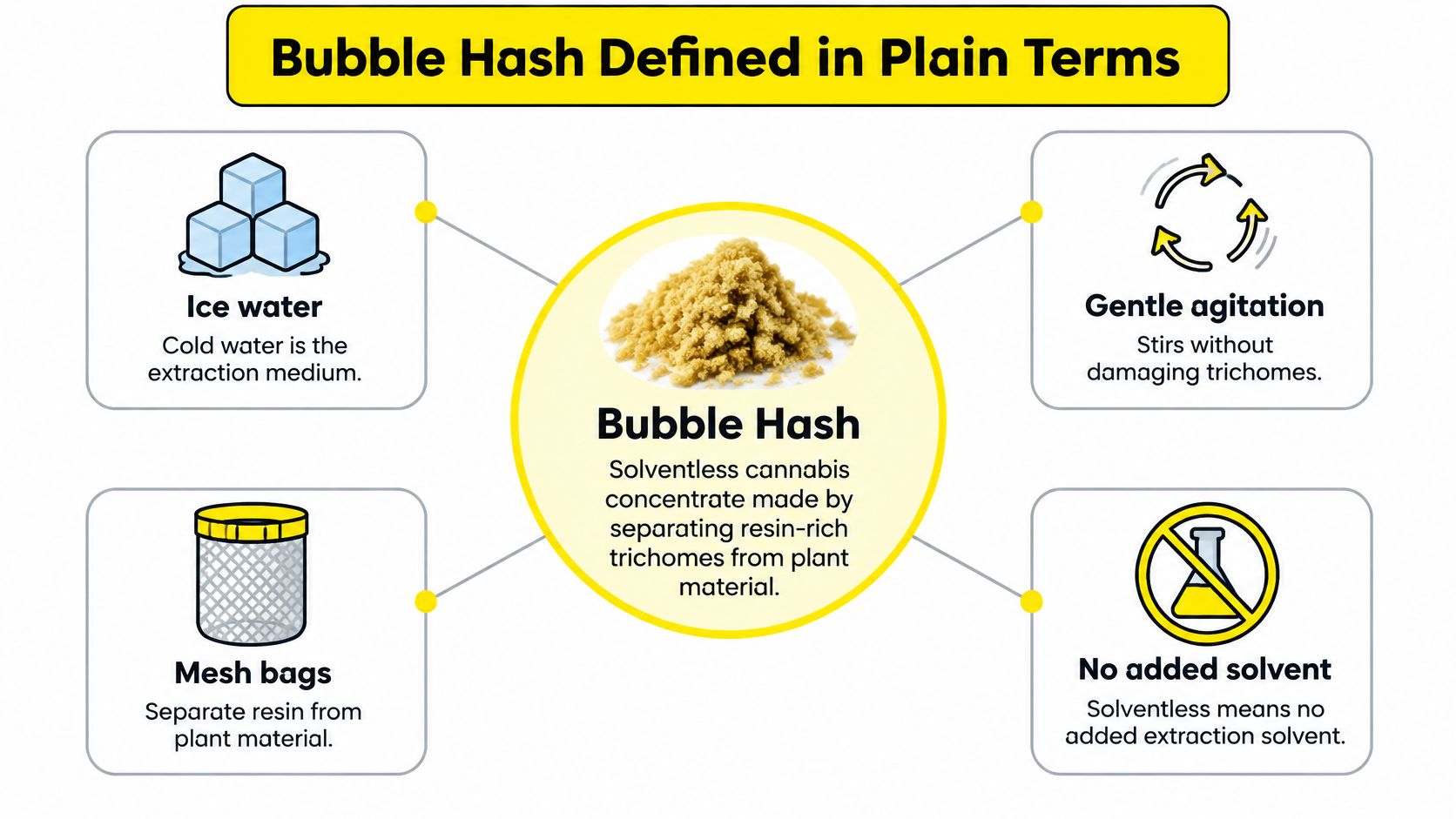
Bubble hash is a solventless cannabis concentrate made by separating resin-rich trichomes from plant material using ice water, gentle agitation, and mesh bags. If no butane, propane, or other chemical solvent touches the plant during extraction, does that automatically mean the finished hash is safer or cleaner than other concentrates?
Most dispensary menus and beginner guides blur those two ideas together. When shoppers ask what is bubble hash, they usually hear about its pure, water-based method and walk away thinking "solventless" equals "risk-free." Understanding how ice-water extraction works, and separating the extraction method from product safety and potency, helps you read labels accurately and dose with confidence.
Bubble Hash Defined in Plain Terms
When you look closely at a cured cannabis bud, you'll see a frosty coating of tiny, shimmering crystals. Those structures are trichomes, the microscopic, mushroom-shaped resin glands that hold the plant's cannabinoids and terpenes. As the National Institute on Drug Abuse marijuana concentrates overview explains, ice-water extraction doesn't dissolve that resin the way alcohol or hydrocarbons do.
Instead, cold temperatures make the trichome heads brittle. Gentle movement in icy water snaps those frozen glands cleanly off the leaves and stems so they can drop through graded mesh screens while larger plant debris stays behind. Once drained and thoroughly dried, the collected resin becomes a concentrated granular or pressed product that dispensaries also label as ice-water hash or water-based processing.
To see how the four core pieces of this method fit together, review the breakdown below.
The Flour Sifter Analogy and Potency Reality
Think of bubble hash production like sifting whole-wheat flour through a stack of kitchen sieves. Each progressively finer screen catches a different particle size, holding back coarse bran on top while letting the finest particles settle below. Traditional hashish makers across Central and South Asia and the Middle East relied on dry sieving and hand-rubbing centuries before modern extracts existed, and ice water adds cold physics and graded filtration to that same mechanical concept.
Because you're removing bulky leaves and stems, a single gram of bubble hash packs substantially more cannabinoids than a gram of dried flower. If you're used to packing a full bowl of flower, loading that same volume of hash will overwhelm you fast. Medical patients and casual consumers alike need smaller, measured portions when exploring any concentrated format, a core principle we walk through in our cannabis concentrates guide.
Keep this distinction front and center: "Solventless" describes how the resin was separated from the plant, not whether the final batch is clean, potent, or free of contaminants.
How Bubble Hash Is Made Step by Step
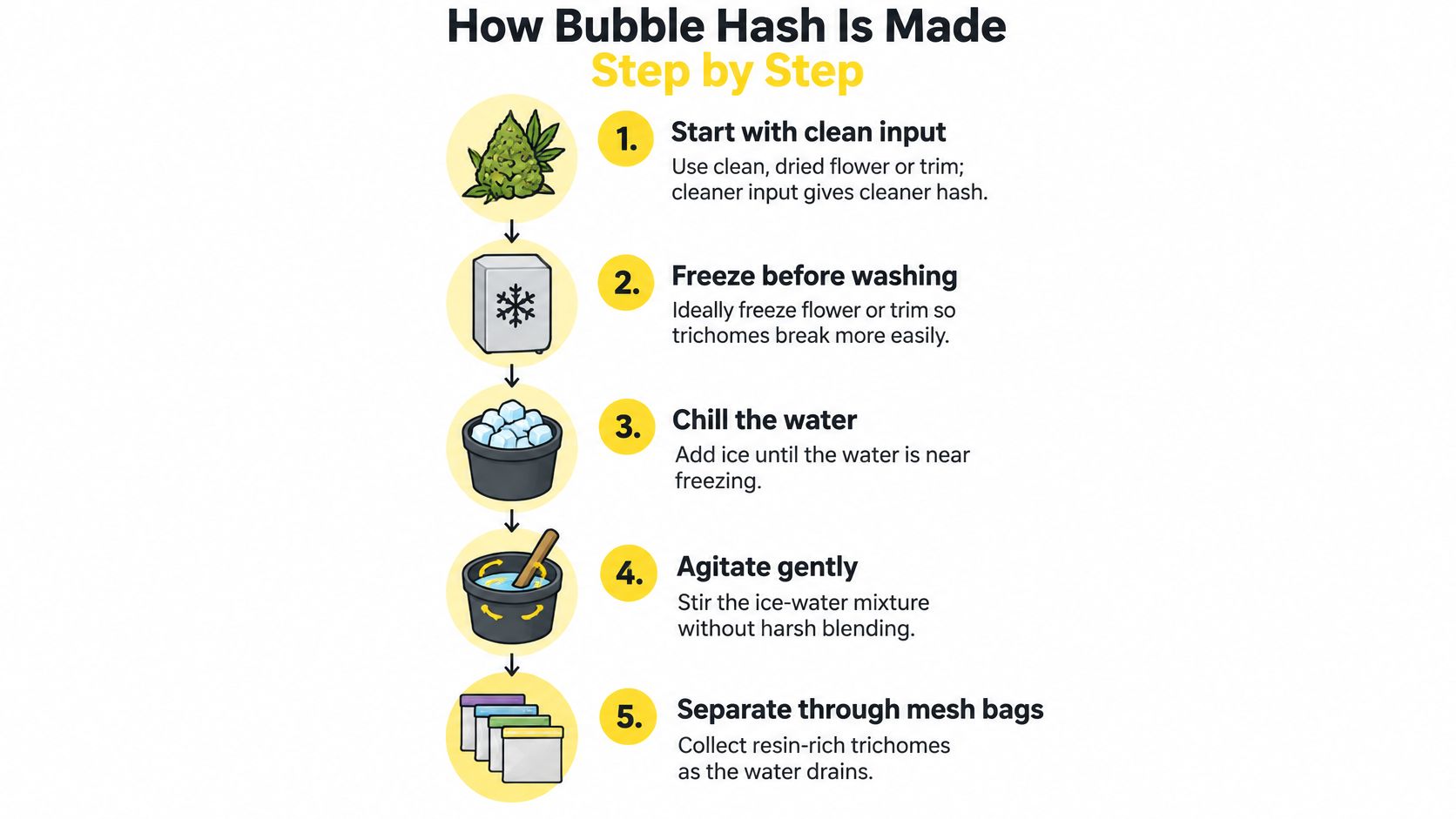
Making clean ice-water hash looks simple from a distance, yet small handling mistakes at any stage change the color, aroma, and safety of the jar. A peer-reviewed medicinal cannabis processing review notes that while water extraction can recover relatively intact glandular trichomes from cured or fresh-frozen material, large-scale production still has limited published research, which makes disciplined technique critical.
The visual below outlines the five main stages of an ice-water wash before we break down every step in detail.
Prepping and Washing the Plant Material
- Start with clean, prepped flower or trim. Producers begin with trimmed buds or sugar leaf that's free of visible debris and ideally frozen beforehand, because pre-chilled resin glands snap off cleanly with less force. The most common mistake here is dumping low-quality or poorly stored trim into the bucket, which guarantees off-flavors and dark plant dust in the finished resin.
- Chill the water near freezing. Adding plenty of ice drops the water temperature enough to turn sticky resin brittle so it breaks away instead of smearing onto the mesh. Using lukewarm water or skimping on ice lets the glands stay soft and gummy, cutting yield and clogging the screens.
- Load the largest mesh bag, known as the work bag. Submerging the cannabis inside the coarsest bag keeps bulky stems and fan leaves corralled while letting cold water circulate freely through the buds. Skipping the work bag or overpacking it tightly blocks water flow and traps loose trichomes inside the plant mass.
- Agitate gently for a short wash. A slow paddle stir or gentle washing cycle creates just enough water movement to knock brittle heads loose without shredding the leaves. Aggressive blending or running long washes releases chlorophyll and pulverized green matter, turning what could have been blonde hash into a dark, harsh paste.
Watching how gently the slurry moves makes the difference between clean separation and bruised plant matter obvious. Here's a quick look at the ice-water wash process in motion.
Filtering, Draining, and Drying the Resin
- Let the slurry settle before lifting the work bag. Pausing briefly gives detached trichomes, which are denser than cold water, time to sink toward the bottom collection screens while spent leaves float upward. Pulling the work bag out immediately traps dislodged heads inside the wet flower and wastes good resin.
- Filter the water through progressively finer collection bags. Lifting each nested screen one at a time separates the sinking glands by particle size, leaving a wet layer of resin sitting on each mesh floor. Pulling a bag too fast or letting water slosh over the rim mixes coarse debris back into your cleaner grades.
- Drain each screen and press out excess moisture gently. Producers scoop the damp resin from each bag onto a clean pressing screen or absorbent cloth and apply light pressure to wick away standing water. Squeezing too hard crushes intact trichome heads together into dense clumps that are much harder to dry evenly.
- Dry the collected resin thoroughly using freeze-drying or controlled air-drying. As the Miraculix Lab bubble hash analysis explains, wet plant resin retains moisture unevenly, and high-end producers often rely on freeze-drying at low temperatures to preserve color and volatile terpenes better than uncontrolled air-drying. The classic error at this step is packaging hash that feels dry on the outside while staying damp at the core, creating hidden moisture pockets that invite mold and rapid degradation.
- Inspect the dried batch and label it cleanly. Before sealing jars, makers check for an even sandy or crumbly texture and record the batch details so buyers can verify what's inside. Skipping final inspection or blending uneven washes without noting it hides quality issues from the consumer.
A well-executed batch finishes with a consistent texture, pale to golden-tan color, and an aroma that clearly mirrors the starting cultivar. Many producers also take their cleanest dried grades and press them with heat and pressure to create another solventless format, which you can explore in our guide on what live rosin is.
What Each Micron Bag Captures
Every screen in a bubble bag stack is rated in microns, a measurement of the tiny openings woven into the mesh. According to a 2025 cannabis extraction study published in PMC, a standard sequence starts with a 220-micron work bag and steps down through 160, 120, 90, 73, 45, and 25 microns.
| Bag size (microns) | What it typically catches | Practical note |
|---|---|---|
| 220 (work bag) | Leaves and large plant debris | Retained and kept out of the collected hash |
| 160 | Coarse plant pieces and some trichome heads | Often lower grade |
| 120 | Mixed trichome heads and fragments | Mid grade |
| 90 | Relatively intact mature heads (70 to 90 micron range) | Often the most sought-after grade |
| 73 | Smaller mature heads | Mid to high grade |
| 45 | Smaller glands and fine material | Darker color possible |
| 25 | Smallest glands and fine dust | Cleanliness reflects wash gentleness and batch input |
Why Trichome Size Creates Different Grades
Cannabis plants don't grow identical resin glands. Mature, bulbous heads typically fall into the 70 to 90 micron range, which is why the 90-micron and 73-micron bags frequently yield the cleanest, most aromatic resin with minimal plant fragments. Meanwhile, the 25 to 45 micron screens catch smaller immature heads, broken stalks, and ultra-fine plant dust that tend to look darker and melt with more residue when heated.
Say a producer washes two batches from the exact same harvest of Blue Dream. For Batch A, they run a gentle wash and isolate only the 73-micron and 90-micron fractions; for Batch B, they agitate harder and pool everything caught from 160 microns down to 25 microns into a single jar. Batch A will look lighter, smell brighter, and melt cleaner, whereas Batch B will offer a heavier total yield with a darker hue and earthier smoke.
Reading Micron Numbers on a Dispensary Label
Neither approach is automatically "wrong" because the right grade aligns with how you plan to use it. If you want pure flavor and a clean melt on a dab rig, you'll look for isolated mid-range screens like 73u or 90u; if you plan to infuse cooking oil or roll joints, a broader full-spectrum blend gets the job done for less.
When a package lists a micron number, read it as a description of how the resin was sorted, not a guarantee of high THC.
Screen size is only one piece of the potency puzzle. Cultivar genetics, trichome maturity at harvest, residual moisture, storage conditions, and laboratory testing methods all shift the final cannabinoid percentage, meaning even a precise-looking label reflects an estimate rather than an exact measurement.
How Bubble Hash Differs From Other Concentrates
Walking up to a dispensary counter and seeing jars of shatter, rosin, wax, and bubble hash side by side can confuse even experienced flower smokers. Two straightforward criteria separate every product on the shelf: whether a chemical solvent is added during extraction, and what physical force releases the resin from the plant.
| Concentrate | How resin is released | Solvent added | Typical texture | Main safety question |
|---|---|---|---|---|
| Bubble hash | Ice water, agitation, and mesh bags | None | Granular, sandy, or pressed | Contaminants carried over from input flower |
| Dry sift hash | Sieving dry trichomes through fine mesh | None | Powdery or pressed | Contaminants in input and dust control |
| Rosin | Heat and pressure on flower or hash | None | Sappy, waxy, or saucy | Heat handling and input quality |
| Butane hash oil | Butane dissolves resin, then is purged | Butane | Shatter, wax, or sap | Residual solvent if purge is incomplete |
| CO2 oil | Pressurized carbon dioxide | Carbon dioxide | Oil or distillate | Equipment setup and purge quality |
Solventless Concentrates Side by Side
Bubble hash sits as our baseline: cold water and mesh screens lift resin glands into a granular, sandy, or lightly pressed concentrate with no added solvent. Its primary safety risk doesn't come from chemical residues, since none are added, but from pesticides, heavy metals, or mold riding along from the original plant or developing during poor drying.
Dry sift hash skips water altogether, tumbling cured buds gently across fine dry screens to collect a powdery or pressed resin. Because there's no drying phase, moisture-related mold is less of an immediate processing hurdle, though clean starting flower and strict dust control remain essential to keep plant debris out of the powder.
Rosin stays in the solventless family by swapping ice water for heat and mechanical pressure applied directly to flower or dried hash. That heat shifts the consistency into a sappy, waxy, or saucy extract, so safety and quality hinge on both clean source material and careful temperature control that avoids scorching delicate terpenes.
Solvent-Extracted Oils and Label Clues
Butane hash oil (BHO) takes a chemical route, using liquid butane to dissolve cannabinoids and terpenes out of the plant before evaporating the solvent away in a vacuum oven. It finishes as glass-like shatter, opaque wax, or sticky sap, making incomplete solvent purging the primary safety concern to verify on a lab sheet.
CO2 oil uses pressurized carbon dioxide acting as a solvent to pull resin into a smooth oil or distillate commonly loaded into vape cartridges. While CO2 evaporates cleanly under proper conditions, product purity relies heavily on calibrated extraction equipment and thorough post-processing.
Imagine two jars sitting on a counter: one holds a pale, sandy crumble from an ice-water wash, while the other holds a dark, waxy budder from a hydrocarbon run. Color alone won't reliably tell you how either jar was made, so check the label for terms like "ice-water hash" or "solventless" versus "BHO" or "CO2 extract," and use our full breakdown of types of cannabis concentrates to match each format to your setup. Decide which column in the table matters most to you, whether that's avoiding chemical solvents, getting an easy-to-handle texture, or prioritizing a specific safety check, and read across from there.
Common Ways Bubble Hash Is Used
Think of bubble hash like a shot of espresso poured into a regular cup of coffee. A tiny splash transforms the flavor and strength of the whole drink, while pouring a full mug of straight espresso can easily go too far. Because ice-water hash comes in sandy, tacky, and pressed textures, you can match the consumption method to both the grade of your hash and how much control you want over your dose.
Five Practical Ways to Enjoy Ice-Water Hash
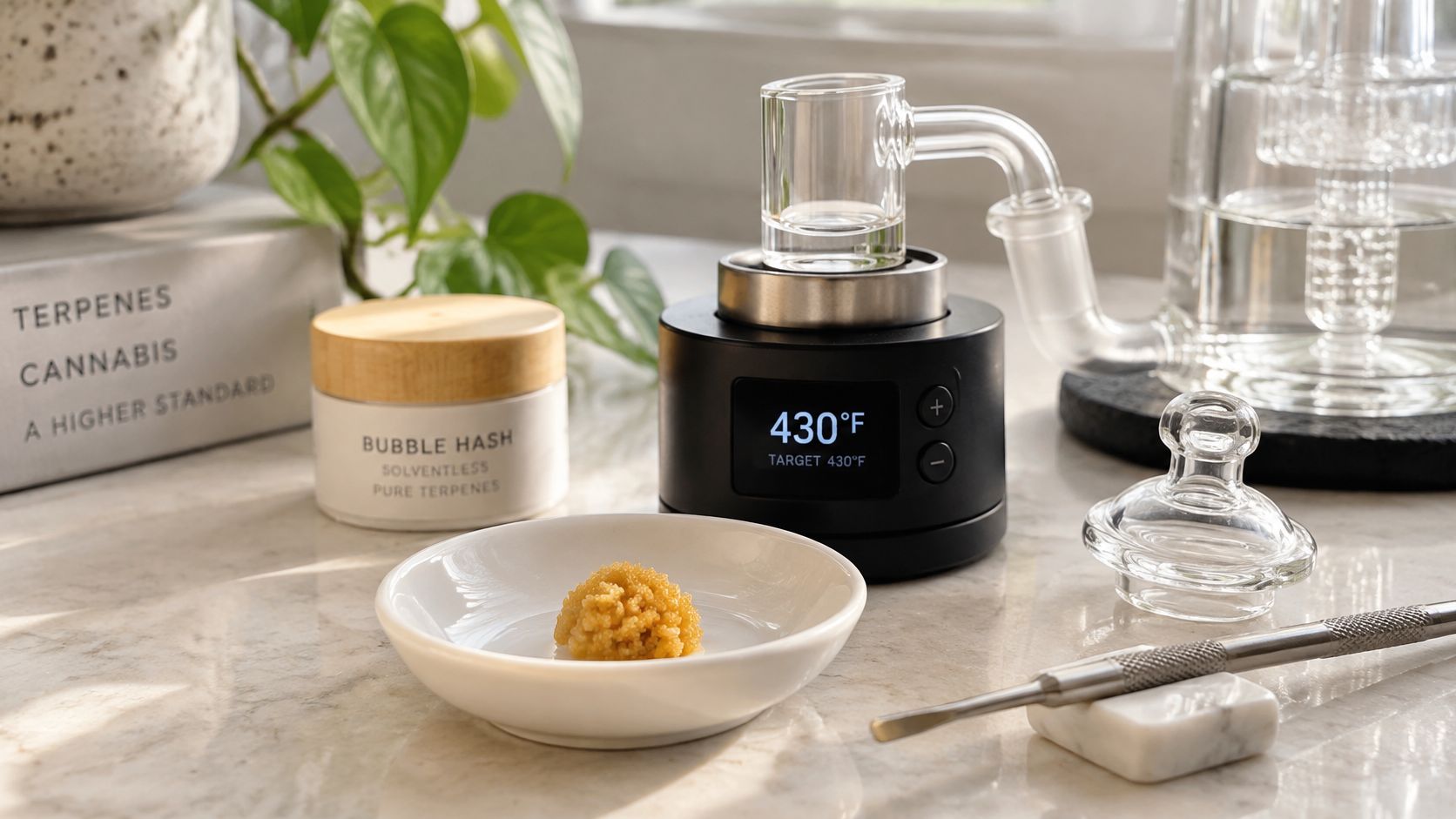
- Low-temperature dabbing for clean, full-melt grades: Take a rice-grain-sized portion of high-grade 73-micron or 90-micron hash and drop it onto an e-nail or quartz banger kept at a low temperature. Lower heat protects bright terpenes from scorching, whereas overly hot nails burn away flavor and leave dark char behind.
- Topping a bowl of flower: Break off a small flake of sandy or crumbly hash and sprinkle it evenly over a half-packed bowl of ground flower. Hold your flame just above the surface so the hash melts gently into the greens instead of torching it directly.
- Rolling a stronger joint or pre-roll: Mix a thin ribbon or light dusting of bubble hash down the center of your ground flower before rolling. Keep the hash centered away from the paper edges so the joint burns evenly instead of canoeing down one side.
- Infusing butter or cooking oil for edibles: Because raw hash contains unactivated cannabinoids, gently decarb it in the oven before whisking it into melted butter or coconut oil. Calculate the total milligrams from the package label and divide carefully across every brownie or cookie so each serving stays predictable.
- Vaporizing in a compatible concentrate device: Only load bubble hash into a vaporizer when the product label confirms it's suited for vaporization and your device handles solid extracts cleanly. Lower-grade hash with leftover plant matter can gum up delicate coils, so check our guide to the best vape pen for concentrates before loading a chamber.
Dosing for First-Timers and Smart Storage
Say you're trying bubble hash for the first time on a quiet Friday evening. Start with the smallest pinch you can pick up on a dab tool or sprinkle lightly across one corner of a bowl, take a single calm draw, and wait at least fifteen to twenty minutes to gauge how the effects build before adding more.
Protect your jar after opening: Store bubble hash in an airtight glass container inside a cool, dark cabinet or refrigerator so light, heat, and open air don't dry out the terpenes or turn sandy resin into a hard, flavorless clump.
Matching your method to your dosing goal keeps every session comfortable: bowl toppers and pre-rolls offer familiar pacing for flower smokers, low-temp dabs deliver immediate potency for experienced patients, and measured edibles provide longer-lasting relief when you do the math up front.
Check Testing Before You Buy Bubble Hash
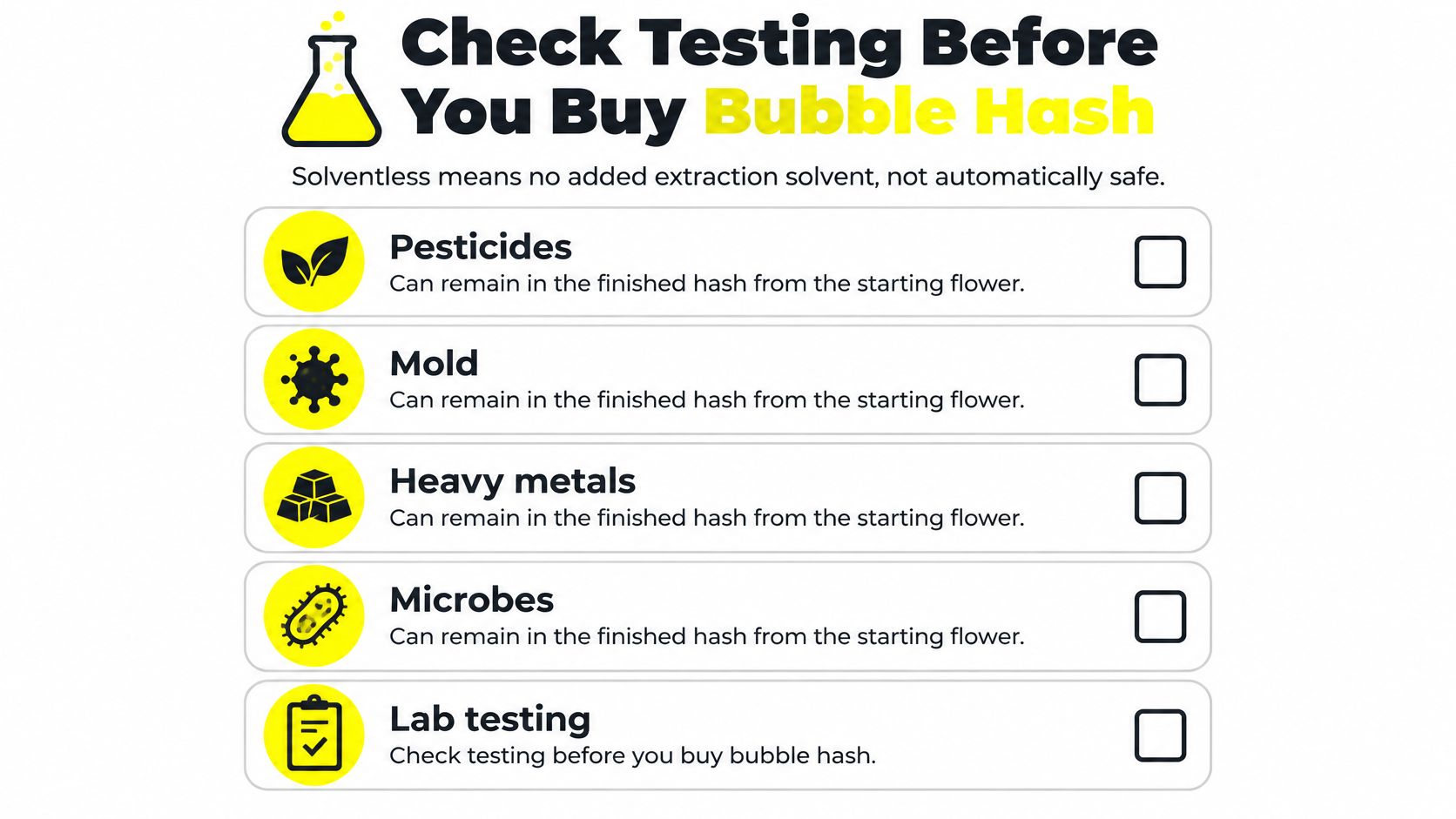
Here's the truth basic cannabis glossaries leave out: solventless does not mean safe. Ice and water only replace chemical solvents as the separation tool. If the starting cannabis was sprayed with unapproved pesticides, absorbed heavy metals from contaminated soil, or carried mold spores from a humid grow room, an ice-water wash won't wash those hazards away.
Worse, concentrating the resin can pull fat-soluble or resin-linked contaminants right along with the cannabinoids. As the Maryland Cannabis Administration technical authority for testing laboratories notes, regulated testing examines concentrates like bubble hash across four major contaminant categories: pesticides, residual solvents, microbiological impurities, and heavy metals, specifically to protect consumers including immunocompromised patients. Think of it this way: the wash selects for whatever lives in or on the resin gland, good and bad alike.
Potency labels alone won't protect you either. Research published in 2025 in Europe PMC found that THC levels in 48% of tested legal cannabis products differed by more than 20% from their labeled concentrations, and chemistry findings in the same review caution that vaping cannabis concentrates can generate harmful aerosol toxicants when additives or poor heat control are involved. A jar can test clean for contaminants and still hit far harder or softer than the front label suggests, which is why batch-specific paperwork matters more than a single bold THC number.
Before you pick up a jar, run through the five core safety checks highlighted below.
Your Five-Point Pre-Purchase Testing Checklist
- Inspect for a compliant package label. Legitimate jars display clear producer information, net weight, cannabinoid estimates, and required regulatory warnings rather than generic sticker bags.
- Locate the batch or lot number. A real batch code ties the exact jar in your hand to a specific harvest and wash, rather than a generic test result from months earlier.
- Verify full contaminant panel testing. Look for lab results covering pesticides, residual solvents, microbiological impurities, and heavy metals, not just a flashy THC percentage printed on the front.
- Confirm the certificate matches your jar. Scan the QR code or ask your budtender to pull up the Certificate of Analysis (COA) so you can confirm the batch ID on the report matches the label.
- Commit to cool, sealed storage at home. Even a spotless lab-tested batch can degrade or invite moisture issues if left open in a warm bathroom or sunny windowsill.
Steps two and four work together, and shoppers often confuse them. The lot number is only useful if the lab report you pull up carries that same number, so treat them as one check performed in two parts. If the batch code on the jar matches nothing on the COA, the paperwork is decoration.
Medical patients and anyone with a compromised immune system should weigh microbial and pesticide results even more heavily than terpene notes or pale color. At Mr. Nice Guys DC, every product is tested for pesticides, potency, and more, giving you a clear benchmark for what transparent dispensary sourcing looks like. You can review how we verify batch quality on our product testing standards page.
Before you buy any jar of ice-water hash, ask to see the batch-specific lab results. If a seller can't show you testing documentation or the numbers look unclear, walk away, or start with the smallest possible dose only after you've verified what's inside.
Whether you're comparing solventless concentrates for the first time or dialing in a reliable medical routine, our budtenders walk you through every format, texture, and lab-tested option without the guesswork. We carry curated concentrates, premium flower, edibles, and accessories, all tested for pesticides, potency, and more, with convenient in-store pickup, curbside service, and delivery across Washington, DC and nearby neighborhoods. Stop by or browse the current menu at Mr. Nice Guys DC to find a clean, verified concentrate that fits your goals.
Mr Nice Guys DC
At Mr. Nice Guys DC, we’re more than just a cannabis delivery service — we’re passionate advocates for quality, convenience, and community. With years of experience in the cannabis industry, our team is dedicated to educating and empowering customers across Washington, D.C. Whether you're a seasoned user or just starting your cannabis journey, our blog delivers trusted tips, product insights, and the latest updates from the world of weed. Stay informed, stay elevated.
