
Must Be 21 To Enter
By entering this site you are agreeing that you are at least 21 Years of Age or older.
I AM 21 OR OLDERComplete Cannabis Concentrates Guide for Safe Dosing
.svg)

.png)
You step into Mr. Nice Guys DC and see jars labeled shatter, wax, rosin, and live resin. You know how to choose flower, but these textures, names, and potency labels feel like a different language. A small jar can contain far more THC than the amount of plant material suggests, so guessing at a first serving isn't a good plan.
This cannabis concentrates guide gives you a practical way to read those labels, compare extraction methods, choose a device, measure a starting amount, and inspect a certificate of analysis before purchasing. It also addresses inhalation-specific risks, high-potency concerns, and the legal and medical questions that matter in Washington, DC. For broader preparation before visiting a dispensary, explore these cannabis education resources.
Introduction
A new concentrate shopper often starts with one simple question: “Which one should I pick?” The better question is, “What do I want to prioritize, and how will I control the dose?” Shatter may appeal to someone who values a firm texture and easy storage, while live resin may suit a flavor-focused consumer. Rosin can attract someone who prefers a solventless process, but its premium positioning doesn't make it automatically risk-free.
Concentrates are popular because they bring cannabinoids and terpenes into a compact format. That convenience comes with a major responsibility: the same small dab can contain much more THC than a comparable amount of flower. By the end of this guide, you'll know how to distinguish the main concentrate families, understand why texture matters, use a cautious inhalation strategy, and look beyond a menu's headline potency.
Understanding Cannabis Concentrates
Cannabis concentrates are products made by separating much of the plant material from the resin-rich compounds that carry cannabinoids and terpenes. They are not just flower pressed into a smaller shape. Extraction and post-processing can create oils, glass-like sheets, soft waxes, aromatic sauces, or pliable rosin, each with different handling and consumption characteristics.
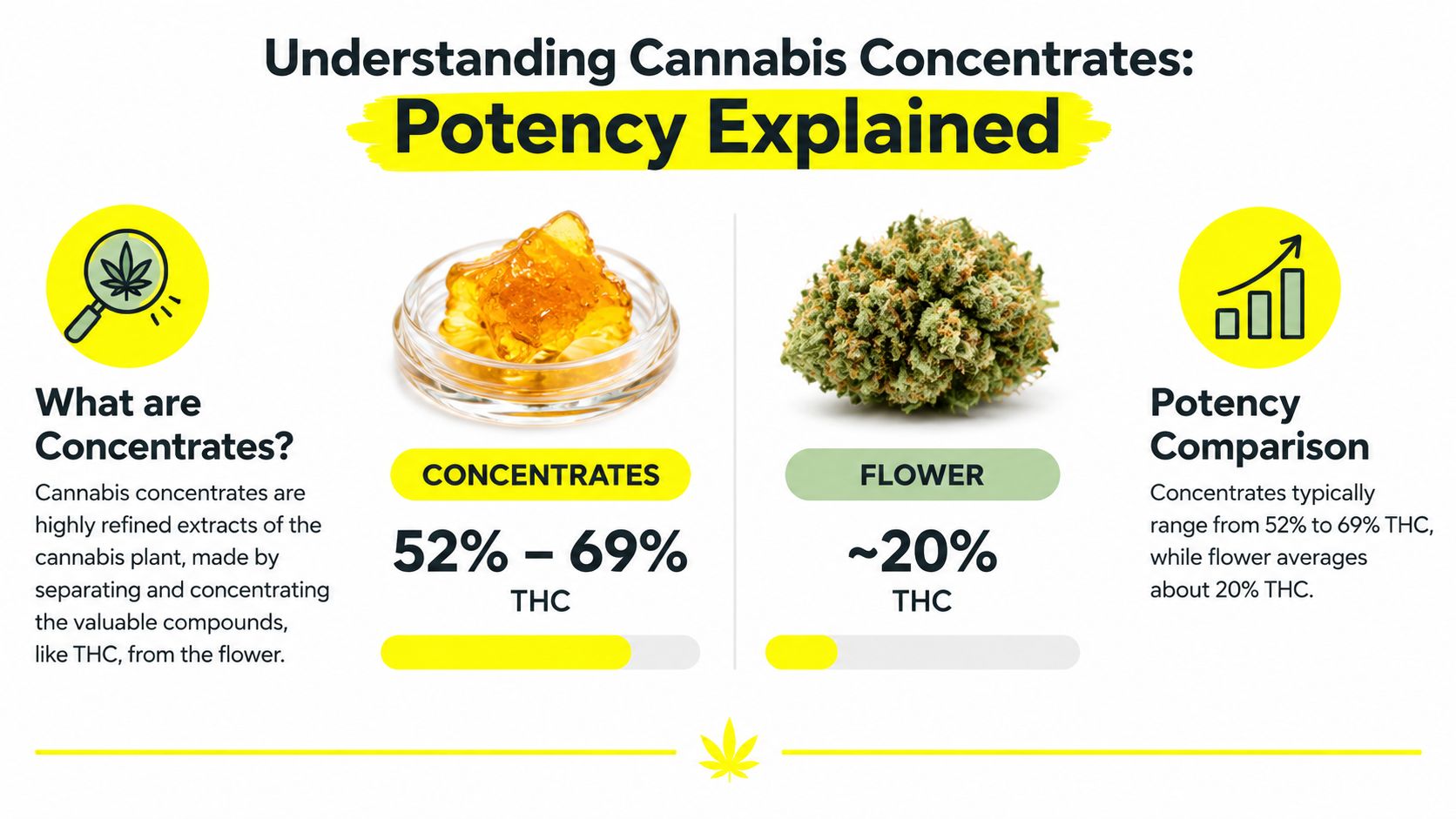
The most important starting point is potency. A large review reports that concentrate THC levels typically range from 52% to 69%, compared with 19.6% THC for flower in Colorado dispensaries, as documented in the peer-reviewed review of cannabis potency and health considerations. Some concentrates reach 90% to 95% THC, according to the same review. Those figures explain why a concentrate deserves its own dosing approach rather than a casual “take a little more” mindset.
Why the potency gap matters
Think of flower as drip coffee and concentrate as espresso. Both can contain the same broad category of active ingredients, but espresso delivers a more concentrated experience in a much smaller volume. You can't judge the strength of a dab by its size alone, just as you can't judge espresso by the size of the cup.
A practical comparison makes this clearer. If a flower product contains about 20% THC and a concentrate contains more than 50% THC, the concentrate carries substantially more THC by weight. A dab that looks like a crumb may therefore feel much stronger than a small piece of flower. The exact effect also depends on inhalation, individual tolerance, product chemistry, and whether the label reports THC, THCA, or a combined value.
Texture and terpene profile
Texture affects handling and dosing. A soft wax can be picked up with a dab tool, while brittle shatter may break unpredictably. Rosin may feel buttery or tacky, and live resin often has a sticky or saucy consistency. These aren't merely cosmetic differences. A product that spreads easily may be simpler to portion than one that snaps or strings.
Terpenes contribute aroma and flavor, and they may influence how a product feels alongside its cannabinoids. A terpene-forward live resin can taste sharper and more plant-like than a highly refined product. Still, flavor intensity doesn't prove that a concentrate is safer, cleaner, or therapeutically superior. Treat the terpene panel as one part of the decision, not a substitute for contaminant testing and dose control.
Practical rule: Potency tells you how much THC is present. Texture tells you how difficult it may be to measure. Terpene information helps describe the sensory profile. You need all three to choose intelligently.
Types and Extraction Methods
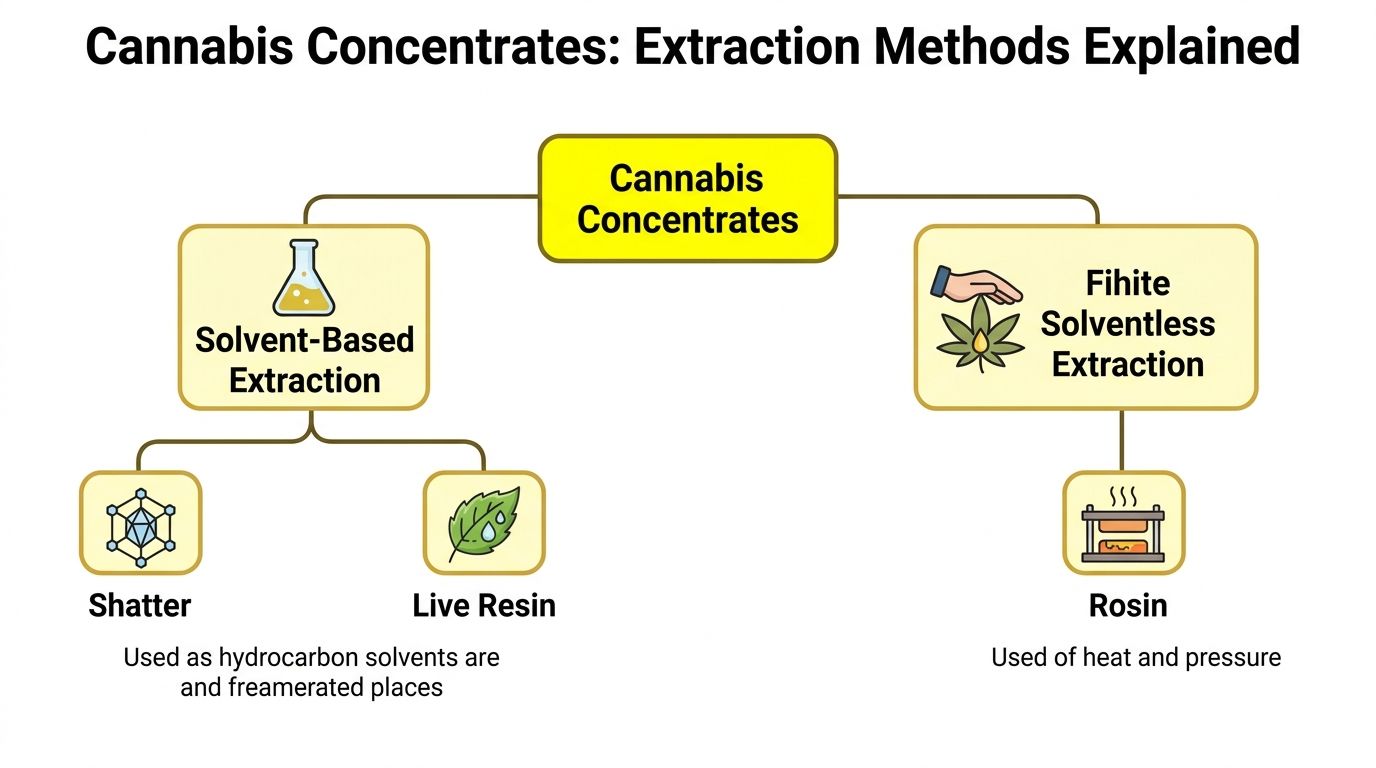
Concentrates usually fall into two extraction families: solvent-based and solventless. Solvent-based methods use substances such as butane, propane, ethanol, or supercritical carbon dioxide to separate cannabinoids and terpenes. Solventless methods use heat, pressure, water, or mechanical agitation instead, as described in this overview of cannabis concentrate extraction.
Solvent-based concentrates
Shatter is the glass-like option. It can snap when handled, which makes it recognizable but sometimes awkward to portion. A patient who wants a stable product for occasional use may appreciate its firm structure, while a first-time user may find a soft concentrate easier to measure.
Wax, budder, and badder are softer forms. Wax is generally pliable or crumbly, while budder and badder have a whipped, creamy consistency. Their texture can make them easier to scoop, but ease of handling shouldn't encourage larger servings. A tool that makes a product easy to pick up can also make over-serving easy if you don't use a measured approach.
Live resin is typically a solvent-based extract made from fresh or fresh-frozen material. Its appeal is often its aroma and flavor, because the process aims to preserve volatile compounds. If you're comparing live resin with distillate, this guide to live resin versus distillate can help clarify why their flavor and refinement profiles differ.
Solventless concentrates
Rosin uses heat and pressure rather than chemical extraction solvents. It may be made from flower or from hash that has first been separated with water and agitation. Rosin is often chosen by consumers who want a solventless process and a pronounced plant-derived flavor, but the finished product still requires careful storage and cautious dosing.
Bubble hash uses ice, water, and agitation to separate resin glands. It can be tacky, sandy, or pliable depending on how it's processed. Because “solventless” describes the extraction method, not the absence of all possible contaminants, a regulated product should still have appropriate testing.
| If you prioritize | A reasonable starting comparison |
|---|---|
| Firm handling | Shatter |
| Easier scooping | Wax or badder |
| Strong aroma | Live resin |
| Heat-and-pressure processing | Rosin |
| Water-based mechanical separation | Bubble hash |
No category wins for every consumer. A flavor-first patient may prefer live resin or rosin, while someone seeking a simple, stable texture may choose shatter. The right choice depends on your tolerance, device, desired sensory experience, and the product's testing record.
Extraction isn't the whole quality story. A solvent-based product can be well tested, and a solventless product can still be mishandled. Ask how it was made, then verify what the laboratory report says.
Potency Dosing and Consumption Methods
Concentrate dosing works best when you separate product strength, amount, and inhalation technique. A high-THC label doesn't tell you exactly how your body will respond, and a visually tiny portion can still carry a substantial amount of active THC.
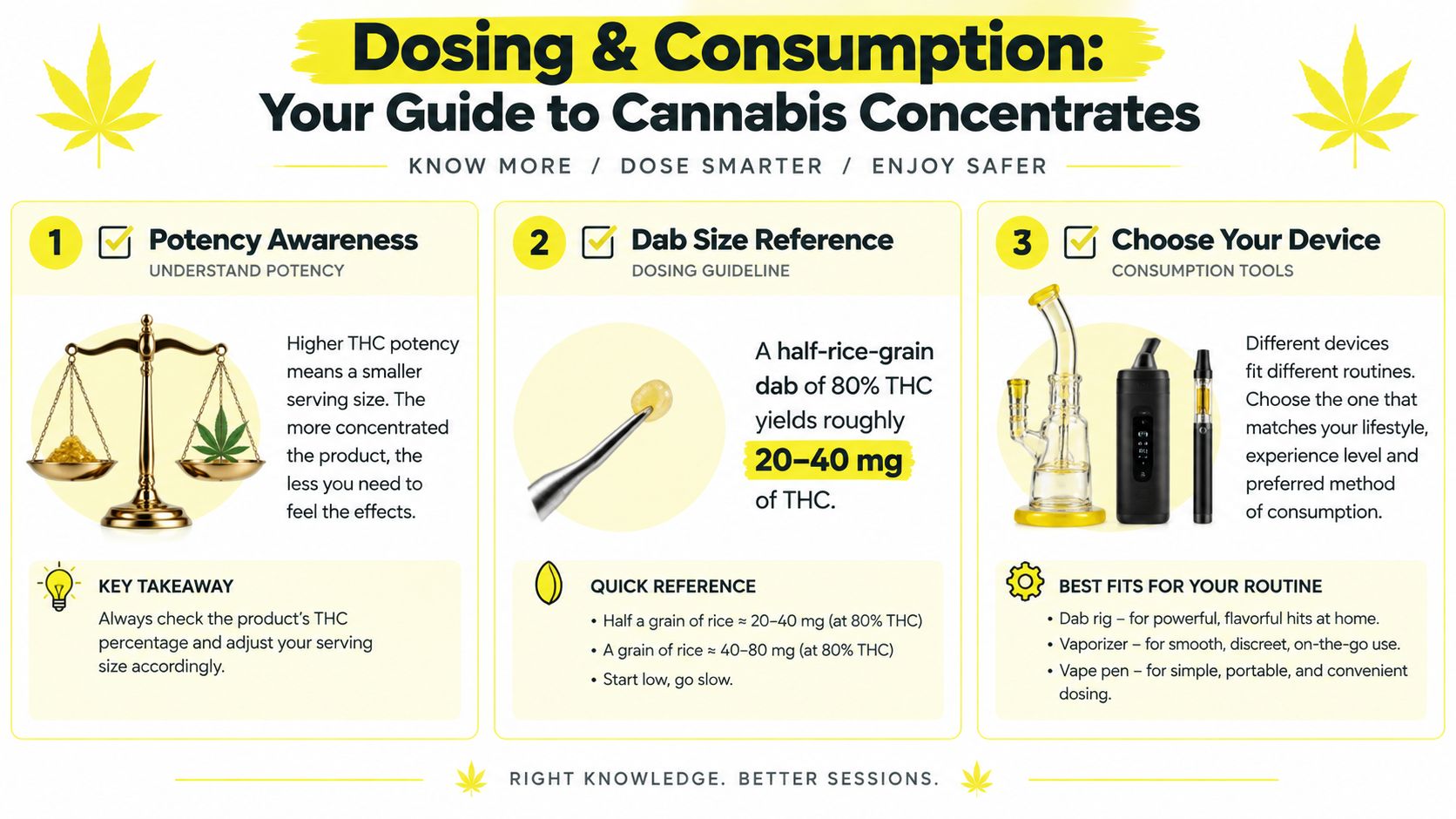
One practical example uses a dab around a half-rice-grain size. If the concentrate is 80% THC and the dab weighs 25 to 50 mg, that serving can contain roughly 20 to 40 mg of active THC, according to this concentrate dosing explanation. That example isn't a universal recommendation. It shows why visual estimates can be misleading, especially for someone without concentrate experience.
A cautious first inhalation
Colorado educational guidance recommends that a serving shouldn't exceed one inhalation lasting two seconds per session, as stated in this state concentrate education resource. For a new user, that means preparing one small, measured amount, taking one short inhalation, and stopping rather than immediately repeating the dose.
Waiting matters because the first inhalation may feel mild at first and then become more noticeable. A person who takes several hits before assessing the first one can lose track of the total amount consumed. Use a calm setting, avoid combining cannabis with alcohol or other intoxicants, and keep the product away from children and pets.
Choosing a consumption tool
A dab rig provides a traditional concentrate setup with a heated surface and water filtration. It can offer control over the inhalation, but it also requires careful heat management and cleaning. An electronic rig may simplify temperature control, though the device still needs a chamber designed for concentrates.
A nectar collector can be portable and direct. It may be convenient for a small serving, but the heated tip can make accidental overuse or burns more likely if the user rushes. A concentrate vaporizer or cartridge offers discretion and a familiar format, but the user still needs to control puff length and frequency.
| Device | Practical advantage | Main caution |
|---|---|---|
| Dab rig | Flexible, established concentrate method | Heat and portioning require practice |
| Electronic rig | Temperature settings can simplify use | Settings don't guarantee a low exposure |
| Nectar collector | Portable and direct | Heated tip and repeated draws can encourage rushing |
| Concentrate vape | Convenient and discreet | Puff size and potency can be easy to underestimate |
Before buying, compare the label's THC or THCA information, the extraction type, the terpene description, and the suggested device. A THC concentrates chart can also help you compare formats and intended uses.
Start with the smallest practical amount, take one short inhalation, and assess before repeating. The goal isn't to prove tolerance. It's to learn how that specific product behaves for you.
Selecting Quality Concentrates at the Dispensary
A polished package doesn't prove that a concentrate is clean or consistent. The most useful document is the certificate of analysis, or COA, which should connect the product to a batch and show cannabinoid results alongside contaminant screening.
Start with identity. Check that the product name, batch or lot information, testing date, and package information align. If the menu lists live resin but the COA describes a different product, ask the dispensary to clarify before purchasing.
What to inspect on a COA
Look for cannabinoid results that distinguish THC from THCA when the report provides both. A product's effect after heating depends on decarboxylation, so a label that presents only one headline number may not tell the whole story.
Then review the safety panels:
- Residual solvents: Maryland technical requirements list action limits including butanes below 5000 ppm, propane below 5000 ppm, hexanes below 290 ppm, benzene below 2 ppm, toluene below 890 ppm, and total xylenes below 2170 ppm, according to the Maryland cannabis testing authority document.
- Pesticides: A compliant report should show whether the relevant panel passed.
- Heavy metals: Check that the report includes this category rather than assuming extraction removes every contaminant.
- Microbiological impurities: Concentrate testing frameworks may include microbial screening, especially when the product is intended for inhalation or ingestion.
A “pass” result is useful, but a missing report is a reason to pause. Solventless products avoid chemical solvents during extraction, yet they still deserve batch testing for pesticides, metals, and microbial concerns.
Applying the information at the counter
Suppose two jars have similar THC labels. One offers a complete COA with a matching batch number, while the other provides only a menu percentage. The first gives you more information to evaluate, even before you compare texture or flavor.
You can also ask whether the concentrate is intended for a dab rig, a compatible vape, or another format. Don't heat a product directly with a flame unless the product and device are specifically designed for that use. For a deeper explanation of testing criteria, review these product testing standards.
Practical Examples of Use Cases
A useful cannabis concentrates guide should work in ordinary situations, not just explain terminology. The following examples show how a person might match a product, device, and starting strategy without treating any one format as universally appropriate.
A patient seeking a controlled evening routine
A medical cannabis patient with persistent discomfort wants a flavor-forward inhaled option but has limited concentrate experience. At the dispensary, the patient compares live resin and rosin, then chooses a batch with a clear COA, a terpene profile they find appealing, and instructions compatible with a low-temperature vaporizer.
At home, the patient prepares a very small amount instead of loading a large scoop. They take one short inhalation, record the product name and time, and wait to assess the response. If the effect is already sufficient, they stop. If the product feels too intense, the next session can use less, a shorter draw, or a lower-frequency routine.
The important decision wasn't solely “rosin versus live resin.” It was the combination of testing transparency, device compatibility, inhalation control, and personal response.
A social consumer choosing for flavor
Another adult wants a concentrate for occasional use with friends and cares more about aroma than maximum strength. They select a soft wax with a fruit-forward terpene description, confirm that the package is tested, and avoid treating the shared jar as an invitation for everyone to take the same amount.
A dab rig may provide the group with a familiar setup, but each person should decide whether to participate and how much to inhale. A new or infrequent user can choose one short draw and stop, while someone with more experience may still prefer a conservative serving because the product's potency can vary.
Sharing also raises hygiene and practical concerns. Use clean tools, don't pass a hot piece without warning, and keep the concentrate closed between uses. Flavor can make a session enjoyable, but it can also encourage people to take repeated hits before recognizing the accumulating effect.
A beginner testing a portable setup
A novice wants to try a concentrate at home without committing to a large device. They choose a compatible nectar collector, prepare a very small portion, and place it somewhere stable before heating the tip. They take one brief inhalation and put the tool down rather than immediately reheating it.
The beginner then waits in a quiet environment. Water, a comfortable seat, and a phone timer can help prevent impulsive redosing. If the first attempt feels too strong, the person has learned something useful without escalating the session.
The device doesn't make the dose safe by itself. A portable tool can deliver a potent inhalation just as efficiently as a rig. The safer pattern is consistent across formats: verified product, measured amount, short draw, no rushed repetition, and secure storage afterward.
Legal and Medical Considerations
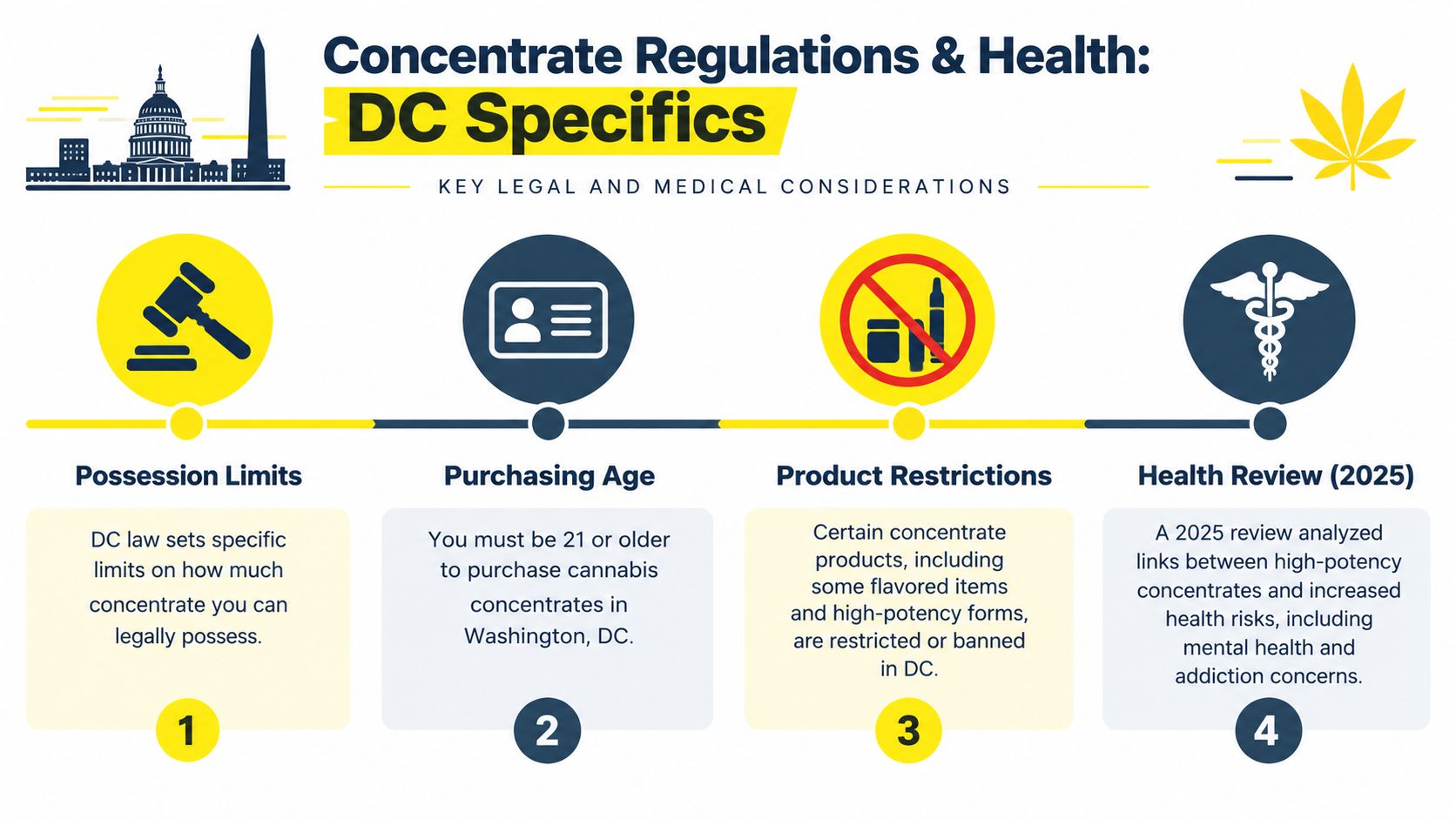
Washington, DC cannabis rules can change, and concentrate access may depend on whether you're a registered medical patient, a qualifying visitor, or another legally recognized consumer. Possession limits, purchasing age, product restrictions, and delivery conditions should be confirmed through current official DC guidance or the dispensary before you buy. A menu or social media post isn't a substitute for the law.
Medical risk also deserves direct attention. A 2025 systematic review found that high-potency concentrates were associated with increased cannabis use disorder risk in 75% of studies and psychosis-related harms in 70% of studies, as reported in this PubMed review of high-concentration THC products. These findings describe associations in the reviewed evidence, not a prediction that every person using a concentrate will experience either outcome.
A sensible medical screening conversation
Speak with a healthcare professional before starting concentrates if you have a personal or family history of psychosis, concerns about dependence, significant heart symptoms, pregnancy-related questions, or medications that may interact with cannabis. A clinician can help separate a hoped-for therapeutic benefit from a risk that may be unacceptable for your situation.
Watch for warning signs such as needing cannabis more often, using more than planned, struggling to cut back, or continuing despite clear problems. Secure storage matters as well. Keep concentrates in a labeled, child-resistant container, away from heat and unauthorized users, and never drive after consuming.
For more background on interpreting potency information, consult this cannabis potency testing guide. Regulations and health evidence should shape your decision before the product reaches your device.
Conclusion
Concentrates are a distinct cannabis category because they combine compact servings with much higher THC levels than typical flower. Shatter, wax, live resin, rosin, and bubble hash differ in extraction method, texture, flavor, and handling, but none removes the need for careful dosing.
Choose a product with a matching batch COA, review cannabinoid and contaminant results, and select a device designed for that concentrate. Start with a small amount, follow the cautious one-inhalation approach, and wait before considering more. If you use cannabis for medical reasons or have concerns about mental health, dependence, or medication interactions, talk with a qualified healthcare professional first.
Mr. Nice Guys DC offers tested concentrates, vapes, flower, edibles, and other medical cannabis formats with educational guidance for choosing a product and using it responsibly. Visit Mr. Nice Guys DC to review current options, ask focused questions about potency and COAs, and arrange a compliant purchase or delivery in the DC area.
Mr Nice Guys DC
At Mr. Nice Guys DC, we’re more than just a cannabis delivery service — we’re passionate advocates for quality, convenience, and community. With years of experience in the cannabis industry, our team is dedicated to educating and empowering customers across Washington, D.C. Whether you're a seasoned user or just starting your cannabis journey, our blog delivers trusted tips, product insights, and the latest updates from the world of weed. Stay informed, stay elevated.
