
Must Be 21 To Enter
By entering this site you are agreeing that you are at least 21 Years of Age or older.
I AM 21 OR OLDERDC Cannabis Education Resources: 2026 Patient Guide
.svg)

.png)
Starting medical cannabis in Washington, DC can feel like a lot to sort out all at once. You might be trying to figure out whether you need a clinician, whether self-certification is enough, what a dispensary can legally sell you, and how to choose between flower, edibles, tinctures, or a vape without guessing wrong on your first purchase.
That confusion is common. In a nationally representative survey of US cannabis consumers, 77.6% said they primarily got cannabis information from friends or family, websites, and personal experience, while only 16.3% of medical-use participants reported getting information from a healthcare provider. That gap is exactly why better cannabis education resources matter, especially for DC patients who need both legal clarity and practical product guidance.
This guide cuts through the noise. It focuses on resources that effectively help DC patients make decisions, not just skim headlines or chase strain names on social media. You'll find official local compliance tools, strong national education hubs, and practical examples based on how patients shop and learn in real dispensary conversations.
If you're standing at the beginning of the process, or you've already bought cannabis but still don't feel confident about dosing, formats, or local rules, start here.
1. DC Alcoholic Beverage and Cannabis Administration (ABCA) – Medical Cannabis Program Resources
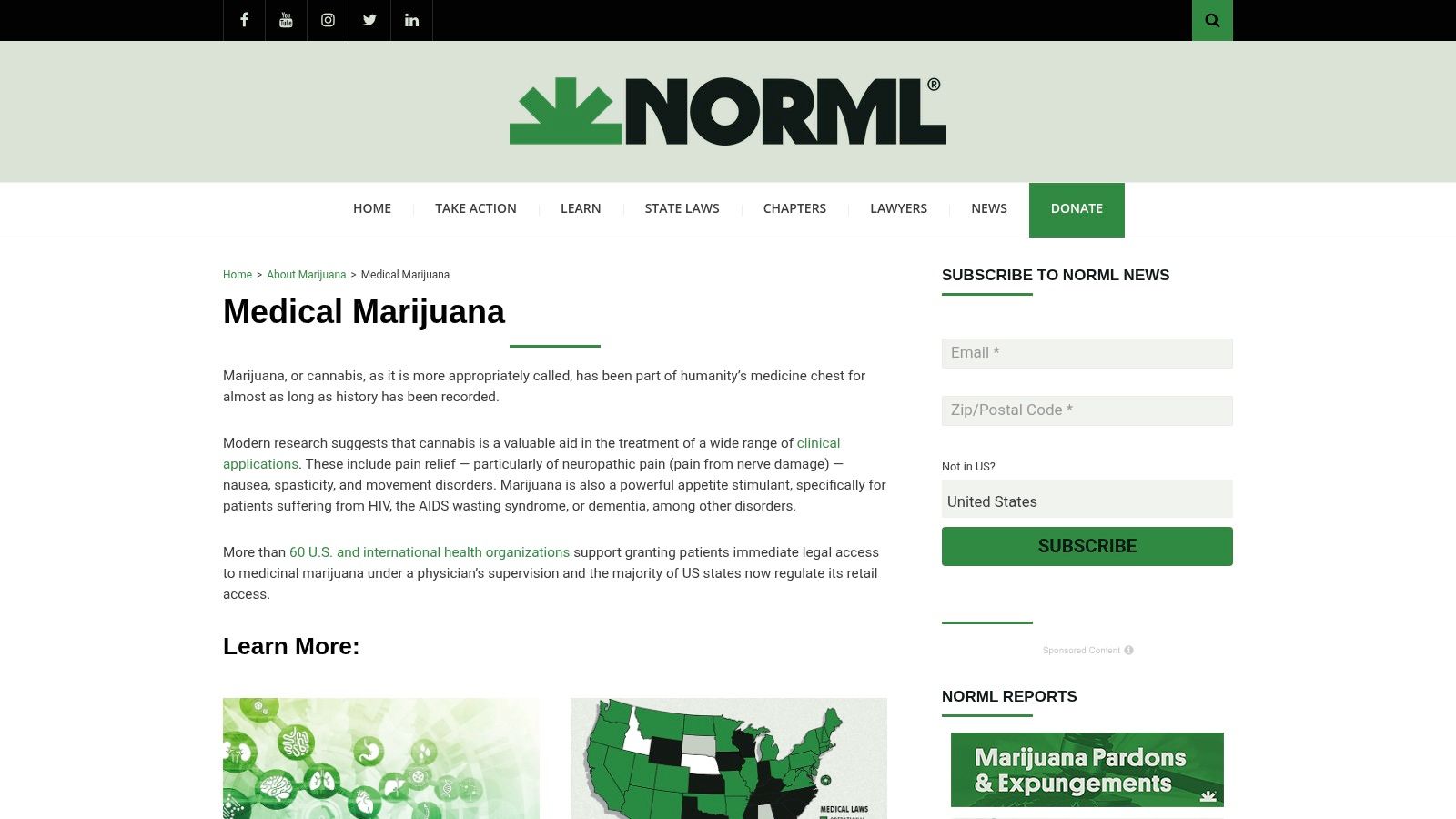
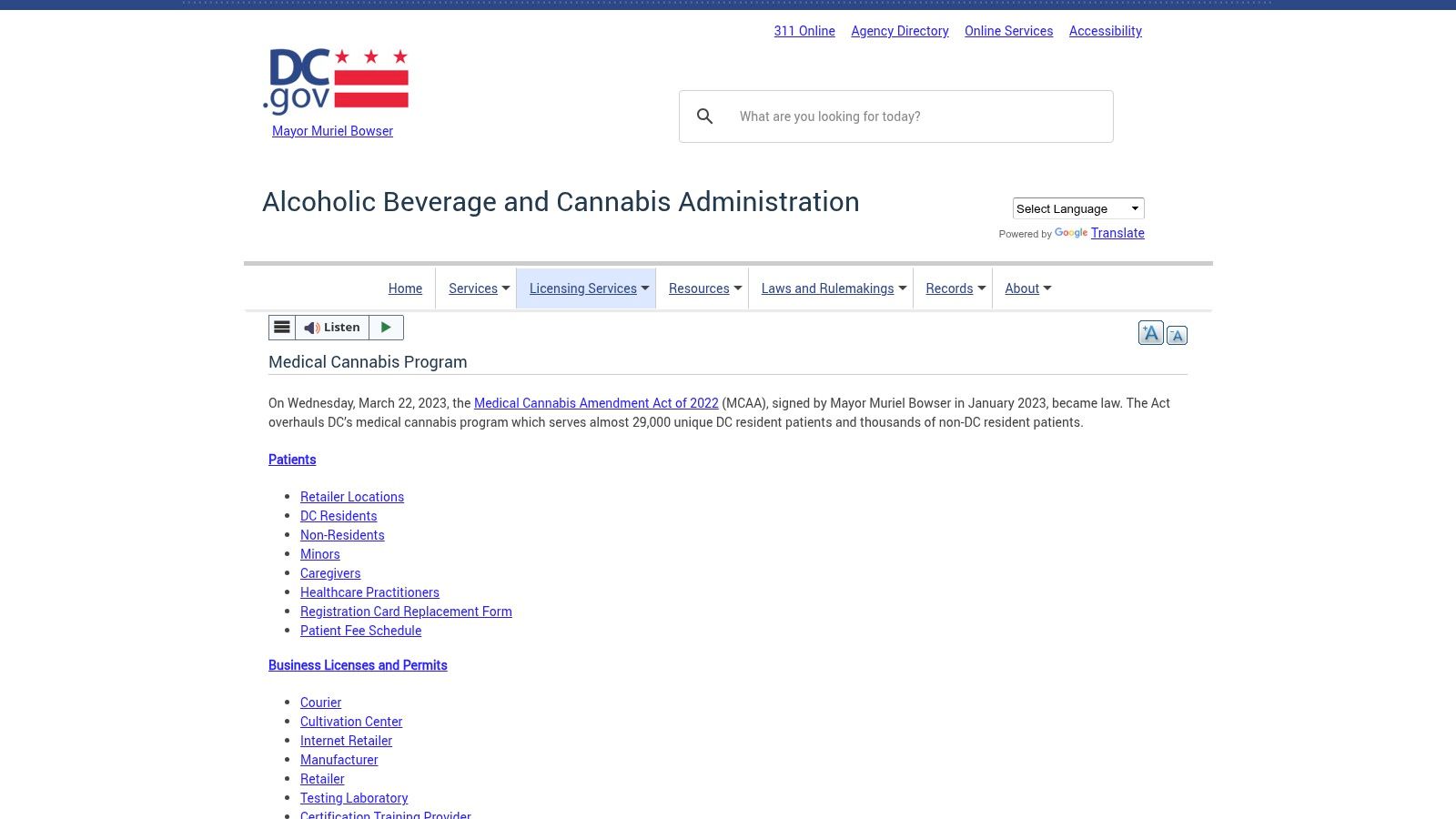
The DC ABCA Medical Cannabis Program is where DC patients should start for law, access, and program basics. If your first question is “What's allowed here?” this is the cleanest answer because it comes straight from the agency overseeing the program.
For DC residents, it helps with patient registration and compliance details. For non-residents and visitors, it's also the best place to confirm reciprocity and temporary patient options before you head to a licensed retailer.
What it does well
ABCA is strongest when you need hard answers on process, not opinions. It's useful for:
- Patient access rules: Who can participate, what documentation applies, and how registration or self-certification works in DC.
- Visitor guidance: Out-of-town adults age 21+ can review temporary patient and reciprocity pathways before shopping.
- Retailer verification: You can confirm whether a store is licensed before buying anything.
In practice, that means a visitor from Alexandria can check the program page first, then verify a retailer before going in. That's a smarter move than relying on a random map listing or a social post.
Practical rule: Use ABCA to confirm legality and retailer status. Don't use it as your only source for product selection or dosing.
A good pairing is this plain-English guide to DC medical card requirements, especially if ABCA's government language feels dense on first read.
Trade-offs
The downside is usability. Government pages answer important questions, but they don't always answer them in the order a new patient thinks to ask. And they won't walk you through whether Gelato flower or a low-dose edible makes more sense for evening use.
ABCA handles compliance. You'll need other cannabis education resources for product literacy, effects, and safe starting strategies.
2. Americans for Safe Access (ASA) – Patient's Guide to Medical Cannabis
The ASA Patient's Guide to Medical Cannabis is one of the better patient-facing national resources because it stays focused on people using cannabis medically, not just browsing cannabis culture content.
That matters. A lot of education sites do a decent job explaining what THC and CBD are, but they stop short when patients need help understanding rights, caregiving, travel questions, or how to talk through safe use.
Why patients like it
ASA gives you practical reading material you can print, save, or share with a caregiver. It's broad, but it's broad in the right way. It covers safety, rights, program navigation, and common patient concerns without burying everything under policy jargon.
A useful example is a patient who's comfortable buying flower but feels unsure about trying edibles. ASA can help frame the safety side and basic expectations, then something more hands-on, like an edible dosage calculator guide, can help turn that into a realistic starting plan.
Where it's strongest
- Medical framing: It speaks to patients and caregivers, not just advocates or shoppers.
- Rights and protections: Helpful if you're trying to understand the broader legal environment around medical use.
- Portable learning: The guide format works well if you want one reference document instead of jumping between dozens of tabs.
The trade-off is depth. ASA is not where I'd send someone who wants close reading of condition-specific research or a deep dive into terpene chemistry. It's much better as a foundation than as your final word on a specific symptom pattern.
A good patient guide doesn't replace clinician input. It gives you better questions to bring into that conversation.
If you're new and want a calm, patient-centered overview before you start comparing products, ASA is one of the easiest places to begin.
3. NORML – Medical Marijuana Education
NORML's medical marijuana education pages are useful when you want legal and policy context in plain language. Patients often need that context more than they realize, especially in a city like DC where local rules, federal tension, and visitor questions can all collide.
If ABCA tells you what DC allows, NORML helps you see how DC fits into the broader US context.
Best use case
NORML is good for patients who ask questions like these:
- How is medical marijuana handled in different states?
- What rights do patients usually have under state law?
- How do policy changes affect access and protections?
That's especially helpful if you live in DC but travel often, or if you're a non-resident trying to compare your home state's setup with what DC allows.
What to watch for
NORML leans policy-forward. That's not a flaw, but it is a limitation. If someone comes into the dispensary asking, “What should I try for nighttime use if inhalation irritates my throat?” NORML probably won't get them all the way there.
Its value is orientation. It helps patients understand the system around medical cannabis. Then they can move to more practical cannabis education resources for product formats, dosing style, and symptom tracking.
One concrete example: a patient might use NORML to understand medical access rules broadly, then use a dispensary conversation to narrow down whether a tincture, capsule, or low-dose edible is easier to manage than smoking.
For legal literacy, it's strong. For product decision-making, it's a starting point, not the finish line.
4. Leafly Learn
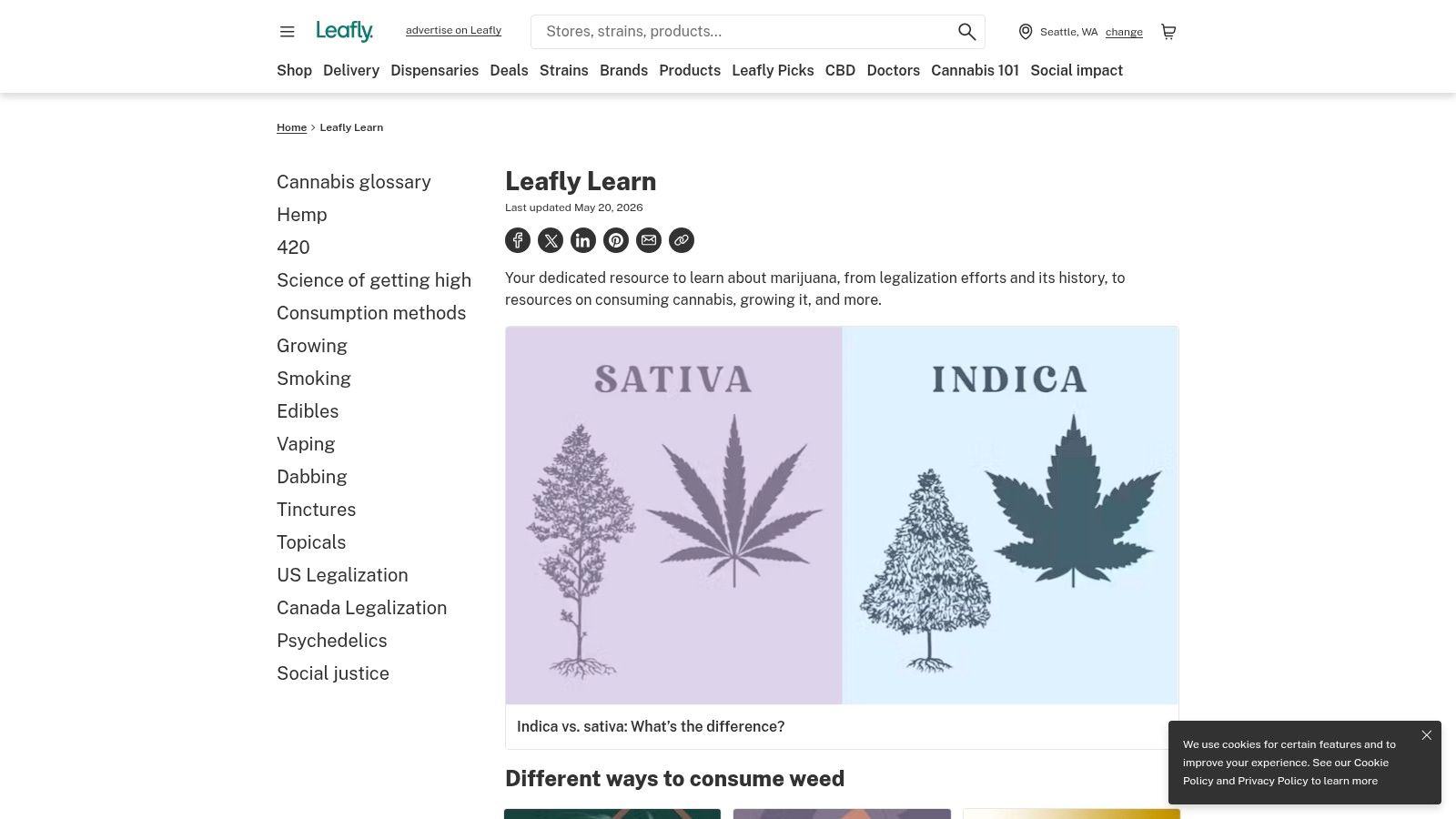
Leafly Learn is one of the easiest education hubs for beginners because it answers the questions people ask in the moment. What's the difference between an edible and a vape? How long does a tincture take? What do terpene terms mean? What should I expect on my first dispensary visit?
That last one matters more than people think. A lot of first-time patients aren't confused about cannabis itself. They're nervous about the retail experience.
Best for first-timers
Leafly's biggest strength is navigation. The glossary, beginner articles, and format explainers are easy to scan, and the language usually feels approachable rather than clinical.
That makes it a good companion to a first visit. If you want a local version of that same prep, this first dispensary visit guide gives a more DC-specific picture of what the process looks like.
Here's a practical example. Say a patient is choosing between a pre-roll, a disposable vape, and a pack of gummies. Leafly can explain the basic onset and format differences. That helps them arrive with better questions instead of feeling put on the spot at the counter.
Trade-offs
- Easy to browse: Great for new patients who need broad literacy fast.
- Regularly refreshed: Topics tend to stay relevant and readable.
- Mixed depth: Some articles are excellent. Others feel more lifestyle-oriented than medically useful.
Leafly is best when you need a broad educational base and a low-friction way to learn basic cannabis vocabulary. It's less useful when you need condition-specific guidance or deeper clinical interpretation.
5. Weedmaps Learn
Weedmaps Learn works well for shoppers who want practical product literacy. It's one of the better cannabis education resources for understanding how products are made, how they're labeled, and what safety terms mean.
That's useful because access is high. In 2022, 60.3% of people age 12 or older perceived cannabis as fairly easy or very easy to obtain. When products are easy to find, the main challenge becomes choosing safely and reading labels with some confidence.
Where it helps most
Weedmaps Learn is strongest on buying-adjacent topics:
- Product categories: Flower, pre-rolls, edibles, tinctures, concentrates, and vapes.
- Testing and contaminants: Helpful for patients trying to understand why lab results matter.
- Extraction basics: Useful if you're curious why one concentrate feels different from another or why certain products are more potent.
A practical example is a patient comparing a standard gummy with a fast-acting edible and a tincture. Weedmaps can help clarify format differences before the patient decides which route gives them the most control.
If you don't understand the label, don't buy the product yet. Learn what the cannabinoid content, serving size, and testing language mean first.
Limits
Weedmaps isn't a medical reference. It's better at helping someone become a more informed shopper than a more proficient clinical reader. For a first-time buyer, that's often enough. For a patient managing chronic pain, sleep, or anxiety patterns, it should be one layer of education, not the only one.
6. Project CBD
Project CBD is one of the more useful nonprofit resources when a patient wants evidence-forward reading without diving straight into raw studies. It's especially strong for people trying to understand CBD itself, the CBD-THC relationship, and how product quality affects outcomes.
That matters because many patients still walk in with a very basic question: “Do I want CBD, THC, or both?” The answer depends on the goal, tolerance, timing, and preferred format.
Why it stands out
Project CBD does a good job translating technical language into readable articles. Its condition libraries, explainers, and special reports are helpful for patients who want more than a dispensary menu description.
A simple example: someone interested in daytime symptom support may want to compare a high-CBD tincture with a balanced gummy instead of jumping straight to a high-THC edible. Before they choose, it helps to understand what CBD vs THC means in practical terms.
Best fit and limitation
- Best fit: Patients who want science-informed reading on cannabinoids and product quality.
- Less ideal: Patients who want broad shopping advice across every category and every use case.
Project CBD also works well for patients who are skeptical of hype. It tends to be less strain-marketing driven than many consumer sites, which is a plus.
The trade-off is its center of gravity. It leans heavily toward CBD education, so if your main need is comparing inhaled THC products for evening relief, you'll probably need another resource alongside it.
7. The Cannigma (Education Hub + App)
The Cannigma Education hub sits in a useful middle ground between consumer education and evidence-screened reading. For patients who want practical tools without giving up scientific review, it's one of the better-balanced options.
Its method and strain selection tools are especially helpful for people who know their goal but not their format. That's a common DC dispensary conversation. Someone might know they want evening calm, or relief that won't lock them to the couch, but they don't know whether to start with a gummy, tincture, or vaporizer.
Why the format works
The Cannigma's content is reviewed by pharmacists and researchers, which gives it more credibility than typical lifestyle content. At the same time, the app and educational tools make it easier to use than a heavy research archive.
For example, a patient choosing between Blue Dream and Wedding Cake may not need a full literature review. They need a way to think through onset time, THC sensitivity, and whether they want something inhaled or ingested. The Cannigma is good at translating that type of decision into plain language.
Real trade-off
Its downside is mixed intent. Some pages feel purely educational. Others sit closer to marketplace or commercial discovery. That doesn't make the resource bad, but it means patients should stay aware of the difference between a learning tool and a buying prompt.
If you like interactive education and want help turning cannabis concepts into everyday decisions, The Cannigma is one of the more usable platforms on this list.
8. Realm of Caring Foundation
The Realm of Caring Foundation stands out because it doesn't just publish information. It builds support around the patient and caregiver experience.
That makes it especially useful for people who aren't learning alone. If a spouse, adult child, or caregiver is helping manage routines, records, and product decisions, Realm of Caring gives them a place to participate rather than just observe.
Best use for caregivers
Its portals, dosing and administration materials, support groups, and events add something many education sites don't. They acknowledge that cannabis use often becomes a shared decision process in households managing long-term symptoms.
A practical example: an older patient may prefer a family member to help track which tincture was taken in the evening and whether it affected sleep quality, next-day grogginess, or appetite. Realm of Caring supports that kind of organized learning better than a standard article library.
Some patients need information. Others need information plus support. Those aren't the same thing.
Downsides
The biggest drawback is friction. Some resources are easier to access once you create an account, and the depth can vary depending on topic. If you want instant reading with no signup, other sites are simpler.
Still, for families and caregivers who want more than self-serve articles, this is one of the more human-centered cannabis education resources available.
9. Healer (Dr. Dustin Sulak) – Medical Cannabis Training and Patient Education
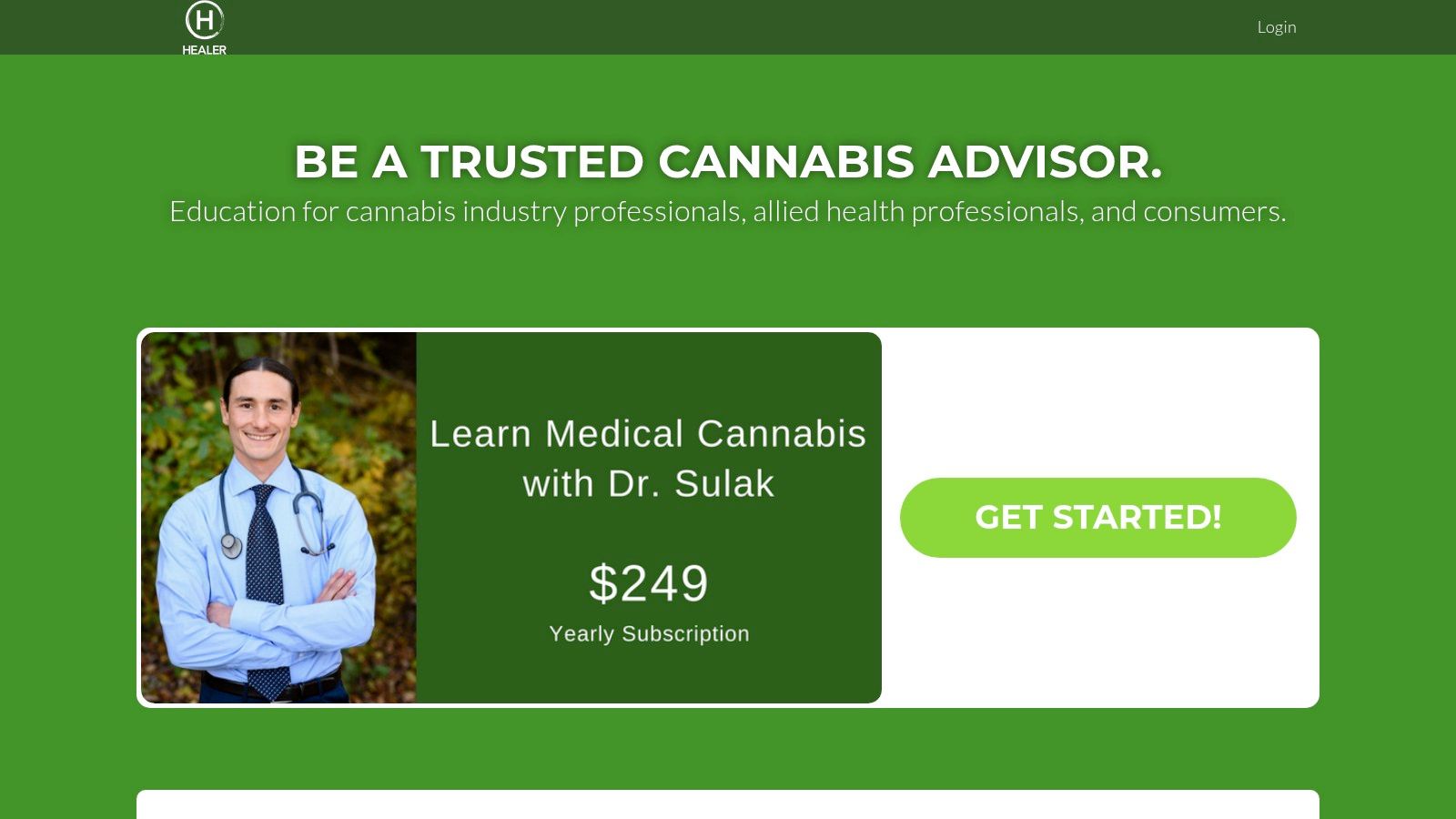
Healer training is for patients who want a more structured system, especially around dosing and self-observation. It feels less like browsing articles and more like following a guided curriculum.
That approach matches what good patient education often requires. Some programs can last up to 8 hours and include practices like journaling different doses and cultivars, learning how CBD may help counter THC overconsumption, and understanding terpene profiles. Healer fits that more disciplined style better than general consumer sites do.
Where it shines
Healer is strongest for patients who want a framework instead of a pile of disconnected tips. The bite-sized modules and downloadable materials help people build a repeatable process.
A practical version of that in real life looks like this: a patient trying cannabis for sleep, pain, or anxiety might compare product categories, then use a symptom-specific guide like choosing the right product for sleep, pain, and anxiety before starting a slow testing routine.
The trade-off
- Strong on structure: Better than most free sites for step-by-step dosing thinking.
- Paid access: Membership cost creates a barrier for some patients.
- Not a substitute for care: Good education still needs to be paired with medical judgment when symptoms are complex.
If you tend to do best with a method, a notebook, and clear progression rather than casual reading, Healer is one of the most practical choices on this list.
10. CannaKeys 360° (Research Dashboard)
CannaKeys 360° is for advanced patients, educators, and clinicians who want organized research synthesis instead of surface-level explainers. Most casual users won't need it right away, but for the right reader it saves a lot of time.
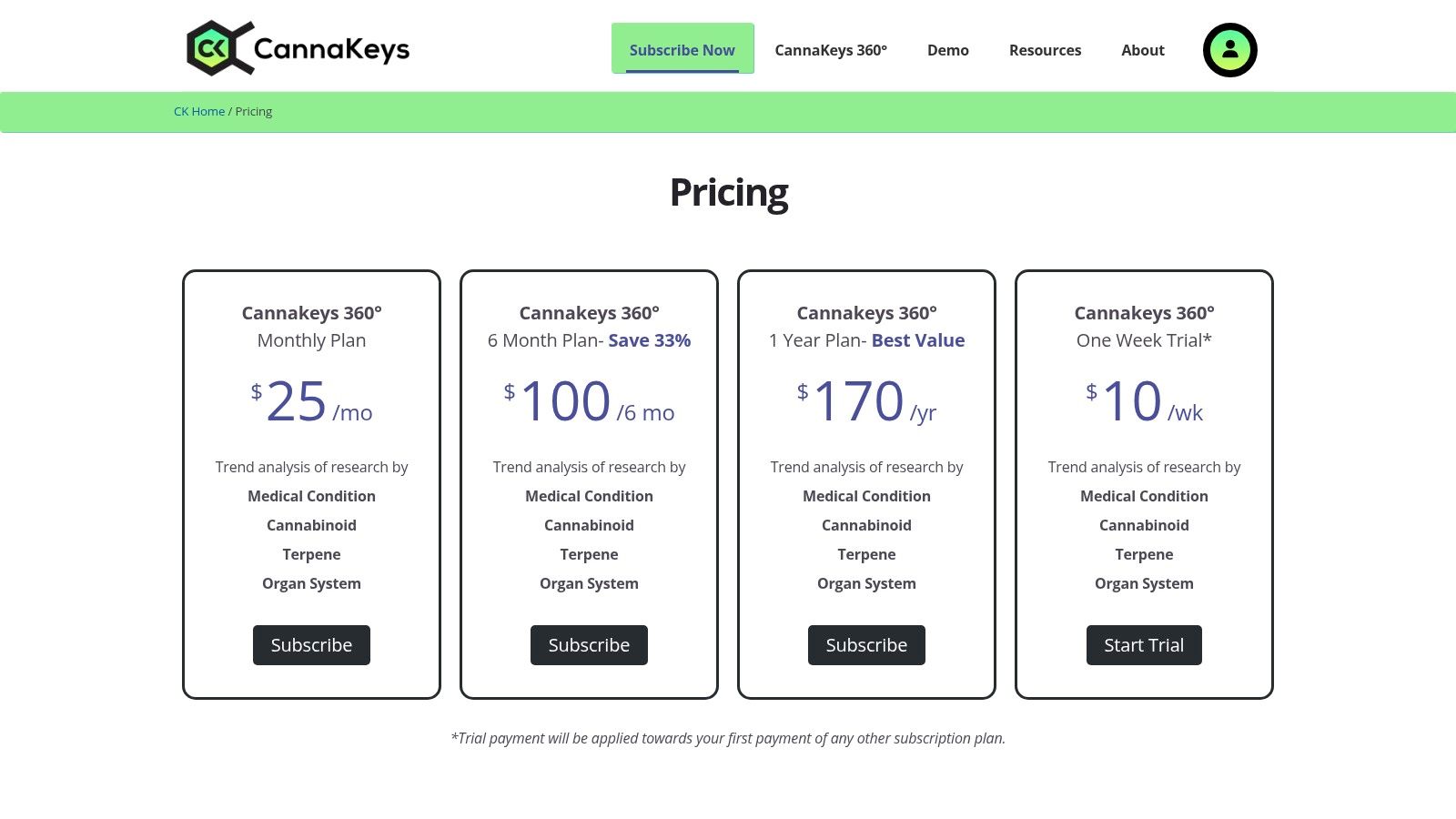
Its value is speed and organization. Rather than hunting through disconnected studies, users can scan research by condition, cannabinoid, terpene, and organ system.
Who should use it
This is the right tool if you're already comfortable with cannabis basics and want to go further. A patient managing a long-term condition may want to see how research is grouped across compounds and symptom categories before bringing a focused question to a clinician.
That fits with the kind of structured medical training many clinicians need. One proposed framework for cannabis education includes six core competencies, including the endocannabinoid system, cannabis plant components and their biological effects, legal and regulatory context, evidence by condition, risks, and basic clinical management. CannaKeys speaks more to that advanced level than to a first-time shopper.
Practical limit
The main downside is cost and complexity. It's paywalled, and even with a polished dashboard, it still isn't beginner education. If someone is still learning the difference between a tincture and an edible, this is too much too soon.
For evidence scanning and deeper research organization, though, it's one of the more serious tools available.
11. Mr. Nice Guys DC Blog
The Mr. Nice Guys DC blog fills a gap that bigger national platforms usually miss. It connects education to what patients in DC are shopping for, asking about, and seeing on local menus.
That local angle matters. National resources can explain cannabis broadly, but they usually won't tell you how a DC patient should think about current product types, neighborhood access, or the practical differences between formats on a local dispensary shelf.
Why local education matters
Washington, DC has some specific realities. Adults 21+ and visitors can self-certify for medicinal cannabis use and buy regulated products like flower, edibles, and concentrates at licensed dispensaries, and those dispensaries must disclose cannabis source and testing results, as explained in this DC dispensary patient guide. Patients need local education that matches that buying environment.
That's where a dispensary blog can help, if it stays practical. Product comparisons, strain write-ups, and explainers about formats become more useful when they connect to what's available now, not just to general cannabis theory.
What it's best for
- Hyper-local guidance: DC-oriented advice instead of one-size-fits-all national content.
- Product literacy: Helpful if you want to compare flower, vapes, edibles, pre-rolls, tinctures, or concentrates in plain language.
- Real menu context: Better for understanding how education maps to actual shopping choices.
A practical example is a patient deciding between Gelato flower for faster onset, a gummy for more duration, or a tincture for more controlled titration. Local guidance can narrow that choice much faster than broad national reading.
The limitation is obvious. A dispensary blog isn't a neutral research database, and it won't replace clinician advice. But for immediate, on-the-ground decision support in DC, it's often more actionable than generic cannabis content.
Cannabis Education: 11-Resource Comparison
| Resource | Core focus / Key features ✨ | Target audience 👥 | Trust / Quality ★ | Access / Value 💰 |
|---|---|---|---|---|
| DC ABCA – Medical Cannabis Program Resources | Registration, reciprocity, fees, licensed retailer locator ✨ | 👥 DC patients, caregivers, visitors | ★★★★ Authoritative | 💰 Free (government) |
| Americans for Safe Access (ASA) – Patient's Guide | Patient guide on safety, rights, travel, program navigation ✨ | 👥 Medical patients & caregivers | ★★★★ Patient-focused advocacy | 💰 Free download |
| NORML – Medical Marijuana Education | State law snapshots, policy explainers, research links ✨ | 👥 Advocates, patients, policymakers | ★★★ Advocacy-informed | 💰 Free |
| Leafly Learn | Cannabis 101, dosing, consumption methods, strain glossary ✨ | 👥 New consumers & patients | ★★★ Large, updated library | 💰 Free |
| Weedmaps Learn | Product guides, testing, contaminants, safe shopping tips ✨ | 👥 Shoppers & first-time buyers | ★★★ Practical & skimmable | 💰 Free |
| Project CBD | Condition-indexed research summaries; CBD-focused evidence ✨ | 👥 Patients exploring CBD & clinicians | ★★★★ Evidence-forward | 💰 Free / donations |
| The Cannigma (Education Hub + App) | Science-reviewed articles, strain tools, dosing app ✨ | 👥 Evidence-seeking patients | ★★★★ Reviewed by pharmacists & researchers | 💰 Free articles; app freemium |
| Realm of Caring Foundation | Dosing guides, support groups, research registries ✨ | 👥 Patients, caregivers, families | ★★★★ Patient-centric support | 💰 Free (account for some features) |
| Healer (Dr. Dustin Sulak) – Training | Clinical protocols, dosing courses, live Q&A ✨ | 👥 Clinicians & advanced patients | ★★★★ Clinically grounded | 💰 Paid membership |
| CannaKeys 360° (Research Dashboard) | Synthesized peer-reviewed evidence, dashboards, algorithms ✨ | 👥 Clinicians, researchers, advanced patients | ★★★★ Time-saving research tool | 💰 Subscription (paywalled) |
| 🏆 Mr. Nice Guys DC Blog | Local strain spotlights, product guides, DC-specific updates ✨ | 👥 DC patients, visitors & shoppers | ★★★★ Local expertise & in-store relevance | 💰 Free; directly tied to dispensary offerings |
Your Partner in Cannabis Education
The best cannabis education resources do different jobs. Some tell you what DC law allows. Some help you understand product categories. Some translate cannabinoid science into plain English. Others support caregivers, organize research, or walk you through a more disciplined dosing process.
That's why most patients shouldn't rely on just one source. A strong approach usually looks like this: use ABCA for local rules and licensed access, use one or two patient-friendly national platforms to build product literacy, and then bring your remaining questions into a real conversation with a clinician or knowledgeable dispensary team. That combination works better than bouncing between random forums, social posts, and strain hype.
It also helps to be honest about what kind of learner you are. If you want quick beginner explainers, Leafly Learn or Weedmaps Learn may be enough to get oriented. If you want more evidence-screened reading, Project CBD or The Cannigma may fit better. If you want structure, Healer is stronger. If you're a caregiver or family member helping someone else understand cannabis, Realm of Caring can offer more support than a standard article library.
There's also a bigger reason to take education seriously. The global medical cannabis market is projected to grow from USD 37.61 billion in 2026 to USD 195.74 billion by 2034, with a projected CAGR of 22.90%. As the market expands, patients will see more products, more claims, and more variation in quality. Better education becomes even more important when menus get larger and choices get more complicated.
In DC, practical learning also needs to include compliance. ABC Board-approved certification training providers exist to help patients understand DC law, dosage limits, storage rules, and medication interaction concerns, as outlined by the DC medical cannabis certification training provider program. For some patients, especially first-timers, that formal guidance can make the process feel much less uncertain.
At Mr. Nice Guys DC, education isn't separate from the dispensary experience. It's part of it. Patients often don't need more noise. They need someone to help connect what they've read to the product formats in front of them, whether that means comparing a tincture with a gummy, understanding why one vape feels too strong, or figuring out whether Blue Dream, Gelato, or Wedding Cake fits the moment they have in mind.
If you want to keep learning and turn that knowledge into confident choices, stop by Mr. Nice Guys DC and continue the conversation with a team that works with DC patients every day.
If you're ready to apply what you've learned, visit Mr. Nice Guys DC to explore local education, browse current products, and get practical guidance on flower, edibles, vapes, tinctures, and more from a DC dispensary team that works with patients and visitors every day.
Mr Nice Guys DC
At Mr. Nice Guys DC, we’re more than just a cannabis delivery service — we’re passionate advocates for quality, convenience, and community. With years of experience in the cannabis industry, our team is dedicated to educating and empowering customers across Washington, D.C. Whether you're a seasoned user or just starting your cannabis journey, our blog delivers trusted tips, product insights, and the latest updates from the world of weed. Stay informed, stay elevated.
