
Must Be 21 To Enter
By entering this site you are agreeing that you are at least 21 Years of Age or older.
I AM 21 OR OLDERWhat is CBD vs THC: A Clear Guide to Differences (what is cbd vs thc)
.svg)

.png)
When you’re first dipping your toes into the world of cannabis, the whole CBD vs. THC thing can feel a bit confusing. Let’s clear it up.
The simplest way to think about it is this: THC (Tetrahydrocannabinol) is the compound famous for the euphoric "high" associated with cannabis. For example, it's what causes the giggly, relaxed feeling someone might get from smoking a joint. On the other hand, CBD (Cannabidiol) is completely non-intoxicating, known instead for its therapeutic effects without any psychoactive experience. A practical example is someone taking a few drops of CBD oil to feel calmer before a stressful meeting.
Your choice really comes down to your personal goals—are you looking for psychoactive effects for medical or recreational reasons, or are you after non-intoxicating relief for general wellness?
The Definitive Answer to CBD vs THC
Okay, so they both come from the same plant, but what really separates these two cannabinoids? It all boils down to how they interact with your body. Though they are both derived from cannabis, they work in profoundly different ways, which is exactly why one gets you high and the other doesn't.
Think of it in practical terms. A patient dealing with chronic pain who also needs to stimulate their appetite might find a THC-dominant product incredibly helpful. But someone looking to quiet daily anxiety or reduce inflammation without any mental fog would be much better off with a CBD product. Their core chemical structures dictate their real-world applications.
CBD vs THC Key Differences at a Glance
To make it even simpler, here’s a quick side-by-side look at the most important distinctions between CBD and THC.
The main takeaway here is that while both compounds pack a therapeutic punch, their effects on the mind are worlds apart. If you’re curious about how these cannabinoids differ from their raw, acidic forms, you should also check out our guide on unlocking THCA vs THC—what every DC patient needs to know.
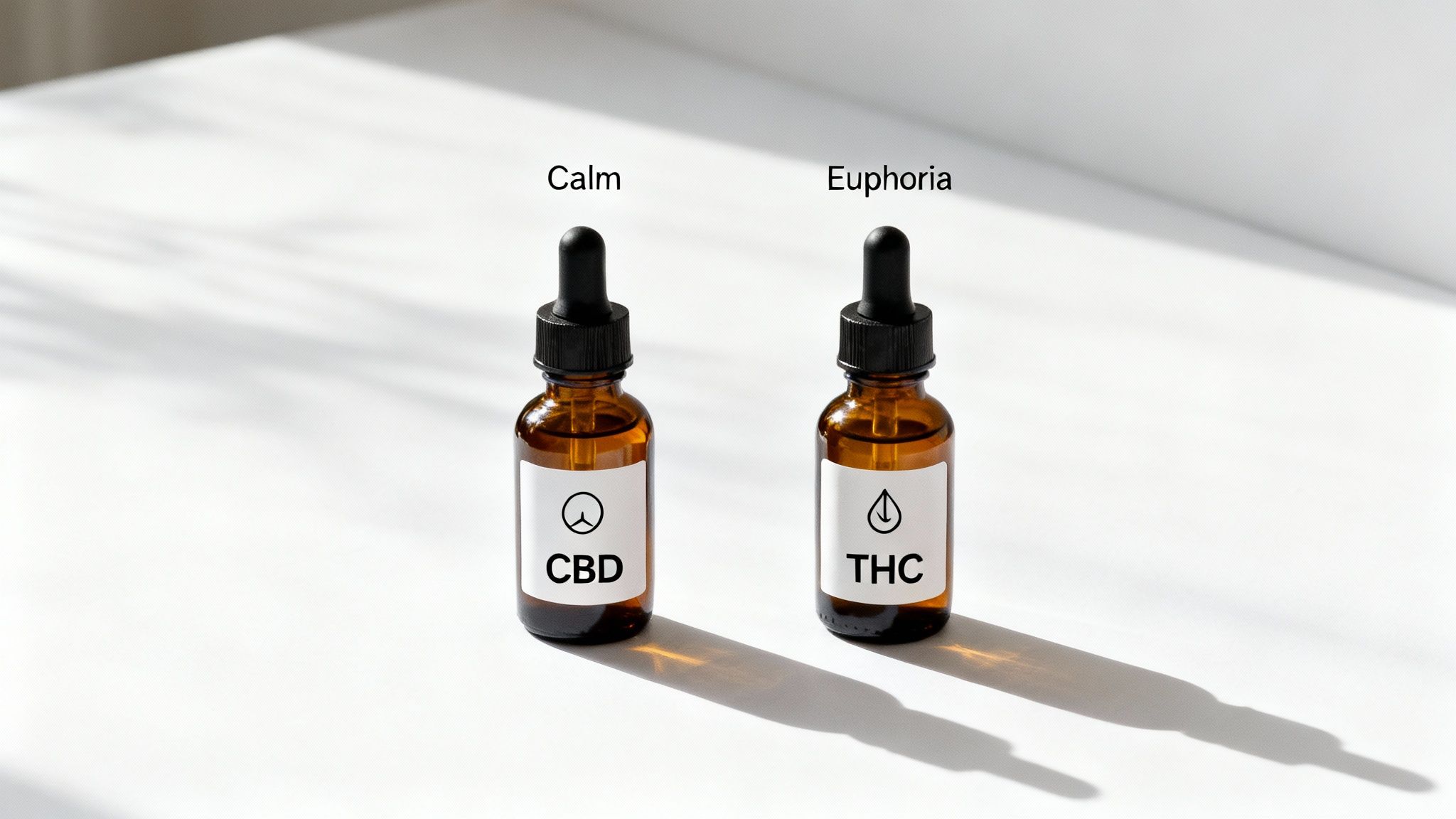
This infographic gives you a great visual breakdown of how CBD and THC affect the mind differently.
As you can see, CBD is all about calm, non-psychoactive support, while THC is linked to that classic energetic, psychoactive impact.
Popularity and Awareness
This key difference is exactly why CBD's popularity has exploded in recent years. It’s become a go-to for people who want the benefits of cannabis without the high. For example, a teacher might use CBD cream on their sore feet after a long day, or a student might take a CBD gummy to help with focus during exam season.
Recent data shows just how mainstream it’s become. An incredible 71.7% of US adults have heard of CBD, and 21.1% have actually used it in the last year. That’s a massive jump from just 14% back in 2019, showing just how much its reputation for wellness has grown.
How CBD and THC Interact with Your Body
To really get what separates CBD from THC, we need to look at how they work inside our bodies. It all comes down to their relationship with the endocannabinoid system (ECS)—a complex network in our bodies that helps keep essential functions like mood, pain, sleep, and appetite in check. Think of the ECS as your body's internal balancing act, always working to maintain harmony.
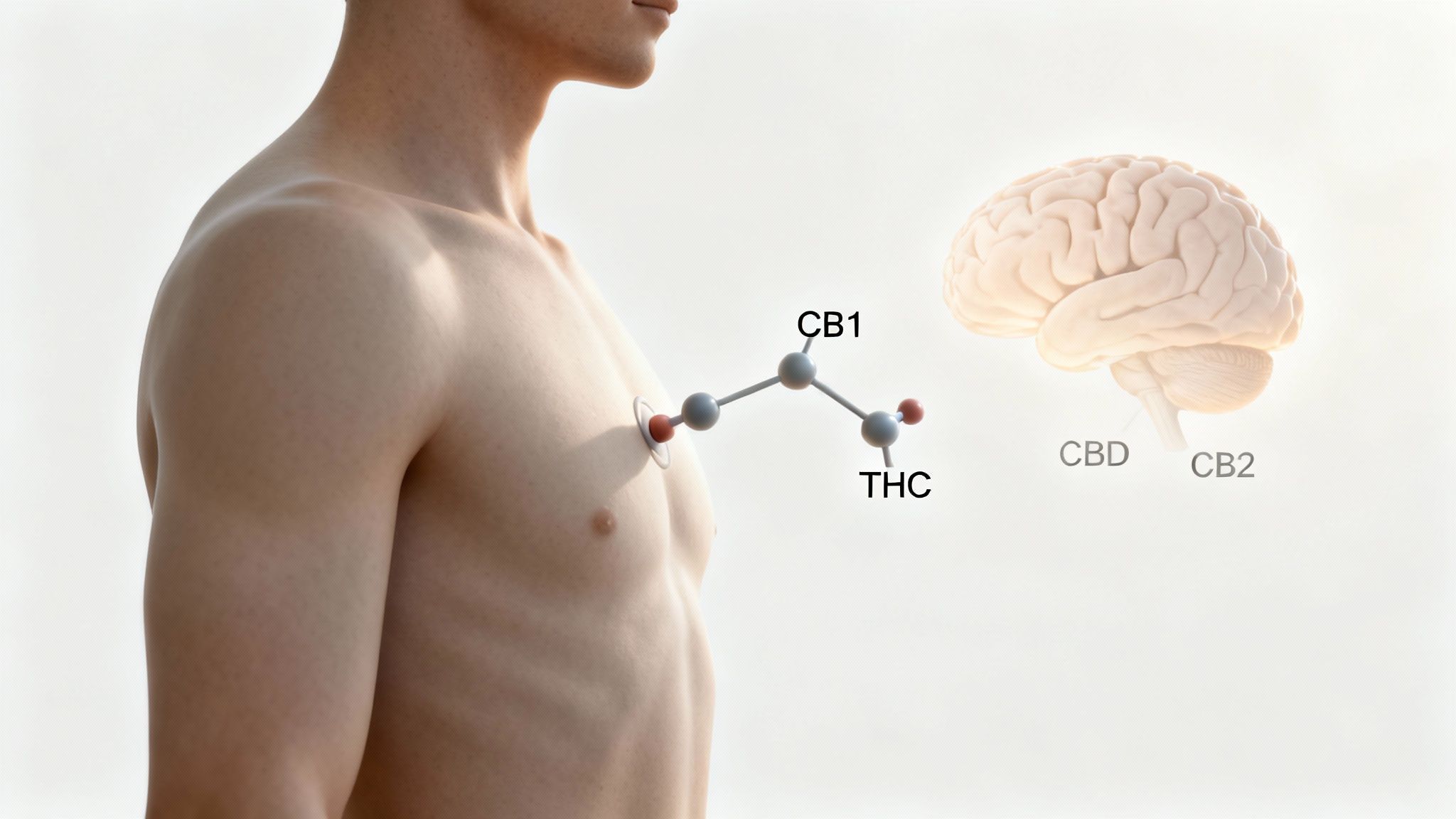
This system has two main types of receptors: CB1 receptors, mostly hanging out in the brain and central nervous system, and CB2 receptors, which are found in the immune system and other tissues. The way THC and CBD talk to these receptors is the whole reason they feel so different.
THC's Direct Approach: The Key to the High
THC loves CB1 receptors. It binds directly to them, fitting perfectly like a key in a lock. This direct connection in the brain is what unleashes the famous psychoactive "high," bringing on feelings of euphoria, altered senses, and for some, the munchies.
A perfect real-world example is a patient using a THC-heavy product to manage nausea from chemotherapy. The THC latches onto the CB1 receptors in the brain regions that control nausea, effectively telling those signals to quiet down while also firing up their appetite.
CBD's Indirect Influence: A Softer Touch
CBD, on the other hand, plays it cool. It doesn't really bind to CB1 receptors, which is exactly why it won’t get you high. Instead, it works more behind the scenes, helping the ECS run more smoothly by preventing the breakdown of our body's own cannabinoids and nudging other receptors.
Imagine someone dealing with everyday stress who takes a CBD tincture. The CBD works subtly to help their own ECS maintain balance, promoting a sense of calm without any fogginess. It doesn't force an outcome; it just helps the body help itself. For a closer look at how tinctures work, check out our guide on the science behind marijuana tinctures and their effects.
Key Takeaway: THC's direct connection to CB1 receptors is like flipping a light switch—the effect is instant and obvious. CBD's indirect approach is more like a dimmer, gently adjusting the system's overall balance without a sudden jolt.
The Entourage Effect: Why They Can Be Better Together
Now, this is where things get really interesting. There’s a theory called the entourage effect, which suggests that cannabis compounds like THC, CBD, and other cannabinoids and terpenes all work better together. When they’re combined, their overall impact can be much greater than if you took each one alone.
Here’s how that plays out in real life:
- A Balancing Act: CBD can actually mellow out some of THC's more intense effects. For example, a person who finds THC alone makes them anxious might try a product with a 1:1 ratio of THC to CBD to get the pain relief they need with a much clearer head and less anxiety.
- Boosted Benefits: A product with both CBD and THC might deliver more powerful pain relief than either one could on its own because they tackle pain from different angles. Someone with arthritis might find that a pure THC product dulls the pain, but a balanced THC/CBD product also helps reduce the underlying joint inflammation.
This synergy is why so many medical patients swear by full-spectrum products. They give you a more well-rounded, nuanced experience by tapping into the natural chemistry of the whole plant to hit those wellness goals.
Comparing Therapeutic Benefits and Medical Uses
Beyond the lab coats and molecular structures, the real heart of the CBD vs. THC debate is how they actually help people. Both have some serious therapeutic chops, but they play on different fields. Figuring out which one is right for you comes down to what you're trying to achieve.
Let's get practical and break down where each one really shines.
The Therapeutic Strengths of THC
THC is the heavy hitter, known for its powerful pain-relieving and anti-nausea effects. It's often the go-to for people dealing with serious or chronic conditions because its direct handshake with CB1 receptors in the brain is so effective at shutting down pain signals and calming a rebellious stomach.
Here’s where THC really makes a difference:
- Chronic Pain Management: Think nerve pain (neuropathy) or the kind of muscle spasticity that just won't quit. A multiple sclerosis patient, for instance, might use a THC-heavy tincture to finally get some relief from muscle spasms when other meds have failed.
- Nausea and Vomiting Relief: This is a huge one for chemotherapy patients. A small THC edible or a quick vape can be the difference between a day of debilitating nausea and being able to hold down food, maintain strength, and keep fighting.
- Appetite Stimulation: The famous "munchies" aren't just a punchline; for people with conditions like HIV/AIDS or cachexia (wasting syndrome), THC's ability to trigger hunger is a critical medical tool. It can kickstart a life-sustaining desire to eat.
The Wellness Applications of CBD
CBD has exploded in popularity because it offers therapeutic benefits without the high, making it a perfect fit for daily wellness routines. Its superpowers are its anti-inflammatory and anti-anxiety effects, offering a gentler path to feeling better.
You’ll often see CBD used for:
- Anxiety and Stress Reduction: For someone battling daily anxiety or just trying to get through a stressful situation, a high-CBD product can be a lifesaver. Picture a professional taking a few drops of CBD oil under their tongue before a big presentation to calm their nerves without clouding their thoughts.
- Anti-Inflammatory Action: CBD is a beast when it comes to fighting inflammation. An older adult might rub a CBD-infused cream directly onto their arthritic knees to get targeted relief from swelling and aches. It's direct, localized, and effective.
- Sleep Support: Millions of people are turning to CBD to get a better night's rest. If you're someone whose mind races the second your head hits the pillow, a CBD gummy an hour before bed can help quiet the noise and ease you into a more restorative sleep.
Situational Guidance: The choice really hinges on your symptoms and how you feel about the psychoactive effects. If you're dealing with severe pain and can handle the high, THC is a powerful ally. If you're looking for consistent, non-intoxicating support for anxiety or inflammation that you can use anytime, CBD is probably your best bet.
Making an Informed Choice
The cannabis market has definitely evolved, with a big trend toward seriously potent products. One study noted that the average THC:CBD ratio in cannabis shot up from around 25:1 in 2009 to a staggering 100:1 by 2017. While things have balanced a bit since then, the shelves are still packed with high-THC options, which makes it even more important to know what you’re looking for.
Knowing the difference is the first step. The team here at Mr. Nice Guys DC is always ready to help you sort through the options. For a deeper dive, check out our guide on choosing the right product for sleep, pain, and anxiety.
What About Side Effects and Safety?
When you’re weighing THC against CBD, it’s not just about the benefits—you have to get real about the potential side effects, too. The experience you'll have with each is worlds apart, and knowing what’s coming helps you make a choice you feel good about.
THC is famous for its psychoactive buzz, which can mean anything from feeling euphoric and creative to just plain relaxed. For most people, that’s the whole point. But those same effects are also the source of its most common side effects, especially if you overdo it.
CBD, on the other hand, is non-intoxicating. It won't get you "high" in the traditional sense. While it doesn't mess with your perception like THC, it can definitely shift your mental state by bringing on a sense of calm. That’s why it’s a go-to for anyone who wants relief without the head change.
A Head-to-Head on Common Side Effects
The side effects from THC are almost always tied directly to its psychoactive nature. They’re usually temporary and not a big deal, but they’re good to know about ahead of time.
Common THC Side Effects:
- Dry Mouth and Red Eyes: The classics. These are super common and happen because of how THC interacts with cannabinoid receptors. A practical tip is to keep water and eye drops handy.
- Slower Coordination and Reaction Time: THC can temporarily throw off your motor skills. This is exactly why you should never drive or operate machinery after using it. For example, simple tasks like cooking might become more challenging.
- Anxiety or Paranoia: While tons of people use THC to chill out, some folks—especially with high doses or certain strains—can feel a spike in anxiety or paranoia. Someone new to edibles might eat too much and feel uncomfortably self-conscious in a social setting.
CBD's side effects are way milder and don't pop up as often. Since it doesn’t latch onto the CB1 receptors the way THC does, it completely sidesteps those more intense effects.
Common CBD Side Effects:
- Fatigue or Drowsiness: High doses of CBD can make some people feel sleepy, which is actually a plus if you're using it to help with sleep. For instance, someone taking a large dose of CBD oil for the first time during the day might feel like they need a nap.
- Changes in Appetite or Weight: CBD is a bit of a wild card here; it can either rev up your appetite or dial it back.
- Digestive Issues: A few people might experience some mild stomach upset, like diarrhea, especially when first starting with CBD oil.
A Quick Word on Potency: The cannabis world has changed a lot. Back in 1995, seized cannabis samples averaged just 3.96% THC and 0.28% CBD. Fast forward to 2014, and those numbers jumped to 11.92% THC and less than 0.15% CBD. That's a much, much higher THC-to-CBD ratio. You can dig into the specifics by checking out the cannabis potency data on the NIDA website. This shift toward super-potent THC makes smart dosing more important than ever.
Real-World Safety and Dosing Advice
Being responsible is the key to having a good experience with either cannabinoid. A few simple rules can help you dodge the risks and find what works for you. The golden rule, especially with THC, is to start low and go slow.
This just means beginning with a tiny dose—think 2.5-5 mg of THC—and then waiting to see how you feel before even thinking about taking more. Edibles are the perfect example; they can take up to two hours to fully kick in, so patience is everything. Rushing it is the fastest way to have a bad time.
Another big one is potential drug interactions. This is especially true for CBD, which can mess with how your body processes certain prescription meds because it uses the same liver enzymes.
For instance, if you’re on blood thinners or some seizure medications, CBD could change how effective they are. It’s always a good idea to chat with your doctor before adding CBD to your routine, especially if you’re taking other medications. That conversation makes sure your whole wellness plan is working together safely.
Navigating DC Legality and Product Types
To safely get your hands on cannabis products in Washington, DC, you have to know the local rules. When you’re weighing CBD vs. THC, their legal status is just as important as how they make you feel. The laws for each one directly control where you can find them and what kinds of products you’ll see on the shelves.
Here in DC, the legal line is drawn pretty clearly. THC products are available for any adult 21 and over through licensed dispensaries, all thanks to the city's I-71 initiative. This framework makes it legal to have and use cannabis with THC, whether for medical needs or just for fun.
Hemp-derived CBD, on the other hand, plays by a different set of rules. The 2018 Farm Bill made hemp products with less than 0.3% THC legal on a federal level. That’s why you can find CBD in all sorts of places, not just dispensaries.
How Legality Shapes What’s Available
This legal split creates two very different paths for finding relief. What you’re trying to achieve with cannabis will point you toward the right legal framework and product. The whole system is set up to keep the stronger, psychoactive stuff regulated while making the non-intoxicating options easy for everyone to get.
Let’s break down what this looks like for a real person in DC.
For Fast, Potent Relief: Say you need something that works now for sharp pain or a sudden wave of nausea. A THC vape cartridge is a solid choice for that. Since it’s packed with THC, the only legal way to get one is from a licensed DC dispensary like Mr. Nice Guys DC.
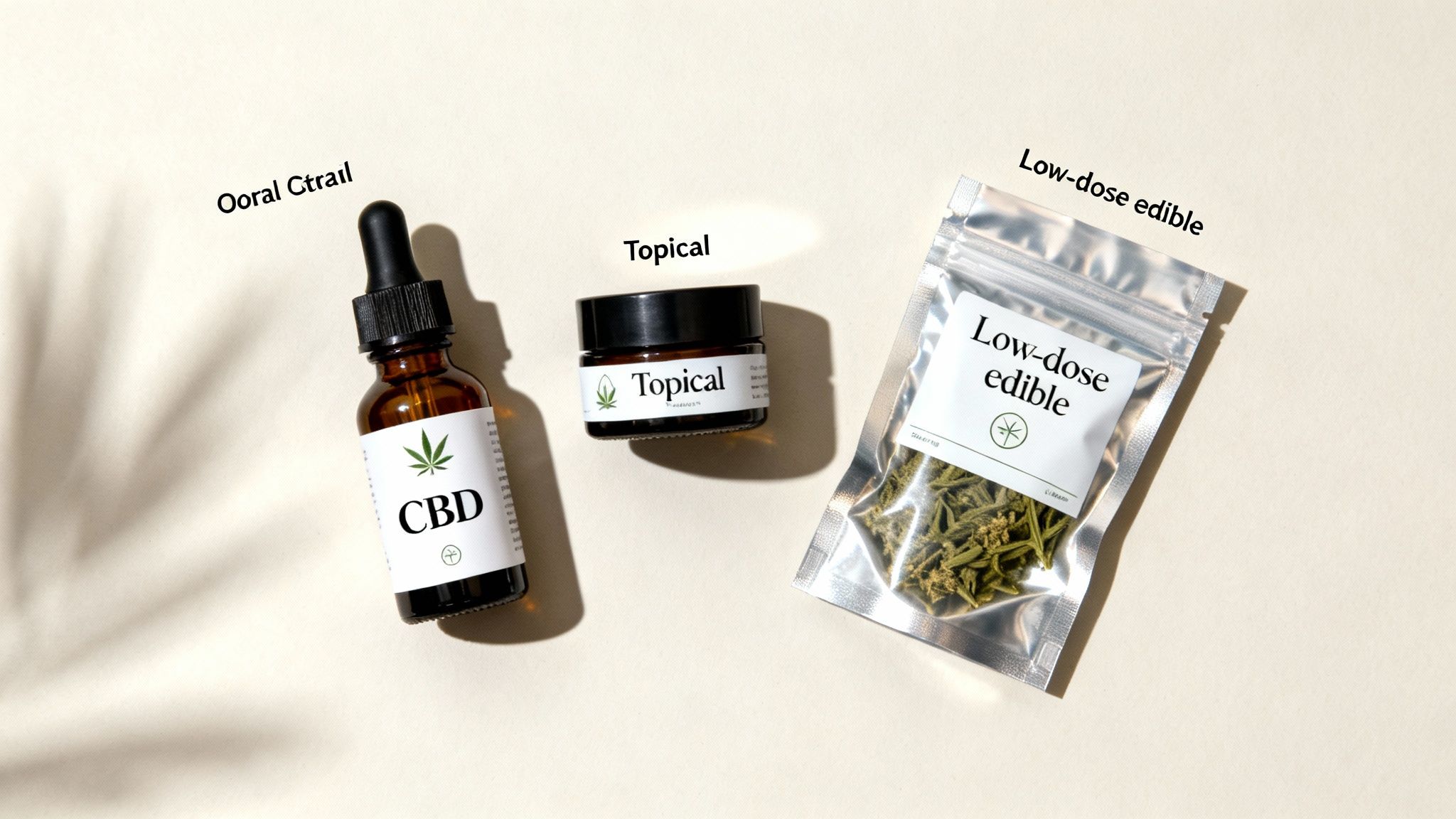
For Localized, Non-Psychoactive Relief: Picture this: your muscles are screaming after a tough workout, or a specific joint is acting up. A high-CBD topical cream or salve is perfect. Because these are usually made from hemp and have almost no THC, you can buy them all over the place without ever stepping into a dispensary.
For Discreet, All-Day Wellness: If you’re looking for a steady hand to manage anxiety throughout the day without any high, low-dose CBD edibles or tinctures are the way to go. They offer reliable, measured doses for consistent support and are widely available.
Making the Right Choice in DC
It really all comes down to matching the product to your needs. The regulations make sure that patients who need the powerful therapeutic punch of THC can get it in a safe, controlled way. At the same time, the wide-open legality of hemp-derived CBD makes it a super accessible option for everyday wellness.
One thing people get wrong all the time is thinking all CBD products are 100% THC-free. Legally, they just have to be under 0.3% THC, but full-spectrum products will have trace amounts. That’s a huge detail to remember if you’re subject to drug testing, since regular use could potentially flag a positive result for THC.
Figuring out the difference between medical and recreational access can get a little confusing. To get a clear look at how to buy cannabis in the district, check out our guide on medical vs. recreational cannabis in DC and how to shop the right way. Whether you need the targeted power of THC or the gentle backup of CBD, knowing the local laws will help you choose with confidence.
How to Choose the Right Product for Your Needs
Stepping into the world of CBD and THC can feel a little overwhelming at first, but figuring out the right product is actually pretty simple once you know what you’re trying to achieve. It all comes down to aligning your wellness goals with the right cannabinoid and product type.
The key is to ask yourself one basic question: are you looking for relief without the "high," or do you need the more powerful effects that come with THC? Your answer is the perfect starting point.
Scenario-Based Recommendations
Let’s walk through a few real-world situations to see how this plays out. Each one highlights a common goal and matches it with the right kind of product, showing you how the differences between CBD and THC really matter in everyday life.
For the Newcomer Looking to Ease Anxiety: If you’re just starting out and want to manage stress without feeling altered, a CBD-dominant tincture or edible is a great place to begin. It delivers a calming effect that can take the edge off anxiety without clouding your mind, making it perfect for daytime use.
For the Experienced User with Chronic Pain: If you’ve been around the block and are dealing with persistent pain, a THC-rich flower or concentrate is likely a better fit. THC's powerful analgesic properties can offer the significant relief needed for more severe or long-lasting conditions.
For Targeted Post-Workout Muscle Soreness: When you’ve got soreness in a specific spot, like your shoulders after a tough workout, a CBD topical is your best friend. You apply it directly to the skin for localized anti-inflammatory benefits, and since it doesn’t enter your bloodstream, there are zero psychoactive effects.
One thing to keep in mind: even if a product is labeled "THC-free," it might contain tiny, trace amounts. This is a big deal if you're subject to drug testing, as using a full-spectrum CBD product regularly could potentially result in a positive test for THC.
Which Cannabinoid Is Right for You? A Scenario-Based Guide
To make things even clearer, here’s a quick reference table. Think of it as a cheat sheet for picking a starting point based on what you need. And remember, our crew at Mr. Nice Guys DC is always here to give you personalized recommendations. You can also dive deeper into how you want to consume your cannabis by checking out our guide to edibles vs vapes vs flower.
At the end of the day, getting a handle on the differences between CBD and THC puts you in the driver’s seat of your own wellness journey. Once you’re clear on your goals—whether it’s calming your mind, soothing pain, or getting better sleep—you can walk in and choose a product with confidence, knowing it’s going to deliver the effects you're after.
Got Questions About CBD and THC? We've Got Answers.
Even after breaking down the main differences between CBD and THC, it’s natural to still have a few things on your mind. Here are some of the most common questions we get at the shop, answered straight up to help you make your next move with confidence.
Can CBD Make Me Fail a Drug Test?
This is a big one, and the short answer is: it’s possible. Most standard drug tests are looking for THC, not CBD. The catch is that many CBD products—especially full-spectrum ones—contain tiny amounts of THC, legally up to 0.3%.
If you're using these products regularly, that trace amount of THC could potentially build up in your system and trigger a positive test. For anyone subject to drug testing, your safest bet is to stick with broad-spectrum or CBD isolate products. These are specifically processed to remove all detectable THC.
We’ve heard real stories about this, like a truck driver who lost his job after a positive THC test, swearing he only used a “THC-free” CBD oil. It’s a harsh reminder to only buy from reputable brands that can show you third-party lab results.
What’s the Deal With the Entourage Effect?
You’ll hear this term a lot. The entourage effect is simply the idea that all the compounds in the cannabis plant work better together than they do alone. Think of it like a band—THC and CBD might be the lead singers, but you still need the drummer and guitarist (terpenes and other minor cannabinoids) to make a great song.
A full-spectrum product that has CBD, a little THC, and other plant compounds might tackle your pain more effectively than a pure CBD isolate. The compounds work as a team, amplifying each other’s strengths while sometimes even dialing down potential side effects.
How Do I Figure Out the Right Dose?
Finding your sweet spot takes a little trial and error because everyone’s body chemistry is unique. The golden rule, especially with THC, is to start low and go slow. You can always take more, but you can’t take less.
- For THC: A good starting point is a small dose, maybe 2.5 mg to 5 mg. If you’re trying edibles, wait at least a couple of hours before even thinking about taking more. For example, eat a quarter of a 10mg gummy and see how you feel after 90 minutes.
- For CBD: Most people start with 5 mg to 10 mg a day and slowly increase the amount every few days until they feel the desired effects. For example, start with half a dropper of tincture in the morning for three days before increasing to a full dropper.
A simple trick is to keep a small journal. Just jot down your dose, the time, and how you feel. It’s the easiest way to dial in your routine and get the results you're looking for.
Navigating the world of CBD and THC is a lot easier when you have someone to point you in the right direction. The team here at Mr. Nice Guys DC is always ready to answer your questions and help you find exactly what you need for your wellness goals. Check out what we have in stock over at https://www.mrniceguysdc.com.
Mr Nice Guys DC
At Mr. Nice Guys DC, we’re more than just a cannabis delivery service — we’re passionate advocates for quality, convenience, and community. With years of experience in the cannabis industry, our team is dedicated to educating and empowering customers across Washington, D.C. Whether you're a seasoned user or just starting your cannabis journey, our blog delivers trusted tips, product insights, and the latest updates from the world of weed. Stay informed, stay elevated.
