
Must Be 21 To Enter
By entering this site you are agreeing that you are at least 21 Years of Age or older.
I AM 21 OR OLDEREdible Dosage Calculator: How to Find Your Right Dose
.svg)

.png)
You're standing in your kitchen with a gummy, chocolate square, or tincture dropper in your hand. You want to feel better, relax, or ease into the evening. You also don't want the classic edible mistake of taking too much, then spending the next few hours wishing you'd been more careful.
That hesitation is healthy.
An edible dosage calculator isn't just for people who love math. It's for anyone who wants a repeatable, safe experience. If you're new to edibles, it helps you avoid guessing. If you already use cannabis, it helps you stay consistent from one product to the next, especially when labels talk about total THC but don't make it obvious how much is in each piece.
Your Guide to a Safe and Enjoyable Edible Experience
A lot of people run into the same problem. They buy a product that looks simple enough, then the package says something like “100 mg total THC” and suddenly the obvious question hits. Is that the whole bag, or each gummy? If it's a chocolate bar, do all the squares have the same amount? If it's a cookie or brownie, can you really trust every bite to be uniform?
That's where a little structure helps.
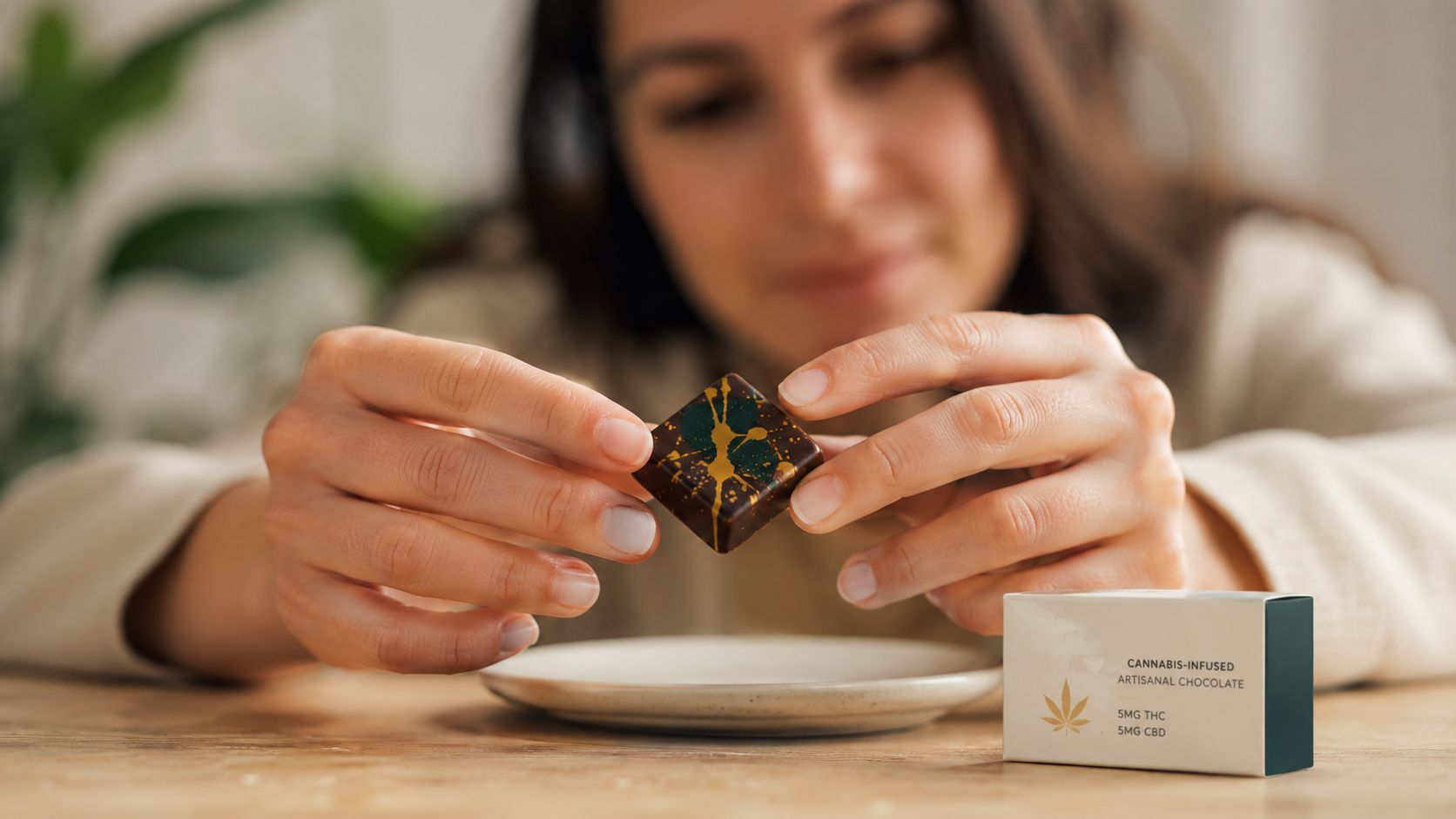
Think of an edible dosage calculator as a label translator. It turns packaging language into a practical answer: how much should I take right now?
What usually confuses people
Some products are easy. A bag may clearly say the THC per piece. Others aren't. You might see:
- Total THC only: The package shows the amount for the whole product, not each serving.
- Multiple pieces in one package: Gummies, mints, and chocolates often split the total across several pieces.
- Non-uniform foods: Cookies, brownies, and hand-cut items can be harder to divide precisely.
- Homemade infusions: You know the flower weight and THC percentage, but not the final dose per serving.
Edibles reward patience and punish guessing.
The good news is that the basic math is simple once you know what number you're solving for. The difficulty often lies not in the calculation itself, but in interpreting the label, understanding the serving size, and the practical step of cutting or portioning the product safely.
The goal isn't to take more
The goal is to take the right amount.
For some people, that means a light, manageable start. For others, it means finding a reliable dose they can repeat without surprises. By the end of this guide, you'll know how to read labels, break down store-bought products, estimate homemade batches more carefully, and avoid the most common edible mistakes.
Why Accurate Edible Dosing Is Essential
THC is measured in milligrams, usually written as mg, because milligrams give you a clear unit to compare from one edible to another. That matters because “one gummy” or “one square” doesn't tell you much on its own. A piece is just a shape. The mg amount tells you the potency.
The problem is that edible labels haven't always been dependable. A 2019 JAMA-related finding summarized here reported that 63% of commercially manufactured cannabis edibles contained THC levels significantly different from their labels, with some products containing up to 400% more THC than advertised. That same source noted a 25% increase in emergency department visits for cannabis-related adverse events in states with newly legal markets. That's a big reason careful dosing matters.
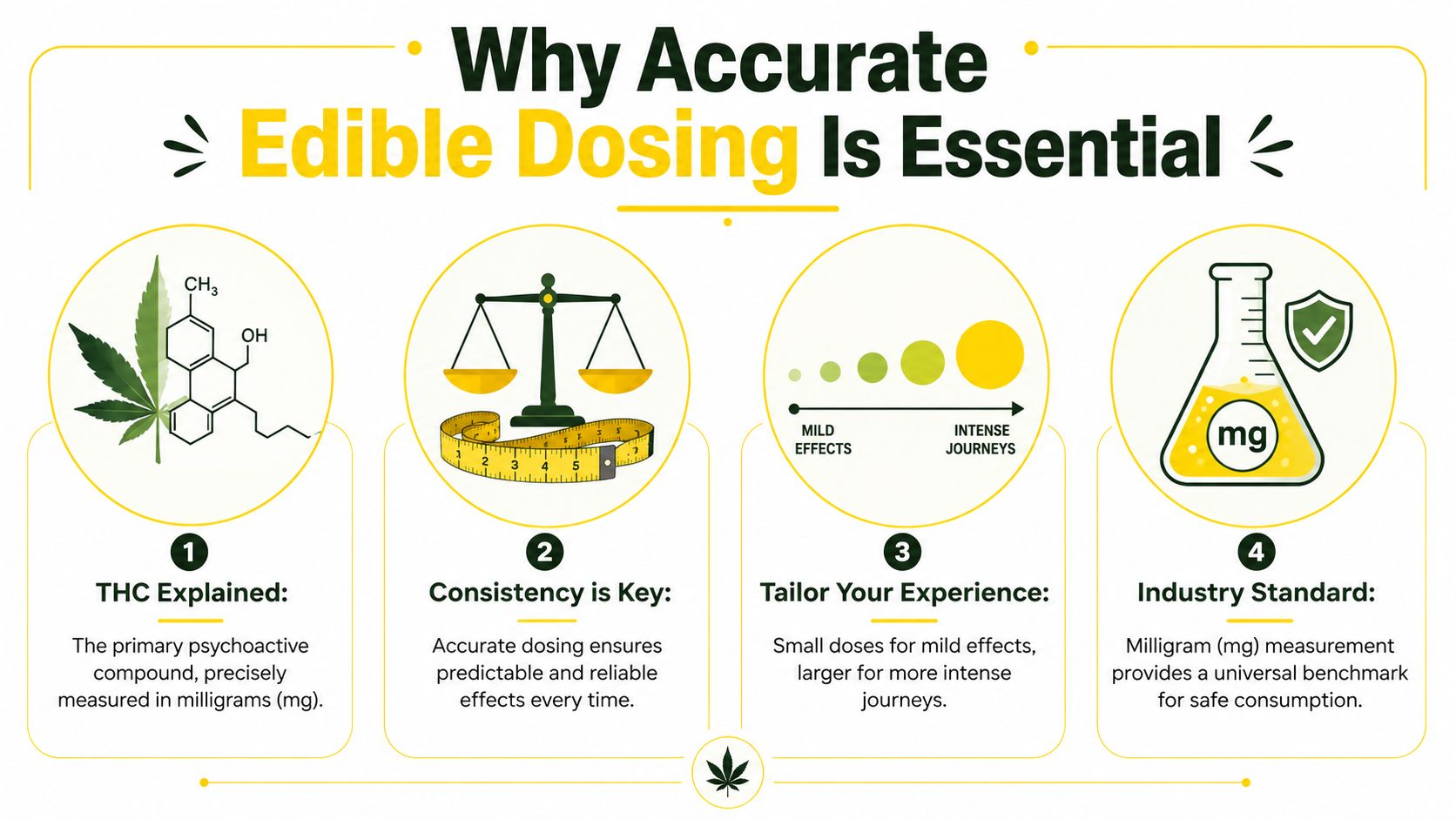
Why mg matters more than product type
A gummy and a chocolate square can look completely different but still contain the same THC amount. That's why smart dosing starts with the label, not the food format.
Here's the practical difference:
- A small piece can still be strong: Size doesn't tell you dose.
- A large edible can still be mild: Bigger doesn't always mean stronger.
- The package total can be misleading: A bag may look like one snack but hold several doses.
If you want more background on why reliable potency numbers matter, this primer on cannabis potency testing is worth reading.
The label can be technically correct and still confusing
A package that says “100 mg total THC” may be accurate, but that doesn't answer the question most patients care about. How much THC is in the amount I'm about to eat?
That confusion gets worse with products that aren't easy to split evenly. A molded gummy with clear pieces is one thing. A soft cookie or an uneven brownie is another. The math may be clean on paper, but the portion in your hand might not be.
Practical rule: Don't dose by appearance. Dose by mg.
That's the whole reason an edible dosage calculator is useful. It helps convert labels and batch totals into an actual serving plan you can follow.
Using an Edible Dosage Calculator
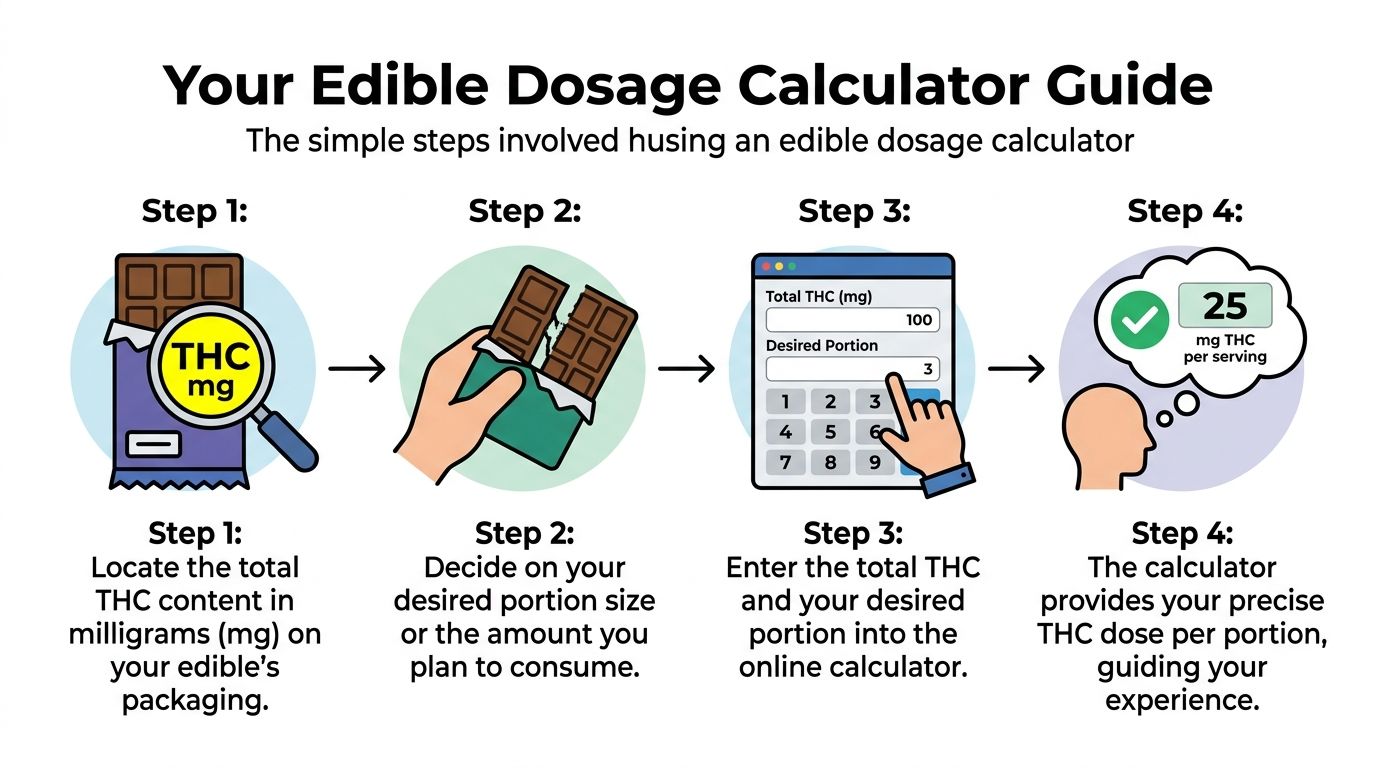
When people hear “calculator,” they often expect something complicated. Most of the time, you're just entering a few numbers and checking one result: how many mg are in the portion I plan to take?
For store-bought edibles
Start with the package. Look for two things:
- Total THC in mg
- Number of pieces or servings
Then use this formula:
Total THC ÷ Number of servings = THC per serving
If a package contains 100 mg total and 10 pieces, each piece contains 10 mg.
That seems simple, but many people stop there. The more useful question is: how much of that piece matches your target dose?
For homemade edibles
Homemade infusions need one extra layer of math. You have to estimate the total THC in the cannabis before dividing it across servings.
One critical step is converting THC percentage into a decimal. A professional dosage guide example shows that 17% THC must be entered as 0.17, not 17. With 28 grams of flower, you first convert to 28,000 mg, then multiply by 0.17 to get 4,760 mg of THC in the batch. If you skip the decimal conversion, your estimate is off by 100x.
Here's that example in plain steps:
- Step 1: Convert grams to milligrams. 28 grams = 28,000 mg
- Step 2: Convert THC percent to decimal. 17% = 0.17
- Step 3: Multiply. 28,000 × 0.17 = 4,760 mg total THC
After that, divide the total by the number of servings in your recipe.
A better home calculation
If your flower label lists THCA and THC separately, a more precise method is:
Total THC = (THCA × 0.877) + THC
That 0.877 conversion matters because THCA isn't psychoactive until decarboxylated. It also helps avoid overestimating potency. For home infusions, it's smart to stay conservative because decarboxylation and infusion losses can reduce final potency.
If you're making infused butter or oil, the cleanest habit is to estimate low, portion small, and test one serving before treating the whole batch as “dialed in.”
For readers making their own edibles, this guide to canna-butter edibles and recipes to try at home gives you useful kitchen context alongside the dosing math.
A quick visual can help if you want to see the calculator logic in action:
What a calculator should help you answer
A good edible dosage calculator should make these answers obvious:
- Per-piece potency: How many mg are in one gummy, square, or serving
- Target portion: How much of the edible matches your intended dose
- Batch estimate: For homemade products, the rough mg per serving
- Real-world portioning: Whether you should take a whole piece, half, quarter, or skip that product format entirely
That last point matters more than people realize. If a product can't be portioned cleanly, the math may be right but the edible may still be a poor choice for a beginner.
Practical Calculations for Popular Edibles
Here, the label meets real life. A formula is useful, but what you need in the moment is a physical action. Cut here. Eat this much. Save the rest.
Gummies and piece-count bags
Let's use the label many patients know well. A package says 100 mg total THC, 10 pieces. A dosage example here shows that each piece contains 10 mg.
For a beginner aiming for 2.5 mg, the formula is:
Target dose ÷ THC per piece = portion size
2.5 mg ÷ 10 mg = 0.25
So the correct beginner portion is one-quarter of a gummy or square.
That's easy with some gummies and harder with others. If the gummy is tiny, sticky, or oddly shaped, the math is still right but the portioning may be messy. In that case, choose a product with lower per-piece potency next time.
Chocolate bars and scored squares
Chocolate bars are usually easier to work with because many are segmented into clear squares. If the bar has a total THC amount divided evenly across those squares, you can start with one square or split a square further if needed.
The key question is whether the chocolate is uniformly molded. A scored bar usually gives you a cleaner split than a chunky cookie or brownie. If the piece breaks unevenly, go with the smaller portion for your first try.
A product is beginner-friendly only if you can portion it accurately.
Tinctures and measured liquid doses
Tinctures work differently because the label often lists potency by volume instead of by piece. You may see the total THC in the bottle and also the amount per milliliter. If the dropper has measurement marks, that makes dosing more controlled than trying to split a soft edible.
For patients deciding between formats, this comparison of THC tinctures vs edibles can help. Tinctures often make low-dose adjustments simpler because you can measure volume more precisely than you can cut a gummy into tiny fractions.
Onset Duration and Critical Safety Rules
A correct dose can still turn into a bad experience if you re-dose too early. That's the part many people underestimate.
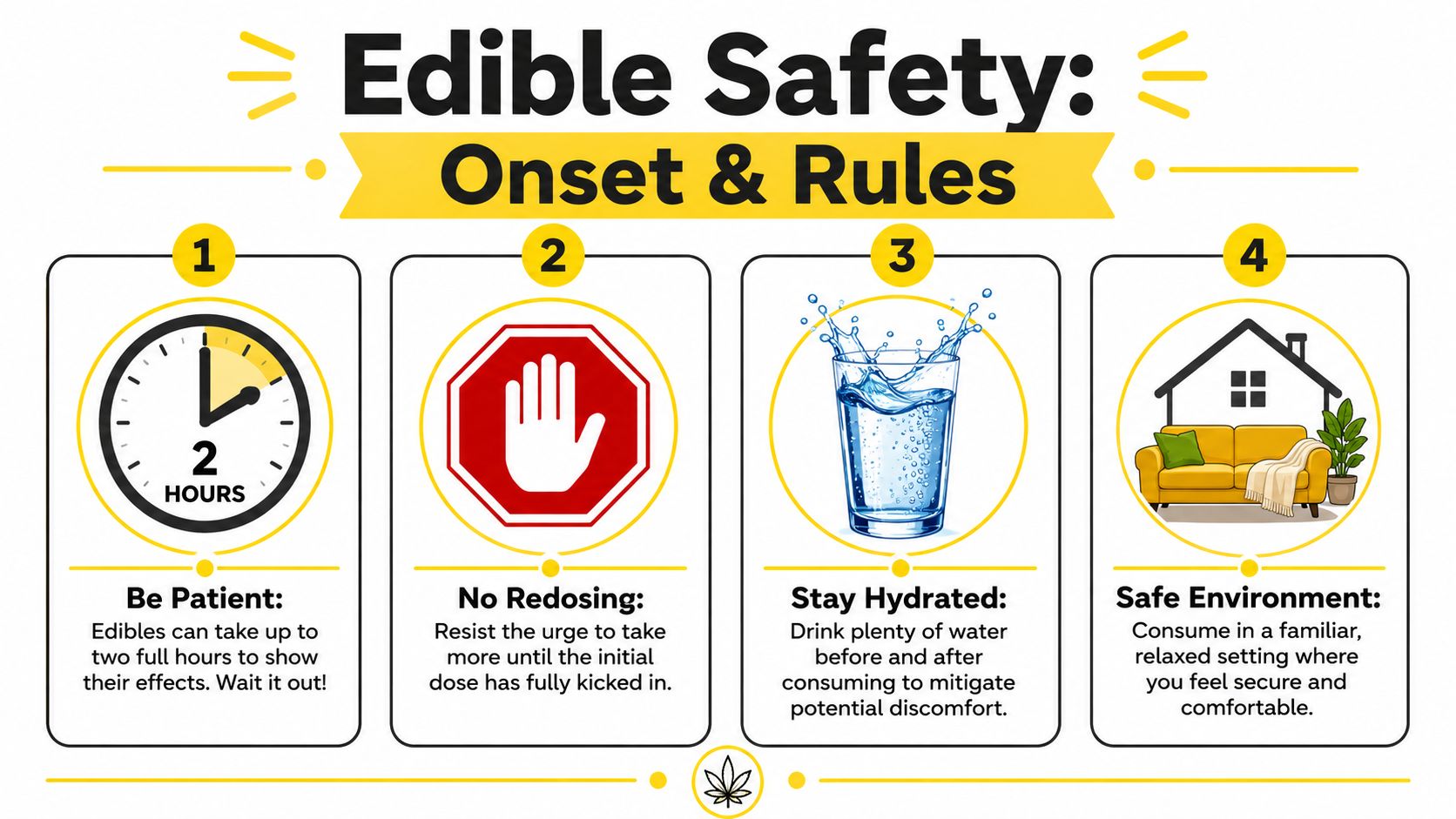
A clinical safety guide on edible dosing notes that 68% of edible-related adverse events happen because users don't wait the full 2-hour onset period before taking more. That pattern is often called dose escalation error. The safest rule is simple. Wait at least two hours before considering another dose.
The starting dose table
Below is a simple reference point for getting started.
| Experience Level | Recommended Dose | Potential Effects |
|---|---|---|
| Beginner | 2.5 mg | Very mild effects, useful for testing sensitivity |
| Prior exposure | 5 mg | Noticeable but more manageable for many adults |
| Experienced | 10 mg | Stronger effects, better suited to established tolerance |
| High tolerance | 30 mg+ | Intense effects, not appropriate for most beginners |
Safety habits that prevent bad nights
- Wait the full window: If you feel nothing after 45 minutes, that doesn't mean the dose failed.
- Stay in one place: A familiar setting helps if the effects come on stronger than expected.
- Keep water nearby: Comfort matters when you're waiting things out.
- Don't stack products: Mixing another edible before the first one peaks is where people get into trouble.
Start low, go slow, and let the first dose finish its job.
If you want a better sense of how timing and duration feel over the course of an evening, this breakdown of how long edibles last is a useful companion read.
Edible Dosage FAQs for DC Patients
Should I adjust my dose based on body weight
Yes, but carefully. Weight and metabolism can change how strong a dose feels. In the same safety discussion referenced earlier, individual factors like body weight and metabolic rate were noted to cause up to a 40% variation in effective dose between individuals. One example given was that a 70 kg patient may need 5 mg for an effect that a 50 kg patient achieves with 2.5 mg. That's why a label can't tell you everything.
What if I ate a big meal first
Food can change how quickly an edible comes on and how it feels. Some people notice a slower start after a full meal. That doesn't mean they should take more right away. The safest move is still patience.
Are all store-bought edibles evenly distributed
Not always in practical terms. A bag with identical gummies is easier to trust than a large cookie or hand-cut product. If the item isn't uniform, your calculator can only do the label math. It can't fix an uneven piece of food.
Is CBD dosing the same as THC dosing
No. CBD products are labeled differently in many cases, and they don't produce the same psychoactive effects as THC. You still want to read the label closely, but you shouldn't assume THC rules map over perfectly.
If you're shopping locally and want a better sense of product types before you buy, this guide on where to buy edibles can help you compare options more confidently.
If you want help choosing a beginner-friendly edible, understanding a confusing label, or finding a format that's easier to portion, the team at Mr. Nice Guys DC can help you make a safer choice. Whether you're looking at gummies, chocolates, tinctures, or something lower-dose to start with, getting clear guidance before you dose is one of the smartest moves you can make.
Mr Nice Guys DC
At Mr. Nice Guys DC, we’re more than just a cannabis delivery service — we’re passionate advocates for quality, convenience, and community. With years of experience in the cannabis industry, our team is dedicated to educating and empowering customers across Washington, D.C. Whether you're a seasoned user or just starting your cannabis journey, our blog delivers trusted tips, product insights, and the latest updates from the world of weed. Stay informed, stay elevated.
