
Must Be 21 To Enter
By entering this site you are agreeing that you are at least 21 Years of Age or older.
I AM 21 OR OLDERTHC Tinctures vs Edibles: Which Is Right for You?
.svg)

.png)
Standing at a dispensary counter with tinctures on one side and gummies on the other is a common kind of stuck. You want relief, not a chemistry quiz. But the choice matters because these products don't behave the same way once they're in your body.
For a lot of DC patients and adult consumers, the main question isn't which format is “better.” It's which one fits the moment. Fast relief before a stressful event calls for one kind of product. Longer coverage for a rough evening, overnight support, or a day when you don't want to redose often points another way.
At a practical level, THC tinctures vs edibles comes down to timing, control, duration, and how comfortable you are waiting for effects. If you've ever taken an edible, felt nothing, then taken more too soon, you already know why this decision deserves a little care.
Tincture or Edible Making the Right Choice
Those asking this question aren't looking for theory. They're trying to solve a real problem. Maybe you need something that won't take forever to kick in. Maybe you want a longer window of relief without carrying a dropper around. Maybe you're brand new and just want the least confusing option.
A quick side by side helps:
| Factor | THC Tinctures | Edibles |
|---|---|---|
| Best for | Faster, adjustable relief | Longer-lasting effects |
| How you take it | Usually under the tongue | Swallowed and digested |
| Dosing style | Flexible, drop by drop | Pre-portioned |
| Good fit for | People who want control | People who want simplicity |
| Common frustration | Taste or holding it under the tongue | Waiting too long, then overdoing it |
That table won't make the decision for you, but it points you in the right direction. Tinctures usually make more sense when timing matters and you want to fine-tune your dose. Edibles usually make more sense when you want a slower, steadier ride and don't mind planning ahead.
Start with the situation, not the product
Here's the simplest way to choose:
- Need relief sooner: Tinctures are often the cleaner choice.
- Need relief to last longer: Edibles often fit better.
- Nervous about taking too much: A tincture can make smaller adjustments easier.
- Prefer a familiar format: A gummy or chocolate may feel less intimidating.
Practical rule: Don't shop by hype. Shop by timeline. Ask yourself when you want to feel it, how long you want it to last, and how much control you want over the dose.
A patient dealing with a sudden spike in discomfort may not want to wait. Someone trying to settle in for the night may not care if it takes longer to start. That difference matters more than trendy packaging or flavor names.
How Your Body Processes Tinctures vs Edibles
A DC patient trying to get through a workday flare-up usually cares about one thing first. What path is this product taking through my body, and how much control will that give me?
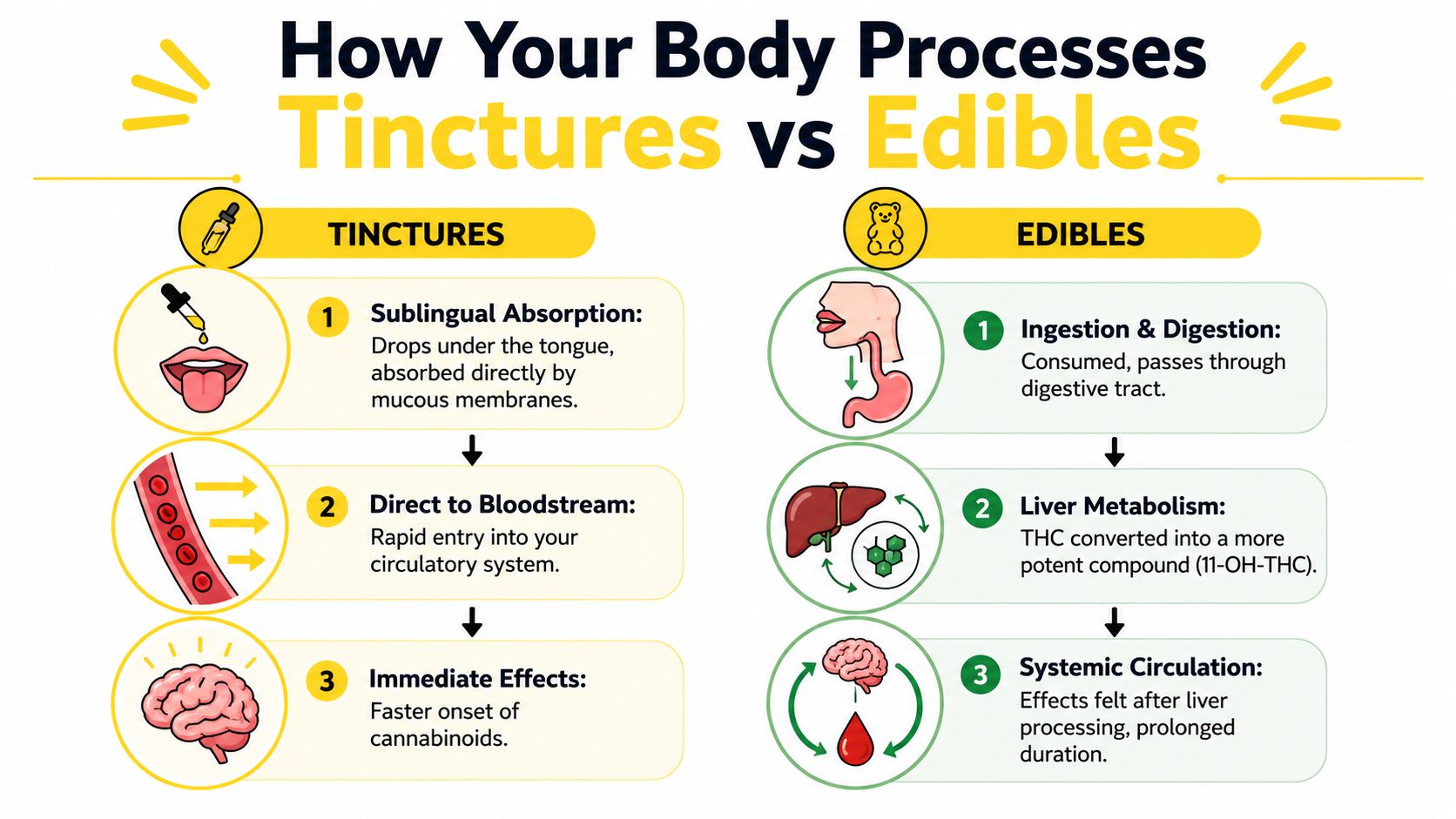
That question matters because tinctures and edibles do not start in the same place biologically. A tincture held under the tongue can absorb through the tissue in your mouth before it ever reaches your stomach. An edible is swallowed, digested, and processed through the liver. Same plant. Different route. Different feel.
Why tinctures feel different
With a tincture, technique matters. If you place the dose under your tongue and hold it there briefly before swallowing, some of the cannabinoids can absorb through the mucous membranes in your mouth. That often leads to effects that feel easier to track as they build, which is one reason patients who want more control during the day often start here.
In the shop, I usually explain tinctures as a practical fit for people who need flexibility. A patient managing afternoon tension, mild pain, or dose-sensitive anxiety may prefer something they can adjust in smaller steps instead of committing to a longer edible experience all at once.
If you want a clearer explanation of that absorption route, this breakdown of the science behind marijuana tinctures and their effects explains why sublingual use feels different from products that rely on digestion.
Why edibles can feel heavier
Edibles go through more processing before you feel them. After you swallow them, your digestive system breaks them down and your liver converts THC into 11-hydroxy-THC, a metabolite many patients experience as stronger and more body-heavy than the effects they get from a tincture.
That is where label math can mislead people. Two products with the same THC milligrams can still feel very different because the body handles them differently.
For DC medical patients, this is often the primary decision point. If you want something you can work into a schedule with fewer surprises, tinctures usually make more sense. If you want a longer, fuller effect and you have time to wait for it, edibles may be the better fit.
Patience matters most with edibles. I have seen patients assume a product is weak, take more too soon, and then spend the next few hours wishing they had waited.
A Head-to-Head Comparison Onset Duration and Effect
A patient in DC who needs relief before heading to dinner has a different problem than someone settling in for a long night at home. That is why onset, duration, and feel matter more than product category labels.
Onset time
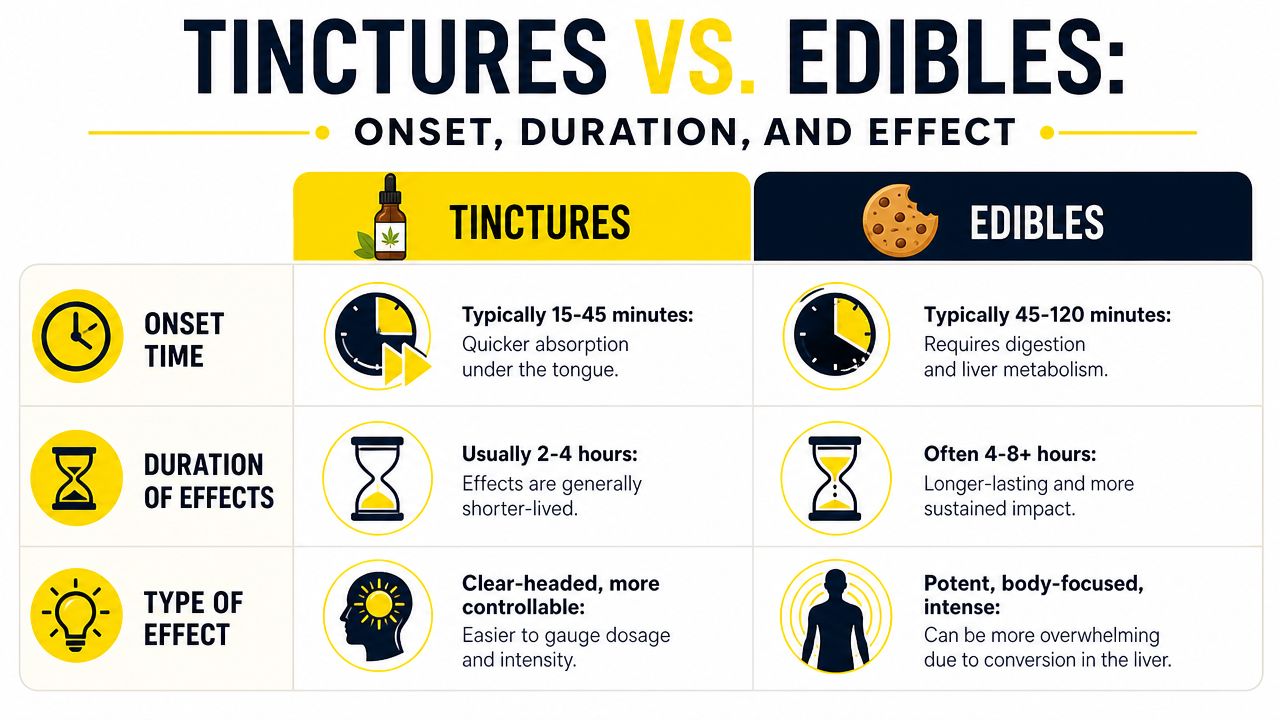
Tinctures usually give faster feedback than edibles. In practice, that means they often fit better when you need to judge your comfort level within the next part of your day, not several hours later.
I often explain it this way at Mr. Nice Guys DC. If you take a tincture before an early evening event, you may have a decent read on the effect before the night is fully underway. With an edible, you may still be waiting while trying to decide whether you took enough. That delay catches a lot of people off guard, especially newer patients who expect all THC products to start on the same timeline.
Duration
Edibles usually last longer. For some patients, that is the whole point.
A longer run can make sense for late-night discomfort, sleep support, or evenings when redosing feels inconvenient. The trade-off is simple. If the dose lands too strong, the experience can stay strong for a while. Tinctures tend to give a shorter, easier-to-manage window, which is why many patients prefer them for afternoons, social plans, or trial-and-error use.
Here's the practical comparison:
| Question | Tincture answer | Edible answer |
|---|---|---|
| Need quicker feedback? | Usually yes | Usually no |
| Need coverage for most of the evening? | Sometimes | Often yes |
| Easier to adjust around your schedule? | Usually | Less often |
| Better if you dislike a long wait? | Usually yes | Usually no |
Type of effect
The feel is different too, and patients notice that quickly. Tinctures often come across as more controlled and easier to place within a normal routine. Edibles often feel heavier, fuller-body, and more committed.
That does not make one better. It makes them useful for different jobs.
A measured tincture can be a smart choice before a museum trip, family dinner, or a stretch of the day when you still want to stay conversational and steady. An edible may fit better when you are home for the night, want longer-lasting relief, and do not need the option to pivot quickly if the effect builds stronger than expected.
For patients in DC, that is usually the main choice. Pick the format that matches your timeline, setting, and tolerance for surprises. If you want a closer look at the time commitment, this guide to how long edibles last can help before you choose a nighttime or weekend dose.
Dosing Demystified The Art of Precision vs Simplicity
Dosing anxiety is real. Most bad experiences don't come from picking the “wrong” category. They come from taking too much, taking more too soon, or not understanding how the product is portioned.
Tinctures favor precision
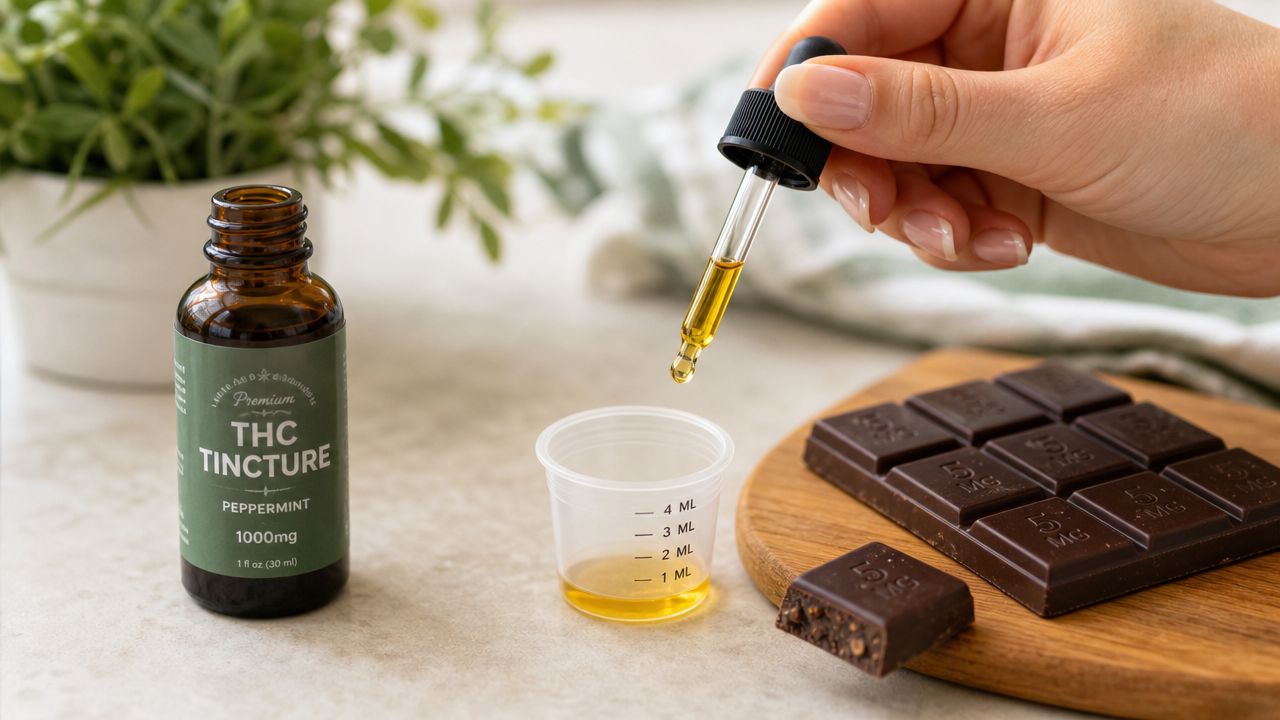
A tincture is useful when you want to inch upward instead of jumping to a full serving. The dropper gives you more room to experiment carefully. That's one reason patients interested in microdosing often prefer this format.
If you're sensitive to THC, that flexibility matters. You can start with a very small amount, stay with the same routine for a few sessions, and see how your body responds before changing anything.
The practical skill here isn't just measuring. It's repeating the same conditions. Similar time of day, similar meal status, similar setting. That consistency makes it easier to tell whether the dose is working.
For a more practical walkthrough, this tincture dosing guide is worth reading before your first bottle.
Edibles favor simplicity
Edibles are easier for many people because the serving is already portioned. A gummy is a gummy. A chocolate square is a chocolate square. You don't need to think about droppers, hold times, or flavor sitting under your tongue.
That simplicity is great until impatience enters the room.
A common first-timer mistake goes like this: take one piece, wait less than you should, assume it didn't work, then take another. Later both doses arrive. That's when edibles stop feeling “simple.”
Start low and go slow works for both formats, but edibles punish impatience more often.
A practical approach looks like this:
- For tinctures: Start with a small measured amount and wait long enough to gauge its effects.
- For gummies or chocolates: Consider starting with a partial serving if you're cautious or new.
- For either one: Write down what you took, when you took it, and how it felt later.
This short video can help make the dosing mindset more concrete before you try either format:
Practical Scenarios When to Choose a Tincture or an Edible
The easiest way to decide is to stop thinking in categories and think in moments. Here are the situations people bring up all the time.
Fast relief before something stressful
Alex has a tense afternoon ahead and feels the edge building early. They don't want to wait around wondering when a product will finally kick in. A tincture usually makes more sense here because it gives quicker feedback and is easier to adjust carefully.
That kind of situation rewards control. You want a format that lets you check in with yourself sooner, not one that keeps you guessing.
If your need is immediate or close to immediate, a tincture usually fits the problem better than an edible.
Longer support for a drawn-out evening
Jordan is dealing with discomfort that tends to hang around for hours. They want one dose to carry them through dinner, quiet time, and the stretch before bed. An edible often fits that goal better because the experience tends to last longer and feel more sustained.
This is also where planning helps. An edible can work well, but only if you take it early enough that the onset isn't frustrating.
A social setting where you want less fuss
Tara is going to a small get-together. She doesn't want to carry a bottle or think much about dosing once she's there. A low edible serving can be the easier option because it's discreet and familiar.
That said, this only works if the timing is right. Taking it at the party and expecting quick results is how people overshoot.
Sleep support
Marcus wants help winding down and staying settled through the night. In that case, many people lean toward an edible because the longer window often matches the goal. Some people still prefer a tincture if they want more control over intensity or if they're still figuring out their tolerance.
The right answer depends on what's been going wrong. Trouble falling asleep and trouble staying asleep aren't always solved by the same format.
Sensitive to THC or returning after a long break
Someone who hasn't used cannabis in a while often does better with a tincture first. The smaller adjustments can make the re-entry less intimidating. Edibles can still work, but they ask for more patience and carry a bigger penalty if you guess wrong.
A simple decision set can help:
- Choose a tincture if you need faster feedback, flexible dosing, or daytime control.
- Choose an edible if you want a longer window, fewer redoses, or a familiar grab-and-go format.
- Pause and reassess if you're choosing based only on flavor, not function.
Key Considerations for DC Medical Patients
A DC patient trying to control symptoms during the workday has a different decision to make than someone trying to stay asleep through the night. The format has to fit the symptom pattern, the schedule, and the amount of control the patient wants over the experience.
Match the format to the symptom pattern
As noted by WithPower's guide to tincture highs versus edibles, THC tinctures taken sublingually typically begin working in about 15 to 45 minutes. Reported duration can vary by source, with some guides citing roughly 2 to 4 hours and others, as noted earlier, reporting a longer 4 to 8 hour window depending on the person and the product. Edibles usually take 30 minutes to 2 hours to begin working and often last 6 to 12 hours because they are digested and metabolized more slowly.
For a medical patient, that difference changes the whole plan. Breakthrough discomfort, sudden nausea, or a spike in stress often call for something with a shorter feedback loop. Longer overnight support often points patients toward an edible because fewer wake-ups matter more than a fast start.
Daily routine matters too. A patient commuting across DC, sitting through appointments, or trying to stay functional at work usually benefits from a format that feels easier to adjust in smaller steps.
Consistency beats guesswork
Symptom relief gets easier to repeat when the patient treats cannabis like any other routine tool. Keep notes on the product, the amount, the time, whether food was involved, and how the effects felt.
That simple record catches patterns fast.
Some patients notice a tincture feels steadier when they take it the same way each evening. Others find an edible hits harder or lasts longer after a full meal. Those details are more useful than copying a dose from a friend, a Reddit thread, or a product review.
For symptom management, the best option is usually the one you can repeat with the fewest surprises.
Practical points specific to DC patients
Access matters. Product selection, purchase limits, and how you shop can look different depending on whether you are buying as a registered patient, so it helps to understand the process before you build a routine. If you are still sorting that out, this guide to getting a DC medical card lays out the basics clearly.
There is also a real quality-of-life question here. A patient using THC for symptom control may need to dose at times that overlap with errands, public settings, or family responsibilities. In those cases, the better format is often the one that creates fewer surprises, not the one that sounds strongest on paper.
One practical rule applies to both. Do not test a new product before an important appointment, commute, or work shift. Try it during a calm block of time so you can judge onset, duration, and comfort without outside pressure.
Your Guide to Buying Tinctures and Edibles in DC
When you're reading a menu, focus on two label details first. Total THC in the package and THC per serving are not the same thing. A package may look strong at first glance, but what matters for dosing is how much you're taking at one time.
That's especially important with edibles. A bag might contain multiple servings, and the label won't dose itself for you. With tinctures, the question shifts. You'll want to know the total THC in the bottle and how that translates into the dropper measurement you plan to use.
Price and concentration can differ quite a bit by format. According to this industry guide on THC tincture pricing and potency, edibles can cost as little as $5 or up to $100, with a 100 mg package typically around $15, while tinctures often range from $30 to $200. The same source notes tinctures can contain up to 1,000 mg of THC, which helps explain why they're often used as a high-dose, adjustable format.
What to check on the menu
- Serving size: Know the amount in one gummy, one square, or one measured dropper.
- Total package strength: Useful for value comparison, but less useful for choosing your first dose.
- Format fit: Ask whether you need speed, duration, or easier dose control.
- Ingredient comfort: Some people prefer a gummy over a tincture taste, and that matters for consistency.
If you want to compare edible options locally before deciding, this guide to where to buy edibles in DC is a practical starting point.
Mr. Nice Guys DC is one local option for patients and adult consumers who want to compare tinctures, edibles, and labeled serving formats in one place, then choose based on timing, dose style, and intended use rather than guessing from packaging alone.
If you're weighing THC tinctures vs edibles and want help picking the right fit for your routine, visit Mr. Nice Guys DC. Ask about onset, duration, serving size, and how you want the experience to fit into your day. A little guidance upfront can save you from a long, uncomfortable learning curve later.
Mr Nice Guys DC
At Mr. Nice Guys DC, we’re more than just a cannabis delivery service — we’re passionate advocates for quality, convenience, and community. With years of experience in the cannabis industry, our team is dedicated to educating and empowering customers across Washington, D.C. Whether you're a seasoned user or just starting your cannabis journey, our blog delivers trusted tips, product insights, and the latest updates from the world of weed. Stay informed, stay elevated.
