
Must Be 21 To Enter
By entering this site you are agreeing that you are at least 21 Years of Age or older.
I AM 21 OR OLDERCannabis Potency Testing: A Patient's Guide for 2026
.svg)

.png)
You're standing at the counter, looking at two jars of flower and maybe a vape cart. One label says THC. Another says THCA. One product has CBD listed, another doesn't. Then you notice a batch number, a test date, and a lab name. At that point, a lot of patients do the same thing. They ask, “Which one is stronger, and what does any of this mean for me?”
That confusion is normal. Cannabis labels can feel like a chemistry quiz when all you want is relief, a calmer evening, better sleep, or something you can trust to feel consistent the next time you buy it.
Potency testing helps turn that label from guesswork into something useful. If you understand a few basics, you can stop treating cannabis like a mystery and start choosing products with more confidence.
Decoding the Numbers on Your Cannabis Label
Let's use a familiar dispensary moment. You pick up one flower jar labeled “THC 20%” and another that shows THCA, THC, and CBD all on the same sticker. A lot of people assume the biggest THC number automatically means the strongest experience. It's not always that simple.
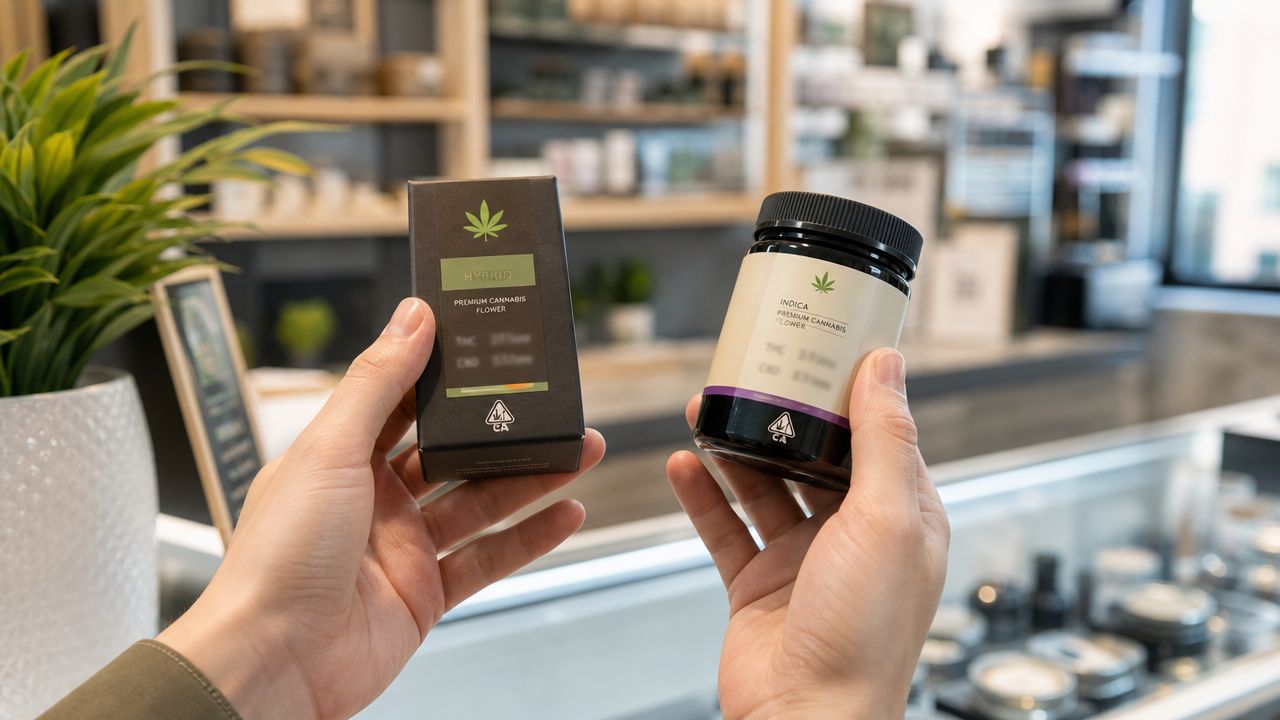
Here's the easy version. THC is the cannabinoid widely associated with intoxication. THCA is its raw precursor in the plant before heat changes it. If you smoke or vape flower, heat converts much of that THCA into THC. That's why flower labels can look confusing at first glance. If you want a deeper breakdown of that relationship, this guide on THCA vs THC for DC patients is a helpful next read.
What patients often mix up
A label can include more than one useful number:
- THC listed alone means the lab measured active THC already present in the sample.
- THCA listed separately means the product also contains cannabinoid content that may convert when heated.
- CBD and CBDA work the same way in terms of active and acidic forms.
- Percentages vs milligrams can describe potency differently depending on product type.
A flower shopper usually sees percentages. An edible shopper usually sees milligrams per serving or per package.
Simple analogy: Think of a cannabis label like a nutrition label. It doesn't tell you exactly how your meal will feel, but it gives you the best standardized snapshot of what's inside.
Why the label matters in real life
If you're new to cannabis, the label helps you avoid overshooting your comfort zone. If you're a returning patient, it helps you find something closer to what worked last time. If you use cannabis for symptom relief, consistency matters even more, because “close enough” can still feel very different from one batch to another.
That's why cannabis potency testing matters. It gives those numbers a lab basis instead of leaving you with marketing words alone.
Why Cannabis Potency Testing Is Essential
Potency testing isn't just about finding the strongest product on the shelf. It's about predictability. Patients need to know whether a tincture, edible, cart, or flower product is likely to match its label closely enough to support a reliable experience.
Potency affects dosing and safety
If a patient wants something gentle for daytime use, a product that feels far stronger than expected can ruin the day. The opposite can happen too. Someone looking for solid evening relief may buy a product that sounds potent but feels weaker than the label suggests.
Testing helps reduce that uncertainty. It gives patients, dispensaries, producers, and regulators a shared language for discussing what's in the package.
For people using cannabis cautiously, potency testing supports practical decisions like:
- Starting dose choices so you're not guessing where to begin
- Product comparisons between flower, vapes, tinctures, and edibles
- Repeat purchases when you want the next batch to feel familiar
- Effect planning for daytime focus, post-work relaxation, or bedtime use
Why modern testing became non-negotiable
Cannabis today isn't the same as cannabis decades ago. A long-running federal monitoring program has tracked seized cannabis samples since 1995. In one major analysis of 38,681 cannabis preparations collected between 1995 and 2014, the average potency of illicit cannabis plant material increased from about 4% THC in 1995 to about 12% in 2014, according to the University of Mississippi and NIDA-linked long-term study.
That change matters for patients. When products become more potent over time, casual guesswork becomes less safe and less useful. Standardized testing turns “this seems strong” into a measurable profile.
Potency testing works like a speedometer. It doesn't tell you where to drive, but it helps you avoid going faster than you intended.
Why this matters in DC
In a regulated environment, testing supports transparency. Patients deserve more than strain names and broad categories like indica, sativa, or hybrid. They need batch-specific information that helps them choose with less trial and error. If you want more context on local oversight, this article on how DC regulates medical cannabis dispensaries is worth reading.
The biggest point is simple. Cannabis potency testing protects patients from surprises. It supports safer first experiences, more dependable repeat purchases, and better communication between dispensary staff and the people they serve.
A Look Inside the Cannabis Testing Lab
A lot of lab science sounds intimidating until you strip away the jargon. At its core, potency testing is just a careful way of separating the important compounds in cannabis so a machine can measure them.
A simple way to picture the process
Think of a mixed bag of candy. You dump it on a table and sort it by color and type. Red pieces go in one pile, green in another, chocolates in another. A cannabis lab does something similar, except the “candies” are cannabinoids like THC, THCA, CBD, and CBDA.
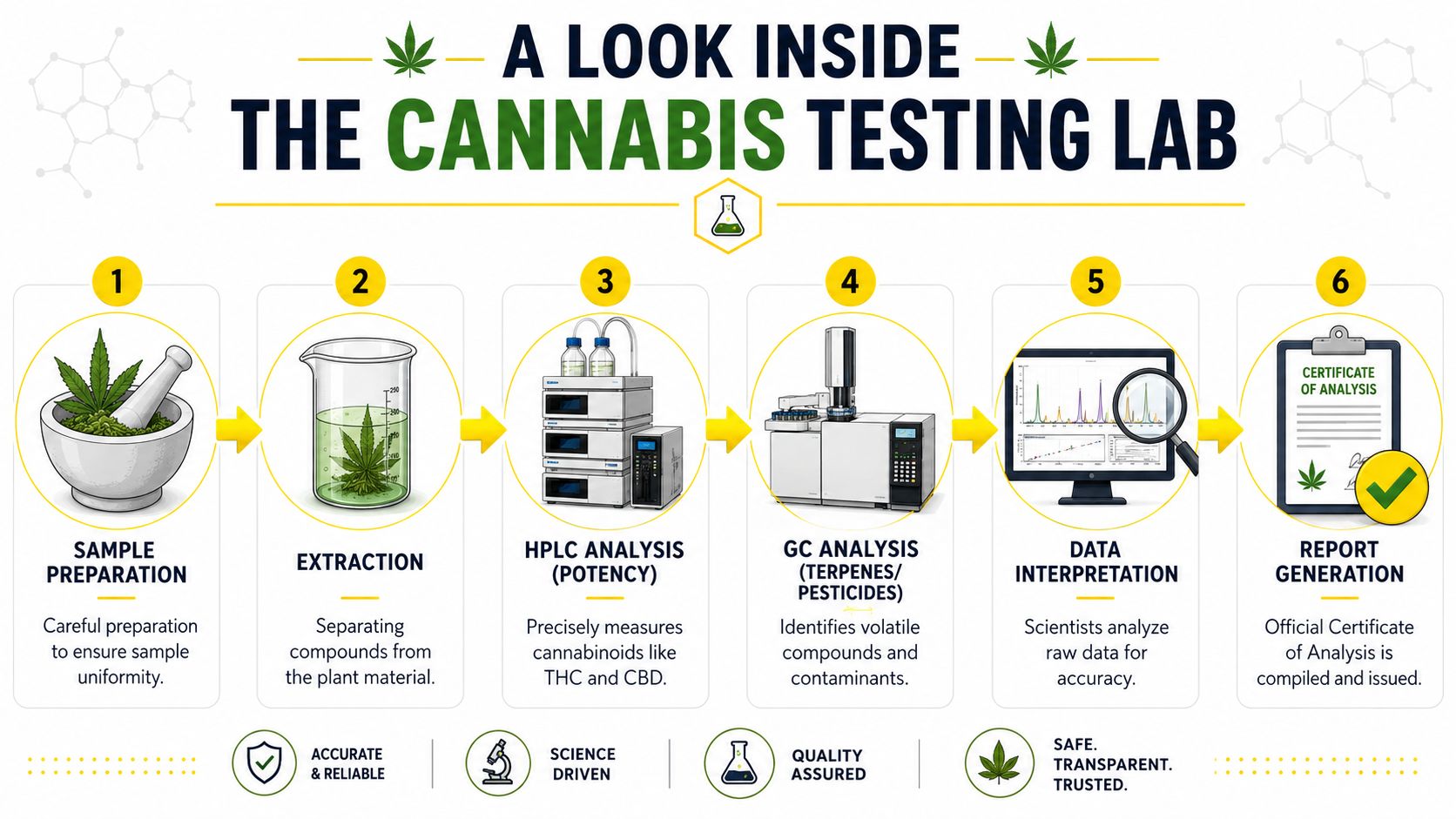
First, a technician prepares the sample so it's as uniform as possible. Then the lab extracts the compounds it wants to measure. After that, instruments separate those compounds and detect how much of each one is present.
Why HPLC is often preferred
Many labs use High-Performance Liquid Chromatography, usually shortened to HPLC. One reason is straightforward. It tests the sample at room temperature, which helps preserve acidic cannabinoids like THCA and CBDA during analysis. Labstat explains that many labs prefer HPLC because it can accurately measure acidic cannabinoids and their active forms, which is essential for calculating total THC on labels.
That matters because flower doesn't start out as pure THC in the jar. A lot of what's there is THCA. If the lab can measure both forms accurately, the final report is more useful for patients and for labeling.
Where GC fits in
Another method is Gas Chromatography, or GC. GC uses heat. That can be useful in some types of analysis, but heat can also change acidic cannabinoids during the test itself. If THCA converts during testing, the cannabinoid picture can look different than it did in the original sample.
That's why many potency workflows lean toward HPLC, especially when accurate labeling depends on distinguishing raw acidic cannabinoids from their active forms.
A quick visual can help make the process feel less abstract:
What this means when you shop
For a patient, the lab method affects how much confidence you can place in the label. If you buy flower, pre-rolls, concentrates, or infused products, you want the numbers to reflect what's in the product before use, not a distorted reading created by the test itself.
That's especially useful when comparing product styles. A live resin cart and a distillate cart can feel very different even if the cannabinoid numbers seem close at first glance. If you want that comparison in plain English, this guide on live resin vs distillate lays it out well.
Lab takeaway: Good testing doesn't just ask, “Is THC present?” It asks, “How much of each cannabinoid is actually here, and in what form?”
Your Guide to Reading a Certificate of Analysis
A Certificate of Analysis, usually called a COA, is the official lab report tied to a cannabis product or batch. If the label is the quick summary, the COA is the full receipt.
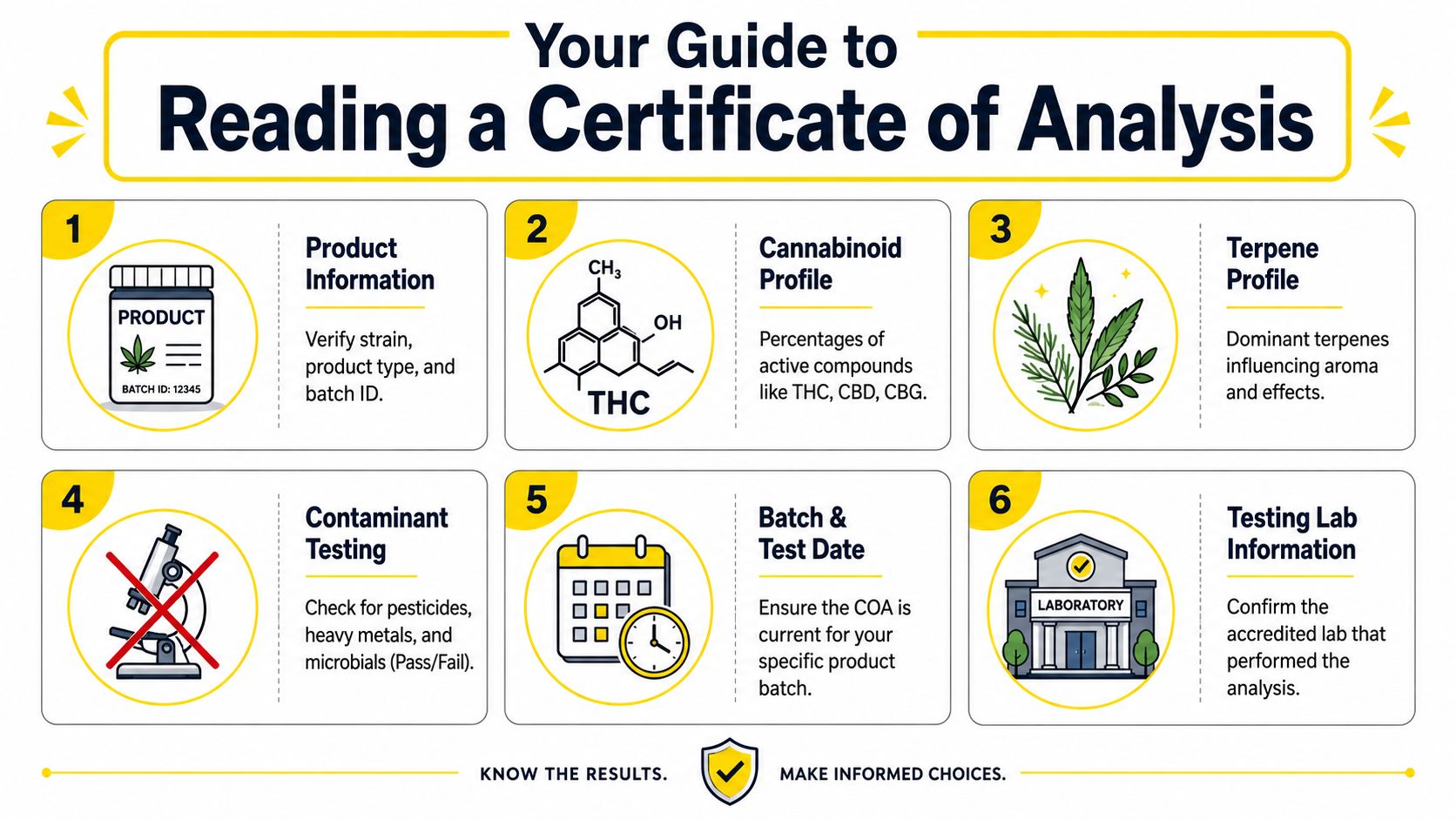
When patients first see a COA, they often focus only on THC. That's understandable, but a good COA gives you a much richer picture.
Start with identity checks
Before reading the cannabinoid section, confirm you're looking at the right report.
Check for:
- Product name that matches what you bought
- Batch or lot ID tied to that specific run
- Product type such as flower, edible, vape, tincture, or concentrate
- Test date so you know the report is tied to a real testing event
- Lab name showing who performed the analysis
If any of those details don't line up, the report may not match the product in your hand.
Read the cannabinoid panel carefully
The cannabinoid panel is where most patients spend their time. You may see active forms and acidic precursors listed separately. For flower, that usually means numbers for THC and THCA, and sometimes CBD and CBDA.
A few practical points help:
- THC tells you how much active THC was measured directly.
- THCA tells you how much precursor cannabinoid is present before heating.
- Total THC is often the number patients care about most for flower because it estimates available THC after conversion during use.
- CBD and CBDA work similarly for patients seeking non-intoxicating support or a more balanced profile.
When two flower options have similar total potency, the better choice often comes down to terpene profile, product type, and how you want to feel, not just which jar has the bigger THC line.
Common cannabinoids on a COA
| Cannabinoid | What It Is | Commonly Associated Effect |
|---|---|---|
| THC | A primary intoxicating cannabinoid in its active form | Euphoria, mood shift, stronger psychoactive effects |
| THCA | The raw acidic precursor to THC found in unheated cannabis | Limited intoxicating effect before heating, contributes to total THC after use |
| CBD | A non-intoxicating cannabinoid in its active form | Calmer, more balanced feel for some patients |
| CBDA | The raw acidic precursor to CBD | Present before heating, relevant to full cannabinoid profile |
| CBG | A minor cannabinoid often present in smaller amounts | Often discussed in products aimed at focus or daytime balance |
| CBN | A minor cannabinoid often seen in some sleep-oriented conversations | Often associated by consumers with more relaxing product discussions |
Don't skip terpenes and pass fail sections
A strong COA often includes a terpene profile. Terpenes are aromatic compounds that can shape how a product feels, smells, and tastes. If you've ever noticed that one strain feels bright and citrusy while another feels earthy and heavier, terpenes are part of that story. This explainer on what terpenes are in weed can help if those names are still unfamiliar.
You should also look for sections covering contaminants. Depending on the report, these can include pass/fail results for items like pesticides, heavy metals, or microbial screening. Patients don't need to memorize every line. You just want to see that the product cleared the safety checks required by the testing process.
A quick patient reading routine
When you're handed a COA or viewing one online, try this order:
- Match the batch to the product.
- Find total cannabinoid information relevant to the format.
- Notice terpene highlights if they're listed.
- Confirm pass/fail safety sections are present and clear.
- Use the whole profile, not one flashy number, to guide your choice.
That habit turns the COA into something practical instead of overwhelming.
The Truth About Potency Numbers and Accuracy
A lot of shoppers assume the potency number on the label is exact, almost like a barcode. In reality, cannabis is an agricultural product first and a lab-tested product second. That means variation can happen even when everyone is acting in good faith.
Why labels and lab reality can differ
Two buds from the same plant may not be perfectly identical. The sample the lab receives may come from one portion of a batch, while the product in your jar comes from another. Moisture, handling, and how the sample was prepared can also influence what gets measured.
Then there's the bigger issue. Some labels can overstate potency in a way that matters for patients.
A peer-reviewed PLOS ONE study found that the average observed THC potency was 14.98% ± 2.23%, and the measured value was 23.1% lower than the lowest label-reported potency and 35.6% lower than the highest label-reported potency in the sampled retail products. The study also found that about 70% of samples were more than 15% below the THC listed on the label, and 13 of 23 samples, about 57%, were more than 30% lower than the lowest reported value. The maximum discrepancy reported was -56.5%. You can read those findings directly in the PLOS ONE retail cannabis potency study.
How patients should use this information
This doesn't mean all labels are meaningless. It means you should treat potency as a guide, not a promise down to the last decimal.
That's especially important if you've been trained to chase the highest THC number. A product with a huge label claim may not deliver the experience you expect. A fuller profile can matter more. If you're curious how that works in broad-spectrum and whole-plant products, this guide to full-spectrum cannabis adds helpful context.
Buy with a little healthy skepticism. Trust the label more when it's backed by consistent third-party testing, a clear COA, and a dispensary willing to discuss the numbers openly.
A better mindset
The most useful question isn't “What has the highest THC?” It's “What product gives me the most dependable result for what I need?”
That mindset protects new patients from rough first experiences and helps regular consumers build a repeatable routine instead of chasing inflated numbers.
How Mr Nice Guys DC Guarantees Reliable Products
You should not have to play detective at the counter. A good dispensary makes the science easier to use by checking the paperwork behind a product, then translating it into plain language a patient can act on.
That matters most when two products look similar on the shelf but may lead to very different experiences. One label might show a big THC number. Another might have a clearer batch record, a fuller cannabinoid profile, or dosing that is easier to repeat. For many DC patients, the more dependable choice is the one with cleaner documentation and clearer guidance.
What reliable curation looks like
A careful retail review process usually includes a few basic checks before a product is recommended to patients:
- Third-party lab documentation so potency and safety claims are backed by test results, not just package language
- Batch-level verification so the product on the shelf matches a real testing record
- Label review by staff so key details can be explained clearly at the counter
- Format-specific interpretation because a vape, gummy, tincture, and flower jar do not use potency numbers the same way
At Mr. Nice Guys DC, that practical translation matters. Staff members help patients compare flower, edibles, cartridges, pre-rolls, concentrates, topicals, and tinctures by looking at tested potency, product format, and the kind of experience the patient wants. The goal is simple. Turn lab information into a clearer buying decision.
What patients should ask any dispensary
A few direct questions can tell you a lot about how carefully a shop handles tested products.
- Can you show me the cannabinoid profile for this batch?
- Was this product tested by a third-party lab?
- Is this number total THC or only active THC?
- Do you have terpene information for this strain or product?
If the staff can answer those questions clearly, that is a good sign. If the conversation keeps drifting back to hype words or the highest THC on the menu, you may not be getting the full picture.
Why this matters in real life
Reliable products make repeat results more realistic. If a bedtime gummy felt steady and manageable last time, good records make it easier to choose something similar again. If a vape felt too strong, clear testing details help you adjust instead of guessing.
That is where a trusted local dispensary earns its place for DC patients. The job is not just stocking products. The job is checking the details, explaining the numbers patiently, and helping people choose with more confidence and less trial and error.
Choosing Products by Effect Not Just Potency
A high THC number can catch your eye, but it shouldn't make the whole decision for you. The better question is how a product is likely to feel in your body and in your routine.
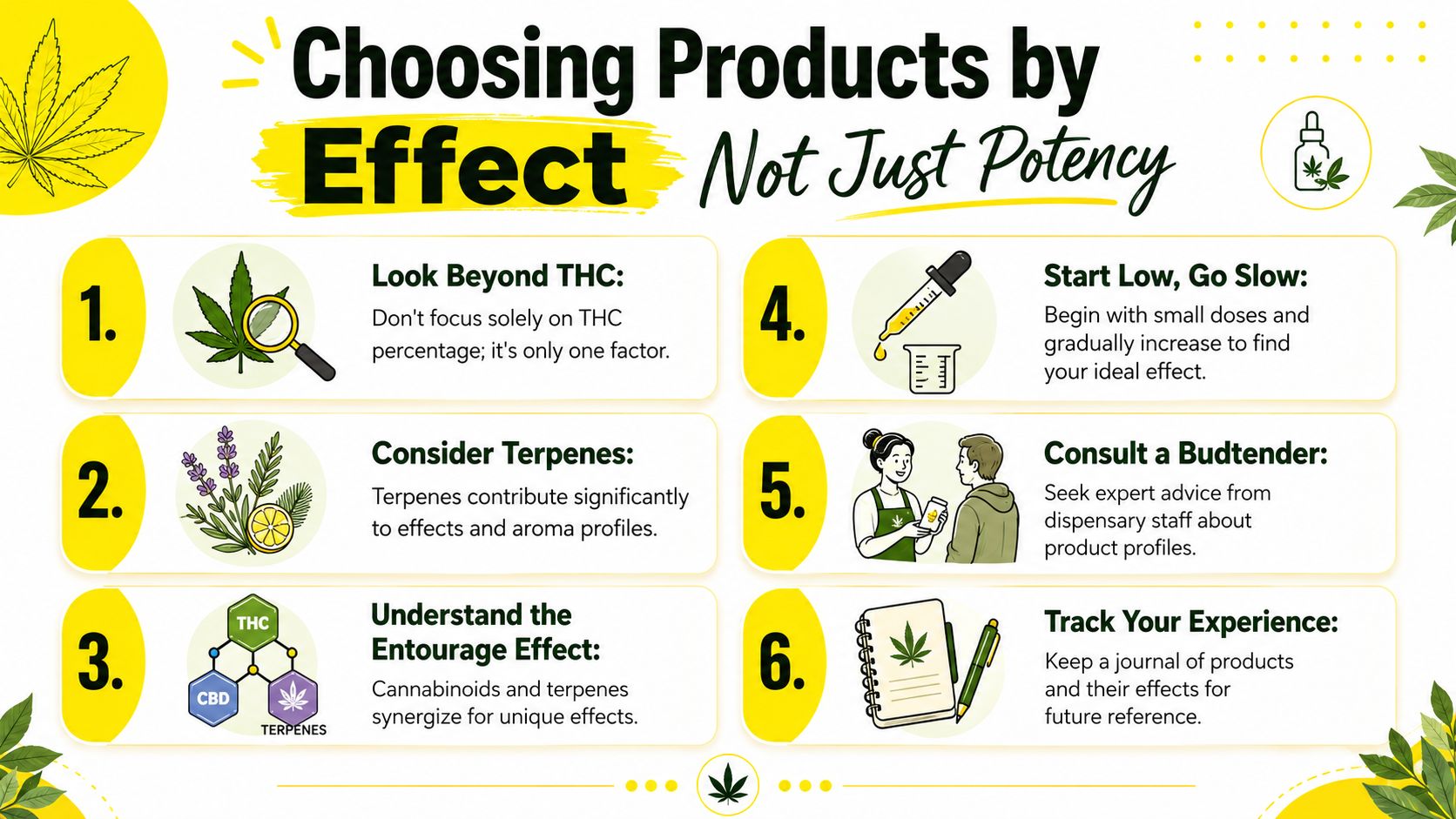
Think in outcomes first
Start with what you want the session to do for you.
If your goal is a calm evening, you may prefer a product with a relaxing terpene profile and a dose you know you tolerate well. If you want something for social use or daytime errands, you may want a gentler, clearer product even if the THC number looks less impressive.
Here are a few practical examples:
- For winding down you might look for products patients often describe as softer, heavier, or more soothing.
- For daytime use you may prefer options that feel lighter and easier to pace.
- For cautious beginners a lower-intensity edible or a single inhalation from a vape can be easier to manage than jumping straight into a very potent flower.
Terpenes help shape the experience
Terpenes don't replace cannabinoids, but they add context. A citrus-forward profile may feel more uplifting to some people. A floral or herbal profile may feel more settling. That's one reason two products with similar THC numbers can feel surprisingly different.
People often use the phrase entourage effect to describe the way cannabinoids and terpenes work together in a fuller profile. You don't have to treat that as magic. The practical takeaway is simple. The whole chemical profile matters more than one headline number.
Practical rule: Choose for the job. A product for sleep, a product for pain relief, and a product for staying functional during the day don't always come from the highest THC shelf.
Build your own decision system
A simple patient-friendly system works better than chasing trends:
Pick your desired effect
Better sleep, less tension, lighter mood, easier evenings, or a manageable social buzz.Choose the format
Flower hits faster. Edibles last longer. Tinctures can be easier to measure. Vapes can be convenient for small, controlled sessions.Review the profile
Look at cannabinoids first, then terpenes if available.Start low and observe
Especially with edibles and new strains, give yourself room to learn your response.Take notes
Write down the product name, batch if possible, dose, timing, and how it felt.
That last step is underrated. The patient who keeps a simple note in their phone usually becomes a much more confident shopper.
Is higher THC always better
Usually, no.
Higher THC can mean stronger intoxication, but it doesn't automatically mean better symptom relief, better balance, or a better overall session. Some patients find that a product with a more moderate potency and a terpene profile they enjoy works better than a supposedly stronger option.
That's the biggest lesson behind cannabis potency testing. It gives you a useful map, but the smartest shopping happens when you combine that map with your own goals, your tolerance, and the full product profile.
If you want help translating lab numbers into a product choice that fits your routine, visit Mr. Nice Guys DC. The team can help you compare flower, edibles, vapes, tinctures, and concentrates using potency data, product format, and effect-based guidance so you can make a more informed decision with less guesswork.
Mr Nice Guys DC
At Mr. Nice Guys DC, we’re more than just a cannabis delivery service — we’re passionate advocates for quality, convenience, and community. With years of experience in the cannabis industry, our team is dedicated to educating and empowering customers across Washington, D.C. Whether you're a seasoned user or just starting your cannabis journey, our blog delivers trusted tips, product insights, and the latest updates from the world of weed. Stay informed, stay elevated.
