
Must Be 21 To Enter
By entering this site you are agreeing that you are at least 21 Years of Age or older.
I AM 21 OR OLDERWhat Are Terpenes in Weed (what are terpenes in weed): Flavor & Effects
.svg)

.png)
You know that distinct smell when you open a fresh bag of flower? That zesty lemon, earthy pine, or sweet berry aroma? That’s the work of terpenes. These aren't just for scent, though. They’re the plant's natural essential oils, and they play a massive role in shaping your entire cannabis experience.
Your First Look at What Terpenes in Weed Are
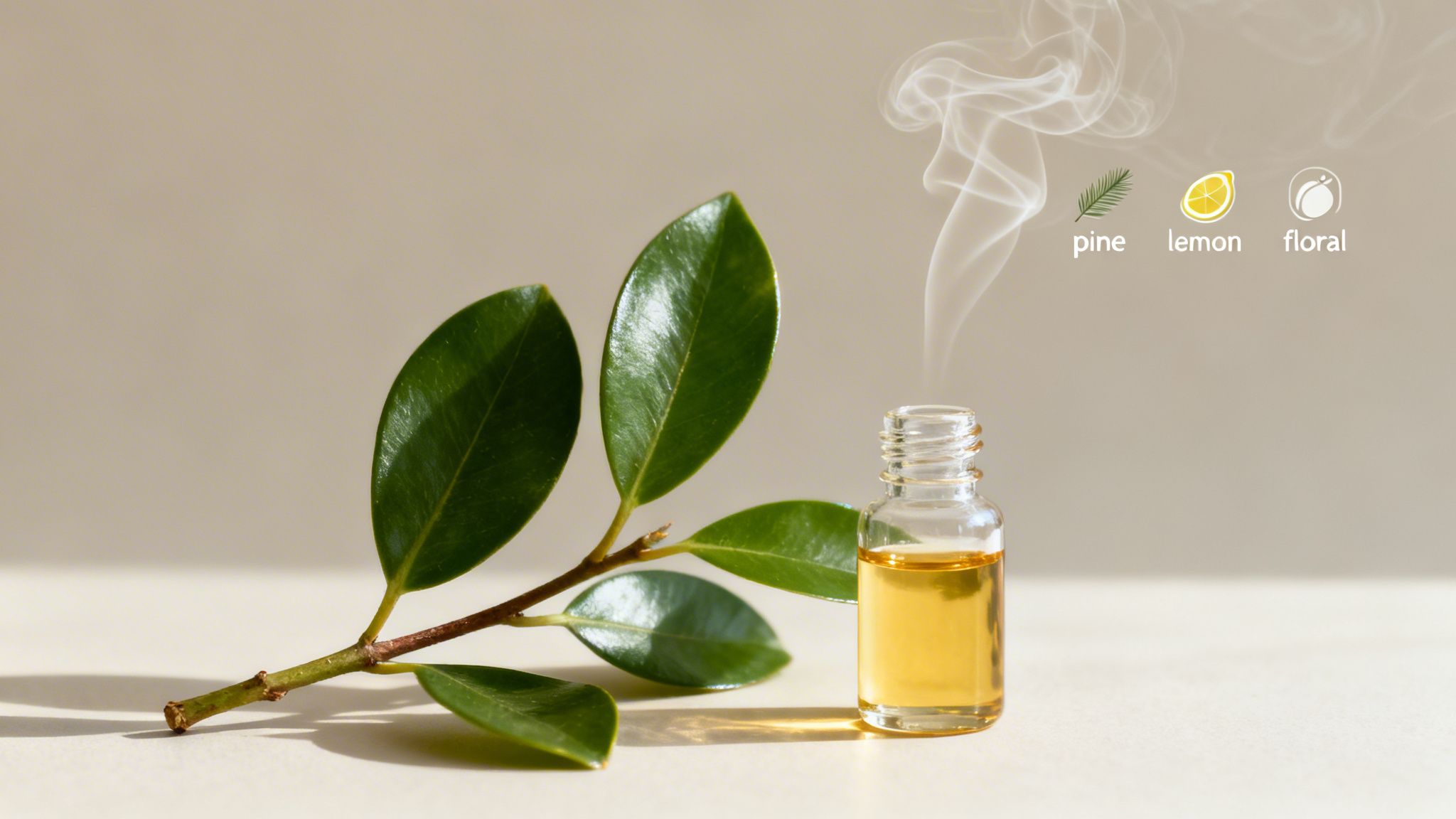
If you’ve ever used lavender to relax or smelled fresh pine needles in a forest, you’re already familiar with terpenes. They’re the fragrant compounds found in all sorts of plants, herbs, and fruits. In cannabis, they’re produced in the same tiny, crystal-like glands that make cannabinoids like THC and CBD.
Here’s a simple way to think about it: THC percentage tells you how strong a strain might be, but the terpene profile tells you what kind of ride you're in for. It’s why two strains with the same THC level can feel worlds apart. One might have you feeling creative and chatty, while the other sends you straight to the couch for a nap.
More Than Just a Pretty Smell
While the aroma is what you notice first, the real magic of terpenes is how they work behind the scenes. They interact with cannabinoids in a process called the "entourage effect," which is just a way of saying they work better together. This teamwork is the key to figuring out why some strains are great for certain vibes or needs.
Key Takeaway: Terpenes are what make a strain feel relaxing, energizing, or focused. They’re the difference between a high-energy sativa for a daytime hike and a sleepy indica for winding down at night.
For instance, a strain that smells strongly of citrus is likely rich in a terpene called limonene. Just like its scent suggests, limonene often brings on an uplifting, mood-boosting feeling. It’s why a strain like Sour Diesel is a go-to for many when they need to get creative or just feel good during the day.
On the other hand, if you get a strain with a musky, earthy scent, you’re probably smelling myrcene. Myrcene, also found in mangoes, is known for its calming and sedative effects. This makes strains loaded with it, like many OG Kush varieties, perfect for chilling out in the evening.
Connecting Smells to Terpenes
Getting to know the most common terpenes is the first step to choosing your flower with more intention. You can start right now, just by paying attention to how your favorite strains smell and what feelings they bring on.
To help you connect the dots, here’s a quick rundown of the big players and their signature scents.
| Terpene | Common Aroma Profile | Also Found In |
|---|---|---|
| Myrcene | Earthy, musky, and herbal with notes of clove | Mangoes, lemongrass, hops |
| Limonene | Bright and zesty citrus, like lemon or orange peel | Citrus fruits, juniper, peppermint |
| Pinene | Crisp and fresh pine, like a walk in the forest | Pine needles, rosemary, basil |
| Linalool | Sweet, soft, and floral, with a hint of spice | Lavender, rosewood, birch bark |
| Caryophyllene | Peppery, spicy, and woody, with a warm kick | Black pepper, cloves, cinnamon |
Once you start recognizing these aromas, you'll have a much better handle on what terpenes in weed are all about. They’re what guide the experience. In the next few sections, we’ll dig deeper into how they work with THC and CBD and break down the most important ones in more detail.
How Terpenes and Cannabinoids Work Together
Sure, the first thing you notice about terpenes is the smell, but their most important job is shaping how your cannabis actually feels. It’s a common mistake to think cannabinoids like THC and CBD are lone wolves. In reality, they team up with terpenes in a process called the entourage effect.
Think of it like a band. THC and CBD might be the lead singers, getting most of the spotlight. But the terpenes are the rest of the crew—the drummer setting the beat, the bassist laying down the groove, and the guitarist adding that emotional riff. All together, they create a complete song. They’re what decides if it’s a mellow acoustic tune or an energetic rock anthem.
This teamwork is exactly why two strains with the same THC percentage can feel worlds apart. One might leave you feeling thoughtful and ready for bed, while the other sparks creativity and makes you chatty. The terpenes are the ones calling the shots.
Steering the Effects of Your Strain
Getting a handle on this partnership is the key to picking products that give you the experience you’re actually looking for. It’s about moving past the habit of just chasing the highest THC numbers and starting to look at the plant’s full chemical profile. A strain’s one-of-a-kind blend of cannabinoids and terpenes is what gives it its signature effects.
Let’s get practical. The terpene myrcene, with its earthy, herbal scent, is well-known for its relaxing vibe. When you find it in a strain with THC, myrcene can crank up the cannabinoid's sedative side, leading to that heavy "couch-lock" feeling perfect for kicking back.
On the flip side, you have a terpene like limonene. It’s the source of that bright, citrusy smell and is famous for its mood-lifting, energizing qualities. When it's in the mix with THC, it can help push back against any potential fogginess, keeping you alert and leaning into a more euphoric, active high. That's why you'll often find limonene-heavy strains recommended for daytime use.
This synergy is the heart of the entourage effect—the idea that the combined impact of all the plant's compounds is way more powerful than any one part on its own. Grasping this concept will completely change how you find the right product.
This interaction also explains why a full-spectrum product—one that keeps a wide range of cannabinoids and terpenes intact—usually offers a more layered and balanced experience. If you want to dive deeper, you can learn more about full-spectrum cannabis in our dedicated guide. The goal is to find a profile that clicks with your body and what you want to achieve.
The Power of Myrcene in Action
The sway terpenes have isn’t just talk; science is backing it up. Myrcene, for example, is the most common terpene in modern commercial cannabis, sometimes making up a massive 65% of the total terpene profile in some Indica-leaning strains. Its major role is crucial for firing up the entourage effect, as it works with THC to boost sedation and pain relief. A 2023 study even showed that terpenes like myrcene could cut pain sensitivity in mice by up to 50% when paired with cannabinoids. Here in the DC market, where products labeled with their terpene content saw a 40% sales jump in 2024, it’s clear that wellness-focused customers are paying attention to myrcene.
Once you understand how these compounds work together, you can start choosing your cannabis with intention. Instead of just asking, "How strong is it?" you can start asking, "How will this make me feel?" It’s a simple shift that empowers you to pick products for specific goals, like:
- Pain Relief: Look for strains high in caryophyllene and myrcene. For example, if you have sore muscles after a workout, a strain like Wedding Cake might offer physical relief.
- Anxiety Reduction: Try out profiles rich in linalool and limonene. If you're feeling stressed before a social event, a strain like Lavender Kush could help calm your nerves.
- Boosting Focus: Go for strains with a solid amount of pinene. When facing a deadline, a strain like Jack Herer could help you stay sharp and on task.
This knowledge turns shopping from a guessing game into a focused search for your own personal wellness.
A Guide to the Most Common Cannabis Terpenes
Now that you know how terpenes and cannabinoids team up, let's meet the star players. While cannabis has over 150 different terpenes, a handful of them do most of the heavy lifting, shaping a strain's personality and effects.
Think of it like learning the key spices in your kitchen. Once you know what makes each one special, you can start making more intentional choices instead of just grabbing whatever’s on the shelf. This is your go-to guide for the five most influential terpenes you'll run into.

This synergy is everything. The full experience comes from the interaction between all these compounds, not just from one acting alone.
Myrcene: The Sedative
Myrcene is the most common terpene in the modern cannabis scene, known for its earthy, musky, and slightly fruity scent that’s a dead ringer for ripe mangoes. If a strain is famous for delivering that classic "couch-lock" feeling, you can bet myrcene is the dominant terpene.
Its main job is to bring on calm and sedation. Strains heavy in myrcene are a go-to for evening use or for anyone just trying to shut down after a long day. It's also believed to boost the effects of THC, making for a stronger, more body-focused experience.
Think of it this way: You’ve had a brutal week and your only goal is to melt into the couch and watch a movie. A myrcene-heavy strain like OG Kush or Blue Dream can help quiet your mind and ease your body into a state of deep rest.
- Aroma: Earthy, musky, herbal, and a bit like cloves.
- Common Effects: Sedating, relaxing, and anti-inflammatory.
- Strains to Try: OG Kush, Granddaddy Purple, Blue Dream.
Limonene: The Energizer
Just like the name implies, limonene explodes with the bright, zesty scent of citrus fruits—think lemons and oranges. This is your go-to terpene for a mood boost and a clean burst of energy, making it a fixture in many popular sativa-leaning strains.
Limonene is all about euphoria, stress relief, and an elevated mood. It’s great for cutting through mental fog, sparking alertness and creativity without the jittery feeling you can get from other stimulants.
Think of it this way: You’ve got a creative project or a Saturday morning chore list to get through. A limonene-rich strain like Sour Diesel or Durban Poison can give you the mental lift and focus you need to get it done with a smile.
- Aroma: Strong citrus, lemon, and orange peel.
- Common Effects: Uplifting, energizing, stress-relieving, and mood-boosting.
- Strains to Try: Sour Diesel, Super Lemon Haze, Durban Poison.
Linalool: The Relaxer
Famous for its soft, sweet floral scent, linalool is the signature aroma of lavender. Its effects are just as gentle as its smell, making it a powerhouse for finding your chill and easing anxiety.
Linalool is prized for its deeply calming properties. It doesn’t usually bring on the heavy sedation of myrcene. Instead, it offers a more gentle, soothing vibe that can quiet a racing mind and set the stage for restful sleep.
Linalool's calming effects are well-known outside of cannabis, too. It’s the whole reason aromatherapy uses lavender oil to help people relax and de-stress before bed. The same idea applies here.
Think of it this way: You're feeling overwhelmed or anxious and need to find your center. A strain high in linalool, like Lavender or certain batches of Amnesia Haze, can help soothe your nerves and bring on a sense of peaceful well-being.
- Aroma: Floral, sweet, and spicy, with clear notes of lavender.
- Common Effects: Calming, anxiety-reducing, sedating, and sleep-promoting.
- Strains to Try: Lavender, Amnesia Haze, LA Confidential.
Pinene: The Focus-Booster
Pinene smells exactly like a walk through a pine forest—crisp, fresh, and totally invigorating. As one of the most common terpenes in the entire natural world, its effects are just as refreshing as its scent.
Unlike more sedative terpenes, pinene is known for promoting alertness, memory retention, and focus. What's really cool is that it's believed to help counteract some of the short-term memory fogginess that can come with THC. This makes pinene-dominant strains a great choice for tasks that demand mental clarity.
If you're into unique effects from landrace strains, you might also be interested in our guide on the classic Chocolate Thai.
Think of it this way: You need to study for a test or really dial in on a complex work project. A strain rich in pinene, like Jack Herer or Strawberry Cough, could help you stay sharp and attentive without feeling over-caffeinated.
- Aroma: Sharp, fresh pine needles.
- Common Effects: Alertness, focus, anti-inflammatory, and memory aid.
- Strains to Try: Jack Herer, Strawberry Cough, Dutch Treat.
Caryophyllene: The Pain-Fighter
With its spicy, peppery, and woody aroma, caryophyllene is the terpene you'd recognize from black pepper and cloves. What makes it so special is its unique ability to act like a cannabinoid. It’s the only known terpene that binds directly to the CB2 receptors in our body, which play a huge role in managing inflammation and pain.
This direct interaction makes caryophyllene a major player for medical patients. Its ability to offer anti-inflammatory and pain-relieving effects without any psychoactivity makes it an incredibly valuable compound. In Washington DC, where 85% of medical users cite pain as their primary concern, this terpene is a major driver of product choices. For example, sales of caryophyllene-rich topicals reportedly rose by 35% in 2024 alone, highlighting its importance.
Think of it this way: You’re dealing with sore muscles after a workout or nagging inflammatory pain. A caryophyllene-dominant strain like Gelato or Runtz can help target that discomfort directly, offering real physical relief.
- Aroma: Peppery, spicy, woody, and clove-like.
- Common Effects: Pain-relieving, anti-inflammatory, and stress-reducing.
- Strains to Try: Gelato, Runtz, Wedding Cake, GSC.
How to Read a Terpene Profile on Cannabis Labels
Alright, so you know what terpenes in weed are and how they steer your experience. That’s half the battle. The other half is using that knowledge when you’re actually shopping. This is where you go from a curious customer to a confident connoisseur.
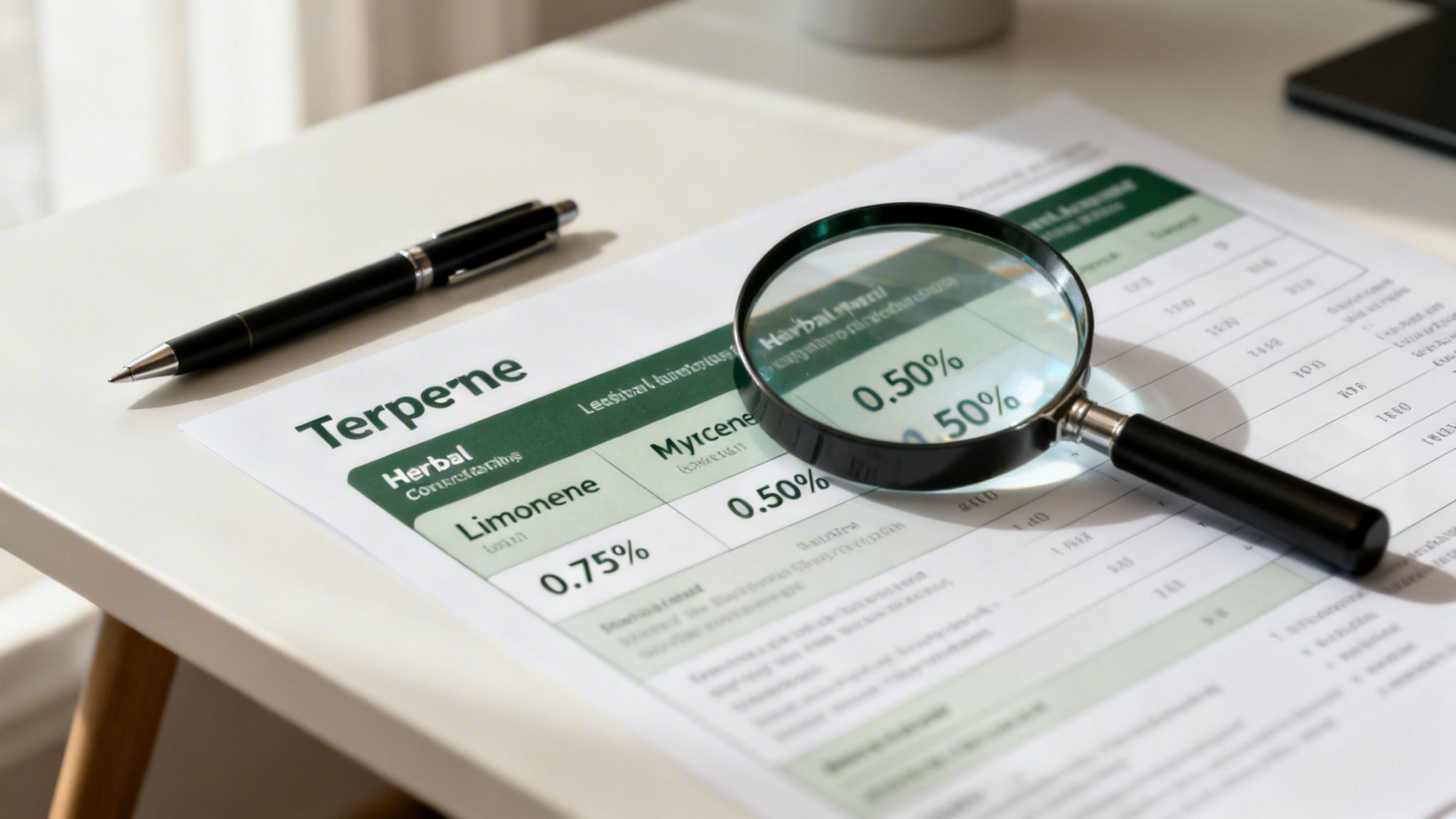
Most quality products, especially flower and concentrates, now come with detailed lab reports. Look for a QR code on the package—it usually links straight to a Certificate of Analysis (COA). Think of the COA as the product's official report card, breaking down its exact chemical makeup, including cannabinoids and, most importantly, its unique terpene profile.
Finding and Reading the Terpene Data
Once you pull up a COA or a detailed label, you’ll see the terpene info laid out in a list or chart. Each terpene is listed by name, with its concentration right next to it, usually as a percentage. For instance, you might see something like "Limonene: 0.75%" or "Myrcene: 1.12%."
Now, those percentages might look tiny, but they pack a massive punch. The total terpene content in flower rarely gets above 3-4%, so even a fraction of a percent makes a huge difference in the product’s aroma and effects. The trick is to spot the dominant terpenes—the ones with the highest percentages.
A Simple Rule of Thumb: The top two or three terpenes on the list will give you the best clue about the strain’s aroma and potential effects. They’re the main players defining the entire experience.
Let’s say you see a product where the top three are Myrcene, Linalool, and Caryophyllene. You can bet that the experience will lean toward relaxing, calming, and soothing. That’s way more useful than just looking at the THC percentage, right?
Putting It All Into Practice
Imagine you’re comparing two strains, and both are labeled 22% THC. On paper, you’d think they’d hit the. But a quick glance at their terpene profiles tells a completely different story.
This is how you start choosing products with a real purpose, whether you’re looking for creative energy or a good night’s sleep. For some products like distillates, terpenes are often added back in to shape the effects. You can get the full story by checking out our guide on live resin vs. distillate and seeing how their terpene content stacks up.
To show you just how much this matters, check out the table below. We’ve broken down how two fictional strains with the same THC level can offer completely different vibes, all thanks to their terpenes.
Comparing Two Strains with Different Terpene Profiles
| Attribute | Strain A ('Citrus Haze') | Strain B ('Earth OG') |
|---|---|---|
| THC Level | 22% | 22% |
| Top Terpenes | 1. Limonene (0.8%) 2. Pinene (0.4%) 3. Caryophyllene (0.3%) | 1. Myrcene (1.2%) 2. Linalool (0.5%) 3. Caryophyllene (0.2%) |
| Expected Aroma | Bright, zesty lemon and fresh pine with a hint of spice. | Earthy, herbal, and musky with a soft, floral undertone. |
| Expected Effects | Uplifting, energizing, and mentally clear. Great for daytime use, creativity, and focus. | Deeply relaxing, sedating, and calming. Perfect for evening use, stress relief, and promoting sleep. |
See the difference? "Citrus Haze" is your go-to for getting stuff done, while "Earth OG" is what you reach for when you need to power down.
By learning to read these labels, you’re no longer guessing. You’re making smart, intentional choices. It’s this kind of know-how that lets you walk into Mr. Nice Guys DC and shop with the confidence of an expert.
Choosing Strains Based on Your Wellness Goals
Okay, so you’ve got the hang of reading a product label. Now for the fun part: putting that knowledge to work and finding the perfect strain for your specific needs. This is where the theory becomes real, and you start picking products based on the effects you actually want, not just a cool name or a high THC number.
Think of it like building your own personalized wellness toolkit. Instead of getting stuck on broad labels like Indica or Sativa, you can get way more specific by targeting terpenes that support your goals. Whether you’re trying to soothe aches, quiet a racing mind, finally get some sleep, or just spark a little creativity, there's a terpene profile out there that can get you there.
Managing Chronic Pain and Inflammation
For a lot of people using cannabis for wellness, finding real pain relief is priority number one. While THC and CBD are major players, some terpenes have powerful anti-inflammatory and pain-relieving qualities that can make all the difference.
The undisputed champ in this arena is caryophyllene. As we mentioned, it's the only terpene we know of that connects directly with your body's CB2 receptors, which play a huge role in dialing down inflammation. If you’re looking for pain relief, start by hunting for strains where caryophyllene is a top terp.
- Key Terpenes: Caryophyllene, myrcene, and pinene.
- How They Help: Caryophyllene goes right to the source of inflammation. Myrcene brings in sedative and muscle-relaxing effects to soothe body aches, while pinene adds its own anti-inflammatory punch to the mix.
- Real-World Example: Your joints are aching after a long day. A strain high in caryophyllene and myrcene—like Wedding Cake or Runtz—can help reduce that inflammation and ease the soreness for some targeted relief.
Easing Anxiety and Promoting Calm
If you’re dealing with a mind that won’t quit or the stress of daily life, the right terpenes can feel like a gentle hand on the brakes. The goal is to find a sense of peace without feeling totally knocked out. You want to quiet the noise, not turn off the lights.
Linalool is the star of this show. Its soft, floral scent is what gives lavender its famous calming vibe, making it a go-to for soothing anxiety. When you pair it with the mood-lifting brightness of limonene, you get a beautifully balanced effect—you're calm, but not drowsy.
This combination is a perfect example of the entourage effect in action. Linalool brings the calm, while limonene keeps your spirits up, so the experience never feels too heavy or sedating.
- Key Terpenes: Linalool, limonene, and a touch of myrcene.
- How They Help: Linalool is well-known for its stress-busting and anti-anxiety properties. Limonene helps elevate your mood and gives you a general sense of well-being.
- Real-World Example: You’ve got a big presentation coming up and need to calm your nerves without losing your focus. A strain rich in linalool and limonene could help quiet that anxiety while keeping you clear-headed and feeling positive.
Promoting Restful Sleep
A good night's sleep is the foundation of everything, but man, can it be hard to come by. For those nights spent tossing and turning, you’ll want to look for strains loaded with deeply sedating terpenes. This is when you want that heavy, "couch-lock" feeling to take over.
Myrcene is the absolute king of sedation. It’s famous for creating that relaxing, body-heavy effect that helps you drift off. Combine it with the gentle, mind-calming vibes of linalool, and you’ve got a powerful one-two punch against sleeplessness. If you want to dig deeper into how different strains can impact you, check out our guide on Indica vs Sativa effects.
- Key Terpenes: Myrcene and linalool.
- How They Help: Myrcene is highly sedative and helps your whole body relax. Linalool works to calm the mind, making it easier to shut down those racing thoughts that keep you awake.
- Real-World Example: It's 2 AM and you're still wide awake. A myrcene-dominant strain like Granddaddy Purple or OG Kush can deliver the physical and mental relaxation you need to finally fall—and stay—asleep.
Enhancing Focus and Creativity
Sometimes, the goal isn't to wind down but to dial in. Whether you're working on a creative project, brainstorming, or just need to focus on a tough task, some terpenes can help sharpen your mind and get the ideas flowing.
The top terpenes for this job are pinene and limonene. Pinene is known for promoting alertness and helping with memory retention—it can even help cut through some of the short-term brain fog that THC can cause. Limonene adds a burst of energy and a mood boost, creating the perfect headspace for creative work.
- Key Terpenes: Pinene, limonene, and caryophyllene.
- How They Help: Pinene helps you focus and stay alert. Limonene boosts your mood and energy. Caryophyllene chimes in to reduce stress, keeping you centered on the task at hand.
- Real-World Example: You're staring at a blank page and need a creative breakthrough. A strain high in pinene and limonene, like Jack Herer or Super Lemon Haze, can help clear out the mental cobwebs and get you inspired.
By matching terpenes to your wellness goals, you can turn every trip to Mr. Nice Guys DC into a successful mission for your own well-being.
Frequently Asked Questions About Cannabis Terpenes
Even as you get more comfortable with the world of cannabis, some questions always seem to pop up. We get it. That’s why we’ve put together some straight-up answers to the most common things people ask about terpenes. Think of this as your quick guide to feeling even more confident in what you’re choosing.
Do Terpenes Get You High?
No, terpenes on their own won't get you high. They aren't psychoactive like THC. But—and this is a big but—they absolutely influence the kind of high you feel. Terpenes are a massive part of the entourage effect.
Think of it like this: THC is the lead singer of the band, but terpenes are the rest of the musicians. They set the mood, control the tempo, and decide if the song is a relaxing ballad or an energetic rock anthem.
For example, a strain heavy in myrcene can steer THC toward a more calming, “couch-lock” feeling. On the flip side, a terpene like limonene can work with THC to give you a more focused, upbeat, and creative buzz.
Are Terpenes Safe To Consume?
Yes, absolutely. The terpenes in your cannabis are the exact same aromatic oils found in fruits, spices, and plants you interact with every day. If you’ve ever smelled a lemon or a pine tree, you’ve experienced terpenes.
In fact, many of them, like limonene and pinene, are so common and safe that the FDA has approved them as food additives. When you get lab-tested cannabis from a trusted spot, you're just getting these compounds in their natural plant form. Still, it's always smart to start slow with a new strain to see how your body reacts.
How Does Vaping Affect Terpenes?
Vaping is hands-down one of the best ways to actually experience a strain's full terpene profile. Smoking, with its intense, direct flame, can scorch and destroy a lot of these delicate compounds before you even get a chance to taste them.
A good vaporizer, especially one with temperature control, heats the flower just enough to turn those terpenes and cannabinoids into vapor without burning anything. This gives you a way cleaner, more flavorful, and aromatic experience. You’ll really taste the citrus, pine, or lavender notes the way they were meant to be enjoyed. If you want to dive deeper into how different methods preserve these compounds, you can explore the science behind marijuana tinctures in our other article.
Why Don't All Products Show Terpene Information?
This is a great question. While the industry is getting better about transparency, full terpene testing isn't standard across the board just yet. It's becoming more common, but where you'll find it most often is on products where terpenes are the star of the show.
- Flower: Most high-quality flower will come with a detailed terpene report.
- Vape Cartridges: Terps are everything when it comes to the flavor and effects of vapes.
- Concentrates: Products like live resin and rosin are celebrated for their powerful terpene content.
With other products, like edibles, the original terpenes are usually lost or changed during the cooking and infusion process. That makes the data less important for the final product's effects. Always ask your budtender for a Certificate of Analysis (COA) if you're curious—any good dispensary will be happy to share that info when it's available.
Figuring out the world of terpenes is a game-changer for finding a truly personalized cannabis experience. For some expert guidance and a menu loaded with terpene-rich products, swing by Mr. Nice Guys DC. Check out what we've got and find the perfect profile for your needs at https://www.mrniceguysdc.com.
Mr Nice Guys DC
At Mr. Nice Guys DC, we’re more than just a cannabis delivery service — we’re passionate advocates for quality, convenience, and community. With years of experience in the cannabis industry, our team is dedicated to educating and empowering customers across Washington, D.C. Whether you're a seasoned user or just starting your cannabis journey, our blog delivers trusted tips, product insights, and the latest updates from the world of weed. Stay informed, stay elevated.
