
Must Be 21 To Enter
By entering this site you are agreeing that you are at least 21 Years of Age or older.
I AM 21 OR OLDERIndica vs Sativa Effects A Guide to Choosing the Right Cannabis
.svg)

.png)
When you’re trying to figure out the difference between indica vs sativa effects, the old-school wisdom is pretty straightforward: Indicas give you a relaxing ‘body high’ that’s perfect for nighttime, while Sativas deliver an energizing ‘head high’ better suited for daytime. This simple split has been the go-to guide for users for decades.
Understanding the Classic Indica vs Sativa Divide
For a long time, the terms Indica and Sativa were the main roadmaps for predicting what a cannabis experience would feel like. This system has deep roots, tied to the plant's physical look and what people observed about its effects over the years.
In the traditional sense, someone would pick up an Indica strain like Granddaddy Purple specifically for its sedating qualities. For example, a person with chronic back pain might use it after a long day to ease muscle tension before bed. The feeling is often described as a pleasant heaviness, sometimes called "in-da-couch."
On the flip side, a Sativa strain like Jack Herer has always been sought after for its stimulating, cerebral buzz. As a practical example, a graphic designer facing a creative block might use it in the morning to spark new ideas and maintain focus on a project. The experience is all about euphoria and mental clarity.
But here’s the thing: this classic Indica vs. Sativa model is a major oversimplification. While it’s a decent starting point, modern science is showing us that a strain’s effects really come down to its unique chemical fingerprint.
Key Takeaway: It’s best to treat the 'Indica' and 'Sativa' labels as general guidelines, not strict rules. A strain's true effects are shaped by its specific mix of cannabinoids (like THC and CBD) and the aromatic compounds known as terpenes.
This means a product's chemistry, not just its family tree, is the most reliable way to know what you’re getting into. Getting your head around this is the first real step toward making smarter choices. If you want to see how these categories play out in different products, check out our guide on the varieties of cannabis carts.
Traditional Effects At-A-Glance Indica vs Sativa
Before we get into the nitty-gritty science, this table sums up what people have traditionally expected from each type. Think of it as the classic user manual.
Remember, this is the old-school view. The real story is a lot more nuanced, and we'll dive into why that is next.
The Classic Story Indica For Relaxation And Sativa For Energy
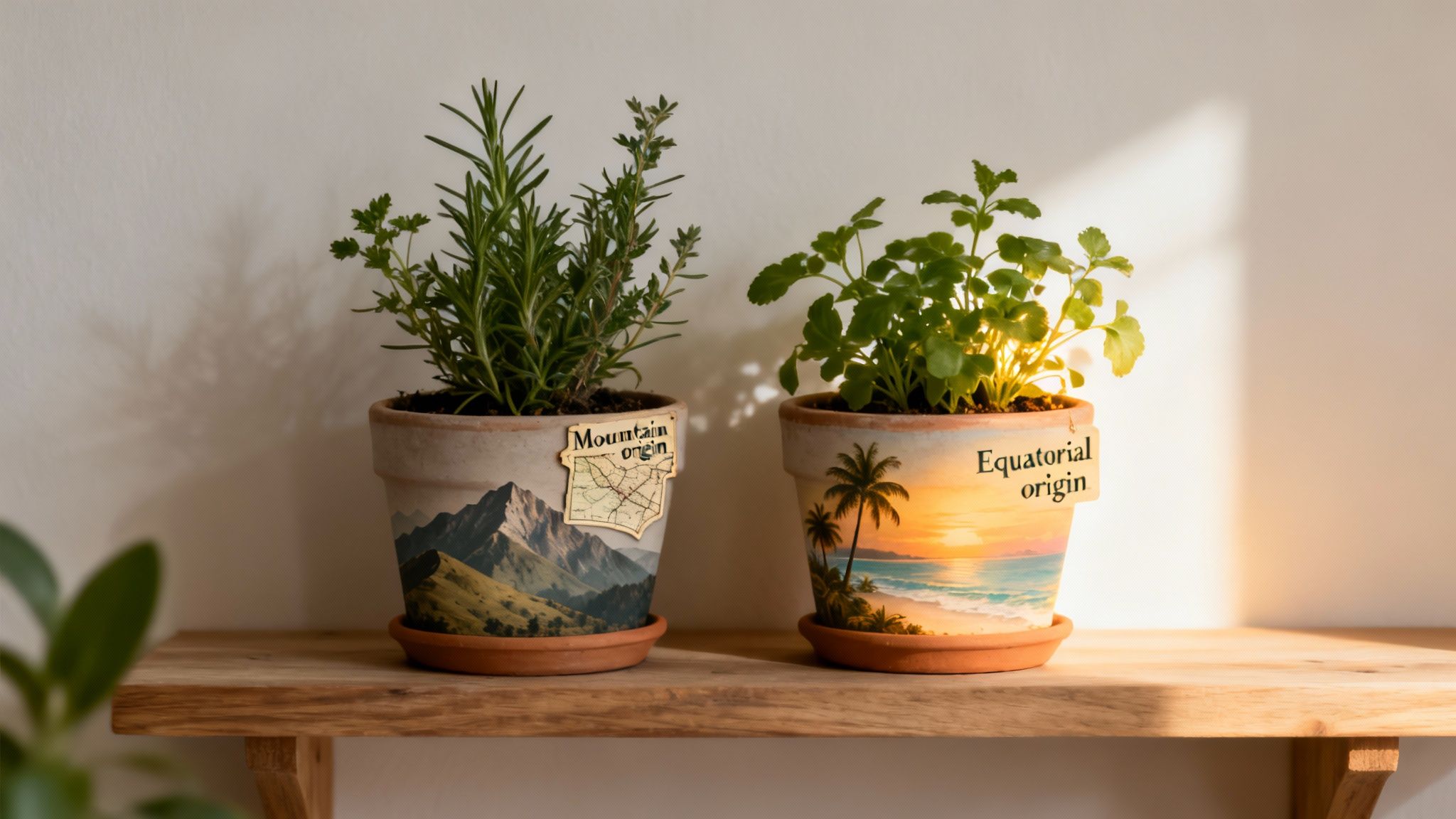
Early botanists didn’t invent “Indica” and “Sativa” in a lab. They simply watched wild cannabis adapt to wildly different climates, then used those adaptations to name what they saw.
Indica strains trace back to the rugged Hindu Kush mountains of Afghanistan and Pakistan. In that brisk, short-season environment, plants evolved to be squat and bushy with broad leaves—ready to finish before the frost.
By contrast, Sativa thrived near the equator in humid jungles of Southeast Asia and Central America. Warm, extended seasons favored tall, lanky stalks with narrow leaves reaching for every sunbeam.
These structural traits are more than aesthetics—they hint at how each type might feel.
From Plant Shape To Perceived Effects
This physical divide led smokers and patients to assign typical effects to each type. Those dense Indica buds earned the nickname “in-da-couch” for the deep body relaxation they often deliver.
Meanwhile, Sativa’s lighter flowers became famous for sparking alertness and creativity. In fact, 85% of Indica users report feeling calm and sleepy, whereas Sativa fans more often note boosted focus and energy. Discover more about how this traditional knowledge took shape.
Classic Use Cases: Indica Vs Sativa
Over time, clear routines formed around these labels. For example:
- Evening Wind-Down With Indica: A person struggling with insomnia might use a strain like Northern Lights or Granddaddy Purple to soothe aching muscles, quiet a racing mind, and drift into a deep sleep.
- Daytime Drive With Sativa: Someone preparing for a social event might use Sour Diesel or Jack Herer to feel more outgoing, jump-start creative conversations, and stay engaged throughout the day.
This historical context is crucial. Early observers noted that sedative strains often contain higher levels of the terpene myrcene, linking plant origins to specific chemical drivers behind the experience.
While this classic story offers a handy rule of thumb, it’s only the beginning. The calming qualities of certain Indicas can be especially helpful for anxiety—check out our guide on best indica strains for anxiety to learn more.
Why Terpenes and Cannabinoids Are the Real Predictors
It’s time to stop thinking in terms of just Indica vs Sativa. While those labels were a decent starting point for decades, we now know that a strain's genetics are a surprisingly weak predictor of its effects. The real magic is in its chemical profile—what experts call its chemotype.
Think of it like making a smoothie. Cannabinoids like THC and CBD are the base ingredients, like bananas and yogurt. They determine the overall texture and potency. But the base alone doesn't define the final taste.
That’s where terpenes come in. Terpenes are the aromatic oils in cannabis that give strains their unique smells and flavors, like the zesty scent of lemons. In our smoothie analogy, if cannabinoids are the base, terpenes are the fruit and spices you add in. They guide the experience and give it a specific flavor, whether that's calming (like adding lavender) or energizing (like adding ginger).
The Science Behind the Switch
The old belief system—Indicas are sedating, Sativas are energizing—is crumbling under the weight of real research. When scientists actually looked at the genetics, they found the whole divide was more myth than reality. A groundbreaking study from Wageningen University, published in Nature Plants, analyzed the DNA of strains from all over the world and found no clear genetic line separating plants labeled Indica from those labeled Sativa. You can read more about these genetic findings on Bedrocan.com.
What this means for you is simple: a plant's shape—short and bushy vs. tall and skinny—tells you almost nothing about how it will actually make you feel. It's all about the specific blend of active compounds inside.
Here's the bottom line: The effects you associate with "Indica" or "Sativa" come from chemistry, not ancestry. It’s the unique cocktail of cannabinoids and terpenes in a strain that creates its signature high.
This explains why a strain labeled "Sativa" but high in the relaxing terpene myrcene might leave you glued to the couch. On the flip side, an "Indica" packed with the uplifting terpene limonene could feel surprisingly energetic.
How Key Compounds Shape Your Experience
The way cannabinoids and terpenes work together is what creates such a rich spectrum of effects. This synergy is famously known as the "entourage effect."
Here are a few of the major players:
Myrcene: This is one of the most common terpenes found in cannabis. When its concentration is above 0.5%, it’s often linked to those classic sedating, "couch-lock" effects. For example, a strain like Blue Dream often has high levels of myrcene, contributing to its relaxing qualities despite being Sativa-dominant.
Limonene: Just like in citrus peels, limonene is all about brightness. It's associated with boosting mood and relieving stress. A practical case is using a strain like Lemon Haze, rich in limonene, to combat feelings of lethargy on a gloomy day.
Caryophyllene: This terpene has a spicy, peppery kick. What makes it so unique is that it also acts like a cannabinoid by binding directly to receptors in our body's endocannabinoid system. Someone with arthritis might seek out strains high in caryophyllene for its potential to reduce joint inflammation and pain.
THC and CBD: These are the foundational cannabinoids. THC drives the main psychoactive effects, while non-intoxicating CBD can actually mellow out THC's intensity. To get a better handle on THC and its raw form, check out our guide: Unlocking THCa vs THC What Every DC Patient Needs to Know.
Matching Your Needs to the Right Chemical Profile
Let's get real. If you want to navigate the world of cannabis effectively, you've got to move beyond the simple Indica vs. Sativa debate. Relying on those broad, often inaccurate labels is a thing of the past. The key is to zero in on a product's specific chemical profile—its unique mix of cannabinoids and terpenes. This is how you actually target the effects you're looking for.
This map breaks down how cannabinoids and terpenes really work together to create the final experience.
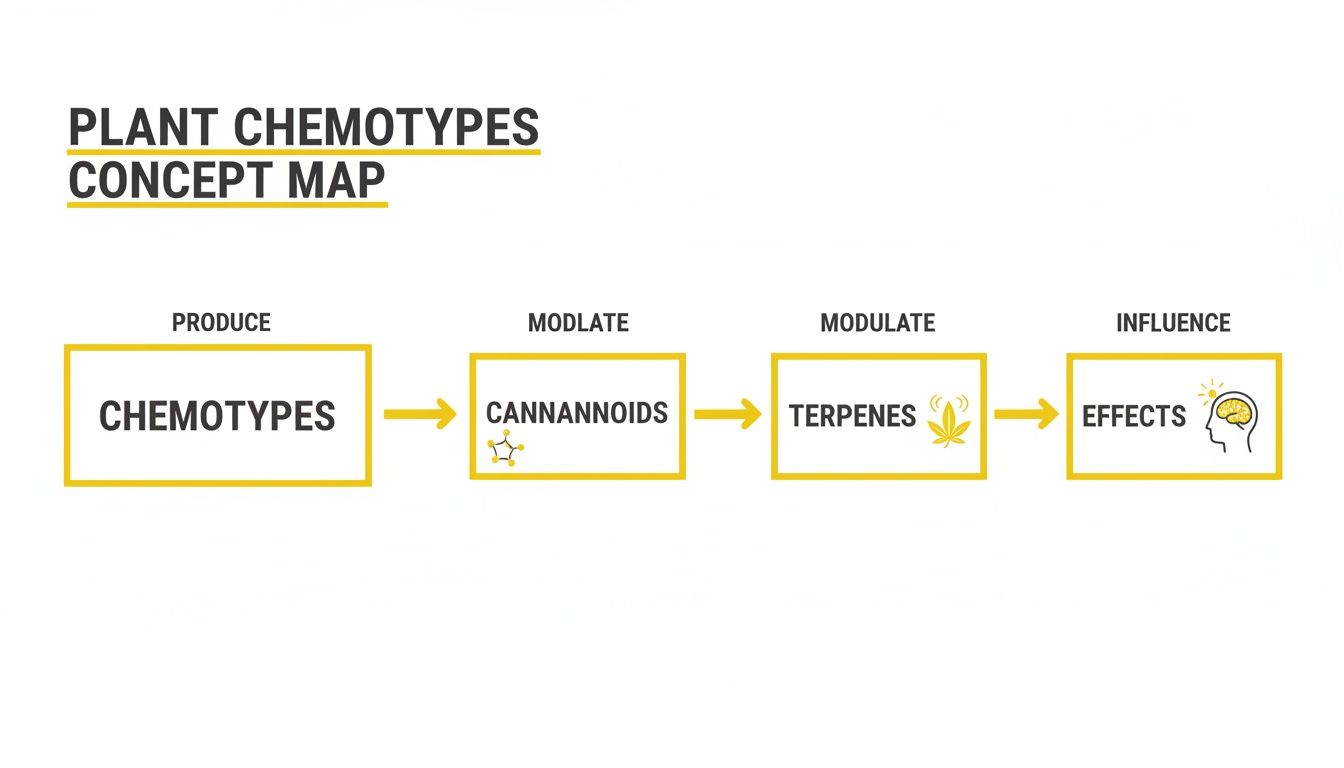
As you can see, the overall feeling you get is all about chemical synergy, not just one compound or a generic plant type.
Targeting Specific Goals with Terpenes
Thinking in terms of terpenes completely changes the game. It turns your selection process from guesswork into a focused strategy. So, instead of asking for a generic "Indica" for pain, you can start looking for strains that are rich in specific compounds known for their therapeutic punch.
For example, imagine you're dealing with post-workout muscle soreness. Instead of grabbing any "Indica," a smarter choice would be a strain high in both myrcene and caryophyllene. Myrcene brings sedative qualities to help your body relax, while caryophyllene interacts with your body's endocannabinoid system to help dial down inflammation.
It's the same story with stress or anxiety. Let's say you have a big presentation coming up and feel overwhelmed. Hunting for a strain that contains linalool (also found in lavender) could provide a calming and mood-stabilizing effect, offering a much more direct path to relaxation than just crossing your fingers with a generic "Indica."
By shifting your focus from "Indica or Sativa" to "Which terpenes will help me?", you empower yourself to find a product that aligns perfectly with your wellness goals. This method is far more reliable and personalized.
Even with this modern understanding, those classic labels still hold a lot of weight. In a major market like Washington, DC, Leafly data shows that what users report for top strains still lines up with the old stereotypes. Indicas like Northern Lights (16% THC) are picked for pain and insomnia, while Sativas like Sour Diesel (18% THC) are the go-to for creativity and energy. In fact, over 70% of popular strains still fit these traditional molds, despite all the hybridization that's happened.
Practical Scenarios for Terpene Selection
Let's put this into practice. Here are a few common situations where looking past the Indica vs. Sativa effects and focusing on chemistry makes all the difference.
For a Mood Boost: Feeling a little down and need an emotional lift? A strain dominant in limonene is an excellent choice. A practical example is using a limonene-rich vape cart during a stressful afternoon to regain a positive outlook.
To Enhance Focus: When you need to lock in on a task, a product high in pinene can deliver that mental clarity you're after. A student studying for an exam could use a strain with pinene to help with alertness and memory retention, avoiding the jitteriness some Sativas can cause.
This targeted approach is the secret to getting consistent results. For a deeper dive, check out our guide on choosing cannabis for sleep, pain, and anxiety. It's all about matching the plant's chemistry to your body's needs.
How to Confidently Choose Your Cannabis Product
Now that you've got a solid grasp of cannabinoids and terpenes, you’re ready to walk into any dispensary and know exactly what you’re looking for. The trick is to stop thinking in terms of the old indica vs sativa effects model. Instead, start focusing on the actual chemistry. This is how you find products that genuinely hit the mark for your wellness goals.
The first step is simply changing how you ask for things. Instead of walking up to the counter and asking for a "strong Indica to help me sleep," you can now ask a much smarter question.
Try something like this: "I’m looking for something to help me unwind before bed. Do you have a flower or vape with a high concentration of myrcene or linalool?"
That small shift in language makes a huge difference. It tells the budtender you know your stuff and are looking for specific chemical profiles, not just a vague category. It kicks off a much better conversation and helps them point you to the perfect product.
Decoding Product Labels and Lab Results
Most legit dispensaries will have a Certificate of Analysis (COA) available for their products. This is just a lab report that breaks down a product’s chemical makeup, and it's your best friend for making an informed choice. Don't let the numbers scare you off; you only need to focus on a couple of key areas.
When you glance at a COA, you'll see a few things:
- Cannabinoid Potency: This part shows you the percentage of major players like THC and CBD. It gives you a straightforward look at the product's overall strength.
- Terpene Profile: This is where the magic happens for dialing in your experience. The report lists the main terpenes and their percentages, so you can match them up with the effects you want.
For example, if you're looking at two different strains to manage knee pain and see one has 0.7% myrcene and 0.4% caryophyllene, you can bet it will probably deliver more physical relaxation and anti-inflammatory relief than another strain with lower percentages of those terpenes—no matter if the label says Indica or Sativa.
This data-first approach takes all the guesswork out of the equation. You're no longer rolling the dice on strain names or what someone else told you. You’re making a choice based on hard science.
Considering Your Consumption Method
Finally, always remember that how you use cannabis changes the game completely. The exact same strain can feel worlds apart depending on whether you vape it, eat it, or take it as a tincture.
Vaping or smoking hits fast, usually within minutes, because the cannabinoids go straight into your bloodstream through your lungs. This is ideal for someone needing immediate relief from a sudden headache or anxiety spike.
Edibles are a different story. They have to pass through your liver, which converts THC into a much more powerful compound called 11-hydroxy-THC. This means you'll wait longer for the effects to kick in (30 minutes to two hours), but the high will be stronger and last much longer. For instance, a person with chronic pain might take an edible before bed to ensure they get a full, uninterrupted night of relief. To dive deeper, you can learn more about the differences between edibles, vapes, and flower in our detailed guide.
By combining what you know about chemotypes with the right consumption method, you can nail down the perfect experience every time.
Got Questions About Cannabis Effects?
Jumping into the world of cannabis can bring up a lot of questions, especially when you're trying to get past the old-school indica vs sativa effects model. Let's tackle some of the most common ones to clear up the confusion so you can choose your products with total confidence.
Can a Sativa Strain Really Make You Sleepy?
Absolutely. It sounds counterintuitive, but it happens all the time. While Sativas are famous for their energetic buzz, a strain's chemical profile tells the real story.
For example, imagine you try a Sativa strain like "Durban Poison," which is known for its uplifting effects. However, this particular batch was grown in a way that produced a high concentration of the sedating terpene myrcene. In this case, you might find yourself feeling surprisingly relaxed or even ready for a nap, which is a perfect example of why checking lab results is more reliable than just the strain name or Sativa label.
Are Hybrids the Best of Both Worlds?
They certainly can be, but "best" really depends on what you're looking for. Hybrids are created by crossing Indica and Sativa plants to dial in a specific blend of effects. You can find Indica-dominant, Sativa-dominant, or truly balanced hybrids, which opens up a massive range of experiences.
The real magic of hybrids is their ability to deliver targeted effects. Skilled growers can cultivate strains with precise cannabinoid and terpene ratios built to tackle specific symptoms, offering a more tailored experience than a pure Indica or Sativa ever could.
Think about a patient who needs pain relief but has to get through a workday. A Sativa-dominant hybrid like "Blue Dream" might offer the pain-dulling properties from its Indica genetics while providing the mental clarity and energy from its Sativa side. This allows them to stay functional and productive without being sedated.
Why Does the Same Strain Hit Everyone Differently?
No two people will experience a strain in the exact same way—our bodies are just too unique. A few key things are at play here:
- Your Body Chemistry: Everyone has a unique endocannabinoid system (ECS), which is the network of receptors that cannabis interacts with. How your personal ECS is wired will have a huge say in how you react to cannabinoids like THC.
- Tolerance Levels: A seasoned user with a high tolerance will feel a strain's effects much differently than a newcomer. A 10mg edible that gives one person a mild buzz could be completely overwhelming for someone trying it for the first time.
- Your "Set and Setting": Your mindset (the "set") and your physical environment (the "setting") play a huge role in your experience. If you're already feeling anxious and you use a high-THC strain in a crowded, loud place, it can amplify those negative feelings.
For example, someone who’s naturally prone to anxiety might find that a high-THC Sativa makes their heart race and triggers paranoia. Another person could try that exact same strain at a concert and feel euphoric and energized.
So, Do the Indica and Sativa Labels Still Matter at All?
Even though the labels are pretty much useless for predicting a strain's effects, you'll still see them everywhere. They haven't completely disappeared from dispensary menus because they serve a purpose as a super basic starting point for new consumers.
Think of "Indica" and "Sativa" as general signposts, like choosing between "red wine" and "white wine." If you walk into a shop knowing nothing, these categories can give you a vague direction to head in—reds are generally bolder, whites are generally lighter. But as you've learned, the real key to finding the right product is to look past that label and check out the chemical profile. That's the only reliable way to know what kind of indica vs sativa effects you're truly going to get.
Ready to move beyond outdated labels and find the perfect product based on your unique wellness goals? At Mr. Nice Guys DC, our expert team is here to guide you through our curated selection of premium cannabis, helping you understand the cannabinoids and terpenes that will work best for you. Explore our menu and place your order for pickup or delivery today at https://www.mrniceguysdc.com.
Mr Nice Guys DC
At Mr. Nice Guys DC, we’re more than just a cannabis delivery service — we’re passionate advocates for quality, convenience, and community. With years of experience in the cannabis industry, our team is dedicated to educating and empowering customers across Washington, D.C. Whether you're a seasoned user or just starting your cannabis journey, our blog delivers trusted tips, product insights, and the latest updates from the world of weed. Stay informed, stay elevated.
