
Must Be 21 To Enter
By entering this site you are agreeing that you are at least 21 Years of Age or older.
I AM 21 OR OLDERWhat is live resin vs distillate? A Guide to Potency, Flavor, and Effects
.svg)

.png)
When you're trying to decide between live resin and distillate, it really comes down to what you're after: flavor or raw potency. Live resin is a full-spectrum concentrate that’s all about capturing the authentic taste and aroma of the living plant. For example, a live resin vape cart made from the strain Gelato will have a sweet, creamy, and slightly fruity taste, just like the flower. On the other hand, distillate is a super-refined THC oil, celebrated for its purity and strength, making it a powerful but much less flavorful choice.
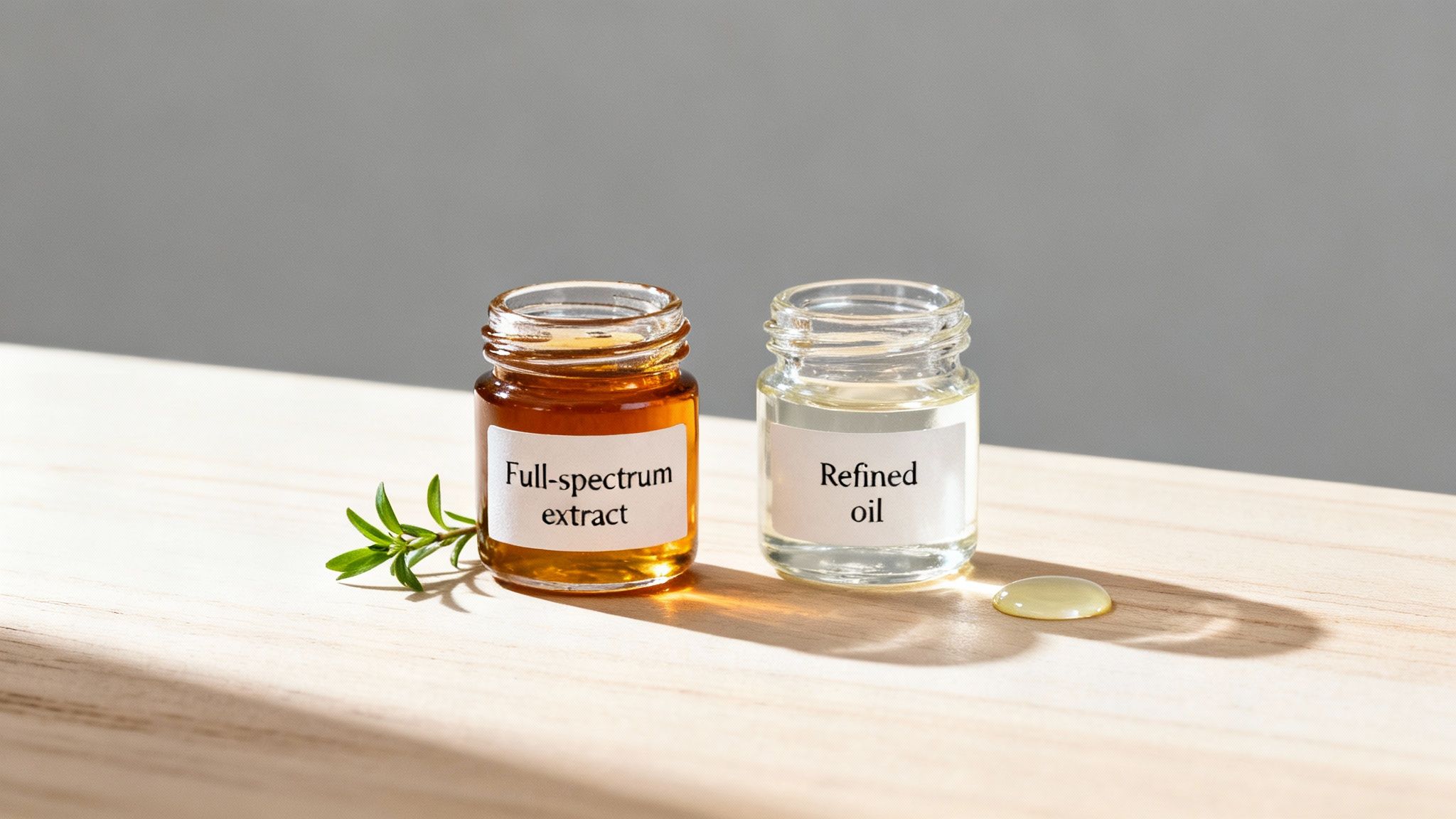
Understanding The Core Differences
Choosing between these two concentrates really hinges on your personal wellness goals. Are you looking for a complex, strain-specific experience that feels just like the original flower? Or do you need a versatile, high-potency product that delivers consistent effects every time?
Your answer will point you to the right concentrate. One gives you a symphony of compounds all working together, while the other delivers a powerful, isolated cannabinoid. For instance, if you want to unwind after a long day with the relaxing, earthy notes of a strain like Granddaddy Purple, live resin is your best bet. If you just need potent, fast-acting relief for a headache, a distillate vape might be more practical.
The Role Of Terpenes and The Entourage Effect
The biggest difference between them is the entourage effect—that magical synergy between cannabinoids and terpenes. Live resin is absolutely packed with terpenes, which are the aromatic compounds that give a strain its unique scent and flavor. These work right alongside THC to create much more nuanced effects. A practical example is the terpene myrcene, which is known for its calming effects and can make an indica live resin feel more sedating.
Distillate, however, has all those terpenes stripped away during production. This leaves you with a product that has an incredibly high THC concentration but lacks the broader spectrum of compounds that can truly shape your experience. For a deeper dive into how different cannabinoids play off each other, you can learn more about THCA vs THC in our detailed guide.
The fundamental difference is simple: Live resin prioritizes the plant's complete chemical profile for a full-bodied experience, while distillate isolates a single cannabinoid for maximum potency.
You can see this split reflected in market trends. Live resin is blowing up right now, with its vape sales in California hitting 27.5% as more people chase those authentic, terpene-rich options. Some projections even estimate the live resin cartridge market will hit $2.5 billion by 2025.
At the same time, distillate still holds a huge market share because it’s so versatile. It's perfect for edibles and tinctures where consistency is everything. For example, a commercial kitchen making thousands of cannabis gummies needs to ensure each one has exactly 10mg of THC, something that's only possible with a pure ingredient like distillate.
To make things even clearer, let's break down their main attributes side-by-side.
Live Resin vs Distillate At A Glance
For a quick reference, here’s a simple table that highlights the key differences between live resin and distillate. It’s a great way to see exactly what sets them apart at a glance.
Ultimately, this table shows that your choice depends entirely on what kind of experience you're looking for. One isn't necessarily "better"—they just serve completely different purposes.
How Live Resin and Distillate Are Made
If you really want to get to the bottom of the live resin vs. distillate conversation, you have to start at the beginning—how they’re made. The production processes are worlds apart, and those first steps are what create two completely different products. Think of it like fresh-squeezed juice versus a pure, neutral spirit. One is all about capturing the fruit's full essence, while the other is about distilling it down to its most basic, potent form.
One process is designed to preserve the plant's entire "living" profile. The other aims to isolate a single compound for raw purity. This difference in philosophy is what shapes everything else, from the flavor and aroma to the high itself.
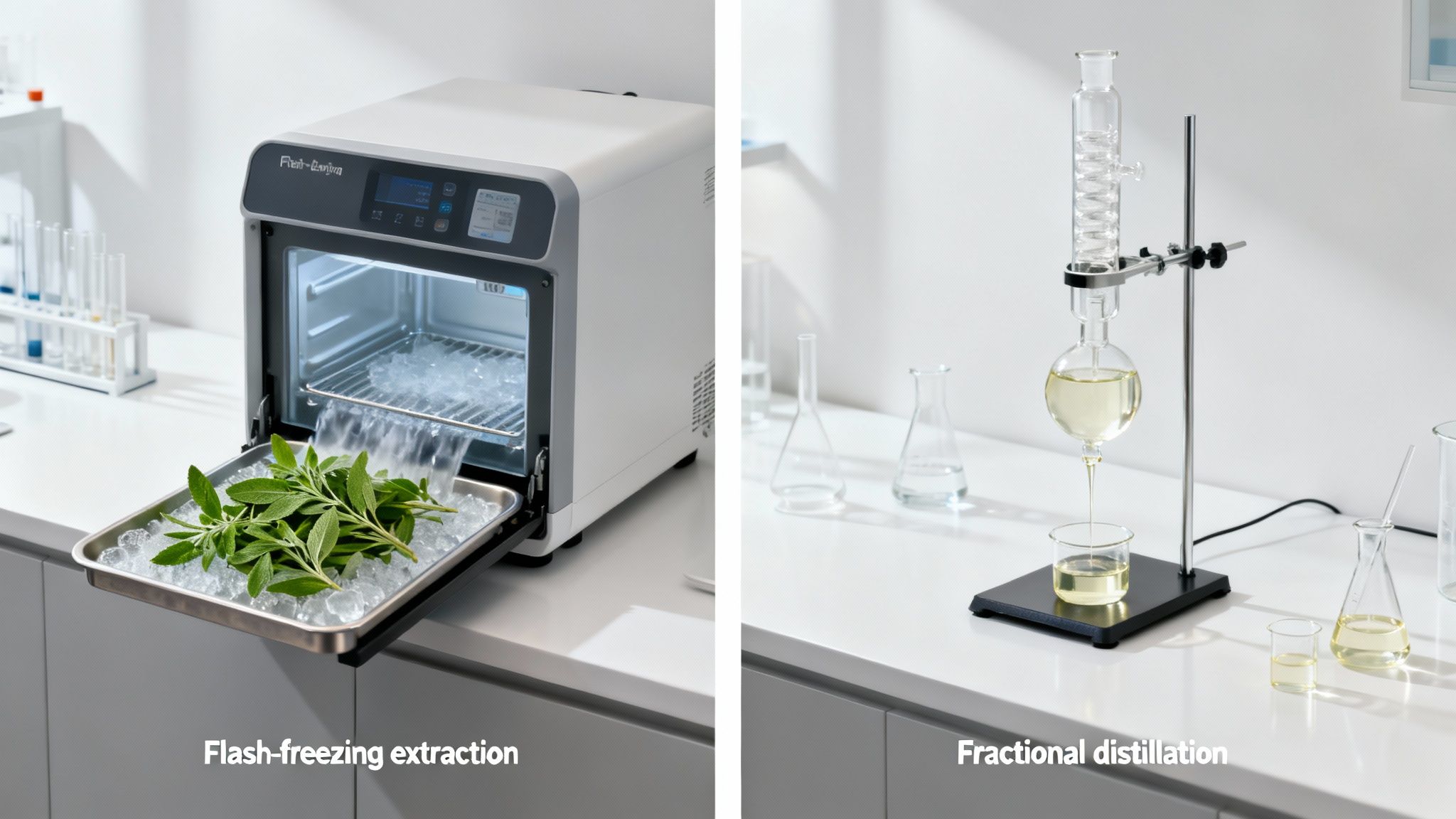
The Live Resin Process: Capturing The Plant’s Essence
Making live resin starts the second the cannabis plant is harvested. Instead of going through the usual drying and curing, the whole plant—flowers, leaves, everything—is immediately flash-frozen at incredibly cold temperatures. This one move is the most important part of the entire process.
By freezing the plant while it’s still "alive," producers stop the delicate terpenes and cannabinoids from breaking down. These are the volatile compounds that give a strain its unique smell and taste, and they start to disappear the moment the plant is cut. Imagine picking a fresh mint leaf versus using a dried one—the fresh one has a much more vibrant and intense aroma, which is exactly what flash-freezing preserves in cannabis.
Key Takeaway: Flash-freezing is what puts the "live" in live resin. It locks in the full spectrum of compounds just as they were in the fresh plant, giving you an authentic, strain-specific profile that you just can't get from dried material.
Once frozen, the plant material is put through a careful extraction, usually with a solvent like butane. The solvent washes over the frozen plant, pulling out all the good stuff. Finally, the mixture is purged of any leftover solvent, leaving behind a potent, terpene-heavy concentrate that’s a true snapshot of its original strain.
The Distillate Process: A Path To Pure THC
Distillate production takes a completely different road, one that’s all about refinement and isolation, not preservation. It’s a multi-step journey that starts with cannabis that has already been dried and cured, or even just crude extract made from trim.
The first extraction pulls out a bunch of compounds, but the goal isn’t to keep them all. Instead, this raw oil goes through several rounds of purification. The most crucial step here is fractional distillation.
Here’s a look at how that works:
- Heating: The crude cannabis oil is heated up in a controlled lab setting.
- Vaporization: As it gets hotter, different compounds—cannabinoids, terpenes, fats—turn to vapor at their own specific boiling points.
- Separation: These vapors are collected and cooled separately, which allows technicians to isolate specific cannabinoids like THC with surgical precision.
This method strips away everything else—terpenes, flavonoids, and other minor cannabinoids—leaving behind a clear, odorless, and tasteless oil that is almost pure THC. We’re talking 90% potency or higher. It’s a very different approach from other liquid cannabis products; you can read more about that in our guide on the science behind marijuana tinctures and their effects. The end result is an incredibly versatile but one-dimensional concentrate.
Comparing Potency, Flavor, And Aroma
When you get down to the live resin vs. distillate debate, the conversation always lands on three things: potency, flavor, and aroma. They're both powerful concentrates, no doubt, but they deliver completely different experiences. One is a straight-up, high-THC punch, while the other is a richer, more nuanced journey that lights up all your senses.
The choice often boils down to one simple question: Are you chasing the highest number on a lab report, or are you after the true, authentic expression of a specific strain? Figuring that out is key to finding the right product for what you need.
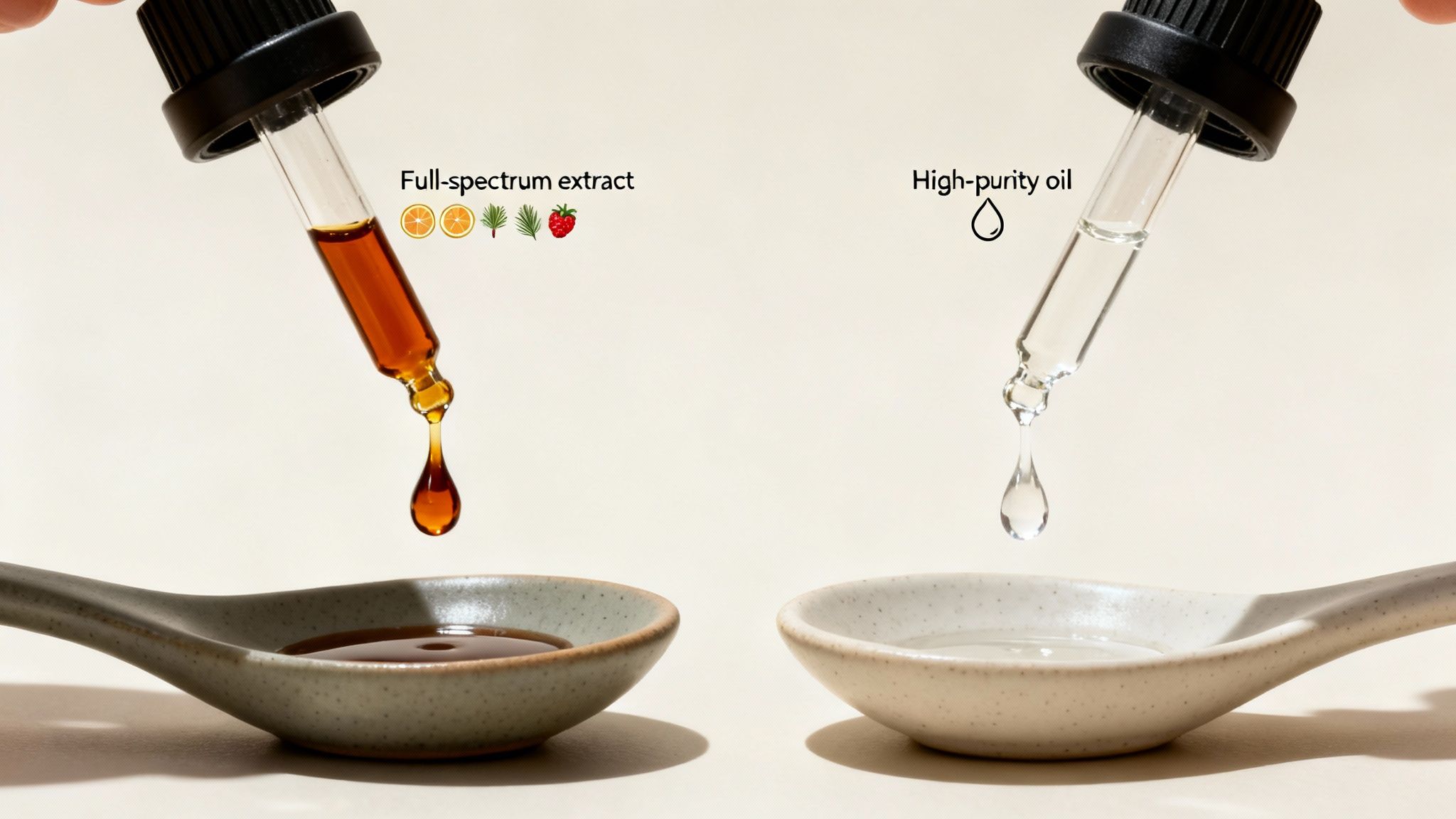
Potency: A Tale Of Two Highs
On paper, distillate looks like the undisputed champ. With THC levels that often hit between 85% and 95%, it delivers a powerful, direct, and fast-acting high. This makes it a go-to for people with a high tolerance or those who need strong, predictable relief without any extra fluff. For example, someone using cannabis for severe nerve pain might prefer distillate for its consistent, high-impact THC dose.
But potency isn't just about the THC percentage. Live resin, which usually tests between 60% and 80% THC, brings a different kind of strength to the table. Its power comes from the entourage effect, where the whole crew of cannabinoids and terpenes work together. This synergy can create a more well-rounded and dynamic high that many people find way more satisfying than just pure THC.
Key Insight: A higher THC number doesn't always mean a "better" high. Distillate gives you a potent but one-dimensional effect, while live resin offers a complex, layered experience shaped by the entire plant.
Flavor And Aroma: The Truest Expression
This is where live resin really pulls away, and the differences become impossible to ignore. Because it’s made from flash-frozen plants, live resin keeps the strain’s original terpene profile intact, delivering a taste and smell that's as real as it gets.
- A live resin from a Lemon Haze plant, for instance, will burst with bright, zesty citrus notes because it holds onto the limonene terpene.
- Likewise, a live resin from a Pine OG will have that fresh, earthy, pine-forward aroma, staying true to its genetics.
This makes live resin the top choice for connoisseurs who want to experience the true soul of their favorite strains. If you want to see just how diverse strain profiles can be, check out our guide on the top flower strains at Mr. Nice Guys DC to get a feel for it firsthand.
Distillate, on the other hand, is the complete opposite. The distillation process strips away all the native terpenes, leaving behind a totally neutral, flavorless, and odorless oil. It's a blank slate, which is great for edibles, but for vape carts, that flavor has to be added back in.
The Reintroduction Of Terpenes In Distillate
To make a vape product people actually want to use, manufacturers add terpenes back into their distillate. The catch is, these usually aren't the original terpenes from the cannabis plant. Instead, they're often:
- Botanically-Derived Terpenes: Sourced from other plants like lemons, pine trees, or lavender to mimic popular cannabis flavors. For example, limonene from orange peels might be added to create a "Tangie" flavor.
- Artificial Flavorings: Cooked up in a lab to create candy-like flavors such as "Blue Raspberry" or "Watermelon Splash."
This is a huge deal in the live resin vs. distillate conversation. A distillate cart might taste like strawberry, but it’s an added flavor. A live resin cart that tastes like strawberry does so because its parent strain naturally produced those terpenes. For anyone seeking a genuine cannabis experience, live resin is the undeniable winner in the flavor department.
Exploring Different Consumption Methods
The way you use a concentrate can totally change the experience. This is especially true when you’re weighing live resin against distillate. Because they’re so different, each one really shines in its own lane. One is built for a full-on, flavorful session, while the other gives you incredible versatility for low-key, predictable use.
Figuring out how each one is typically used will help you grab the right product for the right moment. Whether you're kicking back at home or need some reliable relief on the move, there's a method that fits.
How To Enjoy Live Resin
Live resin is all about the experience—savoring the deep, complex flavors and aromas of the plant it came from. The ways people use it are all geared toward preserving that delicate terpene profile.
Here are the most common ways to get the most out of live resin:
- Dabbing with a Rig: This is the classic move for connoisseurs. A dab rig uses a heated nail (usually quartz) to vaporize a tiny bit of live resin, which you then inhale. It delivers an incredibly potent and flavorful hit that’s perfect for an evening session at home. For example, dabbing some Sour Diesel live resin will give you that powerful, pungent vapor that’s unmistakable and true to the flower.
- Portable Dab Pens: If you want that dabbing experience without being tied to a table, a dab pen or wax vape is the answer. These devices are way more discreet than a full rig but still let you load your own concentrate. The result is a clean, terpy hit without all the extra gear.
- Premium Vape Cartridges: Live resin carts have gotten super popular, and for good reason. They give you the best of both worlds: the authentic taste of the strain and the grab-and-go convenience of a vape pen. These aren't your average carts; they’re filled with pure live resin for a top-tier, flavorful vapor.
The Unmatched Versatility Of Distillate
Distillate is the ultimate workhorse of the cannabis world. Because it’s so pure and has a neutral flavor, it can be infused into pretty much anything without messing with the taste.
Because it’s essentially pure, activated THC in liquid form, distillate is the foundational element for a huge range of products. It provides potent, predictable effects without the skunky flavor of cannabis, opening the door to countless consumption methods.
This adaptability makes distillate a favorite for both product makers and users. Its uses are incredibly broad, designed for anyone who values consistency and discretion over that classic cannabis flavor.
Here’s where you’ll almost always find distillate:
- Standard Vape Cartridges: The overwhelming majority of vape carts on the market are filled with distillate. Producers then add botanical or artificial terpenes back in to create specific flavors like "Blue Raspberry" or "Grape Ape." They offer a consistent, high-potency experience and are a go-to choice for convenience. You can learn more by checking out our guide to decoding vape options like cartridges, pens, and disposables.
- Edibles: Distillate is the perfect active ingredient for edibles. Since it’s already activated and has no flavor, it can be precisely dosed and mixed into gummies, chocolates, and baked goods without changing how they taste. This is how a single gummy can reliably contain exactly 10mg of THC.
- Tinctures and Topicals: Its purity makes distillate ideal for sublingual tinctures and topical creams. It allows for accurate dosing in droppers and absorbs easily into lotions for localized relief, all without that strong cannabis smell. A practical example would be a THC-infused balm for sore muscles, which provides targeted relief without any psychoactive effects or overpowering odor.
How To Choose The Right Concentrate For You
Figuring out whether to go with live resin or distillate all comes down to what you're trying to achieve. There’s no single "better" option here; it’s about picking the right tool for the job. You’re really just matching the concentrate's profile to your own wellness goals or the kind of vibe you’re after.
So, what’s the plan? Are you looking for something with super high potency to predictably manage symptoms, or are you chasing a rich, flavorful experience that’s true to the original plant? Answering that one question is the first step to making a choice you'll be happy with.
Your Goal Your Concentrate
To make things simple, let's look at the live resin vs. distillate debate through the lens of common goals. When you focus on the outcome you want, it's a lot easier to see which concentrate will get you there.
For Consistent Dosing and Predictable Relief
If your top priority is managing something like chronic pain or anxiety with a dose you can count on every single time, distillate is usually the way to go. Its purity means the effects are almost entirely from THC, which makes every session incredibly predictable.
- Here’s a real-world example: A medical patient might need a precise 10mg of THC to handle pain before heading to work. A distillate-based edible or tincture delivers that exact dose without the guesswork that a full spectrum of cannabinoids and terpenes could introduce.
For a Full-Spectrum, Strain-Specific Experience
On the flip side, if you're looking to elevate your mood or want an experience that feels just like a specific strain, live resin is the clear winner. That rich blend of terpenes and minor cannabinoids creates a much more nuanced and targeted high, all thanks to the entourage effect.
- Picture this: Someone looking to get their creative juices flowing or enjoy a more social, happy high might grab a live resin vape cart made from a sativa like Lemon Haze. The limonene terpenes in the live resin play a huge role in those mood-lifting effects, giving you so much more than just raw THC power.
To help you see it clearly, this decision tree maps out which path to take depending on whether you're after full flavor or high potency.
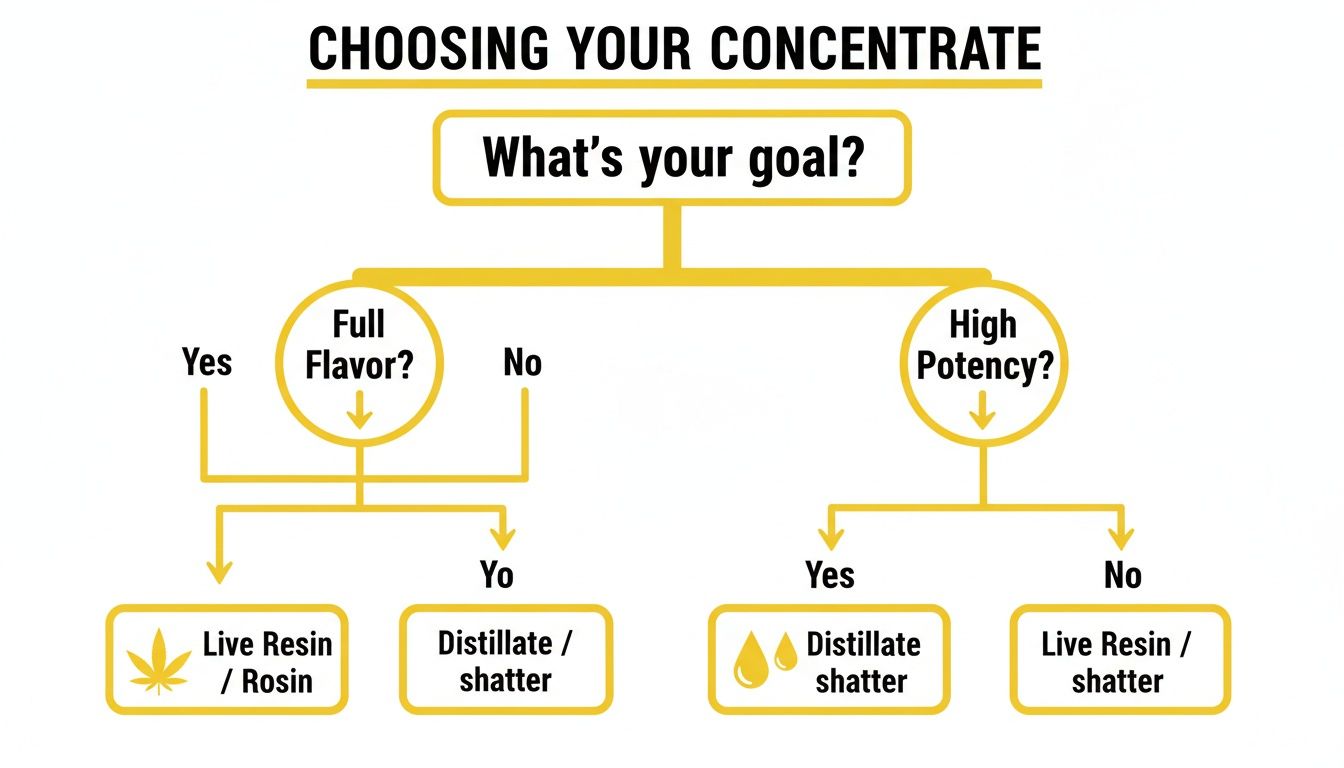
As you can see, it all boils down to your personal preference: an authentic, flavorful journey or a potent, no-frills effect.
Matching The Moment To The Method
Your choice also depends a lot on the situation you're in. The perfect concentrate for a chill night at home probably isn't the same one you'd want for a quick, discreet session on the move.
Choosing between live resin and distillate is like choosing between a craft beer and a pure grain spirit. One is savored for its complex flavor profile and nuanced effects, while the other is valued for its raw strength and versatility in mixed applications.
If you're exploring different ways to consume cannabis, our guide on edibles vs. vapes vs. flower gives a great rundown of how different formats can shape your whole experience.
Let’s break it down for a few common scenarios:
- You're a Flavor Chaser: If you're all about those subtle notes of pine, citrus, or berry, then live resin is your only real move. Its preserved terpenes deliver an authentic taste that distillate just can't touch. For example, a dab of Strawberry Cough live resin will taste just like fresh strawberries, an experience you can't replicate with flavored distillate.
- You're New to Concentrates: For anyone just starting out, distillate can be a much friendlier entry point. The effects are predictable, and it's easy to find in low-dose edibles and vapes, making it simpler to control your session and not overdo it. A 5mg distillate gummy is a great practical first step.
- You Want Maximum Discretion: When you need to keep things on the down-low, distillate vapes are your best friend. They produce way less of that classic weed smell, often swapping it for faint botanical or fruity scents that are perfect for public spots.
- You're Making Your Own Edibles: If you're a home cook looking to infuse your own goodies, distillate is the industry standard. It's already activated (decarboxylated) and has no flavor, so it blends into any recipe without adding that weedy taste. For example, you can add a measured amount of distillate to your brownie batter for potent, flavorless results.
What To Look For When Shopping
Walking into a dispensary can feel like a lot when you’re staring at walls of options. But knowing a few key things makes the difference between guessing and walking out with exactly what you need. It really just comes down to knowing how to read the story on the product label.
When you're trying to decide between live resin and distillate, the label is your roadmap. It’s packed with all the details you need to confirm a product’s quality, safety, and the kind of experience it’s going to deliver.
How To Read Product Labels
A quality product always comes with a detailed label, and any reputable spot like Mr. Nice Guys DC makes sure this info is clear and easy to find. Don't just look at the THC percentage—that's only one part of the story.
Here’s what you should really be zeroing in on:
- Cannabinoid Percentages: Sure, distillate will show off those huge THC numbers, often hitting 85-95%. But check out the live resin label for a mix of cannabinoids like CBD, CBG, or CBN. That variety is what fuels the entourage effect.
- Terpene Profile: This is everything for live resin. A good label will list the top terpenes—think myrcene, limonene, or caryophyllene—which control the flavor and shape the high. A high terpene percentage (5-15%) is a dead giveaway for a top-shelf, flavorful product.
- Lab Testing Information: Always hunt for a QR code or batch number. This links to a Certificate of Analysis (COA), which is a third-party lab report confirming the product is clean and free of nasty stuff like pesticides, heavy metals, or leftover solvents.
Talking To Your Budtender
Your budtender is your best friend in the shop, especially once you have a basic grip on the live resin vs. distillate difference. Instead of just asking "what's strong?", you can steer the conversation to find the perfect fit.
Walk in with your end goal in mind. A good budtender can take what you want to feel—whether that's "uplifting and creative" or "calm and relaxing"—and point you to a specific product backed by real lab data.
For instance, try saying something like, "I'm looking for a live resin vape with citrusy notes to help boost my mood. What do you have with high limonene content?" That gives them something solid to work with, making sure you leave with something that actually matches your wellness goals.
Understanding Price and Proper Storage
You’ll almost always find that live resin costs more than distillate. That price difference comes from its complicated and hands-on production process, which demands fresh-frozen, high-quality flower to keep those delicate terpenes intact. Distillate is usually cheaper because it can be made from a much wider range of starting material, even trim.
Once you’ve got your concentrate home, storing it right is key to protecting your purchase.
- For Live Resin: Keep it in the fridge inside an airtight, light-proof container. The cold is crucial for preserving the volatile terpenes that give it that amazing flavor and aroma. For example, keeping your live resin "badder" or "sauce" in a small silicone or glass jar in the fridge will maintain its consistency and taste for months.
- For Distillate: Room temperature is fine, just keep it away from direct sunlight and heat. Its simple chemical makeup makes it way more stable and less fussy than live resin. A distillate syringe or vape cart can be safely kept in a drawer or cabinet.
A Few Common Questions
Diving into the world of concentrates like live resin and distillate can definitely bring up a few questions. We get it. To make things clearer, here are some straight answers to the things we hear most often from people walking into our shop.
Is The High From Live Resin Different Than Distillate?
Absolutely. The difference is night and day. A high from distillate is all about that pure, potent THC. It’s a very direct, predictable, and clean buzz that a lot of people appreciate for its consistency. Think of it as a straight shot of potency.
Live resin, on the other hand, delivers a true full-spectrum experience. Thanks to the entourage effect, its rich blend of terpenes and other cannabinoids works together with the THC. This creates a more complex, well-rounded high that feels much closer to smoking traditional flower, reflecting the unique character of the original strain. For example, a Blue Dream live resin might provide a gentle, creative euphoria, while a Blue Dream distillate will just feel strong and heady.
Which Concentrate Is Better For Beginners?
If you’re just getting into concentrates, distillate is usually the best place to start. Its effects are almost entirely THC-driven, which makes it much easier to manage your dose and see how your body handles high-potency cannabis without any other variables.
Distillate products, like vape cartridges or accurately dosed edibles, offer a controlled and less intimidating introduction. Once you’re comfortable, you can start exploring the more nuanced world of live resin to find the flavors and layered effects you really connect with.
Can Live Resin Be Used In Edibles?
You can definitely use live resin in edibles, though you don’t see it as often. The main reason distillate is king in the edibles market is its neutral flavor and the fact that it's super easy to dose precisely. It doesn’t mess with the taste of the gummy, brownie, or whatever else you're making.
But, using live resin brings that strain's unique terpene profile and the entourage effect into the mix. This can create a more dynamic, full-bodied edible experience. It just takes a bit more work—you have to decarboxylate (or activate) it properly, and it will definitely add a distinct cannabis flavor to the final product. For example, making cookies with OG Kush live resin will give them a unique, earthy flavor profile along with a more balanced high.
Ready to figure out which concentrate is right for you? The team here at Mr. Nice Guys DC can walk you through our top-shelf selection of live resin and distillate products. Check out our menu and place an order for pickup or delivery today at https://www.mrniceguysdc.com.
Mr Nice Guys DC
At Mr. Nice Guys DC, we’re more than just a cannabis delivery service — we’re passionate advocates for quality, convenience, and community. With years of experience in the cannabis industry, our team is dedicated to educating and empowering customers across Washington, D.C. Whether you're a seasoned user or just starting your cannabis journey, our blog delivers trusted tips, product insights, and the latest updates from the world of weed. Stay informed, stay elevated.
