
Must Be 21 To Enter
By entering this site you are agreeing that you are at least 21 Years of Age or older.
I AM 21 OR OLDERTypes of Cannabis Concentrates Explained for Patients
.svg)

.png)
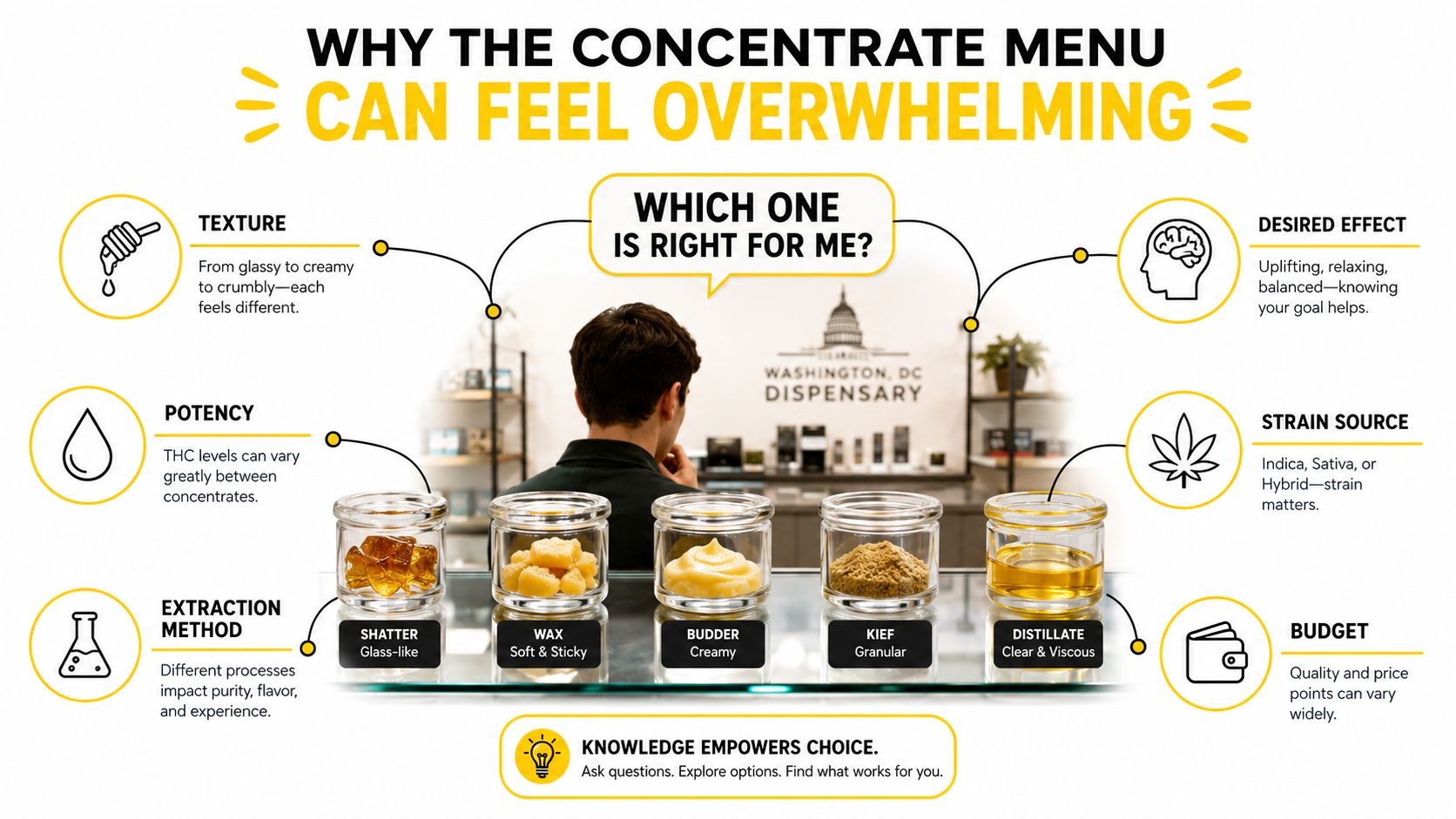
You're standing at a Washington, DC dispensary counter with a concentrate menu open in front of you. One jar holds something glassy and amber, another contains soft wax, a third looks creamy like frosting, and the remaining options include granular kief and nearly clear distillate. The practical question is simple: which type is right for you?
The answer doesn't start with the texture alone. Concentrates are products made by separating resin-rich compounds, especially cannabinoids and terpenes, from excess plant material. Some methods use solvents, while others rely on pressure, heat, screens, agitation, or water. The result is a broad family that includes traditional hash and kief, flavorful live extracts, scoopable waxes, brittle shatter, rosin, cartridges, and highly refined oils.
A product label and certificate of analysis tell you more than a name on the jar. Check THC and CBD, terpene information, residual-solvent results, contaminant testing, recommended format, and device compatibility. Inhaled products may become noticeable within minutes, while oral products can take much longer, so a small first portion gives you room to assess the experience before increasing it.
Why the Concentrate Menu Can Feel Overwhelming
A first-time patient might ask for “the strongest one,” then point to shatter because it looks more refined than wax. Another might choose distillate because it's clear, assuming a transparent oil must be cleaner or gentler. Neither conclusion is reliable. Texture, appearance, extraction method, potency, and intended use are separate clues.
Cannabis concentrates are broadly grouped into solvent-based extracts and solventless or mechanical concentrates. Solvent-based methods use a substance such as butane, propane, ethanol, or CO2 to dissolve resin from plant material before the solvent is removed. These methods can produce shatter, vape oil, wax, live resin, and distillate. Solventless methods use mechanical separation, heat, pressure, dry-sifting, or water to produce kief, hash, bubble hash, and rosin. This distinction reflects both chemistry and manufacturing history, not just marketing language. A historical overview of concentrate production describes long-established methods such as dry-sieving, water extraction, and rosin pressing, alongside the later rise of hydrocarbon extraction.
What the label can answer
Ask the budtender to help you compare:
- Potency: Look for total THC, CBD, and total cannabinoid content rather than judging strength by texture.
- Terpene profile: Terpenes contribute to aroma and can help distinguish a bright, earthy, piney, or floral product.
- Testing: Review residual-solvent screening and contaminant results where available.
- Format: A distillate cartridge, scoopable rosin, and edible made with concentrate require different handling and have different onset patterns.
- Compatibility: A sticky product may need an open concentrate chamber, while a cartridge needs an appropriate battery.
Broad-spectrum products retain more of the plant's chemical profile, while isolates are highly refined around one cannabinoid. Neither label automatically answers whether a product will suit a patient's goal. A person seeking a predictable cartridge may prefer refined distillate, while someone prioritizing aroma may ask about live resin or rosin.
Counter question: “What's the tested potency, which terpenes stand out, and what device should I use with it?”
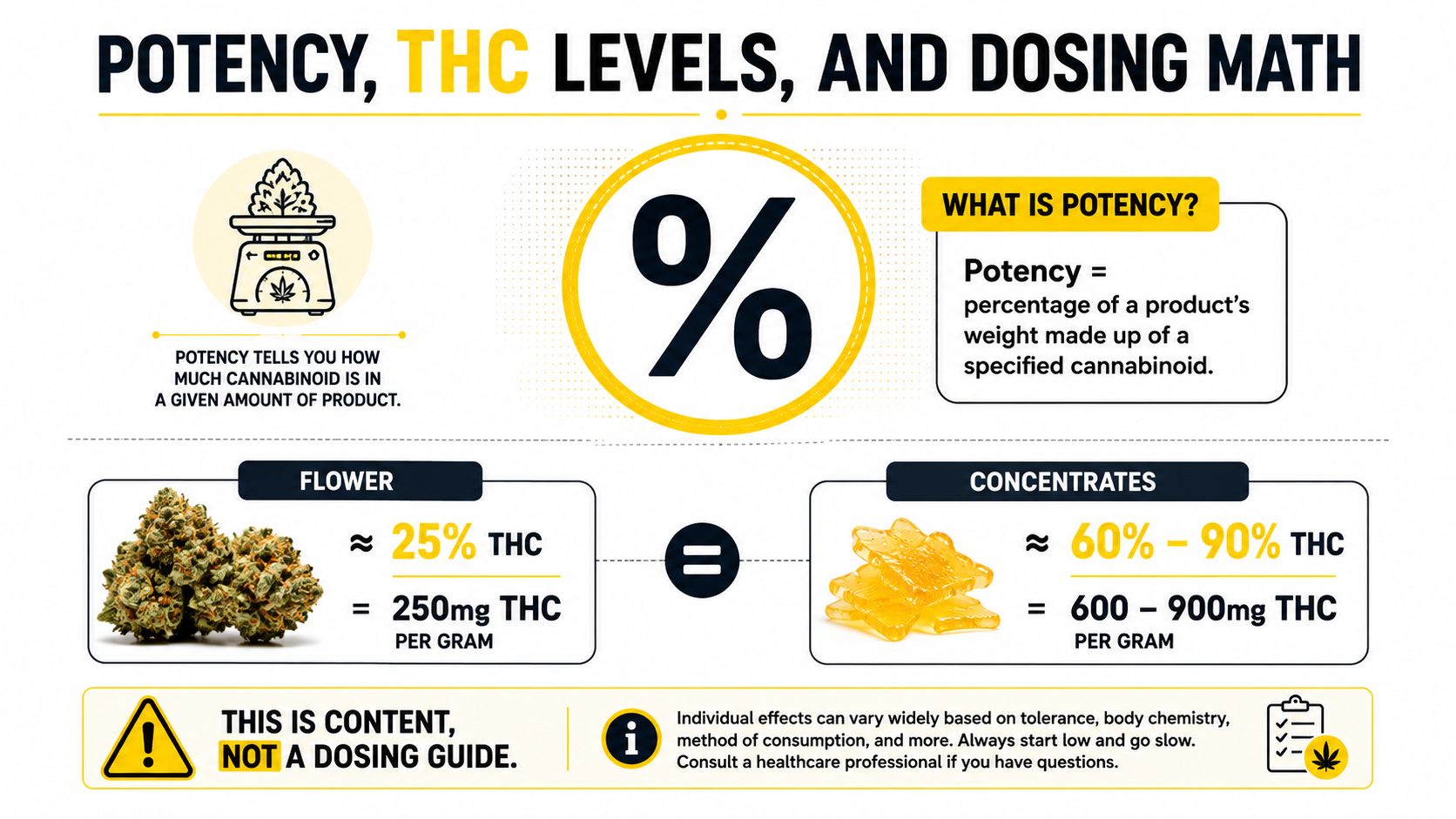
Concentrates became a distinct category largely because they contain much more cannabinoid material by weight than flower. A scientific review reports concentrate THC commonly in the 52% to 69% range, with some products reaching 70% to 95%, while a U.S. government fact sheet places common concentrates around 40% to 80% THC and notes they may be up to four times stronger than flower at about 20% THC. The review and government data are summarized here. That difference makes careful labeling and smaller portions essential.
The Major Concentrate Textures and What They Are
Texture tells you how a concentrate may behave on a tool, in a chamber, or beside flower. It doesn't tell you the exact potency. Two products called wax can have different cannabinoid and terpene profiles, so use the name as a starting point and confirm the laboratory information.
Firm and scoopable extracts
Shatter is brittle, translucent, and glass-like. It's commonly associated with solvent-based processing followed by controlled solvent removal. On a DC menu, a shatter sample may be easiest to portion by breaking off a small piece with a dab tool, although it can become softer in a warm room.
Wax is softer and more opaque, with a consistency that can resemble candle wax. Budder or badder is whipped or aerated into a creamy, spreadable texture. Patients often ask about these products because they're easier to scoop than shatter. Crumble is drier and breaks into pieces, while sugar has a moist, sandy appearance caused by crystalline cannabinoid structures in a thicker phase.
Sauce is a liquid-rich concentrate that may contain cannabinoid crystals suspended in terpene-rich material. It's commonly selected by patients who care about aroma and flavor, but its runnier texture calls for a suitable chamber rather than a narrow or unsuitable device.
Resin-rich and refined products
Live resin is made with plant material frozen soon after harvest, and it typically uses solvents. The fresh-frozen starting material is intended to preserve more of the plant's volatile aroma than many cured-material extracts. A live resin badder or sauce on a DC menu may look very different from a live resin sugar, even though both use the same broad product family. For a more detailed comparison of these formats, see live resin versus distillate.
Rosin uses heat and pressure rather than chemical solvents. Producers can press flower, hash, or kief, creating a sticky sap, soft batter, or wax-like material. Live rosin starts with fresh-frozen material and uses mechanical pressure, while live resin uses a solvent-based process.
Hashish is a broad term for compressed or shaped trichomes. It may be traditional, hand-rubbed, dry-sifted, or refined with water. Kief is loose trichome material, often collected through dry-sifting. Dry sift and bubble hash are more refined solventless forms, separated through screens, agitation, or ice water. Some hash works well mixed with flower, while cleaner-melting forms may be suitable for a concentrate device.
Distillate is a highly refined oil designed for consistency and concentrated cannabinoid content. It can be nearly clear and relatively neutral in flavor, although producers may reintroduce terpenes. Isolates take refinement further around a single cannabinoid and are often used in measured formulations, tinctures, capsules, or edibles rather than treated like a scoopable dab.
| Concentrate type | Typical texture | Basic production method |
|---|---|---|
| Shatter | Brittle and glass-like | Solvent extraction and controlled purging |
| Wax | Soft and opaque | Solvent extraction with post-processing |
| Budder or badder | Creamy and whipped | Solvent extraction with agitation |
| Crumble | Dry and crumbly | Solvent extraction and extended drying |
| Sugar | Moist and granular | Solvent extraction and crystallization |
| Sauce | Runny and terpene-rich | Solvent extraction with separated phases |
| Live resin | Sticky, saucy, or sugary | Solvent extraction from fresh-frozen material |
| Rosin | Sticky, waxy, or batter-like | Heat and pressure |
| Hash or bubble hash | Pressed, soft, or granular | Mechanical or water-based separation |
| Kief or dry sift | Loose and powdery | Screens or dry-sieving |
| Distillate | Thick, clear, or light-gold oil | Refinement and distillation |
| Isolate | Powder or crystals | Extensive refinement around one cannabinoid |
The practical lesson is straightforward. Product names describe a family resemblance, not a promise about effect, purity, or strength. Appearance, aroma, lab results, and a clear explanation from the budtender complete the picture.
Potency, THC Levels, and Dosing Math
Potency is a percentage of product weight, not a recommended serving. A product labeled 25% THC contains approximately 250 milligrams of THC per gram, while an 80% THC concentrate contains approximately 800 milligrams per gram. These are estimates based on the label percentage, and real-world results can vary with laboratory testing and production loss.
That math shows why a concentrate portion is much smaller than a flower portion. A 0.05-gram portion of an 80% concentrate contains about 40 milligrams of THC, while a 0.01-gram portion contains about 8 milligrams. Those figures describe the amount present in the material, not what every patient should consume. For context on concentrate potency ranges and comparisons with flower, this THC concentrate chart can help you read menu labels.
A safer way to think about a first use
For an inhaled concentrate, a patient new to dabbing may begin with a rice-grain-sized portion or one small inhalation, then wait to assess the experience. Inhaled products may become noticeable within minutes, but intensity can continue to rise, so the first inhale shouldn't become an invitation to take several more immediately.
Oral products require more patience. Concentrates used in edibles, tinctures, or infused oils may take 30 minutes to two hours or longer to become noticeable, so rapid redosing can lead to an uncomfortable experience. Meals, sleep, metabolism, medications, tolerance, and prior cannabis use can all affect how a person responds.
Read beyond total THC
A lower-THC product with a distinct terpene profile may feel different from a highly refined product with little native terpene complexity. CBD can also change the overall experience. Patients who are pregnant, managing a medical condition, or taking medication should speak with a qualified healthcare professional before using cannabis.
The useful calculation is not “How strong is this jar?” It's “How much material am I actually putting into the device?”
Solvent-Based vs Solventless Concentrates
The two extraction families answer different priorities. Solvent-based products dissolve cannabinoids and terpenes with butane, propane, ethanol, or CO2, then remove the solvent through controlled processing. Shatter, wax, badder, distillate, and live resin commonly fall into this group. In regulated production, testing for residual solvents and contaminants gives patients information about the finished product.
Solventless products separate trichomes with heat, pressure, screens, agitation, or water. Rosin, hash, bubble hash, dry sift, and kief fit here. Rosin provides the clearest everyday example. A producer applies heat and pressure to flower, hash, or kief, collecting the resin without adding a chemical solvent. This consumer explanation of extraction methods describes rosin, bubble hash, dry sift, and traditional hash in practical terms.
What patients may notice
Solvent-based systems generally scale more efficiently and may recover a large amount of cannabinoids and terpenes. Fresh-frozen hydrocarbon processing can also produce live resin with a vivid aroma. Distillation offers a different trade-off, refining the material into a more predictable cannabinoid base while reducing much of the original plant character.
Solventless products avoid a chemical purge step, which appeals to patients who prioritize a mechanically separated product. Some also prefer the flavor and aroma of rosin or hash, especially when they want a more expressive profile. That preference doesn't make every solventless product automatically better, and it doesn't make every solvent-based product unsuitable. Starting material, processing, storage, testing, and hardware still matter.
| Category | Method | Terpene retention | Typical THC | Common products |
|---|---|---|---|---|
| Solvent-based | Butane, propane, ethanol, or CO2 extraction | Can preserve strong profiles, especially in fresh-frozen extracts | Often high, with concentrates commonly ranging from 40% to 80% THC | Shatter, wax, live resin, distillate |
| Solventless | Heat, pressure, water, screens, or agitation | Often selected for native plant character | Can also be very high | Rosin, hash, bubble hash, dry sift, kief |
CO2 oil can look and behave differently from a textured hydrocarbon extract, especially when formulated for a cartridge. This guide to CO2 cannabis oil can help patients understand why the extraction method appears on some product descriptions.
A DC menu may list both families beside one another. Ask whether your priority is flavor, predictable dosing, simple hardware, solventless processing, or a particular format. That answer is more useful than choosing by extraction label alone.
Consumption Methods, Devices, and Temperatures
A concentrate only works well when the device matches its texture and the heat matches the goal. A glass rig, electric rig, dab pen, cartridge battery, and flower bowl each create a different handling experience.
Four practical formats
A dab rig with a quartz or ceramic banger gives you direct control over the heated surface. Shatter, wax, budder, crumble, sugar, rosin, hash, and diamonds with sauce can work in an open chamber when loaded in a small amount. Quartz is commonly chosen for flavor, while ceramic can offer a different heat-retention experience.
A portable electronic rig, such as a Puffco Peak or Carta, combines a chamber with electronic heating. It removes the need for a torch and lets the user select a temperature. This format suits patients who want a repeatable setup for rosin, live resin, wax, or badder.
A 510-thread cartridge or pod is different. The oil is already inside the cartridge, so the patient uses a compatible battery rather than scooping concentrate. Distillate is common in this format, while live resin, live rosin, and CBD-dominant oils may also appear on menus. See this guide to vape cartridges and pens before pairing a cartridge with a battery.
Adding kief or hash to a bowl, joint, or pre-roll keeps the familiar flower ritual while increasing cannabinoid density. Crumbly wax may also blend with flower, but sticky sauce or runny oil can make a joint burn unevenly.
Temperature changes the experience
THC begins to vaporize around 315°F, CBD around 320°F to 356°F, and a scientific review places typical vaporizer operation in the 160°C to 220°C range, with about 180°C as a common target. This temperature guide explains the relationship between heat, vapor, and flavor.
Lower settings generally favor flavor and terpene preservation, while higher settings tend to produce denser vapor and may sacrifice more aroma. Rosin and live resin often reward a lower-temperature approach. Distillate is comparatively consistent across suitable hardware, but a device that runs too hot can still make the vapor harsher.
| Device | Best for | Temperature window | Beginner friendly |
|---|---|---|---|
| Quartz or ceramic rig | Shatter, wax, rosin, hash, sauce | Controlled low to moderate heat | With budtender guidance |
| Electric rig | Rosin, live resin, badder, sugar | User-selected temperature | Yes |
| 510-thread battery | Distillate, live resin, live rosin carts | Battery-specific low or medium setting | Often |
| Concentrate pen | Wax, shatter, crumble, rosin | Device-specific setting | Yes, if compatible |
| Bowl or joint | Kief, dry sift, hash, crumbly wax | Combustion heat, not a controlled vapor setting | Familiar for flower users |
For a first concentrate session, an electronic rig set near a low temperature with a very small portion is easier to control than a large, hot hit. A patient who prefers a cartridge should choose a tested product and begin with a brief inhalation rather than holding the battery button for an extended draw.
Choosing the Right Concentrate at a DC Dispensary
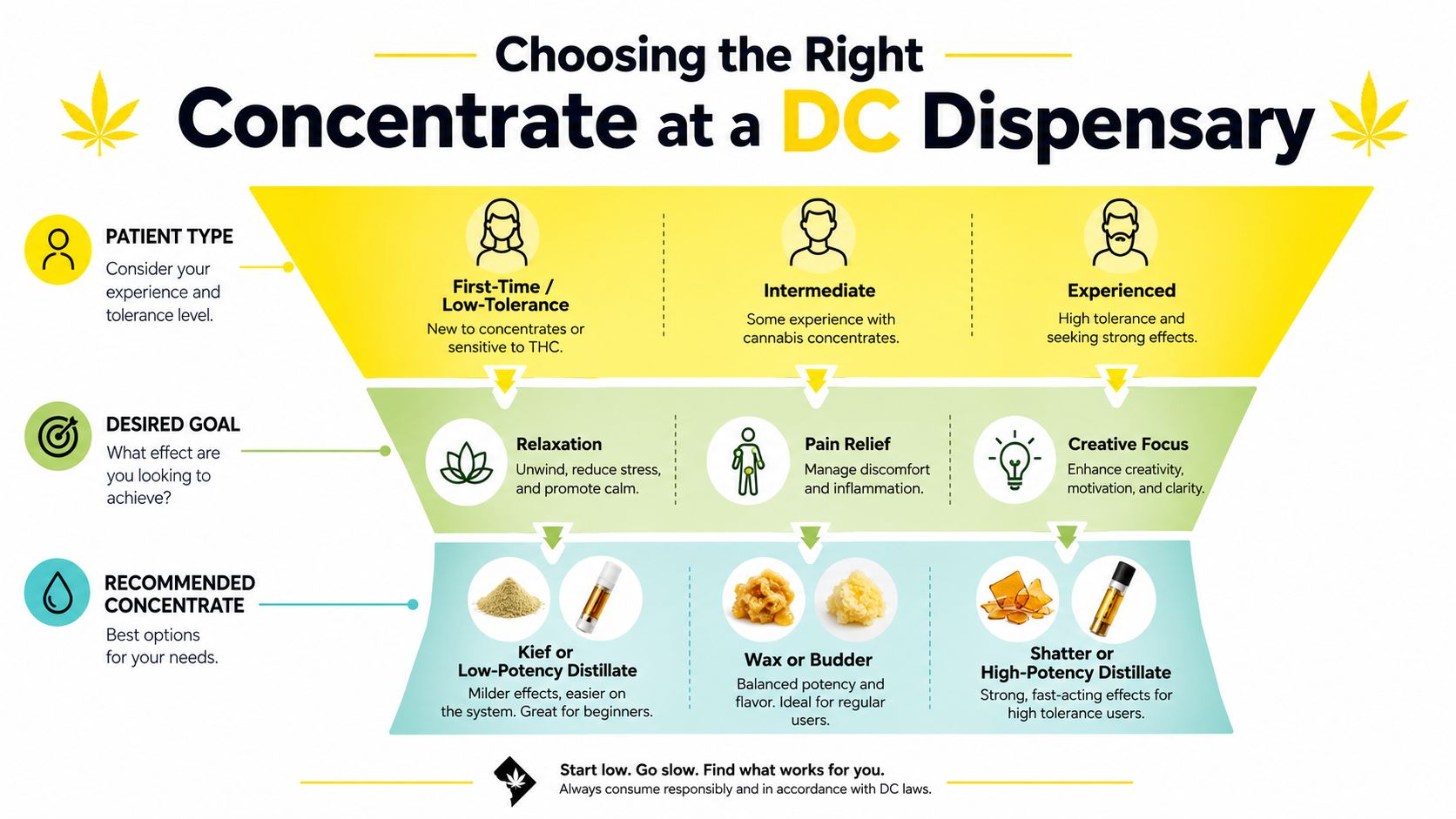
A useful recommendation begins with the patient, not the jar. Tell the budtender how often you use cannabis, what format you already understand, how intense you want the experience to feel, and whether you'll use it during the day or at night. Then narrow the menu by texture, potency, terpene profile, and device.
Match experience to handling demands
First-time or low-tolerance patients may find a cartridge or a measured oral format easier than a torch-and-banger setup. A low-dose 510-thread distillate pen offers a familiar device, while a live rosin cart may appeal to someone who values a fuller aroma. A patient considering an edible-derived tincture should discuss the labeled amount and take only a small amount, because oral onset is slower.
Intermediate patients who already understand inhaled cannabis may compare sugar, badder, or live resin in a temperature-controlled rig. A patient who wants easy scooping might choose badder. Someone focused on aroma may ask about live resin and its terpene profile.
Experienced patients with high tolerance may ask about THCA diamond sauce or high-percentage shatter. High potency doesn't remove the need for a small portion, and a product's appearance still doesn't replace the laboratory result.
Use the label as your filter
Look for:
- Total cannabinoids: Compare THC and CBD before comparing texture.
- Dominant terpenes: Myrcene is commonly associated with a relaxing profile, limonene with an uplifting profile, and pinene with a pine-like profile that some patients connect with focus.
- Harvest information: A harvest date can help you discuss freshness, especially for terpene-forward products.
- Testing details: Ask whether the product has been screened for residual solvents and contaminants.
- Device fit: Confirm whether the product belongs in a cartridge, open chamber, banger, or flower.
A patient asking for nighttime relaxation may prefer to discuss a myrcene-forward live resin or rosin. Another patient looking for daytime use may ask about limonene or pinene rather than selecting the highest THC label. These are conversation starters, not guarantees of a particular medical outcome.
Mr. Nice Guys DC offers concentrates, cartridges, edibles, tinctures, and other cannabis formats, with menu information that can help patients compare potency and product type. A dispensary visit should end with a clear plan: what you're buying, how you'll use it, how much you'll begin with, and when you'll reassess.
Storage, Safety, and Responsible Use
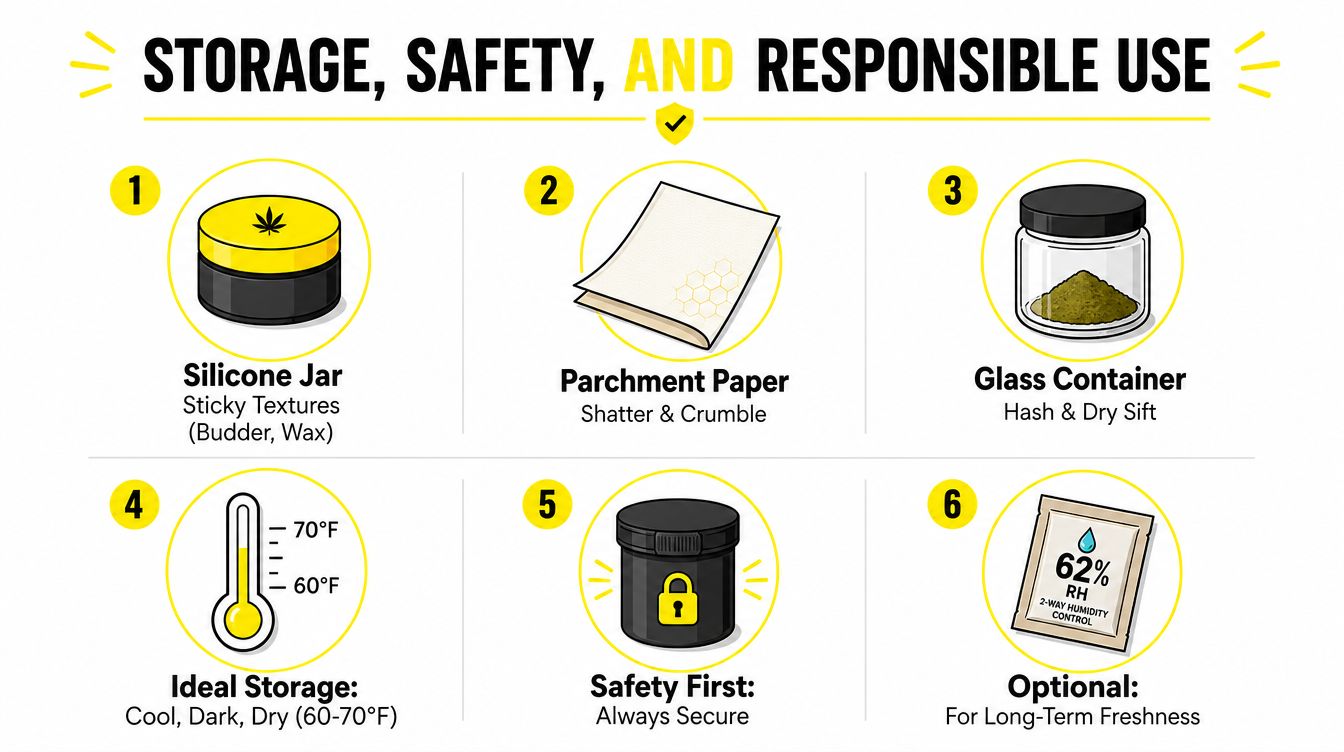
Heat, light, air, and careless handling can change a concentrate's texture and reduce its aroma. Store products in a cool, dark, dry place, generally below 70°F, and use a container that suits the material.
Match the container to the texture
- Sticky wax, budder, badder, and rosin: A clean silicone jar can make removal easier, although patients should follow the packaging guidance for the specific product.
- Shatter and crumble: Parchment can help prevent brittle pieces from sticking to a surface.
- Hash, kief, and dry sift: A small glass container helps protect loose or pressed trichomes from air, light, and moisture.
- All products: Keep the original label and laboratory information with the concentrate.
A cool cupboard can work for short-term storage. Avoid windowsills, cars, radiators, and other warm or bright areas. Clean your device as directed by its manufacturer, because residue in a banger, chamber, mouthpiece, or cartridge can affect taste and performance.
Keep use controlled
Start with a rice-grain-sized portion or one small inhalation, then wait long enough to understand the effects before using more. Don't combine concentrates with alcohol or unfamiliar medications, and speak with a healthcare professional if you take prescriptions or use cannabis for a medical condition.
Avoid black-market cartridges, untested hardware, and home butane extraction. A regulated product with testing information gives you more useful safety information than an unlabeled jar or cartridge.
Store concentrates in a locked, child-resistant location away from pets. If a pet ingests cannabis, contact a veterinarian or an animal poison service promptly, tell them what was consumed, and don't wait for symptoms to become severe.
For more container guidance, see this resource on cannabis storage containers. The right container protects the product, but secure storage protects the people and animals in your home.
Recap and Smart Questions for Your Budtender
The main types of cannabis concentrates become easier to understand when you connect texture to a practical patient question:
- Shatter: “Can I portion a firm, glass-like extract with my device?”
- Wax: “Do I want a softer concentrate that's easy to scoop?”
- Budder: “Would a creamy texture be easier for me to handle?”
- Live resin: “Is aroma and a fresh-frozen terpene profile important to me?”
- Rosin: “Do I prefer a solventless product made with heat and pressure?”
- Hash: “Should I use a traditional pressed or loose trichome product with flower or a compatible vaporizer?”
- Distillate: “Do I want a refined, consistent oil for a cartridge, edible, or other measured format?”
At the counter, ask about total THC and CBD, dominant terpenes, laboratory testing, residual-solvent screening, recommended hardware, and expected onset time. If you're unsure, describe your experience level, desired intensity, preferred format, and time of use instead of asking only for the strongest product.
Start low, track how you feel, and let your next purchase reflect your actual experience rather than packaging, hype, or texture alone. A thoughtful budtender can help you compare options, but your label, your device, and your measured first portion should guide the decision.
Explore the current concentrate, cartridge, edible, tincture, and other cannabis options at Mr. Nice Guys DC, where patients can compare formats and product details for in-store pickup, curbside service, or delivery. Visit the dispensary with your questions about texture, potency, terpenes, and device compatibility so the team can help you choose a practical starting point.
Mr Nice Guys DC
At Mr. Nice Guys DC, we’re more than just a cannabis delivery service — we’re passionate advocates for quality, convenience, and community. With years of experience in the cannabis industry, our team is dedicated to educating and empowering customers across Washington, D.C. Whether you're a seasoned user or just starting your cannabis journey, our blog delivers trusted tips, product insights, and the latest updates from the world of weed. Stay informed, stay elevated.
