
Must Be 21 To Enter
By entering this site you are agreeing that you are at least 21 Years of Age or older.
I AM 21 OR OLDERHow to Choose Storage Containers for Cannabis
.svg)

.png)
You opened the jar, and the flower you expected to smell sweet and sticky feels dry and crumbly instead. Or maybe the gummies in the pocket bag have fused into one sad slab, or the cartridge leaked just enough to ruin a shirt. That's not bad luck, it's bad storage, and the fix is usually a better container, not a more expensive product.
Storage containers matter because cannabis is sensitive to air, light, heat, and humidity. Once those factors start working on flower, edibles, concentrates, or vapes, the product changes fast in taste, texture, and handling. A generic kitchen jar can help a little, but it's usually the wrong shape, the wrong seal, or the wrong material for keeping cannabis in real-world condition.
There's a bigger point here, too. If you keep pre-rolls loose in a plastic bag for two weeks, they'll usually come out drier, harsher, and less aromatic than they went in. Put the same pre-rolls in a proper humidor-style jar, and you've got a much better shot at keeping the experience intact, because the container is doing the work the product needs instead of just sitting there.
Why the Right Storage Containers Matter for Cannabis Patients
A patient walks in thinking the flower “went bad,” but what usually happened is simpler. The jar was too loose, the room was too warm, and the container let the product age in place. That's how a fresh eighth turns into something that burns hot, tastes flat, and loses the character you paid for.
Cannabis isn't hard to damage. Flower loses its edge when it's exposed to the wrong balance of air and moisture, edibles soften or stick when they're left in the wrong package, and concentrates get messy the moment the container lets them spread or dry out. A decent storage container doesn't make cannabis better than it was, it keeps it from getting worse.
Practical rule: if you wouldn't leave it open on the counter, don't store it in a container that behaves like an open counter.
The common mistake is treating storage as a vanity choice. It's not about matching your jars to your shelf or buying the prettiest tin. It's about preserving potency, flavor, texture, and safety so the product you bought still behaves the way you expected a week later.
For flower specifically, terpene preservation matters because terpenes drive aroma and much of the taste profile. A good overview of that relationship is worth reading alongside a smart storage setup, especially if you want to understand why the nose disappears first, and what you can do about it: what terpenes do in weed.
The comparison is easy. One patient keeps pre-rolls in a loose plastic bag for two weeks, then wonders why they hit rough. Another patient uses a proper sealed jar and keeps the same pre-rolls from drying out as quickly. The second setup doesn't just look cleaner, it gives the flower a better shot at staying usable until the last one is gone.
Comparing Container Materials for Different Products
The material matters before the brand does. I'd take a plain, well-made jar in the right material over a fancy container in the wrong one every time, because cannabis storage is mostly about how the container behaves under pressure, heat, moisture, and handling.
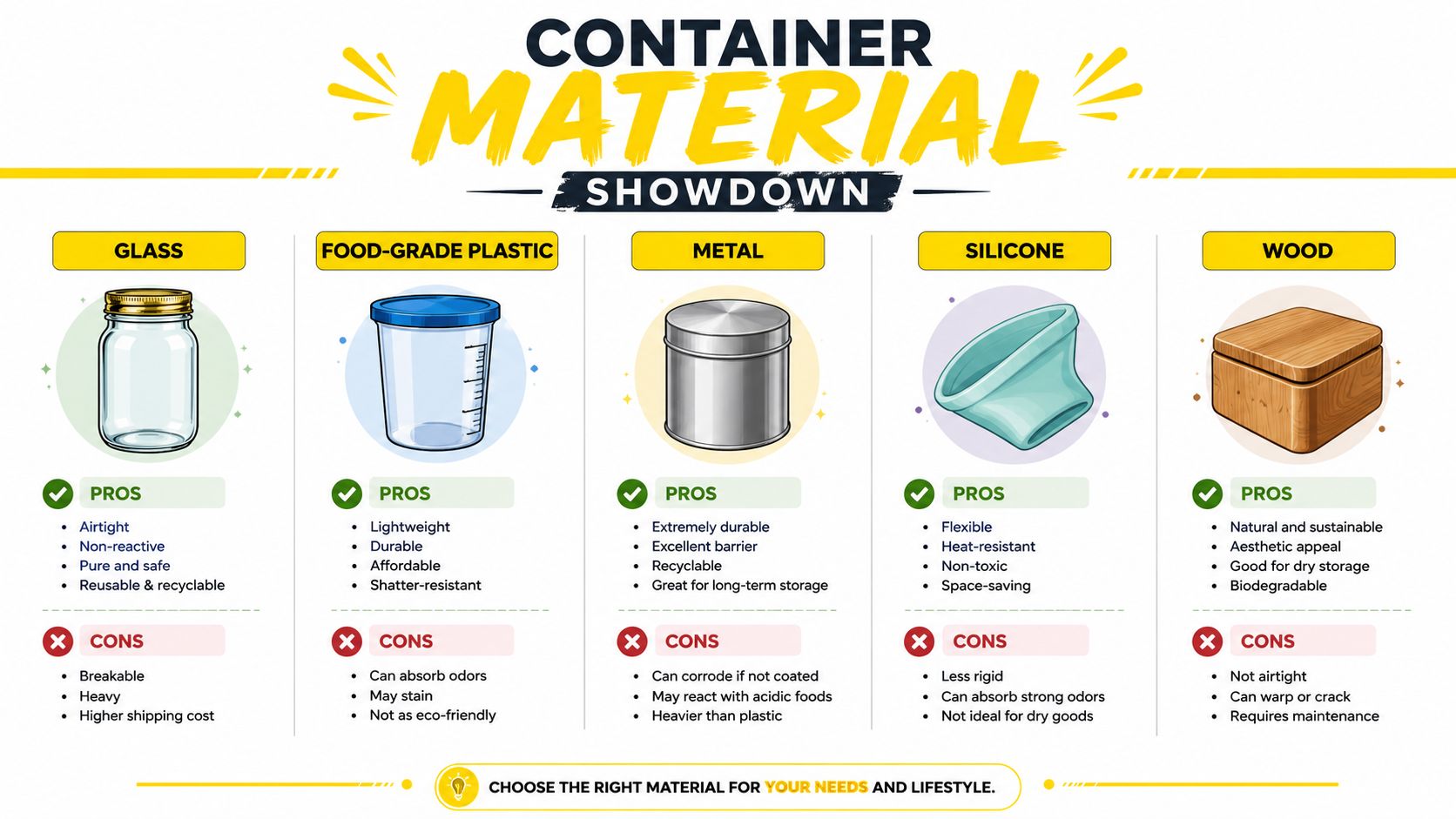
The five materials worth caring about
Glass is the safest default for flower. It blocks oxygen exchange better than a lot of cheap alternatives, doesn't hold onto smells, and doesn't react with the product. The downside is simple, it breaks, and if you're careless in a pocket or bag, it'll punish you for it. A UV-blocking glass jar is still my first choice for an eighth of flower at home.
Food-grade plastic is practical for light-duty storage, travel, and cheap organization. It's lighter than glass and won't shatter, but it's more likely to scratch, hold odor, or pick up residue over time. If you use it, use it for short-term storage, not as the forever home for your best flower.
Metal is rugged and protective, which makes it useful for concentrates and transport, but it isn't my favorite for sticky product if the interior finish is rough or the lid seals poorly. A stainless steel container can work for wax or a non-contact outer shell, but I'd avoid anything that leaves you scraping concentrate off the sides.
Silicone is flexible, easy to carry, and great for sticky textures. It's also the material I reach for when someone asks how to store a dab that wants to cling to everything else. The tradeoff is that silicone can retain odor or feel too soft for long-term protection, so I'd use it for wax, rosin, or quick access, not for flower.
Wood looks premium, but it's not my pick for cannabis unless it's part of a well-designed humidor. Wood can absorb moisture and odors, which is exactly what you don't want if you care about consistency. It's a style choice first and a storage choice second.
| Material | Best For | Watch Out For |
|---|---|---|
| Glass | Flower, small batches, odor control | Breakage, weight |
| Food-grade plastic | Short-term travel, low-risk storage | Scratches, odor retention |
| Metal | Concentrates, rugged carry | Reactive feel, poor interior finish |
| Silicone | Sticky concentrates, quick access | Odor retention, less rigid protection |
| Wood | Humidor-style setups | Moisture absorption, inconsistent sealing |
The right fit depends on the product, not the hype. If you want a deeper flower-specific approach to container choice and freshness, the logic lines up with this guide on how to keep flower fresh, because the container and the seal do most of the heavy lifting.
Matching Containers to Flower, Edibles, Concentrates, and Vapes
Flower, gummies, wax, and cartridges don't belong in the same kind of storage container. Each one fails in a different way, so each one needs a different setup.
Flower needs a real seal and a little breathing room
For flower, I want airtight glass with enough headspace to avoid crushing trichomes. If you're storing a single eighth of Gelato, a small glass jar with a tight lid is the move, not a drawer, not a bag, and not a giant container where the buds rattle around.
A fresh jar keeps aroma better and helps preserve texture. If you want one habit that pays off, it's this, put flower in a container that seals cleanly and don't keep opening it every hour to check the smell.
Edibles need light protection and anti-stick storage
Gummies and chews do best in opaque, food-grade containers that keep light out and stop pieces from fusing together. A tin of 10-mg gummies should stay sealed and separate, not dumped into a purse pocket where heat and friction mash it into a mess.
Edibles are simple, but only if you respect the packaging. If they're exposed to warm air or sunlight, texture goes first, then consistency.
Concentrates need low-friction storage
Wax, shatter, and rosin should go into non-stick silicone jars or parchment-lined glass. A gram of live resin doesn't need a big container, it needs a container that lets you scoop cleanly without leaving half the dose stuck to the sides.
If you've ever tried to rescue sticky concentrate from a bad container with a dab tool, you already know why this matters. The container shouldn't fight you.
Vapes need upright protection
Cartridges and pens belong in upright padded cases that stop leaks and keep the mouthpiece clean. A half-gram cart tossed loose into a bag can leak, crack, or collect lint where it doesn't belong.
For more on cartridge care and what to expect from common formats, I'd keep this nearby: vape cartridges and pens. A simple padded case is usually enough, as long as you keep the cart standing upright and don't let it bake in a hot car.
A good container for cannabis doesn't just hold the product, it protects the part of the product you actually paid for.
Humidity Control and Keeping Terpenes Alive
If flower gets too dry, it burns hot and tastes thin. If it gets too wet, you invite mold risk and a bad smoke. That's why humidity control is the difference between flower that still smells alive and flower that feels like it's been forgotten in a drawer.
Use a humidity pack, not a dry packet
For flower, a two-way humidity pack is the smart move. It helps stabilize the space inside the jar instead of just pulling moisture one way and overdrying the product. Cheap desiccant packets are the wrong choice for flower because they're built to absorb moisture, not balance it.
The number I'd keep in your head is 58 to 62 percent for flower storage. That range is the standard sweet spot patients usually aim for when they want aroma and smoke quality to hold up without making the jar feel damp.
Match the pack to the jar, not to the stash in your head
A half-empty jar still needs the same discipline as a full one. The air space matters, because the container's internal environment changes as soon as you open it repeatedly or leave too much empty room.
The practical habit is simple. Pick the right pack size for the jar volume, seal the lid fully, and replace the pack when it stops feeling responsive. If the jar starts smelling flat or the flower gets brittle, don't blame the strain first, check the container setup.
Practical rule: one good seal and one proper humidity pack beat three extra gadgets every time.
This is the same logic behind insulated specialty containers used in other storage settings, where thermal resistance, sealing quality, and moisture management matter more than raw size, because condensation inside the enclosure can damage packaging and inventory. The point is the same here. A container that leaks air or traps moisture in the wrong way is failing at its only job.
For a straight look at humidity pack behavior and when they make sense, I'd use this as your reference: humidity control packs. If you store flower long enough to care about taste, you need to care about the environment around it too.
Child Resistance, Labeling, and DC Compliance Basics
A good cannabis container in a home with kids needs two things, child resistance and clear labeling. You can't rely on a pretty jar and a shelf too high to reach. If the closure is weak, it's weak. If the label is missing, the household gets confused fast.
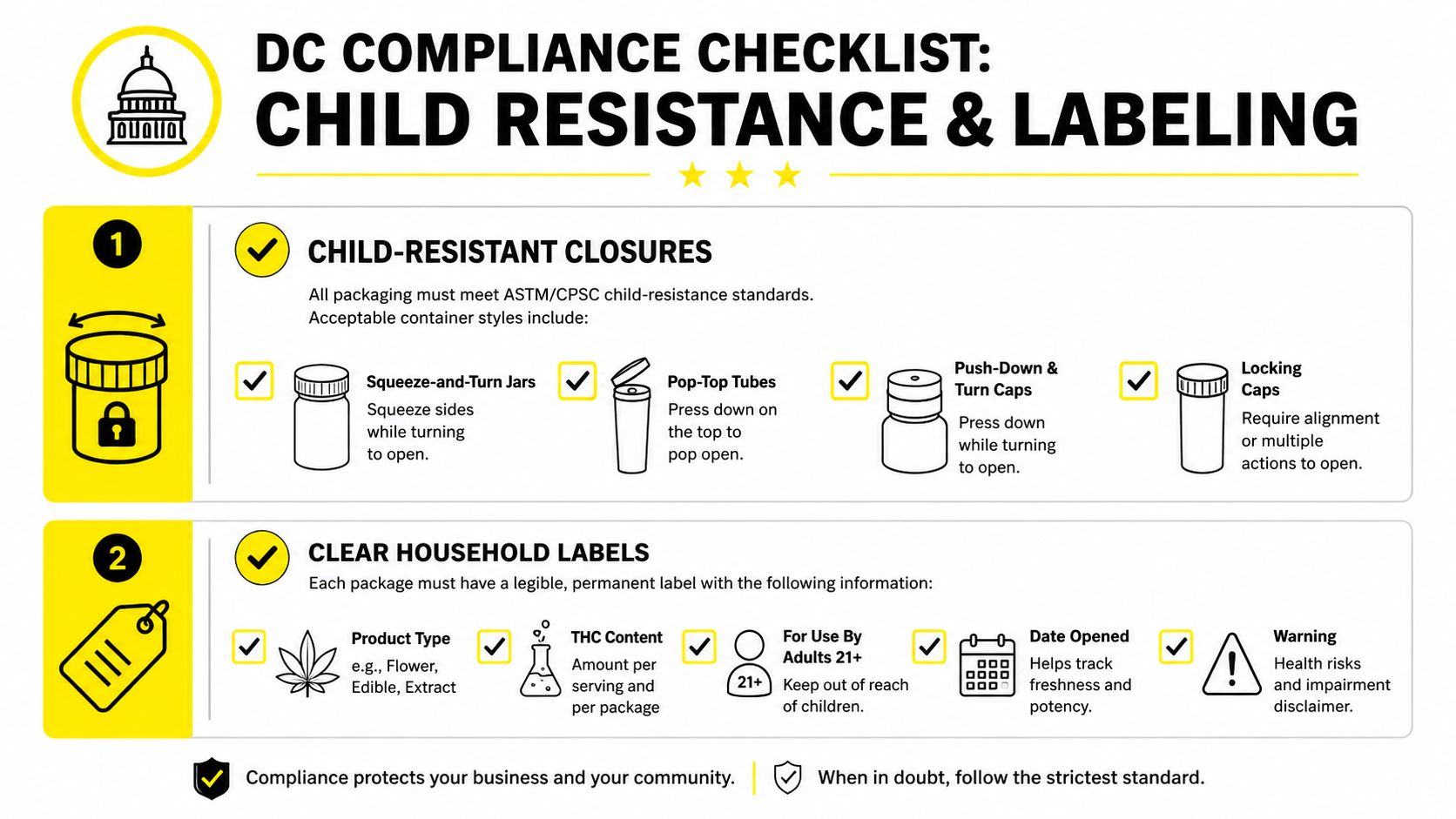
Child resistance has to be real
Push-and-turn caps usually outperform simple screw-tops because they ask for two actions at once. That matters in a house where a curious hand might get into anything left out. If a container is marketed as child-resistant but opens too easily, I don't trust it.
The safer move is a closure you've tested yourself. Open it, close it, and hand it to the wrong person in your head. If the mechanism feels obvious, it's probably not good enough for a home with kids.
Labels keep the house organized and the product traceable
Write the strain name, format, purchase date, and a personal batch note on the container or on a tag that stays with it. That sounds small until you've got three jars, two kinds of gummies, and a cartridge rolling around in the same drawer.
In DC, keep products in their original labeled packaging when you transport them. Unlabeled transfer containers create confusion if you ever need to explain what's what during a stop, and they make it harder for you to track what's open, what's new, and what needs to be used first.
A parent storing medicated gummies in a clearly labeled, locked-top jar out of reach is doing it right. The container protects the children, and the label protects the adult using the medicine.
Cleaning and Rotating Containers the Easy Way
Wait until a jar looks dirty, and it's already too late. Residue hangs around long before you can see it, and once you mix product types, that leftover smell and oil can change the next batch.
Keep the routine boring
Empty the container first. Wipe glass with isopropyl alcohol, let it air dry fully, then reload it. That's the whole routine, and it works because it removes residue without leaving a bunch of extra cleaner behind.
Silicone needs a gentler version of the same habit. Clean it thoroughly, but don't use anything so aggressive that it damages the surface or leaves behind a smell that sticks around. Concentrates are the biggest reason to stay on top of this, because they leave more residue than flower and contaminate the next product faster.
Rotate by date, not by memory
Put the oldest product in front and the new product in back. Then date the label so you don't have to guess what's been sitting around the longest.
- Glass jars: wipe monthly if you use them often.
- Silicone containers: clean after sticky use, not “whenever you remember.”
- Edible tins and cases: check for crumbs, melted edges, or smell transfer.
- Cartridge cases: clear lint and oil before they build up.
A patient who wipes glass jars once a month and labels every container with the month and year usually ends up with flower that stays fresher because nothing gets lost in the back of the cabinet. The routine takes minutes. The payoff lasts for months.
Transporting Cannabis in DC, Alexandria, and Bethesda Without Trouble
Transport is storage with motion. The same container that protects your product at home has to keep protecting it when the car turns, the train stops, or the bag gets knocked around.
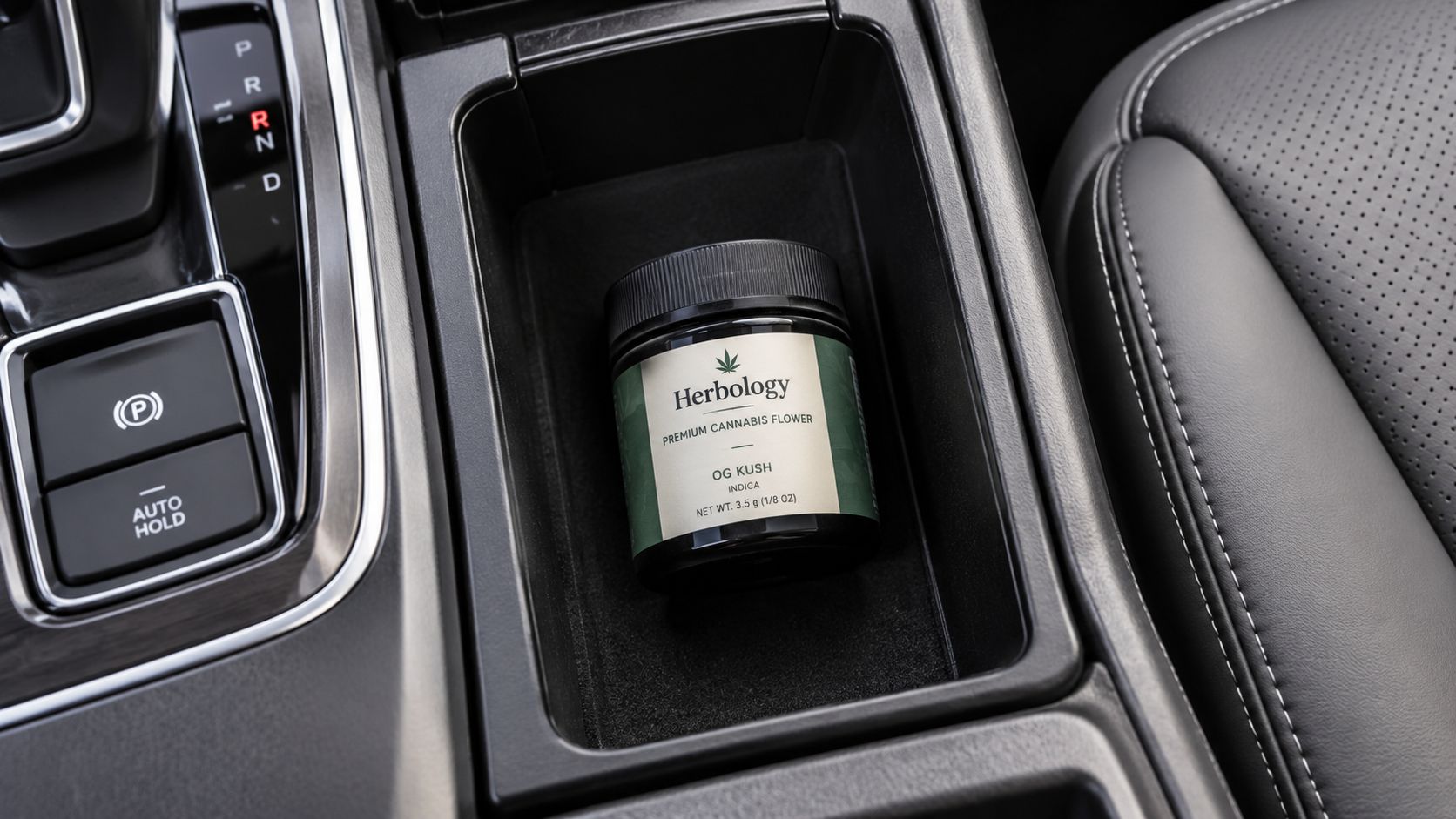
The biggest mistakes are predictable. People leave product in open sight in a car, mix opened and unopened items, or toss everything into an unlabeled transfer container and hope that's enough. It isn't. Keep product in its original packaging, put it in a sealed bag, and store it out of view. Don't consume in public, and don't treat a quick ride across town like a loophole.
If it leaks, rattles, or smells obvious in a bag, it's not packed well enough for the trip.
For patients moving between DC and nearby areas like Alexandria or Bethesda, the cleanest routine is simple. Use a child-resistant case for your cartridge, keep flower sealed, and avoid crossing any line with more than the legal limit you're allowed to carry. If you're taking the Metro from Shaw to Bethesda for a delivery pickup, a smell-proof, child-resistant case keeps the cart protected and keeps you from fidgeting with it the whole ride.
If you want to understand how delivery stays compliant in the city, the clearest practical rundown is here: how weed delivery works in Washington, DC. The point is the same whether you're walking, driving, or riding rail. Good storage makes the trip calmer and cleaner.
If you want help choosing the right flower, cart, or edible format to match the storage setup you plan to use, visit Mr. Nice Guys DC and talk to a team that knows what patients in DC are carrying home. They can point you toward products that stay fresh longer, travel cleaner, and fit the way you really live.
Mr Nice Guys DC
At Mr. Nice Guys DC, we’re more than just a cannabis delivery service — we’re passionate advocates for quality, convenience, and community. With years of experience in the cannabis industry, our team is dedicated to educating and empowering customers across Washington, D.C. Whether you're a seasoned user or just starting your cannabis journey, our blog delivers trusted tips, product insights, and the latest updates from the world of weed. Stay informed, stay elevated.
