
Must Be 21 To Enter
By entering this site you are agreeing that you are at least 21 Years of Age or older.
I AM 21 OR OLDERVape Cartridges and Pens: A DC User's Guide for 2026
.svg)

.png)
You're probably in one of two spots right now. Either you've seen vape pens all over DC and want something simple, discreet, and easy to use, or you've already tried one and realized the answers online are all over the place. One site talks about strains, another talks about batteries, and almost none of them explain what matters when you're trying to buy and use vape cartridges and pens legally in Washington, DC.
A common example is the first-time patient who knows they like flower, but wants something easier for evenings at home or quick relief without the smell of smoke. They search “vape pen DC,” then hit a wall. Can you buy one if you're over 21? What's the difference between a pen and a cartridge? Why do some carts taste amazing while others feel harsh? Those are real questions, and they deserve straight answers.
We see that confusion every day at the shop counter. So let's clear it up in plain language, with practical examples you can use.
Your Introduction to Vaping in DC
A lot of people in DC start with the same thought: “I want something convenient, but I don't want to guess.” That makes sense. Vape cartridges and pens look simple from the outside, yet the details matter a lot. The legal path matters. The hardware matters. The oil inside matters even more.
Nationally, cannabis vapor pens are the second most popular cannabis category in the United States, with a 23.6% market share according to Headset's cannabis vapor pen sales trends report. That tells you these products aren't some fringe format anymore. They're a normal part of how many adults use cannabis.
Why people in DC choose vapes
Some people want a quicker, lower-odor option than smoking. Others want something easy to carry, simple to dose, and less messy than concentrates. A patient managing a busy workday might keep a cartridge for short, measured sessions. Another patient may prefer a live resin cart at night because flavor matters more than convenience.
Practical rule: If you want convenience, portability, and less setup, vape cartridges and pens usually make more sense than dab rigs or smoking.
Why local rules change the decision
DC isn't a typical cannabis market. That's where many readers get tripped up. General vape advice from national blogs often skips the biggest question a DC resident has, which is how to get a tested cartridge legally and what protections come with that.
If you want more background before choosing a product, our cannabis education resources break down common formats, effects, and terminology in more detail.
What Are Vape Cartridges and Pens
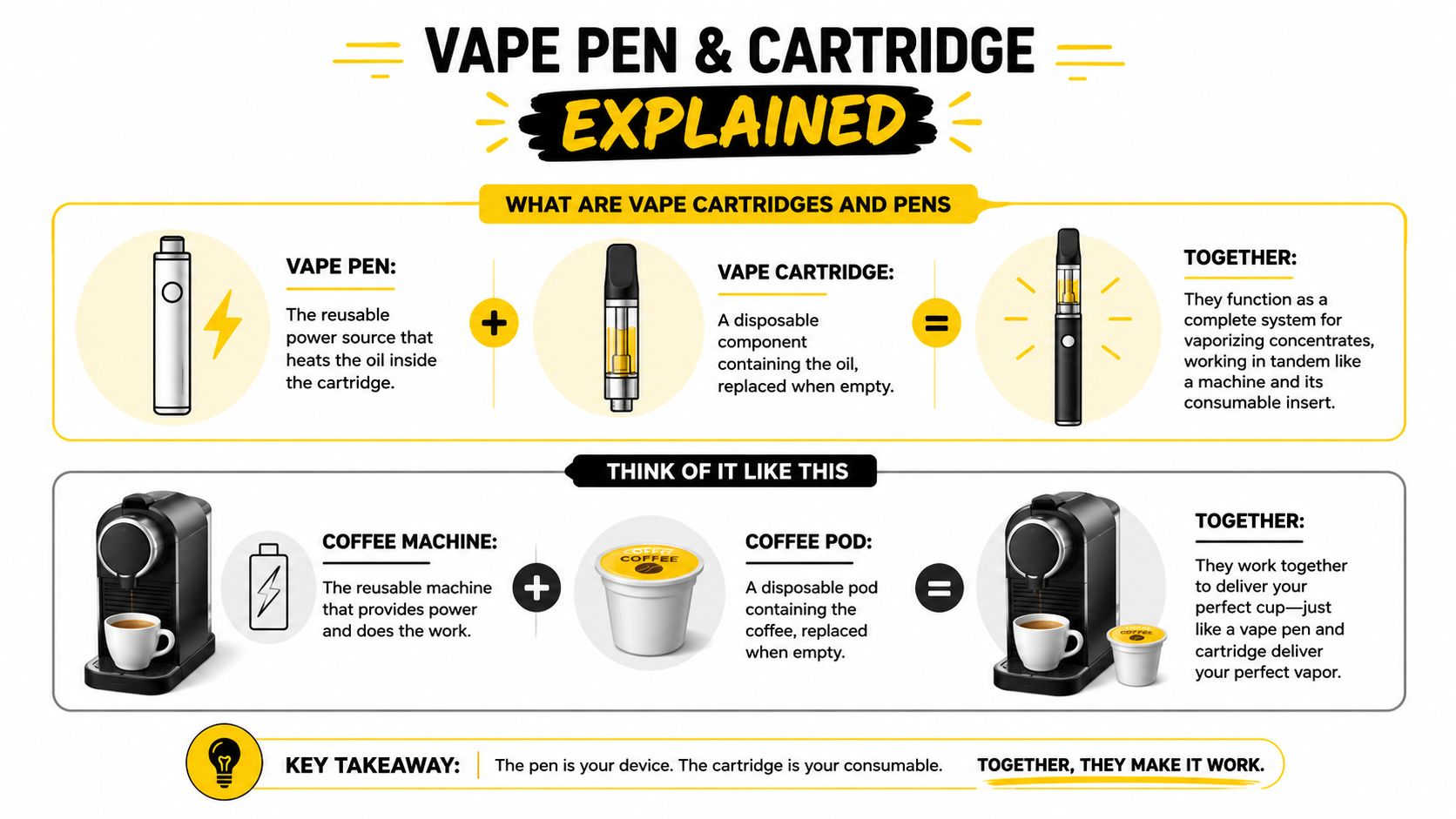
The easiest way to understand this is to think about a coffee machine and a coffee pod.
The vape pen is the machine. It's the battery that provides power. The cartridge is the pod. It holds the cannabis oil and the internal parts that heat that oil into vapor. When you connect them, you get one working system.
The pen
A pen is usually a small rechargeable battery. Some have a button. Some are inhale-activated. Some let you adjust voltage, while others keep things simple with one fixed setting.
If you buy a reusable battery, you'll usually keep it and replace only the cart when it's empty. That's the setup many people prefer because it gives you flexibility.
The cartridge
A cartridge is the part filled with cannabis oil. Most include:
- Mouthpiece: The top where you inhale.
- Oil chamber: The tank where you can see the extract.
- Heating core: The internal element that warms the oil.
- Threading or connector: The bottom connection that attaches to the battery.
A practical example helps. If you screw a Blue Dream cartridge onto your battery, the battery powers the heating core inside that cart. The oil warms, turns into vapor, and you inhale through the mouthpiece.
How they work together
People often say “I bought a vape,” when they really mean one of three things:
- A battery only
- A cartridge only
- A complete disposable unit
That's why product labels matter. A reusable setup means you buy the battery once and swap carts later. A disposable means the oil and battery come together in one all-in-one device.
If you're comparing formats and trying to figure out which setup fits your routine, our guide on vape pens vs carts and which one fits your lifestyle is a helpful next read.
Exploring Different Types of Vape Products
The hardware tells you how a vape works. The oil tells you what kind of experience you're likely to get.
That's where menus can get confusing fast. Two cartridges may look almost identical, yet feel completely different because one uses distillate and the other uses live resin. Then you've got full-spectrum options, disposable devices, standard 510 carts, and pod systems that only work with one brand's battery.
Oil types at a glance
Here's a simple side-by-side comparison.
| Oil Type | Key Characteristic | Best For | Example Feel |
|---|---|---|---|
| Distillate | Refined oil, often paired with added terpenes | People who want a straightforward, consistent experience | A Blue Dream distillate cart may feel clean, direct, and familiar |
| Live Resin | Extract made to preserve more of the plant's original terpene profile | Flavor-focused users who want a fuller aroma | A Wedding Cake live resin cart may feel richer and more layered |
| Full-Spectrum | Broader cannabinoid and terpene profile | Users who want a more whole-plant style effect | A full-spectrum cart may feel more rounded and balanced |
Distillate, live resin, and full-spectrum
Distillate is often the easiest entry point. It's common, straightforward, and usually very approachable for people who want reliable effects without overthinking the menu. If someone says, “I just want a clean daytime cart I can recognize and use easily,” distillate is often where they land.
Live resin usually appeals to people who care about flavor and a more expressive plant profile. If you've ever tried a cart and thought, “This works, but it tastes flat,” live resin is often the category that changes your mind.
Full-spectrum sits in a different lane. It's chosen by people who want more than just a narrow THC-forward experience. They often want the broader mix of cannabinoids and terpenes preserved in the oil.
A useful way to shop is to ask yourself one question first: do you care more about simplicity, flavor, or a fuller plant profile?
Hardware choices that affect compatibility
510-thread cartridges are a common first encounter in DC. These are the common screw-on carts that fit many standard batteries. They're familiar because they're easy to swap and easy to understand.
Then there are proprietary pod systems. These use brand-specific pods and matching batteries. They can feel sleek and simple, but they lock you into one ecosystem.
A practical example: if you already own a standard 510 battery, buying another 510-thread cart is usually the easy move. If you buy a pod by mistake, it may not fit your current battery at all.
For a deeper look at strain styles inside carts, including how shoppers think about indica, sativa, and hybrid options, see our guide to exploring the varieties of carts, indica, sativa, and hybrid.
What experienced users often learn later
Many people start by shopping for strain name alone. After a while, they realize extraction type and hardware quality shape the experience just as much. A Gelato distillate cart and a Gelato live resin cart may share a strain family, but they won't necessarily taste or feel the same.
That's why reading the product description matters. Don't stop at the front label.
How to Use and Maintain Your Vape Pen
A good first session is usually quiet and uneventful. The pen turns on, the cart heats evenly, and you take a small puff without coughing or getting a burnt taste. That outcome mostly comes down to setup.
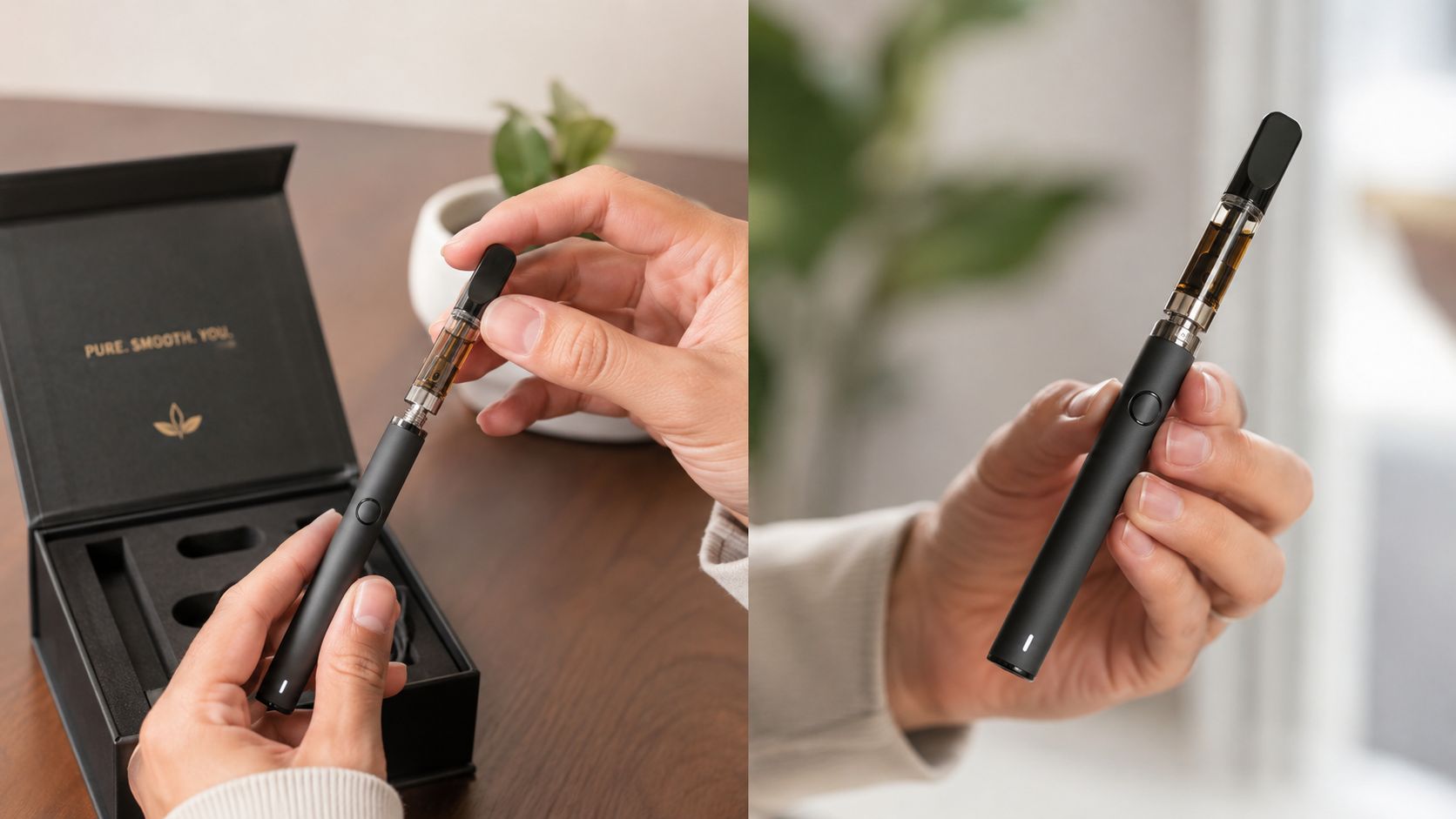
Your first setup
Start with the basics:
- Charge the battery fully: A weak battery can cause uneven heating.
- Attach the cartridge gently: Screw it in until it's snug. Don't crank it down.
- Turn the device on if needed: Many button batteries use a multi-click sequence.
- Begin at the lowest reasonable voltage: This helps protect flavor.
- Take a short puff: A small inhale gives you a better first read than a long pull.
A simple real-world example: if you just bought a fresh cartridge and take a huge first pull on a high setting, you might think the cart is harsh. In reality, the battery may be overheating the oil.
Voltage matters more than most people think
Adjustable voltage batteries set to lower settings, such as 2.0 to 3.3V, preserve terpene integrity and maximize flavor, while higher voltages above 4.0V can cause burnt hits and oil degradation according to Rhode Island packaging and label guidance on vape performance and safety.
That means lower settings are usually the smart starting point. If you're using a flavorful cart like live resin, low voltage helps you taste what you paid for. If you jump too high, the vapor may feel hotter, harsher, and less nuanced.
A simple routine that prevents problems
Use these habits to keep your pen working well:
- Store it upright: This helps reduce leaks and clogs.
- Keep contact points clean: A cotton swab with isopropyl alcohol can remove residue from the battery connection.
- Avoid chain hitting: Give the cart a short rest between pulls so the oil can wick properly.
- Protect it from heat: Leaving a pen in a hot car can thin the oil and create leaks.
- Watch the oil level: A nearly empty cart is more likely to taste burnt.
Here's a visual walkthrough if you want to see a basic setup in action.
If you want a broader primer on inhaling, pacing, and device basics, our how to vape weed guide covers the fundamentals in plain language.
Safe Dosing and Understanding Lab Tests
The most common vape mistake isn't choosing the wrong strain. It's taking another puff too soon.
A lot of beginner advice stops at “start low and go slow.” That's fine as a slogan, but it leaves out the reason people still overdo it. With carts, the problem is timing. People don't always feel the full effect right away, so they assume the first puff didn't work.
Why one puff can sneak up on you
The full effects of vaping THC distillate can take about 10 minutes to arrive, and 38% of new users take multiple puffs within 5 minutes, which raises the chance of anxiety and other unpleasant reactions before the first dose has peaked, according to The GrowthOp's discussion of vape pens and cannabis extracts.
That's the dosing illusion. You take one hit, wait a minute, feel almost nothing, then take two more. Ten minutes later, all of it lands together.
Don't judge a vape by the first minute. Judge it after the waiting period.
A practical example: if you're new to carts and trying a strong evening product, take one small puff and set the pen down. Drink some water. Sit with it. Don't keep testing it every minute.
A simple dosing method that works
Try this approach:
- First session: Take one small puff.
- Then wait: Give it the full window before deciding.
- Change one variable at a time: Don't increase puff length and voltage together.
- Keep notes: If Blue Dream feels light at one puff but balanced at two, write that down for next time.
This kind of tracking is more useful than chasing a label number.
What to look for on a COA
A Certificate of Analysis, or COA, is the lab report tied to a product batch. Many people only glance at potency. That's not enough.
For cartridge safety, look for a batch-specific third-party COA that shows screening for:
- Heavy metals: You want clear results showing acceptable status, such as “PASS” or “ND” where applicable.
- Pesticides: These should be screened, not ignored.
- Residual solvents: Important for extracts.
- Microbes: Another basic safety check.
- Potency alignment: The report should reasonably match the product label.
The deeper safety issue is hardware and materials. Premium medical-use cartridges should use medical-grade 316L stainless steel heating elements and center posts, combined with ceramic or quartz chambers, because those materials help reduce the risk of inhaling leached metals from inferior hardware, as outlined in this guide on vape safety and cartridge selection.
Licensing alone isn't the whole answer
A licensed product is a better starting point than an unregulated one, but smart shoppers still verify. Safety-minded patients should check more than THC percentage. They should review contaminant screening and pay attention to the ingredients and build quality of the cartridge itself. That's especially important for people with sensitive lungs or respiratory concerns, a point emphasized in this overview of cannabinoid vaping safety concerns.
One practical shopping example: if two carts have similar strain appeal, choose the one with clearer testing documentation and better hardware transparency. A cart is only as trustworthy as the proof behind it.
If you want help reading potency reports and lab language, our guide to cannabis potency testing can help you make sense of the paperwork.
Navigating DC Laws and Purchasing Vapes
You're in DC, you see a vape you want, and the first question is not flavor or strain. It's whether the product is being offered through a legal medical channel or outside of it. That one detail changes what protections you have as a buyer.
The key split in DC
In Washington, DC, medical cannabis patients can legally purchase lab-tested vape cartridges from licensed dispensaries, while recreational users under Initiative 71 can only possess or receive them as a gift, not buy them commercially, as explained in this DC patient guide to cannabis vape cartridges.
That distinction causes a lot of confusion because people often assume possession rules and retail sales rules match. In DC, they do not. A person may be allowed to possess cannabis under one part of the law, but that does not automatically create a legal storefront purchase option for THC vapes.
A simple way to read the situation is this: the medical system is the regulated purchase path. Outside that system, you should be much more careful about what claims a seller makes.
What that means in everyday life
Say you are a registered medical patient. You can review a dispensary menu, compare cartridge options, and buy a product that entered the market through the licensed system.
If you are not in the medical program, the experience is different. You cannot walk into a typical retail setting in DC and legally buy a THC vape the way you might in another city with adult-use sales.
That matters for safety, not just legality. A regulated purchase path gives you a clearer paper trail, better odds of real batch testing, and packaging that follows medical cannabis rules. An informal transfer may not give you any of that, even if the product looks polished at first glance.
DC also treats nicotine and cannabis differently here. The District's flavored tobacco rules apply to nicotine and synthetic nicotine products, not THC cartridges sold through the medical cannabis program, according to the District's flavored tobacco prohibition FAQs. So if someone tells you all flavored vapes are banned in DC, that statement leaves out an important legal distinction.
How to shop more carefully in the District
The safest approach is to verify the product the same way you would verify medicine or electronics. The box alone is not enough. A clean label can be copied. A real regulated product should give you a chain of trust you can follow.
Use a short checklist:
- Source: Ask whether the cartridge comes from a licensed medical dispensary or an informal gift channel.
- Testing proof: Look for batch-specific lab documentation, not vague claims like "tested" or "premium."
- Packaging details: Child-resistant and light-resistant packaging, required warnings, and readable manufacturer information all matter.
- Hardware transparency: If the seller cannot tell you who made the cart hardware or what materials were used, treat that as a caution flag.
- Seller clarity: A trustworthy seller should answer direct questions plainly. Evasive answers usually signal a problem.
That last point gets overlooked in a lot of vape guides. In DC, advanced safety verification means checking both the oil and the route it took to reach you. A cartridge can sound impressive on the front label and still leave big unanswered questions about sourcing, storage, or hardware quality.
For patients who want a licensed option in the District, Mr. Nice Guys DC provides access to medical cannabis products through the regulated system.
Troubleshooting Common Vape Pen Problems
Even solid hardware acts up sometimes. Most issues fall into a few familiar buckets: clogs, burnt taste, weak vapor, or a battery that seems dead.
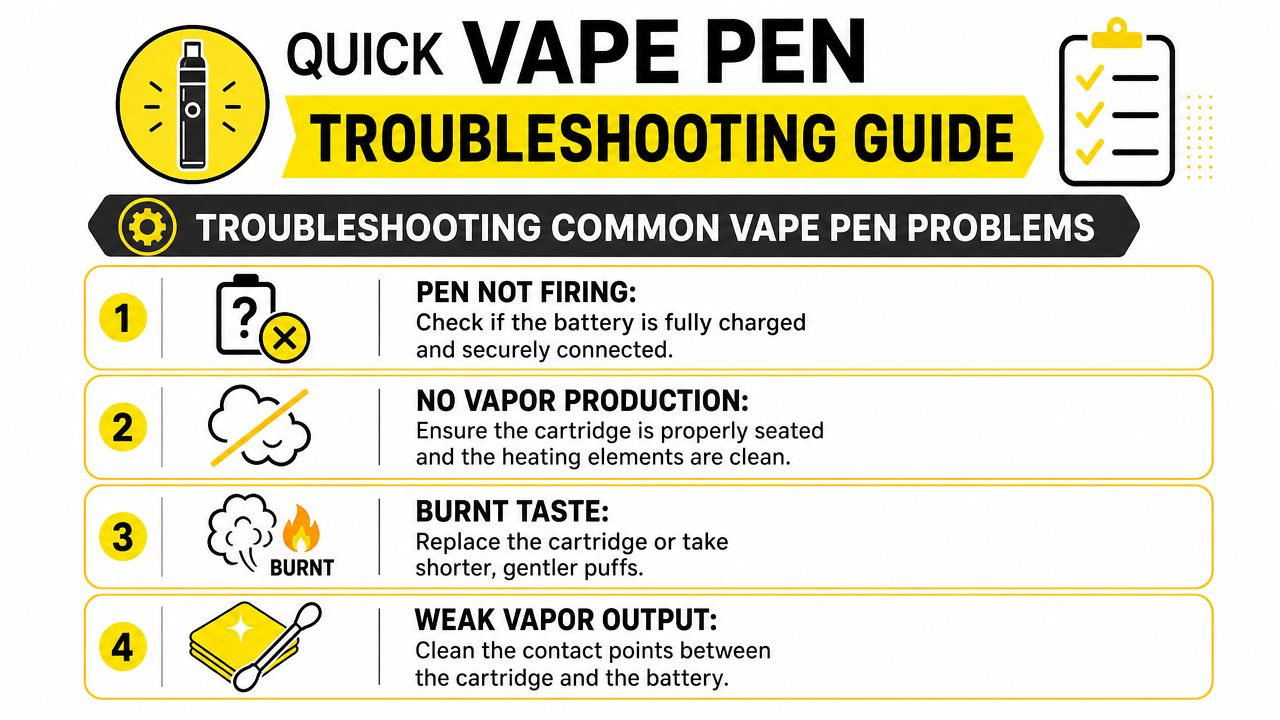
If the pen isn't firing
Start simple.
- Charge first: A low battery is the easiest explanation.
- Check the connection: Unscrew and re-seat the cart gently.
- Clean the contact point: A little residue can interrupt power.
If the light still blinks, try another compatible cartridge if you have one. That helps you figure out whether the problem is the battery or the cart.
If you get no vapor
This often happens when the cartridge isn't making a clean connection or the airway is blocked.
Try these fixes:
- Warm the cart gently in your hands: Thick oil can slow movement.
- Use preheat if your battery has it: That can loosen a mild clog.
- Take a soft primer pull: Don't yank hard. Gentle airflow works better.
If it tastes burnt
A burnt hit usually points to too much heat, not bad luck.
- Lower the voltage: High settings can scorch oil.
- Take shorter puffs: Long pulls can overheat the core.
- Check the oil level: A near-empty cart often tastes rough.
A practical example: if your cart tasted great yesterday and burnt today after you changed the battery setting, the setting is the first thing to undo.
If vapor feels weak
Weak output doesn't always mean the product is weak. It may mean the pen needs a quick cleanup or the oil is cold and thick.
Clean contact points, keep the cart upright, and use gentle pulls before assuming the cartridge is defective.
Small habits solve most repeat problems. Upright storage reduces leaks. Moderate voltage preserves flavor. A little patience prevents clogs.
If you want help choosing vape cartridges and pens that fit your routine, our team at Mr. Nice Guys DC can help you compare formats, understand lab-tested options, and shop the DC medical market with more confidence.
Mr Nice Guys DC
At Mr. Nice Guys DC, we’re more than just a cannabis delivery service — we’re passionate advocates for quality, convenience, and community. With years of experience in the cannabis industry, our team is dedicated to educating and empowering customers across Washington, D.C. Whether you're a seasoned user or just starting your cannabis journey, our blog delivers trusted tips, product insights, and the latest updates from the world of weed. Stay informed, stay elevated.
