
Must Be 21 To Enter
By entering this site you are agreeing that you are at least 21 Years of Age or older.
I AM 21 OR OLDERWhat Is THC Tinctures Good for: Uses, Onset and Dosing


If a tincture is sold for sleep, pain, anxiety, appetite and inflammation all at once, why is the evidence strong for only some of those uses? That's the gap most labels don't explain. When people ask what is THC tinctures good for, the useful answer isn't a list of promises. It's which uses have support, how the route changes timing, and exactly how many milliliters deliver the dose you're aiming for.
THC Tinctures at a Glance
A THC tincture is a cannabis extract made with alcohol, oil or glycerin. You take it as drops or with a measured syringe, usually under the tongue, though you can also swallow it. There's no smoke or vapor.
The dose doesn't come from the bottle size. It comes from the milligrams of THC per milliliter printed on the label. A small bottle can be stronger than a large one, and a full dropper from one product may contain several times the THC of a full dropper from another.
Evidence Strength by Use Case
The table below separates common reasons for use from the strength of support behind them. It reflects evidence for cannabis or cannabinoid medicines, which doesn't automatically apply to every retail tincture.
| Use case | Evidence strength | What it means for a tincture |
|---|---|---|
| Chronic pain in adults | Substantial (2017 National Academies review) | Reasonable option to discuss with a clinician, not a guaranteed fix |
| Neuropathic pain from nerve damage | Some studies show benefit | One of the most promising pain types to raise with a clinician |
| Acute pain | Limited | Not a reliable rescue for sudden pain |
| Chemotherapy-induced nausea | Conclusive for approved cannabinoid medicines | Ask whether a prescribed cannabinoid medicine suits you better than an unregulated tincture |
| MS spasticity | Patient-reported benefit (AAN guidance) | Track symptoms, since objective results vary |
| AIDS-related appetite loss | Approved for dronabinol, a prescription medicine | Dronabinol is not the same as a retail tincture |
| Anxiety and insomnia | Limited or inconsistent | Do not expect proven results |
| Inflammation | Not established | Treat claims as unproven |
The strongest rows are specific. The National Academies 2017 review concluded cannabis or cannabinoids have substantial evidence for chronic pain in adults and conclusive evidence for chemotherapy-induced nausea and vomiting, and it also identified evidence for reducing multiple-sclerosis-related spasticity. A summary of that review reported 27 randomized trials involving nearly 2,500 chronic-pain participants generally found greater pain relief than placebo.
That doesn't make all pain equal. Evidence for most acute pain is limited, while neuropathic pain from nerve damage looks more promising. If you're comparing options for ongoing discomfort, our guide to cannabis for pain relief can help you frame questions for that conversation.
Practical rule: If a use isn't listed as strong, treat a tincture claim for it as unproven and discuss it with a clinician before relying on one.
Potency, THC-to-CBD ratio, route and schedule also change results. Two patients can take the same volume and have different experiences because their products and health histories differ. That's why a tincture is best viewed as a measured delivery format for selected symptoms, not as a general wellness treatment.
How Fast Tinctures Work Compared With Other Formats
The same tincture behaves differently depending on where it goes first. Held under the tongue, cannabinoids meet the mouth's mucous membranes. Swallowed right away, THC travels through digestion and first-pass liver metabolism, which slows the effect and makes it less predictable.
Think of onset, peak and duration as three separate clocks. Onset is when you first notice something. Peak is when effects are strongest, and duration is how long they last. Confusing onset with peak is where most dosing mistakes start.
Onset, Peak and Duration by Format
| Format | Onset | Peak | Duration | Best fit |
|---|---|---|---|---|
| Sublingual THC tincture | 15-40 minutes | 1.5-4 hours | Up to 12 hours | Predictable, adjustable dosing |
| Swallowed tincture or edible | 30 minutes-2 hours | 2-4 hours | 4-8 hours | Longer, slower evening effects |
| Inhaled flower or vape | Within minutes | About 15-30 minutes | About 1-3 hours | Fast relief, harder to dose |
Those tincture ranges matter in real time. Health Canada guidance on using a cannabis product reports that oil or tincture held under the tongue produces initial effects in approximately 15 to 40 minutes, strongest effects after about 1.5 to 4 hours, and possible effects lasting up to 12 hours. Swallowed products generally begin in 30 minutes to 2 hours, peak after 2 to 4 hours, and last about 4 to 8 hours.
Say you take a low sublingual dose at 7 pm for evening symptoms. You might feel mild effects by 7:30 pm, but the strongest effects may not arrive until 8:30 to 11 pm. If you redose at 7:45 pm because the first dose feels weak, both doses can peak together later.
That timing should shape your plans for driving, work, alcohol and other sedating substances. It also explains the fit between formats. Inhalation suits fast, shorter relief, edibles suit slower and longer effects, and tinctures sit between them with more control. Our comparison of THC tinctures versus edibles shows how that choice plays out in practice.
Why Patients Choose Tinctures and Where They Fall Short
A tincture works like a dimmer switch, not an on-off switch. You can turn the dose up in small steps. A whole edible or a bowl of flower is closer to flipping the switch and hoping the brightness is right.
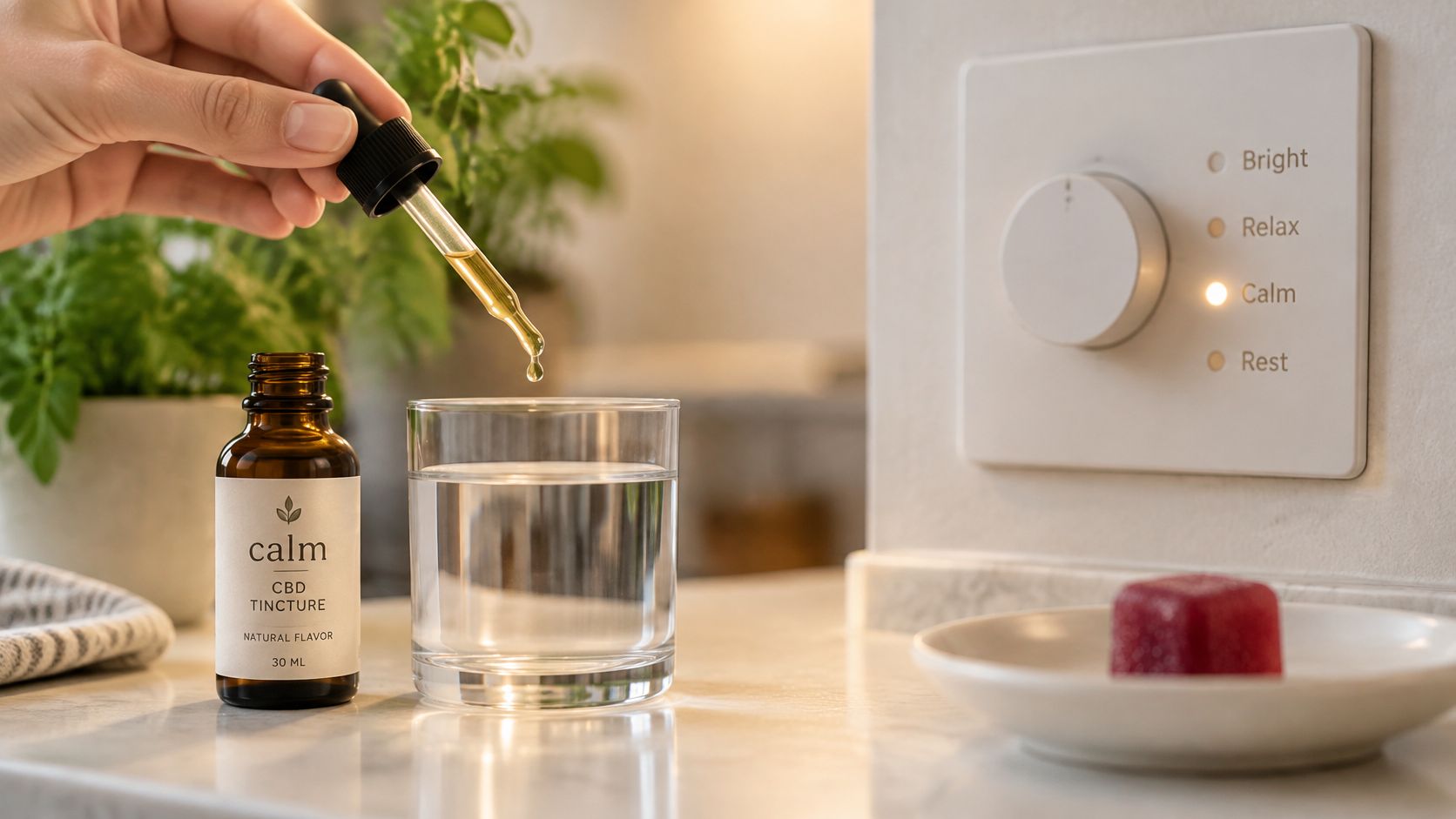
The image below shows the dropper format many patients use at home.
Three practical advantages explain the appeal.
- No inhalation required: You avoid smoke and vapor, which matters if you can't inhale comfortably or prefer not to.
- Discreet use: A small bottle at home doesn't leave a lingering smell or require equipment.
- Repeatable dose: You can log the same milligram amount, at the same time, for weeks and compare results fairly.
The trade-offs are just as concrete. Concentration differs between bottles, so yesterday's dropper amount isn't today's dose if you switch products. Effects arrive more slowly than inhalation, and most tinctures aren't standardized for one specific condition.
Consider two patients. A 62-year-old with chronic back pain wants to avoid smoking. She takes the same measured evening dose and logs pain, sleep hours and morning grogginess. After two weeks she can point to a pattern instead of guessing.
A 34-year-old with a history of panic attacks tries the same approach for stress. Instead of calming down, he feels his heart race and his thoughts speed up. For him, the tincture isn't a neutral wellness tool. It's the wrong tool, and stopping is the right decision.
The video below is a useful pause before you decide a format fits your routine.
Choose a tincture when measured, gradual dosing matters more than speed.
If you need relief in minutes, or you can't reliably measure small volumes, another format may fit better. If you value a quiet routine and a dose you can repeat, the tincture's slower pace becomes its main advantage.
Medication, Alcohol and Health Risks to Check
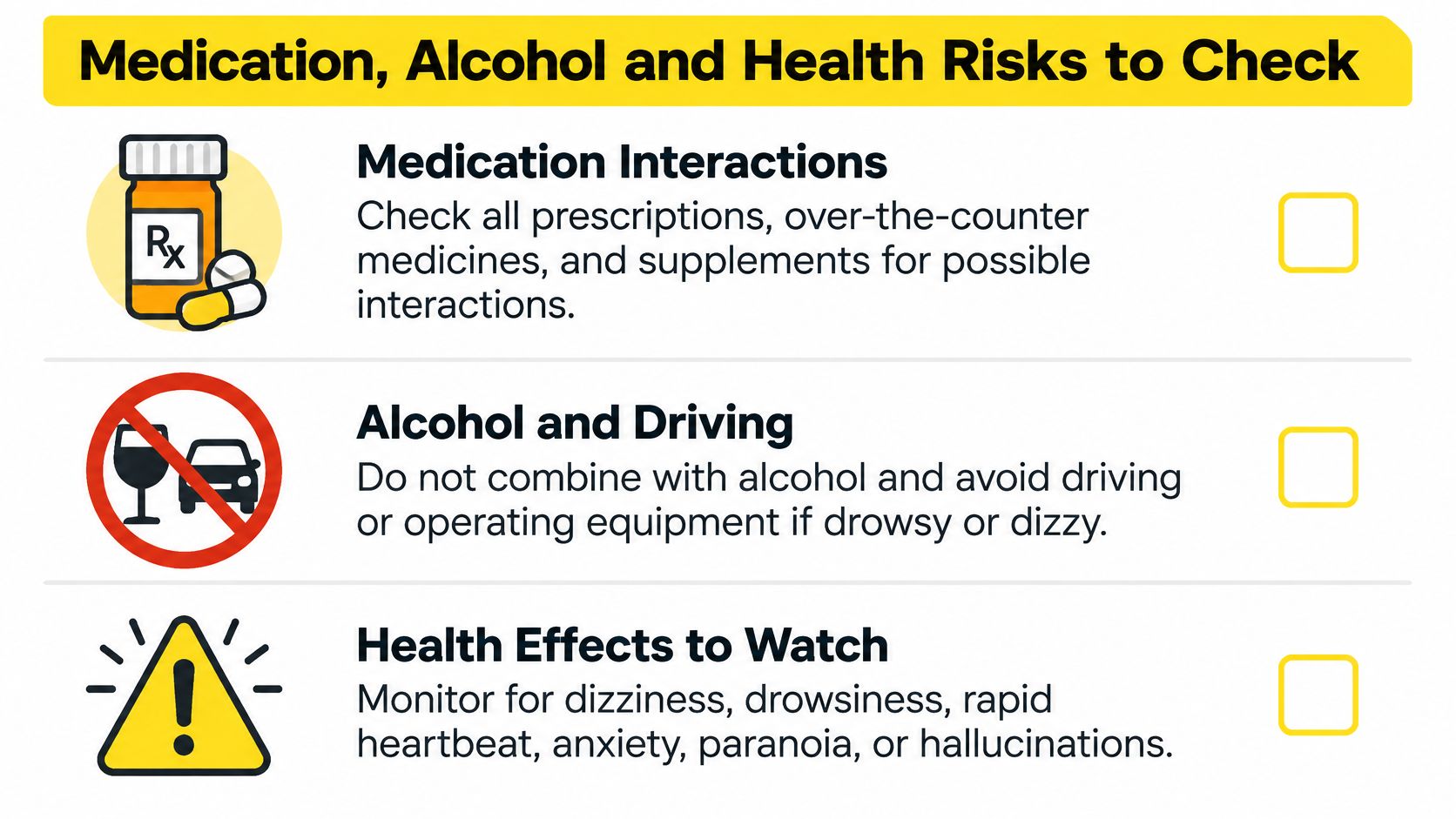
Natural and non-inhaled doesn't mean inactive. THC can cause dizziness, drowsiness, rapid heartbeat, anxiety, paranoia or hallucinations, and higher doses generally produce worse effects. Skipping smoke doesn't skip pharmacology.
That point matters most for older adults and medical patients who already take other medicines. The Mayo Clinic overview of marijuana interactions notes cannabis may increase sedation with central-nervous-system depressants, may interact with anticoagulant or antiplatelet medicines including a potential bleeding concern with warfarin, and can affect seizure medicines or their side effects.
Who Should Check First
Talk to a clinician or pharmacist before your first dose if any of these describe you.
- Sedatives or sleep medicines: Added sedation can impair balance, concentration and reaction time.
- Blood thinners: A bleeding concern needs review, especially with warfarin or antiplatelet drugs.
- Seizure medicines: Cannabis can affect levels or side effects, so don't adjust anything on your own.
- Heart disease or high blood pressure: A rapid heartbeat or lightheadedness may carry more risk for you.
- Psychosis or severe anxiety history: THC can worsen paranoia or panic in vulnerable people.
- Pregnancy or breastfeeding: Don't start without direct medical guidance.
- Older age: Lightheadedness raises fall risk, particularly when standing up at night.
Our medication compatibility check guide can help you prepare a complete list, including over-the-counter products and supplements. Bring that list, not just your prescription names, because combinations matter.
Alcohol needs its own line. It amplifies impairment, and combining cannabis and alcohol increases physical-harm risk. If you drink after a dose, you can't tell which substance caused dizziness or poor coordination, and the tincture may still be approaching its peak.
The safety checklist below sums up the checks to make before a first dose.
The FDA has not approved the cannabis plant for treating medical conditions, and evidence for many claimed benefits remains limited. Don't drive or operate machinery until you know the full effect of your dose, including how you feel the next morning.
How to Dose a THC Tincture Step by Step
Titration means adjusting a dose gradually to find the lowest amount that helps. Start with the product label: its THC concentration determines how much liquid contains a given dose.
Find the total THC in milligrams and the bottle volume in milliliters. Divide the THC amount by the volume to calculate milligrams per milliliter. For example, a 30 mL bottle containing 500 mg THC has about 16.7 mg per mL.
Then calculate the volume you want to measure:
Formula: Desired dose in mg ÷ concentration in mg per mL = volume in mL.
For 2.5 mg from a 16.7 mg per mL bottle, divide 2.5 by 16.7. The result is about 0.15 mL. A dropper's size alone does not tell you the dose; the concentration matters too.
Volume to Measure for Common Doses
Use the table to check the calculation for the product's concentration and the dose you have discussed with your clinician.
| Label strength | Volume for 2.5 mg | Volume for 5 mg | Volume for 10 mg |
|---|---|---|---|
| 5 mg per mL | 0.5 mL | 1 mL | 2 mL |
| 10 mg per mL | 0.25 mL | 0.5 mL | 1 mL |
| 25 mg per mL | 0.1 mL | 0.2 mL | 0.4 mL |
| 50 mg per mL | 0.05 mL | 0.1 mL | 0.2 mL |
The same volume can deliver different amounts of THC. For example, 0.1 mL of a 25 mg per mL product delivers 2.5 mg, while 0.1 mL of a 5 mg per mL product delivers 0.5 mg. Check the concentration before measuring rather than copying someone else's volume.
The Eight Steps in Order
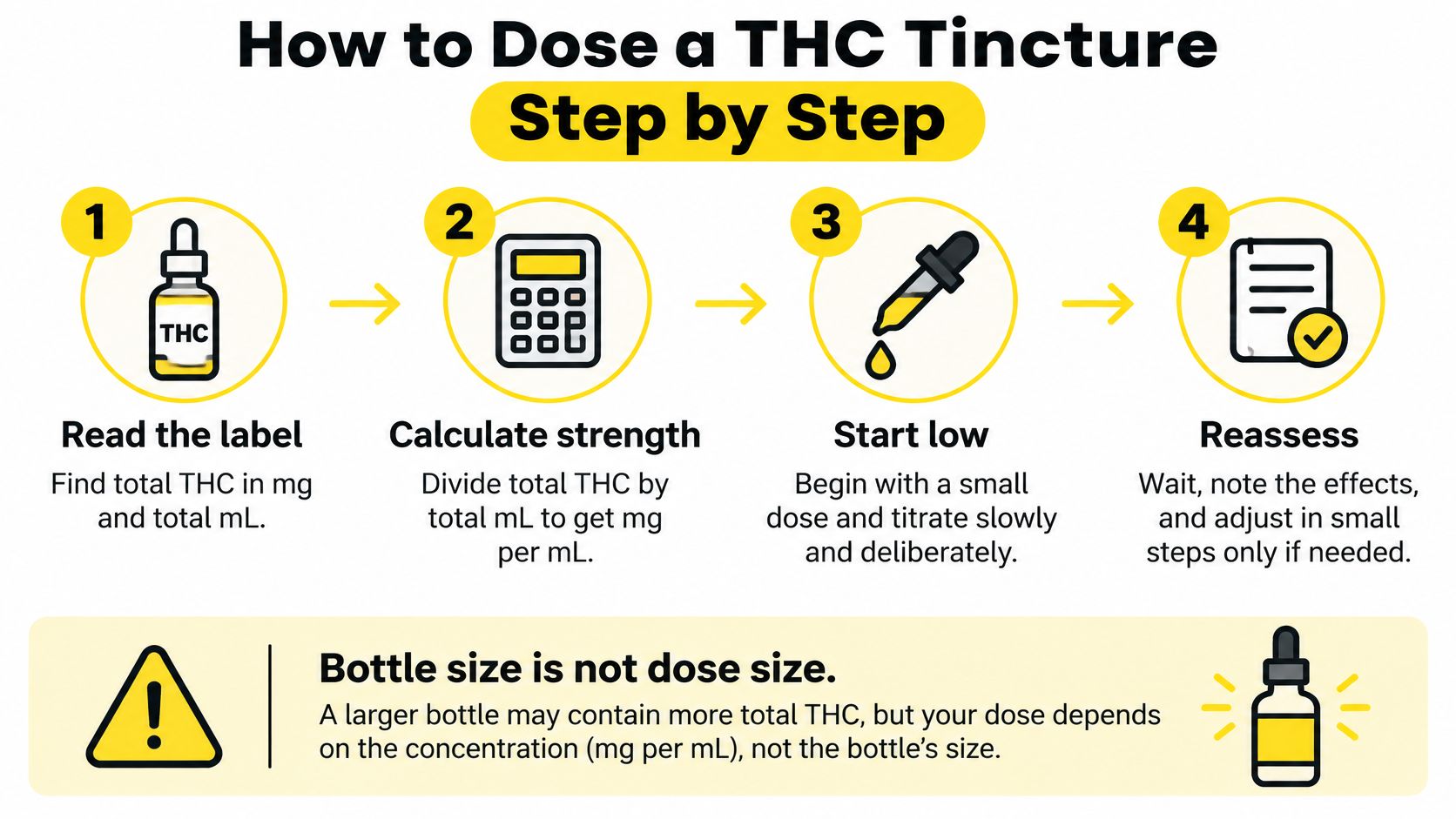
- Confirm the label and testing: Find the total THC, total volume, and concentration in mg per mL. Check that the product has lab results for potency and contaminants. Mr. Nice Guys DC tests every product for pesticides, potency, and more.
- Calculate your volume: Use the formula above and write down the result. For example, a 2.5 mg dose from a 25 mg per mL bottle is 0.1 mL. Do the math before handling the dropper.
- Choose a cautious starting dose: The Health Canada guide to accessing cannabis for medical purposes recommends starting with 2.5 mg of THC once daily; people over 55 or with certain health risks may consider 1.25 mg. Ask a clinician which starting point applies to you. A cautious starting dose does not guarantee a particular effect or safety.
- Measure by the marking, not by drops: Draw the liquid to the line that matches your calculated volume. Drop sizes and concentrations vary, so counting drops or assuming a full dropper is one dose can lead to errors.
- Use as directed and record the details: If the product directions say to place the dose under your tongue, follow them. Note the time, dose in mg, volume in mL, and whether you have eaten recently. Food can change how a dose feels, so recording it can help make sense of your experience.
- Wait before judging the effect: Allow at least two to three hours before deciding whether the dose has taken effect. Mild effects after 30 minutes do not show how strong the dose may become.
- Make any increase on a later occasion: If you and your clinician decide to adjust the dose, use the smallest measurable change. The same careful approach applies to low-dose edibles, where small changes can help avoid taking more than intended.
- Get help for severe effects: Seek medical help for heavy sedation, a racing heartbeat, confusion, or panic that does not settle. Do not drive yourself.
For example, someone takes a first dose at 9 pm, feels little by 9:30 pm, and takes another at 10 pm. The first dose may still be building toward its peak at midnight, while the second dose is also taking effect. Waiting through the onset window helps prevent this kind of accidental stacking.
Keep the routine steady while you learn how a dose affects you. Record the dose, time, food, effects, and side effects so you can compare like with like. Follow the label's storage directions, keep the bottle upright in a cool, dark cabinet away from children and pets, and measure at eye level. If the syringe's smallest marking is larger than your calculated volume, ask a pharmacist or budtender about a finer oral syringe rather than rounding up.
Confirm Your First Dose and Where to Get Help
Your decision has three parts: whether a tincture fits your goal, what your first dose is, and who checks it with you. Make all three before your first evening dose, not after.
Three Concrete Next Steps
- Write down one goal and one measure: For nighttime nerve pain, track pain on a 0-10 scale at bedtime and again at 3 am if you wake. For sleep, track total hours and how many times you woke.
- Bring the label and your medication list: Take a photo of the front and back of the bottle, list prescriptions, over-the-counter medicines and supplements, and ask a clinician or pharmacist about interactions and the starting dose. Our medical cannabis 101 guide for first-time visitors explains what to expect from that first conversation.
- Start low and log for two weeks: Begin with the lowest labeled dose, keep the same routine, and don't change the dose and the timing on the same night. One change at a time tells you what caused any difference.
For Washington, DC residents, access runs through the medical cannabis program. We help customers get a medical cannabis card in Washington DC, with clear instructions and support for both self-certification and certification through a traditional healthcare provider. The application is filled out online through the DC Department of Health website, so check the current requirements there before you apply.
If your log shows no meaningful change after two careful weeks, that's useful information too. It may mean the evidence doesn't fit your condition, the dose needs clinical review, or another format suits you better. Don't keep raising the dose to chase a result the product may not deliver.
A THC tincture is good for measured, gradual symptom management when the evidence fits and medication risks have been cleared, not as a fast or universal fix.
Bring your goal, your medication list and your questions, and we'll help you read tincture labels by milligrams per milliliter so your first dose is measured, not guessed. We stock tested tinctures alongside flower, edibles, topicals and capsules, and our staff recommend products based on what you're trying to manage. Visit Mr. Nice Guys DC to review your options and get support with your DC medical cannabis card before you start.
Mr Nice Guys DC
At Mr. Nice Guys DC, we’re more than just a cannabis delivery service — we’re passionate advocates for quality, convenience, and community. With years of experience in the cannabis industry, our team is dedicated to educating and empowering customers across Washington, D.C. Whether you're a seasoned user or just starting your cannabis journey, our blog delivers trusted tips, product insights, and the latest updates from the world of weed. Stay informed, stay elevated.
