
Must Be 21 To Enter
By entering this site you are agreeing that you are at least 21 Years of Age or older.
I AM 21 OR OLDERMedication Compatibility Check: Cannabis User Guide
.svg)

.png)
You're often doing this check at the busiest possible moment. A new prescription is ready at the pharmacy. You already take a blood pressure pill, a sleep aid from the drugstore, a daily vitamin, and a cannabis gummy at night. Someone asks, “Any other medications?” and you hesitate because cannabis doesn't feel like a medication, your magnesium supplement seems harmless, and the cold medicine was only for a few days.
That's exactly where a medication compatibility check either works or fails.
A good check isn't just about whether two prescription drugs can be taken together. WebMD's interaction guidance makes clear that interactions can involve other drugs, shared active ingredients, alcohol, foods, and supplements such as St. John's wort, and those effects can matter for things like blood pressure medicines, birth control pills, and cancer drugs. For people who use cannabis, that broader view matters even more. The question is not “Is weed safe with my meds?” It's “What exactly am I taking, in what form, how often, and what happens when all of it overlaps in one body?”
First Assemble Your Complete Medication List
The biggest failure point in any medication compatibility check is simple. The list is incomplete.
People usually remember prescription bottles. They forget the ibuprofen in the kitchen drawer, the melatonin gummy, the elderberry syrup, the CBD tincture used “only sometimes,” or the vape used on weekends. But compatibility review only works when the checker sees the same reality your body sees.
What belongs on the list
Start one master list in your phone notes, a wallet card, or a printed sheet. Keep it updated every time something changes.
Include all of these:
- Prescription medicines with the exact name, strength, and how you take them. Example: “sertraline 50 mg each morning” or “lisinopril 10 mg nightly.”
- Over the counter products such as ibuprofen, acetaminophen, naproxen, antihistamines, sleep aids, antacids, cold and flu products, and laxatives.
- Vitamins and supplements including magnesium, fish oil, probiotics, ashwagandha, turmeric, and especially herbal products.
- Cannabis products with as much detail as you can. Write down whether it's THC, CBD, or mixed, and whether it's a gummy, tincture, capsule, vape, flower, beverage, or topical.
- Alcohol and food factors that may be relevant. Interactions aren't limited to prescriptions, and WebMD specifically warns that alcohol, certain foods, and supplements can materially affect medication safety.
- Allergies and recent medication changes so your clinician can spot patterns, not just current pairings.
What to write for cannabis
Many lists become vague. “I use weed at night” isn't enough for a useful review.
Write it like this instead:
| Product | What to record |
|---|---|
| Edible | Brand or product name, THC/CBD amount on label, usual number taken, and what time |
| Tincture | THC/CBD content, dose in mL or drops, how often, and whether you hold it under the tongue or swallow |
| Vape | THC/CBD type, how many puffs you usually take, and when |
| Flower | Strain or product name if known, how much, and whether smoked or vaporized |
| Topical | Product type, ingredients if available, and where/how often used |
If you're new to formal medical access, it also helps to understand medical card requirements in DC so your records, shopping, and provider conversations stay organized from the start.
Practical rule: If you put it in your body often enough that you'd notice running out, it belongs on the list.
A quick self-audit
Before any online check or pharmacy call, ask yourself:
Did I include products I only use as needed?
Sleep aids, migraine meds, nausea meds, and cold products are common misses.Did I include duplicate ingredient risks?
WebMD notes that taking multiple products with the same active ingredient can cause side effects or overdose. That matters when one ingredient appears in both a prescription and a combo product.Did I disclose my cannabis use?
Your pharmacist is not grading you. They're trying to prevent harm.
A clean, current list turns a vague conversation into a precise one. That's what makes the next step useful.
Use a Trusted Online Interaction Checker
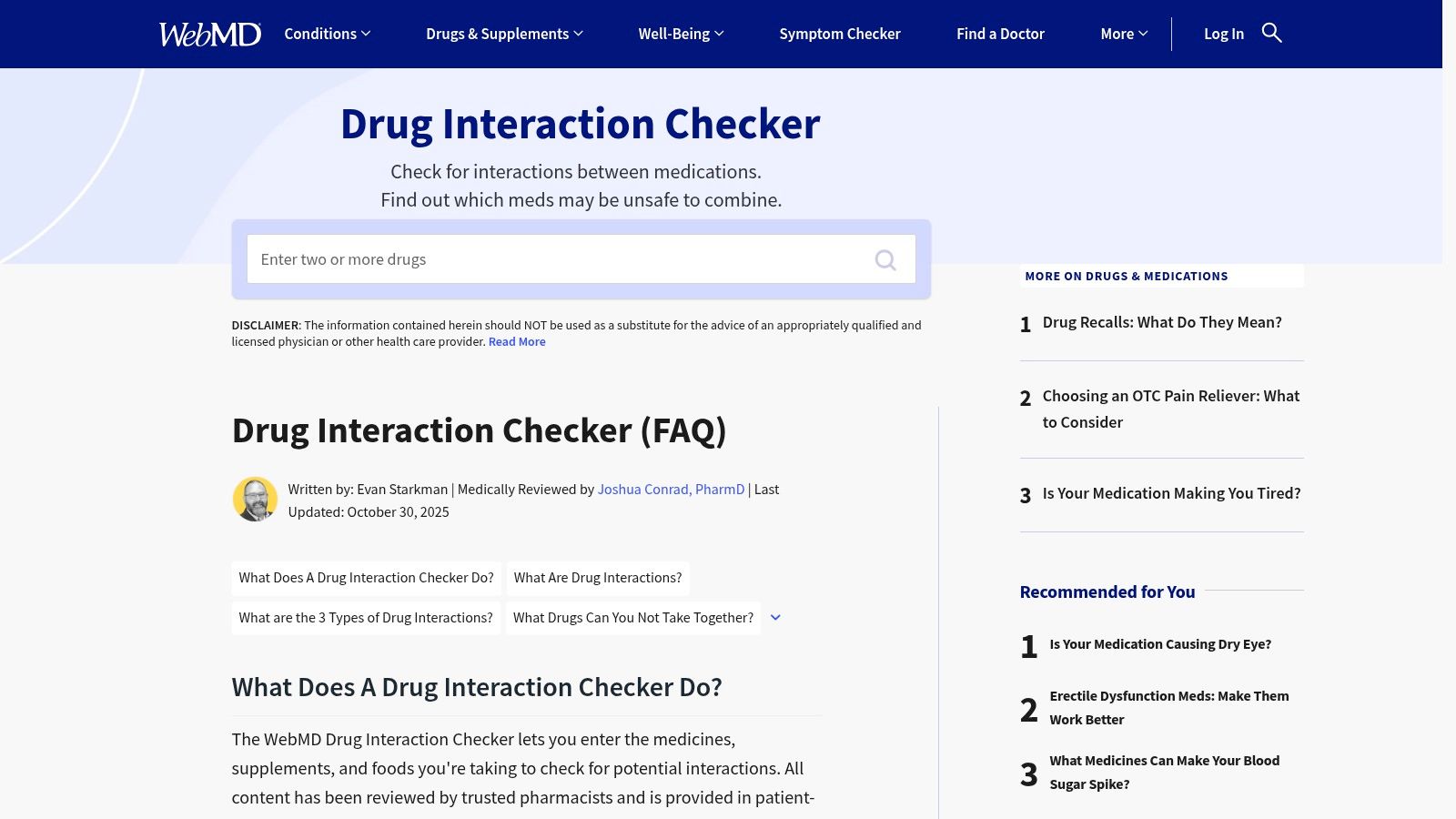
Once your list is complete, an online checker becomes a practical screening tool. Not a diagnosis. Not final medical advice. A screen.
One reason digital tools matter is scale. DrugBank notes that modern systems can screen more than 1.3 million drug-drug interactions through a single API call. That tells you how far medication compatibility checking has moved beyond memory and paper inserts.
A consumer checker is simpler than a professional database, but it can still catch issues worth discussing.
What makes a checker worth using
A useful checker should let you search exact medication names and review more than just prescriptions. That broader scope matters because, as noted earlier, interaction review now includes supplements, alcohol, and some food factors, not just one prescription against another.
When I'm coaching patients, I tell them to trust tools that are familiar, clearly structured, and easy to review with a pharmacist afterward. The main value is not the colored warning itself. The value is that the tool helps you arrive at the pharmacy with a more complete question.
A simple way to run your check
Use your list and enter one item at a time. Don't rush. Similar names, combination products, and cannabis formulations can be entered incorrectly.
Try this workflow:
Start with your daily prescriptions
Enter the medicines you take on a schedule, such as an antidepressant, blood pressure medicine, seizure medicine, or blood thinner.Add over the counter items next
Over-the-counter items frequently reveal hidden problems. A nighttime cold product may add sedation. A pain reliever may matter for bleeding or stomach irritation.Add supplements and herbs
St. John's wort is a classic example of something people forget to mention but that can matter clinically.Account for cannabis in the notes you keep
Some consumer tools won't handle every cannabis product cleanly. If that happens, still document the exact THC or CBD product, form, dose, and timing so you can bring that information to a pharmacist.
Here's a practical example. Suppose someone takes an SSRI in the morning, a blood pressure medicine at night, and uses a CBD tincture in the evening. The point of the check is not to prove the combination is safe or unsafe by itself. The point is to surface concerns like sedation, blood pressure changes, or altered drug handling in the body so a clinician can judge the actual risk.
What the result page is really telling you
An interaction checker usually gives a severity label and a short explanation. Read the explanation first.
Look for wording like:
- May increase side effects
- May increase drowsiness
- May affect blood pressure
- May change how a medication is metabolized
- Use together only with monitoring
Those phrases tell you what kind of problem is being screened for. They're more useful than the headline label alone.
After you review one example, it helps to watch the interface in action and see how a patient-oriented walkthrough feels in real time.
What online tools do well, and what they don't
They do well at flagging known patterns. They don't know how you personally respond, whether your liver function is reduced, whether your dose is tiny or high, or whether you only use a cannabis edible twice a month.
A checker is strongest when it starts a conversation, not when it ends one.
That's why I prefer patients to bring a screenshot, printed results, or a notes app summary to the pharmacy. It shifts the conversation from “Is this okay?” to “This tool flagged these concerns. Can you review them with my actual doses and my cannabis product?”
Understand Common Interaction Types
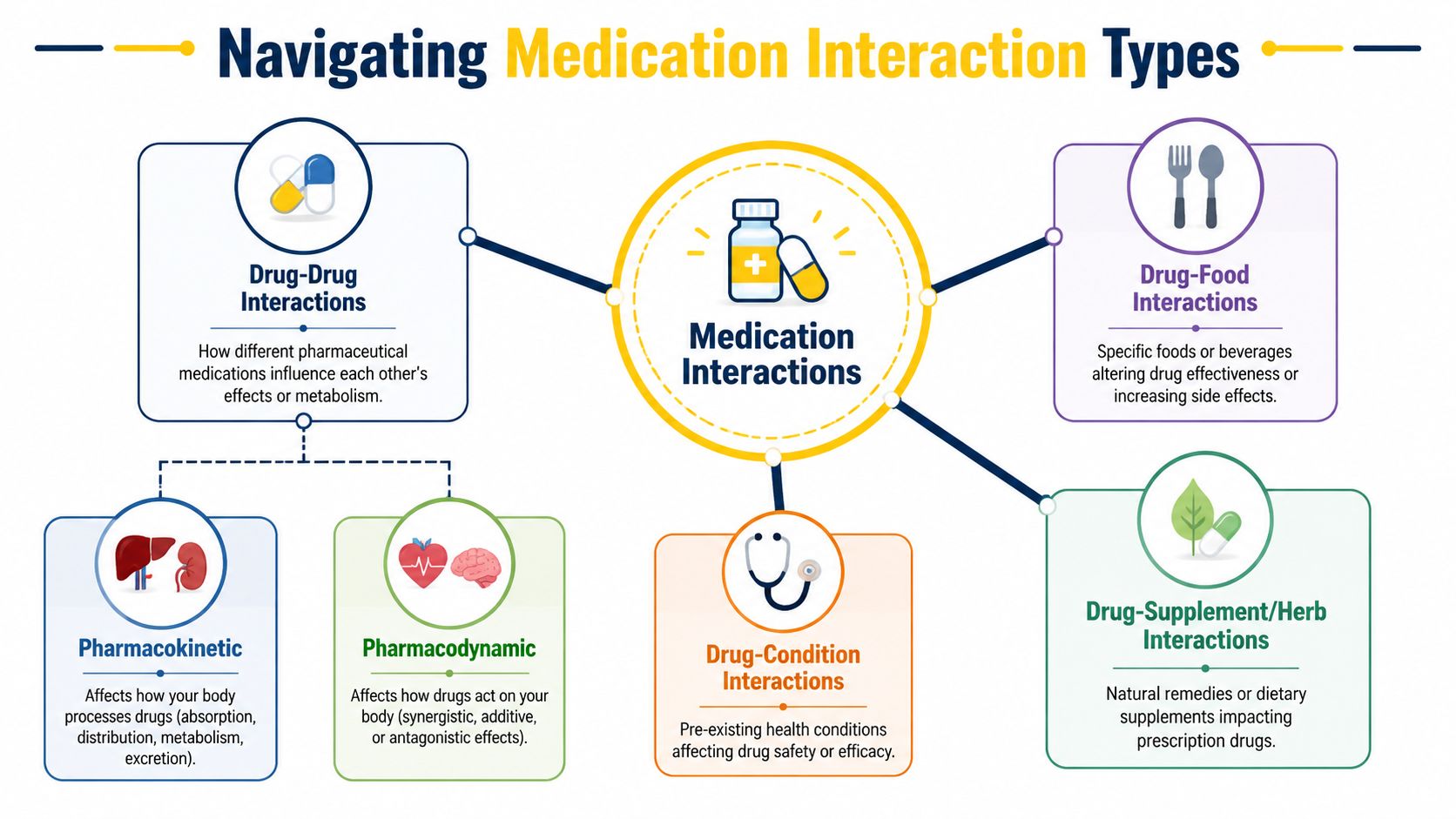
Interaction warnings make more sense when you know what kind of interaction you're looking at. Most fall into a few buckets. Once you see the pattern, the warning stops feeling mysterious.
The liver traffic jam
Many drugs are processed by enzymes in the liver. Think of those enzymes like checkout lanes at a grocery store. If two products need the same lane at the same time, one can get delayed. That can make a medicine stick around longer, hit harder, or clear faster than expected.
Patients often hear this described as a “CYP interaction.” You don't need to memorize enzyme names to use that information well. You just need to know the practical result. One product may make another feel stronger, weaker, or less predictable.
A useful question for your pharmacist is: “Does this combination change drug levels, or is it mostly a side effect overlap?” That gets you to the heart of the issue quickly.
Additive effects
Some combinations don't change drug levels much. They push in the same direction.
Common examples include:
Sleepiness plus sleepiness
A sedating antihistamine with cannabis can leave you much more impaired than either alone.Dizziness plus dizziness
A blood pressure medicine plus a product that also lowers alertness or coordination can make standing up feel harder.Dry mouth plus dry mouth
Not usually the most dangerous issue, but it can become very uncomfortable and affect hydration and swallowing.
Two products can be individually reasonable and still be a bad pair for your workday, your balance, or your ability to drive.
Opposing effects
Some products pull in opposite directions. One may be trying to calm the nervous system while another is stimulating it. One may raise a physiologic effect while another lowers it. These aren't always dangerous, but they can make therapy less predictable.
That matters with cannabis because some people use it for sleep, some for pain, some for nausea, and some for anxiety. The goal of the medication matters. The cannabis formulation matters too.
A few high-attention categories
Certain warnings deserve extra respect because the downside can be serious.
| Interaction pattern | Why it matters in plain English |
|---|---|
| Serotonin-related overlap | Too much serotonin activity can become dangerous, especially when several serotonergic products are involved |
| Bleeding risk overlap | Some combinations can make bruising or bleeding more likely |
| Sedation and impairment | This affects driving, falls, work safety, and next-day function |
| Heart rate or blood pressure effects | Important if you already have cardiovascular treatment in place |
If you want a plain-language primer on cannabinoids before reviewing these patterns, this CBD versus THC guide is a useful companion because it helps you describe the product correctly when you talk to a clinician.
Why checkers flag so much
Some patients get discouraged when a tool produces several warnings. That doesn't always mean the regimen is wrong. It means the system is screening a very large rule set, and modern databases are built to cast a wide net.
The practical skill is learning which alerts are about watching, which are about adjusting, and which are about stopping until someone reviews it.
Key Cannabis Considerations for Your Check
Cannabis complicates compatibility review because it isn't one ingredient and it isn't one route. THC and CBD aren't interchangeable, and a gummy does not behave like a vape.
That's why “I use cannabis” is not enough information for a meaningful medication compatibility check.
THC and CBD create different questions
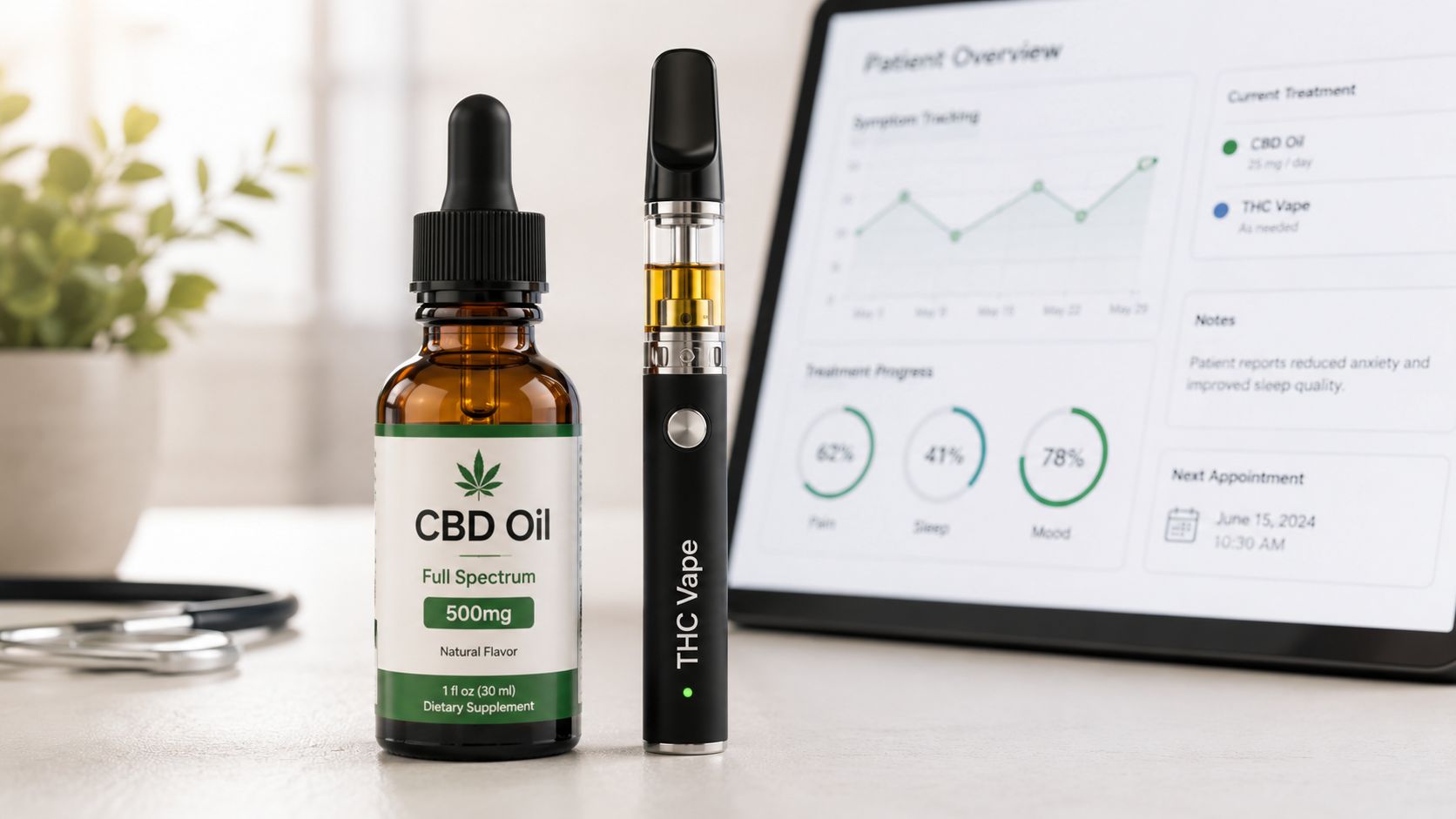
THC tends to raise practical concerns about impairment, dizziness, sedation, anxiety in some users, and timing around daily activities. CBD often raises a different question. Could it alter how another medication is processed?
That distinction matters. A patient using a low-THC, higher-CBD oil for evening discomfort may need a different review than a patient using a fast-acting THC vape for breakthrough symptoms.
When you document cannabis, note the main cannabinoid profile if you know it:
- Mostly THC
- Mostly CBD
- Balanced THC and CBD
- Unknown ratio
If you use capsules or oils, cannabis oil capsules are a good example of why form matters. A capsule gives a more standardized dose than many inhaled products, which can make discussions with a pharmacist much more precise.
Form changes the interaction profile
How you take cannabis changes how your body handles it.
A rough practical comparison:
Edibles and capsules
Slower onset, longer tail, more involvement of digestion and liver processing.Tinctures
Can sit somewhere in the middle depending on how they're used and swallowed.Vapes and inhaled products
Faster onset, easier to “stack” unintentionally because effects come quickly and repeated puffs are common.
This doesn't mean one route is always safer. It means the timing, intensity, and duration can differ enough to change how an overlap with medication feels in real life.
Timing can matter, but it doesn't erase risk
Sometimes patients ask if taking cannabis a few hours apart from a medication solves the interaction. Sometimes it helps with side effect overlap. Sometimes it doesn't meaningfully reduce the concern.
Spacing can be reasonable to discuss if the main issue is sedation or stomach upset. It's less reassuring when the concern is altered metabolism or a medication with a narrow margin for error. In other words, separating doses is a strategy, not a guarantee.
If a combination worries you, don't solve it by guessing at spacing. Ask whether the risk is about timing, total exposure, or the specific cannabinoid.
Be concrete when you ask for help
“Is cannabis okay with my meds?” is too broad.
Say this instead: “I take sertraline each morning, lisinopril at night, and a CBD tincture in the evening. The bottle says it's high CBD with a small amount of THC. I usually take one dropper around 9 pm. Can you check whether that creates a problem with sedation, blood pressure, or drug metabolism?”
That level of detail turns a vague concern into a usable clinical question.
Interpret Results and Know When to Seek Help
An online result only helps if you know what action it should trigger.
Think of the alert level as a next-step signal, not a verdict.
A simple action framework
Here's the practical approach I recommend:
Major
Don't start, combine, or increase the products on your own. Call your pharmacist or prescriber before using them together.Moderate
Treat this as a conversation item, not an automatic no. Ask what specific problem is expected, what symptoms to watch for, and whether dose timing or monitoring changes the plan.Minor
Still mention it, especially if you're older, sensitive to side effects, or taking several products. “Minor” on a screen doesn't always feel minor in real life.
What to say when you call
You don't need medical language. You need precision.
Try this script:
“I ran a medication compatibility check and it flagged an interaction. I take these prescriptions every day, plus this over the counter product and this cannabis product. Can you tell me whether the concern is sedation, blood pressure, bleeding, serotonin effects, or something else?”
That question gets you a much better answer than “Is this safe?”
If the warning involved a tincture or edible and you're still trying to standardize your intake, this tincture dosing guide can help you describe your actual use more clearly before you speak with a clinician.
When complexity raises the stakes
As regimens get more crowded, mistakes become easier. A review in this drug development and interaction context notes that polypharmacy increases complexity, and incomplete regimen entry is a common pitfall that can lead to missed interactions and adverse effects. That's why a person taking several prescriptions, occasional OTC products, supplements, and cannabis should be especially careful about complete documentation.
If any of these apply, seek pharmacist or prescriber review sooner rather than later:
- You take several daily medications
- You use both THC and CBD products
- You recently started, stopped, or changed a dose
- You've had dizziness, fainting, severe sedation, palpitations, or unusual bleeding
- You are pregnant, trying to become pregnant, or have serious heart, liver, kidney, or seizure conditions
The best outcome is often not dramatic. It's a calm call where the pharmacist says, “Yes, I see the issue. Here's how to handle it safely.”
Preparing for Your Dispensary Discussion
A budtender can help you understand a product. They can't replace a pharmacist reviewing your full regimen. That's not a criticism. It's just a different role.
The most productive dispensary conversation is built around product facts, not requests for medical clearance.
Ask for specifics, not reassurance
Instead of saying, “Is this safe with my medications?” ask questions that help you gather usable details:
- What are the exact THC and CBD amounts in this product?
- Is it mostly THC, mostly CBD, or balanced?
- How is it taken, edible, tincture, vape, capsule, or topical?
- How long do customers usually expect onset and duration to feel?
- Is there a certificate of analysis or lab information showing cannabinoid profile?
- Is the dose consistent from serving to serving?
Those answers give your pharmacist something concrete to work with.
Match the product to the safety question
If your main concern is next-morning grogginess, ask about product forms with clearer serving sizes. If your concern is avoiding a large evening dose, ask about lower-dose options. If your concern is keeping CBD exposure predictable, say that directly.
A short script can help:
“My pharmacist wants to know the exact cannabinoid content and how I take it. I'm looking for a product with a clear label and consistent serving size.”
That keeps the conversation practical and avoids putting the dispensary staff in the position of making a medication safety call they shouldn't make.
If this is your first formal dispensary visit, this medical cannabis basics guide can help you walk in with the right expectations and vocabulary.
A good dispensary discussion doesn't replace your clinical team. It helps you gather cleaner product information so your doctor and pharmacist can give you better advice.
If you want a dispensary team that values clear product information, patient education, and a professional experience, Mr. Nice Guys DC is a strong place to start. Bring your medication list, ask specific questions about THC and CBD content, and use that information to have a confident follow-up conversation with your pharmacist or doctor.
Mr Nice Guys DC
At Mr. Nice Guys DC, we’re more than just a cannabis delivery service — we’re passionate advocates for quality, convenience, and community. With years of experience in the cannabis industry, our team is dedicated to educating and empowering customers across Washington, D.C. Whether you're a seasoned user or just starting your cannabis journey, our blog delivers trusted tips, product insights, and the latest updates from the world of weed. Stay informed, stay elevated.
