
Must Be 21 To Enter
By entering this site you are agreeing that you are at least 21 Years of Age or older.
I AM 21 OR OLDERLow Dose Edibles: A Beginner’s Guide to Safe Dosing
.svg)

.png)
You're at home in Washington, DC, holding a neatly labeled gummy and wondering whether one piece is too much, too little, or exactly right. Thirty minutes pass. You feel nothing, so taking another piece can seem reasonable. With edibles, that decision often happens before the first dose has had time to show you what it can do.
Low dose edibles reward patience, accurate measuring, and a clear understanding of how oral THC differs from smoking or vaping. The right starting point isn't the largest amount you can tolerate. It's the smallest measured amount you can evaluate safely, in a setting where you don't need to drive, work, or make important decisions.
The Edible Paradox Why Less Is Often More
A new patient enters a dispensary looking for relief and notices that some packages promise a much stronger experience than others. The larger number can feel persuasive. More THC might seem like a better value, especially when the patient assumes an edible behaves like a few inhaled puffs.
That assumption is where trouble often begins. A person eats a gummy, waits half an hour, notices no obvious change, and takes another. Later, the first dose and the second dose become active together. What started as an attempt to stay comfortable can turn into anxiety, dizziness, confusion, or a long evening spent waiting for the effects to fade.
The reason isn't a lack of discipline. Oral THC follows a different route through the body, so edible dosing requires a different waiting strategy than smoking or vaping.
Practical rule: If you can still say, “I don't feel it yet,” you may still be waiting for the dose to arrive.
A foundational comparison comes from a peer-reviewed review of cannabis products in Colorado. Its laboratory analysis found that 1 mg of delta-9-THC in an edible produced a behavioral effect comparable to approximately 5.71 mg of delta-9-THC in smoked cannabis (review summary and source). That doesn't mean every person will experience the same ratio, but it shows why labeled milligrams can't be compared casually across formats.
The practical distinction is simple:
- Smoking or vaping: Effects usually become noticeable quickly, which lets the user evaluate the experience sooner.
- Eating THC: Effects arrive later, may feel stronger, and can last much longer.
- Redosing: Taking more before the first serving reaches its peak can stack doses together.
The goal of low dose edibles isn't to chase the strongest possible effect. It's to find a manageable amount that fits your purpose, whether that means relaxing at home, supporting a medical routine, or learning how your body responds.
Understanding the Science Behind Low Dose Edibles
A lot of first-time edible experiences follow the same pattern. Someone waits for the quick feedback they would get from smoking, feels little after a while, takes more, and then gets hit by both doses later. The reason is pharmacology, not impatience.
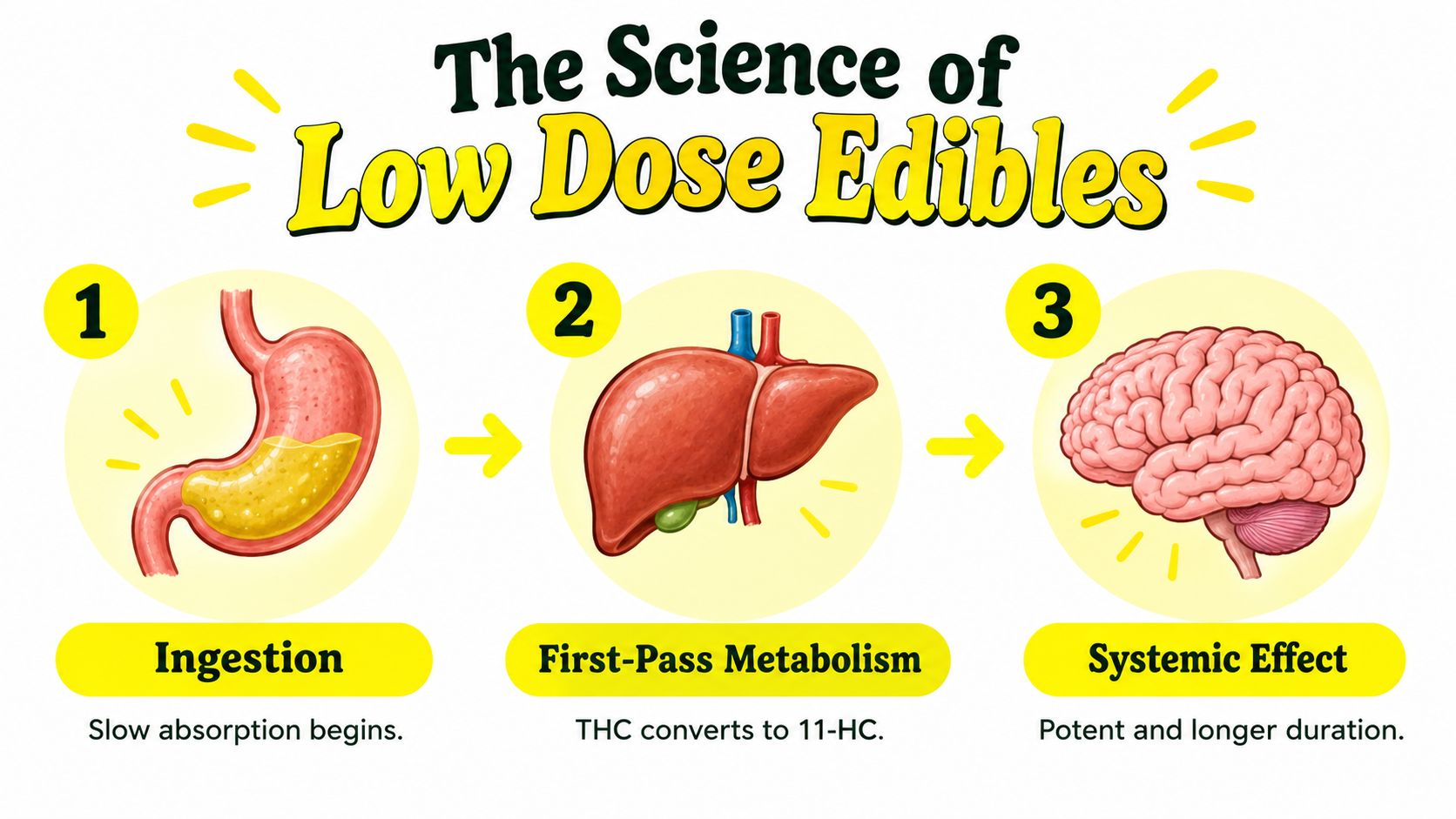
Smoking moves THC from the lungs into the bloodstream quickly. Eating THC sends it through digestion first, then through first-pass metabolism in the liver. That extra stop changes both timing and feel.
Inhaled THC takes a more direct route into circulation. Oral THC goes through a slower processing step first. During that process, the liver converts some THC into 11-hydroxy-THC, an active metabolite that can contribute to stronger and longer-lasting effects. That is why an edible with a modest label amount can feel very different from an inhaled amount that appears similar.
The hardest part for beginners is the delay. With inhalation, your body gives feedback quickly. With an edible, the signal arrives later and often builds in stages. A light effect at first does not mean the dose has finished unfolding.
That delay is why edible timing has to be handled differently from smoking. Initial effects may show up anywhere from about half an hour to a couple of hours after eating, stronger effects may arrive later, and the full experience can last for hours. The exact pattern shifts with stomach contents, food composition, metabolism, body weight, sex, product format, and other medications.
Why the waiting window matters
Say you take a measured 2.5 mg serving at 7:00 p.m. At 7:30, you feel nothing. At 8:00, you feel a slight shift but cannot tell whether it is the edible or your attention turning inward. If you add another serving at 8:05, you are still judging the first dose before it has shown its full effect.
By 9:00 or later, both servings may be active at the same time. The problem is not that the second amount was automatically too much by itself. The problem is overlap. You stacked a second wave onto a first wave that was still rising.
For a broader explanation of how cannabinoids are processed, this cannabinoid breakdown guide gives useful background. For edibles, the practical lesson is simple. The clock is part of the dose.
How to Start Low and Go Slow Safely
For a new or inexperienced consumer, Health Canada guidance recommends starting with 2.5 mg of THC or less, while emphasizing that this is a practical low-dose benchmark, not a guarantee of the same response for everyone (guidance cited by the CDC). Adults older than 55, people with certain health conditions, and people taking medications that may interact with THC may be better served by discussing an even smaller starting amount, such as 1.25 mg, with a clinician.
A first session should feel more like a controlled observation than a test of tolerance.
A measured first session
Choose a clearly labeled product. Confirm the THC amount per piece, not just the total THC in the package. A package containing several pieces can let you begin with a fraction of the total amount.
Start with 2.5 mg or less. If a gummy contains 5 mg per piece, don't assume the entire piece is appropriate. Use a product designed for smaller portions or follow a reliable serving method.
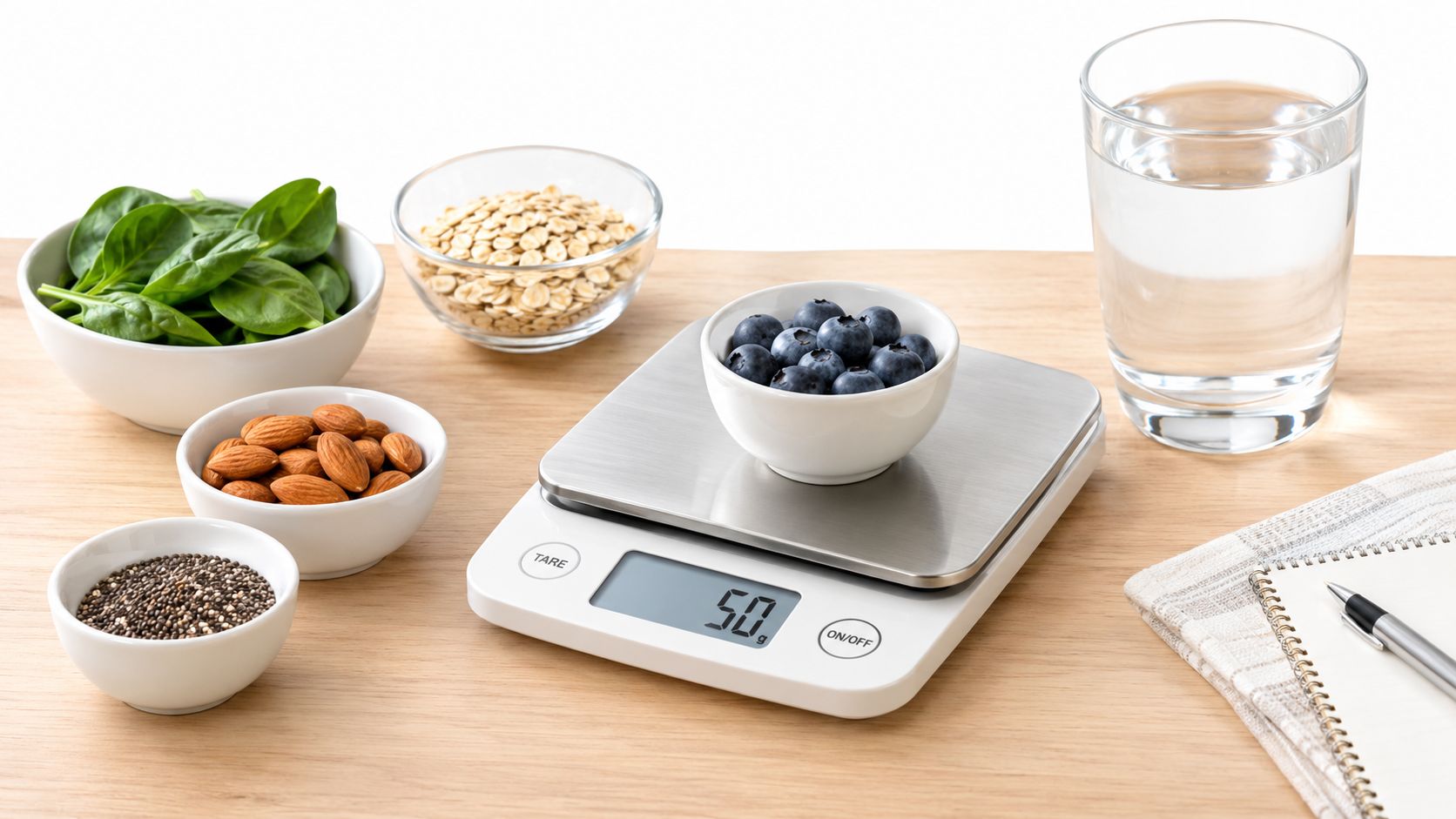
Record the time. Write down the amount, product format, and time of consumption. This simple note prevents the “When did I take that?” problem.
Wait at least 2 hours before considering more. British Columbia recommends starting with 2.5 mg or less and waiting at least 2 hours before considering another 2.5 mg dose. Full effects may take up to 4 hours, so waiting closer to that window is sensible when your response is uncertain (lower-risk cannabis guidance from Health Canada).
Increase only on a different session. If the first amount feels manageable but insufficient, repeat the same amount another time before making a small change. You can always evaluate more later. You can't remove THC after swallowing it.
A simple journal can look like this:
| Time | Amount | What to note |
|---|---|---|
| 7:00 p.m. | 2.5 mg | Product, food, and starting mood |
| 8:00 p.m. | No additional dose | Early sensations and alertness |
| 9:00 p.m. | Decide only after observing | Comfort, impairment, anxiety, or unwanted effects |
| Later | No driving or hazardous activity | Duration and next-day impressions |
If you feel that you've taken too much, move to a quiet, familiar place. Sit or lie down, sip water, avoid alcohol and additional THC, and ask a trusted person to stay nearby if that makes you feel safer. Don't drive, operate equipment, or make important decisions while impaired.
A practical microdosing guide for edibles can help you think through portions and tracking, but medication interactions and health conditions deserve individualized advice from a qualified healthcare professional.
Choosing the Right Product Format for Your Needs
The best format depends on how precisely you need to measure, how long you want the experience to last, and whether taste or discretion affects your routine. A low dose is only useful when you can identify the amount you consumed.
Gummies are often the simplest starting point because each piece can carry a stated amount. They're portable, familiar, and easy to store securely. Their limitation is that a single piece may still contain more THC than a cautious beginner wants, so check the amount per piece before buying.
Mints and lozenges can feel convenient for people who prefer a smaller format. Some dissolve in the mouth, while others are swallowed like a traditional edible. Don't assume a mint is automatically faster or gentler. The product's directions and formulation matter, and the same delayed-onset caution still applies unless the label clearly describes a different delivery method.
Chocolate offers a different kind of flexibility. A scored bar may allow you to divide servings, but breaking chocolate by eye can be less consistent than using individually labeled pieces. Warm conditions can also make portions messy, which isn't ideal when you're trying to repeat a medical routine.
Read the label like a dosing tool
Look for these details before opening the package:
- THC per piece: This tells you what one gummy, mint, square, or serving contains.
- Total THC per package: This helps you understand the whole container, but it isn't your personal dose.
- Serving instructions: Confirm whether one serving means one piece or a fraction of a piece.
- Cannabinoid content: Note whether the product contains THC alone or other cannabinoids that may change the experience.
- Ingredients and warnings: Check for allergens, stimulants, sedating ingredients, or interactions relevant to your health.
A package can contain 10 mg of THC in total while offering several smaller pieces. That may be more useful for a cautious consumer than one piece containing the entire amount. The meaningful unit is the labeled amount per piece, not the package size or the phrase “low dose” on the front.
Use the edibles, vapes, and flower comparison to compare delivery methods, but keep your choice tied to your actual routine. Someone seeking discreet evening use may prefer a measured gummy. Someone who needs flexible portions may prefer individually divided chocolate or a product with a smaller amount per piece.
Navigating DC Regulations and Purchasing Responsibly
A low-dose plan begins before consumption. In Washington, DC, look for a verified purchasing channel, clear labeling, secure packaging, and staff who can explain the amount per piece. A compliant source makes it easier to distinguish a measured product from one that only advertises a total package amount.
For DC patients, Mr. Nice Guys DC is one local option that offers cannabis products, including edibles, with in-store pickup, curbside service, and delivery through Sweede. Its educational materials include dosing information and a calculator for working toward a target amount such as 2.5 mg. Patients and visitors should still confirm current eligibility, purchasing requirements, and local rules before ordering.
A careful purchase checklist protects you from two different problems: taking more THC than intended and buying a product whose quality is difficult to assess.
- Verify the source: Prefer a licensed or otherwise verified supply chain rather than an unlabeled product from an informal seller.
- Check per-piece dosing: The label should make it clear whether a gummy contains 1 mg, 2.5 mg, 5 mg, or another amount.
- Review batch information: Look for testing and product details that support consistent potency.
- Inspect the packaging: Child-resistant packaging and clear warnings matter because children can experience more severe consequences after accidental ingestion.
- Ask about medical considerations: If you take prescription medication, have a health condition, or are older and new to THC, ask a clinician before beginning.
You can also review this guide to THC limits in edibles for additional context about package limits and serving size. A legal package limit doesn't automatically make the product an appropriate personal dose.
This short video offers another way to think about responsible purchasing and product selection:
Store edibles away from children and pets, and don't leave them in a place where they could be mistaken for ordinary candy. If a product looks poorly labeled, has an unusual seal, or doesn't clearly state the amount per serving, choose a different product or ask the dispensary team for clarification.
Common Misconceptions About Low Dose Edibles
A common low-dose mistake happens in a very ordinary moment. Someone takes a gummy, feels nothing after half an hour, takes another, and later gets hit by both doses at once. That pattern starts with misunderstanding how edible THC behaves in the body.
Myth one: A low dose can't impair you. A smaller amount can still change attention, short-term memory, judgment, and reaction time. The effect may feel subtle, which is part of the problem. If you feel “basically fine,” you can still be less sharp than you think, so driving, using equipment, or doing anything safety-sensitive should wait.
Myth two: Edibles work faster because they're stronger. Edibles usually work slower than inhaled cannabis, not faster. Smoking or vaping sends cannabinoids into the bloodstream through the lungs, so the effects show up relatively quickly. Edibles take the longer route through digestion and liver processing first, which is why the waiting strategy has to be different. That delay tricks people into stacking doses before the first one has fully arrived. If you want a plain-language refresher on timing, read how long edibles take to work.
Myth three: Tolerance builds instantly. One comfortable experience does not give you a stable personal baseline. Your response can shift based on whether you ate recently, how you slept, your metabolism, other medications, and the product itself. A gummy taken after dinner may not land the same way as the same gummy on an empty stomach. Consistency teaches you more than escalation.
Myth four: A compliant 10 mg package is a low dose. Package limits and personal dose are different ideas. A legal package cap can describe the total THC in the package without saying that the whole package makes sense for one sitting. For new or sensitive consumers, a much smaller amount may fit better than the package total. The useful question is not “How many milligrams are in the bag?” It is “How many milligrams are in one piece, and how many pieces am I taking?”
Myth five: Delta-9 and every other cannabinoid are interchangeable. Labels matter. Different cannabinoids can vary in effect, onset, and overall feel, so “THC” is not specific enough by itself. Check the exact cannabinoid listed, the amount per serving, and the source before assuming two products will behave the same way.
Too much cannabis can cause extreme confusion, anxiety, paranoia, panic, rapid heart rate, delusions or hallucinations, increased blood pressure, and severe nausea or vomiting, according to the CDC's cannabis FAQ. Seek urgent medical help if symptoms are severe, getting worse, or feel unsafe.
Mr Nice Guys DC
At Mr. Nice Guys DC, we’re more than just a cannabis delivery service — we’re passionate advocates for quality, convenience, and community. With years of experience in the cannabis industry, our team is dedicated to educating and empowering customers across Washington, D.C. Whether you're a seasoned user or just starting your cannabis journey, our blog delivers trusted tips, product insights, and the latest updates from the world of weed. Stay informed, stay elevated.
