
Must Be 21 To Enter
By entering this site you are agreeing that you are at least 21 Years of Age or older.
I AM 21 OR OLDERHow Long Do Edibles Take? a 2026 DC User's Guide
.svg)

.png)
Edibles usually take 30 to 120 minutes to kick in, and for some people the full experience builds much more slowly than they expect. That range is only a starting point, because your body, your meal timing, and the type of edible all shape when you feel it.
If you're reading this with a gummy on the counter or half a chocolate square already eaten, you're asking the right question. Most first-time edible experiences feel quiet at first. Then the waiting starts. You wonder if you took enough, if you should take more, or if nothing is happening at all.
That uncertainty is where people get into trouble.
A better way to think about edibles is this. They're not fast. They're gradual, personal, and easier to enjoy when you know what your body is likely doing behind the scenes. Once you understand the timeline, the wait feels less mysterious and a lot less stressful.
The Patient Question How Long Do Edibles Take
Regarding how long do edibles take, there is a simple first answer and a more honest second answer. The simple answer is that effects commonly begin somewhere in the 30 to 120 minute range. The honest answer is that your own timeline may land early, late, or somewhere in the middle.
That can feel frustrating when you're new. Smoking or vaping gives quick feedback. Edibles don't. They ask for patience before they give you information.
A practical example helps. One published example notes that a person consuming a 10 mg THC gummy without prior food intake may begin feeling effects at 45 minutes, reach peak intensity at 2.5 hours, and remain affected for approximately 6 hours in this edible timing example. That's a useful illustration, but it isn't a promise for every person or every product.
Why the question matters so much
When customers ask me this in a dispensary, they're usually not just asking about timing. They're asking three things at once:
- When will I feel something: They want to know when the edible stops being a mystery.
- When will it be strongest: They want to avoid being surprised by the peak.
- How long will I be committed: They want to know if this is a light evening plan or an all-night plan.
Those are smart questions. If you also want the full picture after effects begin, this guide on how long edibles last is a useful companion.
The biggest mistake with edibles isn't usually taking them. It's assuming the first hour tells the whole story.
A better expectation for first-timers
If you took a standard gummy, don't judge the experience too early. You might notice a subtle shift before a strong one. Some people first feel a softer body sensation, a little mood change, or heavier eyelids before anything obviously psychoactive shows up.
Think of the first hour as observation time, not decision time. That mindset alone makes the experience safer and more predictable.
Understanding the Edible Metabolism Process
Smoking is like handing THC directly to your bloodstream. Edibles are more like sending it through a processing center first. That extra route is why the timeline is slower and often feels deeper.
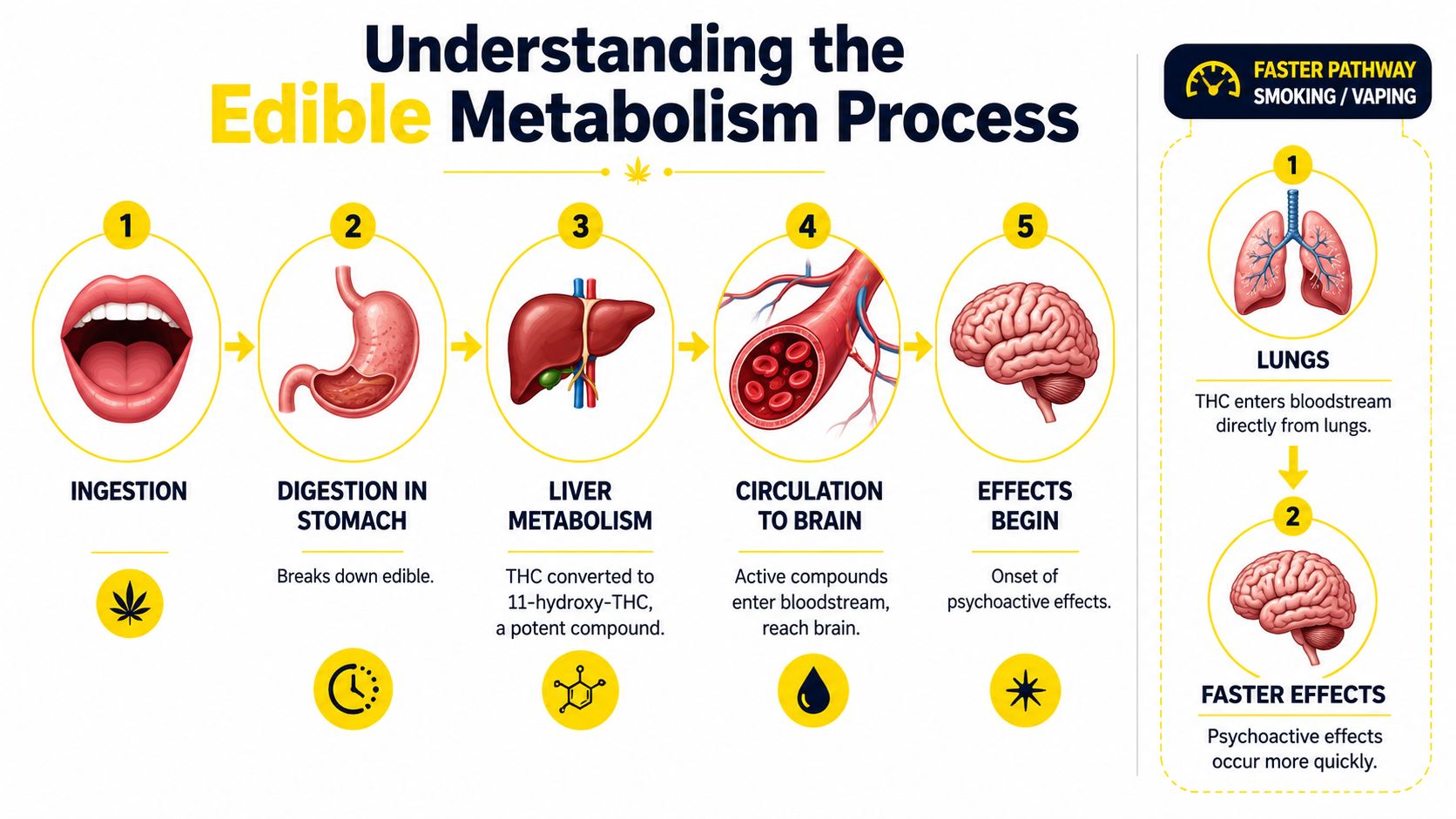
What your body does after you eat an edible
When you swallow a gummy, chocolate, or baked edible, the THC doesn't go straight from your mouth to your brain. It moves through your digestive system first. Then your liver processes it before it reaches circulation in the way that produces the familiar edible experience.
That liver step matters. With oral THC, the body converts it during first-pass metabolism into 11-hydroxy-THC, which is one reason edibles can feel different from inhaled cannabis. The delay isn't a flaw in the product. It's the normal route the compound takes.
According to this explanation of edible onset timing, edible cannabis typically requires an onset time of 30 to 120 minutes because it must be metabolized by the liver, where peak blood levels of THC are observed approximately 3 hours after ingestion. The same source stresses waiting at least 2 hours before re-dosing to reduce the risk of accidental overconsumption.
Why the effects can feel stronger
People sometimes assume a gummy should feel milder than smoking because there's no inhalation. In practice, the edible experience often feels more sustained and more immersive. That's part chemistry and part timing. The rise is slower, so people may keep waiting, then the full peak arrives later than expected.
Here's the basic flow in plain language:
- You eat the edible: The product moves into the stomach and digestive tract.
- Digestion starts: The edible breaks down over time, not instantly.
- The liver processes THC: This is the key step that changes the timing and feel.
- Active compounds circulate: Then the psychoactive effects become noticeable.
- The peak arrives later: What you feel at 45 minutes may be very different from what you feel later.
Practical rule: If you're not sure whether it's working, that's not a reason to take more. It's usually a reason to wait longer.
Why inhalation feels so different
Inhaled cannabis follows a much shorter path. That's why smoking or vaping often gives near-immediate feedback, while edibles ask for patience. If you're used to quick onset from a vape, an edible can feel almost inactive at first, even when it's working exactly as intended.
This is why experienced cannabis users can still misjudge edibles. Tolerance to one format doesn't always translate neatly into good timing decisions with another.
Key Factors That Influence Your Edible Timeline
An edible works less like a light switch and more like a recipe with a few variables. Same gummy, different day, different result. That is why one customer feels settled in before the opening scene, while another is still wondering whether anything is happening at all.
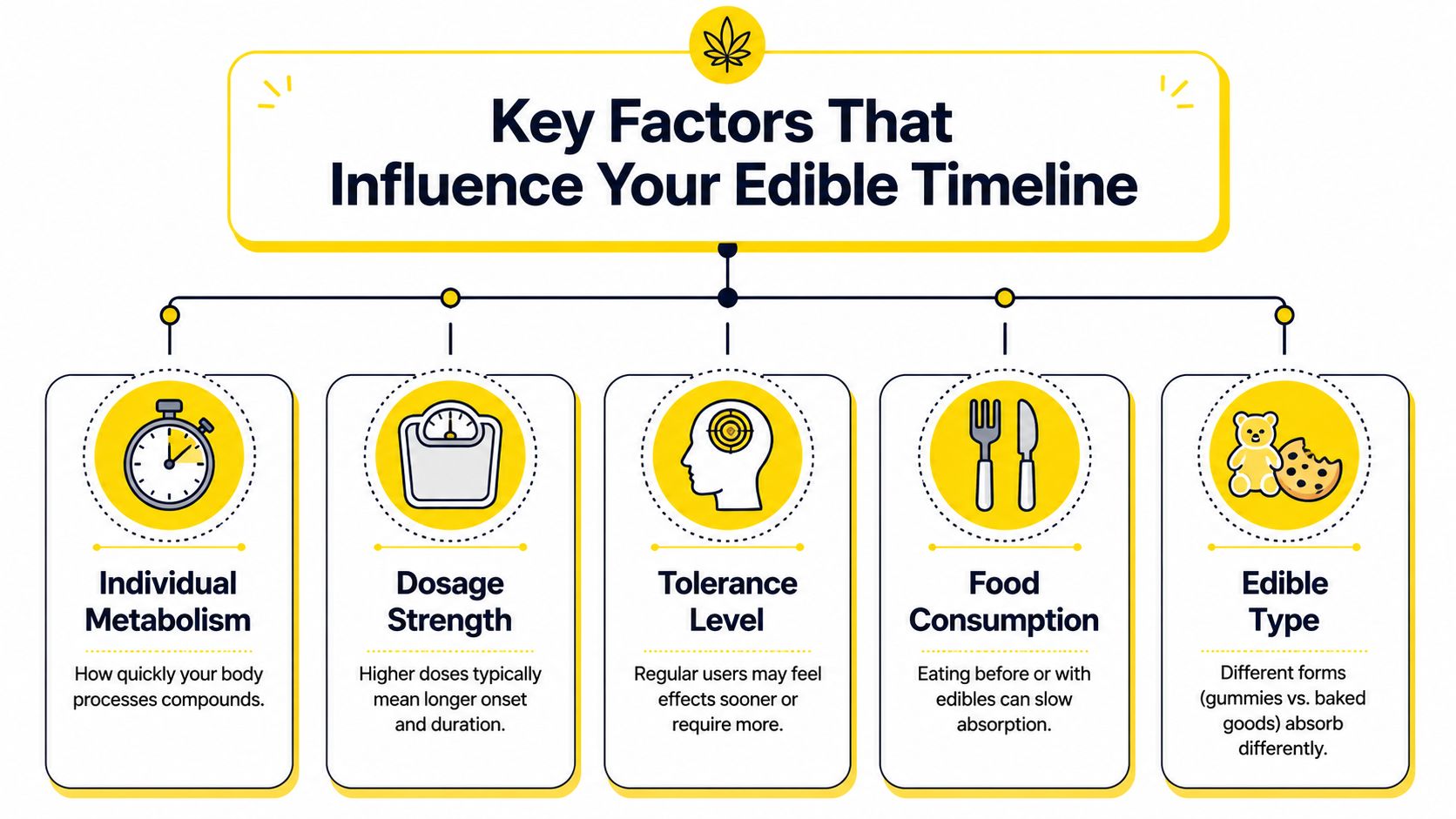
What you've eaten can shift the timeline
Food is one of the biggest variables in onset time. If you take an edible on a relatively empty stomach, you may notice the effects sooner. If you take it after a large meal, especially one with a lot of fat, digestion often slows down and stretches out the wait.
A slower start can fool people. They assume the edible is weak, take more, and then both doses arrive in the same window.
That is a key detail for any cautious user. The version of the experience you feel at one hour may be very different from what shows up later.
Your body runs on its own schedule
Your digestive speed, metabolism, body size, and overall chemistry all affect timing. Two people can take the same product, at the same dose, and still have different onset windows.
A helpful way to look at it is this. The edible has to move through your body's processing steps, and some bodies move through those steps faster than others. If your system runs slower that day, delay does not mean failure. It usually means patience matters more than guesswork.
Experience changes how people read the early signals
Tolerance does not just affect intensity. It also affects interpretation. A first-time consumer may notice subtle changes quickly, while a regular consumer may ignore those same early cues and wait for a bigger shift before calling the edible active.
That can create a problem. Familiarity can make people feel more confident than the timeline allows.
If you want a more measured, easier-to-read experience, microdosing edibles with small, repeatable amounts is a useful approach.
The product format changes the pace
Different edible formats behave differently in the body. A chewy gummy, a rich brownie, a chocolate square, a cannabis drink, and a lozenge do not all follow the same path at the same speed.
A simple way to sort them is by how much digestion they require:
- Solid edibles: Gummies, chocolates, and baked goods usually build more gradually.
- Liquids and lozenges: These can feel faster for some people because part of the absorption may begin before full digestion.
- Heavier edibles taken with food: These often feel slower and less predictable.
As noted earlier, edible effects can last much longer than new consumers expect, and the strongest part of the experience often arrives well after the first noticeable change. That is why planning matters. If you have driving, errands, work, or a packed social schedule later, an edible may be the wrong format for that time block.
Safe Dosing for Your First Edible Experience
You get home on a quiet evening, split a gummy, and settle in for a relaxed night. An hour later, you feel almost nothing. The tempting mistake is to assume the dose was too small.
For a first edible, the safer move is simpler. Start with 2.5 mg of THC or less, then give your body a full waiting window before you decide anything else. Edibles often reward patience more than confidence, especially when you are still learning how your body processes them.
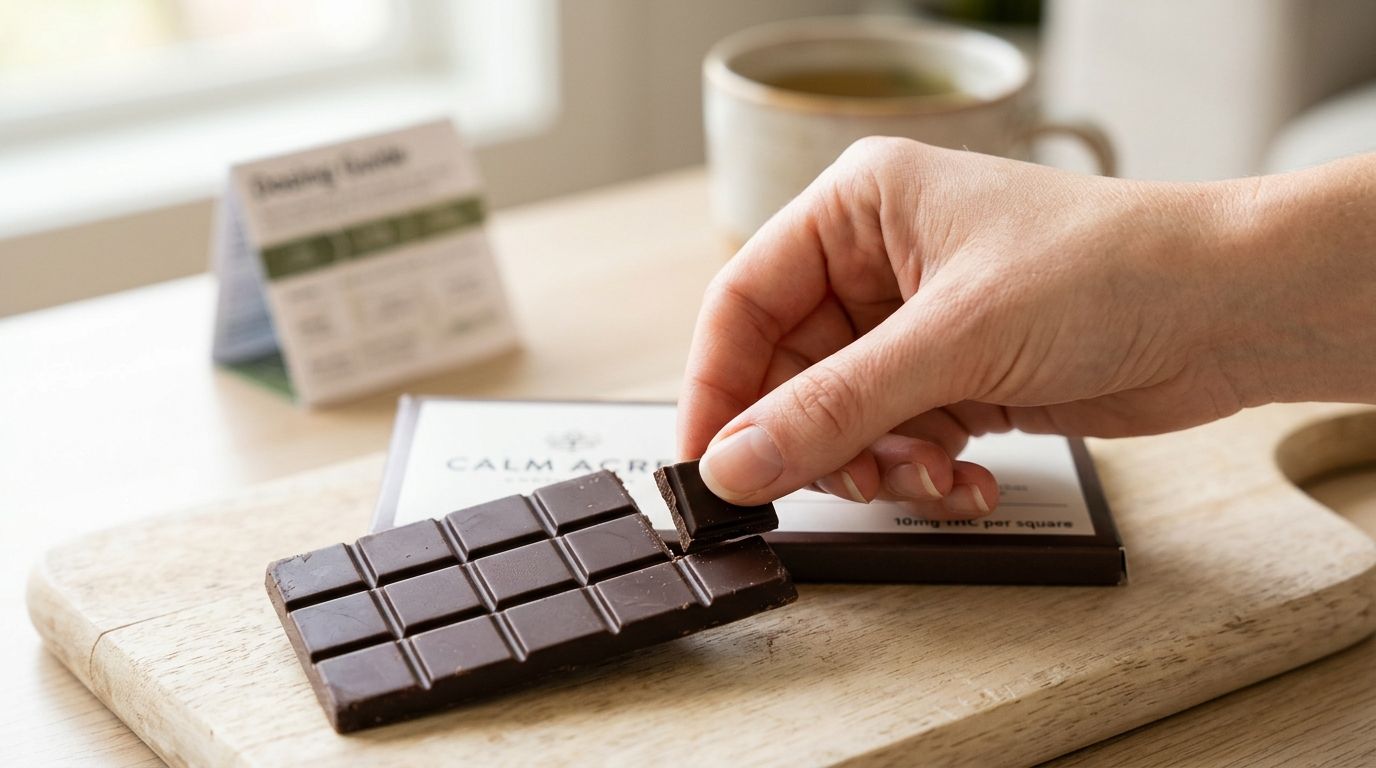
A simple first-time plan
A good first session works like a basic user manual. Keep the variables small, clear, and easy to track.
- Choose a low dose: Pick a portion with a modest amount of THC.
- Set up your space: Stay somewhere familiar, comfortable, and low-pressure.
- Protect your time: Skip driving, errands, work, and complicated social plans.
- Take one dose only: After that, your job is to wait and observe.
- Keep comfort items nearby: Water, light snacks, and a cozy place to sit can make the experience feel much smoother.
If you need help turning a chocolate bar, gummy, or baked edible into a more cautious serving, this edible dosage calculator for smaller first-time portions can help.
The delayed responder problem
Some new consumers feel early effects in a reasonable window. Others respond much later. The BC government fact sheet on safe edible use explains that delayed full effects can lead people to take a second dose before the first one has fully arrived, which raises the risk of an unpleasant experience.
This scenario is behind many negative edible experiences.
A person takes one serving, waits, feels little, takes more, and then both doses arrive in the same window.
Patience, therefore, is not just advice. It is a safety mechanism.
Here's a short visual walkthrough that reinforces the dosing mindset for beginners:
A practical example for a cautious night in
A low-dose chocolate square from a trusted shop like Mr Nice Guys DC can be a smart first test because it is easy to portion and easy to repeat later if you want consistency. You eat a small piece after dinner, put on a familiar show, keep your phone charging nearby, and stay home for the rest of the night. That setup gives the edible time to unfold without pressure.
Compare that with taking an edible before dinner reservations, a party, or any plan with a clock attached. The same dose can feel much harder to read when you are distracted, rushed, or deciding whether you need to leave the house.
Your first edible should feel manageable and predictable. The goal is not to prove anything. The goal is to learn your timing, your comfort zone, and the type of product that fits you best.
Edibles vs Other Cannabis Consumption Methods
Edibles are only one option. Sometimes they're the best fit. Sometimes another format matches your goal better, especially if you want quicker feedback or a shorter commitment window.
According to this comparison of edible formats and timing, liquid edibles and sublingual products like lozenges often have a faster onset of 15 to 45 minutes because they allow for partial absorption through the oral mucosa, bypassing some gastric digestion. The same source notes that solid edibles typically last 4 to 8 hours, with some residual effects for up to 24 hours.
Cannabis Consumption Method Comparison
| Method | Onset Time | Peak Effect | Total Duration |
|---|---|---|---|
| Solid edibles | 30 to 120 minutes | Around 3 hours, with many users feeling the strongest effects later in the session | 4 to 8 hours, with possible residual effects up to 24 hours |
| Liquid edibles | 15 to 45 minutes | Earlier than solid edibles | Varies, often shorter feeling at onset but still substantial |
| Sublingual products | 15 to 45 minutes | Earlier than solid edibles | Varies by product and dose |
| Smoking or vaping | 2 to 10 minutes | Much sooner after use | Usually fades within a few hours |
How to choose the right method
If you want a long, steady experience and don't need immediate feedback, edibles make sense. If you want faster onset and easier dose-by-dose adjustment, inhalation or a sublingual format may feel more predictable.
For a broader decision guide, this comparison of edibles, vapes, and flower helps match format to goals and comfort level.
Your Guide to Edibles at Mr Nice Guys DC
Once you understand the timing, shopping for edibles gets a lot easier. You stop asking, "What's strongest?" and start asking better questions. How precise is the dose? Can I split it easily? Is this a gummy, a chocolate, or a beverage? Is this a better fit for a quiet evening or daytime relief?
That shift is what leads to better experiences.
What to look for when you browse
A strong edible menu should make life simpler, not more confusing. Look for products with clear labeling, easy portioning, and consistent dosing across formats like gummies, chocolates, and baked items.
A trusted dispensary team can also help you translate general advice into a real choice. A first-time patient may do better with something precisely portioned and easy to divide. A more experienced customer may want a format that lasts longer or fits a familiar evening routine.
If you're curious about what kinds of products are typically available, this overview of edibles and vape products at Mr. Nice Guys DC is a helpful place to start.
The best edible for a beginner usually isn't the most exciting one. It's the one that's easy to dose, easy to understand, and easy to respect.
A good dispensary experience should leave you feeling informed, not rushed. That's especially important in DC, where many patients and adult consumers are choosing among several formats for different wellness or lifestyle goals.
If you're ready to find an edible that fits your comfort level, visit Mr. Nice Guys DC. Their team can help you compare gummies, chocolates, and other formats, think through dose size, and choose a product that matches the kind of experience you want.
Mr Nice Guys DC
At Mr. Nice Guys DC, we’re more than just a cannabis delivery service — we’re passionate advocates for quality, convenience, and community. With years of experience in the cannabis industry, our team is dedicated to educating and empowering customers across Washington, D.C. Whether you're a seasoned user or just starting your cannabis journey, our blog delivers trusted tips, product insights, and the latest updates from the world of weed. Stay informed, stay elevated.
