
Must Be 21 To Enter
By entering this site you are agreeing that you are at least 21 Years of Age or older.
I AM 21 OR OLDERVape Pen Cartridge Types Explained for Flavor and Potency
.svg)

.png)
You're standing at a dispensary menu, looking at several cartridges that appear almost identical. One promises bold flavor, another advertises high potency, and a third comes as a disposable pen that seems easier to use. The labels may look similar, but the devices can produce noticeably different results because a cartridge is both an oil product and a hardware system.
The connector, battery, coil, wick, reservoir, and mouthpiece all influence how the oil heats and reaches you. The oil itself also matters. Distillate, CO2 oil, live resin, and live rosin can differ in flavor, texture, and expected experience. A high-potency oil in poorly matched hardware may clog, taste burnt, or waste oil, while a well-matched cartridge can deliver smoother and more consistent use.
This guide breaks down the main vape pen cartridge types in plain language. You'll learn how 510-thread cartridges compare with pods and disposables, how oil types shape flavor and potency, why resistance and voltage matter, and when a reusable 510 setup may offer better value or performance than a single-use device. For a helpful overview of basic cartridge terminology, see this guide to vape cartridges and pens.
Introduction to Vape Pen Cartridge Types
A first-time buyer may begin with the oil label, choosing between live resin, rosin, or distillate. That label describes what is inside, but it does not tell the whole story. Two cartridges with similar oil can perform differently because their coils, connections, resistance, and battery settings differ.
A cartridge works like a small delivery system. The reservoir holds the oil, the wick brings it to the heating element, and the coil turns it into aerosol. The mouthpiece directs the aerosol as you inhale, while the battery provides energy. The connector determines whether the battery can power that cartridge.
Practical rule: Treat oil and hardware as a matched pair. Potency and extraction style alone do not predict performance.
The main hardware families are 510-thread cartridges, proprietary pod systems, and all-in-one disposable pens. A 510 cart screws onto a separate rechargeable battery, so you can switch between compatible cartridges and replace the battery when needed. A pod usually clicks or magnetically attaches to a battery made for that product family. A disposable combines the oil, battery, coil, and mouthpiece in one sealed device.
That design choice affects more than convenience. A reusable 510 can be a better fit for thick oils or cartridges that tend to clog because you can select compatible hardware and, on some batteries, adjust voltage or preheat. It can also reduce repeated battery purchases when you use cartridges regularly. Disposables may suit occasional use because they require no separate battery, but the entire device is replaced when the oil or battery runs out.
Oil volume also shapes the decision. Cartridges commonly hold 0.5 g to 2 g of oil, and THC levels often range from 70% to 95%, according to this cartridge size and potency guide. A smaller cartridge can limit waste while you test an unfamiliar oil. A larger format may mean fewer replacements for frequent use, provided the hardware handles that oil well.
Before buying, confirm the connection, identify the oil, inspect the construction, and choose a battery setting suited to the cartridge. For basic terminology, review this guide to vape cartridges and pens.
How Vape Cartridges Work and Why Types Exist
When a cartridge works well, the oil, heating parts, and battery behave like one system. The reservoir stores the oil, usually in a glass or plastic chamber. The coil and wick draw in and heat that oil. The mouthpiece carries the vapor to you, while the connector links the cartridge to its battery.
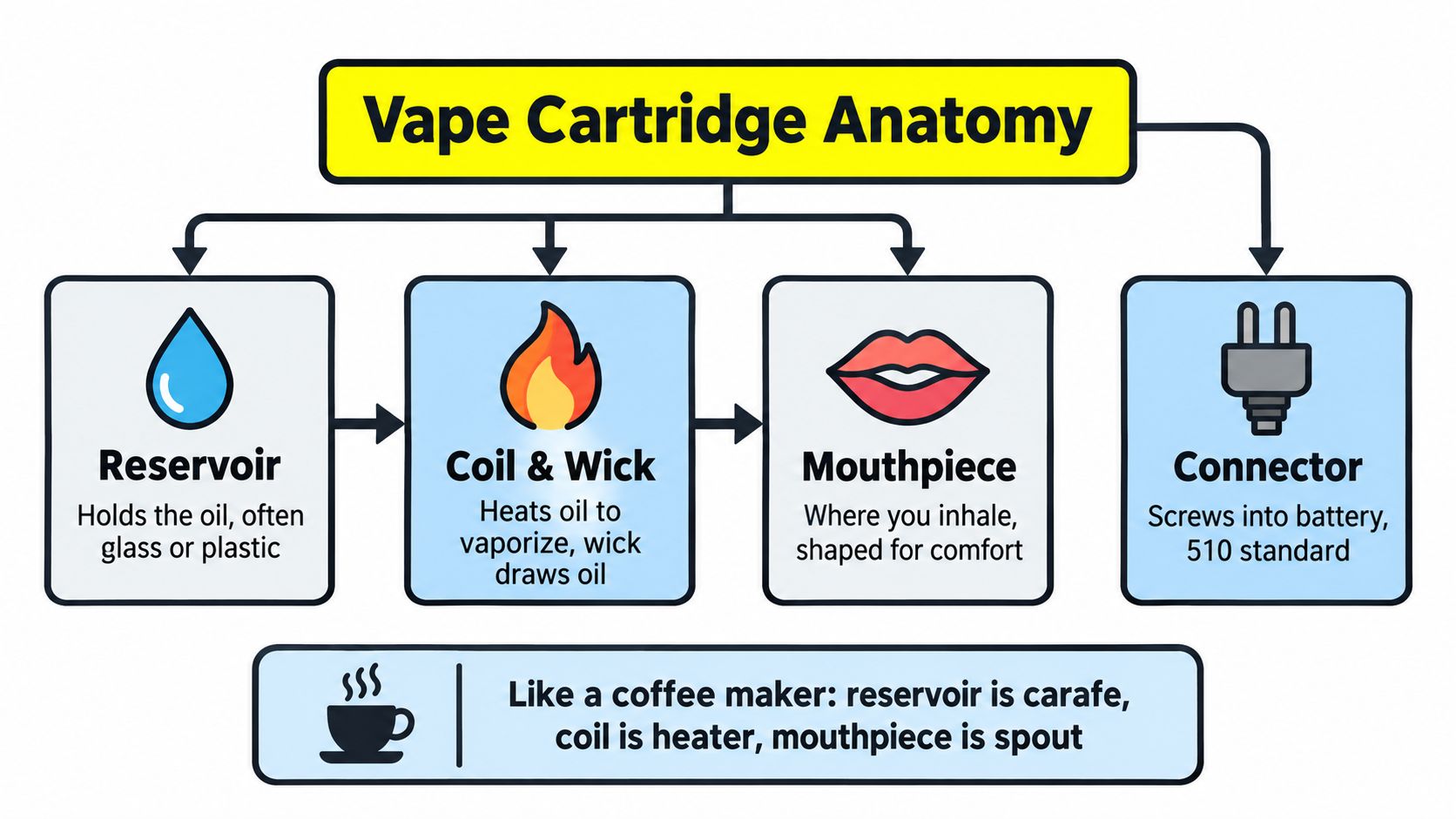
A coffee maker shows how these parts depend on one another. The reservoir is like the carafe, the heating element is the heater, and the mouthpiece is the spout. If the pod does not fit the machine, the system cannot work properly. Cartridges follow the same basic rule: the oil, coil, battery connection, and heat setting must match.
The three hardware families
510-thread cartridges use a screw-style connector that became a common standard for interchangeable cartridge hardware. An industry explainer says Joyetech introduced the 510 thread in 2008, and describes about 85% of carts on the market now use 510 threading in this history of vape cartridge threading. That shared design lets compatible batteries work with cartridges from different brands.
Pod systems use a proprietary connection. A pod can slide, click, or attach magnetically to its matching battery, but the design usually ties the user to one brand or product family. Setup is straightforward, although a pod from one system generally will not fit another.
All-in-one disposables place the cartridge, battery, coil, and mouthpiece inside one sealed device. There is no separate battery to choose or charge. Once the oil runs out, the battery fails, or another internal part stops working, you normally replace the whole pen.
A practical example makes the difference clear. Someone with a 510 battery can keep it and switch among compatible 1-gram carts, as long as each cartridge's connection and operating settings match. A proprietary-pod user buys a matching pod, while a disposable user replaces the complete device after the oil or battery is depleted.
Hardware also shapes the experience. A reusable 510 gives more control for thick oils or cartridges prone to clogging, especially when the battery offers a suitable voltage or preheat setting. Disposables reduce the number of parts to manage, but they offer less flexibility when the oil and battery are built together. Choose according to the balance you want between interchangeability, simplicity, portability, and control over heating.
510 Thread vs Pod Systems vs Disposable Pens
The quickest way to understand the three formats is to compare what happens when the oil runs out.
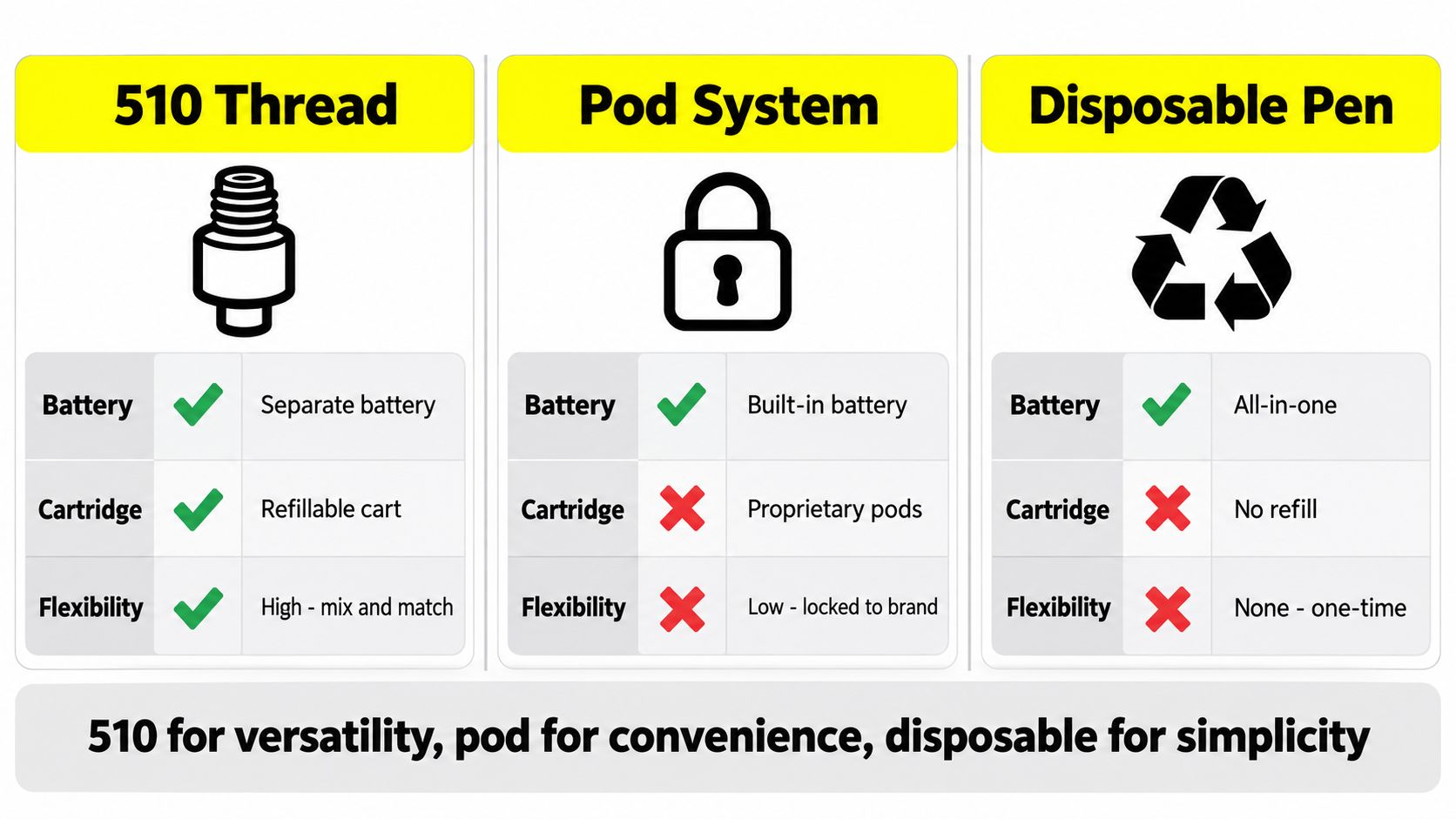
With a 510-thread setup, you keep the battery and replace only the cartridge. With a pod system, you keep the brand-specific battery and purchase compatible pods. With a disposable, you replace the complete pen because the oil chamber and battery are integrated.
510 thread
A 510 cartridge offers the broadest hardware flexibility. You can use one compatible rechargeable battery with cartridges from different brands, oils, and strain profiles. Many 510 batteries also allow basic voltage adjustment, giving you more control over how quickly the oil heats.
The tradeoff is that you need to manage two pieces. You must charge the battery, keep the cartridge connection clean, and make sure the battery setting matches the cartridge. A 510 system may deliver better long-term value for a frequent user because the battery can stay in service while only the oil cartridge changes.
Pod systems
Pods emphasize ease of use. The matching battery and pod are designed to work together, so you generally won't think about thread compatibility or whether a cartridge fits. That can help someone who wants a straightforward device with minimal setup.
The limitation is flexibility. A pod system usually ties you to one manufacturer's battery and pod design. If you want to try a product from another brand, you may need another device rather than attaching a different cartridge.
Disposable pens
Disposables are the simplest option for travel, occasional use, or someone who doesn't want to charge a separate battery. The device arrives ready to use and typically has no refill step.
That simplicity comes with reduced control and more complete-device replacement. A disposable may be convenient when you want one compact product, but it's less suitable if you prefer to adjust voltage, compare different cartridges on one battery, or keep hardware separate from oil purchases.
| Format | Battery setup | Cartridge setup | Flexibility |
|---|---|---|---|
| 510 thread | Separate rechargeable battery | Interchangeable compatible cartridge | High |
| Pod system | Matching battery | Proprietary pod | Limited |
| Disposable pen | Integrated battery | Sealed all-in-one device | Minimal |
Market preference has also shifted toward disposables. BDSA reported that disposables crossed 50% of U.S. vape market share in April 2026 and reached 51% in May 2026, while premium oil formats such as live resin and rosin rose to 32% of vape sales from 28% a year earlier in the same market coverage at BDSA's cannabis vape trends report. Those figures don't make disposables universally better. They show why buyers should ask whether convenience outweighs reusable hardware, adjustment options, and waste concerns.
For a local explanation of these formats, this comparison of cartridges, pens, and disposables can help clarify the differences before you shop.
Oil Types Inside Cartridges and How They Shape Experience
At the dispensary counter, two cartridges may share the same 510 connection yet deliver very different results. The difference starts with the oil. Distillate, CO2 oil, live resin, and live rosin each bring their own flavor, texture, and hardware requirements.
Distillate and CO2 oil
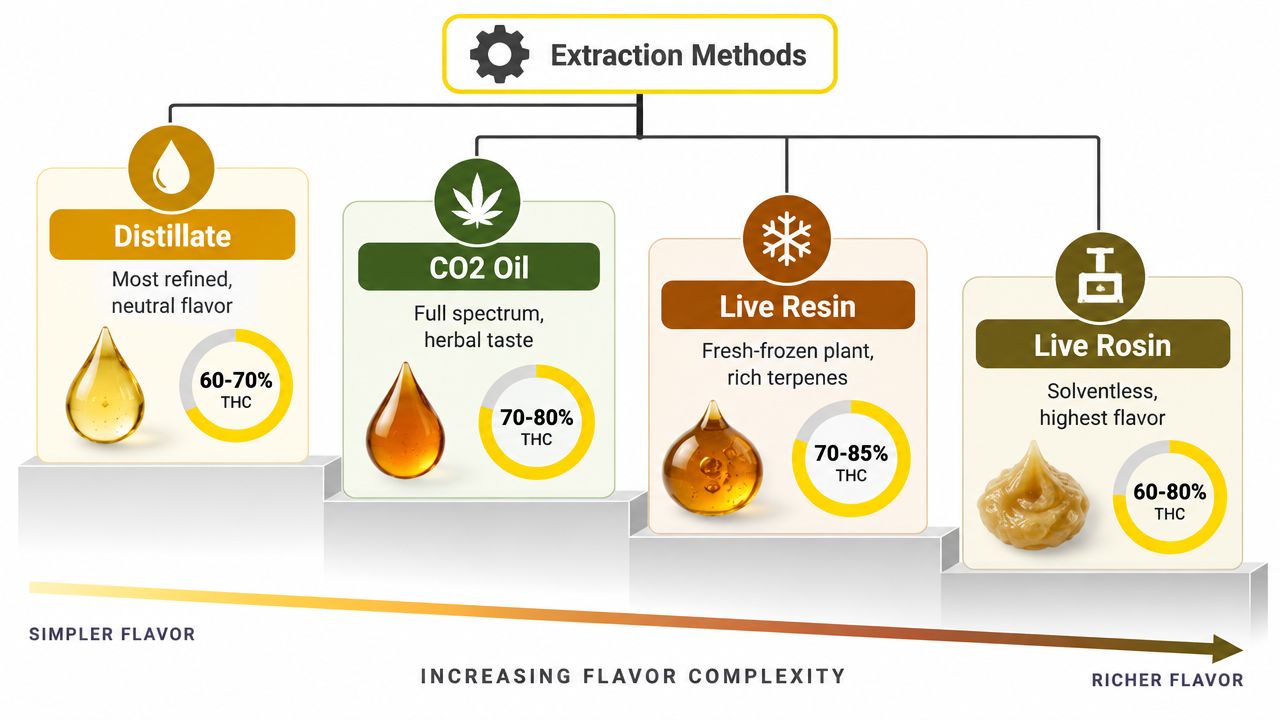
Distillate is highly refined cannabis oil. Its refined character often produces a cleaner, more neutral flavor, while added terpenes can create a specific strain profile. Buyers who value potency, predictable use, or a lower-cost starting point may find distillate practical.
CO2 oil usually retains a broader extract profile and a more herbal taste. It can suit someone who wants more of the plant's aromatic character without choosing the most flavor-focused extract.
Extraction changes the experience even when the active ingredient remains cannabis oil. Distillate generally offers a simpler flavor base, while CO2 oil may preserve more botanical character. The distinction is similar to comparing a neutral base with one that keeps more of its original ingredients, although the comparison is only a guide.
Live resin and live rosin
Live resin is made from fresh-frozen plant material and is valued for richer terpene expression. Its profile can feel more pronounced than a neutral distillate formulation, which appeals to flavor-focused consumers. Live resin may also be more viscous, so cartridge construction and battery settings matter more.
Live rosin is a solventless extract made through mechanical processing. Buyers often select it for strong flavor and a less processed extraction approach. Its thicker texture can require a cartridge and battery that heat the oil consistently.
A reusable 510 can have an advantage with either thicker oil. If the battery allows voltage adjustment, you can use a gentler setting and give the oil more time to move toward the coil. That setup can also be useful when clogging is a recurring problem, or when you want to switch between cartridges instead of replacing an entire disposable pen. Disposables remain simpler, but a 510 may offer better value for someone buying several oil types over time.
Matching oil to your goal
Choose the experience first, then match the oil and hardware to it.
- Flavor seeker: A live resin or live rosin cartridge may suit you when terpene character matters most.
- Potency-focused buyer: Distillate offers a highly refined option with strong THC concentration, but potency alone does not predict flavor or comfort.
- Balanced shopper: CO2 oil may provide a fuller botanical profile without automatically choosing the most premium format.
- First-time buyer: A smaller cartridge limits your commitment while you learn which oil and battery combination works for you.
Cartridge selection is also a dosage decision. A 0.5 g cart can suit someone seeking a smaller trial, while a 2 g cart or disposable may fit a frequent user who wants fewer replacements. Start with small inhalations, especially with a high-THC label, and wait to assess the effect before taking more. For a closer comparison of two popular extracts, read this live resin versus distillate guide.
Coil Materials Resistance and Safety Factors That Affect Flavor
The oil doesn't vaporize in isolation. It reaches a heating element through a wick or porous material, and that assembly sits inside a chamber connected to the mouthpiece and battery. Ceramic coils are often selected for even oil contact and a clean flavor profile, while metal heating elements can respond quickly but may produce different results depending on their design and operating temperature.
The reservoir material matters too. Borosilicate glass is commonly valued for its durability and chemical resistance, while lower-quality plastics or poorly specified components may create other concerns. A cartridge also includes contacts, soldered joints, seals, and internal supports. These parts deserve attention because heat reaches more than just the oil.
A peer-reviewed analysis found nickel and chromium components in all devices examined, while other cartridges contained copper, lead, tin, gold, silicon-rich rubbers, and fluorinated microplastics in the coil, lead, and cap assembly. The findings are detailed in this peer-reviewed analysis of cannabis vaporizer device emissions. That evidence supports a practical buying habit: look for transparent manufacturing information and credible testing rather than judging a cartridge only by its oil name.
Resistance and voltage pairing
Resistance controls how much power the cartridge draws at a given voltage. Technical guidance for 510 cartridges places typical resistance around 1.2Ω to 1.6Ω, with lower-resistance carts drawing more power at the same voltage and vaporizing high-viscosity oils faster, as explained in this 510 cartridge voltage guide.
Higher power isn't automatically better. Too much heat can reduce flavor quality, make the vapor harsher, and heat the oil faster than the wick can replace it. Thick live resin or rosin may need more heat to move efficiently, but a controlled preheat or a battery with adjustable output can be more useful than selecting the highest setting.
| Resistance Range | Best Voltage Range | Ideal Oil Type | Flavor and Performance Note |
|---|---|---|---|
| Around 1.2Ω | Lower setting, increased cautiously | Thick, high-viscosity oils | Faster oil throughput, but overheating is more likely if voltage is too high |
| Around 1.3Ω to 1.5Ω | Moderate setting | Many general-purpose oils | Useful middle ground for vapor production and flavor |
| Around 1.6Ω | Lower-voltage use | Terpene-rich extracts | Gentler heating can support flavor preservation |
Signs of a better-built cartridge
Look for a clearly identified coil material, a glass body where appropriate, secure seals, and a mouthpiece that doesn't feel loose. Anti-clog designs, preheat functions, temperature control, and USB-C charging are increasingly common features in quality 510 batteries, according to recent industry coverage of cartridge construction and battery features.
If a cartridge repeatedly tastes burnt, leaks, clogs, or produces unusually harsh vapor, stop using it. A detailed discussion of testing and contamination concerns is available in this heavy metal testing resource.
How to Choose the Right Cartridge Type for Your Needs
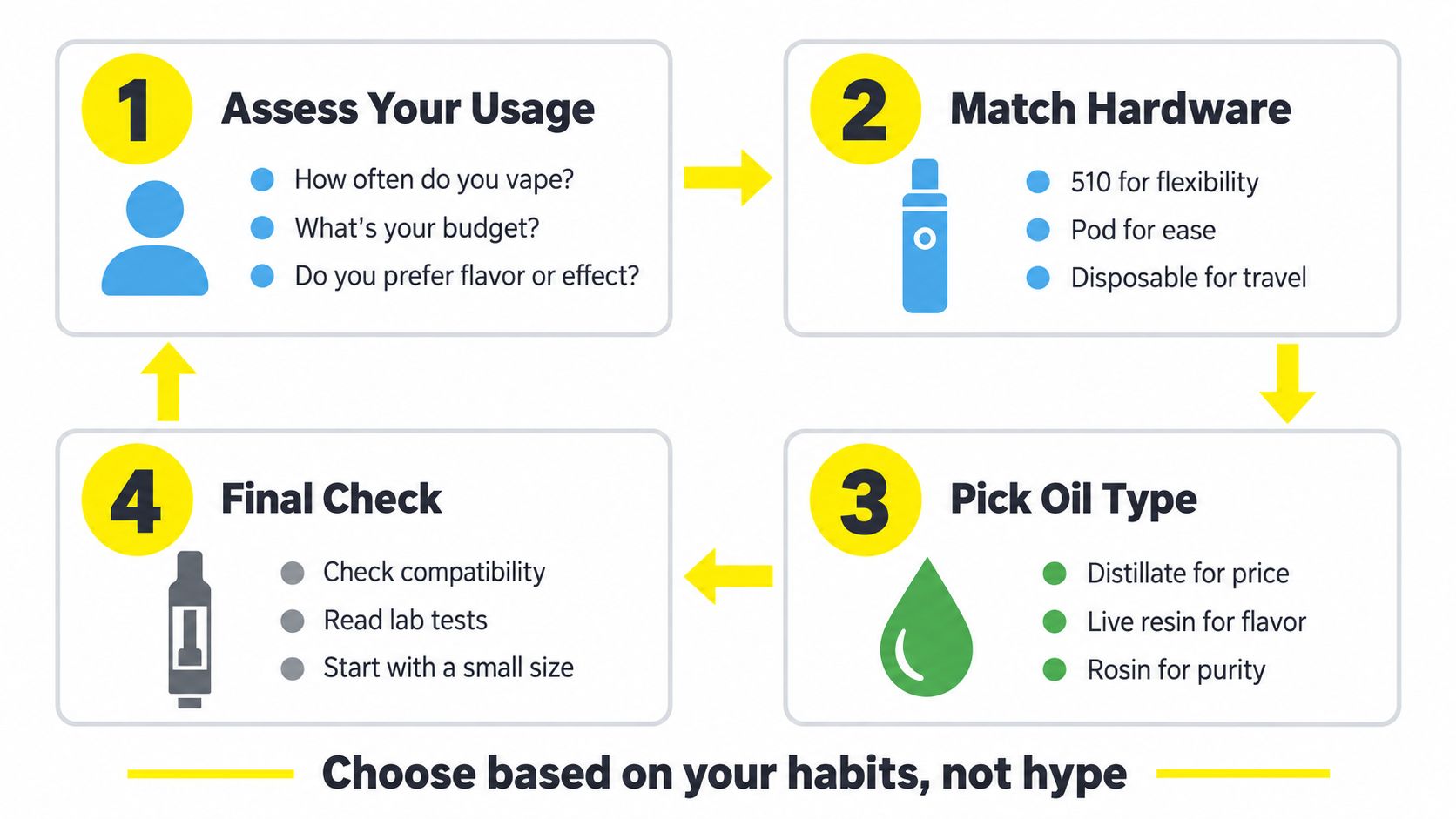
A useful decision starts with your routine, not the product's marketing language. Ask how often you vape, whether you need portability, how much you care about flavor, and whether you want to reuse a battery across several oils.
Match the format to your routine
An occasional user who wants minimal setup may prefer a disposable. It's compact and ready to use, with no separate battery to charge or cartridge to attach. The downside is that the entire unit becomes replaceable hardware once the oil or battery is finished.
A frequent user may get more practical value from a reusable 510 battery. One battery can support multiple compatible cartridges, and the user can select different oils without buying a complete device each time. That setup may also reduce hardware waste compared with repeatedly replacing sealed pens, although the cartridge itself still requires replacement.
A patient who prefers thick live resin or live rosin should focus on the heating system. A 510 battery with adjustable voltage, preheat, and anti-clog features can offer more control than a fixed-output disposable. Choose a cartridge with construction suited to viscous oil, and begin at a conservative setting before increasing output.
A useful buying question: Will this cartridge's oil flow properly through its coil at the battery setting I plan to use?
Use this dispensary checklist
- Confirm the connection: Verify that a 510 cartridge matches a 510 battery, and that a pod matches its proprietary battery.
- Check the oil texture: Thicker extracts may need a suitable coil and controlled preheat.
- Review construction: Look for clear information about ceramic heating elements, glass bodies, seals, and anti-clog features.
- Start smaller: A 0.5 g format can make sense when you're testing a new oil or device.
- Compare the whole system: Consider the cartridge, battery, replacement pattern, and waste together.
A flavor-focused occasional consumer might choose a small live resin 510 cart with a low-voltage battery. Someone who values simplicity for occasional travel might select a disposable containing the same broad oil category. A frequent user who wants fewer replacements may choose a larger cartridge and a reusable battery, provided the oil and resistance are compatible.
For another lifestyle-based comparison, see this guide to vape pens versus cartridges. The best choice isn't always the newest format. It's the combination that fits your habits without forcing the hardware to do a job it wasn't designed to handle.
Final Takeaways on Vape Pen Cartridge Types
The clearest way to understand vape pen cartridge types is to stop treating every cart as a simple oil container. You're choosing a complete system that includes a connector, battery, heating element, reservoir, wick, and mouthpiece, along with a particular extract.
A 510-thread cartridge offers the most flexibility because you can use compatible cartridges with a separate rechargeable battery. Pods simplify the experience but usually keep you within one brand's hardware family. Disposables reduce setup, although they combine the oil and device into a single unit that must be replaced together.
The oil changes the experience in a different way. Distillate tends to emphasize refinement and potency, CO2 oil can retain a broader herbal character, live resin is often selected for terpene-rich flavor, and live rosin appeals to consumers seeking a solventless option. None of those labels removes the need to consider the coil and battery.
Before buying, check:
- Connection: Does the cartridge fit your battery?
- Oil: Is the extract thin or viscous?
- Heating: Can the battery provide a suitable, controlled setting?
- Construction: Are the coil, body, seals, and testing information clearly identified?
- Size: Would a smaller cartridge help you test the system first?
Buy from a regulated source, review available lab information, and ask a knowledgeable staff member about compatibility. Mr. Nice Guys DC provides cartridge and pen options alongside guidance for patients and adults 21+ who want to compare formats and oil types. As hardware evolves, the most reliable habit is still the simplest one: verify the parts, understand the oil, and choose based on how you'll use it.
Visit Mr. Nice Guys DC to compare vape cartridges, pens, and oil formats with a team that can help you check battery compatibility and choose a practical starting size. Ask about available 510-thread, disposable, and extract options before placing an in-store, curbside, or delivery order.
Mr Nice Guys DC
At Mr. Nice Guys DC, we’re more than just a cannabis delivery service — we’re passionate advocates for quality, convenience, and community. With years of experience in the cannabis industry, our team is dedicated to educating and empowering customers across Washington, D.C. Whether you're a seasoned user or just starting your cannabis journey, our blog delivers trusted tips, product insights, and the latest updates from the world of weed. Stay informed, stay elevated.
