
Must Be 21 To Enter
By entering this site you are agreeing that you are at least 21 Years of Age or older.
I AM 21 OR OLDERVape Pen Cartridge Refill: Safe Steps and Smart Tips
.svg)

.png)
You've got a nearly empty vape pen cartridge, a syringe of cannabis oil, and one important question: can this cartridge be refilled? That decision matters more than the filling technique. Opening the wrong hardware can turn usable oil into a leaking, clogged mess, while a compatible refillable cartridge can be practical when you handle it carefully.
For medical cannabis patients, convenience isn't the only consideration. Clean hardware, predictable airflow, consistent oil delivery, and reliable product sourcing matter just as much. A vape pen cartridge refill can work, but replacing a worn or sealed cartridge is often the safer and more consistent choice.
Identifying Refillable vs Disposable Hardware
Start with the cartridge, not the oil. A refillable cartridge is built with an accessible tank, a removable mouthpiece, or a clearly marked fill port. A disposable vape pen usually combines the battery, reservoir, heating element, and mouthpiece inside one sealed unit. Some products may look similar from the outside, so appearance alone isn't enough.
Check the manufacturer's instructions before removing anything. A removable mouthpiece can indicate refillable construction, but it doesn't guarantee that the seals or heating element are designed for repeated use. A sealed all-in-one pen should generally be treated as finished when the oil or battery is depleted. Guidance on vape cartridges and pens can help clarify the hardware differences before you start.
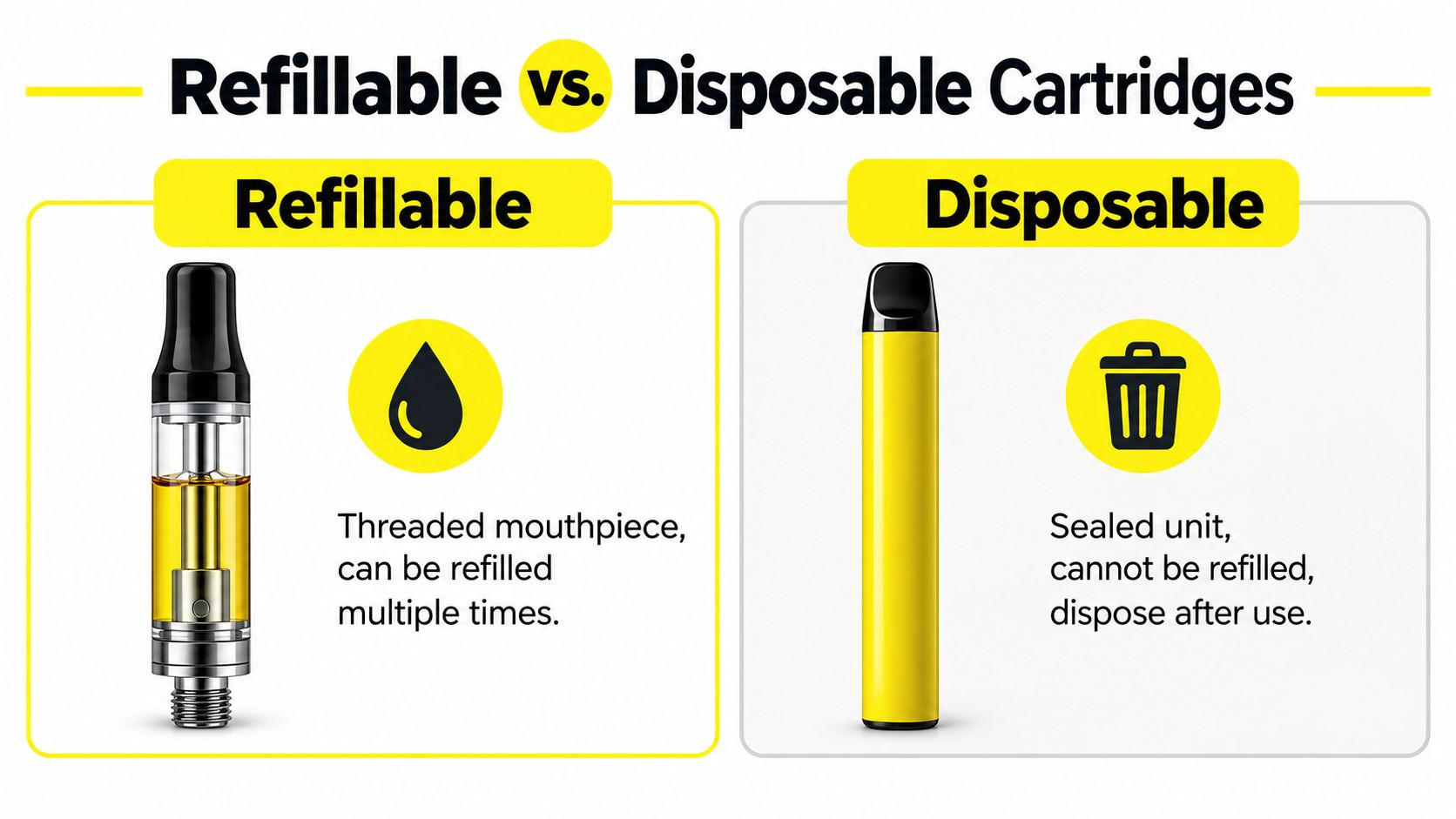
Physical clues worth checking
Look for these features, but don't force any component:
- Removable mouthpiece: A mouthpiece that unscrews or lifts off may expose a fill area, though some are press-fit and can be damaged during removal.
- Dedicated fill ports: Small openings beside the central airflow post are more promising than a sealed tank with no visible access point.
- Manufacturer labeling: Terms such as “refillable,” “open system,” or compatible oil guidance carry more weight than the presence of a 510 thread.
- Thread condition: A 510 connection tells you how the cartridge attaches to a battery. It doesn't automatically mean the tank is refillable.
That last distinction causes many preventable failures. A non-refillable 510-thread cartridge can still fit a reusable battery, but opening it may damage the mouthpiece, gaskets, or internal seal. A practical example is removing the mouthpiece from a non-refillable 1 g THC cart and adding oil anyway. The cartridge may leak through the threads or flood the airway because its internal parts weren't designed for that use, as explained in this guidance on refilling vape cartridges safely.
Why refillable formats matter
The market is moving toward reuse, but growth doesn't eliminate hardware differences. A major estimate places the global vape cartridge market at US$1.8 billion in 2024, with a projection of US$4.9 billion by 2030 at an 18.5% CAGR. In that forecast, refillable cartridges are projected to grow at 21.6% CAGR, compared with 17.0% for pre-filled cartridges. The source also estimates the U.S. market at US$478.4 million in 2024. See the market estimate and refillable cartridge projections.
Historically, replacement cartridges also became a major retail pattern. Cartridge replacements reached 77.7% of total ENDS volume sold by 2016, according to the cited U.S. retail market study. Review the cartridge replacement data. The takeaway is simple: refillable and replaceable systems are established formats, but a reusable battery, a refillable tank, and a disposable pen aren't interchangeable.
The Proper Refilling Technique
Once you've confirmed that the cartridge is designed for refilling, work slowly. You'll need a small syringe with a blunt or suitable dispensing tip, or a pointed-tip bottle, plus the oil and a clean work surface. Thick distillate may move slowly, so gentle warming can improve flow, but avoid high heat that could thin the oil too aggressively or affect the cartridge materials.
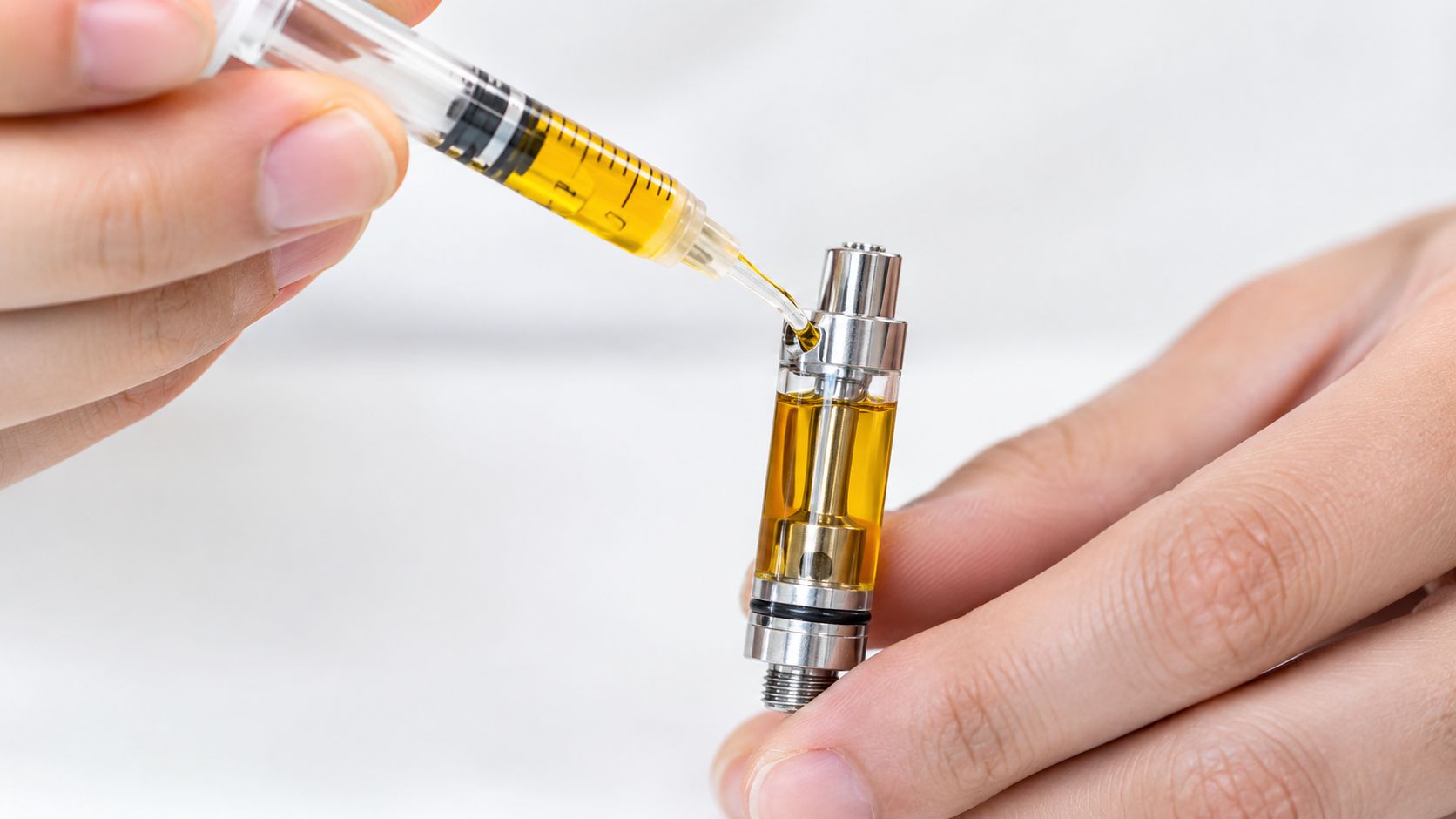
Fill along the tank wall
Remove the mouthpiece only if the manufacturer says it's removable. Keep the syringe tip near the inner wall of the reservoir, away from the center airflow tube. The center post carries air from the heating area to the mouthpiece. Oil inside that passage can cause gurgling, leakage, restricted airflow, or oil reaching your mouth. This guide to using cannabis oil in a syringe covers the tool choice and handling considerations.
Use this sequence:
- Inspect the tank. Check for cracks, loose seals, old residue, or a damaged mouthpiece. If the glass or base is compromised, replace the cartridge instead of filling it.
- Prepare the oil. If it's unusually thick, warm the oil container gently according to its product guidance. Don't use an open flame or expose the cartridge to uncontrolled heat.
- Position the tip. Place the syringe or bottle tip against the inside wall, not over the central post.
- Dispense slowly. Add oil in a controlled stream so it can settle around the wick openings instead of pooling at the top.
- Stop below capacity. A common target is about 90% full, leaving headspace for the vacuum seal. Refillable cartridge guidance explains why the air gap helps reduce leakage and supports wicking. Read the refill technique and headspace guidance.
- Replace the mouthpiece carefully. Seat it evenly without cross-threading or pressing oil into the airflow path.
- Let the cartridge rest upright. Give the oil time to reach the wick before vaping. Start with short, gentle draws rather than a long pull.
Many cartridges are designed around 0.5 mL or 1 mL capacities, so don't fill above the marked line. A 1 mL cartridge should be filled close to, but not beyond, that line. Overfilling can push oil into the mouthpiece or battery connection, as described in this cartridge filling guide.
Practical rule: If you need force to make the oil enter, stop. Resistance usually means the tip is misaligned, the oil is too thick, or the cartridge isn't meant to be opened.
Safety and Contamination Risks
Refilling isn't automatically safer because it reduces waste. Each opening creates another opportunity for dust, residue, skin contact, or oil from an uncontrolled source to enter the reservoir. Public-health guidance warns that refillable cartridges and refill bottles can become contaminated, expose users to toxic liquid, and create a danger for children. Review the European Commission's public-health factsheet on refillable cartridges.
The hidden problem is repeated use. A cartridge's wick, seals, mouthpiece, and heating element all experience heat and oil exposure. Residue can collect around the airflow path, while an aging gasket may no longer hold the same seal. Those changes can produce inconsistent vapor, altered flavor, leaking, or uneven delivery from one draw to the next.
Treat reuse as a trade-off
A refillable tank may save the trouble of buying a new cartridge immediately, but it doesn't provide unlimited service life. Medical cannabis patients should be especially cautious about assuming that a familiar cartridge delivers the same experience after several refill cycles.
Retire the cartridge if you notice:
- Persistent burnt or metallic flavor: Don't try to mask it with more oil. The heating element or wick may be damaged.
- Visible residue or discoloration: Sticky buildup around the mouthpiece or center post is a reason to stop using the hardware.
- Repeated leaking: A failed seal won't be repaired by tightening the cartridge further.
- Oil in the mouthpiece: This often indicates flooding, overfilling, or an airflow problem.
- Cracked glass or loose components: Replace the cartridge rather than risking contact with leaked oil.
Don't rinse the tank with water and assume it's sanitized. Moisture can remain inside the airflow path, and household cleaning products shouldn't come into contact with oil intended for inhalation. For patients comparing refillable hardware with professionally packaged products, product testing standards provide useful context for why sealed, tested cartridges offer a more controlled starting point.
A cartridge that still produces vapor isn't necessarily a cartridge that still delivers a clean, consistent experience.
Keep refill bottles and syringes away from children and pets, and don't use oil unless its source, ingredients, and intended use are clear. If the cartridge looks contaminated or the oil has an unusual smell, color, or texture, discard it.
Troubleshooting Leaks and Clogs
Gurgling, leaking, weak vapor, and burnt flavor usually point to a mismatch between oil flow, airflow, heat, and seal integrity. Start with the simplest explanation. A cartridge filled too high or assembled unevenly can behave badly even when the battery is working correctly.
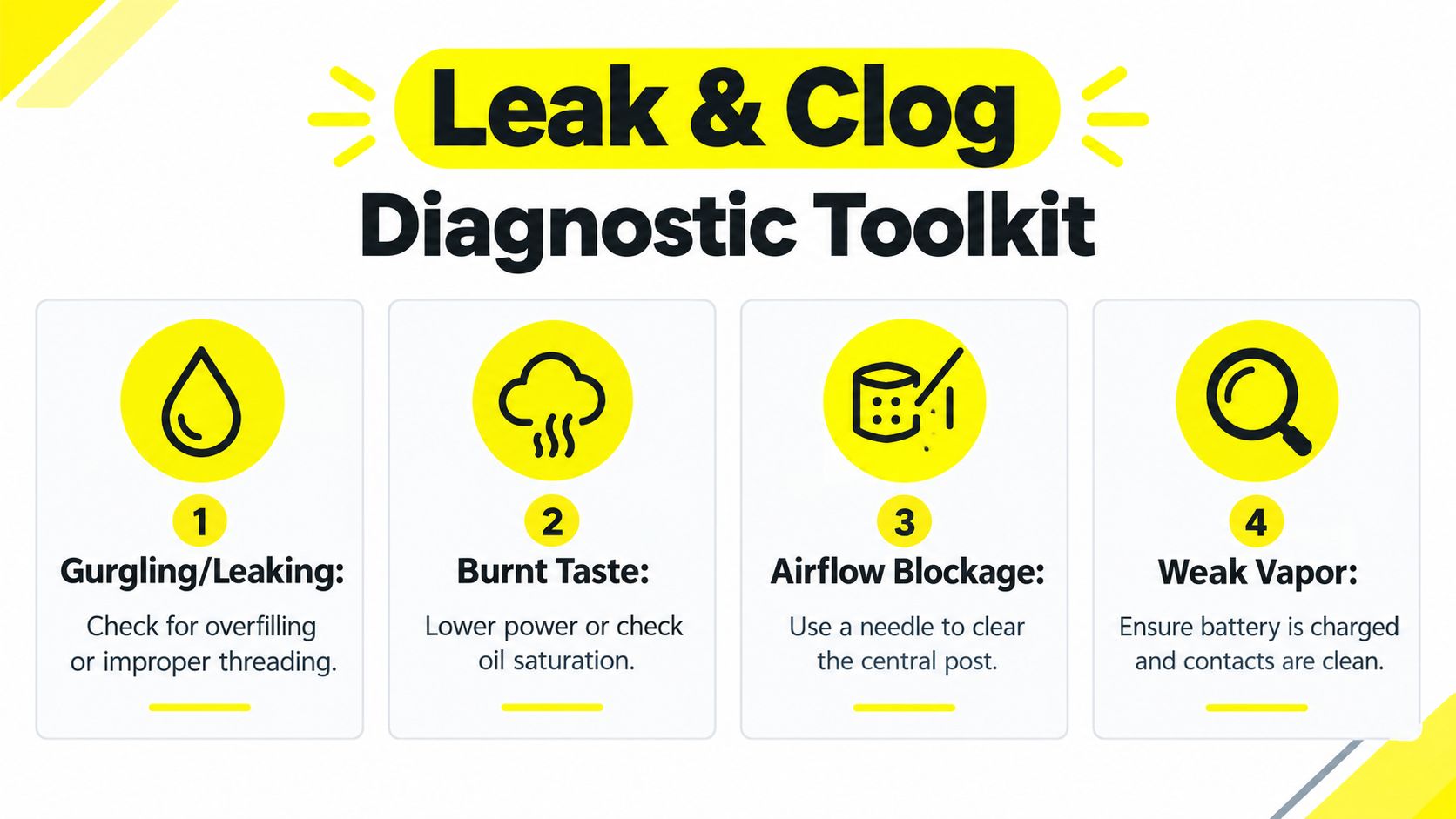
Match the symptom to the likely cause
Gurgling or oil in the mouth usually means liquid has entered the central airflow path. Remove the cartridge from the battery and wipe the mouthpiece and connection with a clean, dry material. Don't keep pulling hard, because strong suction can draw more oil into the airway.
Leaking around the base can come from overfilling, damaged seals, loose threading, or oil forced into the battery connection. Check that the cartridge sits straight and isn't cross-threaded. If oil has reached the battery, stop using the setup until the connection is clean and dry.
A clogged draw often develops when thick oil settles near the airway or when residue narrows the central post. Gentle warmth can help loosen thick oil. Use only the cleaning method approved for that hardware, and never push a sharp object deep into the cartridge where it could damage the coil or seal. The infographic may mention a needle for clearing a central post, but that approach can damage delicate parts, so replacement is safer when the obstruction won't clear gently.
A burnt taste points to insufficient wick saturation, excessive power, or repeated draws without recovery time. Let the cartridge rest upright, use shorter puffs, and reduce the battery setting if it's adjustable. Oil viscosity matters. Thick concentrates may need a controlled preheat, while thin oil can flood when overheated.
Storage and battery checks
Store the cartridge upright in a cool, dark location. Heat can change oil flow and put extra pressure on seals, while sideways storage allows oil to sit against areas that aren't designed to hold it for long periods. Keep the battery contacts clean and avoid overtightening the cartridge.
A weak hit may come from a low battery, dirty contacts, a blocked airway, or a failing cartridge. Clean the battery connection carefully, charge the battery according to its instructions, and test the cartridge at its lowest suitable setting. Guidance on the best temperature for vaping weed can help you avoid treating every performance issue as a need for more power.
Diagnostic shortcut: If cleaning, upright resting, and a lower setting don't resolve the problem, replace the cartridge. Repeated troubleshooting can't restore a worn wick or failed seal.
Refilling vs Premium Prefilled Cartridges
Refilling appeals to people who already have compatible oil and want to keep using the same hardware. It can reduce setup friction and make a refillable system feel economical. The trade-off is that you're responsible for fill accuracy, cleanliness, compatibility, storage, and the condition of the cartridge itself.
A fresh prefilled cartridge shifts those variables back to the producer and dispensary. The cartridge arrives sealed, the oil is selected for that hardware, and the patient doesn't have to open the tank or estimate how much residue remains inside. That doesn't make every prefilled cartridge identical, but it generally makes the experience more repeatable than repeatedly reopening a used tank.
Compare the experience, not just the oil
| Consideration | Refill | Fresh prefilled cartridge |
|---|---|---|
| Convenience | Requires tools and careful handling | Ready to attach and use |
| Consistency | Depends on oil, technique, and cartridge wear | Starts with new hardware and a controlled fill |
| Leak risk | Can rise after poor filling or seal damage | Lower when the cartridge remains sealed and intact |
| Flavor | May be affected by residue from earlier oil | Begins with clean, dedicated hardware |
| Compatibility | Oil viscosity must suit the atomizer | Product is packaged for its intended device |
| Medical use | More variables between sessions | Simpler to track as a distinct product |
The oil itself also changes the decision. A thicker live resin may behave differently from a more fluid distillate, and switching oils inside the same cartridge can leave residual flavor and alter airflow. Patients who want to understand those differences can review live resin versus distillate before choosing a format.
For occasional users, replacing the cartridge is often the sensible option because it removes the need to store filling tools and manage residue. For regular users, a refillable system may be reasonable when the manufacturer explicitly supports it and the patient accepts the maintenance involved. A fresh cartridge from Mr. Nice Guys DC is one option for patients who prioritize a sealed, ready-to-use format and want to discuss cartridge or pen choices with a dispensary team.
Final Recommendations for Vape Maintenance
A reliable vape routine is mostly preventive. Keep the battery connection dry and free of residue, store cartridges upright in a cool, dark place, and avoid leaving oil or hardware in direct heat. Use the lowest battery setting that produces a satisfactory draw, especially when the oil is delicate or the cartridge is new.
Use this quick check before every refill:
- Confirm compatibility: Refill only hardware explicitly designed for it.
- Inspect the seals: Reject cracked glass, loose mouthpieces, or persistent leaks.
- Protect the airflow: Keep oil against the tank wall, never inside the center post.
- Leave headspace: Stop around the marked capacity rather than filling to the brim.
- Allow saturation: Let the cartridge rest upright before taking short draws.
- Know when to replace: Retire hardware with burnt flavor, contamination, repeated clogs, or leaking.
The best vape pen cartridge refill is the one that preserves clean airflow and predictable use. If the cartridge is sealed, damaged, contaminated, or inconsistent, replacement is the better maintenance decision.
For compatible cartridges, disposable pens, and practical guidance on choosing between refillable and fresh hardware, visit Mr. Nice Guys DC. The dispensary serves medical cannabis patients with curated vape products and can help you select a format that fits your preferred oil, battery, and level of maintenance.
Mr Nice Guys DC
At Mr. Nice Guys DC, we’re more than just a cannabis delivery service — we’re passionate advocates for quality, convenience, and community. With years of experience in the cannabis industry, our team is dedicated to educating and empowering customers across Washington, D.C. Whether you're a seasoned user or just starting your cannabis journey, our blog delivers trusted tips, product insights, and the latest updates from the world of weed. Stay informed, stay elevated.
