
Must Be 21 To Enter
By entering this site you are agreeing that you are at least 21 Years of Age or older.
I AM 21 OR OLDERTHC Tincture Shelf Life and How to Keep It Potent
.svg)

.png)
You find a half-used THC tincture behind a row of vitamins in the kitchen cabinet. The label is still readable, the bottle is tightly closed, and you vaguely remember buying it months ago. The questions arrive quickly: Is it still safe? Has it lost strength? Should it smell or look different by now?
Those questions matter because THC tincture shelf life isn't only about a printed date. It also affects potency, flavor, consistency, and whether you're getting the value you expected from each dose. A bottle stored in a cool, dark drawer can age very differently from one left beside a stove or on a sunny windowsill.
The most useful way to understand freshness is to start with the carrier, the liquid that holds the cannabis extract. Alcohol and oil don't age in the same way, much like preserved spirits and pantry oils behave differently in your kitchen. From there, storage choices, oxygen, light, heat, and handling determine how quickly quality changes.
This guide moves from basic shelf-life expectations to practical storage, freshness checks, and safer replacement decisions. If you're also comparing tinctures with other cannabis formats, you can review the benefits of cannabis tinctures for a broader look at why people choose liquid products.
Introduction to THC Tincture Shelf Life
Two identical bottles can age very differently depending on where they live. A tincture usually does not become unusable the moment its label date arrives. Instead, the cannabinoids and carrier change gradually. The liquid may lose strength, develop a stale flavor, or show less of the texture and aroma it had when fresh.
That makes shelf life different from the duration of effects. Shelf life means how long the bottle maintains acceptable quality and potency. Effect duration means how long a dose feels after you take it. An older tincture can feel different because of dose or personal response, but that feeling alone cannot show whether the liquid was stored well.
The carrier, such as alcohol or oil, sets the starting point for understanding how a tincture ages. These liquids handle oxygen, heat, light, and repeated opening differently. Storage choices then act like a set of controls: a cool, dark location and a promptly closed cap reduce stress, while warmth, sunlight, and frequent exposure can speed quality loss.
Consider an oil-based THC tincture used only occasionally. If it stays upright in a bedroom drawer and the cap is closed after each dose, it faces less exposure. An identical bottle left on a bright counter, opened repeatedly, and kept beside a warm appliance faces more heat, light, and air. The printed dates may match, but the storage histories do not.
Practical rule: The printed date gives you a planning point. Storage history tells you how confidently to interpret it.
Research offers a useful reference under specific test conditions. A 2021 peer-reviewed study of cannabis-based oral formulations found that active-molecule variation stayed below 10% after 180 days in both refrigerated and room-temperature storage. The tested β-4 oils remained stable for 180 days in the refrigerator and at room temperature. You can review the summary of the tincture stability findings for the study context.
That result does not apply identically to every bottle. Formula, carrier, packaging, light exposure, heat, oxygen, and contamination all influence aging. The main lesson is simple: freshness is managed, not guessed. For a broader explanation of why people choose liquid cannabis products, see these cannabis tincture benefits.
How Long THC Tinctures Typically Last
A bottle opened for occasional weekend use may stay usable far longer than one handled several times a day. Shelf life is a gradual decline, not a switch from “fresh” to “spoiled.” Potency, aroma, and flavor can shift at different speeds as the carrier and storage conditions change.
Oil-based tinctures commonly fit within a 1 to 2 year general industry window. Alcohol-based products may last longer when their formulation, seal, and storage are suitable. These ranges provide orientation, not a guarantee that every bottle will remain unchanged until the final day.
Use the carrier as your first estimate
Start with the chemistry on the ingredient label. Oil carriers can oxidize, so oxygen, warmth, and time may gradually affect the carrier and cannabinoids. Alcohol carriers resist microbial and oxidative spoilage more effectively, which helps explain their longer potential window. The bottle still needs a secure closure and protection from heat and light.
A 2026 stability study examined a cannabis extract oil solution containing 10 mg THC plus 10 mg CBD per milliliter. It found measurable decline over 24 months and estimated a batch-specific shelf life of about 20 months. Pooled regression supported a conservative estimate of approximately 21 months when the product stayed in its original packaging at temperatures up to 25°C. The reported cannabis extract oil stability findings matter because the estimate came from regression modeling rather than a casual observation.
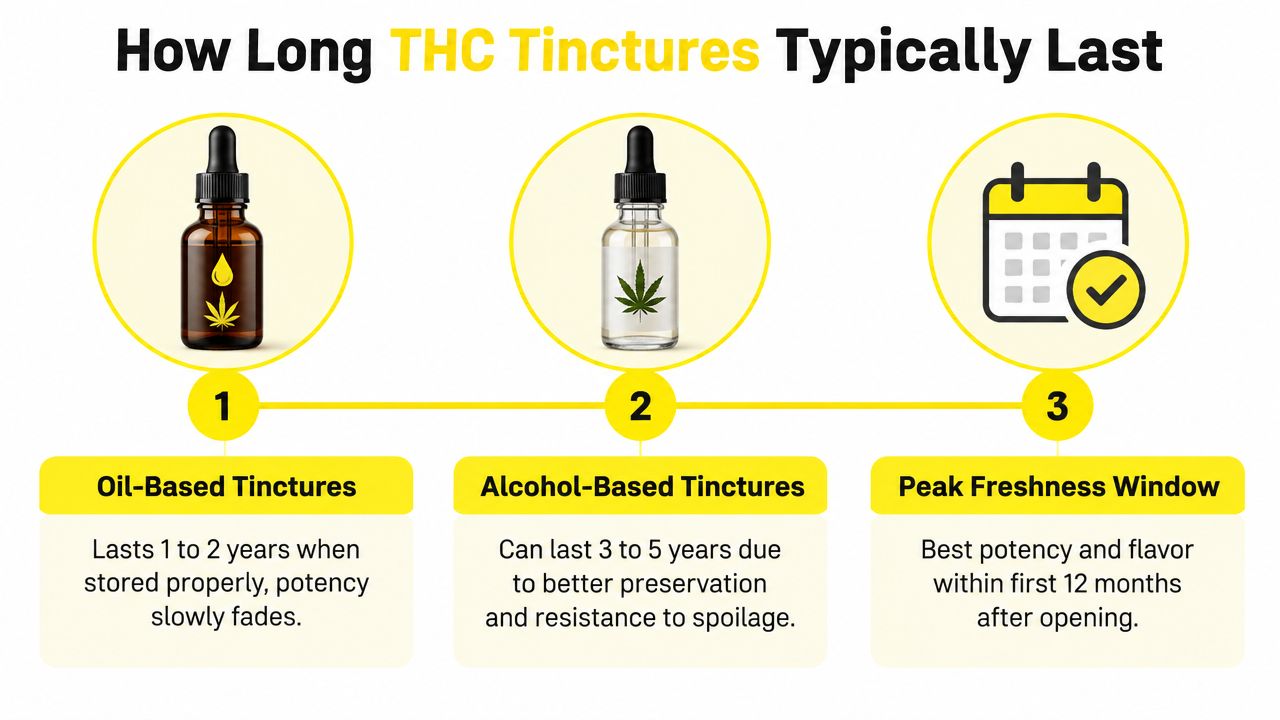
For an oil tincture kept in its original container at or below room temperature, the tested results suggest a shelf-life window close to 2 years. That does not mean the liquid has identical potency throughout the period. The label remains the best starting point because manufacturers set dating for their specific formula and packaging.
Duration is not the same as freshness
A tincture's effects after one dose do not measure its remaining shelf life. A product can still produce noticeable effects while its flavor, aroma, or cannabinoid balance has changed. Comparing it with how long vape cartridges stay good also requires care, since cartridges involve different materials, devices, and exposure patterns.
Alcohol-based products may remain stable longer than oil-based options, but neither carrier is immune to poor storage. A bottle's most useful estimate combines the printed date, carrier type, opening date, and storage history.
Why Carrier Type and Packaging Change Longevity
The carrier gives a tincture its storage environment. It influences how the extract handles oxygen, heat, light, and possible contamination. Choosing between alcohol and oil is therefore more than a matter of texture or taste. It also affects how the formula ages.
Alcohol-based and oil-based tinctures may share the same dispensary shelf, but they behave differently over time. Alcohol usually creates a more preservation-friendly medium. Oils contain lipids that can oxidize and develop rancid odors or flavors. Alcohol tinctures may stay usable longer under suitable conditions, while oil tinctures can lose freshness sooner when warmth, air, or light reach the bottle.
Alcohol and oil side by side
| Carrier | Main aging concern | Practical storage focus |
|---|---|---|
| Alcohol-based | Alcohol loss or cannabinoid decline after repeated exposure | Tight seal, dark glass, protection from heat and light |
| Oil-based | Oxidation and rancidity in the lipid carrier | Cool, dark storage, minimal air exposure, careful handling |
An alcohol tincture works much like a well-sealed pantry spirit. The cap still needs to close properly, yet the carrier generally resists common spoilage pathways. An oil tincture is closer to a delicate cooking oil. It can remain useful, but warmth, oxygen, and light place greater pressure on its flavor and potency.
Carrier type sets the baseline. Packaging controls how much stress reaches it.
Packaging controls the surrounding environment
Dark amber glass helps reduce light exposure. A tight cap limits air exchange. Limited headspace, or less empty air above the liquid, leaves oxidation fewer opportunities to affect the formula as the bottle is used. For a formulation example, see this guide to cannabis tincture with 40% alcohol, which shows how alcohol content can support preservation.
Keep the bottle upright. This limits unnecessary contact between the liquid and closure materials, while also making leaks easier to notice. For home organization, this cannabis storage container guide offers practical ways to consider protection from light, heat, and accidental exposure.
A small amber bottle with a snug cap, standing upright in a dark cabinet, gives an oil tincture a better environment than a clear bottle left open on a bathroom shelf. The container cannot stop aging. It can slow the conditions that make aging happen faster, much like storing cooking oil in a closed cupboard instead of beside a sunny window.
What Makes THC Tinctures Lose Potency Over Time
A tincture left near a sunny kitchen window may still look normal while its chemistry slowly changes. Four forces guide that aging: heat, light, oxygen, and time. They often reinforce one another. Warmth can speed reactions, bright light can stress cannabinoids, and each opening brings more air into the bottle.
Heat changes the pace
Heat speeds chemical reactions. In an oil-based tincture, repeated warming can also affect the carrier, with changes in smell or taste appearing before the product looks different. A bottle beside a stove receives regular heat cycles that one kept in a stable drawer avoids.
Alcohol and oil do not age in exactly the same way. Alcohol works more like a pantry preservative, while an oil carrier is closer to cooking oil. The carrier helps set the starting point, and temperature determines how quickly that formula moves away from it.
Room-temperature storage may be reasonable when the tincture stays in its original packaging and away from direct heat. As the 2026 oil-solution stability work discussed earlier showed, shelf-life estimates depend on the formula, container, and storage conditions rather than temperature alone.
Light reaches beyond the surface
Sunlight, especially ultraviolet light, can degrade cannabinoids and change the product's appearance. A windowsill may not feel hot, yet repeated bright exposure still adds stress. Clear bottles offer less protection than amber glass stored away from strong light.
A closed cabinet provides a simple barrier. Keep the bottle away from direct sun, intense lamps, and reflective surfaces that receive bright daily light.
Oxygen and time work gradually
Every opening replaces some of the bottle's air. One quick dose will not ruin a tincture, but repeated opening, a loose cap, or substantial empty space above the liquid gives oxidation more opportunity to affect cannabinoids, aromas, and oils.
A peer-reviewed NIH-hosted study of traditional cannabis tinctures found partial losses below 10% after 9 months of refrigerated storage. It also found only moderate changes after pasteurization, supporting cool storage as a practical way to slow decline over many months. The NIH-hosted cannabis tincture study provides the relevant evidence.
Cool, dark, sealed storage slows the clock; it does not stop it.
Best Storage Practices to Extend Freshness
Good storage is mostly a matter of routine. You don't need a laboratory cabinet or complicated equipment. You need a location that stays relatively cool, dark, dry, and undisturbed.
Choose the location first
A bedroom drawer or interior closet usually works better than a bathroom cabinet. Bathrooms experience repeated warmth and humidity from showers, while a drawer protects the bottle from light and large temperature swings. A kitchen cabinet can work if it sits away from the stove, oven, dishwasher, and sunny window.
For oil-based tinctures, refrigeration can be useful when the product isn't used often. The oil may look cloudy or become thicker when cold, and that change can be reversible at room temperature. Alcohol-based tinctures generally don't require refrigeration when stored properly in their original container.
Build a simple handling routine
Use this sequence each time:
- Keep the bottle upright: Upright storage limits leaks and keeps the formula away from unnecessary contact with the closure.
- Open it only when needed: Prepare the dose first, then close the bottle promptly to reduce air exposure.
- Protect the dropper: Don't let the dropper tip touch your tongue, skin, food, or a cup. Contact can introduce contamination.
- Wipe the outside clean: If a small amount reaches the bottle neck, remove residue with a clean tissue before replacing the cap.
- Keep the original packaging: The box or labeled container can provide an additional barrier against light and helps preserve batch and date information.
Travel requires the same priorities. Keep the bottle in a shaded bag, away from a car dashboard or hot trunk, and don't leave it beside a window. During warm weather, a temperature-controlled environment is preferable to carrying an oil tincture through prolonged heat.
Storage habit: Put the tincture back in the same dark location immediately after dosing. Consistency prevents accidental counter storage.
Write the opening date on the label or keep it in a phone note. That one habit turns an uncertain bottle into a trackable product. If the tincture changes noticeably, don't try to rescue it by mixing it into a newer bottle. Replace it instead.
How to Tell If Your THC Tincture Has Degraded
A freshness check starts with observation, not a larger dose. Examine the bottle under normal light, smell the liquid without putting the dropper near your face, and compare what you notice with the product's original appearance and aroma.
Some changes can be normal. A tincture may settle, become slightly thicker when cold, or show mild variation from batch to batch. Separation that blends back together after gentle shaking isn't automatically a problem. Persistent changes deserve more caution.
Look, smell, and texture
Check these features:
- Color: Mild darkening can occur over time, but dramatic darkening or an unusual shift suggests the formula may have changed.
- Clarity: A slight haze can relate to temperature or formulation. Persistent cloudiness, especially when it doesn't clear at room temperature, is more concerning.
- Smell: An oil-based tincture that smells sour, stale, or rancid may have an oxidized carrier. An alcohol-based product should retain its expected aroma rather than developing a musty or sharply unpleasant odor.
- Texture: Thickening from cold may reverse as the bottle warms naturally. A sticky, abnormal texture that remains can indicate deterioration.
- Separation: Shake gently if the label permits. If layers remain permanently separated, the formula may no longer be uniform.
Never taste a product that shows visible mold, a surface film, or a strongly rancid smell. Those signs are reasons to discard it, not reasons to take a smaller test dose.
Watch for inconsistent effects
Potency loss can be subtle. A tincture may look acceptable while producing weaker or less consistent results. If your notes show that the same labeled dose used to feel predictable but now feels noticeably different, the bottle may have declined.
That observation isn't a laboratory measurement. For more precise information, cannabis potency testing is the appropriate route, especially when dose accuracy matters for a medical routine.
Keep a short record of the purchase date, opening date, storage location, and dose response. For example, “opened in spring, stored in a dark drawer, aroma unchanged, effects weaker than expected” gives you far more useful information than relying on memory.
When the bottle's history is unknown and the liquid has an off smell, persistent cloudiness, visible growth, or permanent separation, discard it. A questionable tincture isn't worth trying to salvage.
Keeping Your Tincture Potent and Enjoyable Longer
The practical answer to THC tincture shelf life comes down to a few connected choices. Start with the carrier, then protect the liquid from its biggest environmental pressures. Alcohol-based and oil-based tinctures can both be useful, but oil formulas usually deserve more careful attention to cool storage and carrier freshness.
Use this compact checklist:
- Read the label: Note the carrier, best-by date, batch information, and storage instructions.
- Date the first opening: Your personal storage timeline starts becoming clearer once you know when the seal was broken.
- Choose a stable location: A dark bedroom drawer or interior cabinet is preferable to a sunny counter or humid bathroom.
- Seal it promptly: Tight closure reduces oxygen exposure between doses.
- Keep it upright: This helps prevent leaks and protects the closure.
- Inspect before use: Look for unusual cloudiness, persistent separation, off odors, or visible growth.
- Rotate thoughtfully: Use older, well-stored bottles before newer ones, but don't keep a product that shows clear signs of deterioration.
A tincture kept cool, dark, and tightly sealed is more likely to deliver the consistent experience you bought it for. If you aren't sure whether a bottle is still appropriate for your routine, ask a qualified dispensary educator or healthcare professional rather than changing your dose to compensate for uncertain potency.
Mr. Nice Guys DC offers cannabis tinctures and educational guidance for adults 21+ and medical cannabis patients in Washington, DC, with in-store pickup, curbside service, and delivery through Sweede. Visit Mr. Nice Guys DC to review current options, check product information, and get help choosing a format that fits your storage habits and wellness routine.
Mr Nice Guys DC
At Mr. Nice Guys DC, we’re more than just a cannabis delivery service — we’re passionate advocates for quality, convenience, and community. With years of experience in the cannabis industry, our team is dedicated to educating and empowering customers across Washington, D.C. Whether you're a seasoned user or just starting your cannabis journey, our blog delivers trusted tips, product insights, and the latest updates from the world of weed. Stay informed, stay elevated.
