
Must Be 21 To Enter
By entering this site you are agreeing that you are at least 21 Years of Age or older.
I AM 21 OR OLDERCannabis Tincture with 40 Alcohol: How to Make a Cannabis
.svg)

.png)
You're probably here because you've seen two very different pieces of advice at once. One person says to use whatever vodka you already have at home. Another says only very high-proof alcohol works. If you're a medical patient, that gap matters because you're not making a novelty product. You're trying to make something consistent, usable, and safe.
A lot of DC patients ask about a cannabis tincture with 40 alcohol because standard vodka is easy to find, familiar to handle, and less intimidating than stronger grain alcohol. That makes it a practical starting point. It also raises real questions that many guides skip, especially around extraction strength, mouth irritation, dosing, and what counts as a smart option for everyday wellness use.
We're going to keep this simple and practical. Think of this like a conversation at the counter with a budtender who wants you to understand what's in the bottle before you take a drop.
Why Choose a Cannabis Tincture with 40% Alcohol
You get home with a bottle of vodka, your flower, and a mason jar, then the second-guessing starts. Is 40% alcohol enough to make a tincture that helps, or are all those high-proof recommendations telling you vodka is a waste of time? For DC patients, that question matters because the safest option is not always the strongest solvent. It is the one you can use carefully, dose predictably, and fit into real daily life.
A cannabis tincture with 40% alcohol means you are using 80-proof spirits. Proof is double the alcohol by volume, so 80 proof equals 40% alcohol. That strength sits in a practical middle range. It can pull cannabinoids from prepared cannabis, but it also contains a lot of water, which changes what ends up in the jar and how the final tincture feels in your mouth.
That tradeoff is a primary reason patients choose it.
High-proof alcohol usually extracts faster and more aggressively. Standard vodka is easier to buy, easier to handle, and less harsh to store around the house if you are trying to keep your setup simple and controlled. In DC, that practical difference comes up all the time. Many home guides skip straight to "use the strongest alcohol you can find," but that advice does not answer the questions patients actually ask us at Mr. Nice Guys DC. Will it irritate your mouth? Will it taste stronger? Will the result be consistent enough to dose in small amounts? Will it be realistic to make again the same way?
With 40% alcohol, you are often choosing approachability over maximum extraction speed. That can be a reasonable choice for someone who wants a modest home project, especially if inhalation is not a good fit and edibles feel too unpredictable.
A simple comparison helps. A stronger alcohol works more like a heavy-duty cleaner. It pulls more, and it pulls fast. A 40% spirit works more like a gentler soak. You still get useful compounds, but you also pull more water-soluble plant material, which can make the tincture taste greener and feel less concentrated drop for drop.
Patients often gravitate toward 40% alcohol for a few clear reasons:
- It is familiar: Standard vodka is easy to recognize, measure, and store.
- It feels more manageable: The equipment is basic, and the process is less intimidating than working with very high-proof grain alcohol.
- It supports careful dosing: Tinctures let you start low, count drops, and adjust slowly based on your response.
- It may fit sensitive routines better: Some patients prefer a method they can use sublingually or mix into a small amount of food.
That last point matters for medical use. If you are trying to support sleep, pain, or evening symptom relief, a tincture can be easier to adjust than an edible that takes a long time to peak. If you are still learning the basics of sublingual use, our guide to using CBD tincture under the tongue can help you build a better routine.
The practical rule is simple. Choose 40% alcohol if you want a tincture method that is easier to access and easier to work with. Choose it with clear expectations. It can make a usable tincture, but it will not behave the same way as higher-proof alcohol, and patients get the best results when they understand that difference before they start.
Understanding the Science of 80-Proof Extraction
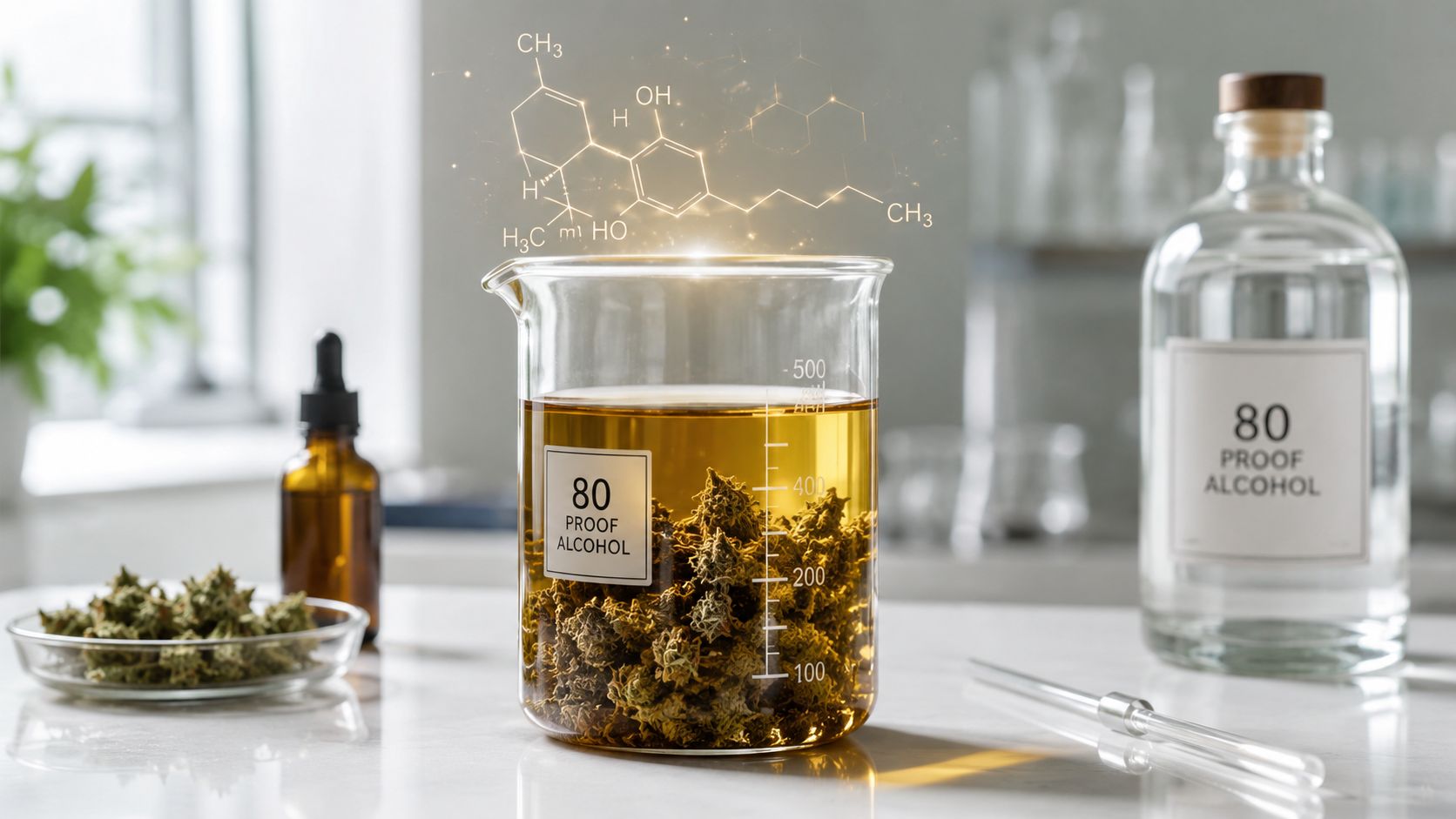
You buy a standard bottle of vodka, combine it with prepared cannabis, and expect the alcohol to pull out the parts you want most. It does. It also pulls out some of the parts you may want less, especially because 80-proof liquor is not pure ethanol. It is a mix of 40% alcohol and 60% water, and that water changes the chemistry in a very practical way.
Alcohol dissolves cannabinoids such as THC and CBD well. Water does not. Water is better at pulling out compounds that contribute a grassy taste, a darker color, and a more plant-forward finish. For DC patients, that distinction matters because many guides often say "use the highest proof you can find" without explaining what happens if you are using a legal, easy-to-find 80-proof spirit instead. A cannabis tincture with 40% alcohol can still work, but it usually gives you a broader, less selective soak than high-proof ethanol.
Tea is a useful comparison here. Steep herbs in hot water and you get both pleasant flavor and some bitter notes if you let it sit too long. Cannabis in 80-proof alcohol works in a similar way. The ethanol portion helps capture cannabinoids and terpenes, while the water portion makes it easier to pull extra plant material into the jar.
What 40% alcohol is actually extracting
80-proof alcohol works like a mixed solvent, not a precision tool. That is why results can vary more than patients expect.
| What it helps pull | What often comes along with it |
|---|---|
| Cannabinoids like THC and CBD | More chlorophyll and plant taste |
| Some aromatic compounds | Extra color and bitterness |
| A usable home tincture base | Lower potency per drop than higher-proof methods |
This is also why color can be misleading. A greener tincture is not automatically stronger. It often means the jar collected more non-cannabinoid plant compounds along with the cannabinoids.
Why prep matters as much as the alcohol
Two patients can use the same flower and the same vodka and still get very different results. The difference often comes from decarboxylation, grind size, soak time, temperature, and storage.
Decarboxylation changes THCA and CBDA into the forms more commonly associated with noticeable effects. If that step is skipped or done unevenly, your tincture may be weaker or less predictable. A very fine grind can also increase unwanted plant matter in the liquid because more surface area is exposed. Longer soaks can increase extraction, but with 40% alcohol they can also increase the "green" character many patients are trying to avoid.
Light and heat matter too. Cannabinoids and terpenes hold up better when you keep the tincture in a cool, dark place. Gentle handling is the goal. Direct sun, high heat, or an open jar near a stove can reduce quality and create avoidable safety problems.
Use enough time to extract. Use enough care to protect the cannabinoids. Keep heat low and keep flames far away from alcohol.
That last point is easy to gloss over, but we do not recommend it. Even 80-proof liquor is flammable. For medical patients making tinctures at home in DC apartments or shared spaces, safety has to come before speed.
If you want a clearer explanation of how cannabinoids behave in tinctures once they are made, our guide on the science behind marijuana tinctures and their effects adds helpful context.
Comparing 40% Alcohol Tinctures to Other Methods
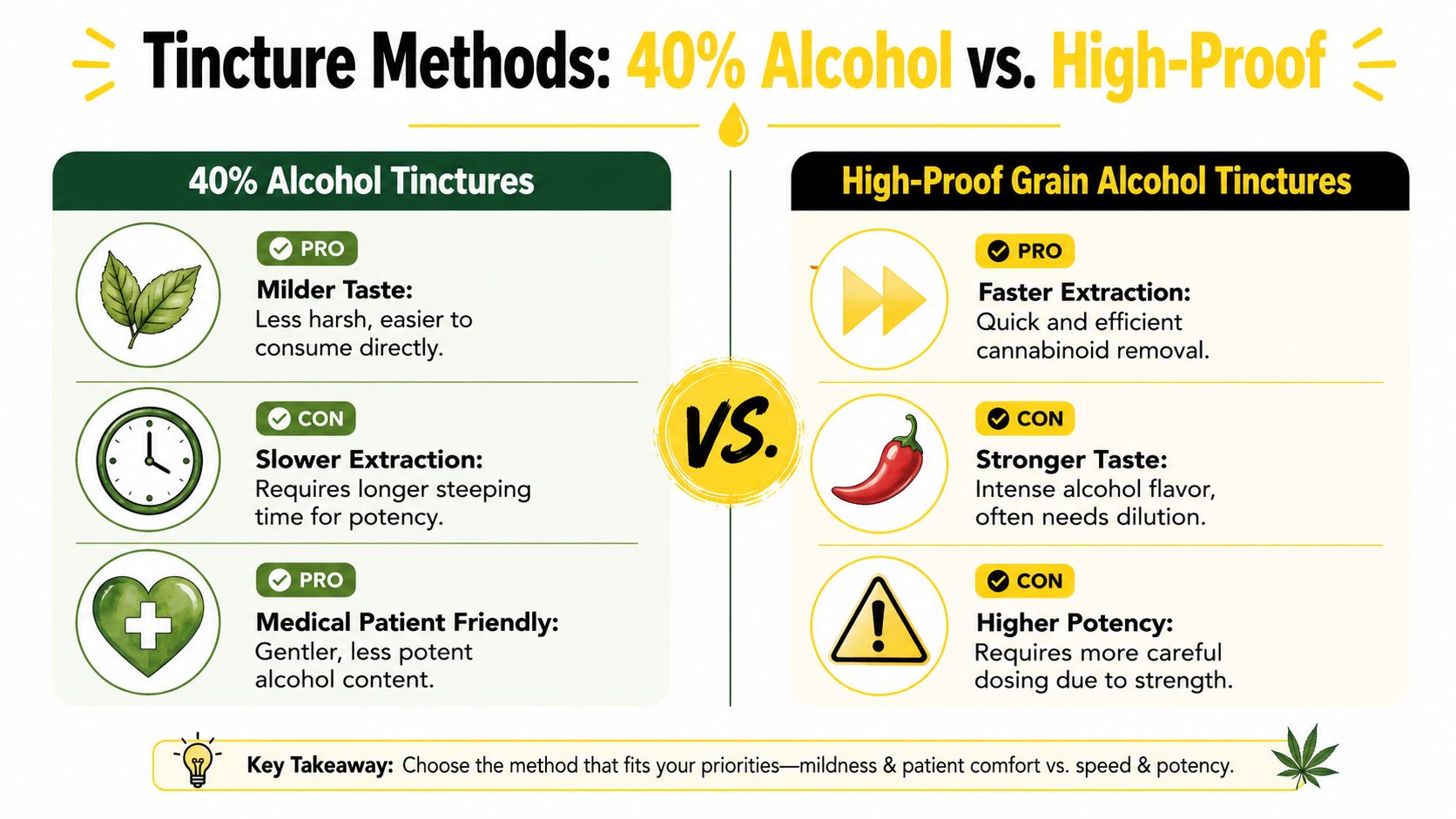
You are standing in a DC kitchen with decarbed flower on the counter and two clear choices in front of you. One bottle is standard 80-proof liquor. The other method calls for much stronger alcohol that is harder to find, harsher to handle, and less practical for many patients in shared homes or apartments. The primary question is not which method sounds more powerful. The primary question is which one gives you a tincture you can make safely, use comfortably, and dose with some confidence.
That is where 40% alcohol earns its place.
A 40% alcohol tincture usually extracts more slowly and less aggressively than high-proof grain alcohol. For many home patients, that slower pace is not a flaw. It often means a milder taste, less pull from unwanted plant compounds, and a process that feels more manageable if you are making your first batch.
40% alcohol versus high-proof alcohol
High-proof alcohol is often recommended because it can pull cannabinoids more efficiently. In simple terms, stronger solvent power usually means a stronger extraction. But stronger is not automatically better for every patient.
Here is the practical tradeoff. High-proof alcohol can produce a more concentrated tincture from the same amount of flower, but it also raises the stakes. It is more flammable, more irritating in the mouth for some patients, and more likely to extract bitter or grassy notes if the process is not handled carefully. In a small DC apartment, those details matter.
By comparison, 80-proof liquor works more like a gentler wash. You may need more patience, and your final tincture may be less potent per dropper, but the process is often easier to control. For patients who value approachability over maximum extraction, that can be the better fit.
Where glycerin fits in
Glycerin is the main alternative for patients who want to avoid alcohol entirely. It tends to be sweeter and easier on the tongue, which can make regular use more pleasant. That benefit is real, especially for patients with mouth sensitivity or anyone who dislikes the burn of alcohol.
The tradeoff is extraction strength. Glycerin is generally not chosen because it pulls as broadly or as efficiently as alcohol. It is chosen because it improves comfort and avoids alcohol exposure.
So the choice often comes down to your priority. If you want a balanced middle ground, 40% alcohol can make sense. If you want the strongest pull and have the experience to handle it safely, high-proof alcohol may appeal to you. If tolerance and taste come first, glycerin deserves a look.
A simple side-by-side comparison
| Method | What it does well | What to watch for | Often a good fit for |
|---|---|---|---|
| 40% alcohol | Easier to source, easier to handle, gentler flavor | Lower concentration, slower extraction | First-time home makers and cautious medical patients |
| High-proof alcohol | Stronger extraction, more concentrated result | Greater flammability, harsher taste, less forgiving process | Experienced DIY users who prioritize potency |
| Glycerin | No alcohol burn, sweeter taste | Weaker extraction, different final profile | Alcohol-sensitive patients |
One more point gets missed in a lot of tincture guides. Home methods are useful, but they are not always the best answer for long-term consistency. If precise formulation matters more to you than DIY flexibility, professionally made products can be a better match. Our guide to CO2-extracted CBD oil and controlled extraction methods explains why many patients prefer that level of repeatability.
A Practical Guide to Making Your Tincture
You get home with flower, a bottle of 80-proof liquor, and a mason jar. The process looks simple on paper, but one small mistake can leave you with a weak tincture, a harsh-tasting one, or a batch that is hard to dose with confidence. For DC patients using 40% alcohol because it is easier to find and easier to handle than high-proof spirits, the goal is not chasing the strongest possible extract. The goal is a clean, usable tincture you can make safely and repeat.
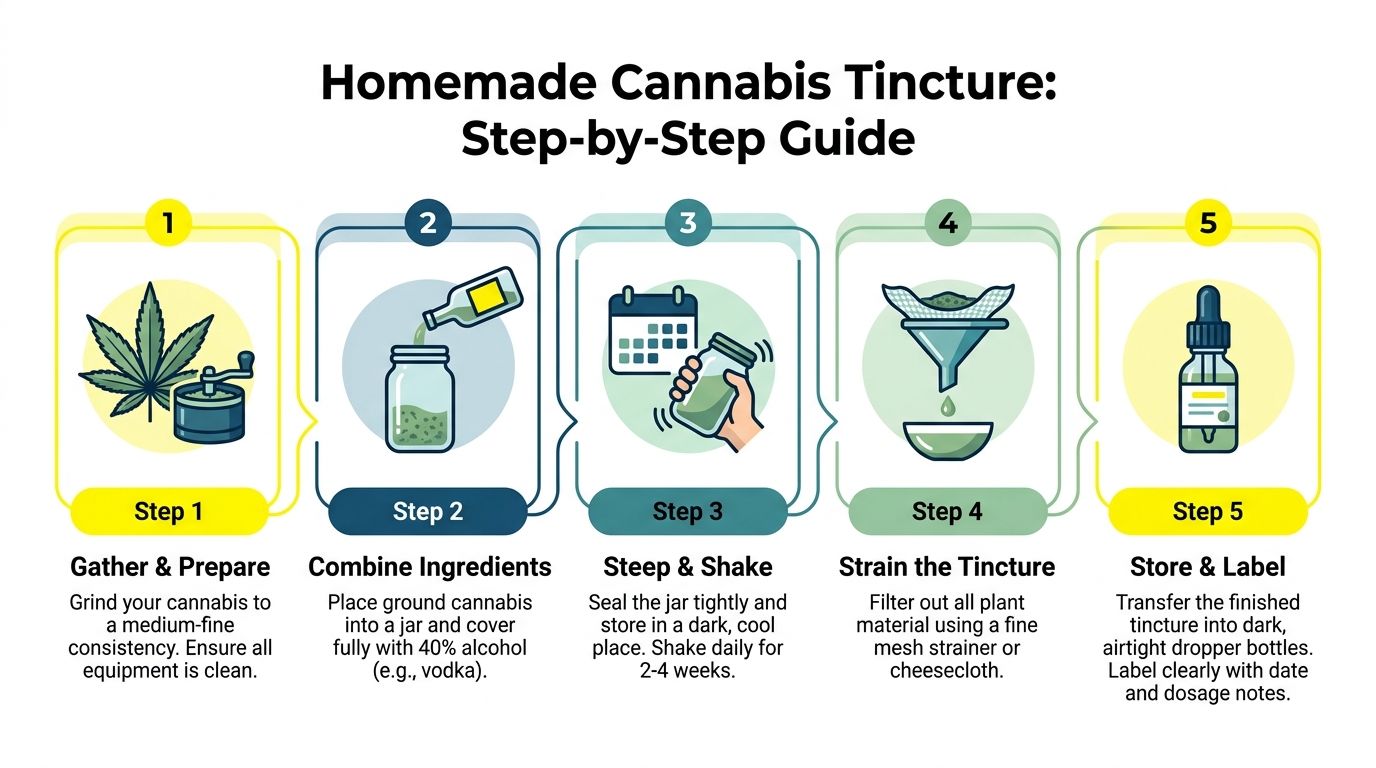
Step one: decarb before you soak
Heat comes first. Without it, much of the cannabis will stay in its raw acidic form, which can leave patients wondering why the tincture feels far weaker than expected.
A simple way to handle this is to break the flower up by hand or give it a rough chop, then spread it on parchment on a baking sheet and warm it gently in the oven. Avoid turning it into a fine powder. Powder makes straining harder and can leave more plant sediment in the final bottle. We want more surface area, not green dust.
If you are making tincture for symptom relief, consistency matters more than speed here. Set a timer, keep the temperature moderate, and let the flower cool before it touches the alcohol.
Step two: choose one ratio and write it down
Many homemade recipes often become inconsistent. One guide uses a light flower-to-alcohol ratio. Another uses much more plant material. With 40% alcohol, there is less room for sloppy measuring because the solvent is already a middle-ground option.
A practical starting point is simple. Use enough alcohol to fully cover the decarbed flower with a little extra room for shaking, and measure both amounts before you combine them. Then write those amounts on paper or on masking tape stuck to the jar.
That note becomes your map. If the batch works well, you can repeat it. If it is too mild, you can adjust one variable next time instead of guessing what changed.
Step three: let time do part of the work
With 80-proof alcohol, patience helps. High-proof solvents pull cannabinoids faster and more aggressively. A 40% alcohol tincture usually benefits from a longer soak and regular agitation.
Place the flower and alcohol in a clean glass jar with a tight lid. Store it in a cool, dark place. Shake it once a day. Some patients prefer a shorter soak for a lighter-tasting tincture, while others let it sit longer to get a fuller extraction. Either way, keep your method consistent across the batch.
Cold storage can help reduce some of the bitter plant taste. If you want to try that approach, chill both the flower and the alcohol before combining them and keep the jar cold during extraction. The tradeoff is that the process can feel slower. For many medical patients, slower is fine if it keeps the workflow safer and easier to control.
Here's a helpful visual walkthrough before you start mixing jars and filters:
Step four: strain for clarity, not just appearance
Straining is not just about making the tincture look nicer. It also removes fine plant particles that can keep releasing bitter flavors into the bottle.
Start with cheesecloth or a fine mesh strainer to catch the larger material. Then run the liquid through a paper coffee filter. If it still looks cloudy with sediment, filter it again. That extra pass takes longer, but it usually gives you a cleaner result and a more predictable bottle.
Pour the finished tincture into dark glass if you have it. Label it with the date, the strain or product used, and the ratio you started with.
Step five: store it like medicine
Keep the bottle sealed, away from heat and light, and out of reach of children and pets. A tincture does not need dramatic storage conditions, but it does need basic care. Alcohol helps preserve it, yet careless storage can still affect flavor and reliability over time.
If you enjoy home infusions and want to compare alcohol tinctures with a different DIY format, these canna-butter edibles to try at home show how much the preparation method changes the final experience.
One final budtender tip from us at Mr. Nice Guys DC. If your first 40% alcohol tincture turns out lighter than expected, that does not mean you failed. It usually means your process needs tighter notes, a longer soak, or a better flower-to-liquid ratio. With 80-proof tinctures, careful repetition is what gets you to a result you can trust.
Safe Dosing and Administration for Medical Patients
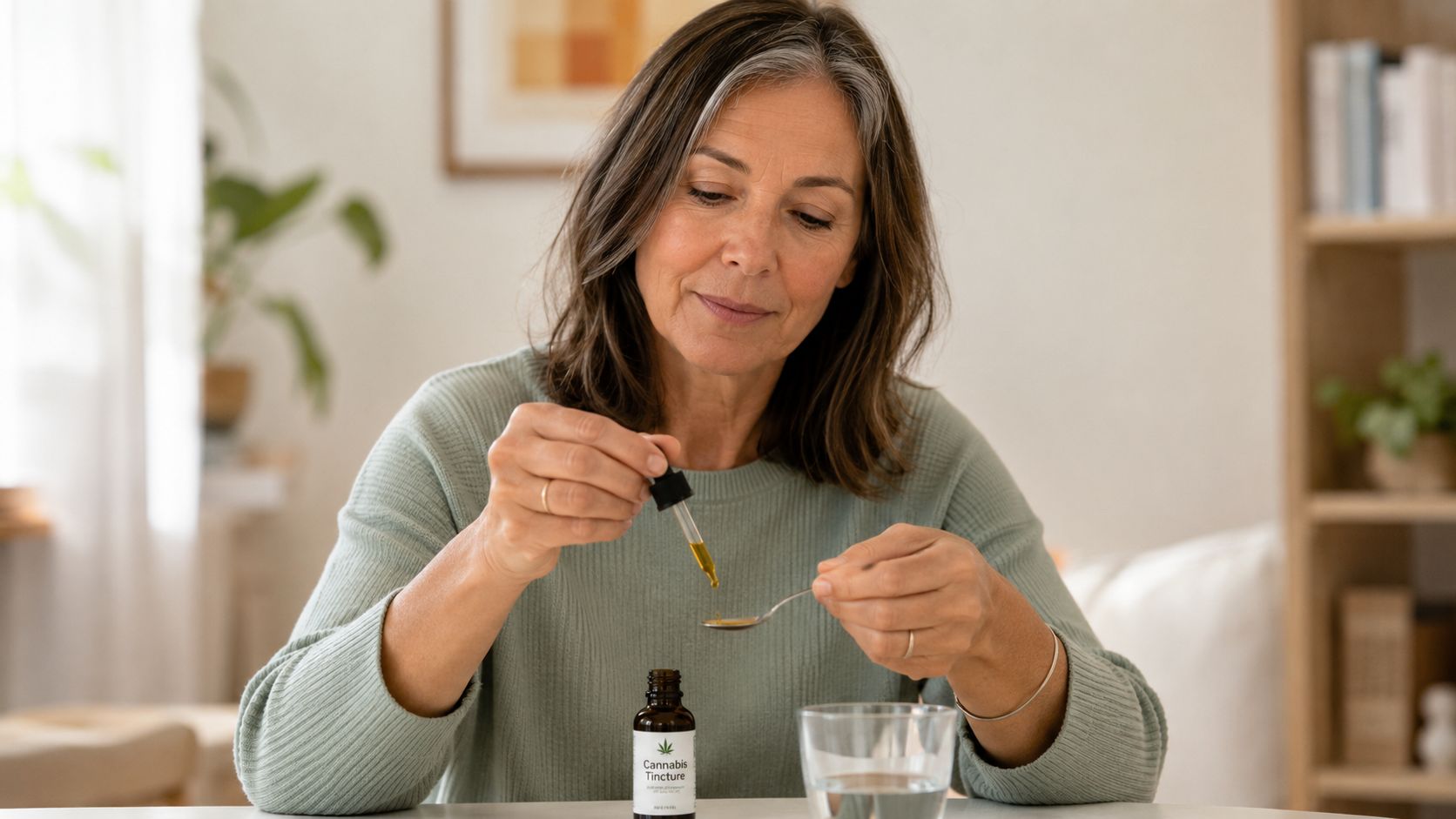
You finally have a finished bottle on the counter. The next question is the one we hear all the time at Mr. Nice Guys DC. How much should you take, especially if you made it yourself with 40% alcohol?
Start with caution. Homemade tinctures are useful, but they are rarely as predictable as a lab-tested bottle. For medical patients, the safest approach is to begin with a very small dose, wait long enough to judge the effect, and write down what happens. That slow approach can feel boring. It is also how you avoid a long, uncomfortable evening.
Start with the smallest reasonable test dose
If you know the potency, use the milligrams per milliliter to guide your first trial. If you do not know the potency, treat the tincture like a stronger product than it looks. Color is not a reliable clue. Neither is smell.
A simple method works well:
- Take a small measured amount, not a random squeeze of the dropper.
- Wait at least 2 hours before taking more.
- Track the time, the amount, and the effect in a notebook or your phone.
That record matters more than patients expect. A tincture routine works like adjusting eyeglasses. Small changes can make a big difference, but only if you know what you changed.
Sublingual use and swallowing are not the same experience
Many patients place the tincture under the tongue first, then swallow. That method may feel faster than swallowing it right away, but a 40% alcohol tincture can sting. For some people, that sting is mild. For others, it makes daily use unpleasant enough that they stop using a product that might otherwise help them.
If the alcohol burns, you have options. You can use a smaller sublingual amount, shorten the time you hold it under the tongue, or ask your care team whether a different format makes more sense for your needs. Comfort matters because consistent use matters.
Safety points that deserve real attention
Alcohol tinctures need a little more respect than many quick DIY guides suggest, especially for DC patients using cannabis for symptom relief.
- Keep the bottle locked away from children and pets.
- Avoid driving or doing anything safety-sensitive until you know how your dose affects you.
- Do not redose early just because the first dose feels subtle.
- Avoid alcohol-based tinctures during pregnancy.
- If mouth irritation, nausea, dizziness, or anxiety show up, stop and reassess before using more.
The alcohol volume in a small dose is usually tiny. The cannabis effect is the part that changes how you feel and function. That is why patience is safer than guessing.
If you want help translating droppers and milliliters into a repeatable routine, our guide to cannabis tincture dosage for medical patients walks through the math in a practical way.
One more point that often gets missed. A 40% alcohol tincture can be a reasonable option for some patients because it uses a familiar spirit base and can store well, but that does not make it the right fit for everyone. If the alcohol irritation, taste, or timing gets in the way of steady symptom control, that is useful information. A good dosing plan is not just about strength. It is about finding a method you can use safely, consistently, and with confidence.
Compliance and Finding Tinctures in Washington DC
For DC patients, home tincture making can be rewarding, but it doesn't replace the value of regulated products. The biggest difference is consistency. When you buy a professionally made tincture, you're not trying to infer potency from flower weight, soak time, and how green the jar looks after a few weeks.
That matters even more when alcohol is involved. Federal alcohol rules can affect labeling and positioning. According to the TTB extraction products FAQ, a commercial manufacturer that keeps a cannabis tincture at 40% alcohol must ensure the product is marketed for dietary or wellness use and not for beverage purposes if it wants to avoid the regulatory burden tied to TTB licensing and federal alcohol warning requirements. That's one reason dispensary tinctures come with very specific packaging and use instructions.
Why regulated products can make life easier
A home method gives you control. A regulated product gives you predictability.
- Label clarity: You can dose from listed potency instead of rough estimates.
- Packaging safeguards: Usage directions and storage guidance are built in.
- Cleaner repeatability: If one bottle works for you, the next bottle is more likely to behave similarly.
There's also an important legal example outside DC that shows how tightly tinctures can be regulated. In Massachusetts guidance, tinctures are treated as concentrates rather than edibles, with a 5 mg delta-9 THC cap per serving and 500 mg total delta-9 THC per bottle, according to the Massachusetts Cannabis Control Commission guidance on tinctures. Even if you're in DC, examples like that show why packaged cannabis tinctures tend to look carefully standardized.
For many patients, the best path is a mix of both worlds. Learn how tinctures work so you can evaluate what you're taking. Then decide whether your needs are better served by DIY control or by professionally tested consistency.
If you'd rather skip the guesswork and choose from carefully curated tinctures, flower, concentrates, edibles, and more, visit Mr. Nice Guys DC. Our team works with medical cannabis patients across Washington, DC and nearby areas to help you find options that fit your routine, comfort level, and wellness goals.
Mr Nice Guys DC
At Mr. Nice Guys DC, we’re more than just a cannabis delivery service — we’re passionate advocates for quality, convenience, and community. With years of experience in the cannabis industry, our team is dedicated to educating and empowering customers across Washington, D.C. Whether you're a seasoned user or just starting your cannabis journey, our blog delivers trusted tips, product insights, and the latest updates from the world of weed. Stay informed, stay elevated.
