
Must Be 21 To Enter
By entering this site you are agreeing that you are at least 21 Years of Age or older.
I AM 21 OR OLDERCBD Tincture Under Tongue: Maximize Absorption in 2026
.svg)

.png)
You've got the bottle in your hand, the dropper looks simple enough, and then the questions start. Do I fill the whole thing? Do I swallow right away? If I don't feel anything fast, did I do it wrong?
This is a common sticking point when using a CBD tincture under tongue. The bottle makes it look easy, but the details matter. A small change in how long you hold it, where the liquid sits, or how you measure the dose can change how the experience feels.
The good news is that this isn't complicated once someone walks you through it plainly. Think of this like the in-person version of advice you'd get from a patient budtender who wants you to waste less product, feel more confident, and get a more consistent result every time.
Why Using a CBD Tincture Under the Tongue Works Best
You place a few drops under your tongue, wait, and one day it seems to settle in fairly quickly. Another day, with the same bottle, it feels slower. That difference often comes down to where the liquid sits, how your mouth is hydrated, and how much of the dose stays in contact with the soft tissue instead of getting swallowed.
The area under the tongue has thin mucous membranes and plenty of tiny blood vessels. A tincture held there can pass into the bloodstream more directly than a dose that goes straight to the stomach. Swallow it right away, and more of that CBD gets routed through digestion first. That usually means a slower, less predictable onset.
A sponge is a useful comparison here. If the liquid spreads across a slightly damp surface and stays put for a moment, more can absorb. If it pools in one spot or gets washed down quickly with saliva, less of the dose has a chance to use that fast route.
Why onset time can vary, even with the same tincture
This is the part many quick guides skip. “Hold for 60 seconds” is a decent starting instruction, but it is not the whole story.
Your results can shift based on dry mouth, how full your stomach is, how much saliva you produce, and your technique with the dropper. If the tincture lands in the center of the tongue and gets swallowed fast, it behaves more like an oral product. If it coats the tissue under the tongue and along the lower gums for a brief hold, more of it has a chance to absorb before the rest is swallowed.
That is why two people can use the same product and describe different timing.
A better technique than just letting it pool
Instead of dropping the whole dose in one puddle and hoping for the best, try what budtenders often call oral painting. Place the tincture under the tongue, then use your tongue to gently spread it along the floor of the mouth and the inside of the lower gums before holding it there. The goal is not to swish it around like mouthwash. The goal is to increase contact with the absorbent tissue.
That small adjustment can make the dose feel more consistent from one day to the next.
If you want more background on why tinctures can hit differently than other formats, this plain-English guide to the science behind marijuana tinctures and their effects helps connect the dots.
What people often get wrong
People often blame the bottle strength first. Technique deserves equal attention. A well-measured dose that is placed carefully and held with patience usually gives better feedback than a larger dose swallowed in a rush.
Main takeaway: using a CBD tincture under the tongue works best because placement changes the path the liquid takes, and better contact with the tissue usually leads to faster, more reliable absorption.
Preparing for Your First Dose
Before the first squeeze of the dropper, slow down and look at the label. This is the part many people skip, and it's where dosing confusion starts.
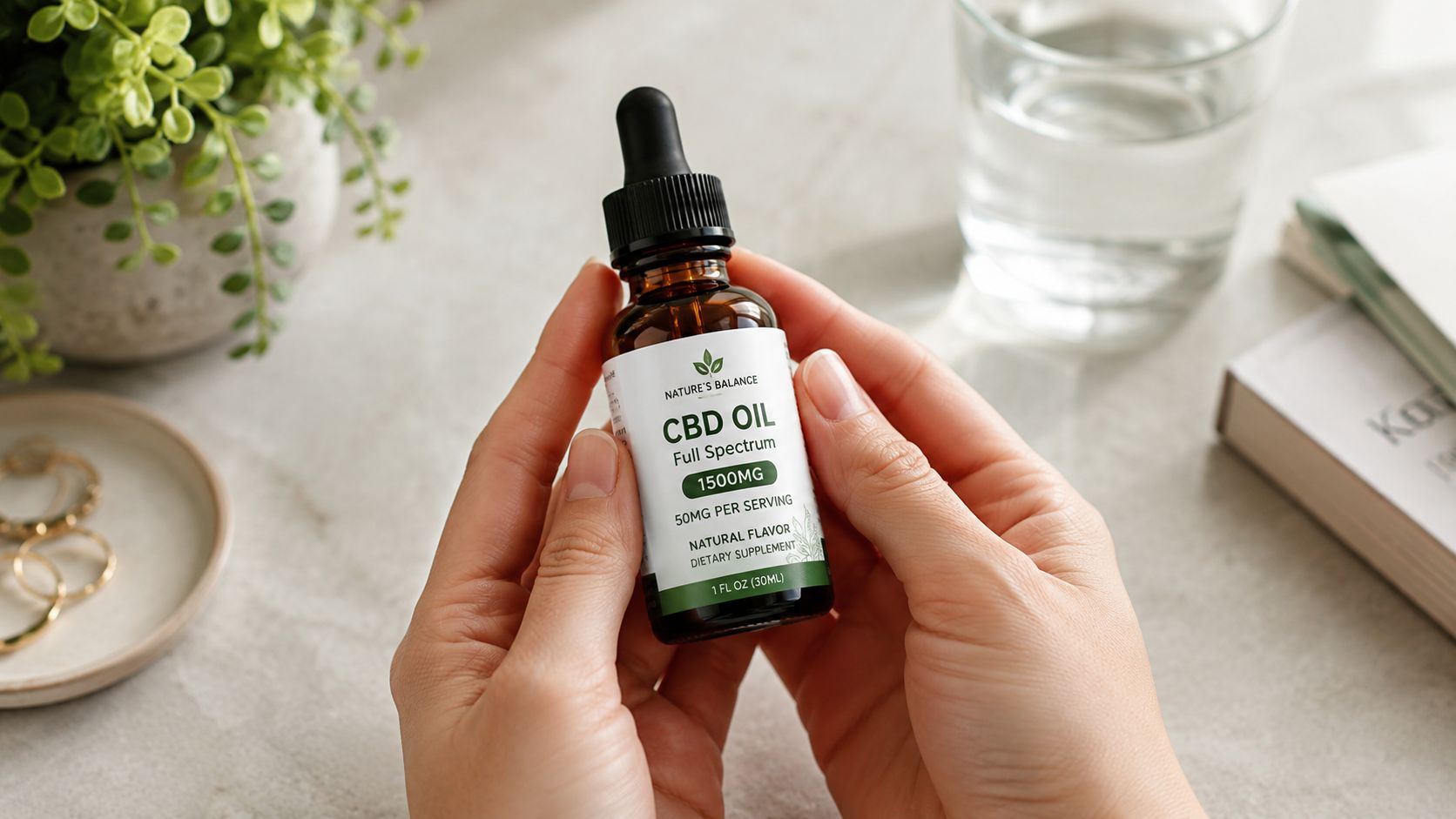
A tincture bottle usually tells you the total CBD in the bottle and the bottle size. Those two numbers help you estimate how much CBD is in a full dropper, but if your label isn't clear, don't guess. Read the serving information first, and if the serving size still feels vague, ask a dispensary professional or pharmacist before you dose.
Start low and go slow
For beginners, the safest habit is a modest starting point. Enthea Care's guidance on the benefits of CBD oil under the tongue says recommended dosing for sublingual CBD typically begins at 5 mg to 10 mg per day, with gradual increases of 5 mg per week until the desired effect is reached.
That “start low and go slow” approach matters because bodies respond differently. One person may feel settled with a small amount. Another may need more time and more careful adjustments. Starting low makes it easier to notice what your body is telling you.
A practical example helps here. Say your bottle label shows that one measured serving equals 10 mg of CBD. A cautious first try could be that single serving once a day. If after several days that amount feels too light, you'd increase gradually instead of jumping way up.
Small prep habits that help
Use this quick routine before each dose:
- Shake the bottle first. Oil and active compounds can settle unevenly.
- Measure before you lift the dropper. That keeps your dose more consistent.
- Dose when you can pay attention. Don't try your first dose while rushing out the door.
- Keep a simple note in your phone. Write down the product, dose, and time.
A tincture works best when the dose is repeatable. If you eyeball it differently every time, it's hard to tell what's actually helping.
If you want help interpreting bottle strength, servings, and how to think through small adjustments, this cannabis tincture dosing guide is worth reading before you experiment.
The Sublingual Method Step by Step
You measure your dose carefully, use the dropper, and still feel like the tincture did nothing. In the shop, that usually comes back to technique. A tincture can work very differently depending on whether it sits on the absorbent tissue under your tongue or gets swallowed almost right away.
Get the oil where it needs to go
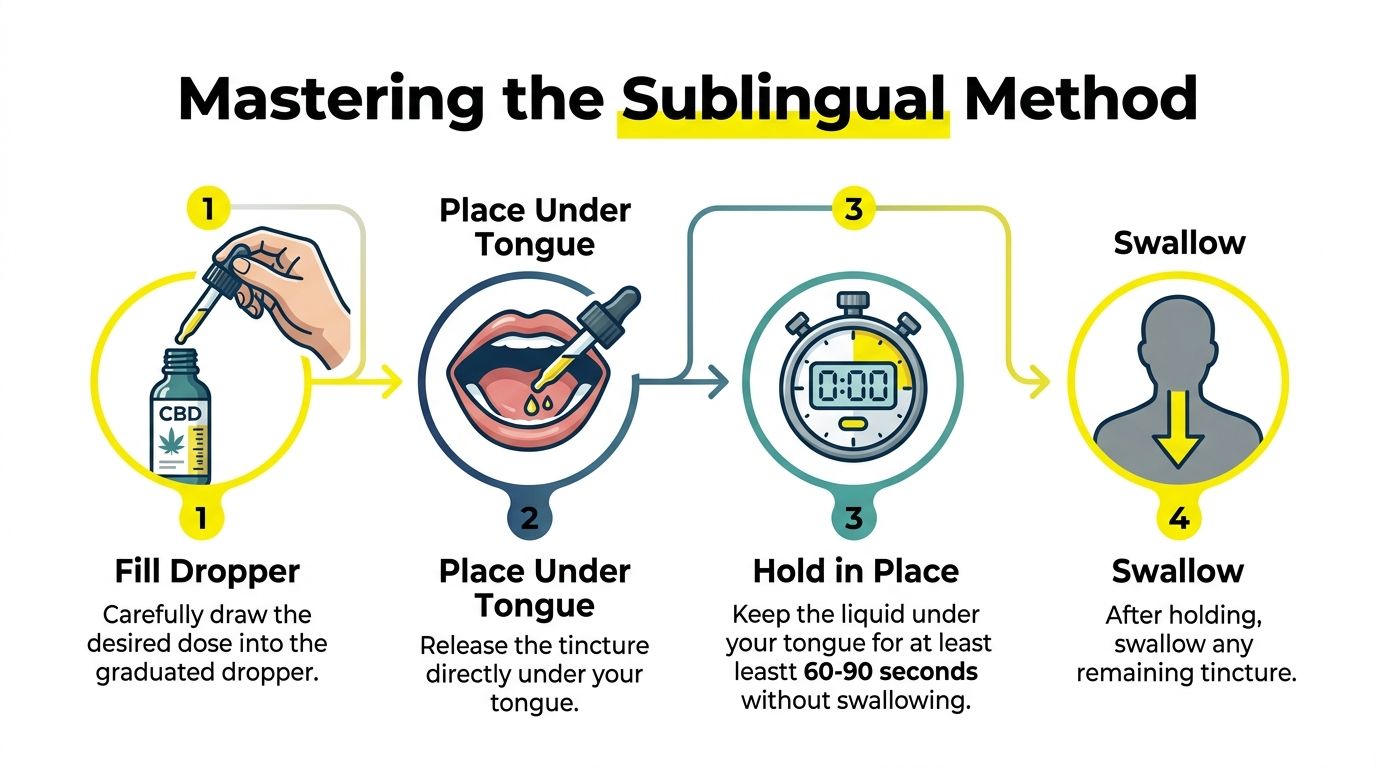
Start with your measured dose in the dropper. Tilt your head slightly forward, lift your tongue, and place the liquid into the soft pocket underneath it. That area is the target because it has thin tissue and a good blood supply. If the oil lands mostly on top of your tongue, more of it mixes with saliva and heads toward your stomach.
Once the tincture is under your tongue, close your mouth and let it sit. Breathe through your nose. Try not to talk or move the oil around right away.
A good hold time is 60 to 90 seconds. Treat that window like steeping tea. The contact time matters because the oil needs a chance to sit on the tissue long enough to absorb.
Why one person feels it faster than another
The common advice is to hold it and wait, but the part many guides skip is why results can vary even when two people use the same bottle. Some mouths produce more saliva. Some people swallow without noticing. A thinner oil may spread quickly, while a thicker one may pool in one spot. Even the exact placement under the tongue changes how much contact the tincture gets.
That is why one patient says, "I noticed it pretty quickly," and another says, "It took a while." The method is the same on paper, but practical details change the outcome.
Don't rush the swallow
A fast swallow is one of the biggest technique mistakes. The dose may start in the right place, but if taste or habit makes you swallow after a few seconds, much more of the tincture shifts to the digestive route.
If the flavor is strong, use a timer on your phone and focus on breathing slowly through your nose. Keeping your tongue relaxed helps too. The goal is calm contact, not holding your mouth rigid.
A simple example helps. If you dose, wait the full hold time, and swallow after the timer, you have used the tincture the way it was intended. If you take it and chase it with coffee right away, you have changed both absorption and timing.
Use oral painting to catch the leftover oil
Here's the advanced tip I share in person because it helps more than people expect. After the hold, do not swallow immediately. Use your tongue to spread the remaining oil along the inside of your cheeks and around the gums for a few seconds, then swallow.
That technique is called oral painting. The inside of your cheeks and gums also have absorbent tissue, so this gives leftover tincture another chance to make contact instead of heading straight down your throat. It is especially useful with thicker oils or when some of the dose collects in one little pool under the tongue.
USA Medical's discussion of CBD oil under the tongue describes this technique and explains why spreading residual oil across more oral tissue may improve absorption.
A short routine that's easy to remember
Use this sequence:
- Shake and measure.
- Place the dose into the pocket under your tongue.
- Hold it still for 60 to 90 seconds.
- Paint the leftover oil along your cheeks and gums.
- Swallow what remains.
If you want help comparing textures, flavors, and formula styles before you buy again, this cannabis tincture review guide is a helpful next read.
What to Expect After You Dose
Expectations can make or break the experience. Plenty of people take a tincture, wait a few minutes, feel nothing obvious, and decide the product failed. Usually, it's not that simple.
The often-repeated quick-onset timeline is an average, not a promise. Medical News Today's review of how often you can take CBD oil under the tongue notes that while many guides cite 15 to 25 minutes, pharmacokinetic reviews show onset can range from 10 to 60 minutes depending on factors like mucosal thickness, saliva pH, and the carrier oil in the formulation.
Why your timing may be different
Two people can take the same tincture and still get different onset times. Your oral tissues may absorb faster or slower. Your saliva may dilute the oil more than someone else's. A thinner carrier oil may spread differently than a thicker one.
That's why one person says, “I noticed it pretty quickly,” while another says, “It took a while.” Both can be right.
Reality check: Slow onset doesn't automatically mean weak product. Sometimes it means your body and that formula need a little more time to line up.
A better way to judge your dose
Use a check-in routine instead of waiting for some dramatic feeling. Note the time you took the tincture. Then check in with yourself around the half-hour mark.
Ask simple questions:
- Mood: Do I feel a little more settled?
- Body: Has tension eased at all?
- Focus: Am I less distracted by discomfort?
- Change over time: Is the effect building, flat, or absent?
A practical example. If you take a morning tincture at 8:00, don't keep redosing at 8:10 because you don't feel a big shift yet. Check in around 8:30. Then continue paying attention through the next part of the hour before deciding whether the timing felt normal for you.
If you want to compare your experience to broader timing and sensation patterns, this guide to weed tincture effects can help you understand what a gradual onset often feels like.
Troubleshooting Common Tincture Issues
Even when you're using a tincture correctly, little annoyances can get in the way. Taste, timing, and technique are the usual culprits.
If the taste throws you off
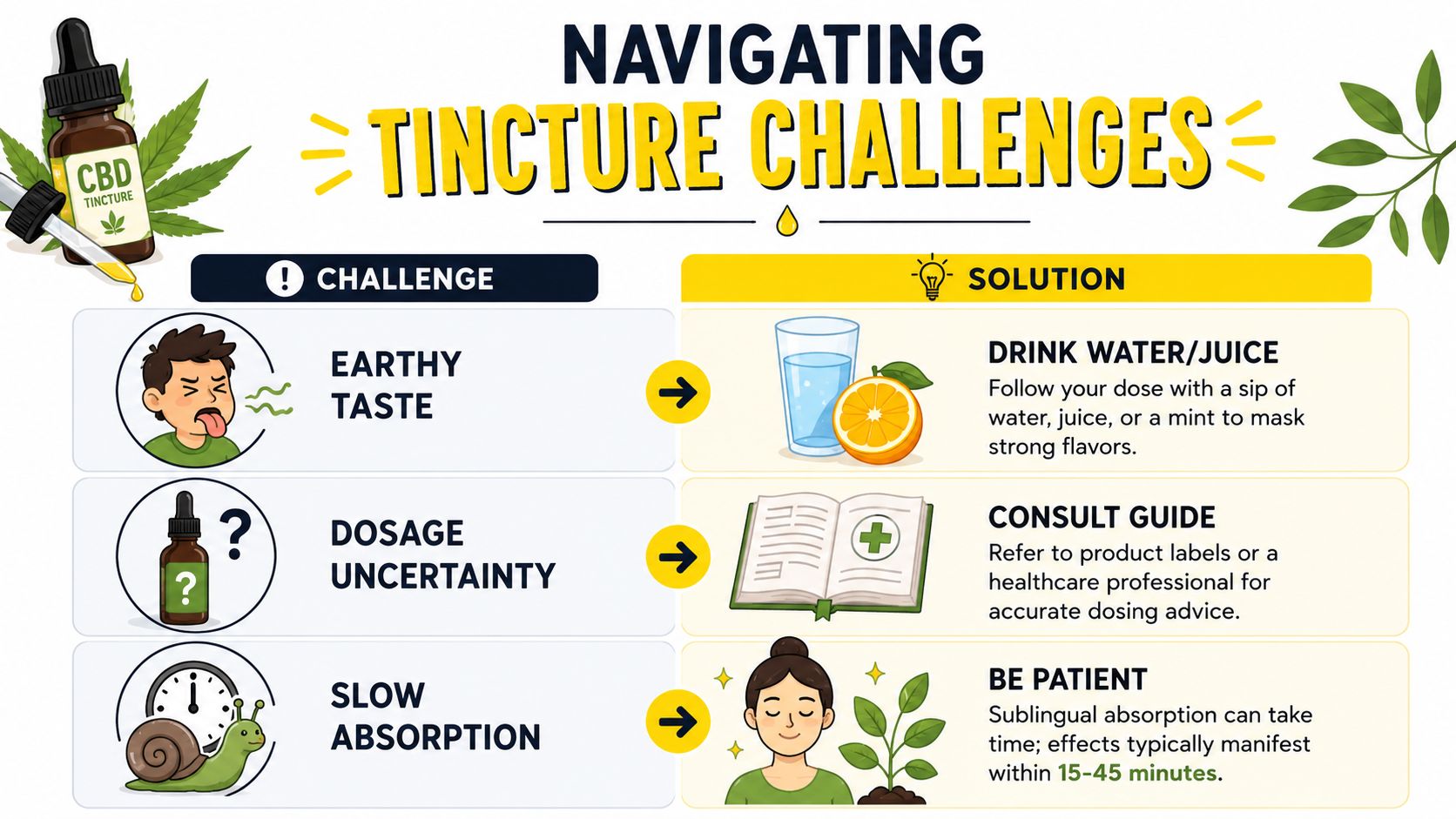
Some tinctures taste grassy, peppery, or just plain earthy. That's normal, especially with less sweet formulations. The fix isn't to swallow early. The fix is to plan for the aftertaste.
Try this:
- Clean your palate first. A sip of water before dosing can help.
- Set up a chaser for later. Keep water, juice, or a light snack nearby for after the hold.
- Breathe through your nose. It dulls the taste while the tincture sits.
A practical example is keeping a mint or glass of water on the counter, then using it only after the hold period ends. That way you don't break the method just because the flavor isn't your favorite.
If you swallowed too fast
This happens all the time. Don't panic. You didn't ruin the product or do anything unsafe. You just changed the route of absorption.
According to EO Care's explanation of cannabis tinctures, swallowing too quickly can reduce bioavailability from around 30% to 40% down to about 10% and stretch onset from 15 to 30 minutes to over an hour.
So if you swallowed early, the move is simple. Wait longer before judging the dose. Don't stack another dose on top just because the quick sublingual effect didn't happen.
If you mess up and swallow right away, treat that dose like an oral one. Be patient before taking more.
If your mouth feels irritated
This is less common, but some people notice mild mouth irritation or discomfort. Often the issue is the formula, not the idea of tinctures in general. A different carrier oil may feel better.
Try narrowing it down:
| Issue | What to consider |
|---|---|
| Burning or stinging | The formulation may not agree with your mouth |
| Very thick oil pooling | Hold it steady, then use oral painting before swallowing |
| Dry mouth feeling | Sip water after the dose is complete |
If irritation keeps happening, stop using that product and talk with a healthcare professional or dispensary expert before trying another one.
Your Guide to Tinctures in DC
Good tincture use doesn't end with the dose. Storage matters too. Keep the bottle in a cool, dark place with the cap sealed tightly so the oil stays stable and the flavor doesn't degrade faster than it should.
It's also smart to talk with a doctor before adding CBD if you take other medications. That's especially important if your routine is already medically managed and you want to avoid unnecessary guesswork.
In DC, the hardest part usually isn't taking a tincture. It's choosing one that fits your goals, your tolerance, and your routine. Some people want something simple for evening balance. Others want a product they can use more predictably during the day. That's why education matters as much as the label.
For readers comparing options locally, this medical cannabis tincture guide is a strong place to continue. It can help you think through product fit before you buy.
A well-used tincture should feel straightforward. Measure carefully. Hold it long enough. Don't expect your body to match someone else's timeline exactly. And if you want better consistency, use the extra step often overlooked. Paint the remaining oil across the gums and cheeks before swallowing.
If you're looking for thoughtful, patient-first guidance on tinctures and other cannabis products, Mr. Nice Guys DC is a trusted local resource. Their team helps medical patients and adult consumers sort through product options, ask better questions, and find formats that fit real-life needs without the usual confusion.
Mr Nice Guys DC
At Mr. Nice Guys DC, we’re more than just a cannabis delivery service — we’re passionate advocates for quality, convenience, and community. With years of experience in the cannabis industry, our team is dedicated to educating and empowering customers across Washington, D.C. Whether you're a seasoned user or just starting your cannabis journey, our blog delivers trusted tips, product insights, and the latest updates from the world of weed. Stay informed, stay elevated.
