
Must Be 21 To Enter
By entering this site you are agreeing that you are at least 21 Years of Age or older.
I AM 21 OR OLDERIndica Strains That Don't Make You Sleepy: A Practical Guide
.svg)

.png)
The advice often gets reversed. They're told to pick indica when they want calm and to avoid it when they need to stay functional, but that shortcut leaves out the chemistry that shapes how a product feels. A strain's label can hint at the experience, yet the terpene profile, cannabinoid balance, dose, and consumption method usually decide whether you feel relaxed and clear or relaxed and sleepy.
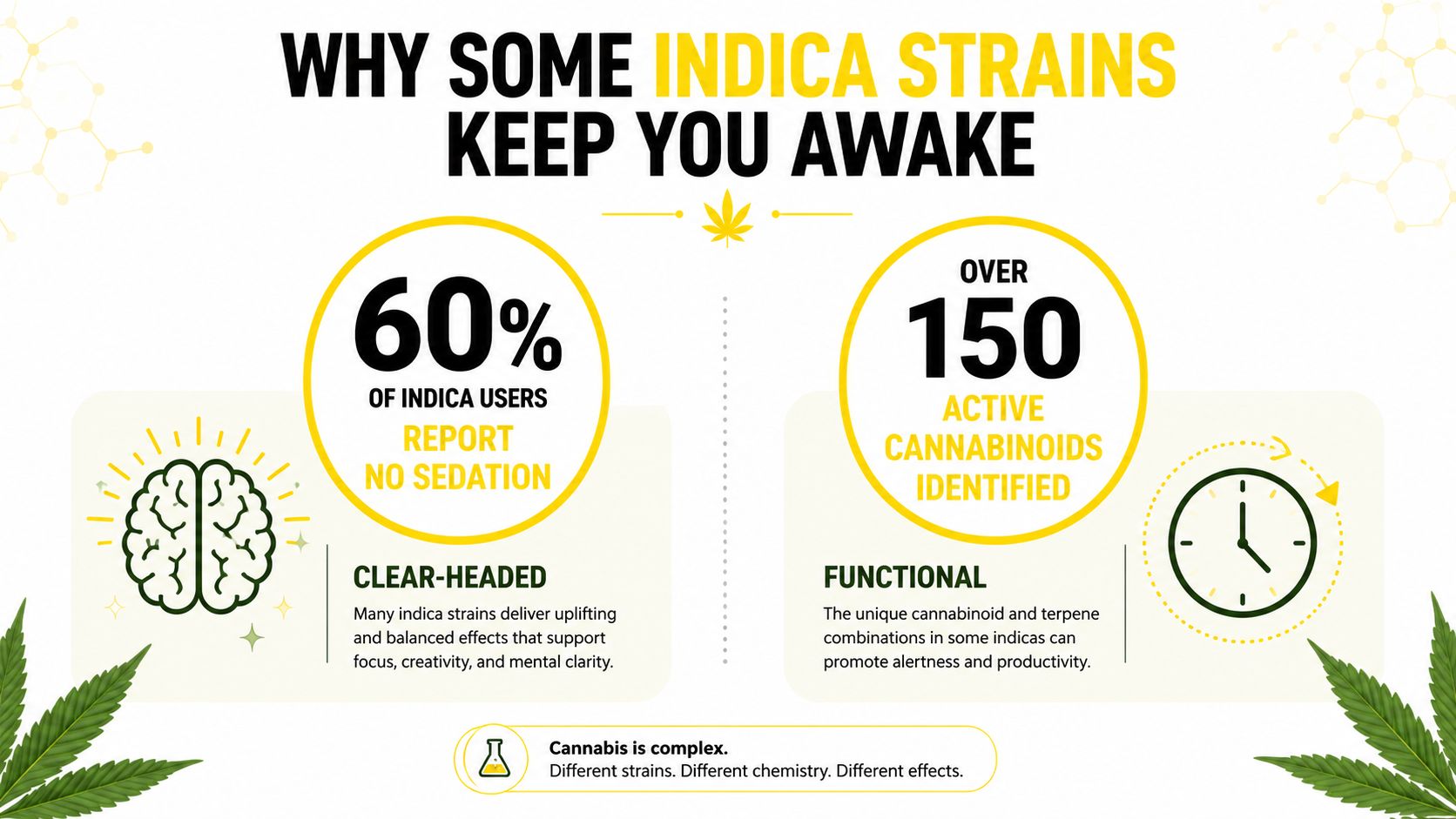
That matters a lot for indica strains that don't make you sleepy, because some indica-leaning products can feel surprisingly workable during the day. A useful starting point is the common reputation of indica as sedating, then checking why that reputation exists in the first place. Healthline notes that indica strains are traditionally associated with relaxation, sedation, pain relief, and insomnia relief, while WebMD links the sleepy effect commonly tied to indica to myrcene, with about 0.5% myrcene associated with more calming or sedating effects (Healthline's overview of indica strains). At the same time, a survey cited in industry education found 72% of users felt sleepy or tired after indica, compared with 13% after sativa, which means roughly 28% of indica users did not report sedation (AVL Dispensary's education page).
Why Some Indica Strains Keep You Awake
The easy story says indica equals sleepy. The better story is that the label is only a rough shorthand. Broad strain labeling helped build the modern idea of indica as body-heavy and sedating, but the actual effect comes from chemistry, not the shelf tag. A flower can carry indica genetics and still feel clear, steady, or even a little mentally bright depending on what is inside the plant and how much of it reaches you.
The label gives you a clue, not a verdict
That distinction matters for patients and adult consumers who want relief without losing the afternoon. In the survey cited by AVL Dispensary, 72% of users said indica made them sleepy or tired, compared with 13% for sativa, so the reputation is real, but not universal. The same data also leaves room for the exception that matters most here, because roughly 28% of indica users did not feel sleepy or tired (AVL Dispensary).
That non-sedated group exists for a simple reason. Two jars can both say indica and still differ in cannabinoid balance, terpene mix, freshness, and dose, the same way two teas can both be herbal but land very differently in the body. A batch with lighter myrcene, more balancing terpenes, or a lower effective dose may support calm without pushing into couch-lock. Healthline connects indica's sleepy reputation to myrcene, and WebMD's threshold of about 0.5% myrcene helps explain why some flower leans sedating while other flower stays more functional (Healthline).
For a DC patient, that means the label is the starting point, not the answer. If a dispensary menu says indica but the lab sheet shows a terpene mix that does not lead with myrcene, the product may fit daytime use better than the name suggests.
Practical rule: if the menu says indica but the lab sheet shows a terpene mix that doesn't lead with myrcene, don't assume it'll knock you out.
Cannabinoids and Terpenes Made Simple
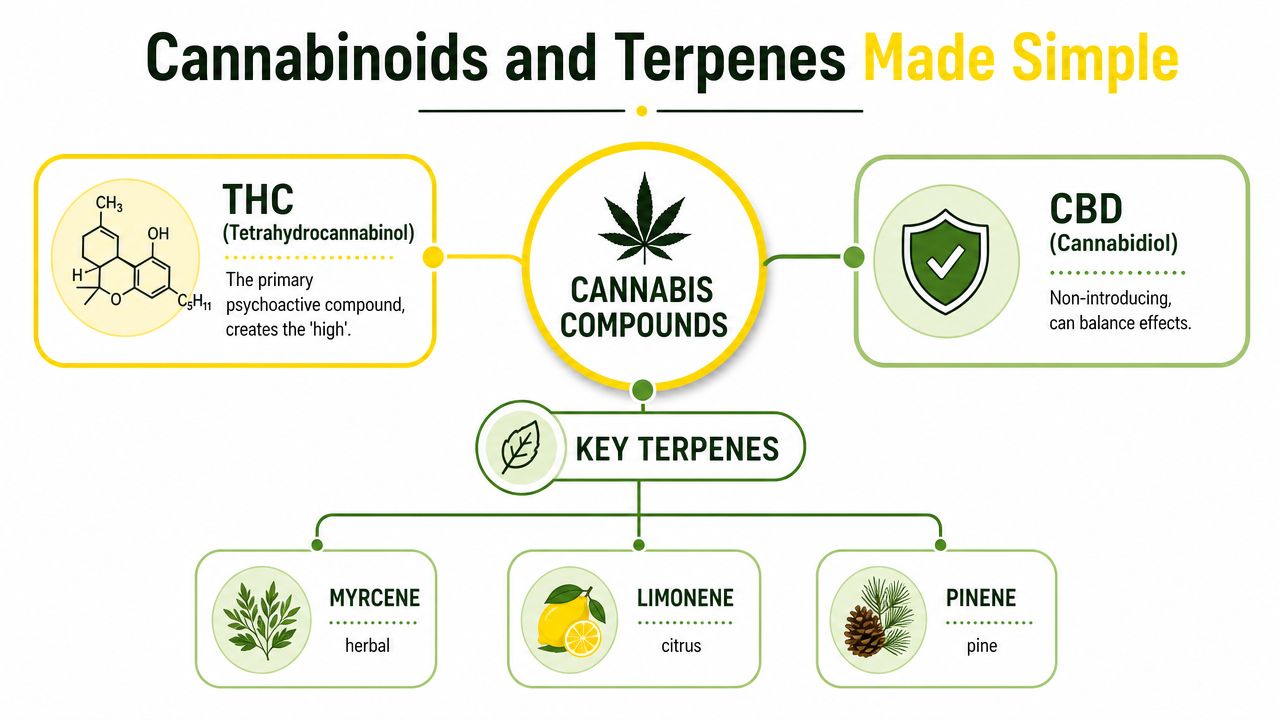
Cannabis chemistry feels less mysterious once you separate the parts, the way a kitchen separates the base ingredient from the seasoning. THC is the compound that usually drives the high. CBD can soften the edges for some people, and terpenes are the aroma compounds that also shape how the experience feels in the body.
Terpenes work like seasoning, not the main ingredient
A strain can keep the same basic genetics and still feel different because the terpene mix changes the effect. Myrcene is often linked with relaxation and a heavier body feel, limonene is commonly associated with a brighter mood, and alpha-pinene is often tied to a clearer, more alert experience. That is why two indica-leaning products can sit on opposite sides of the daytime-use line.
For readers who want a quick THC and CBD refresher, this CBD versus THC guide from Mr. Nice Guys DC is a useful companion. The basic takeaway is simple. THC level tells you how strong the psychoactive effect may feel, but the terpene profile often tells you whether that strength feels sleepy, steady, or more functional.
Myrcene is worth checking because once it becomes more prominent, the overall profile can tilt a product toward calm or sedation. That does not make myrcene bad. It just means it is one of the first numbers to ask for if you want indica strains that don't make you sleepy.
When people say a strain “feels balanced,” they are usually describing a chemistry pattern, not a marketing category.
A simple kitchen analogy
A strain with the same genetics can feel different depending on its terpene mix, like how the same rice bowl tastes different with citrus versus pepper. Cannabis works the same way. THC and CBD form the base experience, while terpenes shape whether that base feels mellow, bright, or heavy.
Reading a COA Like a Budtender
A Certificate of Analysis, or COA, is the closest thing to a map for choosing a daytime-friendly indica. It tells you what's in the batch, instead of asking you to trust the strain name. For anyone shopping with a goal of staying clear-headed, this is the page that matters more than the strain shelf.
What to scan first
Start with THC percentage. One expert source recommends strains with moderate THC of about 15 to 19% and co-dominant uplifting terpenes, because higher THC loads can increase sedation even when the plant is indica-dominant (Leafwell). That range isn't magic, but it is a practical middle ground when you want relief without getting flattened.
Then look at the top three terpenes. If myrcene dominates, the odds of sedation go up. If limonene or alpha-pinene appears alongside myrcene, the effect may stay more lively and usable during the day. This is a scenario where a batch of indica-leaning flower can feel functional instead of sleepy.
| COA Quick-Read Reference | ||
|---|---|---|
| THC Range | Dominant Terpene | Likely Feel |
| Moderate, around 15 to 19% | Limonene or alpha-pinene alongside myrcene | More likely to stay functional |
| Higher THC | Heavy myrcene profile | More likely to feel sedating |
| Moderate THC with balanced terpenes | Mixed profile | Often the safest daytime starting point |
If you're standing in a dispensary, ask for the batch's lab sheet and compare the terpene list, not just the strain name. The potency-testing explainer from Mr. Nice Guys DC is a good way to get comfortable with the language.
What to ask out loud
Ask for the THC:CBD ratio, the top terpenes, and whether the current batch is more body-heavy or more balanced. A budtender can usually tell you fast whether a label is giving you a daytime option or a sleeper. If you want a simple filter, start by asking for moderate THC and a terpene profile that doesn't lead with myrcene.
Useful habit: judge the batch, not the strain name. The same strain can change from one harvest to the next.
Dosing and Consumption Methods That Stay Functional
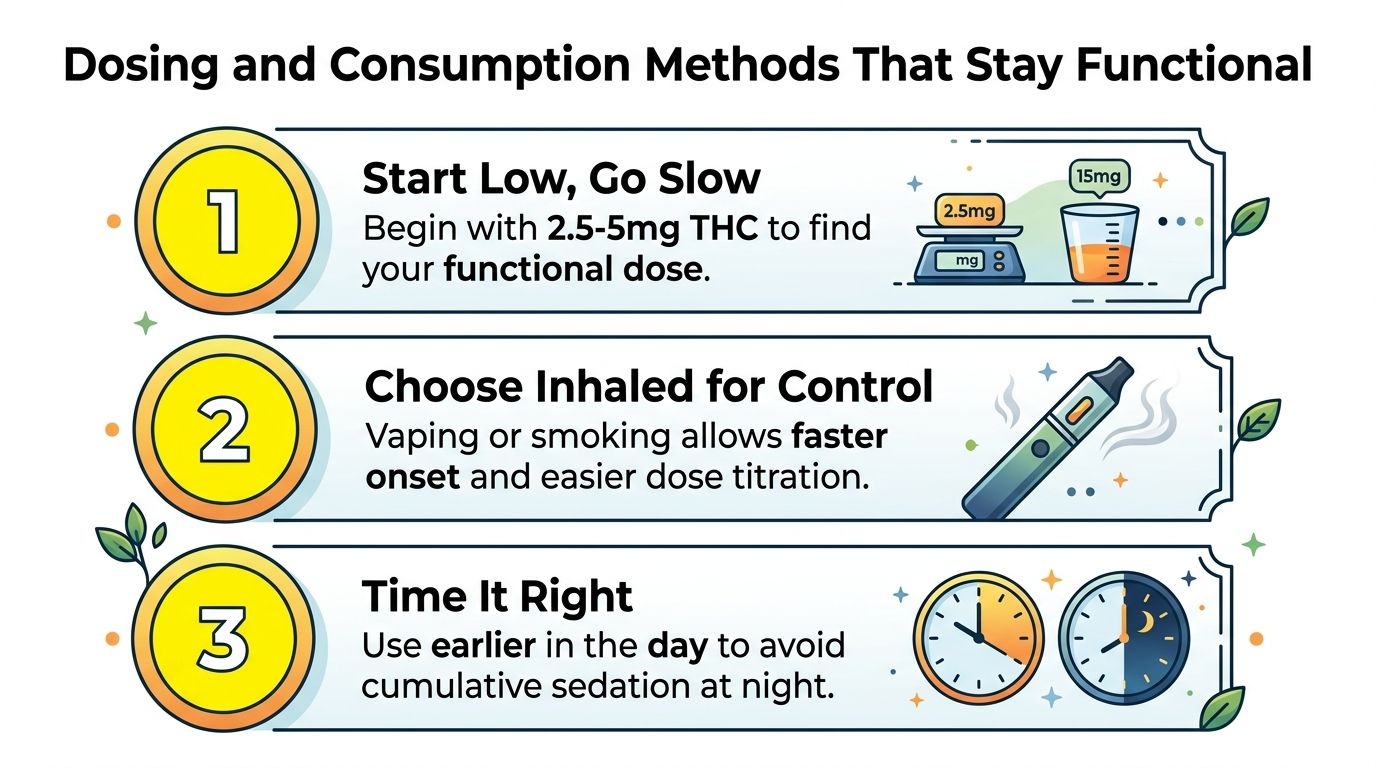
Even a well-chosen strain can turn sleepy if the dose is too big or the format hits too hard. That's why method matters as much as genetics. Recent guidance emphasizes that higher THC, empty-stomach use, and edibles are more likely to increase impairment or drowsiness, which is exactly why a daytime plan needs guardrails (Mood's guide to indica and sleepiness).
Control beats guesswork
Inhaled products, like flower or vapes, let you feel the effect quickly and adjust in small steps. Edibles come on later and can hit harder, so they're easier to overshoot when you want to stay functional. If you're trying to avoid accidental sedation, inhalation usually gives you better feedback.
The same principle applies to timing. Earlier use is easier to manage than late-day stacking, because the effects don't pile up into the evening. That matters if your goal is to take the edge off discomfort without falling asleep on the couch before dinner.
A practical starting point is the logic behind low-dose use, and the microdosing edibles guide from Mr. Nice Guys DC can help if you're trying to keep your dose conservative. Even with an indica-leaning product, less can feel more functional when your goal is calm, not knockdown sedation.
A simple day-use rule set
- Start small: take one modest inhalation or a very low oral dose, then wait.
- Avoid the empty-stomach gamble: low fuel can make the experience feel harsher.
- Save stronger formats for later: edibles are usually a poor fit when you need to stay sharp.
Example Strains Worth Asking About
Some strains keep showing up because they land in a useful middle zone, relaxed without automatically pushing people toward sleep. The name on the jar matters less than the chemistry pattern behind it. Indica-dominant hybrids and high-CBD cultivars often fit this lane because they can deliver body calm without the full bedtime heaviness people expect from classic heavy indicas (The Weedologist).
Read the pattern, not just the name
Harlequin, Cannatonic, ACDC, Larry OG, and some Blueberry phenotypes are often mentioned as options that can relax the body without the same drowsy pull as a pure indica. In practical terms, those are the kinds of products worth asking about when you want to stay functional and still feel your shoulders drop. The label starts the conversation, but the lab profile tells you whether the effect is likely to stay steady or slide into sedation.
Blue Dream and Wedding Cake also come up in daytime-friendly conversations because they can sit in a more balanced lane, depending on the batch and the lab profile. A batch with moderate THC and a terpene mix that includes limonene or alpha-pinene is the version most likely to stay workable. If the same strain leans hard on myrcene, the experience can swing the other way. The easiest way to shop this in DC is to ask for the COA, then compare the terpene line to the effect you want. The indica versus sativa effects guide from Mr. Nice Guys DC gives a helpful baseline for that kind of label-to-lab comparison.
By contrast, strains like Purple Kush and Bubba Kush are usually the ones to skip when you need to remain alert. Those are the names people often reach for when sleep is the goal, not productivity. If you're building a daytime shortlist, it helps to think in categories, then confirm the batch details before you buy.
- Look for: Harlequin, Cannatonic, ACDC, Larry OG, Blue Dream, Wedding Cake, and some Blueberry phenotypes
- Watch carefully: heavy myrcene, very high THC, and anything that feels more body-heavy than balanced
- Avoid for work hours: Purple Kush and Bubba Kush when you need to stay sharp
Common Misconceptions Worth Retiring
The biggest myth is that indica automatically means nighttime. That rule is too blunt for real shopping, because the effect depends on the batch, not just the lineage. A label can help you narrow the search, but it can't replace the lab report.
Another common mistake is assuming higher THC always means better. Higher THC can be too much for daytime use, and the sedation risk can increase when the load is heavy. That's why a moderate range often makes more sense for people who want relief without a nap.
The third myth is that CBD cancels THC. It doesn't work like two drinks canceling each other out. What a roughly 1:1 THC:CBD ratio can do is soften the psychoactive edge, which is different from erasing it.
The last misconception is that smoking is the only serious option. Tinctures, low-dose edibles, vapes, and flower all have a place, depending on whether you want quick feedback, longer duration, or tighter control. For more on the basic compare-and-contrast between labels and effects, the indica versus sativa effects guide from Mr. Nice Guys DC is a useful background read.
Putting It Together at Mr. Nice Guys DC
The easiest way to shop for indica strains that don't make you sleepy is to ask for the lab numbers first and the strain name second. That puts the conversation on THC percentage, THC:CBD ratio, and the top terpenes, which is what predicts whether a product feels functional. For DC-area patients, that approach works better than relying on the word indica alone.
What to ask when you're shopping
If you're talking to staff in person or by phone, ask whether the current batch of Blue Dream, Wedding Cake, or Harlequin is in stock, then ask to see the COA. If the terpene list shows a moderate THC level with a profile that isn't dominated by myrcene, you're closer to the daytime lane you want. If the product looks heavy and sedating on paper, move to a more balanced hybrid or a higher-CBD option.
Mr. Nice Guys DC lists current strain information through its strains and product guide, and that kind of menu review is useful before you order. The same logic applies whether you're planning in-store pickup on U Street, curbside service, or delivery powered by Sweede across DC and nearby areas like Alexandria, Bethesda, Rockville, and Silver Spring.
You can also keep the format simple. Flower and vapes are easier to titrate when you need clarity, while edibles need more caution because they can last longer and feel heavier. If you're a first-time patient, bring your medical certification details and ask the team to walk you through the batch data before you choose.
Quick Checklist Before Your Next Visit
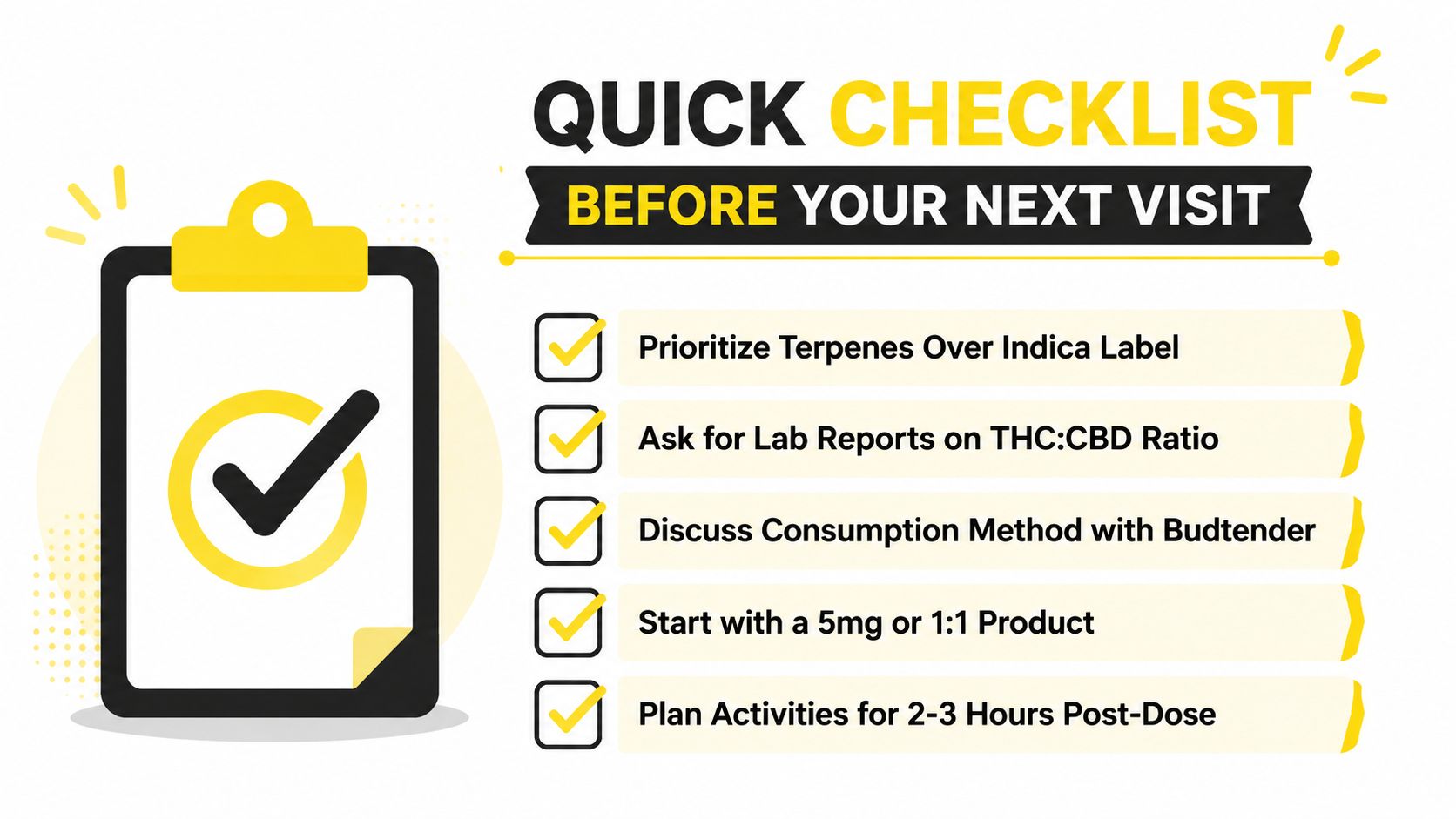
If you want a fast way to shop without getting lost in the labels, use this mental checklist. It keeps the decision tied to chemistry, not marketing language.
Screenshot this before you go
- Prioritize terpenes over the indica label.
- Ask for the lab report on THC:CBD ratio.
- Discuss the consumption method with the budtender.
- Start with a low-dose product, especially if you're unsure how a batch will land.
- Plan your next few hours so you can notice how the dose affects you.
A batch that works during the day usually has moderate THC, a terpene profile that doesn't lean too heavily on myrcene, and a format that gives you control. That combination can make an indica-leaning product feel calm, clear, and usable instead of sleepy. If you're stuck, ask the staff to help you compare a few current batches side by side.
The easiest next step is to bring this checklist to your next visit or delivery order and ask for the COA before you buy. If you want help narrowing it down, stop by or order from Mr. Nice Guys DC, and let the team walk you through the current menu and lab data so you can choose with confidence.
Mr Nice Guys DC
At Mr. Nice Guys DC, we’re more than just a cannabis delivery service — we’re passionate advocates for quality, convenience, and community. With years of experience in the cannabis industry, our team is dedicated to educating and empowering customers across Washington, D.C. Whether you're a seasoned user or just starting your cannabis journey, our blog delivers trusted tips, product insights, and the latest updates from the world of weed. Stay informed, stay elevated.
