
Must Be 21 To Enter
By entering this site you are agreeing that you are at least 21 Years of Age or older.
I AM 21 OR OLDERCannabis Tincture Side Effects: A Patient's Guide
.svg)

.png)
You're probably here because tinctures sound appealing, but the side effects feel murky. Maybe you want a smoke-free option, something discreet, something you can measure with a dropper instead of guessing with a joint or vape. Then you start reading words like psychoactive, sublingual, full-spectrum, onset, and suddenly a small bottle looks a lot less simple.
That hesitation is reasonable.
Getting into trouble with tinctures typically doesn't stem from them being uniquely harsh. It arises because the timing is easy to misunderstand. A few drops under the tongue can feel very different from the same few drops swallowed with tea or taken right before dinner. If you expect one timeline and your body follows another, you may think nothing is happening and take more too soon.
That's why cannabis tincture side effects make more sense when you think about them as a dosing and timing problem first, not just a symptom list. Once you understand how THC and CBD differ, how onset changes with the way you take a tincture, and how to titrate slowly, tinctures usually become one of the more controllable ways to use cannabis.
Your Introduction to Cannabis Tinctures
A tincture is a liquid cannabis extract, usually taken with a dropper. Many people choose tinctures because they want something smoke-free, easier to dose, and simpler to fit into a daily routine. A patient might place a measured amount under the tongue before bed, or add it to a drink and use it more like an edible.
That flexibility is useful, but it also creates confusion.
The same bottle can behave differently depending on whether you hold it under your tongue or swallow it right away. That's one reason new patients often feel unsure. They're not just choosing a product. They're also choosing a delivery method without always realizing it.
If you want a deeper primer on how these products work in the body, this overview of the science behind marijuana tinctures and their effects is a helpful companion read.
Why tinctures feel easier, until they don't
A dropper makes tinctures look precise, and they can be. But a measuring tool only helps if you know what you're measuring and how long to wait. Think of a tincture like a faucet with a delay in the pipes. You turn the handle, but the water doesn't always arrive instantly. If you keep turning because nothing seems to happen, you may end up with a flood.
That's how many uncomfortable reactions start.
Many people call something a “side effect” when it's really a stronger-than-intended main effect from taking too much, too soon.
A calmer way to think about safety
You don't need to memorize every possible reaction to use tinctures more safely. You need a simple framework:
- Know the cannabinoid. THC and CBD don't affect you the same way.
- Know the route. Under the tongue and swallowed are not interchangeable.
- Know the pace. Your body may be slower than your expectations.
- Know your goal. Relief, sleep support, and relaxation can each call for a different approach.
That framework makes tinctures much less intimidating. It also helps you recognize that many cannabis tincture side effects are preventable with better timing, smaller starting doses, and a more patient first trial.
How THC and CBD Tinctures Affect You Differently
THC and CBD are often mentioned together, but they don't create the same experience. If cannabis tinctures were tools, THC would be the tool that changes perception more noticeably, while CBD would be the tool that usually works without an intoxicating “high.”
That difference matters because the side effect pattern usually follows the cannabinoid profile.
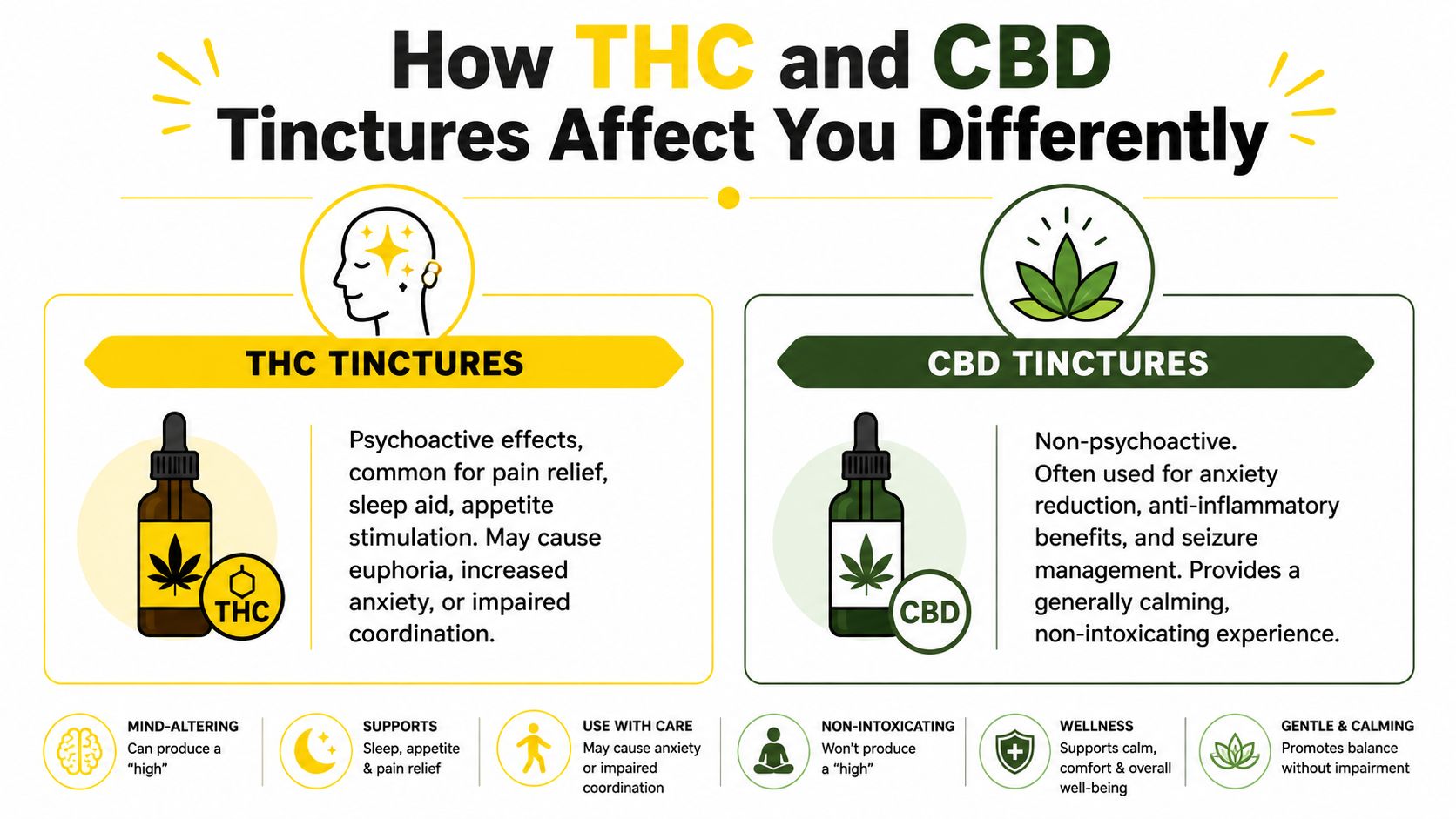
THC tinctures
THC-dominant tinctures are more likely to produce psychoactive effects. The FDA notes that THC-dominant cannabis products can be associated with anxiety, paranoia, increased heart rate, dizziness, dry mouth, and fatigue, while CBD-dominant products are non-intoxicating but can still cause side effects that often improve when the dose is reduced or use is stopped, as described in the FDA's consumer guidance on products containing cannabis or cannabis-derived compounds.
In plain terms, THC is more likely to make someone say, “I feel this in my head, my body, and my mood.”
A practical example helps. If someone takes a THC tincture hoping to relax after work, they may feel pleasantly settled at one dose. At a higher dose, that same person might feel mentally “too aware,” shaky, or uneasy. The product didn't suddenly become dangerous. The dose crossed from helpful into uncomfortable for that person.
CBD tinctures
CBD-dominant tinctures are usually chosen by people who want a non-intoxicating option. That doesn't mean they're side-effect free. CBD can still cause somnolence, diarrhea, decreased appetite, irritability, and agitation, according to the FDA guidance above.
That surprises some patients. They expect “no high” to mean “no downside.” But CBD still has a real safety profile. It is a different one.
A simple way to remember it is this:
- THC side effects often feel mental and sensory
- CBD side effects often feel sedating or digestive
THC vs. CBD tincture side effects at a glance
| Potential Side Effect | Primarily Associated with THC | Primarily Associated with CBD |
|---|---|---|
| Anxiety or paranoia | Yes | Less typical |
| Increased heart rate | Yes | No typical association |
| Dizziness | Yes | Can happen, but less defining |
| Dry mouth | Yes | Less defining |
| Fatigue or feeling slowed down | Yes | Can happen |
| Somnolence | Less defining | Yes |
| Diarrhea | No typical association | Yes |
| Decreased appetite | Less defining | Yes |
| Irritability or agitation | Less defining | Yes |
If you're still deciding between these two categories, this guide explaining CBD vs. THC can help you match the product type to your goals.
A tincture label tells you more than strength. It tells you what kind of side effects you should prepare for.
Where people get mixed up
A balanced tincture can blur the line. Some products contain both THC and CBD, so patients may expect CBD to “cancel out” all THC effects. Sometimes the combination feels smoother, but it doesn't erase the possibility of dose-related THC discomfort.
That's why reading the label matters. If a tincture is THC-dominant, treat it like a THC product. If it's CBD-dominant, don't assume it can't cause drowsiness or digestive issues. Clear expectations reduce surprise, and reduced surprise usually means fewer stressful experiences.
Why Dose and Administration Method Matter Most
The biggest mistake people make with tinctures is thinking the bottle determines the experience. Usually, dose and how you take it matter more.
A tincture isn't like a light switch. It's more like a dimmer. Small adjustments can change the effect a lot, especially with THC. A low amount may feel subtle and useful. A larger amount from the very same bottle may feel overpowering.
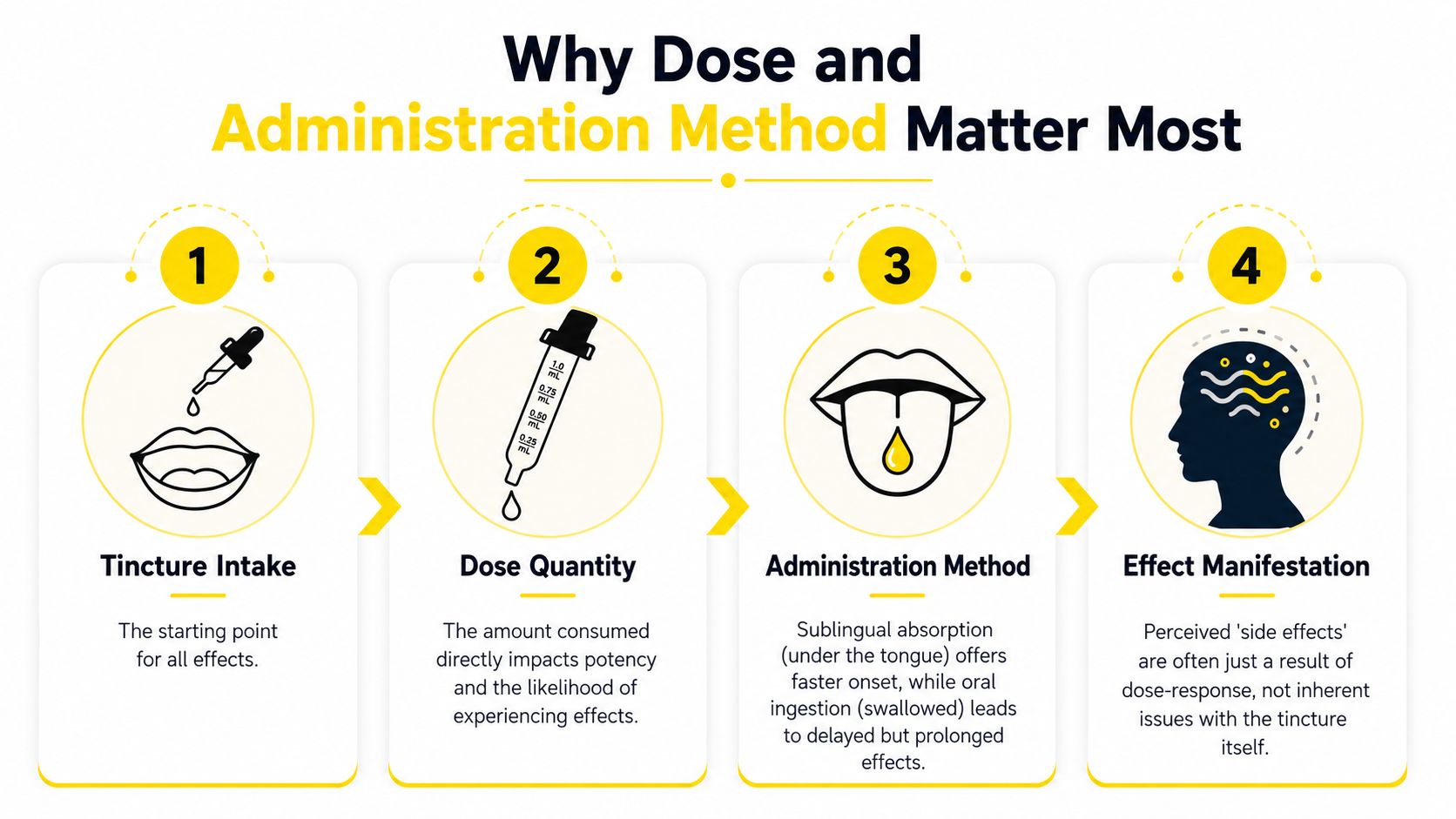
Under the tongue versus swallowed
Much confusion begins here.
Tinctures used sublingually are absorbed under the tongue and typically begin working in about 15 to 45 minutes, peak around 45 to 90 minutes, and may last roughly 4 to 8 hours, according to this discussion of THC tinctures versus edibles. That same source notes that alcohol-based tinctures can cause local mouth burning, and taking them on an empty stomach may worsen upset stomach and dizziness.
Swallowed tinctures behave more like an edible. The effect may feel later and can be harder for a new user to judge in real time.
Why the same dose can feel different
Take two patients using the same tincture:
- Patient A holds it under the tongue and waits.
- Patient B squeezes it into a drink and finishes it quickly.
They may have very different timelines and very different impressions of “how strong” the tincture is, even if the measured amount was identical.
That's why many reports of cannabis tincture side effects are really reports of mismatched expectations.
A practical example
Suppose someone wants a light evening effect and takes a small measured amount under the tongue. If they sit still, eat a normal meal, and wait, they may notice a gentle shift and stop there.
Now change just one variable. The same person swallows that amount, feels nothing right away, gets impatient, and takes more. Later, both doses arrive. What felt “weak” at first can suddenly feel too strong.
If you want a more product-specific walkthrough, this cannabis tincture dosing guide is useful for tracking intake and response over time.
Practical rule: Don't judge a tincture by the first few minutes. Judge it by whether you gave it enough time to show you what it does.
Two overlooked details
- Empty stomach effects. Some people feel more dizzy or unsettled when they take a tincture without food.
- Alcohol base sensitivity. Some tinctures can sting in the mouth. That irritation isn't necessarily a cannabis reaction. It may be the formulation base.
Patients often feel reassured when they separate these variables. It's easier to solve “I swallowed it and redosed too early” than “my body can't handle tinctures.”
Common and Rare Side Effects to Know
Once people understand timing and dose, the symptom list becomes easier to interpret. Some cannabis tincture side effects are common and manageable. Others feel more alarming and deserve more caution, especially with THC-heavy products.
The useful question isn't just “What can happen?” It's “What does this usually mean?”

Common and manageable reactions
A clinical consumer guide reports that tincture effects are often felt within 15 to 45 minutes and common side effects can include rapid heartbeat, dizziness, dry mouth, red eyes, slowed reaction time, impaired balance, anxiety, and paranoia, with more serious adverse outcomes linked to orally consumed cannabis products containing 50 mg or more of THC in this guide comparing tinctures and edibles.
Those symptoms can sound dramatic on paper, but many are familiar cannabis effects rather than signs of danger.
A few practical examples:
- Dry mouth. Keep water nearby before you dose, not after you already feel uncomfortable.
- Dizziness. Sit down, avoid standing quickly, and give your body time to settle.
- Red eyes. This can be annoying but usually isn't harmful.
- Slowed reaction time or impaired balance. Don't drive, don't multitask, and don't assume “I feel okay” means your coordination is normal.
More distressing reactions
Anxiety, paranoia, and rapid heartbeat usually create the most fear. These tend to be associated more strongly with THC, especially when the dose is too high for the person taking it.
That doesn't always mean the product is wrong for you forever. It may mean one of these was off:
- The amount was too high
- You took more before the first dose fully landed
- The setting made you more uneasy
- You expected a mild effect and got a strong one
If a patient feels “too high,” the experience is often temporary, but it can still feel very real and very intense in the moment.
What helps in the moment
If you feel uncomfortable after a tincture, simplify everything.
- Sit somewhere quiet. Reduce stimulation.
- Sip water. Small sips are easier than chugging.
- Remind yourself it will pass. That matters more than people think.
- Avoid adding more cannabis. Don't try to “fix” the feeling by guessing.
The goal is not to fight the sensation. It's to stop escalating it.
Why symptom lists can mislead
A long list of side effects can make tinctures seem unpredictable. In practice, a lot of these reactions cluster around one core issue: too much THC, too quickly, with too little patience.
That's why reading symptom lists without understanding dosing can increase anxiety. People start watching for every possible reaction instead of preventing the most common cause.
A Practical Guide to Safe Dosing and Harm Reduction
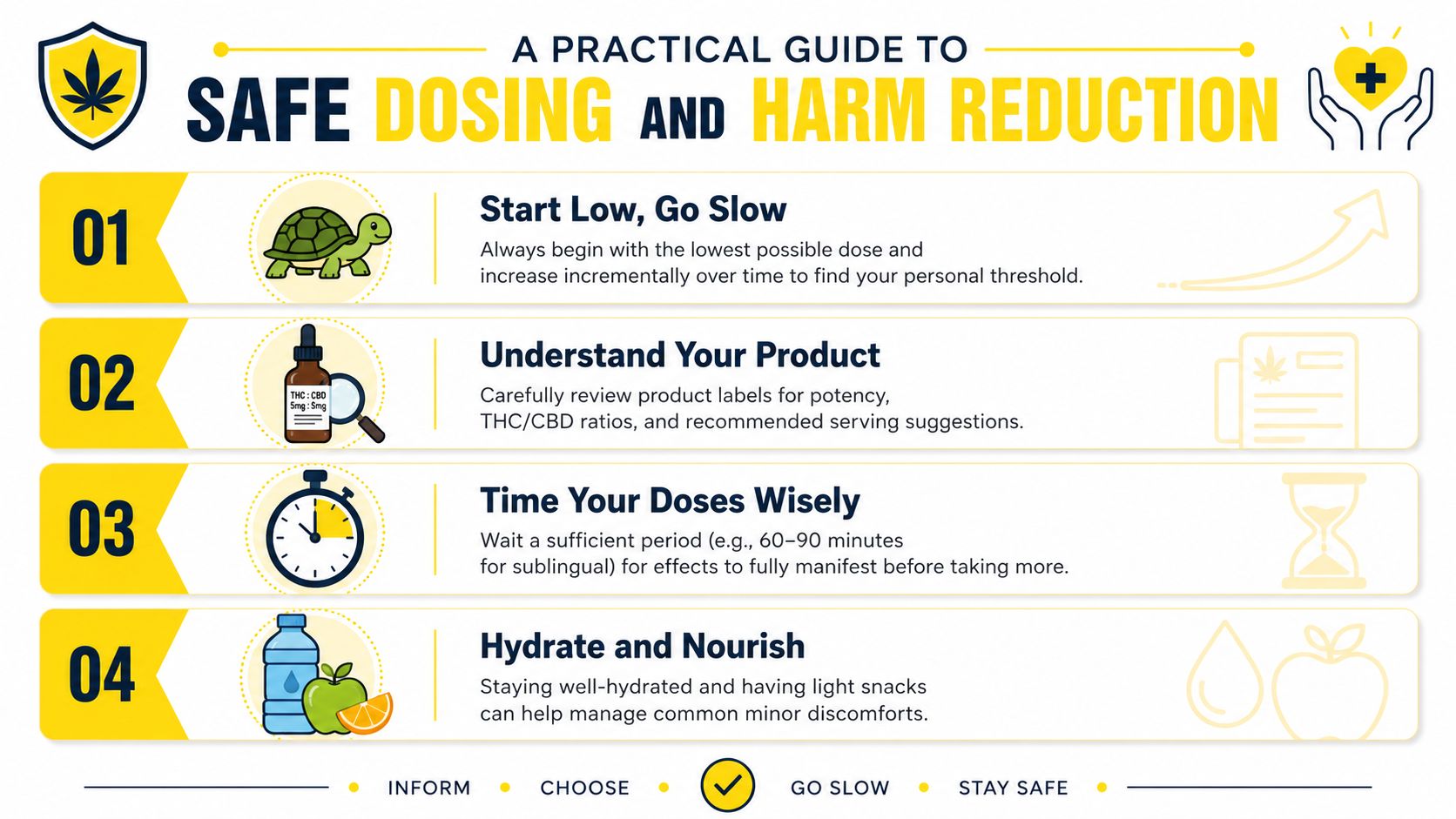
If there's one rule worth remembering, it's this: start low and go slow. With tinctures, patience is not a personality trait. It's a safety tool.
Many uncomfortable reactions happen because a user feels nothing, assumes the dose was too small, and takes more before the first amount has fully taken effect.
A dispensary guide notes that swallowed tinctures may take about 45 to 90 minutes to work, while sublingual use is faster at roughly 15 to 30 minutes, and many “side effects” are really dosing errors from delayed onset that lead to early redosing, anxiety, tachycardia, or excessive sedation, as explained in this overview of what cannabis tincture is and how timing affects the experience.
Here's a visual summary to keep the basics straight.
A safer first trial
Try your first new tincture at home, on a day when you don't need to drive or make important decisions. Eat something light beforehand if you know you tend to get dizzy on an empty stomach.
Then follow a calm routine:
- Read the label carefully. Confirm whether it's THC-dominant, CBD-dominant, or balanced.
- Measure a small starting amount. Don't eyeball it.
- Choose one route. Under the tongue or swallowed. Don't mix methods on the first try.
- Wait fully. Give the product enough time before making any judgment.
- Write down what happened. Note when you first noticed effects and whether the result felt too light, about right, or too strong.
Why impatience causes most problems
Think of a tincture like slow-cooking rice. Lifting the lid every minute doesn't make it cook faster. Adding more ingredients halfway through because “nothing's happening” usually makes the final result worse.
That's what redosing too early does.
If you want a product-specific education resource, Mr. Nice Guys DC's tincture article on whether you can smoke tincture also helps clarify how these products are meant to be used and why route matters.
Small habits that reduce risk
- Pick a steady environment. Your first trial shouldn't happen before a crowded event or stressful obligation.
- Hydrate and eat lightly. This won't eliminate all side effects, but it can make the experience easier.
- Don't combine with guesswork. New tincture, unfamiliar setting, and no meal is a poor trio.
- Keep the evening simple. If your only task is noticing how you feel, you're less likely to panic about normal changes.
The video below gives another basic safety overview that many patients find useful before trying a tincture for the first time.
Go slowly enough that your notes teach you something. If you change dose, timing, and setting all at once, you won't know what caused the outcome.
Potential Drug Interactions and Medical Cautions
This is the part many patients skip, and they shouldn't.
Cannabis products don't exist in a vacuum. If you take prescription medications, especially on a regular schedule, tinctures can complicate the picture. A useful analogy is the grapefruit warning on some medications. Grapefruit can affect how the body processes certain drugs. Cannabis, especially CBD, may raise similar concerns because it can affect the same liver enzyme system that helps metabolize many medications.
You don't need to become a pharmacologist to act safely. You do need to treat this as a real medical question, not a minor detail.
Why CBD deserves extra caution
Many people assume CBD is the simpler choice because it's non-intoxicating. But the safety data show that side effects are common enough to define a meaningful profile. A review of cannabidiol research reported that 59% of parents in one survey noted adverse events, 47% in a retrospective pediatric series reported adverse events, and 88% of patients in one long-term treatment group experienced treatment-emergent adverse events, with 33% experiencing severe adverse events. The most frequent problems were diarrhea, decreased appetite, vomiting, and sedation, which aligns with FDA warnings, as summarized in this review of CBD's therapeutic effects and adverse effects.
That doesn't mean CBD is unsafe for everyone. It means “non-intoxicating” should not be confused with “medically trivial.”
When to call your doctor or pharmacist
Talk with a clinician before using a tincture if you:
- Take blood thinners
- Use antidepressants or mood medications
- Take seizure medications
- Have a history of serious mental health symptoms
- Are already prone to strong sedation or appetite changes
This is not optional.
Bring the exact product label if you can. A doctor or pharmacist can help more if they know whether the tincture is THC-heavy, CBD-heavy, or mixed, and how you plan to take it.
Navigating Tinctures Safely in Washington DC
For DC-area patients, the main takeaway is simple. Tinctures can be one of the more controllable cannabis formats, but only when you respect the timing. Those who have a rough first experience didn't fail at cannabis. They moved too fast, misunderstood the route, or expected immediate feedback from a product that unfolds more gradually.
That's good news, because those are solvable problems.
A safer approach looks like this:
- Choose the right cannabinoid profile for your goal
- Use one administration method at a time
- Wait long enough before taking more
- Track your response instead of relying on memory
- Ask questions before experimenting
For patients in Washington, DC, that education piece matters as much as the product itself. If you're comparing options or trying to decide whether a tincture fits your routine, this medical cannabis tincture guide can help you think through practical use.
You don't need to approach tinctures with fear. You need to approach them with a plan. When you do, cannabis tincture side effects stop feeling random and start looking much more predictable.
If you'd like help choosing a tincture, understanding a label, or talking through safe first-use questions, Mr. Nice Guys DC is available as a local resource for Washington, DC patients and adult consumers who want straightforward guidance before they buy.
Mr Nice Guys DC
At Mr. Nice Guys DC, we’re more than just a cannabis delivery service — we’re passionate advocates for quality, convenience, and community. With years of experience in the cannabis industry, our team is dedicated to educating and empowering customers across Washington, D.C. Whether you're a seasoned user or just starting your cannabis journey, our blog delivers trusted tips, product insights, and the latest updates from the world of weed. Stay informed, stay elevated.
