
Must Be 21 To Enter
By entering this site you are agreeing that you are at least 21 Years of Age or older.
I AM 21 OR OLDERCan You Smoke Tincture? Unpacking the Risks and Safe Alternatives
.svg)

.png)
Let's get right to it: No, you should absolutely not smoke a cannabis tincture. This is one of those questions we hear from time to time, and the answer is always a hard no. Tinctures are liquid extracts made for oral or sublingual (under the tongue) use, and trying to smoke or vape them is not only a waste of good product but can be genuinely dangerous.
Why You Cannot Smoke Tincture
Think of it like this: trying to smoke a tincture is like putting a liquid vitamin in a pipe and lighting it up. It just doesn't make sense. The product is in the wrong form for that method. It was never designed to be heated to combustion temperatures, and doing so will destroy the very compounds you’re after while creating some nasty byproducts you definitely don't want to inhale.
Tinctures are made by infusing cannabis into a carrier liquid, which is almost always either alcohol or some type of oil. These carriers are fantastic for absorbing cannabinoids and delivering them through your digestive system, but they are absolutely not safe to inhale.
The Problem with the Base Ingredients
The real issue boils down to that carrier liquid. Each type brings its own set of risks when you try to heat and inhale it—risks you don't face when smoking regular cannabis flower.
Alcohol-Based Tinctures: These are highly flammable, for starters. Putting a flame to an alcohol-based liquid can cause a dangerous flare-up. For a practical example, imagine putting a few drops of high-proof rum into a pipe and lighting it—you’d get a small, dangerous flame and harsh fumes, not a smooth smoke.
Oil-Based Tinctures: This is even more hazardous. Carriers like MCT oil, coconut oil, or olive oil are great for edibles but terrible for your lungs. When heated and inhaled, these oils can coat your lung tissue, which can lead to serious respiratory problems like lipid pneumonia. For instance, attempting to smoke an MCT-based tincture is functionally similar to inhaling aerosolized cooking oil, something no one would ever recommend for respiratory health.
The core takeaway is simple: Tinctures are formulated for your digestive system, not your respiratory system. Using them as intended is key to both safety and effectiveness.
This is a crucial distinction for anyone exploring cannabis products, especially if you're looking for reliable therapeutic benefits from a trusted spot like Mr. Nice Guys DC. While the desire for fast-acting effects might make smoking seem like a shortcut, it's essential to use products as they were designed. It keeps you safe and ensures you get the experience you're actually paying for.
To put it all in perspective, let's break down the core differences between using a tincture properly and smoking.
Tincture Use vs Smoking: A Quick Comparison
This table really highlights why these two methods are worlds apart. Each is designed for a completely different purpose and pathway into your system.
As you can see, the two are fundamentally different. Trying to make one act like the other isn't just ineffective—it ignores the science behind how they work.
What Exactly Goes into a Cannabis Tincture?
To really get why you can’t smoke a tincture, you have to look inside the bottle. A tincture isn't just pure cannabis concentrate; it's a liquid formula built for a very specific job—and that job isn't combustion. The good stuff from the cannabis plant, like THC and CBD, is infused into a carrier liquid that keeps it stable and helps your body absorb it.
Think of the carrier liquid as a delivery truck. Its whole purpose is to get its precious cargo—the cannabinoids and terpenes—to its destination safely. That destination is either your bloodstream (through sublingual absorption) or your digestive system. Trying to smoke it is like setting the delivery truck on fire. You end up destroying both the vehicle and everything valuable inside.
The Two Main Types of Tincture Carriers
Tinctures typically rely on one of two "delivery trucks," or carrier liquids. Each one is picked because it's great at dissolving and preserving cannabis compounds for oral use, not because it’s safe to burn and inhale.
Alcohol-Based Tinctures: This is the old-school method. High-proof, food-grade alcohol like ethanol is a fantastic solvent, easily stripping all the cannabinoids and terpenes from the plant material. The final product is a potent liquid that your body absorbs super fast when dropped under the tongue.
Oil-Based Tinctures: The more modern approach uses a carrier oil. You'll commonly see MCT (medium-chain triglyceride) oil from coconuts, but olive oil or hemp seed oil are also popular. These oils are easy for your body to process through digestion and are often preferred because they taste a lot milder than straight-up alcohol.
Both of these are a terrible idea to smoke. Alcohol is obviously flammable and creates some nasty fumes, while inhaling burnt oil poses a serious risk to your lungs.
Full-Spectrum, Broad-Spectrum, and Isolate
Beyond the carrier liquid, the type of cannabis extract inside also defines the tincture. This part determines the cocktail of plant compounds you get in every single drop.
- Full-Spectrum: This extract has it all—every cannabinoid, terpene, and other compound found in the original cannabis plant, including trace amounts of THC. The idea here is to create an "entourage effect," where all the compounds work together to amplify the benefits. A practical example would be a tincture used for chronic pain, where the combined effect of THC, CBD, and minor cannabinoids provides more comprehensive relief than CBD alone.
- Broad-Spectrum: This is almost identical to full-spectrum, containing that same rich mix of cannabinoids and terpenes, but with one key difference: the THC has been completely removed. It’s a go-to for people who want the entourage effect without any psychoactive component. For instance, a first responder might use a broad-spectrum CBD tincture for stress relief without worrying about failing a drug test.
- Isolate: This is the purest form available. It contains only one specific, isolated cannabinoid (like CBD or THC) and nothing else. Every other plant compound has been stripped away. A common practical use is in products for athletes who need pure CBD for muscle recovery and want zero risk of consuming other cannabinoids.
Each of these formulas is carefully crafted to be absorbed orally. If you want to nerd out on the chemistry, you can learn more about the science behind marijuana tinctures and their effects in our detailed guide. Once you understand the ingredients, it’s crystal clear why these products are made for dropping, not smoking.
The Unsafe Science of Burning Tinctures
Applying a flame to a liquid that was never designed for combustion is where the question "can you smoke tincture" goes from a simple "no" to a hard "absolutely not." When you try to burn a tincture, you're setting off a chain reaction of nasty chemical changes that are not just ineffective, but genuinely dangerous.
The basic makeup of a tincture is pretty simple: you have a carrier liquid holding all the valuable cannabinoids.
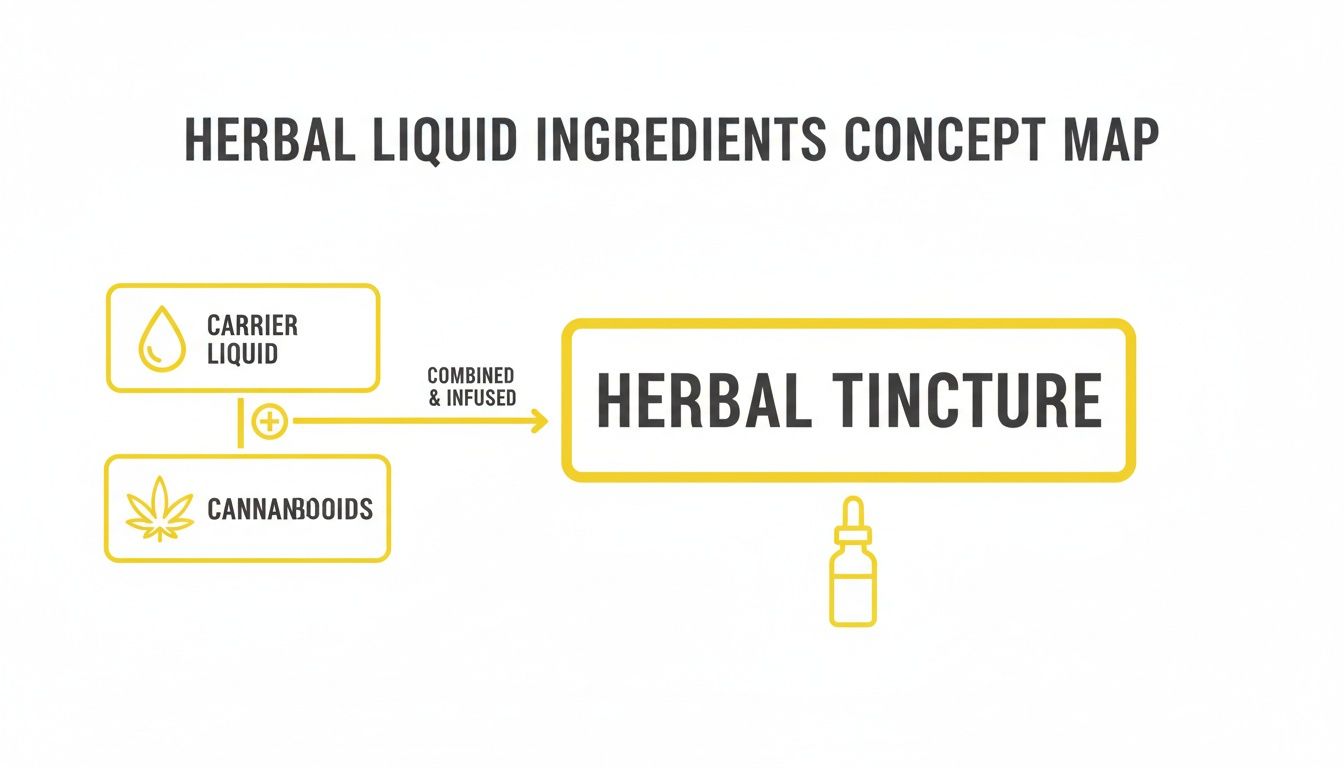
This visual really drives home the point that the final product is a blend. And understanding that blend is the key to seeing why smoking it is such a bad idea. It’s that carrier liquid—the alcohol or oil—that becomes the main problem when you introduce a flame.
The Fire Hazard of Alcohol-Based Tinctures
Let's start with the obvious one. Alcohol-based tinctures are a straight-up fire risk. The high-proof ethanol used to make them has a really low flashpoint, which means it doesn't take much more than a spark to get it to ignite.
Trying to smoke it is basically like putting a highly flammable liquid in your bowl and lighting it. For example, some tinctures use 190-proof alcohol; putting a lighter to that in a pipe right near your face is asking for a dangerous flare-up that could seriously burn your face, hands, or whatever is around you. Even if you avoid a fireball, you’re just going to be inhaling harsh, nasty alcohol fumes. That's a great way to wreck your throat and lungs while torching the very cannabinoids you wanted in the first place.
The Hidden Danger of Burning Oil
The risk with alcohol is fire, but the danger with oil-based tinctures is a bit more sneaky—and maybe even worse. When carrier oils like MCT, coconut, or olive oil get heated to combustion temperatures, they don't just vaporize cleanly. Instead, they create an aerosol of tiny, superheated oil droplets.
Inhaling these heated oil particles can lead to a serious medical condition called lipoid pneumonia. This happens when fat particles (lipids) build up in your lungs. Your body freaks out, triggering inflammation and causing severe, potentially long-term respiratory damage.
A practical example of this danger emerged during the 2019 vaping crisis, where illicit THC vape cartridges were cut with Vitamin E acetate—a type of oil. Inhaling that oil led to severe lung injuries for hundreds of people. While the oil in a tincture is different, the principle is the same: your lungs aren't meant to process inhaled fats.
This condition is a direct result of putting fats into an organ that was only ever designed to handle gas exchange, not process oils. It’s also important to remember that the cannabinoids themselves behave differently depending on their chemical structure, which you can learn more about by exploring THCA vs THC and what every DC patient needs to know.
The bottom line is simple: the chemical properties of carrier liquids make them totally wrong for inhalation. Burning a tincture doesn’t just waste your money by incinerating the good stuff; it creates real health hazards that aren't worth any perceived benefit.
How to Use Tinctures the Right Way
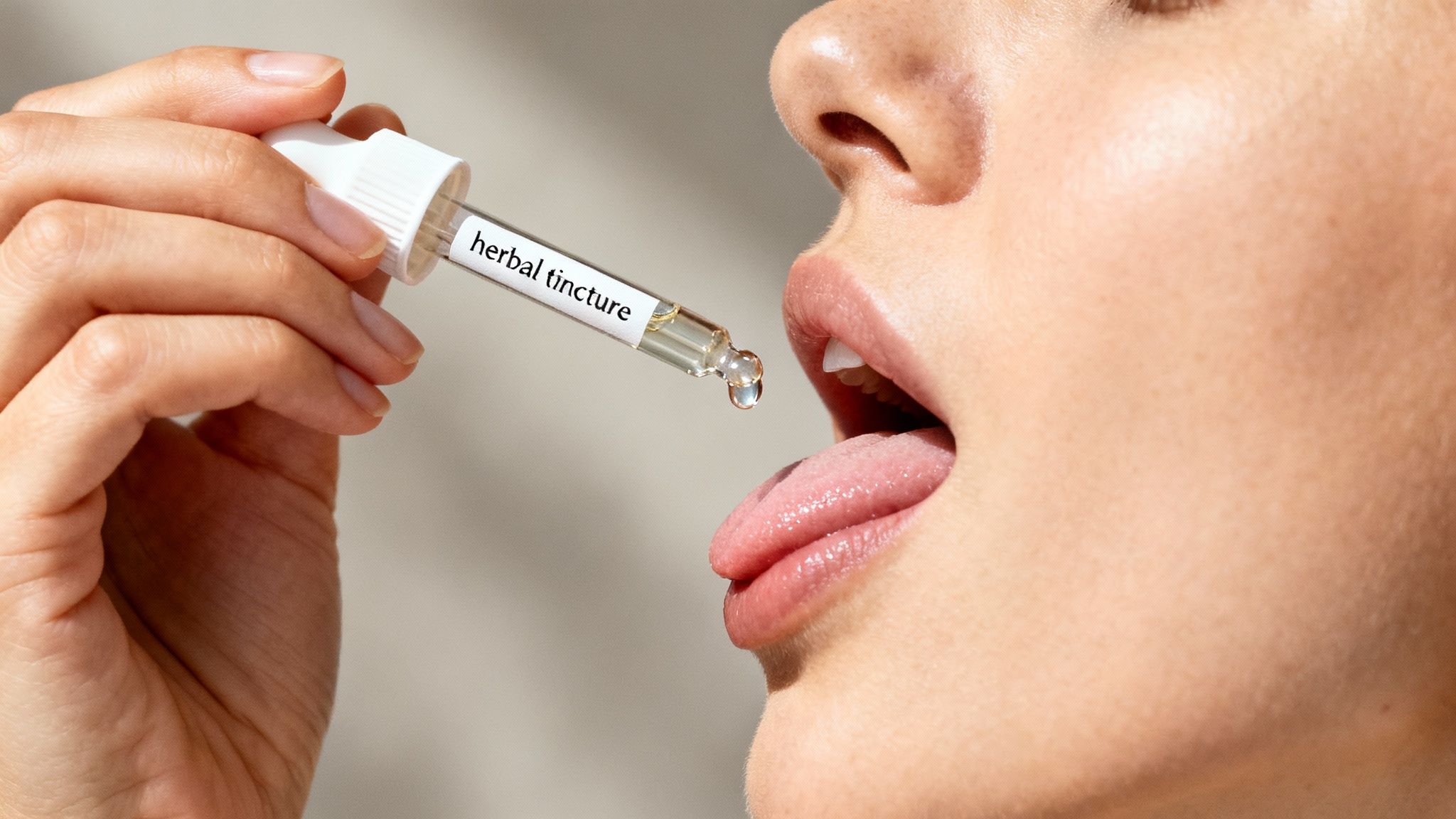
Now that we've established why tinctures and flames are a terrible mix, let's talk about how to unlock their actual potential. When you use them correctly, tinctures are hands-down one of the most reliable and efficient ways to consume cannabis. The secret is all in the technique: sublingual administration.
It sounds fancy, but it's really simple. You just place the liquid directly under your tongue. This area is packed with capillaries—tiny blood vessels right near the surface—that act like an express lane into your bloodstream. By holding the tincture there, you let the cannabinoids bypass your digestive system for a faster, cleaner, and more potent effect.
A Step-By-Step Guide to Sublingual Use
Using a tincture is pretty straightforward, but a few small details can make a huge difference. Nail this simple process, and you'll get consistent, predictable results every single time.
- Prep Your Dose: First, give the bottle a good shake to make sure everything is mixed well. Squeeze the dropper's bulb and let it fill up with the tincture. Most droppers have measurement markers to help you get the exact amount you need. For example, if your target dose is 5mg and the tincture has 10mg per 1ml, you'd fill the dropper to the 0.5ml mark.
- Administer Under the Tongue: Gently place the tip of the dropper under your tongue and squeeze the bulb to release the liquid. Pro tip: try not to let the dropper touch your mouth. This keeps things sanitary and prevents any contamination.
- Hold and Absorb: This is the most crucial part. You need to hold that liquid under your tongue for at least 60-90 seconds before you swallow. The longer you can hold it, the more cannabinoids get absorbed directly into your system. As a practical tip, try looking in a mirror while you do it to make sure the liquid stays pooled under your tongue.
- Swallow What's Left: After you’ve held it, just swallow whatever is remaining. Any cannabinoids left over will get processed through your digestive system, kind of like an edible, giving you a secondary, longer-lasting wave of effects.
Remember, patience is key here. The whole point of holding the liquid is to maximize that direct sublingual absorption. If you swallow too early, you're just sending more of it through your liver, which slows everything down and can even change the effects.
Onset and Duration: What to Expect
The experience you get from a tincture is totally different from other methods. For a practical example, a patient using a tincture for arthritis might take their dose in the morning and experience steady relief that lasts through their workday, a much different experience than the rapid but shorter-lived effects of smoking.
At Mr. Nice Guys DC, you can find options that let you microdose as low as 3mg (0.10ml) for subtle relief or go up to 60mg (2ml) for more significant effects. The best part? The onset time is usually just 15-30 minutes.
Here’s a quick rundown of what you can expect:
- Onset Time: Effects from sublingual use typically kick in within 15 to 45 minutes. It's way faster than an edible but not quite as instant as inhalation.
- Duration: The effects are impressively long-lasting, sticking around for about 4 to 6 hours. This provides sustained relief without needing to constantly re-dose.
This predictable and controlled experience is exactly why tinctures are a staple in so many wellness routines. If you want to take a deeper dive, you can learn more about weed tincture effects and their benefits. Whether you’re managing chronic pain with a 1:1 THC:CBD blend or microdosing to keep daily anxiety in check, using your tincture the right way is the first step toward getting the results you want.
Safer Alternatives for Fast-Acting Effects
So, you're looking into smoking tinctures because you want fast results. I get it. But let's pump the brakes for a second. There are much safer—and frankly, way more effective—ways to get that rapid onset you're after.
These methods are actually designed for inhalation, delivering immediate effects without forcing you to mess with burning carrier oils or alcohol. If you enjoy the ritual and instant feedback of smoking, modern cannabis tech offers some fantastic alternatives.
Vaping Concentrates and Cartridges
Vaping is a go-to for a reason. Instead of burning plant matter, it gently heats cannabis oil until it creates a vapor. This process, called vaporization, dodges the combustion that creates all the tar and carcinogens linked to traditional smoking. It’s a cleaner, smoother experience that’s a lot easier on the lungs.
Vape products come in a couple of common forms, each with its own vibe:
- Disposable Vape Pens: These are the ultimate grab-and-go option. They come pre-charged and pre-filled with cannabis oil. No setup, no fuss, making them perfect for beginners or anyone needing convenience. A practical example is a tourist in DC who wants a simple, discreet way to consume cannabis without buying a bunch of gear.
- 510-Thread Cartridges: This is the industry standard. These pre-filled cartridges screw onto a rechargeable battery, giving you access to a massive variety of strains and formulas. For instance, a medical patient might keep a calming Indica cartridge and an uplifting Sativa cartridge to switch between depending on their symptoms.
Here's the most important takeaway: vape oil is made specifically for vaping. Unlike tinctures, it contains no carrier oils like MCT or olive oil, which makes it safe to inhale when heated with a proper device.
Traditional Cannabis Flower
Of course, you can't go wrong with the classics. Smoking high-quality cannabis flower is the most traditional way to consume cannabis, and it provides that immediate onset of effects that so many people love. The options are endless and cater to just about every preference out there.
For instance, you could use:
- Pipes or Bongs: A straightforward way to smoke dried flower. Bongs add water filtration to the mix, which helps cool the smoke for a smoother hit.
- Pre-Rolls: For pure convenience, nothing beats a pre-roll. These are professionally rolled joints, ready to go right out of the package. Perfect for a quick, no-mess session. As a practical example, someone heading to a social gathering might grab a pack of pre-rolls to easily share with friends.
Choosing between vaping and smoking flower really just boils down to personal taste. Vaping offers a cleaner flavor profile and more discretion, while flower provides that full-spectrum, classic experience. If you want to dig deeper, you can check out a full comparison of edibles vs. vapes vs. flower to figure out what fits your lifestyle.
Ultimately, both are infinitely safer and more effective for rapid relief than trying to smoke a tincture.
Finding Your Perfect Product at Mr Nice Guys DC
So, let's circle back to the main question: can you smoke a tincture? The answer is a hard "no." Tinctures are fantastic tools for wellness, but only when you use them the way they were designed—under the tongue. Trying to smoke one is more than just a waste of a good product; it's a genuine health risk that gives you zero payoff.
Knowing this puts you in the driver's seat of your own wellness journey. When you're checking out the selection at Mr. Nice Guys DC, you can now confidently decide what actually fits your needs. Are you looking for the slow, controlled, long-lasting relief a sublingual tincture offers? Or do you prefer the immediate effects you get from a much safer way to inhale, like flower or a vape?
Your Path to the Right Product
The whole point is to find what works for your body and your life. For some people, that’s going to be a precisely dosed tincture they take every day for consistent support. For others, it might be premium cannabis flower or a top-shelf vape cartridge.
There’s no single “best” product out there—only the one that’s best for you. The most important thing you can do is talk to people who know their stuff and can help you sort through all the options.
Your wellness is a personal journey. The right product should align with your health goals, lifestyle, and comfort level, ensuring a positive and effective experience every time.
The team here at Mr. Nice Guys DC is all about education and safety. Our staff has been around the block and can answer your questions, break down the real differences between products, and point you toward something that actually delivers the effects you’re after without putting your health on the line.
Whether you’re a long-time patient or just starting to explore cannabis, we're here to help you make a smart choice. To see what's on the shelves, you can learn more about cannabis products at Mr. Nice Guys DC in our detailed guide.
A Few More Questions We Get About Tinctures
We've walked through a lot, but a few common questions always pop up. Let's tackle them head-on to make sure everything's crystal clear.
So, Can You Vape a Tincture Instead?
That’s a hard no. Vaping a tincture is just as risky as trying to smoke it. Most tinctures use carrier oils like MCT or coconut oil, which will absolutely wreck the coils in a vape pen. But more importantly, inhaling heated oils can lead to a nasty lung condition called lipoid pneumonia.
Even alcohol-based tinctures are a no-go. Their high flammability makes them completely unsafe for any kind of vaporizer. The bottom line is simple: only use products specifically made for vape pens.
What if I Just Put a Few Drops on My Flower?
We hear this one a lot, but it’s another idea that’s best avoided. Putting oil-based tincture drops on your cannabis flower just brings you back to square one—inhaling burnt lipids, which is no good for your lungs. If it's an alcohol-based tincture, the flame will just burn off the alcohol and destroy the cannabinoids instantly.
Stick to the script for the best results. Tinctures go under the tongue for steady, long-lasting effects. Flower is meant for smoking or vaping. Mixing them up this way is both a waste and a risk.
Is RSO the Same Thing as a Tincture?
Nope, Rick Simpson Oil (RSO) and tinctures are two different things, though they're often used in similar ways. RSO is a super thick, highly potent, full-spectrum cannabis extract. A tincture, on the other hand, is that extract (or a similar one) diluted in a carrier liquid like oil or alcohol to make dosing much easier.
Both are made for oral or topical use—never for inhalation. You should never smoke or vape RSO or any kind of tincture. The health risks from inhaling burnt carriers or concentrated plant material just aren't worth it.
Ready to find the right product for your needs? The crew at Mr. Nice Guys DC can walk you through our top-shelf selection of safe, effective tinctures, vapes, and flower. Check out what we have in stock today at our online menu.
Mr Nice Guys DC
At Mr. Nice Guys DC, we’re more than just a cannabis delivery service — we’re passionate advocates for quality, convenience, and community. With years of experience in the cannabis industry, our team is dedicated to educating and empowering customers across Washington, D.C. Whether you're a seasoned user or just starting your cannabis journey, our blog delivers trusted tips, product insights, and the latest updates from the world of weed. Stay informed, stay elevated.
