
Must Be 21 To Enter
By entering this site you are agreeing that you are at least 21 Years of Age or older.
I AM 21 OR OLDERWhere Can I Buy Shrooms Online: Legal Paths and Safety Guide
.svg)

.png)
If ordering psilocybin mushrooms online seems as simple as adding a product to a cart, why can't buyers apply the same rules they use for ordinary wellness products? The gap between online visibility and lawful access is where many people get into trouble. Search results may show mushroom websites, spore vendors, gummies, or delivery claims, but those categories don't share the same legal or safety status.
The practical question isn't only where can I buy shrooms online. It's whether the product contains psilocybin, whether the seller can legally provide it in your jurisdiction, whether shipping crosses a legal boundary, and whether anyone has verified what's in the package. This guide separates those issues and points toward supervised research, regulated services where available, and compliant medical cannabis options in Washington, DC.
Buying Psilocybin Online: What Buyers Need to Know
Could a website selling “magic mushrooms” operate like an ordinary online store? The checkout page may look familiar, but psilocybin remains federally classified as Schedule I in the United States. Ordinary nationwide retail sales of psilocybin mushrooms or psilocybin-containing edibles generally aren't lawful. The compound inside the product, along with the laws applying to the buyer and seller, matters more than the site's design. JAMA Network Open's discussion of online psilocybin access and legal exposure explains why online visibility does not establish lawful availability.
Search results can also mix products with very different legal and safety profiles. A listing might describe spores, mushroom-growing supplies, functional mushroom products, or an edible marketed as psychedelic. These categories are not interchangeable. Some places allow sales of spores or non-psilocybin products, but that permission does not authorize selling or shipping mushrooms that contain psilocybin.
Why search results create confusion
Words such as “shop,” “delivery,” and “nationwide shipping” describe a seller's marketing, not its legal authority. They do not prove that the business has a license, that the product is lawful where you live, or that a package may legally cross state lines. A nationwide-shipping claim for psilocybin mushrooms is a major warning sign.
A buyer in one state might order an edible advertised as a mushroom gummy from a website in another. Local decriminalization may seem relevant, yet interstate shipping can raise federal issues. If the label is inaccurate, the buyer may not know whether the package contains psilocybin, another psychoactive compound, or no mushroom-derived ingredient.
Practical rule: Professional design, customer reviews, and a working payment process do not confirm legal compliance or product identity.
Online cannabis and mushroom markets can also follow different rules, as shown in this comparison of online weed marketplaces. Treat a searchable product as an unverified claim, not proof of lawful access. Check the exact substance, review the rules in your jurisdiction, and consider regulated medical cannabis services in DC when seeking a legal, more clearly documented option.
Understanding Psilocybin Legality by Jurisdiction
Why can a place reduce enforcement for psilocybin while an online order remains unlawful? The answer is that drug policy operates at several levels. In the United States, federal law remains the baseline risk because psilocybin is Schedule I. Ordinary online retail sales of psilocybin mushrooms or psilocybin-containing edibles are generally unlawful outside narrow, regulated programs. A local policy cannot erase federal restrictions or automatically authorize commercial shipping.
The U.S. policy timeline developed through separate city, state, and service models. Denver became the first U.S. city to decriminalize psilocybin mushrooms in 2019, followed by Oakland and Santa Cruz in California. In November 2020, Oregon voters approved Measure 109, creating the first state-licensed psilocybin services framework, and licensed services began in January 2023. These changes created limited or enforcement-focused pathways, not a nationwide online storefront. A psychedelics policy timeline from Prohibition Partners records those milestones.
Decriminalization isn't the same as retail access
Use four separate questions to assess a jurisdiction:
| Question | What it tells you |
|---|---|
| Is possession deprioritized locally? | Enforcement priorities may have changed, while sales remain prohibited. |
| Is the substance legal under state law? | State rules may create limited permissions without authorizing shipping. |
| Is there a licensed service framework? | Access may be limited to approved providers and supervised settings. |
| Can a website ship to you? | Product identity, seller authorization, and shipping laws require separate review. |
Oregon is notable for its state-level regulated therapy model, although regulated psilocybin therapy remains rare. Washington, DC's local policy history is discussed in this guide to Initiative 71. That history should not be treated as permission to order psilocybin products online. A website's ability to accept payment or display a shipping menu does not establish legal authority.
International rules also vary. The 1971 UN Convention on Psychotropic Substances helped shape international controls. Australia legalized certain psychedelics for medical use in 2023, including psilocybin for treatment-resistant depression, and the Czech Republic approved psilocybin therapy for medical use in 2026. These medical pathways do not create ordinary consumer e-commerce access. In conventional, non-psychedelic mushroom markets, online retail is projected to be the fastest-growing channel, with a 10.7% compound annual growth rate from 2025 to 2033, according to Odyssey PBC's overview of psilocybin criminalization and mushroom commerce. That projection concerns the broader mushroom market, not a general legal route to buy psilocybin.
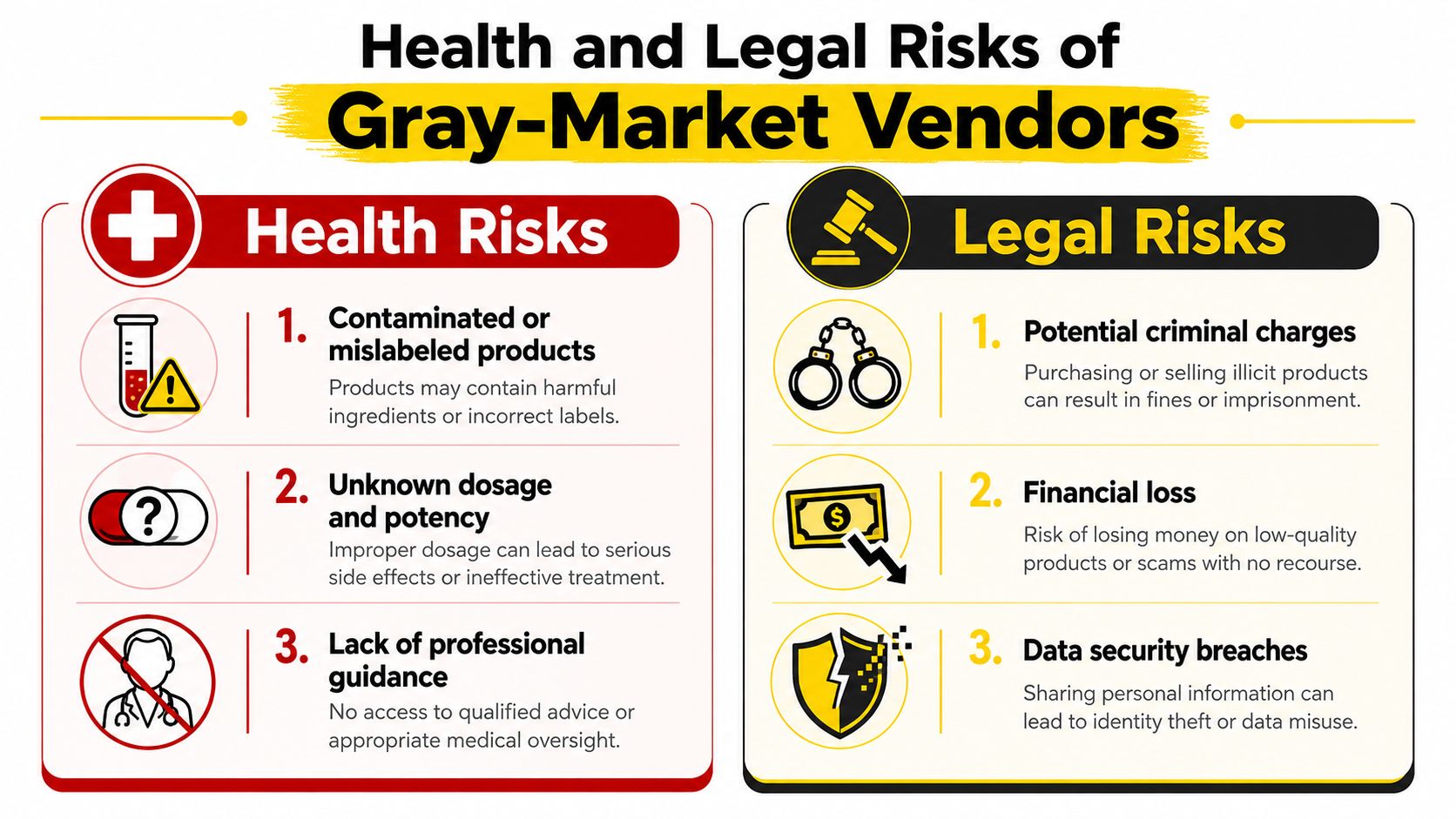
Health and Legal Risks of Gray-Market Vendors
Gray-market mushroom websites often sell convenience before they establish accountability. A regulated provider should be able to identify what it offers, explain the applicable rules, and operate within a recognized oversight structure. An anonymous seller may provide none of those protections, leaving the buyer to trust a label that could be incomplete or false.
The health problem is straightforward. Unregulated products may be mislabeled, contaminated, or adulterated, and a buyer can't confidently assess safety without reliable product identity and dose verification. Public-health and laboratory reporting has found marketed “mushroom” products containing illegal psychoactive compounds or other dangerous substances. The American College of Medical Toxicology's safety discussion of mushroom edibles describes why weak supply-chain controls can lead to unpredictable potency, accidental overconsumption, and toxic exposure.
Labels don't solve potency uncertainty
Even when a package names a recognizable strain, the label may not tell you how much psilocybin is present. Dried Psilocybe cubensis is commonly reported around 0.5% to 1.5% psilocybin by dry weight, and a 2026 laboratory summary reported a 1-to-40 ratio between the least and most potent tested strains. One study example found average combined psilocybin and psilocin levels ranging from 0.879% to 1.36% across different P. cubensis strains. These figures come from a potency review summarizing strain and laboratory variability.
That variability makes strain names a poor substitute for testing. Someone buying “Bluey” or “Texas Yellow” online can't reliably assume that equal weights produce equal exposure. A research summary on potency variability and dosing uncertainty notes that differences within a strain can be substantial enough to undermine consistent dosing.
The legal trap behind shipping claims
The phrase “ships nationwide” should prompt questions, not confidence. A buyer may face exposure if the package contains a federally controlled substance, especially when the shipment crosses state lines. A seller's willingness to mail a product doesn't transfer legal responsibility to the buyer or prove that the transaction is permitted.
Spore sales create another common misunderstanding. In some jurisdictions, spores are treated differently from mature mushrooms because spores may not contain psilocybin. That distinction doesn't make it lawful to purchase, cultivate, possess, or ship psilocybin-containing mushrooms. It also doesn't protect a buyer who receives a product marketed as an active psychedelic. For a practical look at why product form matters, see this explanation of mushroom edibles and local purchasing questions.
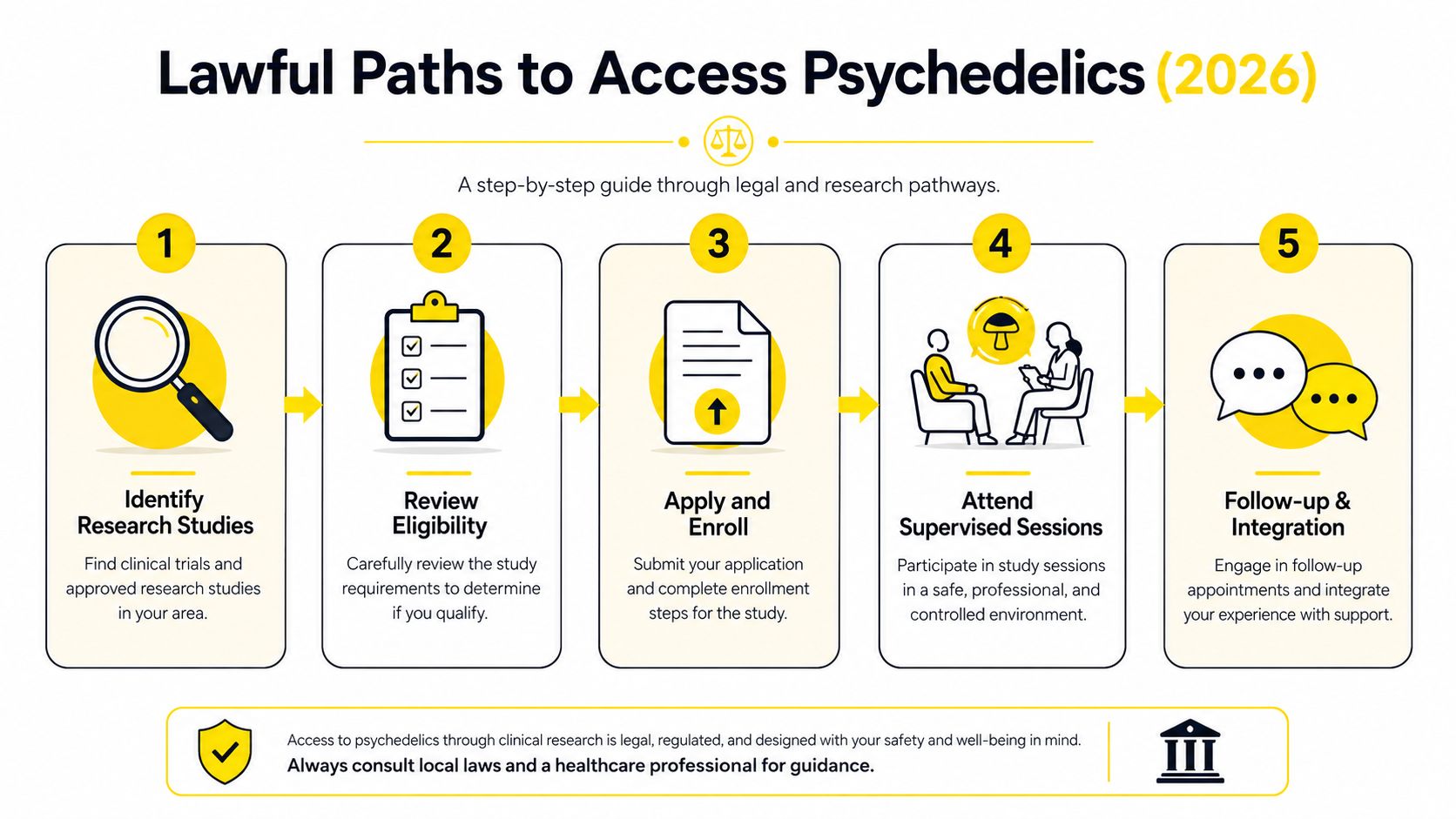
Lawful Paths to Access Psychedelics
For someone interested in therapeutic psychedelic research, a clinical study is different from an online purchase. Researchers operate under an approved protocol, screen participants, document the substance and dose, and monitor participants during the study. The process can be demanding, but those controls address the exact uncertainties that gray-market sellers leave unresolved.
Start with legitimate research registries and recognized medical institutions. Read the study description carefully, identify the research organization, review eligibility criteria, and confirm that the contact details match the institution's official website. Don't send money, identification documents, or medical information to a contact who can't verify the study through an authoritative channel.
A safer enrollment checklist
Identify the study. Confirm the study title, sponsoring organization, location, and purpose. A real study should explain what researchers are investigating and who oversees participation.
Review eligibility. Screening may address medical history, current medications, mental-health conditions, and other safety factors. Excluding someone can be a safety decision rather than a judgment.
Verify the consent process. Before enrollment, participants should receive understandable information about procedures, risks, privacy, and withdrawal rights. Be wary of anyone promising guaranteed emotional or medical outcomes.
Confirm supervision. Legitimate protocols specify who administers or supervises the intervention and what support is available during and after sessions.
Plan follow-up. Integration and follow-up help researchers assess outcomes and identify adverse effects. Keep your regular healthcare professional informed when appropriate.
Oregon's Measure 109 framework represents another narrow lawful pathway, but it isn't an online mail-order market. Services take place through licensed providers and controlled settings. Eligibility, availability, costs, and participation requirements can change, so prospective participants should verify details directly with the relevant state regulator or licensed service center rather than relying on social media advertisements.
A credible program explains its limits. It won't promise that one session will cure depression, addiction, trauma, or any other condition.
Emerging international models also require careful jurisdiction checks. Australia's medical permissions and the Czech Republic's medical approval don't mean a person abroad can order psilocybin online from those countries. Medical authorization is tied to local law, clinical oversight, and patient eligibility. This medical cannabis card guide illustrates the broader principle that regulated access usually begins with eligibility and documentation, not anonymous checkout.
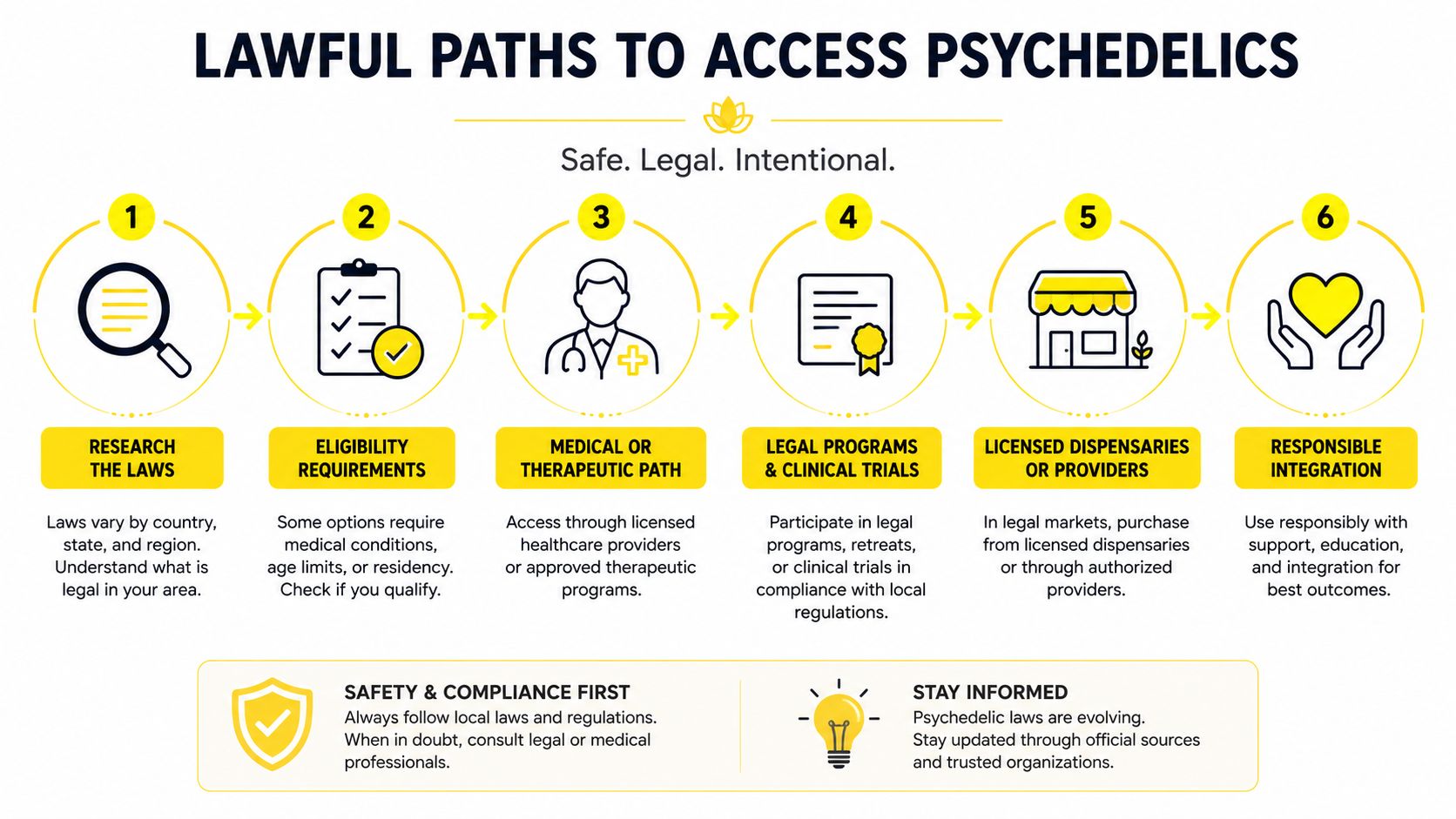
Legal Alternatives Through Medical Cannabis
Some people searching where can I buy shrooms online are actually looking for a controlled way to manage stress, sleep, discomfort, mood, or personal wellness. Medical cannabis isn't psilocybin and shouldn't be presented as a substitute for psychedelic therapy. It can, however, offer a more clearly regulated route for adults who qualify under local rules and want access to labeled cannabis products with guidance.
The comparison is mainly about accountability and product transparency. A regulated cannabis service can explain product categories, provide a menu, follow local compliance requirements, and help consumers choose a format that fits their experience level. An unregulated mushroom seller may not reliably disclose ingredients, potency, manufacturing conditions, or even the identity of the active compound.
Choosing a cannabis format
A new patient may find it easier to compare formats than to interpret a strain name on an unverified mushroom package.
- Flower and pre-rolls offer a familiar inhaled format, with effects that consumers may notice relatively quickly.
- Edibles can be convenient but require patience because effects may take longer to appear than inhaled products.
- Tinctures provide a measured liquid format that some consumers prefer for flexible use.
- Cartridges and pens are portable, but consumers should still ask about ingredients and device handling.
- Topicals are used locally and may suit people who don't want an intoxicating experience.
The right choice depends on the person, product labeling, intended use, and healthcare context. A first-time consumer should discuss medications, health conditions, pregnancy, and mental-health concerns with a qualified healthcare professional before using cannabis. Cannabis can affect people differently, and “natural” doesn't mean risk-free.
For Washington, DC residents and visitors, Mr. Nice Guys DC provides online cannabis ordering with pickup, curbside, and delivery options, along with product categories such as flower and edibles. Its educational medical cannabis guide for a first dispensary visit can help shoppers understand formats and prepare questions. Buyers should still confirm current local eligibility and compliance requirements before placing an order.
A compliant cannabis purchase won't answer every question about psychedelic therapy. It does provide a practical alternative to anonymous online products when the goal is a legal, documented wellness purchase rather than an unverified psychoactive shipment.
Making Informed and Safe Choices
A responsible decision starts with separating interest, legality, and safety. Wanting to learn about psychedelics doesn't require buying an unverified product, and a decriminalization policy doesn't guarantee legal retail access. Ask a healthcare professional about medication interactions, mental-health history, and whether a clinical or regulated pathway is appropriate.
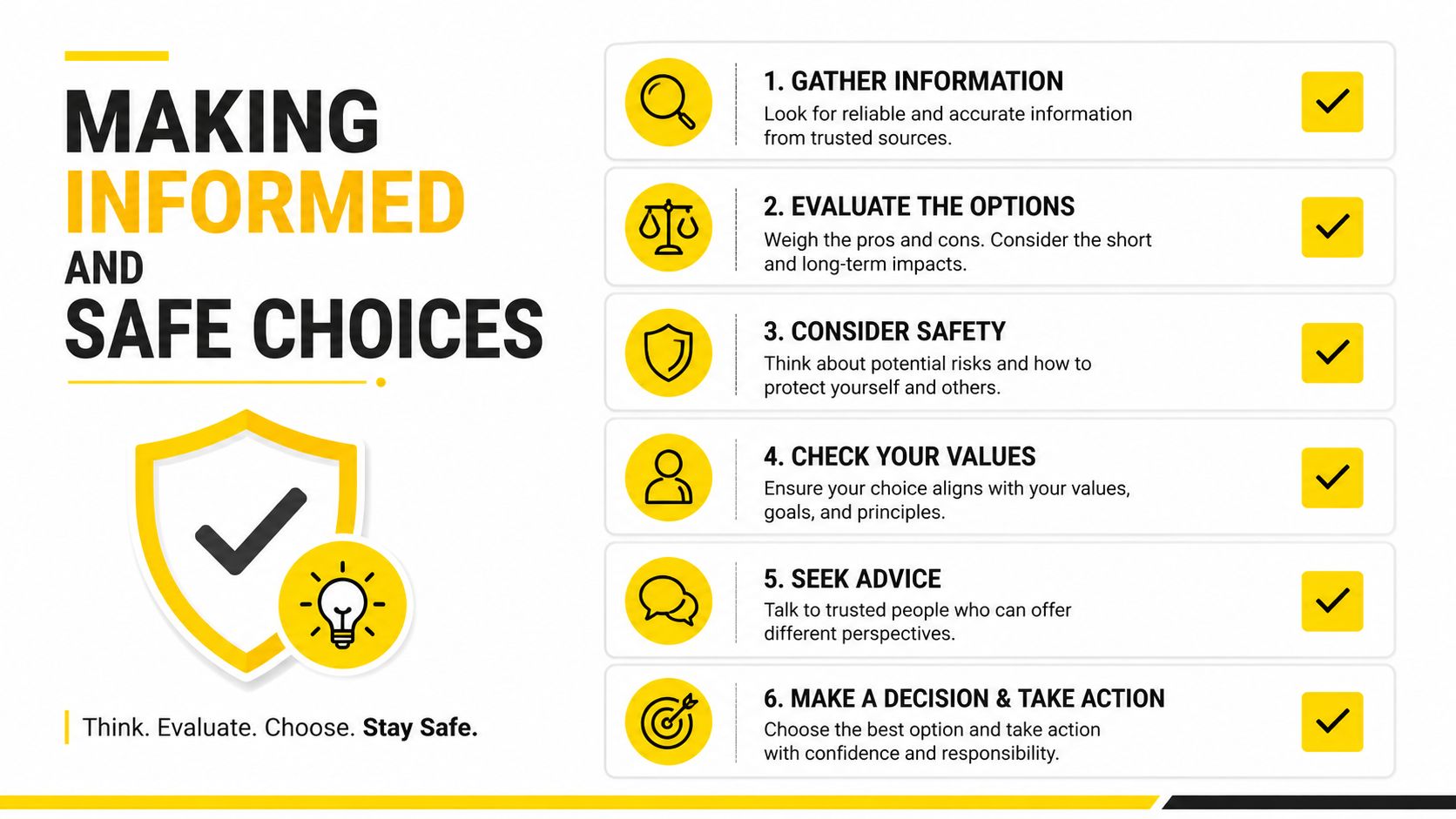
Use this short screening framework before engaging with any website or program:
- Identify the compound: Is the product clearly identified, or does it use vague “mushroom” language?
- Verify jurisdiction: Does the seller or provider explain the law where you live?
- Check oversight: Is there a recognizable license, institution, regulator, or study protocol?
- Demand transparency: Are ingredients, testing, dosage information, and contact details available?
- Protect personal data: Don't share sensitive information with anonymous sellers.
- Reject guarantees: No credible provider should promise a guaranteed cure or risk-free experience.
Research interest in psychedelics is expanding, but uncertainty remains about appropriate protocols, long-term safety, and which therapeutic settings work best. That's why supervised clinical research and regulated services matter. They create places where screening, consent, monitoring, and follow-up can happen instead of forcing consumers to guess what arrived in the mail.
If you're in Washington, DC, use a licensed medical cannabis channel for cannabis products, verify current local rules, and speak with a healthcare professional about your goals before choosing a format. Visit Mr. Nice Guys DC to browse its cannabis menu, learn about pickup or delivery options, and get guidance on compliant medical cannabis access instead of relying on gray-market mushroom sellers.
Mr Nice Guys DC
At Mr. Nice Guys DC, we’re more than just a cannabis delivery service — we’re passionate advocates for quality, convenience, and community. With years of experience in the cannabis industry, our team is dedicated to educating and empowering customers across Washington, D.C. Whether you're a seasoned user or just starting your cannabis journey, our blog delivers trusted tips, product insights, and the latest updates from the world of weed. Stay informed, stay elevated.
