
Must Be 21 To Enter
By entering this site you are agreeing that you are at least 21 Years of Age or older.
I AM 21 OR OLDERHow to Get a Medical Marijuana Card in DC
.svg)

.png)
You're probably here because you want clean legal access in DC, not a lecture. You want to know whether a medical card is worth the hassle, what the paperwork looks like, and whether you can walk into a dispensary without guessing your way through the whole thing.
The short answer is yes, a medical marijuana card can still be worth it in DC if you want a smoother patient experience, clearer legal protection for medical use, and a buying path that's built around guidance instead of impulse. If you're a resident, a new patient, or a visitor trying to figure out reciprocity, the question isn't whether cannabis is available, it's whether you want the medical route or the casual route. For many first-timers, the card wins because it makes the process more orderly and gives you a cleaner way to shop.
If you're only trying to figure out whether the card changes anything for you, start with this DC card guide and then follow the practical steps below.
Who This Card Is Really For
Individuals landing on this topic generally fall into one of three groups. The first is a DC resident who already knows cannabis helps and wants the medical side of the system, not just a basic retail transaction. The second is an adult 21+ who can buy elsewhere but wants more structure, better access to medical guidance, or a more deliberate first purchase. The third is a visitor who's trying to figure out whether a home-state card will work in DC.
A medical card matters when you want more than simple entry. It gives you a patient status that's different from an adult-use purchase, and that difference matters when you care about legal comfort, product selection, and how your purchase is handled at the counter. If you're only looking for a one-off purchase, the card may feel like extra paperwork. If you expect to buy regularly or you want medical-style guidance, it's usually worth the effort.
What changes once you're a patient
A patient card changes how you approach the dispensary. You're not just walking in as a casual buyer, you're entering a system where staff can talk to you more directly about symptom relief, formats, and consistent use. That matters for people with chronic pain, sleep trouble, stress, or anyone who wants to be intentional instead of experimental.
Practical rule: if you already know you're going to ask about dosing, onset time, and product format, you're acting like a medical patient whether you have the card yet or not.
If you're a visitor, the value depends on reciprocity and how much friction you're willing to tolerate. Some people are fine buying as adult-use customers. Others want the patient path because it feels more controlled, more discreet, and easier to repeat. That's the decision point, not the marketing around it.
DC Eligibility Rules Most Applicants Miss
DC is more flexible than a lot of states, and that's exactly why people get sloppy and miss the actual rules. The city recognizes conditions like chronic pain, PTSD, cancer, glaucoma, HIV/AIDS, multiple sclerosis, and more, and it also allows a licensed clinician to determine that cannabis may help a condition even if it's not the condition someone had in mind. That flexibility is useful, but it doesn't mean every applicant gets approved automatically.
You need to be 18 or older unless a caregiver is applying on behalf of a minor. Residency matters too, because DC isn't treating this like a free-floating national program. A valid DC ID, or another acceptable proof of DC residency, is part of the gatekeeping process. If your address is inconsistent across documents, expect trouble.
Who usually qualifies and who usually gets stuck
An adult DC resident with a documented condition and a clinician who's comfortable certifying them is usually in good shape. A visitor with no accepted reciprocity path, a person with no supporting records, or someone trying to rely on a rushed telehealth visit without proper documentation is more likely to get stuck.
Arkansas gives a good example of how strict residency can be elsewhere. Its patient requirements call for being at least 18, or having a caregiver apply for a minor, plus a qualifying condition, the official physician certification form, and Arkansas residency proof like a state ID or driver's license, all before a registry card is issued. That's a reminder that a valid diagnosis alone isn't enough in many programs.
A valid condition helps, but the application still lives or dies on residency proof and the state's own workflow.
The smartest way to think about qualification is simple, does the condition fit the list, does the clinician agree, and can you prove you belong in the DC system. If one of those pieces is weak, the application gets shaky fast.
Your Pre-Application Documentation Checklist
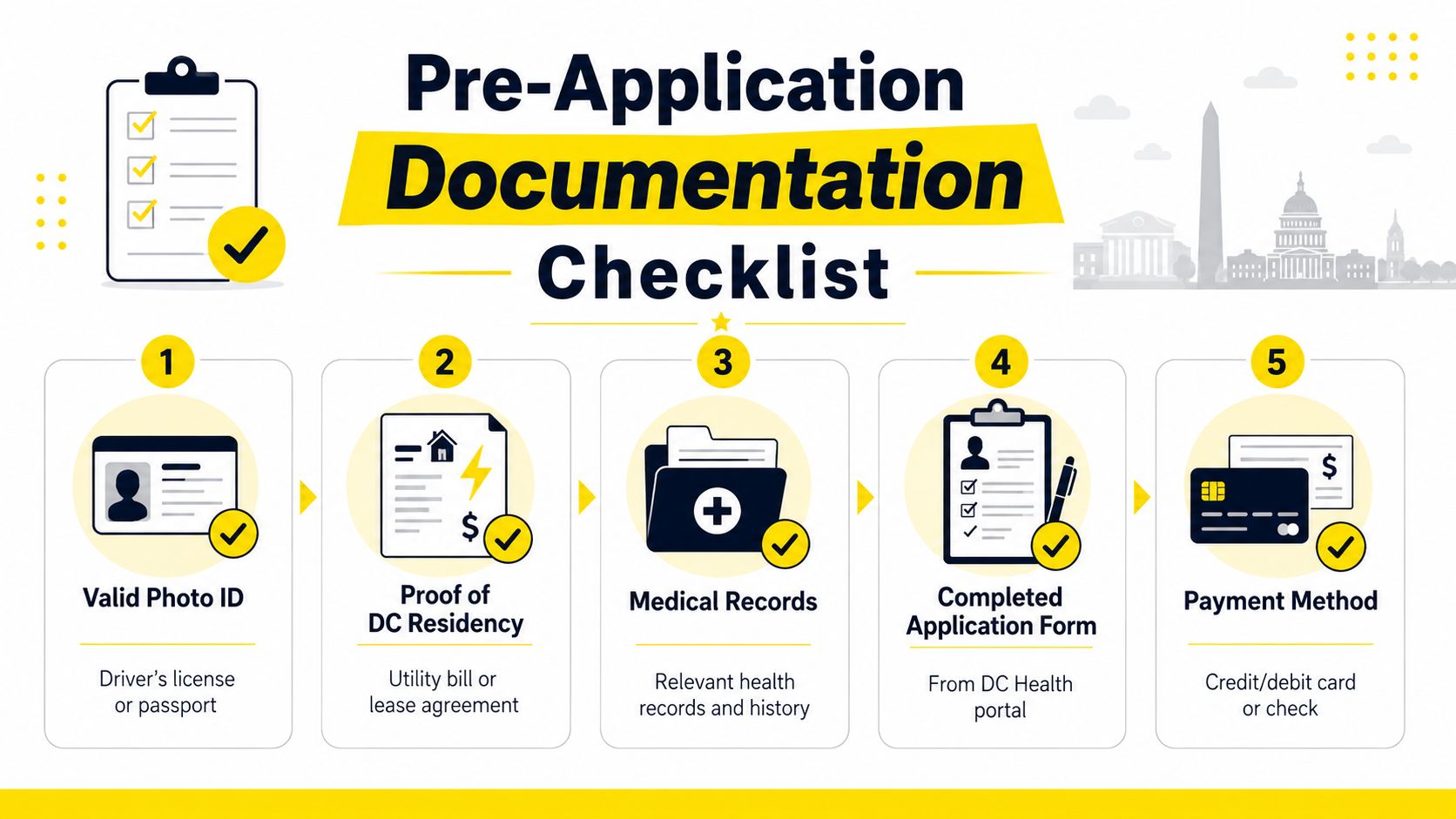
Get your documents together before you book a clinician visit. People waste time because they treat the appointment like the first step, when it's really the middle step. The stronger move is to show up with a clean packet so the clinician can certify you without chasing paperwork later.
Start with a government-issued photo ID. A DC driver's license or non-driver ID is ideal, but any valid photo ID that matches your application details is better than scrambling at the last minute. Then add proof of DC residency, such as a utility bill, lease, or bank statement with your current address. If your ID and your residency document don't match, fix that before you submit anything.
Medical records matter more than many first-timers expect. You do not need a giant file cabinet, but you do need enough history to show the clinician why cannabis is being considered. A one-page summary of symptoms, prior treatment attempts, and any current medication list can make the visit smoother and cut down on back-and-forth.
The mistakes that slow people down
Expired IDs are a classic problem. So are utility bills with the wrong address, or medical records that never mention the condition you're trying to certify. Another common issue is trying to use a clinician visit as if it were the whole application. It isn't.
A patient who gathers ID, residency proof, and records in one afternoon usually moves cleanly. A patient who has to reschedule twice because a bill is missing or the address doesn't match ends up paying twice, waiting longer, and getting annoyed for no good reason.
Best practice: bring the documents to the appointment, not just the memory of where they are saved.
If you want a quick refresher on the ID side, this age-verification guide is the right kind of practical check before you waste a trip.
Getting Your Clinician Certification
The clinician certification is the part that matters most. Everything else is paperwork around it. If you're nervous about this step, don't be. A good appointment is usually straightforward when you're organized and honest about your symptoms.
Telehealth or in-person
Telehealth is faster and usually easier if you already know your history and just need a clinician to review it. It works best when you have a quiet room, stable internet, and your records in front of you. In-person visits make more sense if your medical history is complicated, if you want a more conversational review, or if you're the type of person who prefers face-to-face reassurance.
The key is using a licensed DC-registered clinician who can certify you properly. If the clinician can't enter the certification correctly or doesn't understand the state process, you'll lose time even if the conversation feels pleasant. A polished website doesn't matter if the certification doesn't connect to the registration workflow.
What the appointment should look like
Expect a review of your condition, your prior treatments, and why cannabis is a reasonable option. Bring your medication list. Bring a short summary of what you've already tried. If you know the formats you're open to, say that early.
One of the smarter moves is to ask about product format during the appointment. If you're dealing with pain, you may want to discuss flower, tinctures, or topicals. If you're trying to manage sleep, you may want a different format. A clinician who knows your goal can certify you more cleanly than one who gets a vague story and has to guess.
For people in DC who want a local appointment option, this Anacostia clinic page is useful as a starting point for understanding how certification visits are often structured.
After the clinician enters the certification, the rest should feel administrative, not mysterious.
Submitting Your DC Health Application
Once the clinician certification is in motion, the DC Health application is the clean-up work. Don't overcomplicate it. Create the portal account, confirm the certification uploaded correctly, fill in your personal details exactly as they appear on your ID, and upload the requested documents.
What to check before you click submit
The most common failure point is not the form itself, it's sloppy file quality. A blurry photo, a residency document that doesn't match the ID address, or a missing upload field can leave the application stuck. If you've already done the document prep carefully, this part should move quickly.
A useful rhythm is simple, login, verify the clinician certification, attach your ID and residency proof, pay the fee, and then watch your email. Keep the account credentials somewhere you can find them. People lose time by forgetting which email they used or by not noticing a portal message that asks for one more document.
The practical example here is obvious. The person who uploads a clean ID scan and a matching residency document usually gets through without much drama. The person who takes a phone photo in bad lighting and assumes “close enough” is not enough, and that's where delays begin.
What to do if it sits pending
If the status stays pending longer than you expected, check whether the certification posted and whether the uploaded images are readable. If everything looks right, reach out to DC Health support rather than guessing. A delayed card is usually a paperwork issue, not some mysterious denial.
The whole point of the portal is to make the process more efficient than a paper chase. Use it that way. Don't mail things twice, don't upload mismatched documents, and don't assume the application is finished until you've seen the approval.
Using Your Card at a DC Dispensary
The first dispensary visit is where people stop feeling abstract and start making actual decisions. At a place like Mr. Nice Guys DC on U Street, you show your medical card and government ID at the entrance, step into a patient-focused setting, and talk to a budtender who should ask what you're trying to achieve before pushing products at you. That's the right kind of interaction, because it keeps the purchase tied to your symptoms instead of the menu's loudest labels.
What first-timers usually buy
First-timers tend to do better with simple formats. Flower gives you the most classic cannabis experience, but it isn't always the easiest for medical beginners. Edibles can be useful if you want longer relief and don't mind waiting. Topicals make sense for people looking at targeted body comfort, and tinctures are often easier to dose carefully than a strong edible.
Cartridges and pens are popular because they're convenient, but convenience can make people overuse them if they're not paying attention. Pre-rolls are straightforward if you want a no-fuss entry point. Concentrates are usually not where I send first-timers unless they already know what they're doing. The smarter move is to start with a format you can explain to yourself in one sentence.
A patient with chronic pain might choose a low-dose edible for evening relief and a topical for daytime use. That's a practical, not flashy, purchase. It respects the body, the budget, and the fact that first impressions with cannabis can be all over the place if you go too hard too fast.
Ask about lab results, dosing, and onset time before you check out. Those are the questions that separate a real medical purchase from random shopping. If you're using delivery instead of walking in, this dispensary visit guide is the right mindset check.
Buying rule: the product that sounds strongest is not automatically the product you should buy.
Mr. Nice Guys DC also supports in-store pickup, curbside pickup, and delivery through Sweede to nearby neighborhoods, which is useful if you already know what you want and don't want a long counter conversation every time. Delivery coverage also makes it easier for people in nearby areas to stay consistent once they find a format that works. If you're trying to keep the purchase simple, that flexibility matters.
Reciprocity, Renewals, and First-Timer Tips
If you're visiting DC with an out-of-state card, reciprocity is the first thing to confirm before you travel. Don't assume your home card works just because you've used it somewhere else. Rules vary, and DC's acceptance path is still something you should verify before you leave home with a plan to shop.
Washington State's process is a good reminder of how specific medical access can be. A visiting patient there has to call a medically endorsed store, schedule with a certified medical cannabis consultant, bring authorization and government or state ID, and pay a minimum $1 recognition-card fee. Different place, different mechanics, same lesson, always confirm the rules before you rely on a card across state lines. For DC delivery and local access considerations, this DC delivery guide is a useful reference point.
Renewal habits that keep you from losing access
Treat renewal like an annual calendar item, not a future problem. If you wait until the last minute, you'll find yourself back in paperwork mode when you just wanted routine access. Set a reminder well before the expiration date and keep your ID and card together so you're not hunting for them when you need them.
A good first-timer checklist is short. Start low and go slow with dosing. Keep your card and government ID together. Save your clinician's contact information. Ask questions instead of pretending to know more than you do.
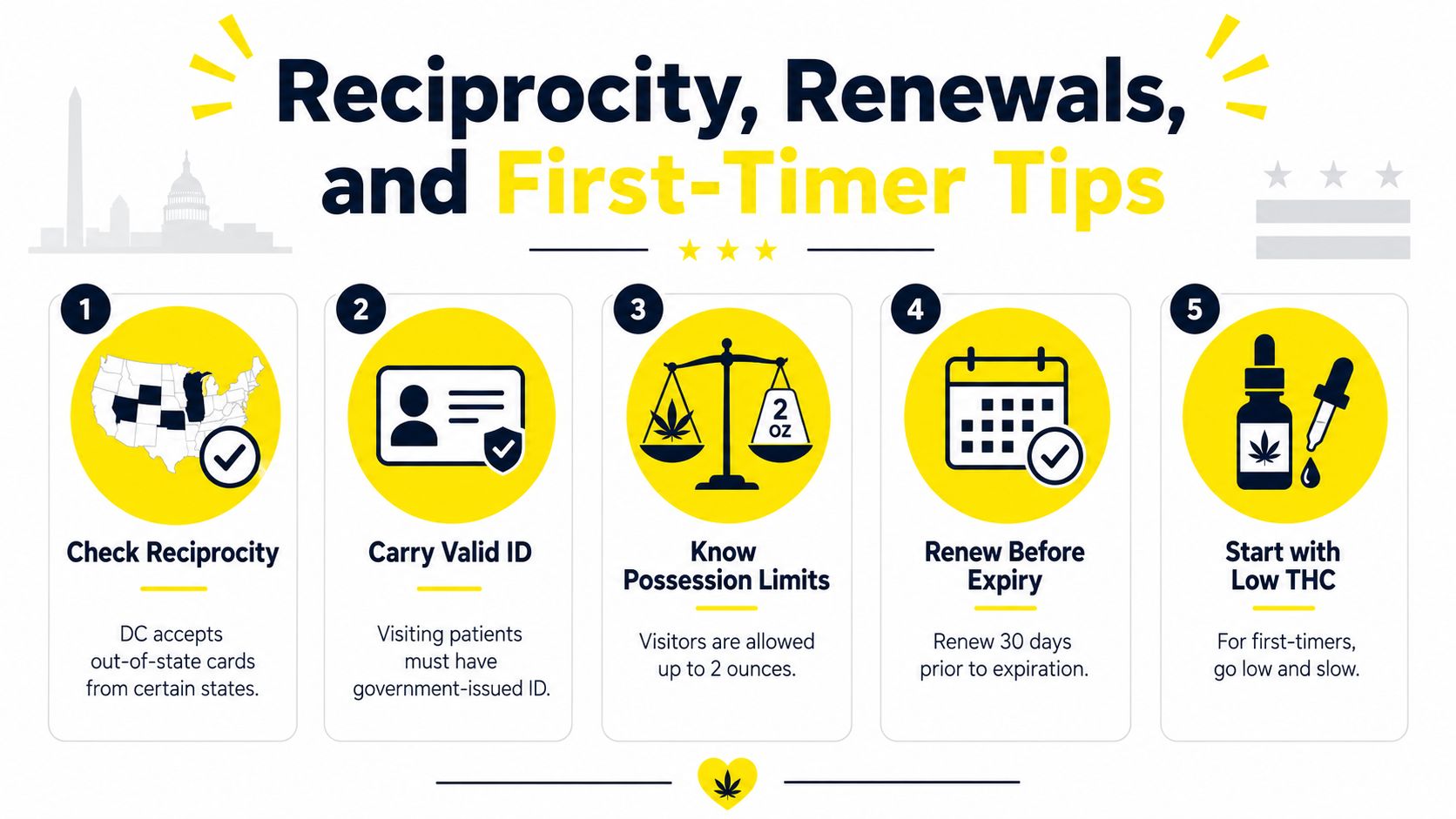
Keep your records, your card, and your ID in one place. The people who stay organized have the easiest patient experiences.
If you're planning to use the card regularly, don't make the rookie mistake of treating it like a one-time admin task. The card works best when you keep your documents current, your product choices conservative at first, and your questions practical.
If you want straightforward help turning your card into an actual purchase plan, visit Mr. Nice Guys DC. They can help you move from certification to product selection without the usual first-timer confusion, whether you're shopping in person or using delivery.
Mr Nice Guys DC
At Mr. Nice Guys DC, we’re more than just a cannabis delivery service — we’re passionate advocates for quality, convenience, and community. With years of experience in the cannabis industry, our team is dedicated to educating and empowering customers across Washington, D.C. Whether you're a seasoned user or just starting your cannabis journey, our blog delivers trusted tips, product insights, and the latest updates from the world of weed. Stay informed, stay elevated.
