
Must Be 21 To Enter
By entering this site you are agreeing that you are at least 21 Years of Age or older.
I AM 21 OR OLDERVape Pen for Weed: The DC Patient Guide
.svg)

.png)
You're standing at a Washington, DC dispensary counter with two choices in front of you: a compact disposable that's ready immediately, or a 510 battery with several cartridges that promise more flexibility. You want relief you can manage, not a harsh draw, a burnt taste, or a device that delivers a different experience every time. Choosing a vape pen for weed gets easier once you understand how the battery, cartridge, temperature, oil, and testing all work together.
Vaping has become a significant cannabis route in the United States. In the CDC's 2022 Behavioral Risk Factor Surveillance System analysis, 15.3% of adults reported current cannabis use, and among those users 30.3% reported vaping cannabis, while 79.4% reported smoking it. The analysis also found that 16.8% of current users primarily vaped, compared with 14.2% who primarily ate cannabis, and 46.7% used multiple routes. These findings help explain why patients may choose a vape for portability and convenience while still using other formats. (CDC analysis summary)
Understanding How a Weed Vape Pen Works
A patient shopping for a vape usually starts with a practical question: which piece matters, the battery or the cartridge? The answer is both. Think of the battery as the engine and the cartridge as the fuel tank. The battery supplies power, while the cartridge holds cannabis oil and the atomizer that turns that oil into an inhalable aerosol.
Most oil cartridges use the 510-thread format, a widely used connection that lets compatible batteries and carts work together. You screw the cartridge onto a charged battery, activate the device according to its design, and inhale through the mouthpiece. Some batteries use a button, while others activate when you draw. A beginner looking for a straightforward setup might pair a basic 510 battery with a pre-filled cart rather than start with a concentrate device.
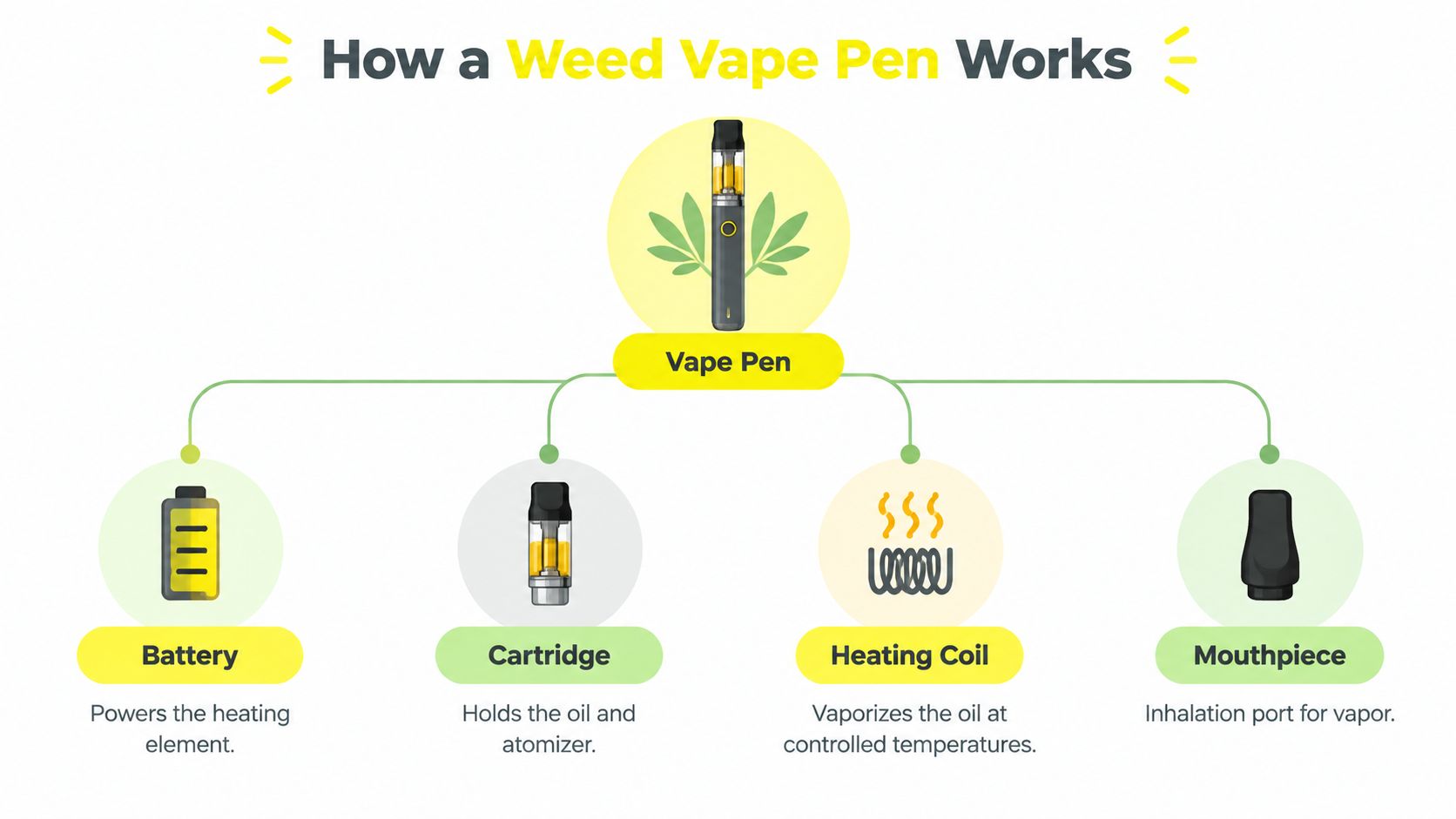
What each component does
- Battery: Provides energy to the heating element.
- Cartridge: Holds cannabis oil and the atomizer.
- Heating coil: Warms the oil so cannabinoids and terpenes can form an aerosol.
- Mouthpiece: Directs the aerosol into your mouth and lungs.
Voltage changes how the device feels, but it doesn't translate into one guaranteed temperature. A lower setting may produce a lighter, more flavorful draw, while a higher setting can create a denser and stronger-feeling hit. Coil resistance, airflow, and oil thickness all influence the actual heat produced. (Seven Point Cannabis explains vape pen use)
For a first session, use a low setting if your battery allows it, take a gentle draw, and pause before repeating. You'll find a more detailed practical walkthrough in this guide to vaping weed, but the central idea is simple: the battery controls energy, and the cartridge determines what material that energy heats.
Comparing Disposables, 510 Cartridges, and Dab Pens
The right format depends on whether you value simplicity, flexibility, or access to thicker concentrates. Disposable pens combine the battery, oil reservoir, heating element, and mouthpiece in one unit. You charge or use the device according to its design, then replace the entire product when the oil or battery is finished. That makes disposables appealing to beginners and patients who don't want to manage separate hardware.
A 510 cartridge separates the oil from the battery. You can keep one compatible battery and switch between carts, which helps a patient compare different formulations without replacing the power source each time. The trade-off is that you need to monitor battery charge, thread compatibility, connection cleanliness, and cartridge condition.
A dab pen is different from an oil-cart setup. It's built for thicker concentrates such as wax or shatter, not ordinary distillate oil in a pre-filled cartridge. A patient who buys a dab pen expecting a plug-and-play oil cart may end up with a device that requires more loading, cleaning, and technique than expected.
The cannabis market has also shifted toward disposable products, while 2-gram formats are described as the fastest-growing size and 510-thread batteries remain a standard. (Headset's report on vapor pens) Those market patterns don't automatically identify the best product for a medical patient. They show why dispensary menus now contain more all-in-one choices alongside traditional carts.
Vape Pen Format Comparison
| Format | Best For | Hardware Needed | Pros and Cons |
|---|---|---|---|
| Disposable | Beginners, travel within permitted settings, and low-maintenance use | The disposable itself | Pros: Ready to use and compact. Cons: Less flexible, and the whole unit is replaced when finished. |
| 510 cartridge | Patients comparing oils or keeping a repeatable battery setup | A compatible 510 battery and cartridge | Pros: Swappable carts and reusable batteries. Cons: Requires battery care and compatibility checks. |
| Dab pen | Experienced users who prefer wax or other thick concentrates | A concentrate-compatible dab pen and concentrate | Pros: Designed for concentrate material. Cons: More cleaning and loading, with a stronger learning curve. |
A patient who uses cannabis occasionally may prefer the simplicity of a disposable. Someone tracking a consistent routine may prefer a 510 battery because changing cartridges doesn't require changing the entire device. For a fuller lifestyle comparison, review this guide to vape pens versus carts before placing an order.
Navigating Temperature, Voltage, and Hardware Safety
A patient can select a low battery setting and still get an unexpectedly hot draw. Coil resistance, airflow, and oil viscosity determine how much heat reaches the oil, so voltage is not a direct temperature reading. Thick oil paired with restricted airflow may run hotter than expected at the same setting. For medical use, that matters because temperature affects both aerosol chemistry and the consistency of each pull.
A 2022 laboratory study examined THC and mixtures of THC with vegetable vitamin E acetate. At a 350°F setting, the device stayed below 250°C. At 430°F, temperatures rose to approximately 500°C to 550°C, while earlier work documented heating between 500°C and 600°C in viscous vape liquids. (Laboratory study in the National Library of Medicine) Excessive heat can accelerate thermal decomposition, producing unwanted byproducts instead of volatilizing cannabinoids.

Why lower settings make sense
Lower settings generally support oil stability and flavor retention. They can create less visible aerosol, and a smaller cloud still may deliver a useful draw. A gentler inhale also gives a medical patient a better chance of repeating a similar dose rather than reacting to a harsh, unexpectedly strong hit. For a practical temperature guide, review this resource on the best temperature for vaping weed.
High-voltage use can push cartridges beyond 400°F, although the actual temperature depends on the battery, coil, airflow, and oil. (Weedmaps explains voltage and vape pens) A burnt, metallic, or unusually harsh taste is a reason to stop using the device, not a reason to increase power.
Cartridge wear matters too
A cartridge is part of the delivery system, not merely a container. A 2021 ACS study found chromium, copper, nickel, lead, manganese, and tin in cannabis vaporizer cartridges, with migration into oil and vapor. A 2025 study of legal cannabis vape products detected aluminum, cobalt, chromium, copper, nickel, tin, and zinc in liquids, while aerosol contained cobalt, chromium, nickel, lead, tin, and zinc. Cracking around connector pins suggested that wear may increase contamination during storage and use. (Weedmaps overview of cannabis vape pen hardware)
Replace any cartridge with connector damage, a leak, unusual discoloration, or a persistent burnt taste. Regulated sourcing and tested hardware reduce uncertainty, but damaged equipment should not remain in use. A consistent routine starts with a sound cartridge and a setting that produces a tolerable, repeatable draw.
Mastering Dosing, Maintenance, and Oil Viscosity
A cartridge can look simple while containing a material with demanding physical properties. Cannabis vape oil often uses THC distillate, which is viscous at room temperature. Manufacturers may add terpenes to reduce viscosity and help the oil wick toward the atomizer. Without adequate wicking, the coil may heat a relatively dry area and create a harsh or burnt draw. (Scientific review of cannabis vaping)
A gentler dosing routine
- Start with the lowest practical setting. Use the device's lower option rather than beginning with a dense, hot draw.
- Take one short, gentle puff. Pulling hard can increase airflow problems and may not improve delivery.
- Pause and assess. Pay attention to relief, impairment, anxiety, throat irritation, and whether you feel tempted to keep drawing automatically.
- Repeat conservatively. If you need more, take another small pull after you've evaluated the first one.
- Record what worked. Note the cartridge, setting, draw length, and effect. This turns an inconsistent routine into a reference you can use later.
A patient moving from flower to oil should be especially cautious. Vape oil can feel smooth while delivering a concentrated cannabinoid dose, so a small draw may be more appropriate than trying to match the number of inhalations used with flower.
Practical rule: Your most useful dose is the smallest amount that provides the intended effect without unwanted impairment or discomfort.
Keeping oil and hardware working
Store cartridges upright in a cool, dark place. Avoid leaving a pen in direct sun or a hot vehicle, since heat can change oil flow and increase leakage. Before use, inspect the mouthpiece and connector, and don't continue with a cartridge that tastes burnt after you've allowed it to rest and reduced the setting.
Keep battery contacts clean and avoid forcing a cartridge onto the thread. Follow the manufacturer's charging guidance, use compatible equipment, and don't use a battery that becomes damaged or overheats. Patients who want a broader explanation of extracts can consult this cannabis concentrates guide.
Evaluating Health Considerations and Potency Risks
A vape pen can feel gentle while delivering a concentrated dose. Vaping avoids combustion, but it isn't risk-free. For a medical patient, the practical assessment includes the oil, cartridge materials, temperature, potency, and frequency, not appearance alone.
Some THC cartridges can reach 95% THC or higher, according to NPR reporting on cannabis vape risks. High-potency oil can make dose control difficult, particularly when discreet use or a smooth aerosol encourages repeated pulls. Possible concerns include lung irritation, anxiety, dependence, and cannabis hyperemesis syndrome. Unregulated products may also contain heavy metals or vitamin E acetate, which makes source verification part of hardware safety, not just a purchasing preference.

The vomiting risk deserves attention
Frequent users should monitor chronic vomiting symptoms. Reporting on a 2026 study described people using electronic vape cartridges as developing chronic vomiting faster than people who smoked cannabis or used edibles. The finding does not mean every vape user will develop the condition, yet daily users have a reason to watch for nausea, repeated vomiting, abdominal discomfort, or relief that appears only after stopping cannabis.
Seek medical care for severe or persistent symptoms, breathing difficulty, chest pain, confusion, or signs of dehydration. A serious reaction needs medical attention, not a voltage adjustment or another cannabis product.
Product quality changes the risk picture
The 2019 U.S. vaping illness outbreak involved 805 confirmed and suspected cases and 12 deaths, and 77 patients reported THC-infused vapes, according to Filter's report on the outbreak and cannabis consumption. The event connected product sourcing and formulation transparency with patient safety.
A lab report can show potency and tested contaminants, but it cannot predict an individual response to high-THC oil. This cannabis potency testing guide explains how to read that information. For a more consistent medical routine, compare the labeled dose with your temperature setting and response, then discuss persistent side effects with a qualified clinician.
Sourcing Compliant Vapes at Mr. Nice Guys DC
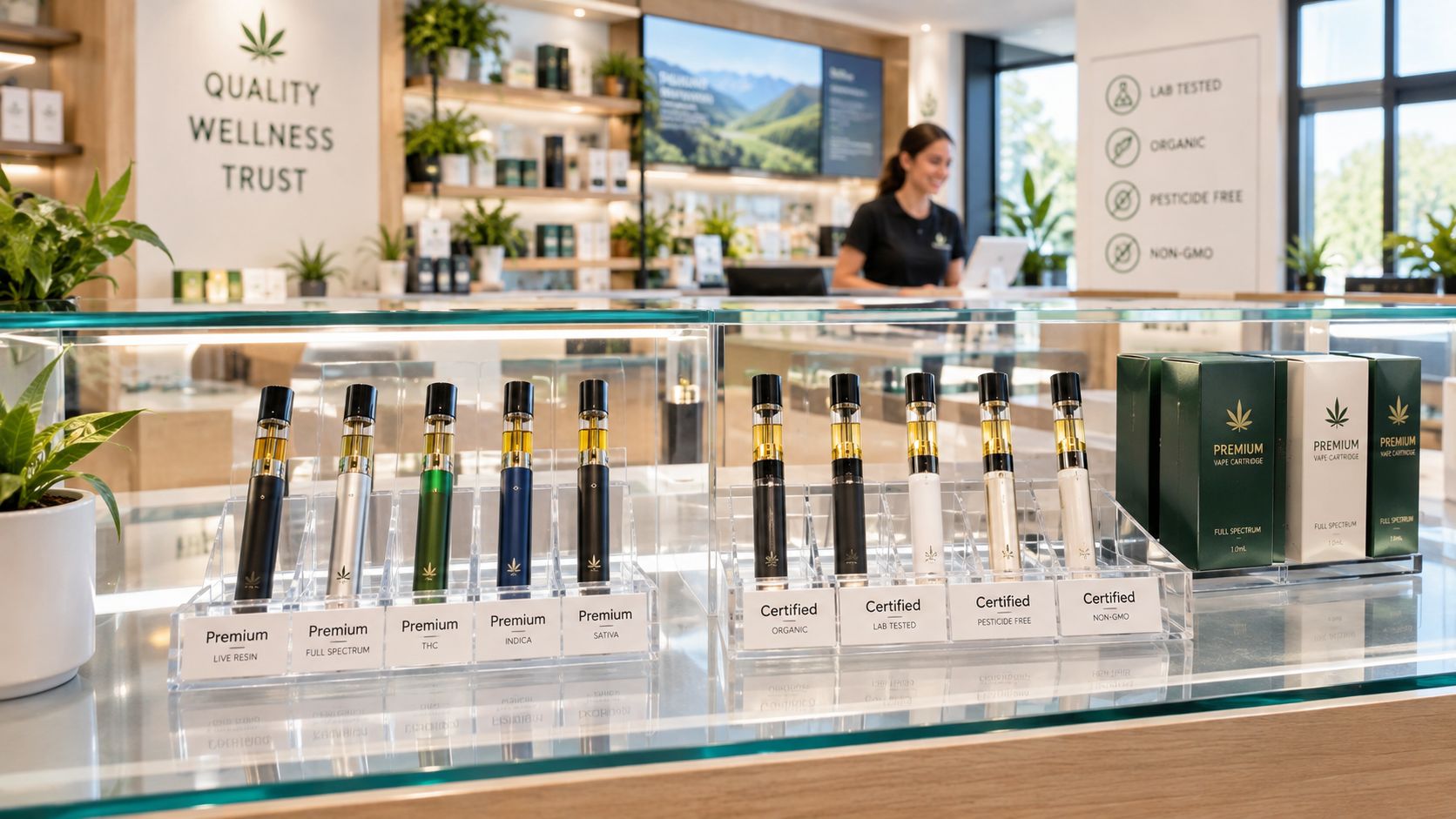
Hardware safety begins before you open the package. A regulated dispensary can provide product labeling, testing information, and staff guidance that aren't reliably available with unverified cartridges. That matters because cartridge metals, additives, oil composition, and potency all influence whether a vape fits a patient's routine.
Mr. Nice Guys DC serves Washington, DC with cannabis products that include cartridges and disposable pens. Its menu also includes flower, edibles, pre-rolls, concentrates, topicals, and tinctures, giving patients alternatives if inhalation doesn't suit them. The team focuses on education and helps customers compare formats and effects rather than treating THC percentage as the only buying criterion.
What to ask before buying
A useful dispensary conversation should cover more than flavor. Ask whether the product is a disposable or a 510 cartridge, whether your current battery is compatible, how the oil is formulated, and where to find potency and contaminant testing. If you're managing a medical condition, explain whether you need a predictable routine, quick onset, portability, or a lower-intensity option.
A simple example helps. A new patient who wants minimal setup may choose a disposable, while a patient who already owns a reliable 510 battery may prefer a tested cartridge. Someone who uses thick wax shouldn't buy an oil-cart battery and assume it can handle concentrate material.
Ordering around the DC area
Patients 21 and older can use Mr. Nice Guys DC for in-store pickup, curbside service, or delivery powered by Sweede across DC and nearby communities. Delivery coverage includes areas such as Alexandria, Bethesda, Rockville, and Silver Spring, with menus that rotate as products change. The practical benefit is access to a staff-supported purchase without requiring every patient to become a hardware specialist.
Keep your identification, product packaging, and device instructions together after purchase. If the cartridge leaks, the connector cracks, or the device overheats, contact the retailer or manufacturer rather than continuing to use it.
Your Checklist for Choosing the Right Vape Pen
Use this checklist before your next dispensary visit or delivery order:
- Match the format to your routine. Choose a disposable for minimal setup, a 510 cartridge for battery flexibility, or a dab pen for concentrates.
- Confirm compatibility. A 510 cartridge requires a compatible 510 battery. A concentrate device isn't automatically suitable for distillate oil.
- Ask about testing. Look for clear potency information and testing related to contaminants, additives, and hardware quality.
- Start with low heat. Lower settings generally support better flavor and reduce thermal stress compared with aggressive high-voltage use.
- Inspect the cartridge. Don't use a leaking, cracked, damaged, discolored, or persistently burnt-tasting device.
- Dose conservatively. Take a short draw, pause, and assess before repeating. High-potency oil can make small changes feel significant.
- Store it upright. Keep the pen cool, dark, and away from direct heat.
- Track your response. Record the product, setting, draw pattern, and effect so your next purchase can be more consistent.
- Respect warning signs. Stop using the product and seek medical guidance for breathing problems, chest pain, severe anxiety, or persistent vomiting.
The best vape pen for weed isn't necessarily the largest, hottest, or strongest option. It's the product that matches your medical goals, uses tested oil and dependable hardware, and lets you repeat a comfortable dose without guesswork.
Mr. Nice Guys DC offers tested cannabis cartridges and disposable pens, along with in-store pickup, curbside service, and delivery across DC and nearby communities. Visit Mr. Nice Guys DC to compare vape formats, review the available menu, and get practical guidance for a more consistent purchase.
Mr Nice Guys DC
At Mr. Nice Guys DC, we’re more than just a cannabis delivery service — we’re passionate advocates for quality, convenience, and community. With years of experience in the cannabis industry, our team is dedicated to educating and empowering customers across Washington, D.C. Whether you're a seasoned user or just starting your cannabis journey, our blog delivers trusted tips, product insights, and the latest updates from the world of weed. Stay informed, stay elevated.
