
Must Be 21 To Enter
By entering this site you are agreeing that you are at least 21 Years of Age or older.
I AM 21 OR OLDER10 Patient Education Resources for Cannabis Users in 2026
.svg)

.png)
You're standing at the counter or scrolling a menu at home, trying to make sense of strains, edibles, vapes, tinctures, topicals, and dosing without guessing. That's exactly where good patient education resources earn their keep, because the right guidance turns a confusing purchase into a smart one. At Mr. Nice Guys DC, the best approach is simple, clear, and practical, the same way a good budtender talks you through a product before you commit.
The challenge is not a lack of information. It's finding the right information in a form you can use in the moment, especially when you're comparing products like Gelato, Blue Dream, Wedding Cake, Runtz, and OG Kush for different goals and routines. The strongest patient education resources don't just explain cannabis, they help you choose, dose, store, and use it with confidence. They also respect real life, which means they should work for first-time shoppers, medical patients managing symptoms, and experienced consumers who still want a cleaner, safer system.
A lot of the health-literacy work in medicine points to the same lesson. Official education materials have often been too hard to read for the average patient, and modern guidance now pushes plain language, teach-back, and materials that patients can act on quickly. That same mindset fits cannabis perfectly. If the goal is safer, more informed use, the resource has to be useful at the counter, on your phone, and after you get home.
1. Product-Specific Strain and Format Guides
A good strain guide does one job well. It tells you what a product is likely to feel like, how it tends to fit into the day, and which consumption method matches your goals. That matters because people shop cannabis for different reasons, some want daytime focus, some want evening calm, and some want symptom relief without having to decode a dozen product labels.
The cleanest version is a one-page handout that covers cannabinoid profile, terpene notes, likely effects, and recommended use case. A customer comparing Gelato, Blue Dream, Wedding Cake, Runtz, and OG Kush should be able to spot the differences fast, not read a wall of jargon. For example, a Gelato card can highlight a sweet aroma and balanced vibe, while a Blue Dream comparison card can point to a more uplifting daytime profile. The point is not to flood the page with every detail, it's to help the buyer narrow the choice.
Practical rule: focus each guide on one product or one clear comparison, then give the customer one decision they can make right away.
A strong in-store guide also works outside the store. Pair it with a QR code that opens a short video demo, keep a laminated pocket version for shopping, and email a digital copy before pickup or delivery so the customer can review it without pressure. Color-coding helps too, with green for daytime, blue for evening, and purple for mixed effects. That keeps the system easy to scan when someone is standing in front of the menu and wants a quick answer.
For a Mr. Nice Guys DC customer, this is the kind of guide that makes the whole purchase feel calmer. If you want a broader product overview to match the guide with what's in stock, the shop's own breakdown of available formats and flower options is a useful starting point, especially when you're comparing choices before you buy: What cannabis products are available at Mr. Nice Guys DC.

2. Consumption Methods and Safety Video Library
Some customers read handouts. Others learn faster when they can watch someone do it right. That's where a short video library comes in, especially for products that need technique, like cartridges, tinctures, edibles, topicals, and flower. The best videos are brief, specific, and calm, not flashy.
A useful library keeps each clip in the 2 to 5 minute range and shows one method at a time. A cartridge video should show battery attachment, gentle inhales, cap-on storage, and safe charging. A tincture video should show how to use the dropper, where the liquid goes, and how to hold it under the tongue before swallowing. A pre-roll clip should cover lighting, pacing, ash removal, and what to do with a partially used joint. Those details sound basic, but they're exactly what prevents confusion.
The format matters as much as the content. Put the clips on YouTube, TikTok, and Instagram, add captions for silent viewing, and organize everything into a “Consumption Methods” playlist by product type. That way, a new customer can jump straight to “How to Use a Cannabis Cartridge Safely” or “Tincture Dosing 101” instead of hunting around for the right answer. For Mr. Nice Guys DC, staff-led videos also make the education feel human instead of generic.
A smart video library should also answer the questions people are embarrassed to ask in person. How hard should you inhale? How do you store a vape when you're done? What does “start low and go slow” look like in a real session? The sharper the examples, the better the learning. If a customer understands the technique once, they can repeat it safely the next time without needing a refresher at the counter.
You can also anchor the learning with a practical how-to article on vaping, which gives customers a clean reference point before they try a cartridge for the first time: How to vape weed.
3. Decision-Support Tools and Effects Matching Guides
People don't always walk in asking for a strain name. They ask for a result. Sleep. Focus. Pain relief. Creativity. Social relaxation. A decision-support tool helps translate that goal into a product choice without making the customer do the mental gymnastics on their own.
The strongest version is a short branching guide or quiz that starts with the need, then drills down into format and timing. Someone looking for sleep support might answer questions about whether they want help falling asleep or staying asleep, then whether they prefer longer effects or faster onset, then whether they'd rather use flower or edibles. That path can lead them toward an indica-leaning flower or a high-CBD tincture, depending on what they said. Someone chasing focus for work or creative projects might get routed toward a Blue Dream-style option or a low-THC daytime format.
Here's the trick. The guide should not pretend every customer wants the same thing. A pain-relief matcher can ask whether the person wants localized relief or whole-body effects, then whether they want a topical, edible, or inhaled option. That gives the staff and the customer a shared language for the conversation instead of a vague “something strong” request.
Good matching starts with the outcome, not the product. If the customer wants sleep, pain relief, or steady daytime focus, the guide should lead with that need and only then narrow the format.
A digital version works well as a website quiz or chatbot, but a printed pocket card helps at the counter too. Add a “Still unsure?” link or staff contact option so the customer can ask a real person for help. Color-coded pathways keep the tool easy to scan, and the whole setup becomes more useful when staff note which questions help customers finish the selection instead of freezing up.
The value here is simple. Decision support reduces second-guessing, and second-guessing is what turns a decent purchase into buyer's remorse. If a customer can see a clear path from goal to product, they're more likely to leave with something they can use well.
For a deeper look at how effects can be grouped and compared, the shop's effects guide is a practical companion to a decision tree: Cannabis effects chart.
4. Multilingual Medication Guides and Cannabis-Drug Interaction Resources
Medical cannabis patients often aren't just choosing a product. They're managing prescriptions too. That makes multilingual medication guides one of the most important patient education resources in the mix, because the wrong assumption about interactions can create real risk.
These guides need to be plain, medically careful, and available in the languages patients use, not just English. A strong set should cover common concerns like blood thinners, antidepressants, and pain medications, with clear language about possible interaction issues and when to speak with a healthcare provider. A blood thinner guide can tell patients to be cautious if they're using medication like warfarin or apixaban. An antidepressant guide can explain that cannabis may increase drowsiness for some people. A pain-medication guide can remind patients not to stop opioids abruptly and to talk with a physician before changing a regimen.
The point is not to scare people. It's to give them enough information to make a safer decision and ask better questions. That matters even more for patients juggling multiple medications, older adults, and people who are already trying to manage chronic conditions on a tight schedule.
A good workflow makes the guide easy to use. Review it with a licensed pharmacist, offer digital copies by preferred language for delivery customers, and keep wallet-sized interaction cards on hand for quick reference. If someone is on five or more medications, the guide should include a simple “check with your doctor” section so the customer knows when self-direction stops and professional input should start.
Keep the language direct. Customers should know what the concern is, what to watch for, and who to call if something feels off.
Mr. Nice Guys DC customers should be able to use these guides without feeling talked down to. That means professional translations when needed, a clean layout, and enough white space for fast reading. It also means making the guide work in a real visit, where the customer may be asking about a tincture, a gummy, and a prescription all at once.
The practical value is straightforward. A multilingual interaction guide helps people connect cannabis use to their existing care plan instead of treating it like a separate universe. That's the kind of education that earns trust.
You can also tie medication questions to a quick compatibility check before purchase, which is why a focused reference like Medication compatibility check belongs in any serious cannabis education toolkit.
5. Teach-Back and Confirmation Checklists
Teach-back is one of the simplest tools in the whole set, and it works because it checks understanding instead of assuming it. A staff member explains the purchase, then asks the customer to repeat the key points in their own words. That's especially useful with edibles, tinctures, and new formats, where confusion about onset and dose can lead to a bad experience.
The best version is conversational, not test-like. A staff member might ask, “How will you attach this cartridge?” or “How many gummies will you start with?” The customer answers, and the staff member listens for whether the dose, timing, and storage steps were understood. If the answer is off, the staff member corrects it right there before the customer walks out.
That approach works because it catches misunderstandings early. It also gives staff a chance to slow the pace down without making the customer feel judged. A person buying gummies for the first time might think one serving is a reasonable starting point, but they still need to hear exactly when effects tend to appear and how long they can last. A person choosing a pre-roll may need a quick reminder about ventilation, storage, or when not to use it.
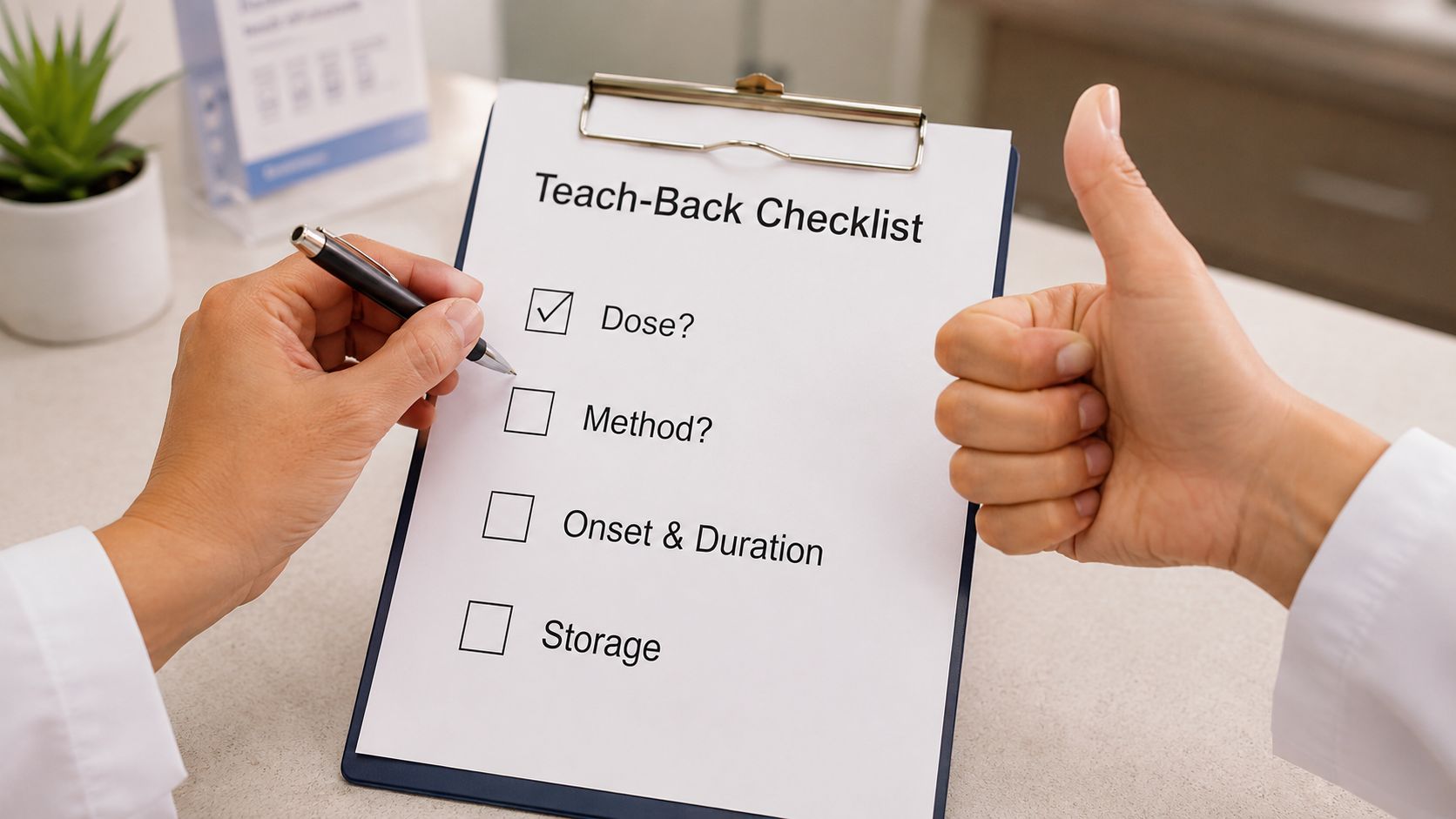
A useful checklist can live on a laminated card behind the counter or in the delivery bag. Staff can mark off the basics, then record the confirmation in the POS system for continuity later. That helps when a customer comes back and says, “I tried the tincture, but I want to adjust.” The team can pick up the conversation where it left off.
The tone matters just as much as the steps. Keep it relaxed, direct, and supportive. If the customer shows they understand the product, say so. That small moment builds trust fast, and it makes the next purchase smoother.
For a shop that wants to keep dosing conversations clear, a calculator reference can also help staff and customers stay aligned after the sale: Edible dosage calculator.
6. Condition-Specific Wellness Handouts
Generic wellness sheets are easy to ignore. Condition-specific handouts get used because they answer a direct question, like whether cannabis may fit into a plan for chronic pain, insomnia, anxiety, PTSD, nausea, or inflammation. That specificity is what makes them worth handing out in the first place.
A strong handout should keep one condition on one page and use simple language. For chronic pain, the sheet can explain that some people look for a CBD:THC balance, use topicals for localized pain, and choose edibles for longer coverage. For insomnia, the guide can focus on evening use, longer-lasting formats, and a sleep routine that supports the product. For anxiety, the handout should clearly warn that high-THC products can worsen anxiety for some people, then point the customer toward lower-THC or CBD-dominant options when appropriate.
That clarity matters because people often want a cure-all when what they really need is a realistic plan. A well-written handout can say what the product may help with, what it won't fix, and what habits make the result more dependable. For example, a pain handout can connect cannabis use with movement, heat or ice, and physical therapy. A sleep handout can remind the reader that consistent bedtime routines matter. Those support steps make the cannabis choice more useful.
A clean visual design helps here too. Use one main idea, define any term you can't avoid, and leave enough room for quick reading. If you can, add a QR code to a peer-reviewed source or a clinician-reviewed summary so the customer can look deeper without getting overwhelmed at the counter.
One condition per handout keeps the message usable. A customer dealing with sleep and pain at the same time still needs a clear first step, not a giant bundle of every possible recommendation.
These handouts also work best when a knowledgeable staff member can explain them in plain terms. That keeps the customer from having to translate medical language on the fly. For Mr. Nice Guys DC, that's the difference between a nice brochure and an education tool that changes behavior.
7. Infographics and Visual Summary Charts
Some information lands fastest when it's visual. That's why infographics belong in any serious set of patient education resources, especially for customers who want to compare products without reading long paragraphs. A good chart can show onset, duration, discretion, dose accuracy, and storage basics in one glance.
The best cannabis infographics are built for quick decisions. A consumption-method comparison can line up flower, vape, edible, tincture, and topical so customers can see the tradeoffs side by side. A strain spectrum chart can place Blue Dream, Gelato, Wedding Cake, Runtz, and OG Kush along a daytime-to-evening axis. A dosing guide can break out beginner, regular, and experienced use with clear warnings about overconsumption and a simple sense of what to expect.
The design has to be consistent. Use the same color language across every chart, keep it mobile-friendly, and make it easy to read on a phone while someone is standing in line or waiting for delivery. That also makes the graphics easy to share on social media, in email newsletters, and in order confirmations. When the visual system stays stable, customers learn it faster.
A strong infographic should never try to say everything. It should answer one question well. If the customer needs to compare formats, show format differences. If they want onset and duration, show timing. If they want dosing help, show dosage bands and highlight where new users should stay cautious. That's more useful than a crowded poster with tiny text and too many icons.
A short run of bold labels helps the message stick:
- Compare formats clearly. Show what starts fast, what lasts longer, and what's easier to dose.
- Keep the layout vertical. Customers read mobile-first, so the design should work on a phone.
- Use the same colors every time. Repetition makes the system easier to remember.
- Link to a deeper resource. Let the chart open into a guide or video when someone wants more detail.
For a dispensary that rotates products often, infographics are also a smart way to keep the education fresh without rewriting everything from scratch. They turn the menu into something customers can easily understand and use.
8. Support Group Guides and Community Connection Resources
Cannabis education doesn't end with product choice. People often do better when they also know where to find community, especially if they're managing chronic pain, sleep issues, anxiety, or PTSD. A support-group guide gives them that path without making them hunt all over the internet.
The strongest version is a local directory with a few clear categories, plus trusted online options when in-person support isn't available. Someone dealing with pain might want a peer-led group, a moderated online forum, or a mentor who's been managing similar symptoms for years. Someone dealing with insomnia may want a sleep-focused community that doesn't shame them for struggling. Someone managing anxiety may want therapist-led support or a mindfulness workshop that fits alongside their cannabis routine.
That kind of guide works because it respects the fact that education is social too. People learn from clinicians, but they also learn from family, friends, and peers. A useful directory can help a customer see where each source fits. It can also make the difference between feeling isolated and feeling supported enough to keep using products responsibly.
A good system should vet every group before listing it. That means checking whether the group promotes responsible use, whether the moderators stay on topic, and whether the tone is helpful. It also means making the guide easy to browse by condition and format, then updating it regularly so the list doesn't go stale.
When people feel alone in the process, they make rough choices. When they feel connected, they ask better questions and follow through more consistently.
For Mr. Nice Guys DC customers, this can also include confidential referral cards without store branding if someone wants privacy. That's a thoughtful touch, and it tells the customer the shop understands real life, not just the purchase. The best support-group guide gives people a next step, not just a list.
9. Medication and Dosing Reference Cards
A wallet-sized reference card is one of the most practical tools in the whole lineup. It travels with the customer, sits in a purse or pocket, and gives them quick access to dose, timing, storage, and notes they can use later. That makes it especially useful for edibles, tinctures, cartridges, and topicals.
The card works best when it's personalized. A customer taking a Wedding Cake 10mg gummy doesn't need a generic reminder. They need their own dose, their own timing, and their own storage plan. A card can say to take one gummy in the evening, note the expected onset window, remind them how long the effect may last, and leave room for a few personal observations about what felt right. The same idea works for a cartridge card with battery info or a topical card with application notes.
The design should be sturdy, readable, and easy to understand at a glance. Lamination helps. Waterproof stock helps. Large type helps. So does a simple icon system that keeps storage, timing, and dose from blending together. If a patient wants a blank card for later, offer that too. Some people want the structure now and the details later.
A useful card also makes follow-up easier. If the patient comes back and says the tincture helped but felt too strong at night, the staff can look at the card and adjust the next recommendation with less back-and-forth. That's a better experience for everyone involved.
A good dosing card should feel like a companion, not a warning label.
For Mr. Nice Guys DC, this is one of the strongest ways to turn education into repeat confidence. The customer leaves with something they can read at home, not just a conversation they might half-remember. And when the card is built from the actual purchase, it becomes even more useful on the next visit.
10. First-Time User Onboarding Kits and Welcome Guides
First-time cannabis customers need more than a receipt and a smile. They need a simple onboarding kit that explains what to expect, what to avoid, and how to use their first purchase without guesswork. That is especially true for people who are new to cannabis entirely, not just new to a particular product.
A good welcome kit should feel calm and curated. Include a short safety guide, a plain-language dosing primer, product-specific notes, and a quick overview of services like pickup or delivery. If the customer bought flower, include guidance on storage and start-up use. If they bought edibles, include onset and duration reminders. If they bought a cart or tincture, include a simple technique guide so they're not left figuring it out alone.
The best onboarding kits also create a feedback loop. A customer can tell the shop what worked, what felt unclear, and what they want next time. That makes the kit more useful over time, because the store learns which explanations stick and which ones need a rewrite. For a dispensary with regular product rotation, that feedback is gold.
A welcome guide also sends a signal. It says the shop expects people to succeed, not stumble. That matters a lot for new users who are nervous about being judged or asking the “wrong” question. The tone should be friendly, direct, and practical, the same way an experienced budtender would talk through a first purchase at the counter.
A few useful elements make the kit stronger:
- A one-page safety sheet for storage, timing, and what not to mix carelessly.
- A simple product note for the exact item the customer bought.
- A contact card so the customer knows where to ask a follow-up question.
- A feedback prompt so the team can improve the next version.
A strong onboarding kit turns a first visit into a relationship. It helps the customer leave with clarity instead of uncertainty, which is exactly what good cannabis education should do.
10-Point Comparison: Patient Education Resources
| Resource | Core features | UX / Quality (★) | Value / Cost (💰) | Target audience (👥) | Unique selling points (✨ / 🏆) |
|---|---|---|---|---|---|
| Product‑Specific Strain & Format Guides | Strain profiles, THC/CBD, terpenes, effects, consumption tips | ★★★★☆ | 💰 Moderate, frequent updates needed | 👥 New & experienced patients | ✨ Laminated + digital images; 🏆 Curated for premium inventory |
| Consumption Methods & Safety Video Library | 2–5 min demos: vaping, tinctures, edibles, dosing & safety | ★★★★★ | 💰 Med–High (production cost) | 👥 Visual learners, first‑time & safety‑conscious users | ✨ Multi‑platform videos + captions; 🏆 Builds trust/credibility |
| Decision‑Support Tools & Effects Matching Guides | Interactive flowcharts/quiz with tailored product matches | ★★★★☆ | 💰 Moderate (dev & maintenance) | 👥 Indecisive shoppers, medical patients | ✨ Interactive, shareable results; 🏆 Reduces purchase regret |
| Multilingual Medication Guides & Drug Interaction Resources | Interaction charts, timing guidance, multi‑language materials | ★★★★★ | 💰 High (medical review & translation) | 👥 Medical patients & non‑English speakers | ✨ Pharmacist‑reviewed multilingual content; 🏆 Safety & compliance focus |
| Teach‑Back & Confirmation Checklists | Staff prompts, patient repeat‑back, documentation for compliance | ★★★★★ | 💰 Low (training time) | 👥 All customers, esp. first‑time/vulnerable | ✨ Quick evidence‑based teach‑back; 🏆 Gold‑standard comprehension check |
| Condition‑Specific Wellness Handouts | Condition summaries, THC:CBD guidance, dosing & references | ★★★★☆ | 💰 Moderate (clinical review) | 👥 Chronic pain, insomnia, anxiety, PTSD patients | ✨ Evidence‑cited handouts; 🏆 Medical credibility for treatment planning |
| Infographics & Visual Summary Charts | Color‑coded charts: onset/duration, dosing, strain spectrum | ★★★★☆ | 💰 Moderate (design) | 👥 Busy patients & social audiences | ✨ Scannable, social‑ready designs; 🏆 High engagement/shareability |
| Support Group Guides & Community Connection Resources | Local & online groups, peer mentors, provider directories | ★★★★☆ | 💰 Low (curation) | 👥 Patients seeking peer support & mental health aid | ✨ Vetted local networks & mentorship; 🏆 Builds community loyalty |
| Medication & Dosing Reference Cards | Wallet cards: product dose, timing, onset, emergency contacts | ★★★★★ | 💰 Moderate (custom print) | 👥 Older patients, polypharmacy users, dose trackers | ✨ Personalized, durable cards; 🏆 Promotes medication safety |
| First‑Time User Onboarding Kits & Welcome Guides | Welcome letter, quick‑start, samplers, safety checklist & discounts | ★★★★★ | 💰 Med–High (kits & samples) | 👥 New customers & first‑time cannabis users | ✨ Curated samplers + discounts; 🏆 Strong first‑impression & retention |
Empower Your Wellness with the Right Knowledge
Having access to the right patient education resources changes the whole experience of medical cannabis. Instead of guessing, you get a system that helps you choose the right product, understand how to use it, and feel better about the decision before you ever take the first dose. That's the value of good education, it gives you confidence that holds up after you leave the store.
Start with one or two tools that match your immediate need. If you're trying to sleep better, grab a condition-specific handout and a dosing card. If you're still figuring out formats, lean on a strain guide and a consumption video. If you take prescription medication, use the interaction guide before you buy anything new.
The wider health-literacy lesson is simple. Patient materials work best when they're readable, actionable, and matched to the person in front of them. Cannabis education is no different. A brochure that looks polished but doesn't help you choose or use a product is just paper. A guide that answers your question in plain language, on the spot, is what changes the experience.
At Mr. Nice Guys DC, that's the standard worth aiming for. The right resource should help you shop smarter, use cannabis more safely, and get clearer about what fits your wellness goals. If you're ready to make that easier, visit the team on U Street or browse their education-first approach online and bring a better plan into your next purchase.
Mr. Nice Guys DC gives you premium flower, edibles, carts, pre-rolls, tinctures, and topicals, plus the kind of guidance that makes each choice easier to understand. If you want cannabis education that feels practical, local, and helpful, visit Mr. Nice Guys DC and use the tools that fit your routine best.
Mr Nice Guys DC
At Mr. Nice Guys DC, we’re more than just a cannabis delivery service — we’re passionate advocates for quality, convenience, and community. With years of experience in the cannabis industry, our team is dedicated to educating and empowering customers across Washington, D.C. Whether you're a seasoned user or just starting your cannabis journey, our blog delivers trusted tips, product insights, and the latest updates from the world of weed. Stay informed, stay elevated.
