
Must Be 21 To Enter
By entering this site you are agreeing that you are at least 21 Years of Age or older.
I AM 21 OR OLDERLimonene Terpene Effects: Mood, Anxiety & THC Paranoia
.svg)

.png)
You're probably here because cannabis has felt inconsistent.
One product helps you relax and settle in. Another, with a similar THC number, makes your thoughts race and your chest tighten. A third gives you a bright, functional lift that feels easy to manage. For a lot of patients in DC, that difference isn't random. It often comes down to the plant's terpene profile, and one terpene gets talked about more than most: limonene.
The problem is that limonene usually gets reduced to a lazy summary like “it boosts mood.” That's only part of the story. The more useful question at the dispensary is this: Can limonene help shape how THC feels? For many patients, especially people who want symptom relief without the “worried high,” that's the question that matters.
This guide breaks down limonene terpene effects in plain language. You'll learn what limonene is, how it may affect mood, why patients often look for it, and what recent clinical evidence says about its ability to reduce THC-induced anxiety and paranoia.
Beyond the High An Introduction to Limonene
A common dispensary moment goes like this. Someone says, “I want something with THC, but I don't want to feel paranoid.” That's not a beginner-only problem. Experienced consumers run into it too, especially with potent flower, carts, and concentrates.
THC matters, but it doesn't tell the whole story. Two products can have a similar cannabinoid profile and still feel very different in the body. That's where terpenes come in. They're the aromatic compounds in cannabis that help shape scent, flavor, and the overall feel of the experience.
Why the same plant can feel different
Think of THC as the engine. Terpenes are part of the tuning. They don't replace THC, but they can influence whether the ride feels sharper, softer, brighter, or heavier.
Limonene is one of the best-known examples because patients often associate it with citrus-forward products and a more upbeat, clearer effect. But the practical value goes further than aroma. For patients trying to avoid spiraling thoughts after a strong hit of THC, limonene has become especially important.
Practical rule: If you've ever said “I want the benefits of THC, just not the jitters,” you're already asking a terpene question.
Why limonene gets so much attention
Limonene shows up in products that smell like lemon peel, orange zest, or grapefruit rind. Patients often gravitate toward it for daytime use, social settings, or stressful afternoons when they want support without feeling foggy.
Here's the key takeaway. A lot of cannabis education still focuses almost entirely on THC percentage. That can leave patients guessing. Looking at limonene terpene effects gives you another layer of control, especially if your goal is a more predictable session.
A simple example: if a patient knows high-THC products can sometimes make them feel uneasy, they may start choosing flower or vapes with noticeable citrus aroma and verified terpene data instead of shopping by potency alone. That doesn't guarantee an identical result every time, but it's a smarter way to choose.
What Exactly Is the Limonene Terpene
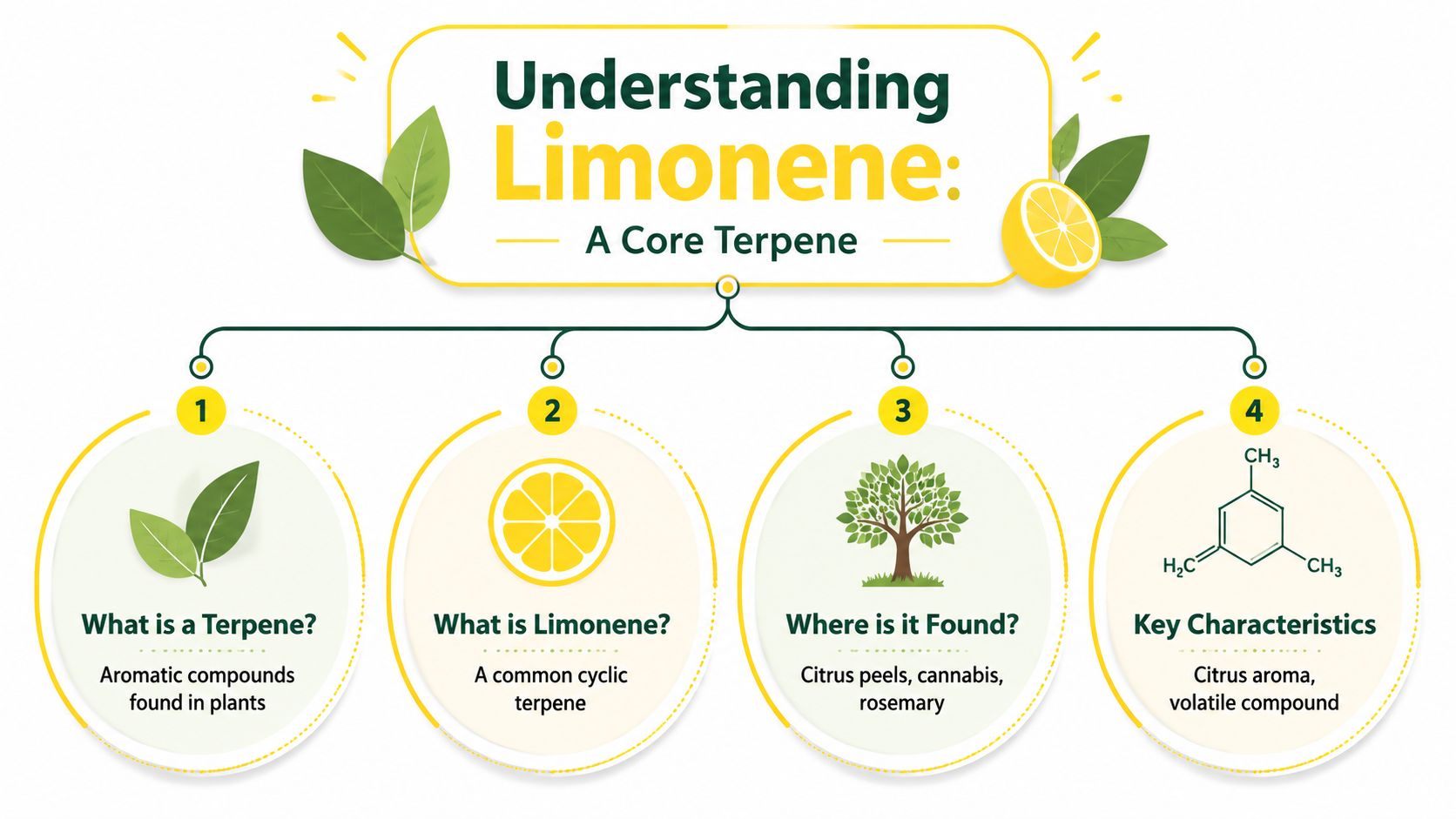
If the word terpene sounds technical, the easiest way to think about it is this: terpenes are the plant's scent compounds. They're the reason lavender smells calming, pine smells crisp, and citrus peels smell sharp and bright.
Cannabis has these same aromatic compounds. Limonene is one of them, and it's responsible for that familiar lemon-orange character many patients notice as soon as they open a jar.
A simple way to understand it
Think of terpenes as the plant's essential oil language. They communicate through smell, and in cannabis they also help shape the user experience. If you want a fuller primer on how these compounds work in flower and extracts, this guide on what terpenes are in weed is a useful next step.
Limonene isn't unique to cannabis. It's found in nature, especially in citrus peels, and people recognize it immediately because the scent is so familiar. It also appears in plants like rosemary. That matters because it helps demystify cannabis. You're not dealing with some mysterious lab-only ingredient. You're dealing with a naturally occurring aromatic compound that shows up in everyday plants.
What patients usually notice first
Before anyone talks about receptors or neurotransmitters, many notice limonene with their nose. Products rich in limonene often smell:
- Citrusy and bright with lemon or orange peel notes
- Zesty rather than earthy when compared with heavier profiles
- Fresh and uplifting instead of musky or skunky
That scent cue can help, but it shouldn't be your only tool. Some products smell citrusy while still having a more mixed terpene profile. Lab results and product testing give you a better read when you want consistency.
Why this matters in real life
At the dispensary, this turns into a practical shopping habit. If a patient says they want something that feels cleaner, lighter, or easier to handle during the day, a budtender may steer them toward products known for citrus-forward terpene expression.
A useful example: someone choosing between two vape carts might ignore the flashy strain names and ask which one has a stronger limonene presence. That question usually gets them closer to the effect they want.
How Limonene Elevates Mood and Relieves Stress
For many patients, the first noticeable limonene terpene effects are emotional rather than physical. People often describe the feeling as brighter, lighter, or more mentally open. Not intoxicated by limonene itself, but gently shifted in a better direction.

What may be happening in the brain
One reason limonene gets linked with mood support is its relationship to key neurotransmitters. Inhalation of limonene vapor directly increases serotonin and dopamine levels in specific brain regions associated with anxiety, depression, and obsessive-compulsive disorder, providing a biochemical mechanism for its reported ability to improve mood and provide stress relief without producing intoxicating “high” feelings itself, as described in Leafly's limonene overview.
That's a big deal because it helps explain why some limonene-rich products feel emotionally supportive without feeling mentally sloppy. Patients often confuse “uplifted” with “stimulated.” They aren't always the same thing. Limonene may feel more like a subtle change in outlook than a burst of intensity.
How that can feel in practice
A patient dealing with a stressful workday might choose a limonene-forward vape or tincture because they want relief that still lets them stay present. The goal isn't to get knocked out. The goal is to smooth the edges.
If you're also comparing non-intoxicating options, this article on CBD tinctures for anxiety can help you think through format and comfort level.
Here are a few real-world descriptions patients commonly use when limonene works well for them:
| Situation | What the patient is trying to avoid | What they may be looking for instead |
|---|---|---|
| Midday stress | Feeling heavy or sedated | A clearer, lighter mood |
| Social anxiety | Overthinking every interaction | A calmer, more open headspace |
| Low motivation | Feeling flat or mentally stuck | A brighter sense of momentum |
Some patients don't want stronger cannabis. They want cannabis that feels easier to steer.
Why “mood boost” can be misleading
The phrase sounds nice, but it's vague. It can make people think limonene is just a happy-smelling extra. In practice, its value is more specific. It may support a sense of ease, reduce mental friction, and help a product feel less emotionally jagged.
That's why product matching matters. A patient who wants to relax before bed might not chase limonene as their top priority. A patient who wants to stay functional, reduce stress, and avoid a muddy head often will.
If you want a quick visual explainer before choosing a product, this short video gives a good overview of terpene-driven mood effects.
Exploring Limonene's Other Therapeutic Benefits
Patients often notice something simple at the counter. Two products can have similar THC numbers, yet one feels easier on the body. Sometimes that difference comes from the terpene profile, and limonene is one reason people pay attention.
Beyond mood, limonene is being studied for effects related to inflammation, digestion, and cell protection. For DC medical patients, that matters because cannabis choices are rarely about one symptom in isolation. Stress, stomach discomfort, and overall function often show up together.
Digestive support in plain language
A review in PMC describes limonene as showing gastroprotective and anti-inflammatory potential. That is a careful way of saying researchers are interested in how it may help protect stomach tissue and calm irritation in the digestive tract. The review does not prove limonene treats specific digestive conditions on its own, but it does support why patients and clinicians keep it on the radar.
The gut lining works like a protective coating. When that coating gets irritated, people may describe the result as a sour stomach, tension in the abdomen, or a general sense that their system is "off." Limonene is interesting here because its potential benefits may overlap with the kind of daytime cannabis experience many patients want. Clearer head. Less friction. Less chance of feeling weighed down.
A common dispensary example is the patient whose stress shows up in their stomach first. They are not necessarily asking for heavy relief. They want something they can still function on while trying to keep both their mood and body more settled.
Other areas researchers are watching
The same review also discusses limonene's neuroprotective and anticancer-related potential in preclinical research. That wording matters. Preclinical means early-stage work, not proof that limonene treats disease in patients.
Still, this kind of research is useful for product education. It suggests limonene may do more than add a citrus aroma. Researchers are examining how it interacts with oxidative stress, inflammation, and broader cell health, which helps explain why this terpene keeps coming up in medical cannabis conversations.
For shopping purposes, the practical question is not whether limonene does everything. It is whether it fits your goal.
- If daytime function matters most, limonene often makes more sense than heavier terpene profiles because patients commonly prefer it in products that feel more mentally workable.
- If sleep is the goal, compare limonene against terpenes that are usually a better match for sleep support.
- If stress and digestive discomfort tend to travel together, limonene may be a useful terpene to discuss with your budtender because those two complaints often influence each other.
For many patients, that is a significant value. Limonene may help shape a cannabis experience that feels steadier, more usable, and easier to customize.
The Entourage Effect How Limonene Tames THC Anxiety
Limonene becomes especially important for medical patients.
A lot of terpene education stops at aroma and general mood. That's helpful, but it misses the question many patients care about most: Can limonene make THC feel less anxious? Recent clinical evidence says yes, and that changes how patients can shop.
What the entourage effect means in plain language
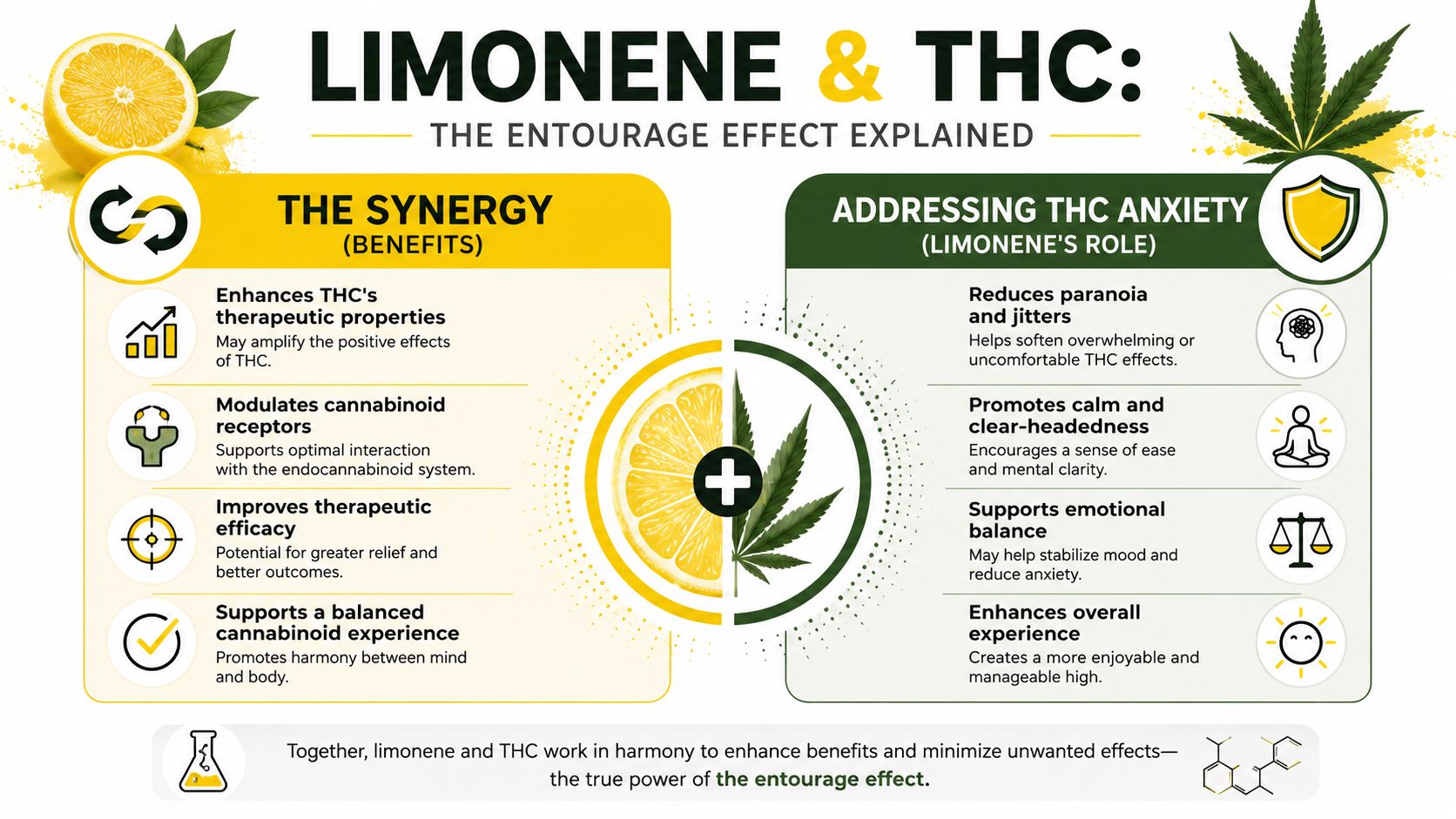
The entourage effect is the idea that cannabis compounds can work together in ways that change the overall experience. Instead of THC acting alone, other compounds like terpenes can shape how the session feels.
If that sounds abstract, think about coffee. Caffeine by itself is one thing. Coffee as a plant product contains other compounds that influence the overall effect. Cannabis works similarly. THC may be the star compound, but it doesn't always perform alone.
If you want a broader look at whole-plant synergy, this guide on full-spectrum cannabis helps connect the dots.
The clinical finding that matters
Here's the part patients should know. In a 2024 double-blinded, placebo-controlled crossover study, vaporized D-limonene was proven to significantly reduce anxiety exacerbated by THC alone, with participants reporting statistically significant reductions in “anxious/nervous” and “paranoid” ratings. This marks the first clinical evidence of a terpene mitigating a primary psychoactive compound's adverse effects, as summarized by Drexel's research highlight on the THC and limonene study.
That's more specific than the usual “limonene may help stress” language. This wasn't just about general mood. It was about THC-induced anxiety. For patients who benefit from THC but dislike how edgy it can feel, that distinction matters.
What this means at the dispensary counter
It means a patient doesn't have to think in binary terms. You don't always have to choose between “use THC and risk paranoia” or “avoid THC completely.” You can start looking for product combinations and terpene profiles that make THC more tolerable.
A practical protocol for patients might look like this:
- Start with your problem, not the strain name. If THC sometimes makes you uneasy, say that clearly.
- Ask for terpene data. Specifically ask whether the product is limonene-forward.
- Choose a slower format first. A small puff from a vape or a modest amount of flower is easier to assess than a large edible dose.
- Track your response. Notice whether citrus-forward products feel smoother, less paranoid, or easier to recover from.
Why this is different from generic terpene advice
Most terpene writeups treat limonene like a cheerful accessory. The clinical finding above suggests something more targeted. Limonene may help buffer THC's rough edges without eliminating the effects patients are seeking from THC in the first place.
That's especially useful in high-THC markets, where some patients want strong relief for pain, stress, appetite, or mood but don't want the racing thoughts that sometimes come with potency.
If THC helps your symptoms but sometimes turns on you, limonene-rich products may be one of the smartest places to experiment.
Limonene Safety and Practical Dosing Guidelines
You're at the dispensary looking at two products with similar THC numbers. One has a bright citrus smell and terpene data to match. The other does not. If THC has made you anxious before, that difference is worth paying attention to.
Safety comes first. Plant Family notes that limonene is classified as “Generally Recognized as Safe” for ingestion, and the same reference explains that isolated, concentrated limonene can irritate the skin and eyes while amounts above 4 mg per gram of flower are considered high. For patients, the practical takeaway is simple. A finished cannabis product is not the same thing as handling raw terpene concentrate.
That distinction matters at home too. Orange peel in food, a limonene-rich flower, and a bottle of isolated terpene liquid all sit in very different lanes. One is part of a whole product. One is a lab-tested cannabis profile. One is a concentrated ingredient that needs much more care.
How to spot a meaningful amount
Strain names can point you in the right direction, but they are not the final answer. Batch testing matters more.
If you have access to a label or certificate of analysis, look for limonene listed among the top terpenes. A flower product with more than 4 mg per gram is generally considered high, as noted earlier. That gives you a practical benchmark instead of forcing you to guess from a catchy menu name.
For DC patients comparing options before they shop, this guide on where to buy weed in Washington DC can help you find places that make terpene details easier to check.
A simple dosing protocol for THC-sensitive patients
Limonene works a bit like a seatbelt for some THC experiences. It may help reduce the anxious edge, but it does not make a large THC dose automatically comfortable. That is why the dose of THC still matters most.
A practical routine looks like this:
- Start with a low THC dose. If you already know you are sensitive, keep the first trial small.
- Use smell as an early clue. Lemon zest, orange peel, or citrus cleaner notes often suggest limonene.
- Verify with terpene data when possible. Your nose can guide you. The label confirms it.
- Take one small inhalation and wait. Give yourself time to notice whether the experience feels steadier, clearer, or still too activating.
- Write down what happened. The goal is to find your personal THC-to-limonene comfort zone, not just a popular strain.
Here's a practical version. A patient picks up a Wedding Cake vape because the terpene panel shows limonene near the top. They take one small puff, wait, and notice whether the effect feels calmer than other THC products they have tried. That kind of testing is far more useful than assuming every citrus-smelling product will solve the problem.
The safest approach is steady and boring. Start low, check the terpene profile, and change one variable at a time. That is how patients turn limonene from a marketing buzzword into a practical tool for reducing THC-related anxiety.
Your Guide to Finding Limonene in Washington DC
Knowing the theory is useful. Knowing what to ask for is what saves time.
In DC, terpene-rich products can move quickly, and menus rotate. That means the best strategy isn't memorizing one “perfect” strain. It's learning how to spot limonene when it shows up in flower, cartridges, and other formats.
What to ask when you shop
Start with the effect you want, not just the product type. Say something like, “I want THC, but I'm trying to avoid paranoia,” or “I'm looking for something citrusy and daytime-friendly.”
That gives the budtender something real to work with. If you're also comparing pickup and local access options, this guide on where to buy weed in Washington DC helps with the shopping side.

Strains and formats patients often look for
Some strain names come up often in limonene conversations. Wedding Cake and Do-Si-Dos are commonly cited examples of high-limonene flower. That doesn't mean every batch will express the terpene the same way, so checking current testing matters.
Here's a practical way to think about formats:
| Format | Why a patient might choose it | What to watch for |
|---|---|---|
| Flower | Full aroma, easy to smell before use | Batch-to-batch terpene variation |
| Vape cart | Fast onset, convenient for testing small amounts | Ask for terpene details, not just strain name |
| Pre-roll | Simple and accessible | Harder to dose precisely if you're sensitive |
A sample dispensary conversation
A patient walks in after having a rough experience with a strong cart that felt mentally sharp and uncomfortable. This time, they ask for a product with a citrus-forward terpene profile and mention that THC can make them paranoid.
The budtender points them toward a limonene-rich flower and a vape option, explains which one is easier to test in small amounts, and shows them the terpene information. The patient takes the vape because they want more control over each inhalation. That's a much better process than buying the highest-THC item and hoping for the best.
Ask, “Do you have anything limonene-forward that tends to feel smoother with THC?” That question usually gets better recommendations than asking for the strongest option.
If you want help finding cannabis that feels more balanced, Mr. Nice Guys DC makes that process easier with curated products, transparent menus, and a team that can help you compare flower, vapes, tinctures, and more based on the effect you're after.
Mr Nice Guys DC
At Mr. Nice Guys DC, we’re more than just a cannabis delivery service — we’re passionate advocates for quality, convenience, and community. With years of experience in the cannabis industry, our team is dedicated to educating and empowering customers across Washington, D.C. Whether you're a seasoned user or just starting your cannabis journey, our blog delivers trusted tips, product insights, and the latest updates from the world of weed. Stay informed, stay elevated.
