
Must Be 21 To Enter
By entering this site you are agreeing that you are at least 21 Years of Age or older.
I AM 21 OR OLDERHow to Cook with Cannabis: A DC Patient's Guide
.svg)

.png)
You're probably standing in your kitchen with a jar of flower, a recipe tab open, and that familiar question: should you just buy an edible, or make one yourself and finally control the dose? If you're a medical patient, that question gets even more practical. Homemade edibles can give you more control over ingredients, texture, and strength, and the process is a lot less mysterious once you break it into a few clean steps.
The good news is that how to cook with cannabis isn't a modern gimmick. The practice has deep roots, from bhang in India dating back to 2000–1400 BC to recipes appearing in a European cookbook in 1475, which is why fats like milk, ghee, butter, and oil have always been central to the process (THC Farmer's history of cannabis cuisine). For a first-time patient, that history matters because it shows the method is older than the product aisle, and the basic technique still works.
Why Make Your Own Cannabis Edibles
A lot of patients start here because they want the calm, longer-lasting feel of an edible without guessing what's in it. They also want to avoid paying for something every time they need a consistent nighttime option or a weekend dose they can plan around. Homemade edibles can solve both problems if you're willing to learn the basics and respect the math.
What DIY gives you that store-bought edibles don't
The biggest advantage is control. You choose the fat, the flavor, the portion size, and the serving pattern. That matters if you're sensitive to sugar, want a savory option, or need a smaller dose than most packaged edibles provide.
It also helps with consistency in a different way. Once you know how your infusion behaves, you can repeat the same recipe instead of trying a different packaged product every time. That's especially useful for medical patients who are trying to keep their experience predictable.
Practical rule: if you wouldn't be comfortable with the exact serving size in a store-bought edible, don't assume a homemade one is automatically safer. Measure it like medicine, not like a snack.
The main hesitation is usually dosing, not cooking. That's fair. But the process gets easier when you treat it like a kitchen workflow, not a culinary challenge. A strong starting point is understanding the difference between smoking and edibles, especially for onset and duration, which is why a quick read on edibles vs smoking helps frame the experience before you mix your first batch.
The First Crucial Step Decarboxylation
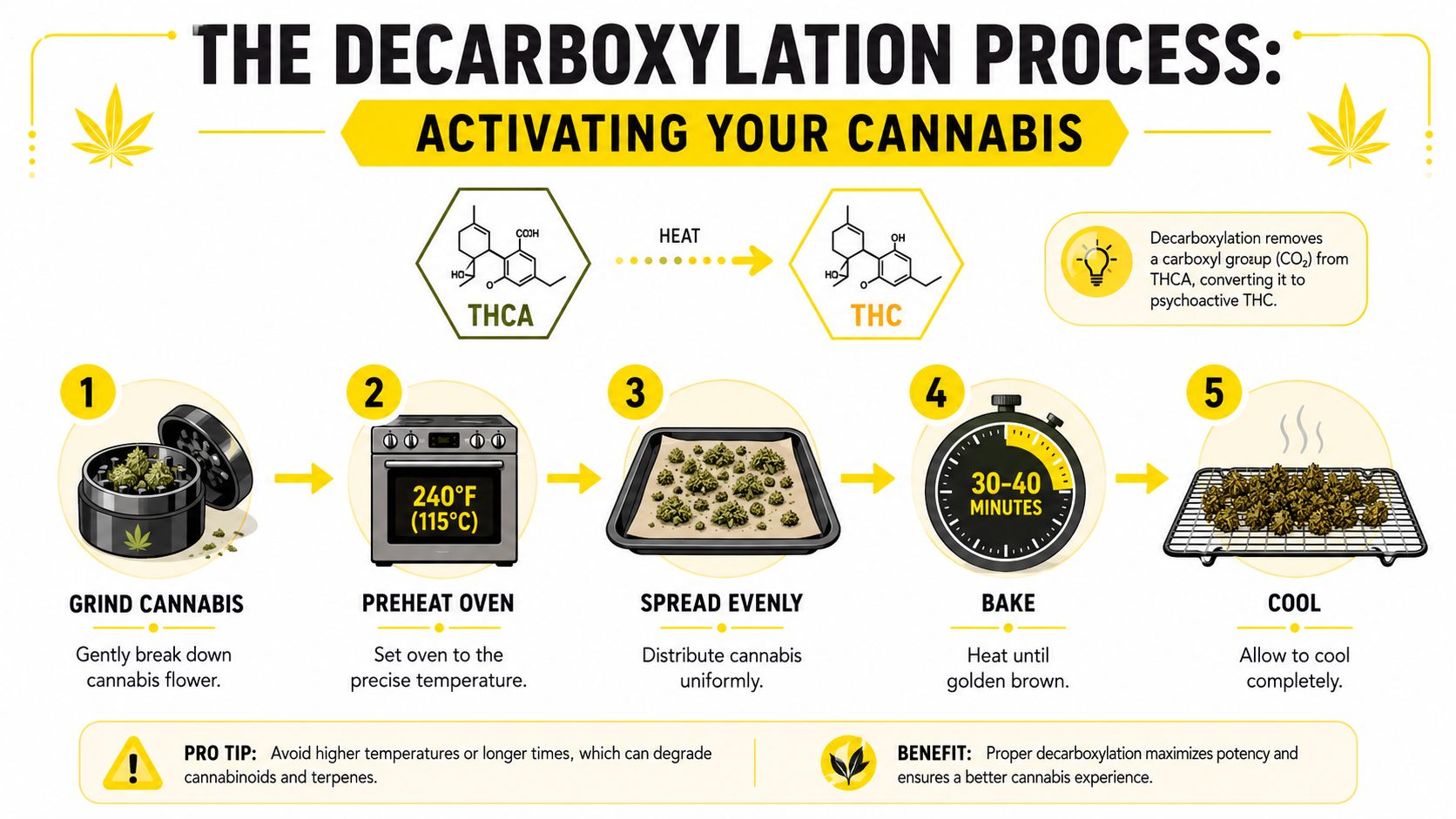
Cannabis flower doesn't become edible-ready just because it's warm. It needs decarboxylation, the heating step that activates the compounds your body can use orally. In simple terms, it flips the plant “on” so the cannabinoids are bioactive when eaten.
The oven method that's easiest to trust
Start by preheating your oven to 220–245°F (105–120°C), and keep in mind that you shouldn't exceed 250°F (120°C) if you want to avoid degrading cannabinoids (Roots Sciences decarboxylation guide). Break the flower into small pieces, spread it in an even layer on a baking sheet lined with parchment paper, and bake it for 30–45 minutes.
You're looking for flower that smells toasted and looks lightly golden, not dark or burnt. If it's browning too fast, the oven is too hot or the rack is too close to the element. A gentler bake keeps the plant usable for infusion and preserves more of what you're trying to extract.
A patient-friendly way to think about this is to treat decarb like turning a light on before you try to read. Without it, the rest of the recipe can still happen, but the result won't be what you wanted. That's why this step sits before everything else.
Small habits that make the batch cleaner
Use a rimmed sheet so loose pieces don't slide around. Stir once or twice during the bake if the flower is spread unevenly. Let it cool before moving it into butter or oil, because handling hot plant material too early can make the kitchen smell stronger than it needs to.
If you want to connect the chemistry to the product itself, a helpful explainer on THCA vs THC for DC patients makes the activation step easier to understand. Once you see decarb as a controlled preparation step instead of a mystery, the rest of the infusion process feels a lot less intimidating.
Creating Your Infusion Cannabutter and Oils
Once the flower is activated, the next step is moving those compounds into a fat. Cannabutter, coconut oil, and olive oil are the usual choices because cannabinoids bind well with fats, which makes them practical bases for home cooking.
Cannabutter works best when you stay patient
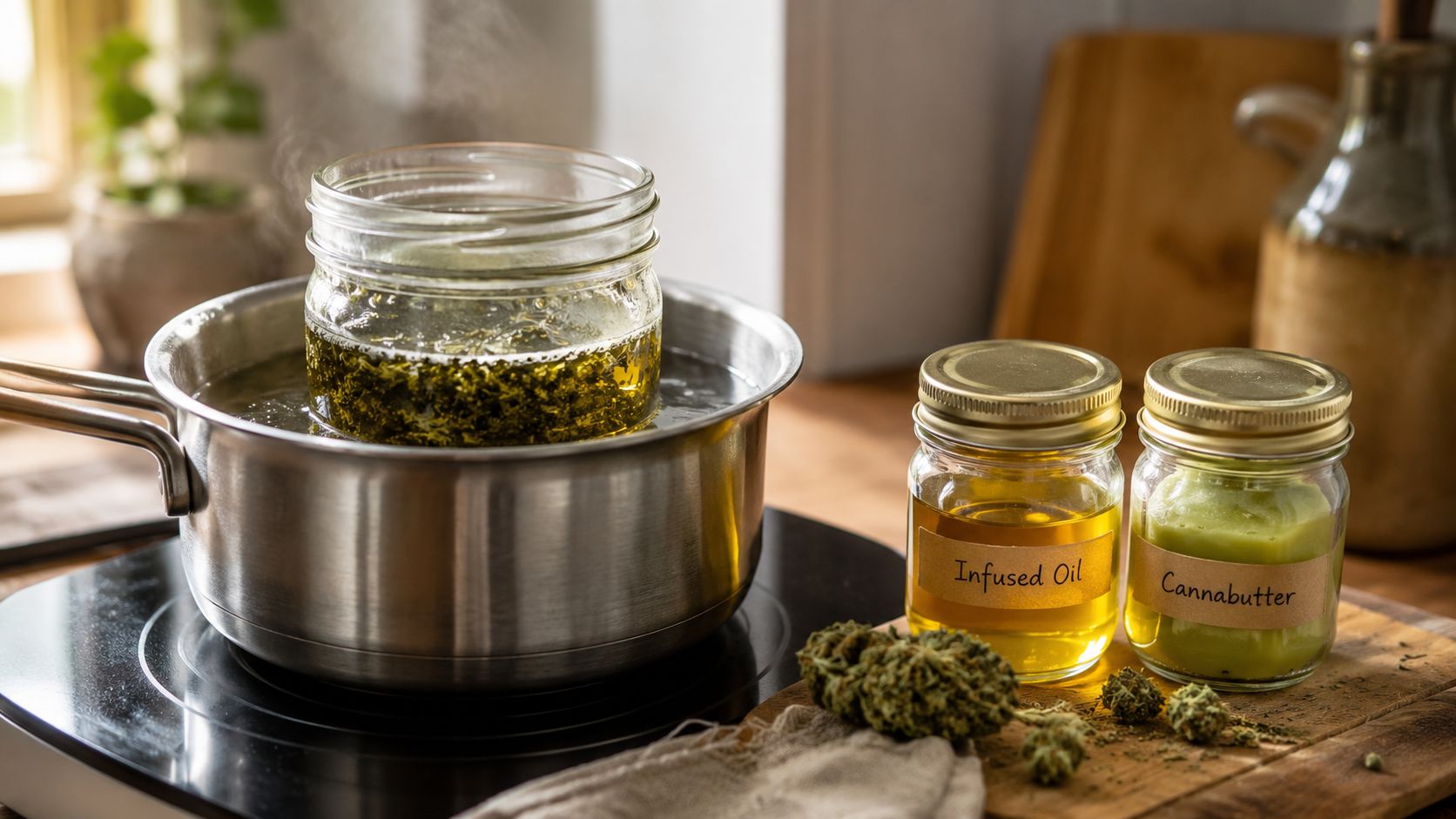
A slow cooker or double boiler gives you the most control at home. Keep the mixture around 160°F to 200°F for 2–3 hours when making cannabutter or coconut oil infusions, and do not let it boil. That lower heat helps protect potency and keeps the flavor from turning harsh, which matters when you are making medicine you want to use.
A practical batch starts with decarboxylated cannabis mixed into melted butter and a little water, then held at that steady temperature until the fat picks up the plant compounds. Stir occasionally, but do not whip air into it. The goal is a steady infusion, not a hard simmer.
Practical rule: if the liquid is bubbling like soup, it is too hot. You want gentle heat, not agitation.
After the infusion time, strain it through cheesecloth or a stainless-steel strainer while it is still warm. That gives you a cleaner final product and keeps plant matter out of your recipes. If you are deciding which fat fits your routine, a clear guide on what cannabis oil is used for can help you sort out whether butter, coconut oil, or olive oil makes the most sense for the way you cook.
Olive oil needs a shorter window
Different fats need different handling. For lighter oils like olive oil, a shorter infusion of 30–40 minutes at 160–180°F is enough, which is useful if you want a salad dressing, a pasta finish, or a savory drizzle that will not taste heavy. The shorter window also gives you a little more control when you are trying to keep the oil tasting clean.
The infusion is not only about extraction, it is about how the fat will behave later in the recipe. Butter brings richness, coconut oil holds up in baked goods, and olive oil works better for savory dishes. Choose the fat based on the meal you want to make, not just the ingredient that happens to be on hand.
Strain cleanly and store cleanly
After straining, pour the infusion into a clean jar or container and let it cool fully before sealing it. If it is butter, refrigerate it until solid. If it is oil, keep it in a dark container so light does not break it down faster than needed. A good infusion should look smooth, smell pleasant, and be easy to portion later.
For a first batch, consistency matters more than style. A well-made infused fat gives you a reliable base for different foods, which is especially helpful for DC patients who want a repeatable result instead of starting over each time.
Dosing Your Homemade Edibles Accurately
This is the part that makes most first-time cooks nervous, and for good reason. Homemade edibles can be inconsistent if you skip the math or pretend every batch behaves the same way. The answer isn't to guess less. It's to calculate better.
Start with the flower, then work forward
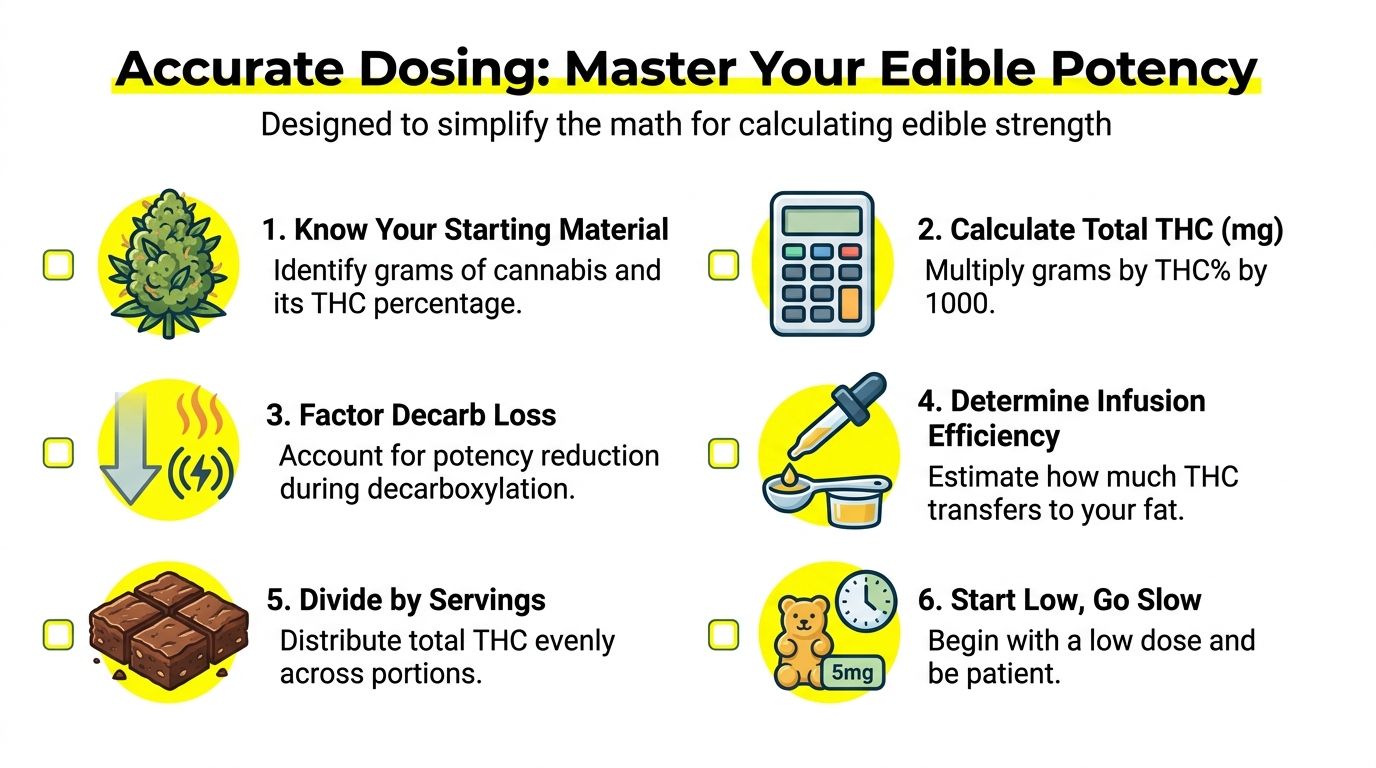
The basic formula is simple in concept. Take the THC percentage of your flower, multiply by the amount of flower you used, and then divide by the number of servings. That gives you a starting estimate for potency, which is the right place to begin.
The missing piece is heat loss. A useful caution from a beginner dosing guide is that 10–20% of THC/CBD is typically lost during cooking and infusion (Trilogy Medicinal beginner's guide). That means your final edible is usually a little less potent than the raw math suggests, so you should lower the estimate instead of assuming full transfer.
Practical rule: if your math says the batch is one thing and the kitchen says it feels stronger, trust the batch, not the assumption. Variability comes from heat, mixing, and serving size.
A realistic example helps more than a perfect formula
Say you start with flower that tests at a certain THC percentage and you infuse it into one batch of butter or oil. Your first number tells you the approximate total potency in the whole batch. Then you adjust that total downward to account for the 10–20% loss mentioned above, because some compound will not survive the cooking process or will stay behind in the plant matter.
After that, divide the adjusted total by the number of portions in the recipe. If you cut brownies into smaller squares, the dose drops. If you pour the same infusion into fewer servings, it rises. That's why the serving count matters as much as the original flower.
Don't mix up infusion types
Butter, oil, and tincture aren't interchangeable even if they all start from cannabis. Butter may blend better in baked goods, olive oil works in savory food, and a tincture behaves differently because you're not baking it into a fat-based dish. For that reason, dose each infusion on its own terms rather than assuming one serving method matches another.
A useful patient resource on edible dosage calculation can help you sanity-check the numbers before you eat the first serving. The goal isn't to make the strongest edible. It's to make the dose you can repeat comfortably next time.
Simple Recipes and Smart Storage Solutions
Once you've got infusion in the jar, the best recipes are the ones you'll make again. I've seen new patients do better with one straightforward savory dish or a simple drink than with a complicated dessert that demands perfect timing. A good edible is one you can measure, remember, and repeat.
Three easy ways to use the infusion
One of the most reliable uses is infused olive oil for pasta or vegetables. Toss it with garlic, lemon, and salt after cooking, or stir it into a finished sauce so you're not exposing it to extra heat. That keeps the flavor cleaner and makes the portion easy to control.
Another simple option is coffee or tea. Add the measured infusion to a warm mug and blend it well so the fat disperses. The goal is even mixing, because clumps make the dose feel unpredictable.
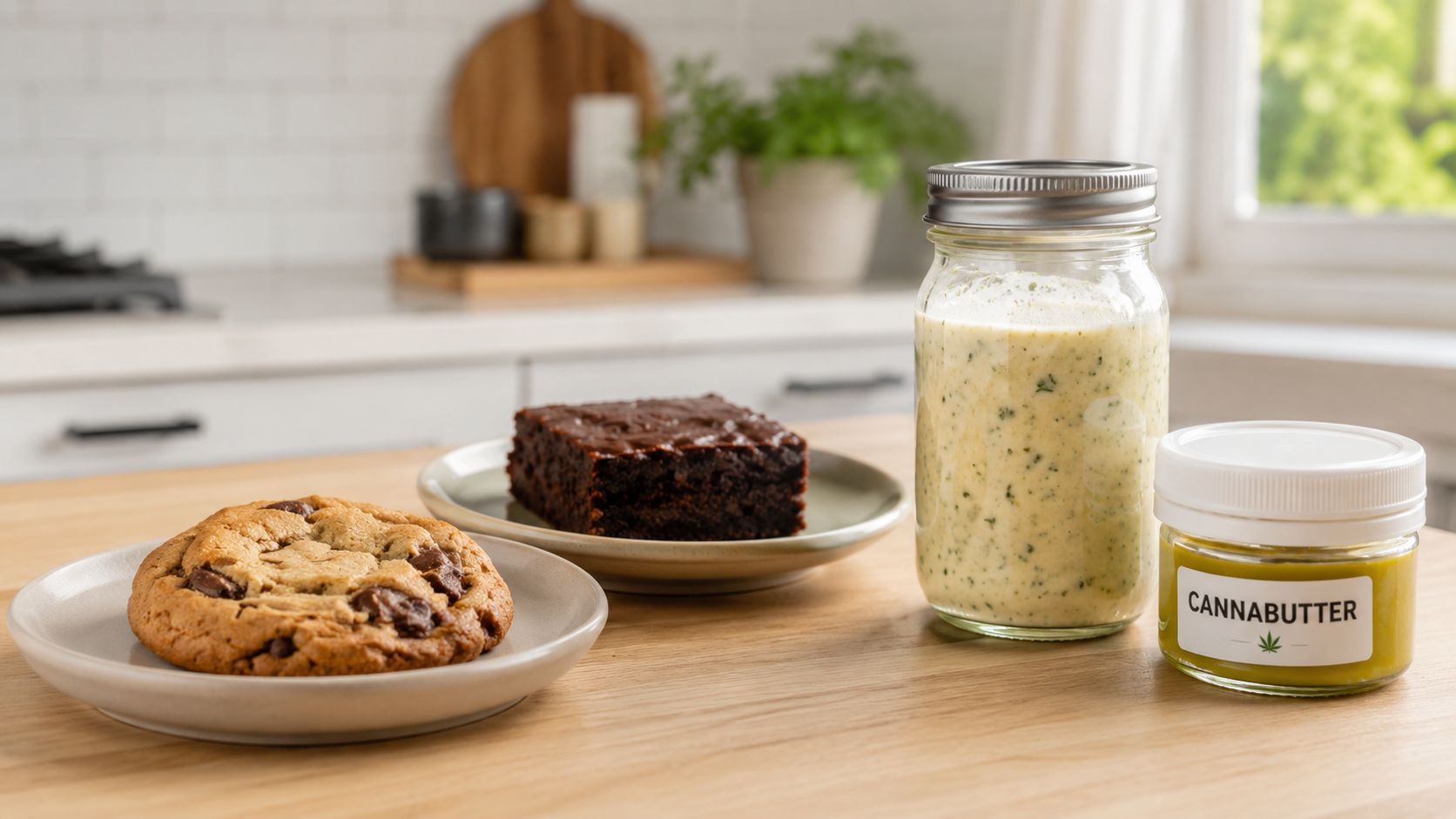
A third low-risk choice is a simple chocolate fudge or brownie batch using a premeasured amount of cannabutter. That works well because the infusion is already blended into the fat, which is then distributed through the recipe. The same principle makes the whole batch easier to portion later.
The basic storage rule is straightforward. Keep butter refrigerated until solid, and keep oils in a cool, dark place in a tightly sealed container. Label everything clearly with the contents and a visible warning so nobody mistakes it for regular food. The cleanest storage habit is the one that prevents confusion three days later.
Label now so you don't guess later
Write down what the infusion is, how strong you estimate it to be, and what recipe it went into. If you made more than one batch, color-code the lids or use separate containers. That's especially helpful in a shared fridge, where an unlabeled jar can turn into a mistake fast.
The same home technique that works for brownies also works for pasta sauces, as noted in the earlier section on infusions. A well-made batch can live several lives, but only if you keep it organized and don't let it sit exposed to heat or light.
Safety and Legal Guidelines for DC Patients
Edibles ask for patience, not bravado. Start low and go slow is still the best rule because edible cannabinoids are absorbed differently, and the onset can take time. A patient who takes a second dose too early often ends up uncomfortable before the first dose has even peaked.
The science behind edibles is clear that cannabinoids become orally bioactive through decarboxylation and are best extracted into fats or alcohol, which is why waiting 1–2 hours before taking more is central to safer use (Cannabis edible overview). For a new home cook, that means the first serving should be treated as a test serving, not a challenge.
Practical rule: eat one measured portion, wait, and write down how it felt. Memory is a bad dosing tool.
For Washington, DC patients, the safest path is to stay within the rules that apply to medical cannabis use and keep homemade products clearly separate, labeled, and stored. A helpful local overview on DC cannabis legalization can give you context on the broader legal environment, but it's still smart to confirm the current medical rules before making large batches or sharing anything with anyone else.
The simplest compliance habit is to cook for yourself, label your products, and keep records of what you made. That protects you, helps you repeat a good batch, and reduces the odds of an accidental mistake at home. If you're unsure about possession, transport, or how homemade products fit your patient status, check the current DC medical program guidance before you infuse another jar.
If you want help choosing flower, understanding an infusion, or picking a product that fits your first edible batch, visit Mr. Nice Guys DC and use the team's medical-cannabis guidance to make your next kitchen session safer, simpler, and more consistent.
Mr Nice Guys DC
At Mr. Nice Guys DC, we’re more than just a cannabis delivery service — we’re passionate advocates for quality, convenience, and community. With years of experience in the cannabis industry, our team is dedicated to educating and empowering customers across Washington, D.C. Whether you're a seasoned user or just starting your cannabis journey, our blog delivers trusted tips, product insights, and the latest updates from the world of weed. Stay informed, stay elevated.
