
Must Be 21 To Enter
By entering this site you are agreeing that you are at least 21 Years of Age or older.
I AM 21 OR OLDERHoliday Promotions at Mr. Nice Guys DC: A Patient Guide
.svg)

.png)
You're in the parking lot or standing at the counter, phone in one hand, wallet in the other, trying to decide whether this holiday sale is worth it. You want to save money, maybe pick up a gift, maybe stock up for yourself, but you also don't want to mess up your order, forget your ID, or pick the wrong format and waste a deal.
That's the right instinct. Holiday promotions only help when you use them cleanly, with a plan, and with compliance in mind. In DC, that means knowing what you want, where the deal is posted, how you're going to order, and what you need at checkout so the savings don't disappear at the register.
Planning Your Holiday Purchase Without the Stress
A lot of people walk into holiday shopping thinking they need to buy everything at once. They do not. They need a short list, a clear limit, and a sense of which promotion fits their routine and their DC compliance needs.
Holiday shopping gets crowded because the demand is real. Adobe said the 2025 holiday season brought $257.8 billion in online spending from November 1 to December 31, up 6.8% year over year, and the National Retail Federation said shoppers planned to spend an average of $890.49 per person on holiday items. Adobe also reported heavy traffic around Black Friday and Cyber Monday, including 80.3 million in-store shoppers, 85.7 million online shoppers, and 75.9 million online shoppers on Cyber Monday (Adobe holiday shopping report). That is the kind of pressure that makes a random cart expensive fast.
Start with a tight wishlist
A first-time patient usually does better with three buckets, not ten. One item for immediate use, one item that might make a decent gift, and one backup choice if the menu changes before checkout.
Practical rule: if you cannot explain why you want each item in one sentence, you are probably about to overspend.
A simple example works better than a vague plan. A new patient might write down “one pre-roll for after the family dinner, one low-dose edible for quiet evenings, one topical for a relative who does not want to inhale,” then wait for the sale instead of grabbing whatever looks shiny. That is how you keep the holiday rush from turning into a random cart.
Holiday promotions also cluster around late November and early December because that is where the traffic is. If you want a good deal, do not shop like it is a normal Tuesday. Check what you need, confirm the format, and keep your purchase tied to a clear use case so you are not paying for extra product you will not touch.
Finding and Signing Up for Mr. Nice Guys DC Holiday Promotions
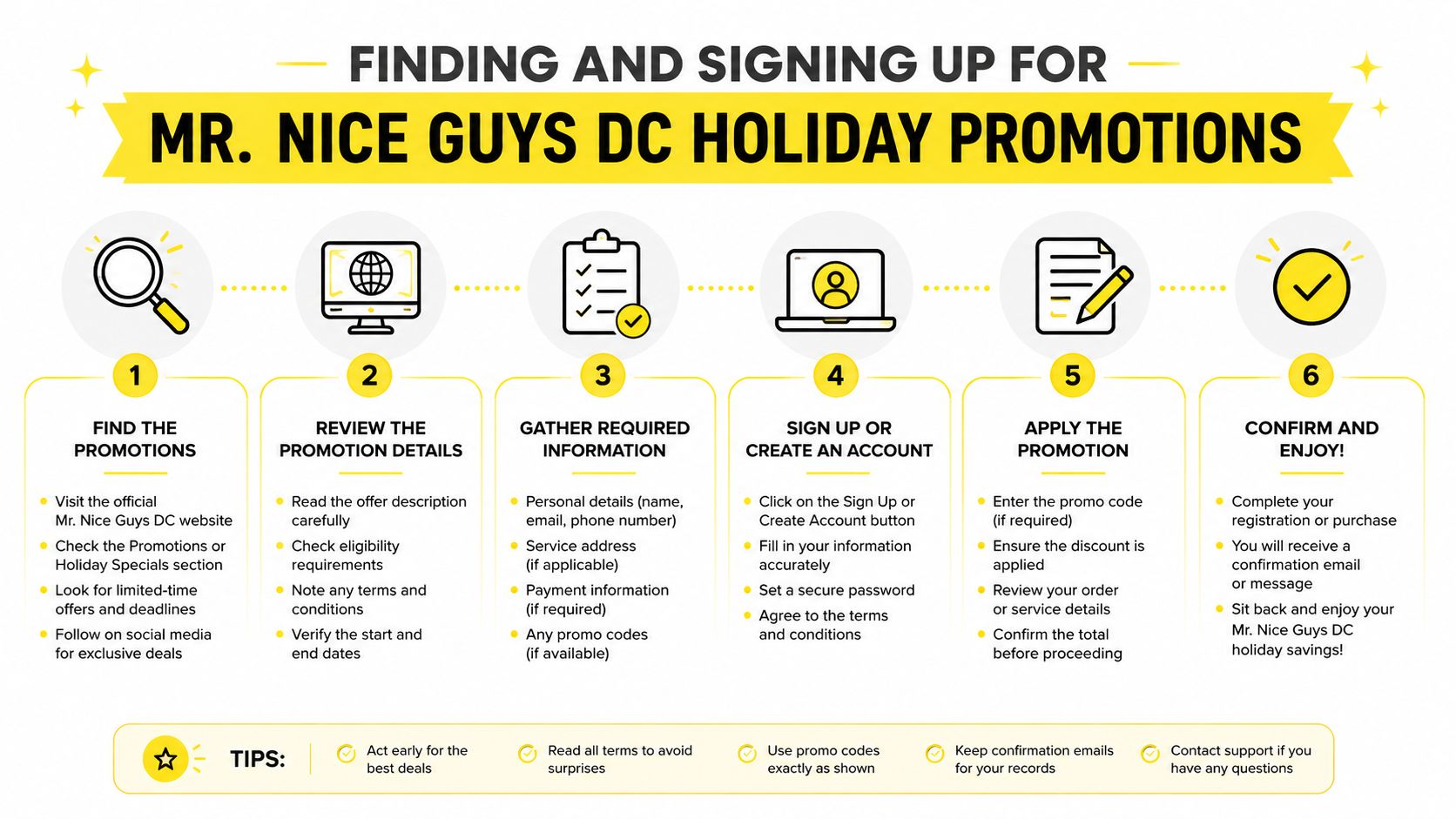
To catch a holiday deal before it disappears, get on the right channels first. Do it before the rush starts, not after the good items are gone. The easiest way to stay ahead is to use the same sources every time and check them in the same order.
Watch the channels that move first
Start with the website, then check the email list, then social pages, then in-store signage. Email usually carries early-access notices for people who already asked to be notified, while in-store signs tell you what is active right now.
If you want a cleaner setup, join the loyalty flow before the next busy stretch. The Mr. Nice Guys DC loyalty rewards program gives returning patients a direct path to perks, and that matters when menu items rotate and a holiday drop only stays live for a short run.
Sign up before the sale window opens
Waiting until the morning of a big promo is a mistake. By then, the stronger items may already be moving, and you end up registering while everyone else is checking out.
Use this sequence instead:
- Subscribe to email updates. Early notices and deadline reminders usually land there first.
- Save the site on your phone. Quick access matters when the menu changes fast.
- Check social posts for quick announcements. Those are useful for same-day drops and limited inventory.
- Look at in-store signs if you are already nearby. Sometimes the register sees a deal before the website catches up.
A returning patient who gets a Cyber Monday flower deal because they are subscribed has a clear advantage over a walk-in who shows up two days later and pays full price. That is timing, not luck.
Keep a checklist ready
Before the next sale opens, make sure these pieces are already handled:
- Email subscription active
- Phone saved for quick menu access
- Loyalty account or rewards touchpoint set up
- Preferred product categories already in mind
- A backup choice in case your first pick sells out
Qualifying for the Deal and What to Bring
Holiday discounts only matter if you can use them at the counter. Age, ID, card status, and payment method all have to line up, because a promo that fails compliance is a wasted trip.
Mr. Nice Guys DC serves patients 21+, so don't count on someone else covering for you or on a blurry photo of your ID getting through. Bring a valid government ID, and if you are a medical patient, make sure your DC medical card is current and matches your information. Check the dispensary's medical card requirements before you head out.
Promotions carry category, channel, and minimum-order limits
Holiday offers are usually narrower than they first look. A deal may apply only to flower, only to edibles, only to a minimum order, or only to one ordering channel. People get burned when they assume every promo works everywhere.
One patient walks in expecting to use a buy-one-get-one edible promo, then finds out it was online-only. That kind of miss is avoidable if you read the offer before you leave home. Bundle pricing deserves the same scrutiny, because the savings can look strong until you notice the item count is smaller than you expected.
Bring the payment type that actually works
Most dispensaries do not take credit, so plan for debit or cash. Do not assume the register will fix it after you have already picked your products and waited in line.
A few common disqualifiers show up over and over:
- Expired ID or medical card
- Out-of-state ID issues
- Mixing up recreational and medical pricing
- Trying to redeem a channel-specific deal on the wrong channel
- Not meeting the minimum order for the promo
Keep your compliance clean, because that is how you protect the discount.
The goal is not to make the process harder. The goal is to stop the holiday rush from turning a real savings opportunity into a wasted trip. If your papers are right, your payment is ready, and your card status is clean, the deal usually goes through without drama.
Choosing the Right Ordering Method for the Holiday Rush
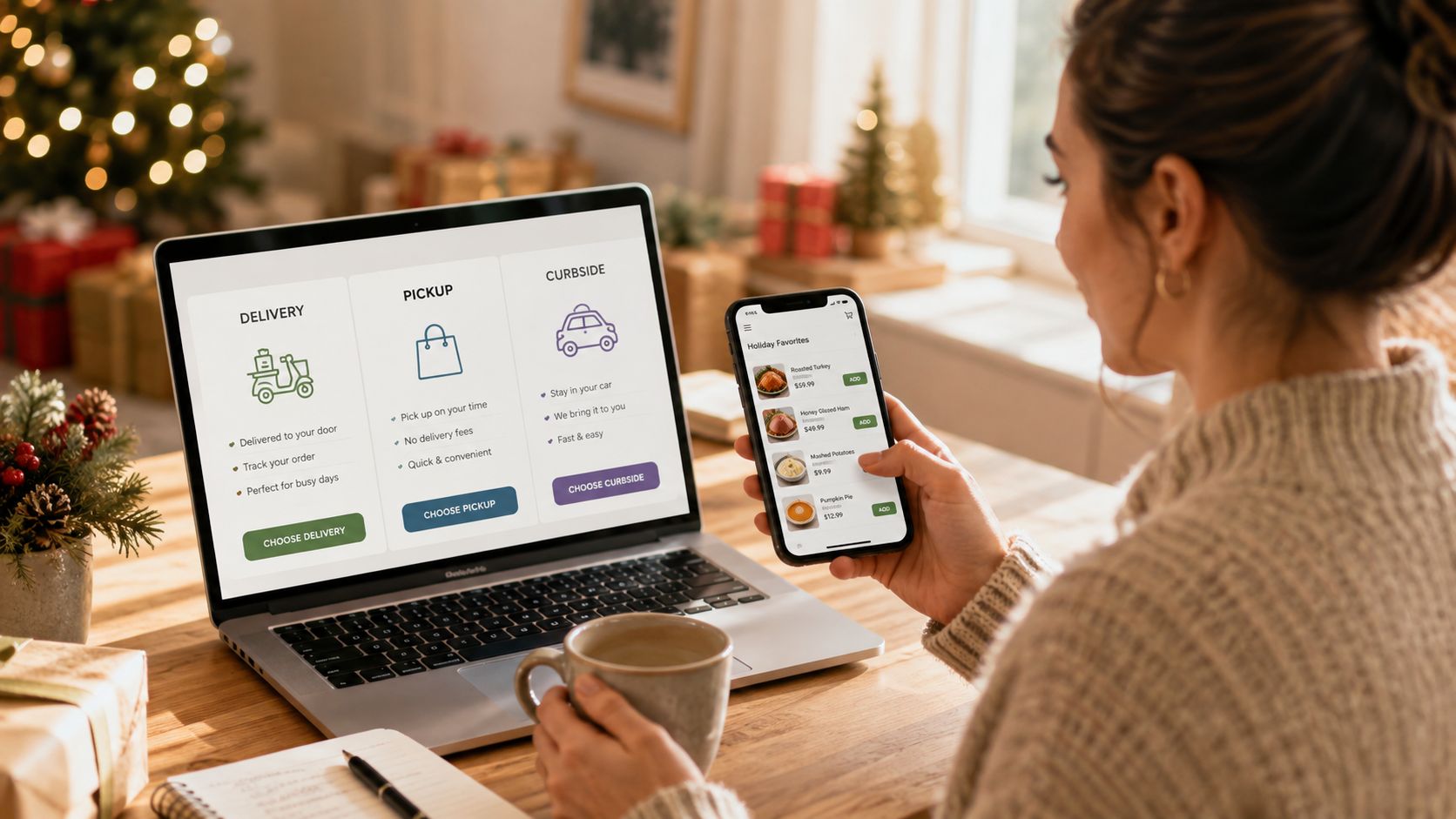
The smartest order method depends on what you're buying and how much control you want over the process. In-store pickup, curbside, and delivery all work, but they don't behave the same way during a holiday promo.
Pickup gives you the freshest read on the menu
Use pickup if you want to talk to staff, see what's moving, and react fast if the promo changed. That's the right move when you're not sure whether a deal is still active or when you want a quick answer about substitution or product fit.
Curbside is better if you already know what you want and you'd rather avoid holiday foot traffic. Delivery through Sweede makes the most sense if you live in DC, Alexandria, Bethesda, Rockville, or Silver Spring and you'd rather save time than stand in a line.
Delivery works, but it rewards planning
Holiday demand can slow down any channel, and delivery is no exception. If a deal is hot, you may want to place the order before inventory thins out, especially if you're chasing a specific flower, edible, or pre-roll drop.
A Friendship Heights patient who switched from delivery to curbside during a holiday promo did the right thing because the pre-roll deal they wanted had already sold out online. That kind of switch is exactly why you should keep one backup method in mind. The same-day delivery guidance for DC is useful if convenience matters, but convenience only helps if the promo still applies at checkout.
Confirm the offer before you commit
Don't assume the same deal appears on every channel. Some promos are pickup-only, some are delivery-friendly, and some disappear once inventory drops.
Before you check out, ask one simple question. Does this promo apply on the channel I'm using right now? If the answer is unclear, fix it before you pay, not after.
Picking Products That Actually Fit the Season
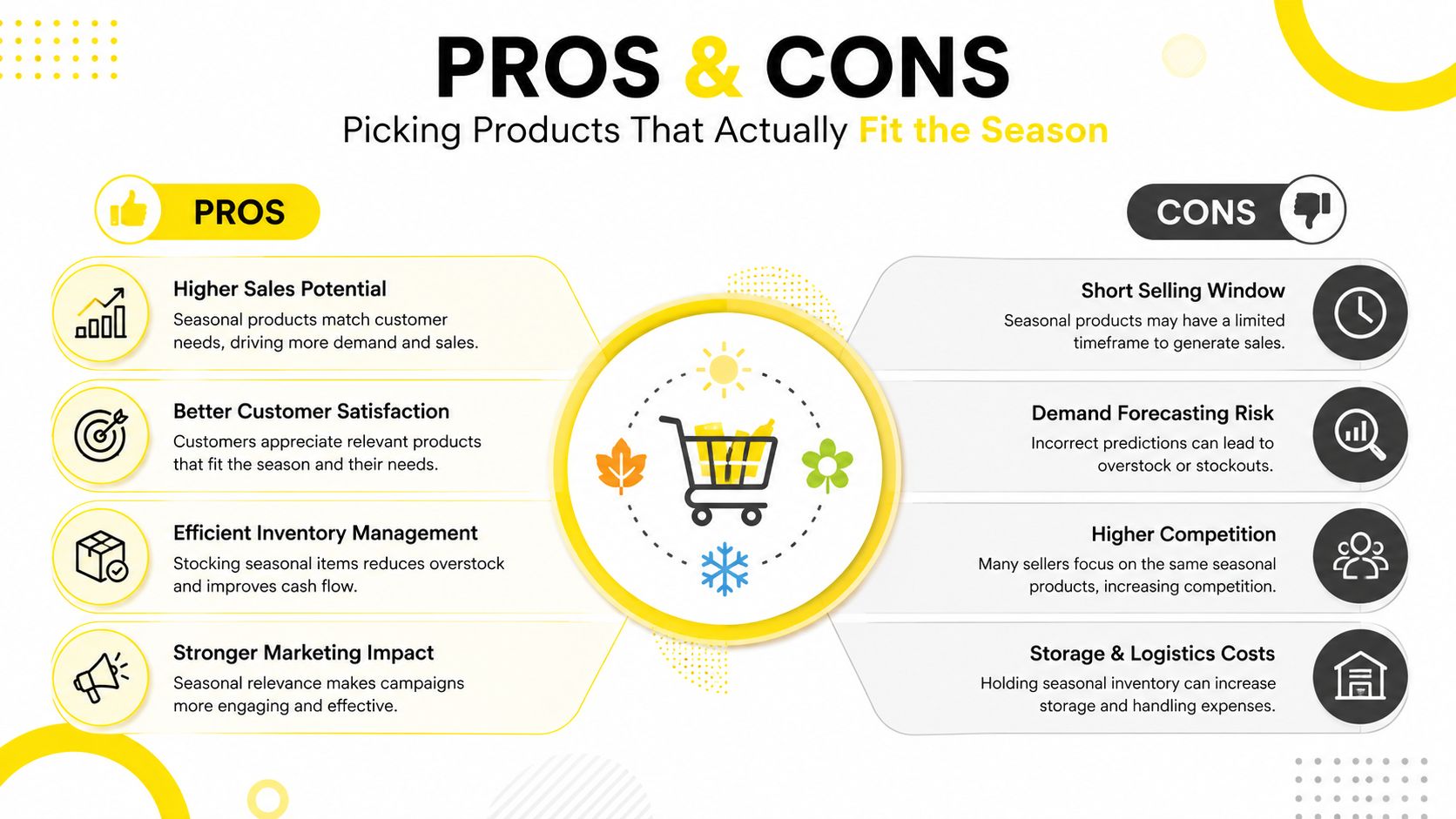
Holiday buying gets messy when people shop by hype instead of use case. A better move is to match the format to the season, the setting, and the person who'll use it.
Match the format to the moment
Flower and pre-rolls make sense when someone wants something straightforward after a long shopping day. Edibles are better when the goal is a low-key holiday party or a quiet night at home. Topicals fit people who want targeted comfort, especially after hours of decorating or cooking.
Tinctures are the calmer choice for travel days or unpredictable schedules. Cartridges work for people who already know the format and want something compact. The point is simple, buy the format that solves the actual problem, not the one that looks easiest on the shelf.
Gift like a patient, not a tourist
A Cleveland Park patient who bundled a topical for a relative and a low-dose edible for themselves made a smarter holiday purchase than someone who would've bought two identical eighths. That choice respected two different needs and used the promo more efficiently.
If you're gifting THC-infused food items, keep the dose conservative and the packaging clear. Any edible gift for a non-consumer should be sealed and clearly labeled so nobody mistakes it for ordinary candy or snack food. That matters more than the bow on top.
The rotating menu also matters here. Slow inventory during promos can work in your favor if you're willing to pick the item that fits the season instead of waiting for a perfect strain name to show up again.
Use the right format for the job
- Flower: good for familiar users who want flexibility
- Pre-rolls: easy for quick, social use
- Edibles: useful for controlled, low-dose gifting
- Topicals: practical for targeted comfort
- Tinctures: sensible for travel or discreet use
- Cartridges: compact and simple for experienced users
The gift ideas for cannabis enthusiasts angle is worth keeping in mind, but only if the gift respects dosage and the recipient's comfort level. Holiday shopping gets better when the product suits the person.
Maximizing Savings Without Getting Trapped by the Deal
A giant discount banner can be a trap. The question is whether the offer lowers your unit cost, fits your habits, and keeps you from buying more than you need.
A 20% off flower deal can be smarter than a buy-one-get-one cartridge offer if you're an occasional user and you already planned to buy one item. A BOGO only wins if you were going to use both units before they sit around untouched. That's why the number on the sign doesn't tell you enough.
Read the math, not just the headline
Holiday promos often look bigger than they are. Bundle pricing can hide a smaller quantity, and “free” add-ons sometimes just shift the cost into the base item.
Use this rule: compare what you were going to buy anyway against what the promo forces you to buy. If the unit price doesn't fall, the deal probably isn't saving you money.
Practical rule: don't buy more just because the total cart looks more impressive.
The minimum order guidance matters here because some promos only trigger after a threshold you might not have planned for. If the threshold pushes you into extra spending, check whether the savings are real or just cosmetic.
Lean on loyalty and small extras
Loyalty points, double-point days, and modest add-ons can beat flashy discount copy. A free pre-roll with a qualifying order may be more useful than a deep discount on something you won't finish.
That's especially true if you shop regularly instead of stockpiling for the entire season. The people who win holiday promotions are usually the ones who buy their normal items at a better rate, not the ones who chase every loud offer.
Use this before you pay
- Check the unit price
- Compare it to what you planned to buy
- Count the total quantity accurately
- Look for loyalty value
- Walk away if the promo forces extra spending you don't need
A clean savings strategy is boring, and that's a compliment. Boring beats expensive.
Your Holiday Promo Checklist and What Comes Next
Holiday shopping goes smoother when you stop improvising and use the same four steps every time. Subscribe to the channel where the deals are posted, confirm your ID and payment method before you leave, choose the right ordering channel for the deal, and stick to the wishlist you made at the start.
That's the whole game. Stay on the list, stay compliant, and don't let a rush decision wreck a good discount.
Quick Reference for Mr. Nice Guys DC Holiday Promotions
| Channel | Best For | What to Confirm Before Checkout | Common Holiday Limitation |
|---|---|---|---|
| In-store pickup | Fast menu access and staff help | ID, product availability, promo eligibility | High foot traffic during peak holiday hours |
| Curbside | Quick orders with less waiting | That the promo applies curbside, plus payment method | Limited help if you need product advice |
| Delivery through Sweede | Convenience in DC, Alexandria, Bethesda, Rockville, or Silver Spring | Delivery eligibility, order minimum, lead time, and promo eligibility | Popular items can sell out before delivery arrives |
Holiday promos don't stop mattering when the season ends. Menus rotate, restocks come and go, and the patients who stay connected tend to hear about the next useful offer before everyone else does.
Use the sale to save money, not to collect random products. That's how you get through the holidays with your budget intact and your compliance clean.
Mr. Nice Guys DC offers medical cannabis shopping with pickup, curbside, and delivery options, plus a rotating menu that can make holiday promotions easier to use when you already know what you need. If you want a clean, compliant way to shop during the season, visit Mr. Nice Guys DC and check what's live before the next rush hits.
Mr Nice Guys DC
At Mr. Nice Guys DC, we’re more than just a cannabis delivery service — we’re passionate advocates for quality, convenience, and community. With years of experience in the cannabis industry, our team is dedicated to educating and empowering customers across Washington, D.C. Whether you're a seasoned user or just starting your cannabis journey, our blog delivers trusted tips, product insights, and the latest updates from the world of weed. Stay informed, stay elevated.
