
Must Be 21 To Enter
By entering this site you are agreeing that you are at least 21 Years of Age or older.
I AM 21 OR OLDERLoyalty Rewards Program: A Guide for DC Medical Cannabis
.svg)

.png)
You walk into the dispensary for the same thing you usually buy, and the budtender points to a QR code or asks for your loyalty number at checkout. You're already thinking about your product, your budget, and whether you need a pickup or delivery order, so it's easy to ignore the small line that says you can earn points. Then the question hits, what do those points do, and are they worth caring about on your next visit?
For DC medical cannabis patients, that question matters because a loyalty rewards program isn't just a retail extra. It can change how you plan your visits, how you redeem value, and how closely you pay attention to the rules that shape medical dispensary shopping in Washington, DC. If you've ever wondered whether the rewards are simple savings or something more complicated, a calm, step-by-step explanation helps a lot, especially when the checkout process also has compliance and identity details attached.
Mr. Nice Guys DC offers a useful place to understand the moving parts because its loyalty page sits alongside the same kind of practical shopping decisions patients make every day, from pickup to delivery and product selection. If you want the bigger picture on dispensary shopping as a patient, the guide on the benefits of shopping at a dispensary in DC gives helpful context before you think about points, balances, and redemption.
Why Cannabis Patients Are Asking About Loyalty Programs
A patient walks up to the counter, scans in, pays for a tincture or pre-roll, and hears a quick mention of points. That's the moment many people pause. They know the dispensary visit is already structured around product choice, timing, and compliance, so the idea of a rewards balance feels useful, but only if it's clear enough to trust.
That hesitation makes sense. Loyalty programs are now mainstream across major markets, with more than 90% of companies offering some form of program and U.S. consumers holding 3.3 billion loyalty memberships in the Accenture data cited by Forbes. The same data shows the average consumer belonged to 14.8 programs but stayed active in only 6.7, which is a good reminder that sign-up alone doesn't create value Forbes loyalty program stats.
Why that matters in a dispensary
In a medical cannabis setting, the patient isn't chasing a gimmick. They're trying to make a regular purchase easier to manage, especially if they already know what format works for them. A points balance can feel a lot like a coffee punch card, but with more paperwork behind it, because the store has to track the purchase, attach it to the right account, and handle redemption in a way that fits the dispensary's rules.
That's why patients ask about rewards after they've become comfortable with the basics of ordering. They want to know whether they'll get anything back for the visits they were making anyway, and whether the program is simple enough to use without slowing down checkout. A good program answers both questions without making the patient decode jargon.
Practical rule: if a rewards program is hard to explain in one sentence at the counter, most patients won't use it often enough to feel the benefit.
The rest of this guide breaks that checkout moment into plain language. You'll see what the program is, how the points move behind the counter, how a DC dispensary visit usually flows from enrollment to redemption, and what privacy and compliance questions are worth asking before you opt in.
What a Loyalty Rewards Program Is
A loyalty rewards program is a structured way for a business to recognize repeat customers with measurable benefits. In cannabis retail, that usually means points, tiers, or a paid membership model, though the patient-facing experience often looks simpler than the back-end system. The point is to make repeat visits feel worthwhile without asking the customer to do mental math every time they shop.
A pharmacy rewards card is a useful comparison. You fill a prescription or pick up eligible items, the store records the visit, and later you may get a discount or another perk based on the activity on your account. A dispensary program works in the same basic pattern, even if the software behind it is more careful about identity, transaction logging, and reward rules.
The basic types patients will see
A points-based program is the most familiar format. You earn points when you buy eligible products, then redeem those points for a discount, a free item, or another perk later. A tiered program adds levels, so a patient who shops more often or spends more can gain access to better benefits. A paid program asks for a membership fee in exchange for a higher-value set of perks, though that is less common in dispensary conversations than points and tiers.
The key vocabulary is straightforward once you separate it into three parts:
- Earn rules: how points are added to the account, such as eligible spend or special promotional days.
- Burn rules: how points are used, such as a discount or an add-on item.
- Expiration rules: when unused points stop being valid.
The clearer the rules, the easier it is for a patient to know whether a visit is worth it. Some programs feel generous because they explain the exchange plainly, while others bury the value in fine print and leave the patient guessing. Clean rules tend to build trust, not just attention.
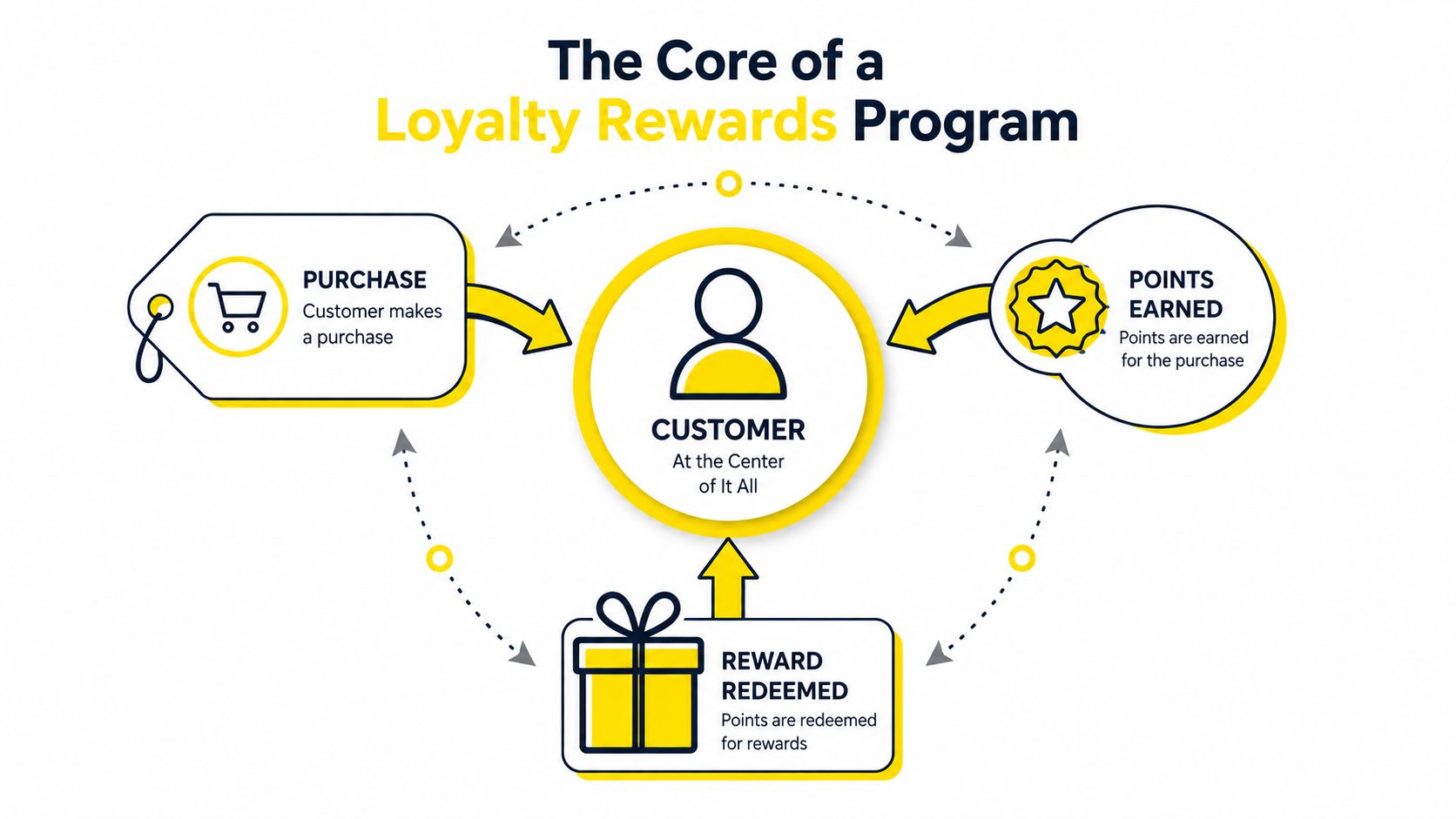
A useful way to read the system is simple. The purchase is the input, the point balance is the middle step, and the redemption is the payoff. If a DC dispensary explains those three steps clearly, patients can decide whether the rewards fit their normal buying habits without needing a spreadsheet.
How the System Works Behind the Counter
The patient sees a quick scan. The dispensary sees a chain of records.
Modern loyalty systems are often built as API-first, event-driven setups where each earn, burn, tier change, or expiration event is captured once and then sent to the points ledger, CRM, marketing automation, and analytics layers in near real time Enable3 architecture overview. That sounds technical, but the practical effect is easy to follow. One purchase can update the account across channels without staff rebuilding the same reward logic for every ordering path.
What happens after the ID scan
At checkout, the staff member attaches the transaction to the correct member record. That matters because strong loyalty design treats member identity resolution, transaction capture, reward calculation, and analytics as separate functions, not one mixed-up process Umbrex loyalty operating infrastructure playbook. If the system cannot match the customer cleanly, the rewards cannot post cleanly either.
The same structure also helps the dispensary handle duplicate accounts, store and delivery transactions, returns, exclusions, and tier progress without guessing. When the ledger records those rules clearly, the patient's balance is less likely to drift away from reality. That matters in a service-heavy setting where staff may need to trace a reward decision back to the transaction that created it.
A payment screen and a loyalty screen can look like they are doing the same job, but they are not. The payment side handles money movement and security checks, while the rewards side tracks eligibility and point logic. For a closer look at that split, the payment processing security guide shows why dispensaries keep those records distinct.
Practical rule: if a dispensary can explain how returns, exclusions, and bonus offers are handled, the rewards balance is much more trustworthy.
What patients feel at checkout
From the patient side, the experience usually feels simple. You place the order, the ID or account gets linked, and the system logs the purchase as an event. Then the account updates after the rules engine does the math, which is why some programs show points right away while others post after processing.
A hotel loyalty system offers a cleaner comparison than a paper punch card. The guest does not count the stays by hand. The front desk, the reservation system, and the rewards ledger all keep the same record in the background. A dispensary loyalty system works the same way, except the record has to match the patient, the order type, and the local compliance rules as well.
A common benchmark makes the value easier to understand, 1 point per $1 spent, with $5 off for every 500 points earned, which works out to about a 1% base reward rate Rework loyalty programs resource. If you spent $100, you would earn 100 points, and after five similar purchases, you would have 500 points to use on a later discount. That is the kind of math a patient can check in their head.
Here is the part many people miss. The system can only stay accurate if the dispensary captures the transaction at the moment of sale. If the ID is not scanned, the account does not know you were there, and the points do not appear.
Joining and Redeeming at a DC Dispensary
Enrolling in a dispensary rewards program should feel like joining a regular customer account, not signing a mortgage. At a place like Mr. Nice Guys DC, patients can usually expect to give the basics needed to connect a purchase to the right account, then keep using that profile for future orders. The point is to make repeat visits smoother, whether the order starts in store, online, or through delivery.
How the first enrollment usually works
Most patients sign up during a visit or while placing an order online. The dispensary may ask for identifying information that ties the order to the right patient record, then it links that account to the loyalty system so future purchases can post automatically. If you're ordering through delivery, the same logic still applies, the reward should follow the member, not the channel.
A good first step is to confirm where your balance lives. Some dispensaries show points in the online account, some display them in a text or email confirmation, and some tell you at checkout. If the number isn't visible anywhere, ask where to check it before you assume the points were lost.
The guide on what to expect at your first dispensary visit can help new patients feel less rushed when they're doing this for the first time.
How redemption usually feels in practice
Redemption is just the moment the points stop being abstract. A patient sees the balance, chooses whether to save it for a later order, and applies the value when the dispensary allows it. That's why the best time to redeem is often when you already know what you need and can use the reward without overbuying.
A simple example makes it clearer. Say a patient spends $120 across three orders, then builds enough points to redeem 360 points on the fourth visit. If the program allows that conversion, the discount shows up at checkout and lowers the out-of-pocket total on the next purchase. The patient didn't need a complicated strategy, just consistent use and a clear redemption rule.
Plain-language check: if you can't tell how many points you need for the reward you want, ask before you finish paying.
Some dispensaries also let rewards work alongside other promotions where allowed, but that always depends on the store's own policy and the product category. The safest habit is to ask whether your points can be combined before you rely on that math. That one question prevents a lot of checkout surprise.
Real Examples of Patient Savings
Two patients can use the same loyalty program and feel completely different results. One shops in small, regular trips for tinctures and capsules. The other buys larger flower orders on the weekends and waits to redeem until the balance feels meaningful. Both can benefit, but the program fits them in different ways.
A daily microdose patient
This patient buys modest amounts often and cares more about steady value than big one-time rewards. Over a month, the order pattern might look like a handful of small visits where each eligible purchase adds to the same account. The reward shows up slowly, but the patient doesn't have to change habits to get it.
That style works well when the dispensary tracks points on every eligible order and the patient keeps the loyalty ID attached each time. The value is not dramatic on any single visit, but the cumulative balance can still be useful when it's time to restock. For a patient who prefers consistency, that's the whole point of the program.
A weekend flower patient
The second patient shops less often but spends more per order. That pattern can make redemption feel faster because the balance rises more noticeably after each trip. When the program includes a tier feature, this patient may also hit a threshold that grants a bonus perk, a higher earn rate, or a special gift depending on the dispensary's rules.
A tiered setup matters most when the reward fits the buying pattern. If the patient buys premium eighths or pre-rolls regularly, a threshold perk can make the program feel more personal than a flat discount ever would. If the program only offers generic points without any visible progression, that patient may not care enough to track it.
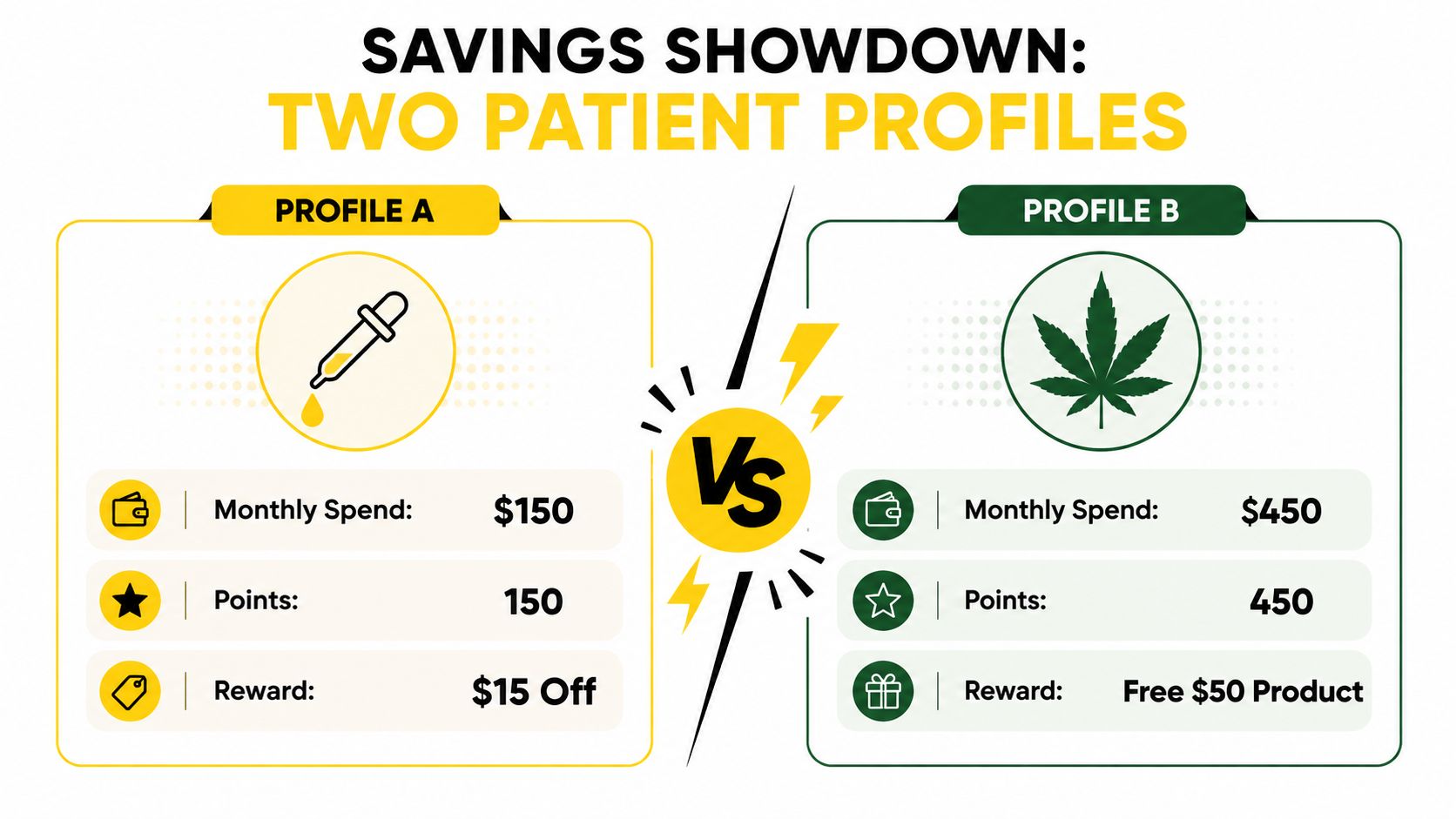
The useful lesson is not that one profile is better. It's that a loyalty rewards program works best when the mechanics match the patient's real shopping rhythm. If your visits are small and frequent, you care about accumulation. If your visits are larger and less frequent, you care about visible milestones and strong redemption value.
Tips to Maximize Value Without Overbuying
A rewards program should help you spend more deliberately, not more impulsively. The best habits are boring in the best way, they keep the points flowing without pushing you to buy extra product you didn't need. That matters in a medical setting, because your reason for shopping should still lead the decision.
Smart habits that actually help
- Time purchases for bonus events: If the dispensary runs a multiplier or special day, line up a planned order instead of making a separate extra trip.
- Consolidate trips: When you know you'll need a refill soon, combining purchases can help you move toward a tier or threshold more efficiently.
- Set a strict budget: Decide what you're willing to spend before you get to the counter, then treat points as a side benefit, not a reason to add more.
- Track point expiration: Don't let a small balance sit until it disappears unused.
Those habits are especially useful because some value leaks happen. Forgetting to scan the loyalty ID means the purchase never posts to the account. Splitting one intended order into two transactions can also keep you from reaching a threshold as efficiently. That's why a little planning usually beats hoping the balance sorts itself out later.
The dispensary's minimum order policy can also affect how you think about consolidation and delivery timing, so it's worth reviewing minimum order requirements before you plan around rewards.
Best practice: ask the budtender what counts toward rewards before you check out, especially if a product category or promotion is excluded.
The right mindset is simple. Use the program to capture value from purchases you were already going to make, and don't let the idea of a reward pull you into buying more than you wanted. That keeps the loyalty math honest.
Privacy and DC Compliance Considerations
A loyalty program always collects something beyond the sale. It records what you bought, when you bought it, and enough account detail to connect repeated visits to the same person. That's part of the value exchange, but it's also why privacy deserves a direct conversation instead of a footnote.
Berkeley Law's consumer-policy analysis warns that rewards programs can trap consumers by encouraging repeat purchasing and by giving firms detailed data that can be used to steer behavior Berkeley Law analysis. That's the uncomfortable side of loyalty, the program is not only a savings tool, it's also a data system. Patients should know that before they opt in.
What to ask before you join
A dispensary can make this easier by separating medical patient data from general marketing analytics where possible and by explaining what the program tracks. You should know whether enrollment is voluntary, what information gets tied to the account, and how the dispensary uses purchase history. If the explanation is vague, ask for a clearer one.
That transparency matters even more in Washington, DC, where medical and adult-use shopping aren't the same thing. Initiative 71 rules, medical program requirements, and dispensary policies all shape what can be sold, how it can be sold, and which promotions apply. For a plain-language review of those boundaries, the guide on how D.C. regulates medical cannabis dispensaries is the right place to start.
Why compliance changes the reward experience
Some promotions may be limited on certain product categories, and not every reward works the same way across every transaction. That's not just a marketing decision, it's part of operating a compliant dispensary in a regulated market. Patients do better when they understand that a reward balance isn't a guarantee, it's a tool that still has to fit the store's rules.
Informed patients get more out of every program because they know where the value stops and where the compliance rules begin.
A good loyalty program should feel useful without feeling invasive. If it asks for a little data, it should also explain what the patient receives in return, in plain language and without pressure. That balance is what makes the rewards feel fair instead of just convenient.
Loyalty Program Questions Patients Ask Most
How quickly do points post?
Usually after the transaction is processed, though the exact timing depends on how the dispensary's system is set up. If the balance doesn't appear right away, ask whether the order still needs to sync.
Do points expire?
Some do, some don't. The dispensary should be able to tell you the expiration rule before you rely on a balance for a later visit.
Do medical and adult-use purchases earn the same rate?
Not always. Because those transactions can fall under different rules and product structures, it's smart to ask how the dispensary treats each purchase type before you check out.
Can a caregiver use my points?
That depends on the program's account rules. If a registered caregiver shops for a patient, the dispensary should explain whether the balance stays with the patient record or can be redeemed another way.
What if the budtender forgot to scan my loyalty ID?
Ask the store right away while the transaction is still easy to match. The sooner you catch it, the easier it is for staff to fix the missing reward event.
Can I combine points with other offers?
Sometimes, but only if the dispensary allows it. Always confirm before you build your order around that assumption.
What's the simplest way to protect my rewards value?
Keep your account information current, scan every eligible purchase, and check your balance before you leave. Small habits matter more than one big redemption strategy.
If you want a dispensary that pairs clear guidance with a straightforward medical cannabis shopping experience, visit Mr. Nice Guys DC. Their team can help you find products, ordering, and rewards in a way that keeps both value and compliance in view.
Mr Nice Guys DC
At Mr. Nice Guys DC, we’re more than just a cannabis delivery service — we’re passionate advocates for quality, convenience, and community. With years of experience in the cannabis industry, our team is dedicated to educating and empowering customers across Washington, D.C. Whether you're a seasoned user or just starting your cannabis journey, our blog delivers trusted tips, product insights, and the latest updates from the world of weed. Stay informed, stay elevated.
