
Must Be 21 To Enter
By entering this site you are agreeing that you are at least 21 Years of Age or older.
I AM 21 OR OLDERHerbal Alternatives Washington DC: Your 2026 Wellness Guide
.svg)

.png)
In a city that runs on high-stakes meetings and non-stop energy, it’s no surprise that folks in DC are looking for ways to dial down the pressure. While cannabis is a familiar go-to for many, there's a whole other world of plant-based options out there that can help you find your chill.
From botanical relaxants to non-psychoactive cannabinoids, these natural alternatives offer a different path to balance and well-being.
Finding Your Natural Groove In The Nation's Capital
Let's be real—life in DC can get intense. Between the hustle and the headlines, finding a moment of calm is essential. Many of us know what medical cannabis can do, but a growing number of people are getting curious about other plants that can support their mental and physical health.
Think of it as building out your personal wellness toolkit. You wouldn't eat the same meal every day, right? Sometimes you need something for energy, other times for comfort. It's the same with wellness. Different herbs can help you achieve different things, and this guide is here to walk you through the best herbal alternatives Washington DC has to offer.
Why Are People Looking Beyond Cannabis?
It's all about having more options and more control. A lot of people are searching for subtle, non-intoxicating ways to manage the daily grind.
Maybe you're a lawyer prepping for a big case and need to sharpen your focus without the jitters. Or you're a student who just needs a way to shut your brain off after a marathon study session. That's where these herbal options really shine.
The big idea is to use nature's own pharmacy to fine-tune how you feel. Whether you’re trying to sleep better, ease some tension, or just feel more resilient, there's probably a plant that can help—without the high you get from THC.
This lets you create a routine that's totally personalized. Instead of a one-size-fits-all approach, you can mix and match what works for you, when you need it. A practical example would be using a CBD balm on your neck during a long workday to ease tension, and then brewing a cup of valerian tea before bed to help you sleep.
A Quick Guide to Herbal Alternatives in DC
To help you get started, we've put together a quick cheat sheet. This table breaks down some of the most common herbal alternatives you’ll find in DC, what they do, and what people typically use them for.
| Alternative | Primary Effect | Commonly Used For |
|---|---|---|
| CBD | Calming, Anti-Inflammatory | Daily stress, mild anxiety, physical discomfort |
| Kava | Relaxing, Social | Unwinding after work, social gatherings |
| Adaptogens | Stress Resilience | Managing long-term stress, boosting focus |
| Valerian Root | Sedative | Sleep support, reducing anxiety before bed |
This is just a starting point, of course. Each of these botanicals has its own unique character, and the key is finding the one that fits your needs and lifestyle. For example, a congressional aide might use an adaptogen daily to handle long-term job pressure, but reach for kava on a Friday night to socialize and decompress.
A Closer Look At Your Options
Ready to dive a little deeper? It helps to know the key players on the scene. Each herb has a distinct personality and purpose. Getting to know them is the first step toward figuring out what will work for you.
Here’s a quick rundown of some popular choices you can find around the DC area:
CBD (Cannabidiol): This is the non-psychoactive cousin of THC, found in the hemp plant. It's famous for giving you a sense of calm and helping with aches and pains, all without the "high." It’s a solid choice for everyday stress management. Practical Example: A few drops of CBD oil in your morning coffee can help take the edge off a stressful commute on the Metro.
Kava: This root from the Pacific Islands is traditionally made into a drink that’s both relaxing and social. It can bring on a feeling of mild euphoria and peace, making it perfect for chilling out in the evening or with friends. Practical Example: Heading to a friend's rooftop BBQ in Adams Morgan? A kava beverage can help you relax and socialize without the effects of alcohol.
Adaptogens (like Ashwagandha): Think of these as your personal stress trainers. This class of herbs helps your body get better at handling stress over time. They don't give you an immediate buzz; instead, they build up your resilience so you're better equipped to handle whatever life throws at you. Practical Example: A non-profit manager facing a tight grant deadline might take ashwagandha for several weeks to build resilience and avoid burnout.
Valerian Root: This is one of the heavy hitters in the world of herbal sleep aids. It’s a well-known sedative often used to calm anxiety and help you drift off to sleep. You'll find it in a lot of nighttime teas and supplements for a good reason. Practical Example: After a late-night session working on a report, a capsule of valerian root can help quiet a racing mind and promote restful sleep.
Understanding Herbal Alternatives To Cannabis
When people talk about "herbal alternatives," it's helpful to think of it like curating a playlist for your mood. You wouldn't blast workout music when you're trying to wind down for the night. It's the same with botanicals—different plants can dial in different effects to match exactly what you need in that moment.
These alternatives are simply plants or compounds from plants that can shift your mood, take the edge off stress, or ease physical discomfort, all without the specific psychoactive high you get from THC. They offer a more subtle, nuanced approach to feeling better. For a lot of people checking out herbal alternatives in Washington DC, it’s all about finding a gentle, effective tool to manage daily life.
The world of botanicals is huge, but most of the popular options fit into a few key groups. Getting a handle on these categories is your first step to picking the right plant for the job.
Non-Psychoactive Cannabinoids Like CBD
This is the category most folks are already familiar with. Cannabinoids are the active compounds in the cannabis plant, but they’re not all the same. While THC is famous for its euphoric lift, other compounds like Cannabidiol (CBD) and Cannabigerol (CBG) play a different role.
Think of CBD as the calm, low-key cousin in the cannabis family. It works with your body's own endocannabinoid system to bring things back into balance, promoting a sense of ease without any intoxication.
Practical Example: You've just wrapped up a long, brutal week at the office, and your shoulders are practically up to your ears with tension. A CBD tincture could help those muscles relax and quiet down the mental noise, letting you unwind with a clear head.
Since they're non-intoxicating, cannabinoids like CBD have become a solid choice for managing daytime stress and physical aches. They deliver a subtle, supportive effect that fits right into a busy schedule.
Botanical Relaxants Such As Kava And Valerian
This group is all about plants that have a more direct, noticeable calming effect on your nervous system. People often reach for them when they need serious, in-the-moment relaxation or help falling asleep.
- Kava: A staple from the Pacific Islands, kava is known for creating a socially relaxed vibe. It can melt away anxiety and bring on a pleasant, peaceful feeling, which makes it perfect for evenings.
- Valerian Root: This one is a heavy hitter for sleep. It has compounds that might boost GABA in your brain, a neurotransmitter that basically tells your nerves to quiet down. It’s the botanical version of putting a "do not disturb" sign on your brain.
Practical Example: You've got a huge presentation tomorrow, and your mind is racing, making sleep impossible. A cup of valerian root tea before bed can help settle that mental chaos and guide you toward a solid night's rest, so you wake up sharp, not groggy.
Adaptogens For Long-Term Resilience
Adaptogens are playing a totally different game. Instead of giving you an immediate fix, these herbs help your body become more resilient to stress over time, with consistent use. Think of them as a personal trainer for your body's stress-response system.
Herbs like ashwagandha, rhodiola, and holy basil fall into this category. They work by helping to regulate cortisol (the main stress hormone), preventing those wild swings that leave you feeling wiped out.
The effect is gradual and builds up. You might not feel a thing right after taking an ashwagandha capsule. But a month later, you might realize that the daily grind—a delayed Metro train or a packed sidewalk in Dupont Circle—just doesn't get to you as much.
Practical Example: A Georgetown student staring down a tough exam period starts taking ashwagandha every day at the semester's start. By the time finals roll around, they feel better able to handle the pressure, with less burnout and better focus during those late-night study sessions.
Getting these categories straight is key to finding your way in the world of herbal alternatives. To get a better sense of how plant compounds create these effects, you might want to check out our guide on terpenes and their role in wellness. Each herb is a unique tool, and learning about them empowers you to build a wellness routine that actually works for you.
A Deeper Look at Popular Herbal Options
So, we've broken down the main types of herbal alternatives. Now it’s time to get familiar with the specific plants people in DC are really talking about. Knowing what makes each herb tick—where it comes from, how it's traditionally been used, and what it does today—is how you find the right fit for your own wellness goals. It’s all about having the knowledge to pick the plant-based support that works for you.
And people are definitely picking them. The market for these botanicals is on fire right now. Here in DC, where the city’s hustle meets a serious focus on wellness, the U.S. herbal supplements market is seeing explosive growth. It pulled in a massive $9,141.1 million in revenue back in 2024 and is on track to more than double to $18,943.8 million by 2033. That jump shows just how many people are turning to these powerful plants. For DC residents, this means more choices and better information than ever before. You can dive deeper into this trend with these insights from Grand View Research.
This boom gives you a ton of options. Let's take a closer look at the herbs leading the charge.
Kava: The Social Relaxant
Kava, or Piper methysticum, is a root from the Pacific Islands with a long history. For centuries, it's been the centerpiece of social ceremonies, used to encourage relaxation and good vibes. Unlike a cocktail, kava helps you feel calm and sociable without fogging up your mind, making it a go-to for unwinding after a packed day.
The magic comes from compounds called kavalactones, which work with your brain's pathways to ease anxiety and bring on a mellow, sometimes even euphoric, feeling. It’s the perfect tool for chilling out at a social gathering or just for a quiet night in.
Practical Example: You just finished a rough commute from your downtown office and need to flip the switch before meeting up with friends. A cup of kava tea can help dissolve the day's stress, letting you connect and enjoy the night without feeling sluggish or out of it.
You'll usually find kava as a powder (which you mix into a drink), in capsules, or as a liquid tincture. When you're shopping, keep an eye out for "noble" kava—it's widely considered the highest quality and safest to use.
Valerian Root: The Sleep Supporter
Valerian root (Valeriana officinalis) is probably one of the most famous herbal remedies for anyone wrestling with sleep or anxiety. Native to Europe and Asia, its history as a calming agent goes all the way back to ancient Greece and Rome. For many, it's the first herb they reach for when they can't quiet a racing mind at bedtime.
While scientists are still figuring out the exact mechanics, the running theory is that valerian root might boost the levels of GABA (gamma-aminobutyric acid) in the brain. GABA is a neurotransmitter that helps calm nerve impulses, blanketing your nervous system in a sense of peace.
It’s available in a few different forms:
- Teas: Often found in blends with other soothing herbs like chamomile and peppermint.
- Tinctures: A concentrated liquid that gets to work quickly.
- Capsules: Super convenient for getting a consistent, pre-measured dose.
Practical Example: Imagine you're staying in a hotel near noisy Reagan National Airport and are worried about getting a good night's sleep before a big meeting. A valerian root capsule can be an effective, natural way to help ensure you drift off and stay asleep.
This herb is a serious ally for anyone looking for a more natural way to get some quality rest.
CBD: The Everyday Balancer
There's a reason CBD, or cannabidiol, has become a household name. This non-psychoactive compound, which comes from the hemp plant, works with your body's own endocannabinoid system. This system helps keep everything in balance, from your mood and sleep cycle to your appetite and how you perceive pain.
Because it doesn’t create a "high," CBD is an amazing choice for anyone looking for subtle, steady support throughout their day. It just helps bring a sense of equilibrium and calm, making those daily stressors feel a lot more manageable.
Practical Example: Think of a professional in DC who uses a CBD tincture every morning to take the edge off a high-pressure job. The effect isn't obvious or intoxicating; instead, they just notice they feel less frazzled and more focused during a hectic workday.
CBD is also incredibly versatile. You can find it in oils, tinctures, capsules, edibles, and topicals. When buying any CBD product, the most important thing to look for is a third-party lab report, also known as a Certificate of Analysis (COA). This report is your proof of the product's purity and potency.
Ashwagandha: The Stress Adaptor
Ashwagandha (Withania somnifera) is a true superstar in Ayurvedic medicine and one of the leading adaptogens out there. Adaptogens are different from relaxants; they actually help your body build up resilience to both physical and mental stress over time.
Think of it this way: instead of just calming you down in the moment, ashwagandha helps train your body to handle stress more effectively in the long run. It does this by helping to regulate cortisol, your body's main stress hormone. With consistent use, people often report better energy levels, sharper focus, and a stronger sense of calm when things get intense.
Practical Example: A student juggling the constant grind of classes and internships might take ashwagandha daily. Over the course of a semester, they might realize that the usual pre-exam panic doesn't hit as hard and that they can stay focused for longer during those marathon study sessions.
Just like the other herbs, ashwagandha comes in capsules, powders, and tinctures. High-quality products will usually tell you the percentage of withanolides—the main active compounds—right on the label.
Comparing Herbal Alternatives and Medical Cannabis
Choosing between herbal alternatives and medical cannabis isn't about picking a "winner." It's about knowing what you need and grabbing the right tool for the job. The best choice comes down to your personal goals, your lifestyle, and the kind of effect you're looking for.
To make it simple, let's use an analogy.
Think of medical cannabis, especially the kind rich in THC, as a speedboat. It's powerful, it hits fast, and it’s built to get you to a very specific destination—like serious pain relief or a strong psychoactive experience—in a hurry. It’s the perfect choice for targeted, right-now needs.
Herbal alternatives like CBD, kava, or adaptogens? They're more like a trusty SUV. They’re versatile, almost always non-intoxicating, and perfect for a whole range of everyday situations. An SUV is what you’d take for the daily commute (managing stress), navigating tricky roads (building resilience), or just making sure you get where you're going safely (protecting your peace of mind).
Psychoactive Effects: The High vs. The Subtle Shift
The biggest difference, and the one that matters most to a lot of people, is the psychoactive experience. Medical cannabis, especially anything with high THC, is famous for producing that classic "high." That intoxicating feeling is often what people are after for recreation or what patients need for severe symptoms.
Herbal alternatives, on the other hand, tend to work their magic without the high.
- CBD and Adaptogens: These give you no high whatsoever. The effects are what we call sub-perceptual. You won’t feel a sudden, dramatic change, but after a while, you might just notice that you're sleeping better or that daily stress isn't hitting you as hard.
- Kava and Valerian: These can create a noticeable feeling of relaxation, maybe even a little bit of mild euphoria. But it’s a world away from a THC high. Think of it as a calming sensation in your body, not a major shift in your head.
The choice here is pretty clear. If you want or need a significant psychoactive effect, medical cannabis is designed for that. If you're looking for functional, clear-headed support to get you through your day, then exploring herbal alternatives is a great move.
This little decision tree can help you visualize that choice.
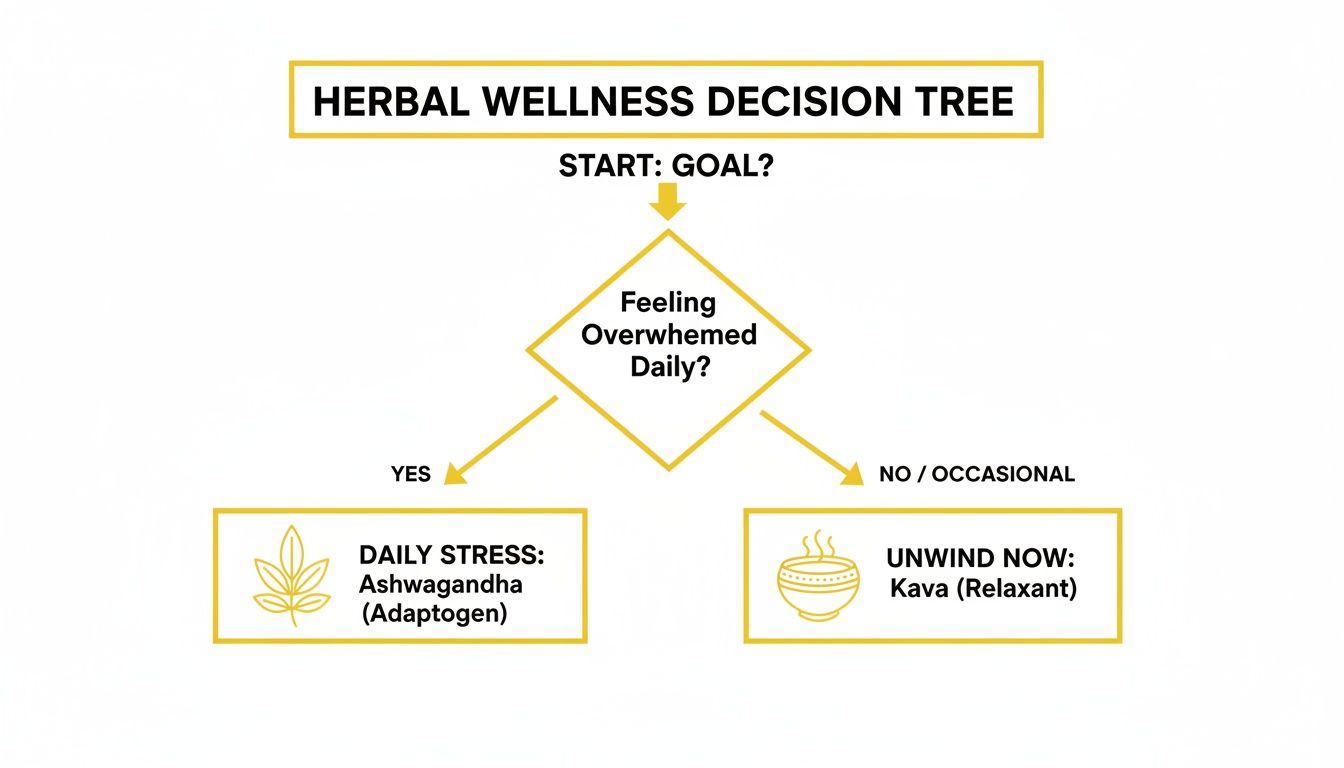
As you can see, your wellness goal—whether it's long-term stress management or just unwinding right now—points you toward different plant-based options.
Onset Time and Primary Uses
Another key thing to think about is how fast these options kick in and what they're really best for. This is where our speedboat vs. SUV analogy really clicks.
Medical cannabis can bring relief incredibly fast. Inhaled methods can start working in just a few minutes. That makes it a lifesaver for acute problems, like a sudden flare-up of chronic pain or an oncoming panic attack. Its main uses are often medical and intensely therapeutic.
Herbal alternatives are all over the map. A warm cup of kava tea might have you feeling relaxed within 30 minutes, which is perfect for shaking off a rough day. Adaptogens, though, are more of a long-game strategy. You might take ashwagandha every day for weeks before you have that "aha" moment and realize you feel more grounded and less rattled by daily pressures.
If you want to dig deeper into the cannabinoid side of things, our article breaking down the differences between CBD and THC is a great place to start.
Medical Cannabis vs. Herbal Alternatives At a Glance
Sometimes, you just need to see it all laid out. This table breaks down the core differences to help you stock your personal wellness toolkit with the best herbal alternatives Washington DC has to offer.
| Factor | Medical Cannabis (THC) | CBD/CBG | Kava/Valerian | Adaptogens |
|---|---|---|---|---|
| Psychoactivity | High (Intoxicating) | None | Mild to None | None |
| Primary Goal | Acute symptom relief, recreation | Daily balance, calming | In-the-moment relaxation, sleep | Long-term stress resilience |
| Onset Speed | Fast (minutes to an hour) | Varies (minutes to hours) | Moderate (30-60 minutes) | Slow (weeks of consistent use) |
| Legal Access | Regulated, medical card needed | Widely available (hemp-derived) | Generally available as supplements | Generally available as supplements |
| Best For | Severe pain, nausea, specific medical conditions | Everyday stress, mild anxiety, general wellness | Social anxiety, unwinding, sleep aid | Burnout prevention, building resilience |
At the end of the day, many folks in DC find it's not an "either/or" situation at all. They build a flexible routine that uses different tools for different moments—maybe medical cannabis for a weekend of deep relaxation and a daily adaptogen to help navigate a crazy workweek. It's all about finding what works for you.
Navigating the Legal Landscape in Washington DC
Trying to figure out the rules for herbal products in Washington, DC can feel like you’re dealing with two completely different worlds. On one side, you have the strictly controlled medical cannabis market. On the other? The wide-open, anything-goes world of dietary supplements.
This split has a massive impact on the safety and quality of what you’re buying. Getting a handle on these differences is the key to making smart, safe choices.
The 2018 Farm Bill Changed Everything
Remember the 2018 Farm Bill? It was a game-changer. This federal law made hemp legal, defining it as any cannabis plant with less than 0.3% THC. That single act opened the floodgates for hemp-based products like CBD to pour into the market, right here in DC.
Almost overnight, CBD was everywhere—popping up in online shops, coffee houses, and corner stores. But here’s the catch: this new legal status didn't come with a clear set of rules for quality or safety. That’s exactly why the supplement market often feels like the Wild West.
The Regulation Gaps You Need to Know
This is where you see the night-and-day difference between medical cannabis and other herbal products.
Medical Cannabis: Anything sold in a licensed DC dispensary goes through mandatory, intense third-party testing. They check for everything—potency, purity, and contaminants. The process is locked down tight. You can get the full scoop on how DC's legal pot delivery works in our other guide.
Herbal Supplements: The FDA treats supplements more like food than medicine. Thanks to the Dietary Supplement Health and Education Act (DSHEA), it's on the manufacturers to make sure their stuff is safe. They don’t need the FDA's green light before it lands on a shelf.
This means just because you can buy an herbal product doesn't mean it’s been independently checked for purity or even that it contains what the label claims. The burden of quality control falls squarely on your shoulders.
The growth since DSHEA passed is wild. The market exploded from about 4,000 products back in the 90s to nearly 30,000 today. With the U.S. market expected to climb to $24.92 billion by 2033, it's clear people are interested.
How to Be a Smart Consumer
With the supplement industry being so loosely regulated, your safety really comes down to your own homework. This isn't about being paranoid; it's about being proactive. You have to become your own quality control department.
Look for companies that aren’t afraid to prove their quality through third-party testing. Transparent sourcing and easy-to-find lab reports (often called Certificates of Analysis or COAs) aren't just nice extras—they are non-negotiable.
Practical Example: Before buying a bottle of CBD oil online, you go to the company's website and look for a "Lab Reports" or "COA" section. You find the report for the exact batch you're considering and confirm it was tested by a third-party lab for potency (it has the amount of CBD advertised) and for contaminants like heavy metals and pesticides (it passed). This simple check is your best defense against a bad product.
Without that proof, you’re flying blind. You have no real way of knowing if you’re getting what you paid for, or if you’re exposing yourself to nasty stuff like pesticides and heavy metals.
Finding Quality Herbal Products in the DC Area
With the natural wellness scene blowing up, finding high-quality herbal alternatives in Washington DC takes a little bit of know-how. The number of products out there can feel endless, but a few simple tricks will help you spot the real deal. Think of it like being a detective for your own health—you just need to know which clues to follow.
The herbal market is absolutely huge. North America makes up 46.2% of what was an $82.9 billion industry in 2024, and it’s on track to hit $166.2 billion by 2034. That explosion in growth means you need a game plan, especially in a city like DC where adults over 21 are looking for legit wellness options.
Your first mission, and the most important one, is learning how to read a product label like a pro.
Decoding the Product Label
A product’s label is its resume, and you’re the one doing the hiring. Flashy marketing words mean absolutely nothing if there’s no substance behind them. A brand you can trust will give you clear, specific info that shows they care about quality.
Here’s what to zero in on:
- Clear Ingredient List: The label should tell you every single thing inside, including the exact part of the plant used. Think "Ashwagandha root extract," not just "Ashwagandha."
- Specific Dosage Information: Vague instructions like "take one capsule daily" are a bad sign. Good products will tell you the exact amount of the active ingredient per serving (e.g., "300mg Ashwagandha root extract with 5% withanolides").
- No Unrealistic Claims: Be skeptical of anything that promises to "cure" a disease or deliver miracle results. Brands that are on the level stick to honest claims about supporting your well-being.
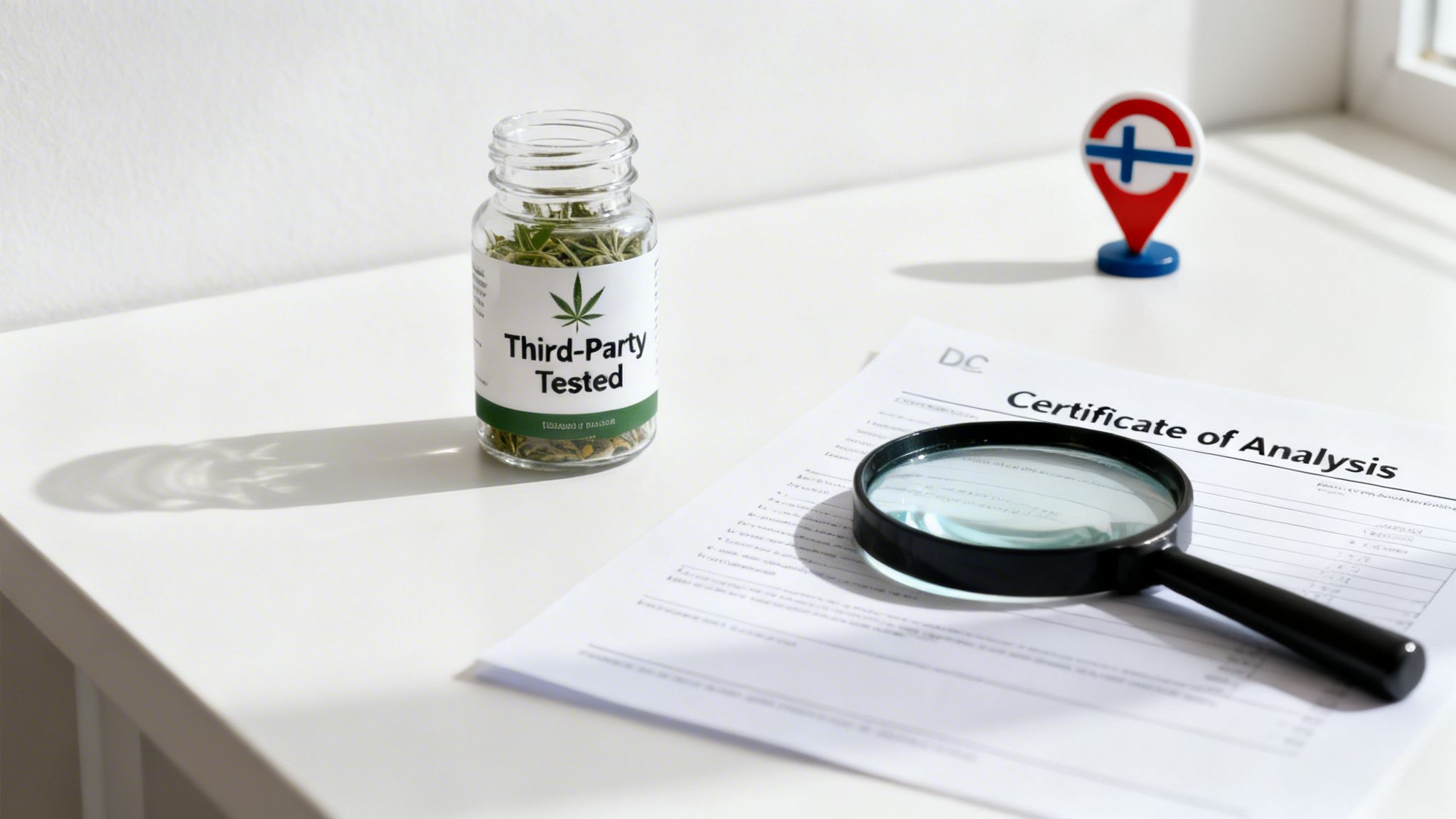
The single most important piece of evidence is a Certificate of Analysis (COA) from a third-party lab. This is non-negotiable proof that the product was tested for potency (does it have what it says it has?) and purity (is it free of junk like heavy metals, pesticides, and mold?).
If a brand makes it hard to find its COAs on its website, consider it a huge red flag and keep looking.
Shopping Smart in the District
Whether you're scrolling online or walking into a local health shop, you need to bring that same level of scrutiny. Don't let slick packaging or a cheap price tag fool you—your health is what matters. When you find a spot you trust, you’re not just buying a product; you’re getting access to people who actually know their stuff and can guide you.
If you’re curious about how regulated products are handled, it’s helpful to see how a licensed medical facility operates. You can get a better sense of that by checking out our guide to finding a dispensary in Washington DC. By arming yourself with this knowledge, you can navigate the world of herbal alternatives and pick products that are safe, effective, and right for your journey.
Some Questions We Hear All The Time
Diving into the world of botanicals can feel a bit overwhelming, and it's natural to have questions. Here are some straightforward answers to the things we get asked most about using herbal alternatives in Washington DC.
Can I Mix Herbal Alternatives With My Medical Cannabis?
This is a big one, and the short answer is: you have to be smart about it. Think of it like mixing drinks—some pairings work, and others can knock you on your back. For example, if you take a relaxing herb like valerian root with a heavy, sedating cannabis strain, you might end up way more drowsy than you intended.
The golden rule here is to "start low and go slow."
Practical Example: You use a THC-dominant vape for occasional pain relief, but you want to try CBD for daily anxiety. Start by taking a low dose of CBD oil in the morning on a day you don't plan to use your vape. See how you feel. The next day, you might try your CBD in the morning and your vape in the evening, keeping them separate to understand their individual effects before ever combining them.
The absolute best move? Chat with someone who really knows their stuff about both cannabis and herbs. They can give you safe, personalized advice that actually fits your needs.
Are Herbal Supplements In DC Actually Regulated For Safety?
This is a super important point. The way herbal supplements are regulated is night and day compared to medical cannabis. Here in DC, medical cannabis has to go through strict, mandatory third-party testing to check its potency and make sure it’s free of contaminants. The supplement world, on the other hand, is a bit like the Wild West.
The FDA doesn't keep as close an eye on supplements, which puts the responsibility right back on you to be a savvy shopper.
Always, always go with brands that are transparent and provide third-party lab reports. This report, often called a Certificate of Analysis (COA), is the only real proof you have that the product is pure, potent, and safe.
How Do I Pick The Right Herbal Product For My Anxiety?
The "right" product really comes down to what you're dealing with. Are you looking for something to take the edge off right now, or are you trying to manage stress over the long haul?
- For quick, in-the-moment relief: If you're stressed about something specific, like giving a presentation, you need something that works fast. A CBD tincture under the tongue or a warm mug of kava tea can bring a sense of calm in less than an hour.
- For long-term, daily support: If you're dealing with that constant, nagging background stress, an adaptogen like ashwagandha is a much better fit. You take it daily, and over a few weeks, it helps your body get better at handling stress on its own.
Our advice is to start with a single herb at a low dose. Get to know how it works for you before you start experimenting with others. For a deeper dive into how different compounds stack up, check out our article on CBD vs THC for pain management.
At Mr. Nice Guys DC, we're here to help you find the right tools for your wellness goals—whether that’s premium medical cannabis or just understanding the world of herbal support. Come check out our curated selection and get some expert guidance at https://www.mrniceguysdc.com.
Mr Nice Guys DC
At Mr. Nice Guys DC, we’re more than just a cannabis delivery service — we’re passionate advocates for quality, convenience, and community. With years of experience in the cannabis industry, our team is dedicated to educating and empowering customers across Washington, D.C. Whether you're a seasoned user or just starting your cannabis journey, our blog delivers trusted tips, product insights, and the latest updates from the world of weed. Stay informed, stay elevated.
