
Must Be 21 To Enter
By entering this site you are agreeing that you are at least 21 Years of Age or older.
I AM 21 OR OLDERDispensary Delivery Near Me: How to Order in DC
.svg)

.png)
You've searched “dispensary delivery near me,” found a menu that looks promising, and entered your address. Then the order stalls because your location sits across a district line, your delivery address doesn't match your patient record, or the courier can't complete the handoff before the legal cutoff. That frustration is common in the DMV area because cannabis delivery isn't ordinary local commerce. The map, the clock, your eligibility, and the recipient verification all matter.
A compliant order should feel simple to you, but there's a controlled process working behind the scenes. The right retailer checks the address before dispatch, confirms the patient or caregiver, prepares the order inside the legal service window, and completes the handoff directly. Here's how to avoid the problems that cause delivery orders to fail.
Why Local Cannabis Delivery Is More Complex Than Food
Food delivery usually cares about whether a restaurant serves your address and whether someone can accept the order. Medical cannabis delivery adds another layer: the retailer must be authorized, the recipient must qualify, and the location must be legally eligible. A nearby dispensary may appear on your search results, yet still be unable to deliver to your building.
That's why “near me” can be misleading. A patient in Georgetown may qualify for delivery to an eligible residential address, while someone in Arlington or Bethesda may be outside the legal delivery area for a DC order. The difference isn't a matter of driver convenience. It comes from jurisdictional boundaries and cannabis regulations.
Practical rule: Treat the address check as part of the purchase, not as a minor checkout detail.
The demand for convenience is clear. One industry report says 67% of cannabis shoppers consider delivery essential, while many states still prohibit or tightly restrict the service, according to this report on the modern cannabis retail journey. That gap explains why searchers often find confusing listings, informal sellers, or services that don't clearly explain their legal operating area.
A licensed medical framework solves that uncertainty by tying delivery to patient records, approved addresses, product tracking, and direct verification. It also gives you a way to ask sensible questions before placing an order. If you're unsure whether a service is legitimate or whether delivery is permitted to your address, use this guide to understand whether pot delivery is legal in Washington, DC.
The premium experience isn't just about having better flower or more attractive packaging. It means the menu is connected to a real inventory system, the products are handled through a regulated retail process, and the driver knows what must happen at the door. An unregulated delivery may promise speed, but it can't offer the same confidence around product consistency, documentation, or recipient protection.
Verifying Your Eligibility and Medical Status
The first question isn't which strain you want. It's whether you're eligible to receive the order. DC medical cannabis delivery is limited to eligible patients and caregivers, and the dispensary must verify your status before sending a driver.
The verification process should match four pieces of information:
- Your program status: You must be actively enrolled in DC's medical marijuana program.
- Your identity: Keep a valid government-issued photo ID available.
- Your address: The delivery address must match the patient's home address and satisfy location rules.
- Your purchase allowance: The requested amount must fit within the applicable rolling limit.
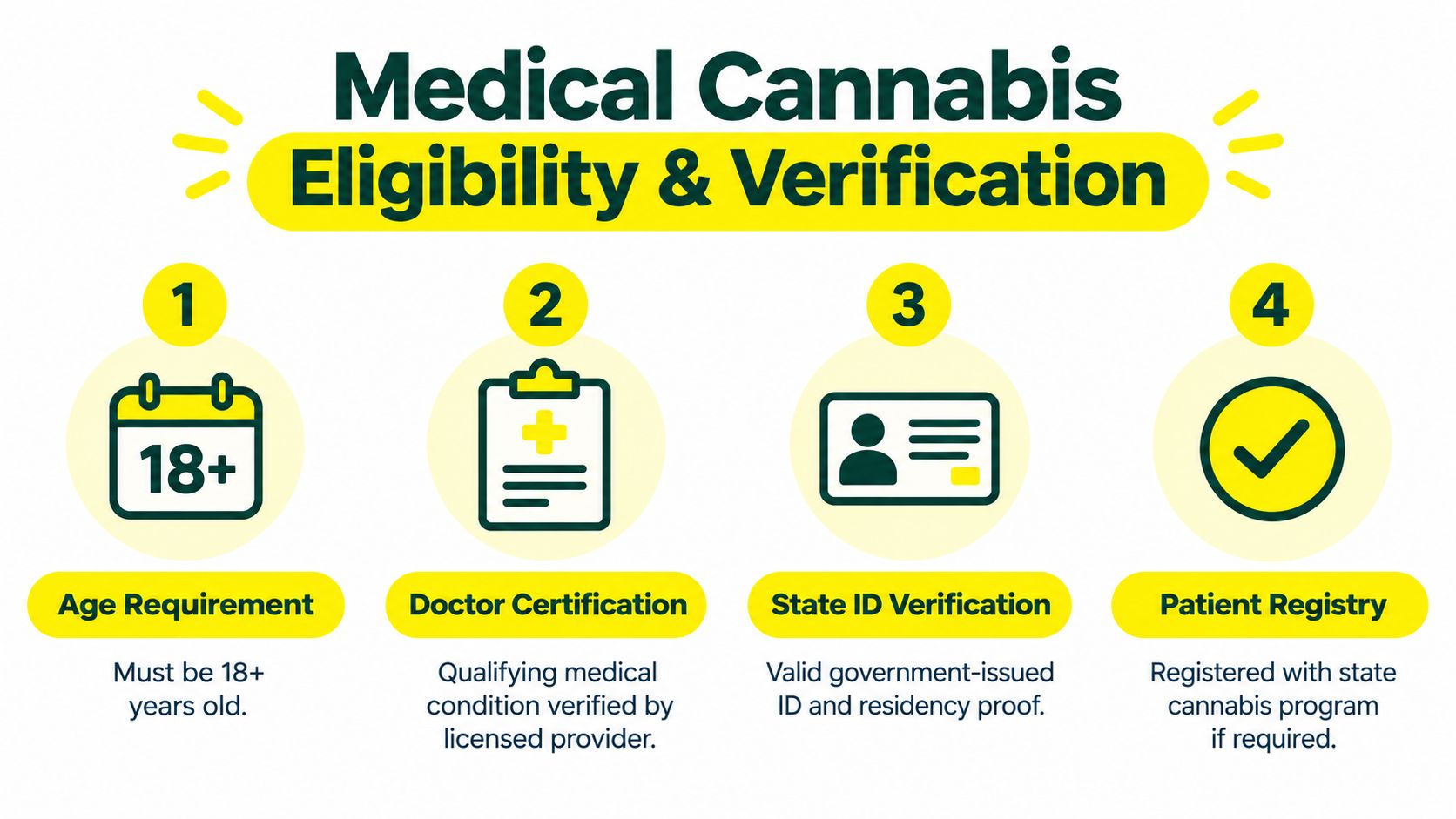
Before delivering, a dispensary must verify that you're actively enrolled in DC's medical marijuana program, that the address matches your home address, and that the order doesn't exceed the rolling 30-day limit of 4 ounces, as explained in this DC medical marijuana delivery guidance.
The rolling limit is easy to misunderstand because it isn't a simple monthly reset. Suppose you've received 3.5 ounces during the past 30 days. You have 0.5 ounces remaining under the stated limit. The dispensary has to account for your recent purchases before approving the new order, so an order that looks reasonable on its own could still be rejected if your available allowance is lower.
Prepare before you build the cart
Have your physical ID and patient information ready before checkout. If your registration details have changed, resolve that issue first instead of hoping the driver can fix it at the door. A mismatch between the patient record, the recipient, and the address can stop an otherwise valid order.
First-time patients should also review the medical card requirements before ordering. The purpose isn't bureaucracy for its own sake. Verification protects the patient, the retailer, and the courier by confirming that the product reaches the person authorized to receive it.
If a caregiver is collecting the order, the caregiver should use the information required by the retailer and arrive prepared for the same kind of identity check. Don't ask a roommate, neighbor, or building employee to accept the package unless the retailer has explicitly confirmed that person's eligibility.
Navigating Delivery Zones and Service Hours
The DMV looks like one connected metro area on a road map. Cannabis law doesn't treat it that way. A driver may be able to reach a neighboring Virginia or Maryland address in minutes, but that doesn't mean a DC medical cannabis order can legally cross the boundary.
DC delivery is restricted to locations inside the District. Delivery can't be made to District or federal government property or to school grounds, with a narrow exception for adults 21+ at colleges and universities. The delivery vehicle must travel only through DC and can't use surrounding jurisdictions as part of the delivery route, according to the DC delivery endorsement rules.
That creates practical differences between nearby addresses:
| Address example | What to expect |
|---|---|
| Georgetown residence | It may qualify if the patient, address, and order meet all requirements. |
| Arlington or Bethesda address | It doesn't qualify for a DC delivery under the cited District restrictions. |
| Federal property | Delivery isn't permitted there. |
| School grounds | Delivery isn't permitted there, subject to the stated college and university exception. |
A business may discuss service availability across neighborhoods such as Georgetown, Shaw, Tenleytown, Cleveland Park, or Spring Valley, but the legal delivery address still controls. Don't assume that a retailer's broader DMV marketing language overrides the District boundary. Enter the exact address and confirm eligibility before spending time on product selection.
Plan around the legal window
DC medical cannabis internet retailers may sell and deliver only from 9:00 a.m. to 9:00 p.m., seven days per week, and the delivery must be completed inside that window, as stated by the DC medical cannabis internet retailer license guidance. An order placed at 8:30 p.m. isn't automatically safe just because the retailer accepted it. The driver still needs enough time to complete the legal handoff before 9:00 p.m.
For same-day service, submit your order early, use an address that the system can verify, and respond quickly if the retailer calls or messages. The same-day delivery information for DC can help you understand the available fulfillment process, but the final decision always depends on the current address, timing, and patient verification.
Mastering the Online Menu and Payment Workflow
Once your address and eligibility are clear, the online menu should help you make a deliberate choice rather than push you into the fastest available item. Start with the format you want, such as flower, a pre-roll, a cartridge, an edible, a tincture, or a topical. Then read the product details for potency, ingredients, cannabinoid profile, and intended effects.
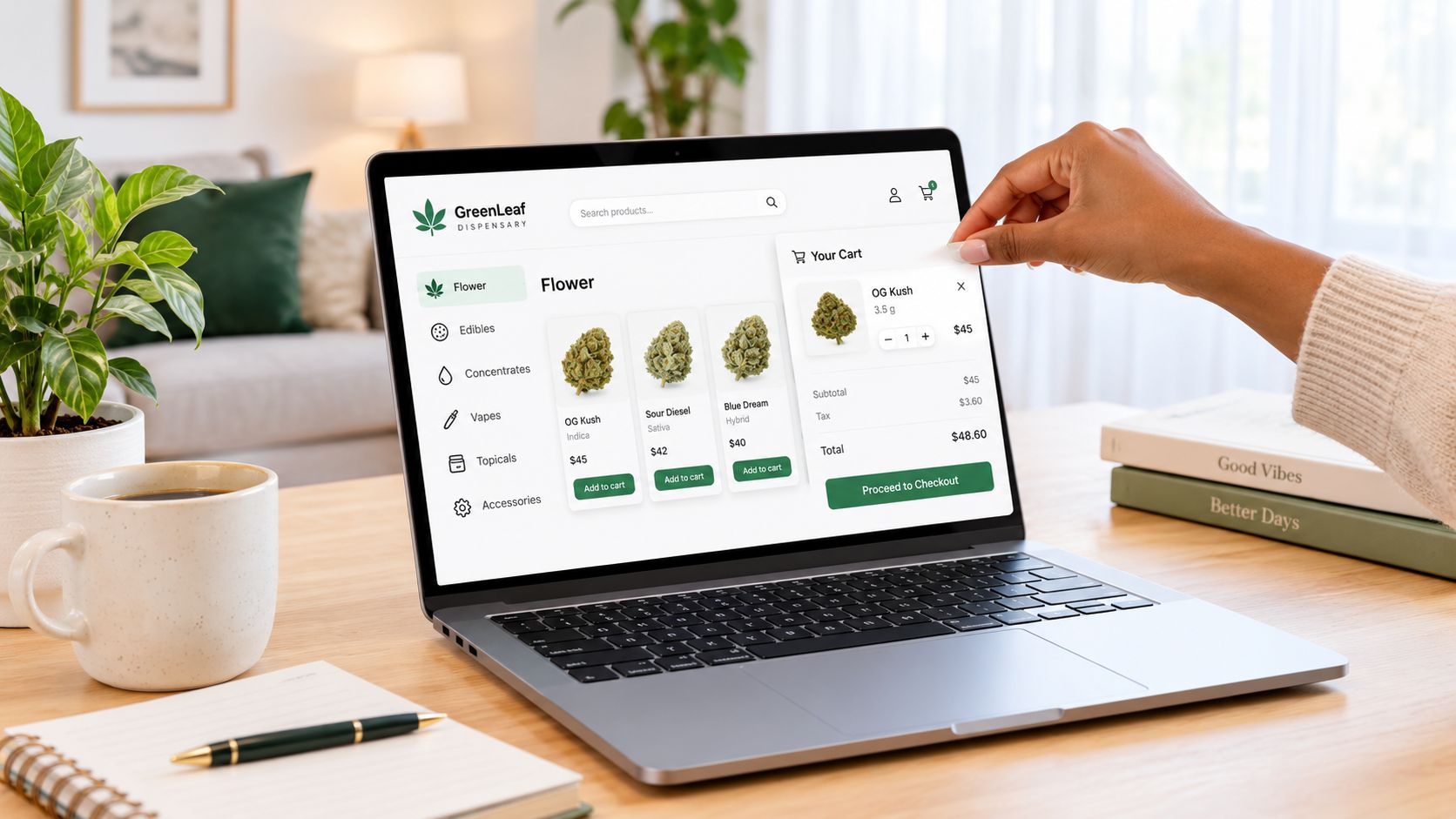
If you're choosing flower, compare the strain name with the listed details instead of relying on the name alone. Gelato, Blue Dream, Runtz, Wedding Cake, and OG Kush can appeal to different preferences, but the current batch information and product format should guide the decision. A patient seeking a discreet, smoke-free option may prefer an edible or tincture, while someone who wants faster inhaled effects may look at a cartridge or pre-roll.
Build the cart with the door in mind:
- Confirm availability: A product shown online may sell out before dispatch, so review the final confirmation carefully.
- Check the format: Don't confuse flower weight with the amount of an infused product or cartridge.
- Review the total: Make sure the order fits your remaining allowance and that the final amount matches what you expect to pay.
- Choose a backup: If a favorite strain disappears, select an alternative with a similar format or effect profile rather than delaying the order.
Shopper research reflects this preference for a smoother digital experience. 75% of cannabis shoppers want one-click reordering, 72% want to pre-order online, and nearly one in three prefer delivery when it's available, according to shopper research on the cannabis retail journey. Convenience matters, but it shouldn't replace careful review.
Payment deserves attention before the driver leaves the store. Cannabis retailers may use cash or debit at the door, while available options can vary by retailer and order flow. Don't assume a standard credit card checkout will work. Confirm the accepted method, prepare the correct amount if paying cash, and ask whether the debit transaction is processed at handoff.
For a closer look at safe checkout expectations, review this guide to payment processing and security.
The cleanest workflow is simple: verify the address, choose the products, review the total, select an accepted payment method, and keep your ID ready. If any detail changes after submission, contact the retailer instead of placing a second order that could create duplicate verification or inventory problems.
Managing Arrival Times and Discreet Handoffs
A delivery isn't complete when the driver reaches your building. It's complete when the authorized recipient is verified and receives the order directly. That distinction matters in apartment buildings, office towers, gated communities, and busy streets where a courier can't safely leave a package unattended.
Give the retailer useful arrival instructions without creating confusion. Include the building name, entrance, unit number, call box details, and a safe place to meet if the lobby doesn't allow visitors to come upstairs. If your building has a concierge, tell the driver whether the concierge can direct them, but plan to meet the courier yourself for the required handoff.
Privacy usually depends more on coordination than secrecy. Use a phone number you'll answer, avoid placing an order when you can't reach the door, and choose a meeting point away from a crowded sidewalk if the property allows it. An unmarked vehicle and a professional exchange can reduce attention, but you still need to be physically present with your ID.
What happens at the door
The courier may need to confirm:
- Recipient identity: Keep the physical government-issued ID accessible, not buried in another room or locked in a vehicle.
- Order details: Check that the package corresponds with your confirmation before accepting it.
- Payment: Complete the selected cash or debit transaction if you haven't paid earlier.
- Receipt or record: Keep the transaction information for your own records.
Delivery controls also protect the product while it's in transit. State-level compliance models use measures such as registered delivery agents, unmarked vehicles, GPS controls, lockboxes, and identity checks. California, for example, requires a delivery inventory ledger that records the trip, customer type, item identifiers and quantities, purchase price, and county of delivery, while Utah requires electronic verification, government ID confirmation, completed payment, and a secure transaction record. These requirements are described in the California delivery track-and-trace guidance.
Those controls explain why a courier can't just hand the order to a neighbor or leave it outside. If your ID doesn't match, payment hasn't cleared, or the location can't be verified, the driver may have to return the order rather than improvise.
For patients deciding between a driver and a store visit, curbside pickup and delivery options provide useful alternatives. Choose the option that gives you enough time and privacy to complete the verification without rushing.
Why Boutique Dispensaries Elevate the Delivery Experience
A boutique dispensary earns its place in your routine through the details that generic delivery listings often omit. The menu should be transparent, the product information should be understandable, and the staff should help you choose based on your experience, preferred format, and reason for shopping.
That matters especially for a first delivery. A new patient may not know whether flower, a cartridge, an edible, a tincture, or a topical fits their routine. A knowledgeable team can explain the practical differences without turning the conversation into a sales pitch. The goal is a product choice you understand before it arrives.
What to look for before ordering
- Clear compliance: The retailer explains who can order, where delivery is allowed, and what happens at the door.
- Useful menu details: Product pages identify the format and relevant potency or ingredient information.
- Reliable inventory: Frequent product rotations give returning patients fresh options without hiding what's currently available.
- Human guidance: Staff can discuss strains such as Gelato, Blue Dream, or Runtz in the context of format and personal preference.
- Professional fulfillment: The courier verifies the recipient, protects the order in transit, and doesn't leave cannabis unattended.
Mr. Nice Guys DC offers medical cannabis delivery in DC through Sweede, alongside in-store pickup and curbside options. Its menu includes flower, edibles, cartridges and pens, pre-rolls, concentrates, topicals, and tinctures, with cash and debit payments available. That combination is useful for patients who want premium product selection without losing the reassurance of a structured, compliant order.
The best response to a “dispensary delivery near me” search isn't choosing the closest result blindly. It's choosing a service that confirms your address, respects DC's medical rules, explains payment clearly, and treats the handoff as part of patient care. Check your registration, verify your address, prepare your ID, and order early enough to avoid the daily cutoff.
If you're ready to order, browse the medical menu and review delivery eligibility with Mr. Nice Guys DC. The team offers premium cannabis products, education for first-time patients, and discreet delivery options for eligible DC addresses.
Mr Nice Guys DC
At Mr. Nice Guys DC, we’re more than just a cannabis delivery service — we’re passionate advocates for quality, convenience, and community. With years of experience in the cannabis industry, our team is dedicated to educating and empowering customers across Washington, D.C. Whether you're a seasoned user or just starting your cannabis journey, our blog delivers trusted tips, product insights, and the latest updates from the world of weed. Stay informed, stay elevated.
