
Must Be 21 To Enter
By entering this site you are agreeing that you are at least 21 Years of Age or older.
I AM 21 OR OLDERCannabis Topical Cream: DC Guide for Pain & More
.svg)

.png)
A lot of people end up looking into a cannabis topical cream the same way. Your knee is barking after a long walk. Your shoulder feels tight from sleeping wrong. Your hands get cranky after a day on the computer. You want something focused on that one spot, not something that changes how your whole body feels.
That's where topicals get interesting. You rub them where you need them, wait a bit, and see whether that area settles down. For many adults, that sounds a lot more appealing than taking something meant for your entire system, especially when the problem is small and specific.
If you're also trying to sort out when cannabis makes sense for pain, sleep, or stress more broadly, this guide to choosing the right cannabis product for your needs helps put topicals in context.
An Introduction to Localized Cannabis Relief
A cannabis topical cream is exactly what it sounds like. It's a cream made with cannabis-derived ingredients and designed to be applied to the skin for localized relief.
That word localized matters. If your lower back feels sore after yard work, a topical might be worth trying on that exact area. If one knuckle is irritated, you can apply it to that knuckle. If your entire body feels wound up, a topical usually isn't the first format people reach for.
Many new users worry about one question first. “Will this get me high?” For standard topicals, that usually isn't the point. They're generally used for surface-level or nearby tissue effects, not for the kind of whole-body experience people associate with smoking, vaping, or edibles.
A good way to think about a cannabis topical cream is this. It's more like putting ice on one sore ankle than taking something for your whole body.
People also get tripped up by product names. Cream, balm, lotion, salve, rub. Brands use all kinds of words, and that can make shopping feel harder than it needs to be. The simpler way to approach it is to ask three questions:
- Where am I applying it? A wide area like a thigh or shoulder often feels easier to cover with a cream.
- What kind of sensation do I want? Some products focus on soothing skin feel, while others add cooling or warming ingredients.
- What am I realistically expecting? Relief from a localized sore spot is a fair question. A miracle fix for every kind of pain isn't.
That last point is where this topic gets more honest and more useful. A cannabis topical cream can be a helpful tool. It's not magic. Knowing the difference is what helps you shop smarter and use it with confidence.
Understanding Cannabis Topicals vs Transdermals
One of the biggest points of confusion in dispensaries is the difference between a topical and a transdermal product. They sound similar, but they're built for different jobs.
The mailbox versus the mail truck analogy
Think of your skin like an apartment building.
A standard topical is like leaving a note in the mailbox for one apartment. The message stays local. It's meant for the skin and nearby tissue where you applied it.
A transdermal product is more like sending a package through the building's main delivery system. It's designed to move ingredients through the skin barrier and into broader circulation.
That difference changes what users should expect. Standard topical creams are generally for one sore joint, one patch of irritated skin, or one tense muscle group. Transdermal systems are formulated with deeper delivery in mind.
Why standard topicals usually don't cause a high
With regular topicals, cannabinoids applied to the skin generally interact with receptors in superficial tissue. THC has difficulty passing through the skin barrier into the bloodstream, which is why users typically don't experience a high. Reported onset is often 15 to 30 minutes with effects lasting up to about 6 hours, depending on formulation and skin factors, as described in Leafwell's overview of cannabis topicals.
That's why a person can rub a cannabis topical cream onto a sore elbow and still go about their day normally.
Simple rule: If the product is a standard cream or balm, think spot relief. If it's marketed as transdermal, read the label more carefully because the delivery goal is different.
Where full-spectrum language fits in
You'll also see labels like full-spectrum, broad-spectrum, or isolate. Those terms describe the cannabinoid profile, not whether the product is topical or transdermal. If that wording feels fuzzy, this explanation of full-spectrum cannabis can help.
A quick practical example makes this easier. If your wrist is sore from lifting boxes and you rub in a standard cream, you're usually looking for local comfort in that wrist. If someone expects that same cream to act like an edible, they're using the wrong mental model.
That's why this distinction matters so much. It sets expectations before you ever open the jar.
How Active Ingredients Interact With Your Skin
You rub cream onto a sore knuckle, wait a bit, and the honest question shows up fast. Is anything really happening, or is this just lotion with better branding?
Your skin is more than a wrapper
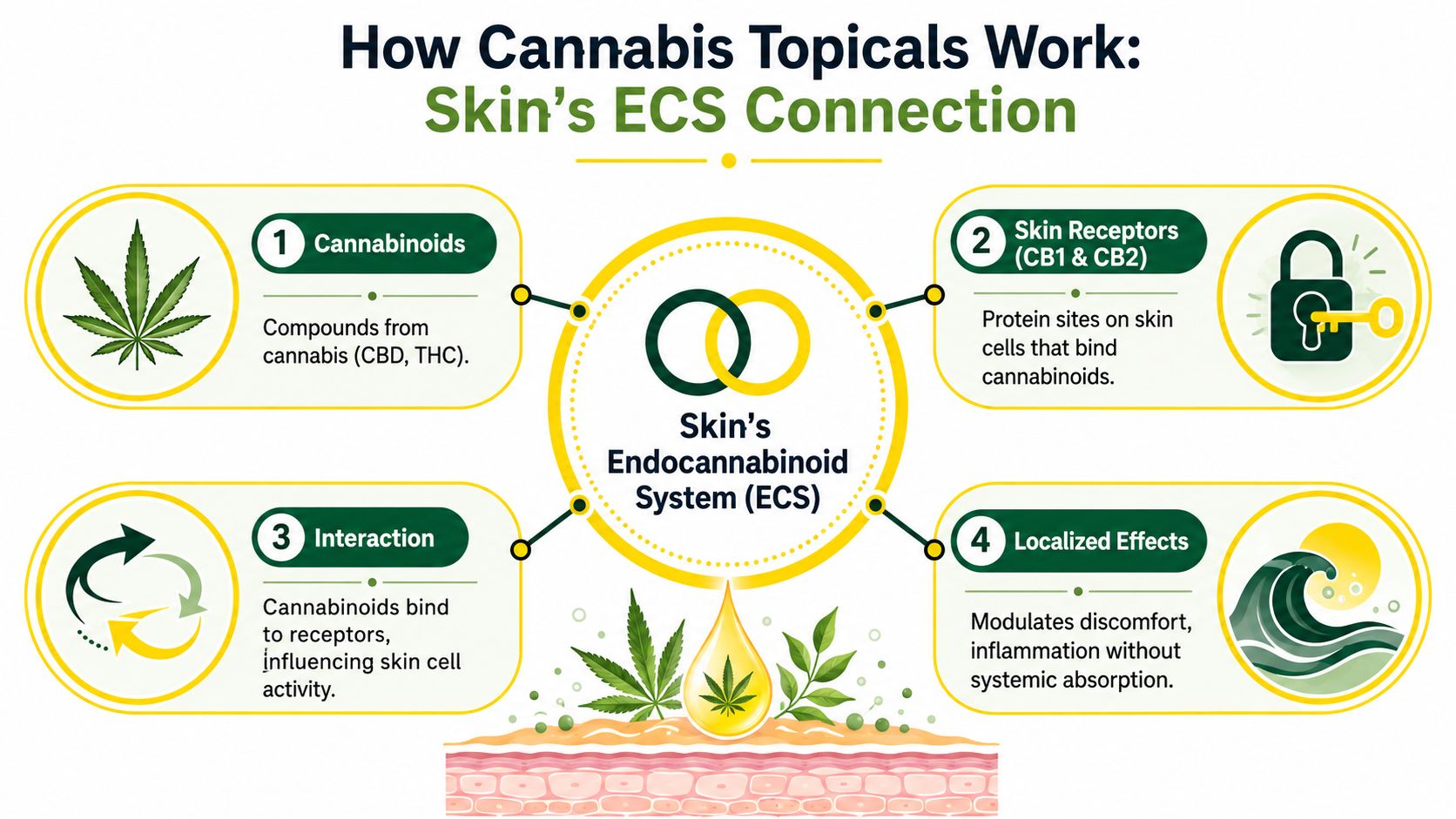
Skin is active tissue. It has nerves, immune activity, oil glands, and signaling systems that help regulate irritation, sensitivity, and barrier function. Researchers have also examined cannabinoid-related receptors and signaling in the skin, which gives cannabis topicals a real scientific basis beyond word-of-mouth alone.
That does not mean every jar on a shelf is proven to work for every problem. It means there is a reasonable biological explanation for why these products are being studied.
A simple way to picture it is a doorbell system in an apartment building. Pressing one button affects one unit, not the whole block. In a similar way, ingredients in a standard topical interact mainly with the area where you apply them.
What may be doing the work
A cannabis topical cream usually combines more than one kind of ingredient, and that matters because the feel of relief may come from several small effects working together.
- CBD: Often chosen for a non-intoxicating formula and commonly used in products aimed at local comfort.
- THC: Included in some creams for local application, even though standard topicals are not meant to create a head high.
- Minor cannabinoids: Some formulas add CBG or other cannabinoids, depending on the brand's goal.
- Terpenes: These aromatic compounds can affect scent and may shape how the formula feels on the skin. If label terms get confusing, this plain-English guide to terpenes in weed helps explain what you're looking at.
- Support ingredients: Menthol, camphor, shea butter, or other moisturizers often play a big role in the overall experience.
That last point trips people up all the time. If a cream feels soothing, part of that effect may come from cannabinoids, and part may come from the base formula softening dry skin or cooling the area. Both can matter.
Why realistic expectations matter
For a new user, the safest mental model is local interaction. You apply the cream to one spot, and the ingredients work mainly in that nearby tissue and on the skin itself.
So if your hands are dry and irritated, the moisturizer may help repair the skin barrier while cannabinoid ingredients interact with local receptors in that same area. If your shoulder feels tense after lifting, the cream may support comfort in that spot without acting like an edible or vape.
That is the science-based middle ground. There is enough biology here to take the category seriously, but not enough proof to promise dramatic results for everyone. A good cannabis topical cream is better understood as a targeted tool, not a magic fix.
Common Uses and Realistic Benefits
You rub a cream onto a sore knee, wait a bit, and then wonder the same thing almost everyone wonders. Is this doing anything, or is it just a nice-smelling lotion?
That question is healthy. Cannabis topicals are easiest to trust when you judge them by what they are built to do, not by big promises.
Where topicals tend to make the most sense
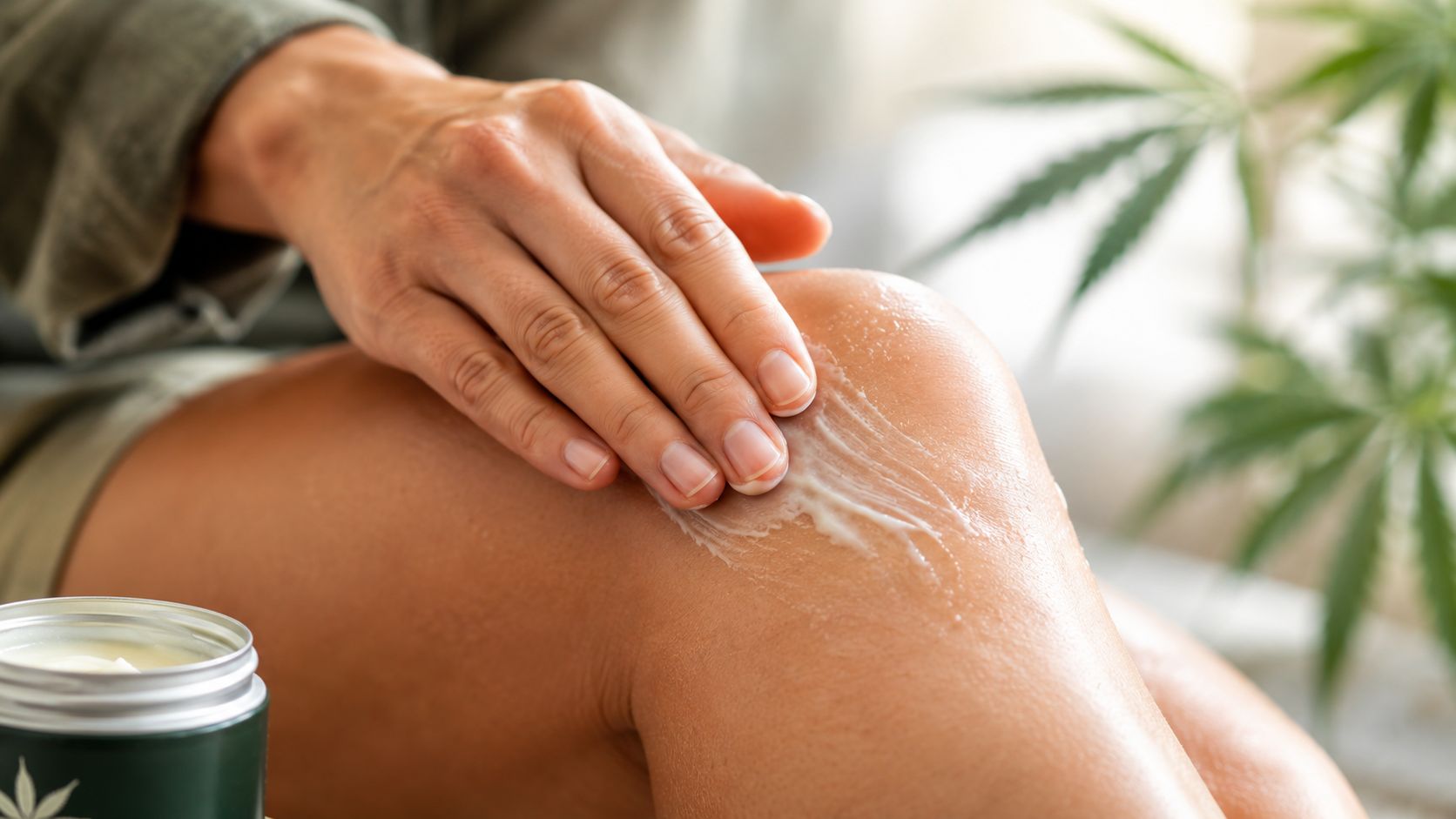
A topical usually fits best when the issue is in one clear spot and close enough to the surface that a cream feels like a logical tool.
Good examples include:
- Joint discomfort in one area: a knee, wrist, knuckles, or elbow.
- Muscle soreness: the kind you can trace to a calf, shoulder, or lower back spot after activity.
- Skin irritation: dry, itchy, or angry patches where the cream base itself may already help.
A simple way to picture it is a targeted patch job, not a whole-house repair. If one hinge is squeaking, you treat the hinge. You do not expect that same fix to quiet every sound in the building.
That is why the science feels promising, but still limited. Earlier research discussed in the article points to potential skin and localized comfort benefits, but it does not support treating every type of pain the same way or promising dramatic relief for everyone.
Where people get disappointed
The biggest mismatch usually comes from expectation.
If someone has a tender wrist after typing all week, a cannabis cream is a reasonable thing to try on that wrist. If someone has broad, hard-to-describe pain all over the body, a topical may still help in certain spots, but it is less likely to feel like a full answer on its own.
One practical rule helps a lot:
If you can point to the spot with one or two fingers, a topical is often a better fit.
That does not guarantee results. It just means the product matches the job better.
What “working” often looks like in real life
For new users, “worked” does not always mean “the pain vanished.”
A more honest checklist looks like this:
- The area feels less tense or irritated
- Movement feels a little easier
- The skin feels calmer, softer, or less dry
- You notice enough benefit to use it again
Those are meaningful results. They are also more realistic than expecting a cream to act like an edible, vape, or prescription pain treatment.
If you want more context on how cannabinoids may play different roles in discomfort support, this guide to CBD vs THC for pain relief can help you compare them.
Say your knees feel stiff after climbing stairs. Using a cannabis topical cream before a walk or at night may help take the edge off that one annoying area. That is a fair test. Expecting the same cream to handle nerve pain, deep internal pain, and full-body soreness the same way usually sets the product up to fail.
How to Choose a High-Quality Cannabis Cream
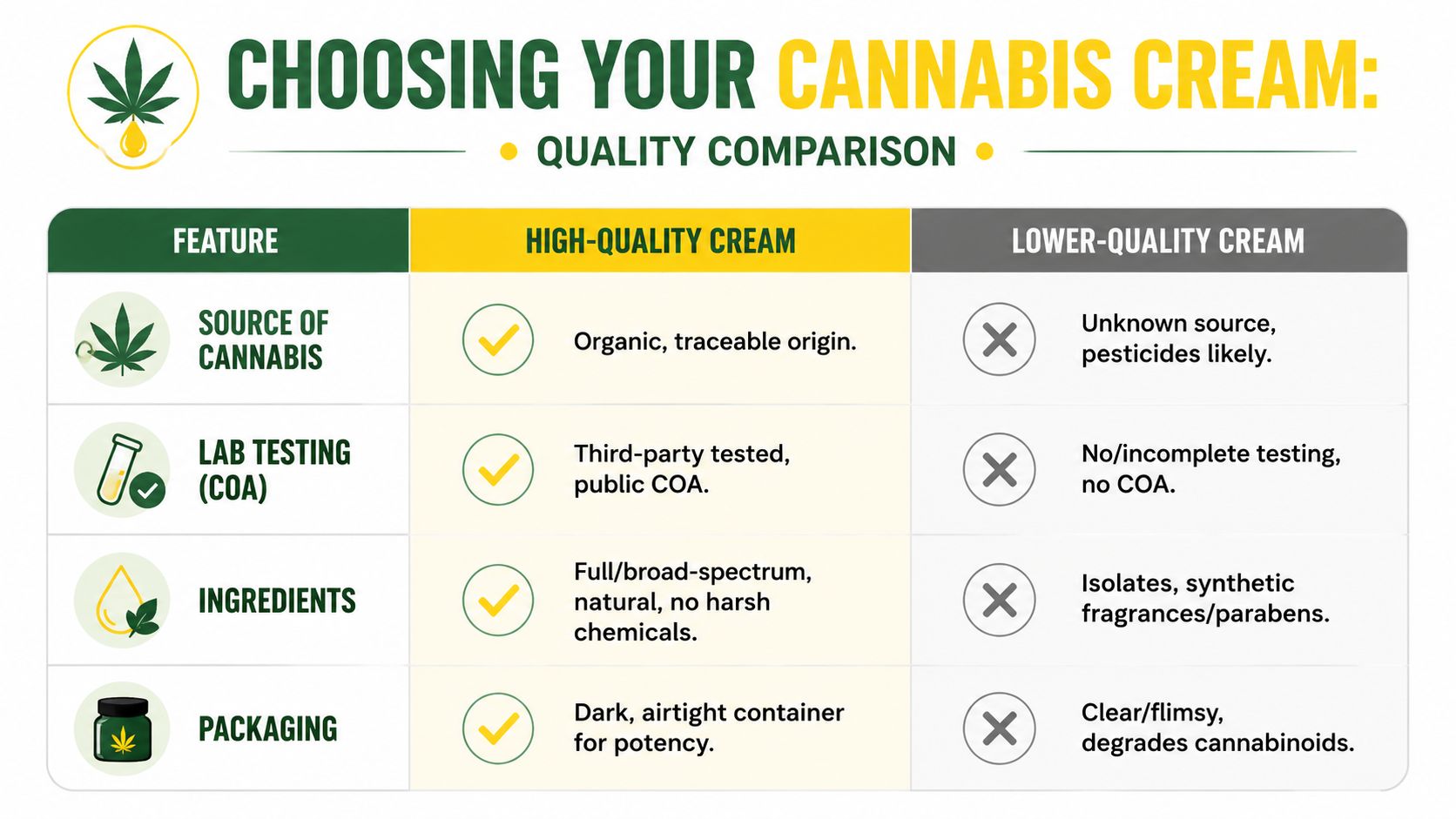
You are standing in front of two jars that both promise relief for a sore knee. One says it has a huge cannabinoid number on the label. The other gives batch testing, a clear ingredient list, and plain language about what is inside. To determine which one is more likely to work as advertised, start with proof, not packaging.
That question matters because topicals are one of the easiest cannabis products to oversell. A cream can feel nice on the skin and still fall short on label accuracy. In a study of hemp-derived topical cannabinoid products, researchers found wide gaps between labeled and measured CBD content, and they also detected THC in some products marketed as hemp topicals. That is why transparency matters, as described in this analysis of hemp-derived topical cannabinoid labels.
Start with the lab report
A Certificate of Analysis, or COA, is your receipt for trust. It shows whether the contents were tested instead of just described.
Look for three things:
- Cannabinoid content: The report should line up with what the package claims.
- Batch-specific testing: The COA should match the exact batch you are holding.
- Clear results: You should be able to find the main cannabinoid numbers without hunting through pages of jargon.
If you want a plain-English explanation of how those numbers are measured, this guide to how cannabis potency testing works helps.
A simple shopping rule is useful here. If a brand makes testing hard to find, treat that as a warning sign.
Then judge the formula, not just the headline number
A big cannabinoid number can grab attention, but it does not tell you how the cream spreads, how long it stays on the skin, or whether the formula suits the area you want to use it on. Potency matters. Formula matters too.
Creams are built to spread across the skin more easily than thick balms. That often makes them a better fit for broader areas like shoulders, calves, or knees. Balms and salves usually stay put better on small spots. If you are choosing between formats, it helps to match the texture to the job instead of assuming more milligrams always means better results.
In Canada, regulators also limit how much THC can be in a topical container, which is a reminder that total content and container size both shape how a product is evaluated, as outlined in Health Canada's composition requirements for cannabis products.
Cannabis topical formats compared
| Format | Texture & Absorption | Best For | Example Use Case |
|---|---|---|---|
| Cream | Lighter, spreads easily, absorbs relatively readily | Larger areas | Rubbing into a shoulder or both knees |
| Balm | Thicker, waxier, stays put longer | Small targeted spots | Applying to one knuckle or a focused patch |
| Lotion | Thinner and lighter feel | Everyday skin application | Using after a shower on a broad area |
| Salve | Dense and often occlusive | Dry skin plus targeted comfort | Massaging into rough elbows or hands |
Don't ignore the non-cannabis ingredients
A cannabis cream is still a skin product first. The base ingredients shape a big part of your experience.
Carrier oils and moisturizers affect slip, absorption, and how greasy or light the cream feels. Added fragrance, menthol, camphor, or warming ingredients can make a product feel strong right away, but that sensation is not the same as cannabinoid performance. For some people, those extras are pleasant. For others, they are the reason a product gets avoided after one try.
Packaging matters too. A pump, tube, or well-sealed jar usually protects the formula better than a messy container that lets in air and contaminants.
For shoppers in DC, Mr. Nice Guys DC carries cannabis wellness products, including topicals, so adults can compare formats and ask practical product questions before choosing.
Application Tips for Maximum Effectiveness
Using a cannabis topical cream well is less about doing something fancy and more about being consistent.
Start with a patch test
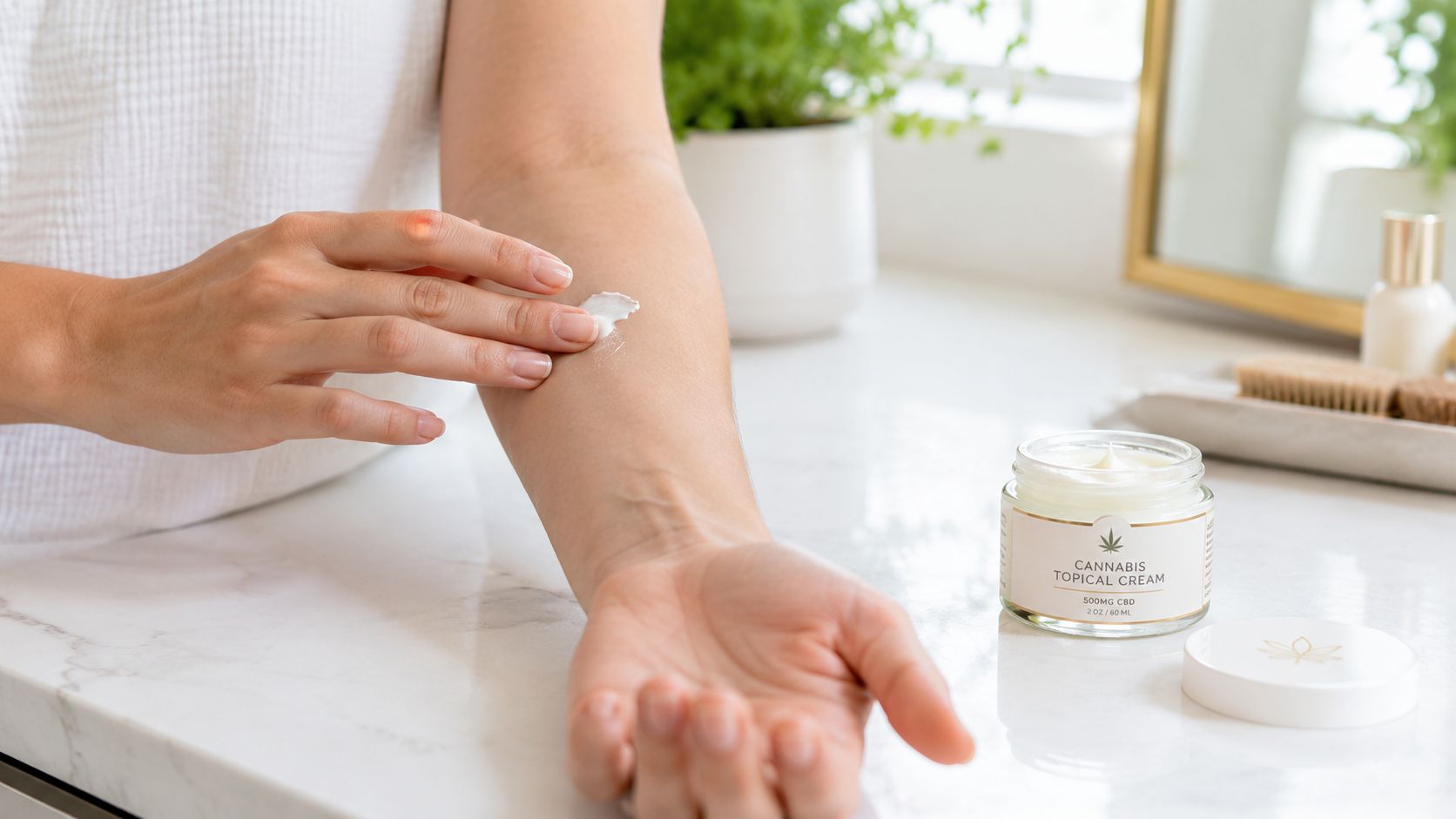
Before you rub a new product all over a larger area, try a small amount on a limited patch of skin. That helps you spot irritation from the formula itself, which may come from fragrances, botanicals, or support ingredients rather than the cannabinoids.
This is especially smart if your skin is already sensitive or reactive.
Use less than you think you need first
A simple first trial works well:
- Clean the area so you're not rubbing the product over sweat or residue.
- Dry the skin because many creams apply more predictably that way.
- Apply a small amount such as a pea-sized portion to the target area.
- Massage it in well so the cream spreads evenly instead of sitting in one thick patch.
A practical example. If your wrist feels sore after typing all day, don't coat your whole forearm on the first try. Start at the wrist itself, rub it in thoroughly, and notice how that specific area responds.
Practical rule: Small first applications make it easier to tell what the product is actually doing.
Give it time before judging it
People often apply a topical and decide within a few minutes that it failed. That's too fast for many products.
Instead, give the product some time to settle in and then reassess how the area feels during normal movement. If you're using it on a knee, walk around the house. If it's your shoulder, gently move through your normal range of motion.
For a quick visual walkthrough on topical use, this video is a helpful primer:
Track patterns, not one-off moments
One use can tell you a little. A few uses under similar conditions tell you much more.
Try noting:
- When you used it
- Where you applied it
- How the area felt before
- Whether movement or skin comfort changed afterward
That kind of simple tracking helps you decide whether a cannabis topical cream earns a place in your routine. It also keeps you from expecting too much from one application on a bad pain day.
Find Your Topical at Mr. Nice Guys DC
By this point, the useful takeaway is pretty clear. A cannabis topical cream can make sense for a sore, specific area. It usually fits best when the goal is local comfort, not an intoxicating effect and not a whole-body solution.
The other big takeaway is just as important. Product quality matters. Labels don't always tell the whole story, and the market includes formulas that look similar on the shelf but perform very differently in real life.
That's why it helps to shop with questions, not just preferences. Ask about the formula. Ask whether there's batch testing. Ask whether the product is a cream, balm, or lotion and why that matters for your use case. If you've got a dry patch on your hands, your needs are different from someone trying to massage a sore calf after exercise.
At Mr. Nice Guys DC, adults can talk through those differences with staff who handle cannabis formats every day. That kind of conversation is useful for first-time topical users and for experienced shoppers who want a more precise fit.
A good topical purchase isn't just about buying cannabis. It's about matching the right format to the right problem, using it correctly, and keeping expectations grounded in how these products work.
If you're ready to explore a cannabis topical cream with more confidence, visit Mr. Nice Guys DC to browse available wellness products or talk with the team about what fits your specific needs, skin type, and comfort goals.
Mr Nice Guys DC
At Mr. Nice Guys DC, we’re more than just a cannabis delivery service — we’re passionate advocates for quality, convenience, and community. With years of experience in the cannabis industry, our team is dedicated to educating and empowering customers across Washington, D.C. Whether you're a seasoned user or just starting your cannabis journey, our blog delivers trusted tips, product insights, and the latest updates from the world of weed. Stay informed, stay elevated.
