
Must Be 21 To Enter
By entering this site you are agreeing that you are at least 21 Years of Age or older.
I AM 21 OR OLDERCannabis Concentrates Online: Complete DC Buyer Guide
.svg)

.png)
You're on the couch in Shaw, comparing two concentrate listings on your phone. One says shatter, the other says live resin. The prices are far enough apart to make you wonder whether you're paying for better extraction, fresher material, or a larger markup. Then you notice that one listing has a lab report and the other only has a potency figure.
That's the practical challenge with cannabis concentrates online in Washington, DC. A menu can make ordering convenient, but it can't replace your judgment about testing, format, dose, delivery requirements, and total cost. This guide focuses on the decisions that matter before you place an order, using the kind of questions I'd walk through with a first-time concentrate buyer at a dispensary counter.
Why Buying Concentrates Online in DC Is Different
A Columbia Heights shopper can open a DC menu, compare polished product photos, and add wax, shatter, rosin, or live resin in minutes. The difficult part starts when those labels leave unanswered questions about freshness, testing, texture, and total value.
Flower provides a familiar reference point. Concentrates require more care because a small jar may contain far more THC than a similar-looking amount of plant material, so portion size matters immediately. Regulated-market products commonly test around 50% to 70% THC, and some labels exceed 90%, according to a technical review in the National Library of Medicine. Potency affects both product comparisons and how cautiously you should consume.

The menu is only the beginning
A useful listing should show more than a strain name and THC figure. Check the concentrate's format or texture, cannabinoid results, terpene information when available, batch identification, and a Certificate of Analysis, or COA. A missing report does not automatically prove poor quality, but it gives you less to verify. Ask the retailer for those details before paying.
Delivery creates separate decisions. Confirm age or patient eligibility, prepare valid identification, select an approved delivery location, and review the provider's payment and order requirements. For the local rules and practical requirements, see this guide to Washington, DC pot delivery.
Practical rule: Use an online menu to identify options, then verify the product before treating the listing as reliable.
Price needs the same scrutiny. A higher-priced live resin may reflect fresher input material or stronger terpene expression, while a lower-priced listing may provide real value. Neither price proves quality. Compare the available COA information, format, batch details, and delivery terms before deciding what the markup is buying. That process helps separate a well-documented product from one that has attractive photos.
What Are Cannabis Concentrates and Why Do They Matter
You open an online menu and see flower, cartridges, rosin, and wax sharing similar strain names. The label that deserves closer attention is the product format, because concentrates change the strength, equipment, handling, and dosing experience compared with flower.
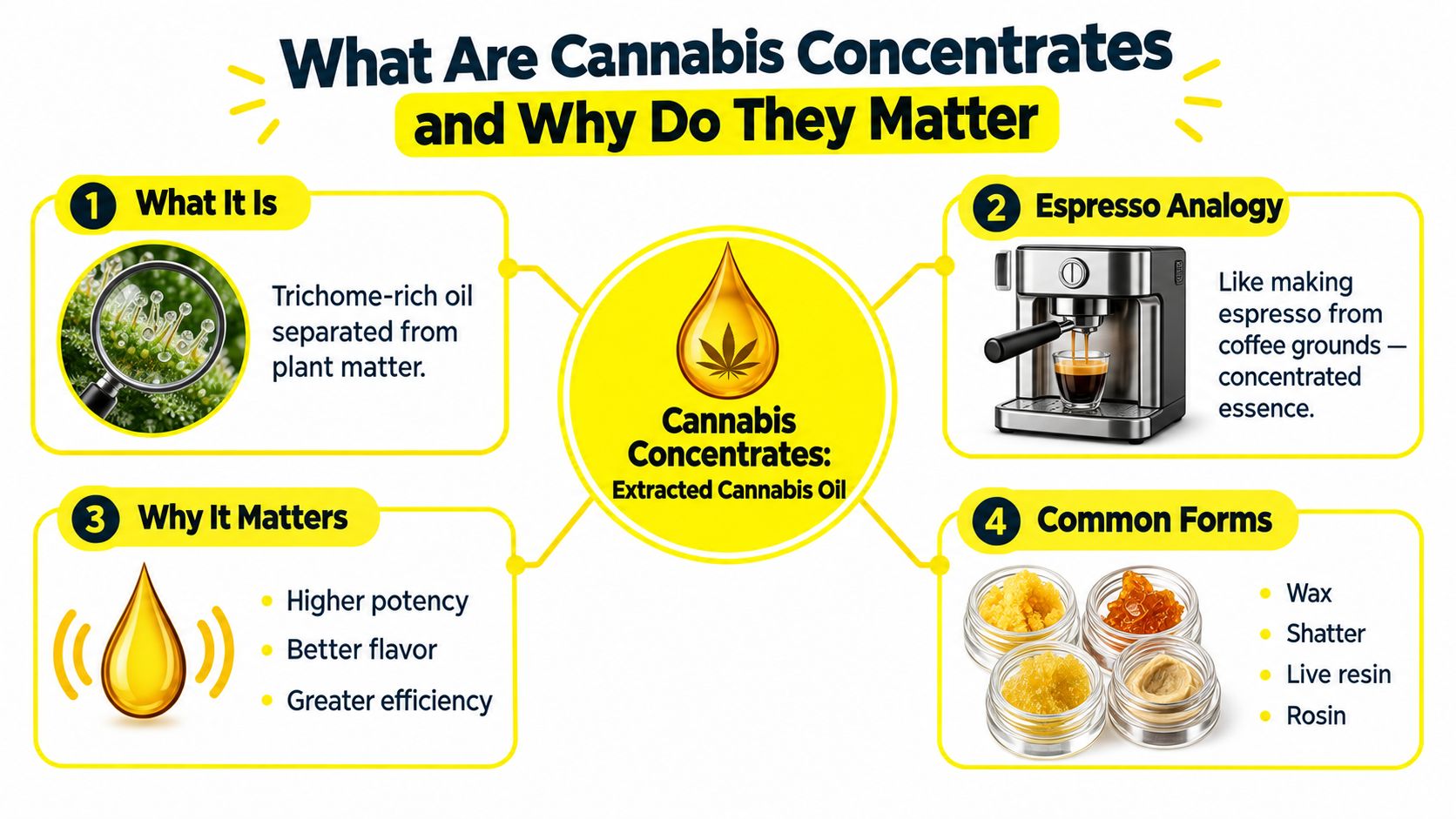
Cannabis concentrates are extracted cannabis products made by separating resin-rich compounds from the plant's bulk material. Extraction may use solvents or solventless methods. The finished product can retain cannabinoids such as THC along with some of the plant's aromatic compounds.
The espresso comparison makes the idea practical. Coffee grounds hold the original material, while espresso delivers a smaller, more intense serving in a finished drink. Concentrates work similarly for cannabis. They are not automatically better than flower. They are a different product with different texture, strength, device requirements, and dosing curve.
Potency changes the buying decision
Concentrates commonly test far higher in THC than flower, and some labels show exceptionally high figures. Solventless and solvent-based products can reach similar potency levels, so THC percentage alone does not show whether a product was made carefully or will taste better.
That matters while comparing online listings. A familiar strain name paired with a large THC figure may offer less flavor or process information than a lower-THC rosin with a clear terpene profile. Potency is one quality signal, not the entire quality assessment. Check the COA, cannabinoid results, terpene information, and batch details before treating a number as a quality verdict.
Consumption method also changes the experience. Vaporized or dabbed concentrates can feel fast and intense because the extract reaches the lungs in concentrated form. An edible made with extract follows a different onset and duration pattern, so the same product category does not guarantee the same experience. For a practical explanation of THC, CBD, and other cannabinoids, read this cannabinoid breakdown.
Why format matters as much as strength
A cartridge is convenient, but you are limited by its device and oil formulation. A jar of rosin gives more control over serving size, while requiring suitable equipment and careful handling. A dab can feel intense quickly, so a conservative first serving makes sense even for someone comfortable with flower.
Choose concentrates according to how you plan to consume them, how much control you need, and whether flavor or convenience matters most. The strongest item on an online menu is not automatically the right purchase. In DC, that distinction helps you compare what the listing promises with the product you can realistically use.
Cannabis Concentrate Types Explained
Concentrate names describe more than branding. They often signal texture, extraction approach, terpene character, and the equipment you'll need.
Shatter has a firm, glass-like appearance and may snap cleanly when handled. It's commonly associated with a clear, concentrated flavor profile, though the actual experience depends on the starting material and processing. Shatter suits buyers who already have a dab setup and prefer a stable texture.
Wax is softer and more opaque, often with a buttery or pliable consistency. It's easier to portion with a dab tool than a brittle sheet, making it practical for someone who wants a traditional jar format without dealing with shatter's rigidity.
Live resin starts with fresh-frozen cannabis rather than dried and cured flower. That approach is intended to preserve more of the plant's terpene character. A Gelato live resin dab may taste bright, sweet, and aromatic, while the same strain name in a highly refined cartridge may express less of the original plant character.
Rosin is a solventless concentrate pressed with heat and pressure. Many buyers choose it for its rich aroma and process transparency, although it can cost more and may require careful temperature control. Distillate is more highly refined and frequently appears in cartridges or infused products. It can deliver a clean, strong cannabinoid profile, but its natural terpene character may be reduced unless terpenes are added back.
| Type | Texture | THC Range | Best For | Flavor Profile |
|---|---|---|---|---|
| Shatter | Firm and glass-like | Varies by batch | Experienced dab users | Clean, concentrated expression |
| Wax | Soft and buttery | Varies by batch | Easy portioning in a jar | Often bold and direct |
| Live resin | Sticky or saucy | Varies by batch | Flavor-focused consumers | Terpene-rich and strain-forward |
| Rosin | Pliable, oily, or creamy | Varies by batch | Solventless shoppers | Full, aromatic, and layered |
| Distillate | Thick oil, usually in a cartridge | Varies by batch | Convenience and portability | Refined, with terpenes depending on formulation |
The useful matching framework is straightforward. Choose live resin or rosin for flavor, shatter or wax for a traditional dab format, and distillate for simple cartridge use. Then verify the actual batch results instead of assuming the category tells you everything. This comparison of live resin versus distillate can help clarify the trade-off between terpene character and refinement.
How to Read a Lab Test and Spot Quality
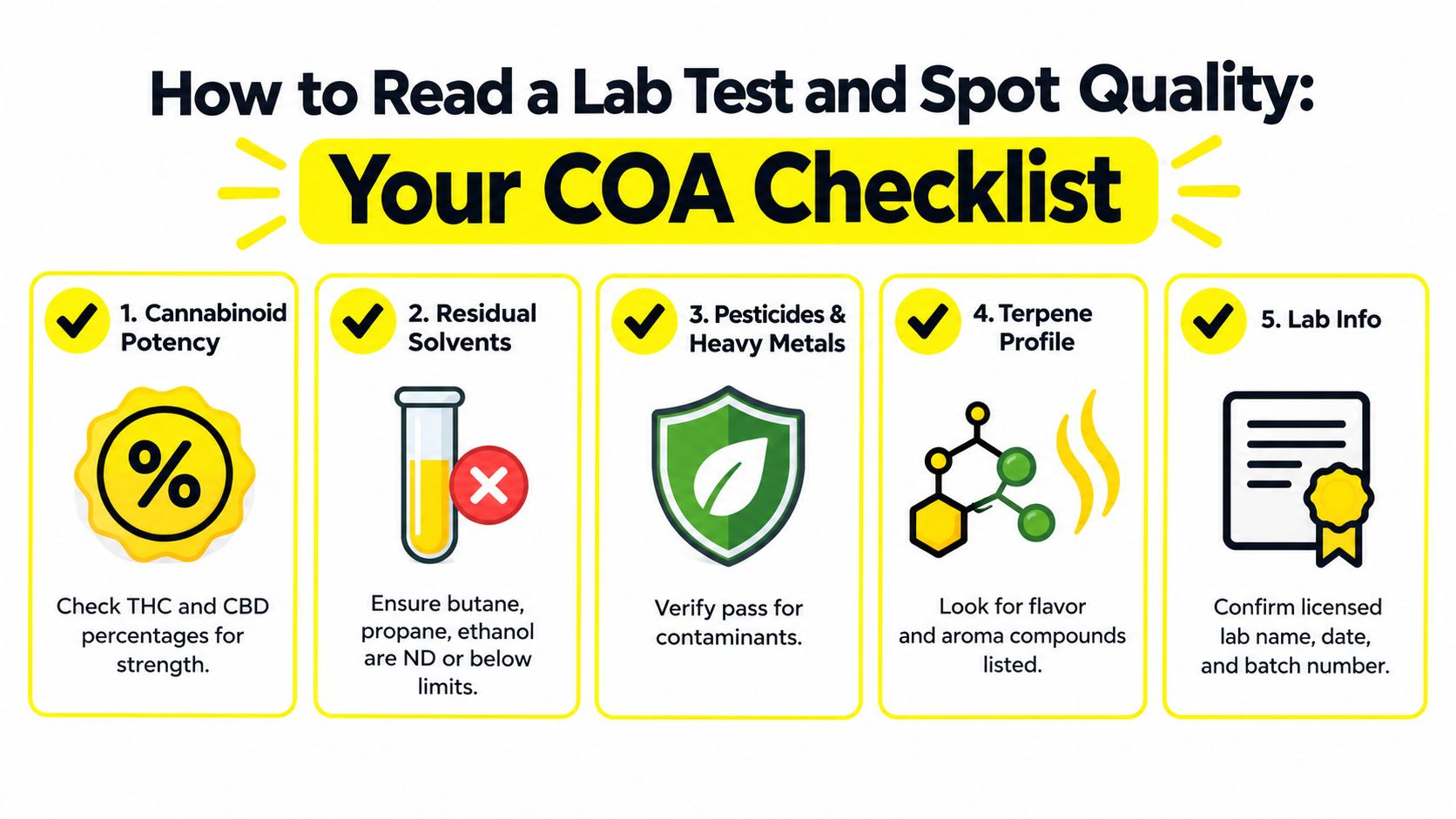
A product page can look professional and still leave important questions unanswered. Before buying a concentrate online, find the Certificate of Analysis, or COA, for the specific batch. The COA should connect the product you're viewing to a real test performed by an identifiable laboratory.
Start with the identity details
Check the product name, batch number, testing laboratory, and test date. The batch number on the COA should match the package or online listing. If the report appears to describe a different batch, it doesn't verify the item in your cart.
Review the cannabinoid panel next. THC and CBD percentages show strength, but they don't establish purity, flavor, or extraction quality. A terpene panel can add useful context, especially when you're comparing live resin, rosin, and other products marketed around aroma.
Check the safety panels
A credible report should address contaminants relevant to extracted cannabis. Look for:
- Residual solvents: Confirm that butane, propane, ethanol, and other applicable solvents are reported as not detected or within the permitted limits.
- Heavy metals: Check that the product passed testing for contaminants that can enter through soil, equipment, or processing.
- Pesticides: Look for a clear pass result rather than a vague statement that the product was “tested.”
- Microbial contaminants: Confirm that mold, yeast, and other relevant microbial panels are included.
- Laboratory information: Verify that the lab is identifiable and independently traceable, rather than listed only by an unexplained abbreviation.
The assigned COA checklist infographic is useful as a quick visual reference:
A missing solvent panel is a serious information gap for an extracted product. So is a laboratory you can't independently verify. Potency claims that look unusually high should also be checked against a third-party report rather than accepted from the marketing copy alone.
COA habit: Match the batch first, review potency second, and examine contamination results before comparing price.
High-potency concentrates are commonly described in the 60% to 90% THC range, and a Canadian public health guide warns that some products can exceed 90% THC. Review the public health guidance on high-potency concentrates. A lab report doesn't make a powerful product mild. It helps you understand what you're buying.
For additional context on how retailers should communicate testing, consult the product testing standards guide. If a seller can't answer basic questions about the COA, pause the order.
DC Online Ordering, Delivery Rules, and Real-World Examples

Ordering concentrates online in Washington, DC starts with a few checks. Confirm that the retailer serves your address, review its age or medical-patient requirements, and keep valid identification ready. Medical patients should also have the required card or certification information available when applicable. A delivery courier hands a package to a young woman who is presenting her identification card.
Delivery coverage may extend beyond the District, depending on the provider. Mr. Nice Guys DC lists DC neighborhoods and nearby locations including Alexandria, Bethesda, Rockville, and Silver Spring. Check the live checkout page before ordering because service zones and operating conditions can change.
A practical order walkthrough
A buyer in Shaw comparing wax with live resin should begin on the retailer's online menu and filter for concentrates. Open both product pages, compare the format and listed potency, then find the COA or ask customer service for the report tied to that batch. The product page gives you the starting information, while the batch report helps confirm what is being sold.
Then choose delivery or pickup based on your address and timing. Confirm the delivery address, check any order minimum, and read the payment instructions before submitting the order. Mr. Nice Guys DC accepts debit and cash, according to the publisher information supplied for this guide. Review this practical guide to ordering weed online if you want a step-by-step look at the process.
Ask about substitutions, unavailable batches, identification requirements, and the expected delivery window if the menu leaves them unclear.
Is online shopping actually cheaper?
Online menus can make concentrates easier to compare, but the displayed price is only part of the decision. Analysts at DataIntelo estimate that online channels account for 28.3% of concentrate distribution and may be 15% to 25% cheaper than retail, while physical dispensaries retain a majority share in a 2026 projection. Review the market channel analysis from DataIntelo
Treat the 15% to 25% range as a comparison point, not a promise. Delivery fees, order minimums, taxes, payment conditions, and product markup can change the final total. Compare the delivered price, then weigh it against batch information, retailer responsiveness, and the convenience of delivery.
A lower menu price is useful only when the product, fees, and service terms remain clear. Confirm those details before paying, especially when the order involves a new retailer or an unfamiliar concentrate format.
Safe Consumption and Proper Storage Practices
Concentrates deserve a slower approach because the dose can be much more concentrated than flower. A U.S. government fact sheet reports that solvent-based concentrates average about 54% to 69% THC, with products reported above 80%, while non-solvent concentrates average 39% to 60% THC. The same fact sheet compares those figures with seized marijuana flower averaging just over 15% THC. Read the NIDA fact sheet on marijuana concentrates.
Choose one method and control the variables
If you're new to dabbing, use a very small amount and avoid taking repeated servings before you understand the first one. A dab rig can produce a quick, powerful inhalation, while a concentrate vaporizer or cartridge may offer more predictable handling. Temperature control matters because excessive heat can make vapor harsh and reduce the flavor you're trying to preserve.
Edibles require separate caution. The body processes them differently from inhaled concentrates, so onset may be delayed and the experience can last longer. Don't assume that a small-looking edible serving feels equivalent to a small inhaled dab.
Colorado's safety guidance says concentrates may contain up to 90% THC and warns that making hash oil with flammable liquids is extremely dangerous and illegal because it has caused explosions, burns, and deaths. Never attempt home extraction with volatile solvents. Buy tested products from a regulated source and use equipment designed for concentrates.
Start low and go slowly: You can always choose to consume more later. You can't undo an oversized first serving.
Protect the product after delivery
Store concentrates in an airtight container in a cool, dark place. Heat can soften the texture and encourage terpene loss, while light and air can gradually affect aroma and freshness. Keep the container away from children, pets, direct sunlight, and warm electronics.
For the best balance of potency and flavor, plan to use concentrates within 3 to 6 months. That timeframe is a practical freshness target, not a guarantee of spoilage or a substitute for the product's own label guidance. If the aroma changes sharply, the texture becomes unexpectedly dry or degraded, or the package shows signs of contamination, don't consume it. Contact the retailer with the batch information instead.
Your Cannabis Concentrate Buying Checklist for DC
A product can look affordable online and still cost more after delivery fees, taxes, order minimums, or payment conditions. Check the full order before deciding.
- Verify the COA: Match the batch number, review THC and CBD results, and confirm testing for residual solvents, pesticides, heavy metals, and microbes.
- Identify the format: Choose shatter, wax, live resin, rosin, or distillate based on your device, experience, and desired balance of flavor, texture, and potency.
- Compare the total: Treat the reported 15% to 25% online savings range as a rough reference, then calculate the actual delivered price rather than relying on the menu price.
- Confirm delivery coverage: Check service for your DC neighborhood or nearby address in Virginia or Maryland, and verify the current delivery window before paying.
- Plan the first serving: Use a conservative amount, especially when the label indicates high potency. Your device and prior experience also affect the result.
- Ask a budtender: Get clarification if the COA, texture, device compatibility, or expected effect is unclear.
Mr. Nice Guys DC's team has more than a decade of experience helping first-time and experienced patients compare cannabis formats. Use that conversation to question unclear listings and choose a product that fits your wellness goals and local requirements.
To compare tested concentrates, review the current menu and delivery options at Mr. Nice Guys DC. The online shop lists products for pickup or delivery, accepts debit and cash payments, and serves DC and nearby communities.
Mr Nice Guys DC
At Mr. Nice Guys DC, we’re more than just a cannabis delivery service — we’re passionate advocates for quality, convenience, and community. With years of experience in the cannabis industry, our team is dedicated to educating and empowering customers across Washington, D.C. Whether you're a seasoned user or just starting your cannabis journey, our blog delivers trusted tips, product insights, and the latest updates from the world of weed. Stay informed, stay elevated.
