
Must Be 21 To Enter
By entering this site you are agreeing that you are at least 21 Years of Age or older.
I AM 21 OR OLDERCannabis Concentrates Near Me Your DC Buying Guide
.svg)

.png)
You've searched “cannabis concentrates near me”, opened a few local menus, and now you're looking at names like live rosin, live resin, wax, shatter, diamonds, and carts. The labels sound familiar enough to recognize, but not clear enough to make a confident choice. You may also be wondering whether the highest THC number is automatically the best option, or whether a product with a lower number could suit your needs better.
That confusion is common. Concentrates combine unusually high potency with different extraction methods, textures, devices, and testing standards. A first-time shopper needs more than a product list. You need to know what the product is, how it was made, how to read its label, and how to buy it through a compliant local channel.
This guide starts with the basics and moves toward practical DC shopping. You'll learn how concentrates differ from flower, how live rosin compares with live resin, how to approach dosing, what a certificate of analysis can tell you, and how pickup, curbside, and delivery options fit into the local buying process. The goal isn't to push you toward the strongest item on a menu. It's to help you choose a format that matches your tolerance, flavor preferences, experience, and wellness goals.
For related local guidance, see this overview of finding a cannabis dispensary near you.
Introduction to Finding Cannabis Concentrates Nearby
A typical search starts with a practical problem. You want a concentrate before the evening, so you type cannabis concentrates near me into your phone. One result shows a pickup menu, another promotes delivery, and a third lists several extracts without explaining whether they're beginner-friendly. The menus may show THC first, while the details you need, such as extraction method or recent lab results, take more effort to find.
That local intent matters. You're not only asking, “What is a concentrate?” You're asking, “Which product can I buy nearby, how do I know it's legitimate, and what will make sense for me?” A useful answer has to connect education with the actual buying experience.
Start with the product, not the percentage
Concentrates are extracted cannabis products that isolate cannabinoids and terpenes from plant material. Because the active compounds are more concentrated, a small amount can produce a much stronger effect than a comparable amount of flower. Published literature describes flower ranges of about 8% to 34% THC and concentrate ranges of about 40% to 97% THC in this review of cannabis concentrates and high-potency products.
That range explains why a menu can feel overwhelming. A shopper comparing shatter with live rosin isn't always choosing “weak versus strong.” Both may be high-potency products, but they can differ in texture, aroma, extraction process, handling, and price.
What this guide helps you decide
A practical shopping decision usually has several parts:
- Format: Choose between a cartridge, dab-friendly extract, or another concentrate form.
- Extraction method: Decide whether solvent-based or solventless production better matches your preferences.
- Flavor profile: Look for terpene-rich options if aroma and taste matter to you.
- Tolerance: Treat concentrates as a different strength category, especially if you mostly use flower.
- Testing: Look for batch information and a certificate of analysis rather than relying on THC alone.
- Access: Confirm whether the menu supports in-store pickup, curbside service, or delivery to your area.
By the end, you should be able to open a DC menu and ask better questions. Instead of choosing the biggest number, you can compare the method, the batch information, the texture, and the intended use.
What Cannabis Concentrates Are and Why They Feel So Strong
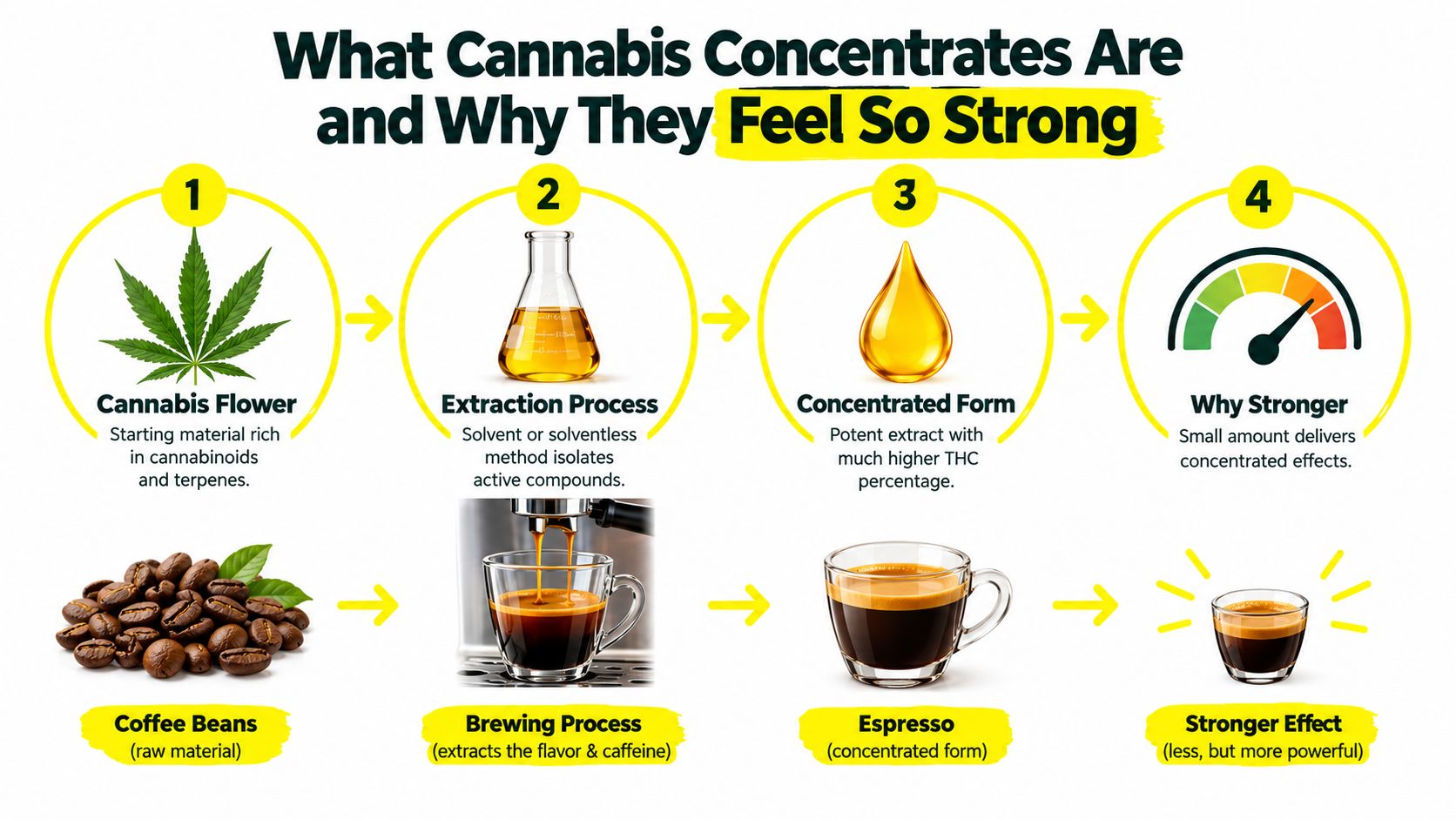
A small dab can feel very different from a bowl of flower. The reason starts with concentration. Like espresso made from the same beans as brewed coffee, a cannabis extract gathers more of the plant's cannabinoids and terpenes into a smaller amount of material.
Extraction may use solvents, or it may rely on solventless methods such as heat and pressure. The finished product can be a brittle sheet, soft wax, creamy badder, dry crumble, sticky live resin, or smooth rosin. Texture helps identify how an extract is handled, but it cannot establish quality by itself.
From flower to extract
Flower stores cannabinoids and terpenes in resin glands across the plant. Extraction separates those compounds and gathers them into less material. That is why a concentrate can contain far more THC per gram than flower.
A review of US cannabis trends reports that concentrates commonly range from 52% to 69% THC, with some reaching 90% to 95% THC, while state-market flower often falls around 16% to 21% THC in the evidence review available through the National Center for Biotechnology Information. The review also describes average concentrate strength rising from 46% THC in 2014 to 68% THC in 2020, showing how potency has increased across the category.
A separate NIH and NIDA data series, summarized in that review, found average THC in DEA-seized cannabis rose from 3.96% in 1995 to 11.92% in 2014 and 16.14% in 2022. These figures do not describe every product on a DC menu. They do explain why a shopper should treat concentrate potency seriously and check the batch label rather than assume all extracts are alike.
Make the label tangible
Percentages become easier to assess after converting them into milligrams. A 1-gram concentrate at 80% THC contains about 800 mg of THC, while a 1-gram flower sample at 20% THC contains about 200 mg of THC using the practical comparison described in this review.
You will not necessarily absorb every milligram. The device, temperature, inhalation, and your individual response all affect the experience. The comparison still matters because one gram of concentrate represents a much larger THC load than one gram of flower.
Practical rule: Treat the package as a concentrated supply, not as one sitting's portion.
THC percentage also leaves out important quality clues. It does not show whether the extract used fresh-frozen flower, how much terpene character remains, or whether the batch passed purity testing. Read the number alongside the extraction method, ingredient and batch information, and certificate of analysis. For a closer potency comparison, use this THC concentrates chart.
Types of Concentrates and How to Choose for Your Needs
The menu names become easier once you sort them by texture, aroma, and method. Shatter, wax, budder, and crumble describe physical forms. Live resin and live rosin describe production choices connected to fresh-frozen material and extraction. Distillate, hash, diamonds, and carts describe other forms or delivery formats you may encounter.
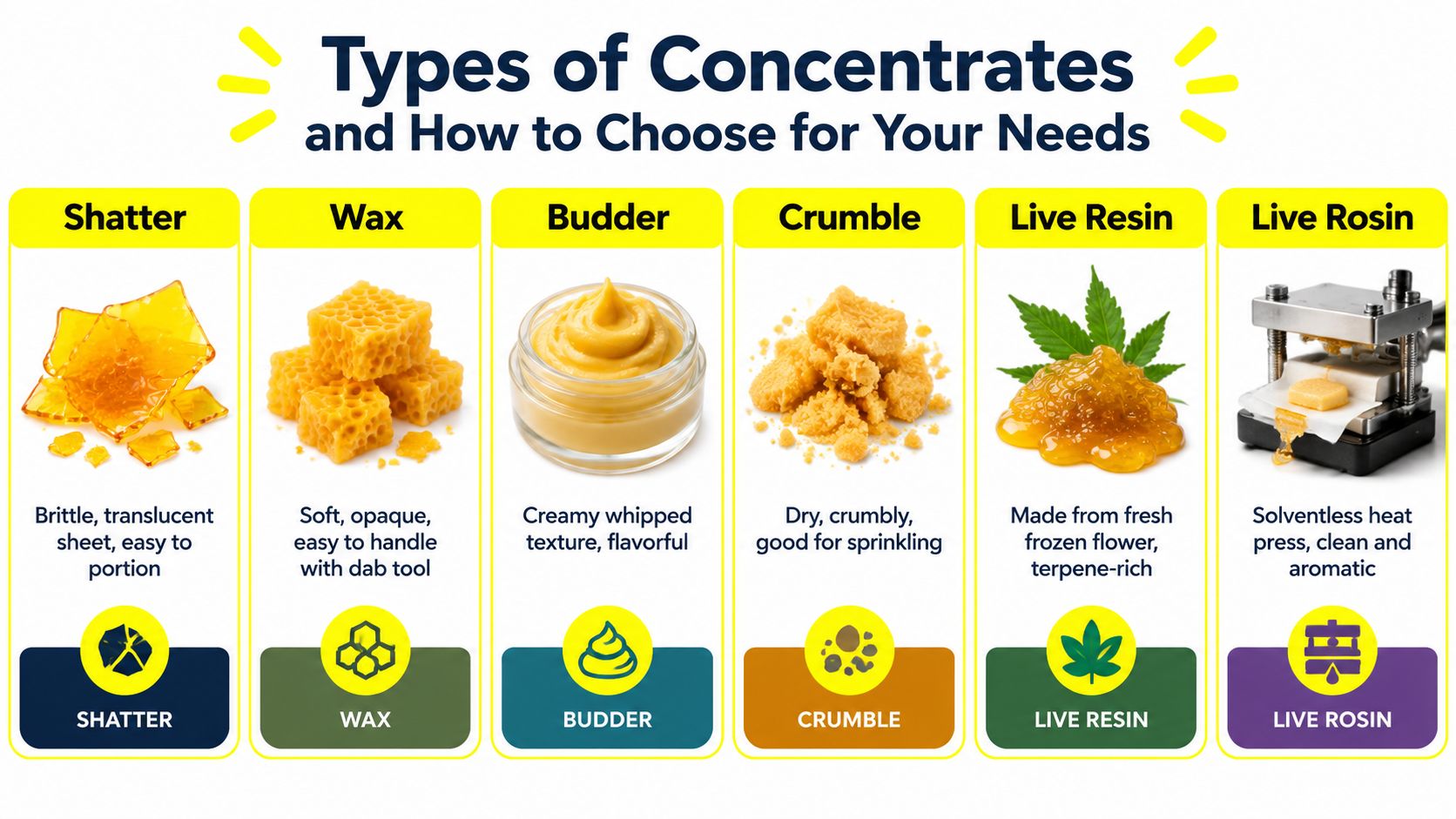
A menu comparison
| Concentrate Type | Texture and Extraction | Flavor and Best For |
|---|---|---|
| Shatter | Brittle, translucent, sheet-like extract, commonly solvent-based | Easy to portion, useful for shoppers who prefer a stable texture |
| Wax | Soft, opaque concentrate with a pliable consistency | Straightforward handling and a familiar dab format |
| Budder | Creamy, whipped texture | Flavor-focused shoppers who want an easy-to-scoop extract |
| Crumble | Dry, crumbly material | Convenient handling and sprinkling onto a compatible preparation |
| Live Resin | Extract made from fresh-frozen flower, usually solvent-based | Terpene-rich aroma and strain character |
| Live Rosin | Solventless extract made with heat and pressure | Shoppers seeking aromatic, solventless production |
| Distillate | Highly refined extract, often used in carts | Neutral or added flavor and convenient portable use |
| Hash | Compressed or processed resin glands | Traditional concentrate formats and broader texture choices |
| Diamonds | Crystal-like cannabinoid formations, often paired with sauce | Experienced consumers looking for a particularly potent format |
| Carts | Pre-filled vapor cartridges containing an extract | Portable, discreet use with a compatible battery |
A practical example helps. If you want a strong aroma and don't mind handling a jar with a dab tool, live resin or live rosin may be more appealing than distillate. If you want portability and minimal setup, a cart may fit better. If you prefer a dry texture that's less sticky, crumble may be easier to manage than wax or budder.
Solvent-based and solventless choices
Live resin is generally made from fresh-frozen cannabis through a solvent-based process. Live rosin uses heat and pressure without solvents. Neither is automatically the right choice for every shopper. The better match depends on your preference for method, aroma, texture, budget, and available testing information.
Shatter and live resin can both deliver pronounced effects, but they offer different handling and flavor experiences. This is why a product comparison such as live resin versus distillate can be more useful than sorting a menu from highest to lowest THC.
The video below offers another visual introduction to the major concentrate formats and the equipment commonly used with them.
If you're new, ask the budtender to explain two products with similar potency but different extraction methods. That comparison can reveal whether you care more about terpenes, portability, texture, or solventless production.
Safe Use Dosing and How to Judge Quality
A new shopper may open a concentrate jar and wonder how such a small portion can feel so strong. Concentrates reward patience. Start with less than you think you need, then give the first effect time to develop before considering more. The potency math from the earlier section is useful for understanding the package, but it is not a serving instruction.
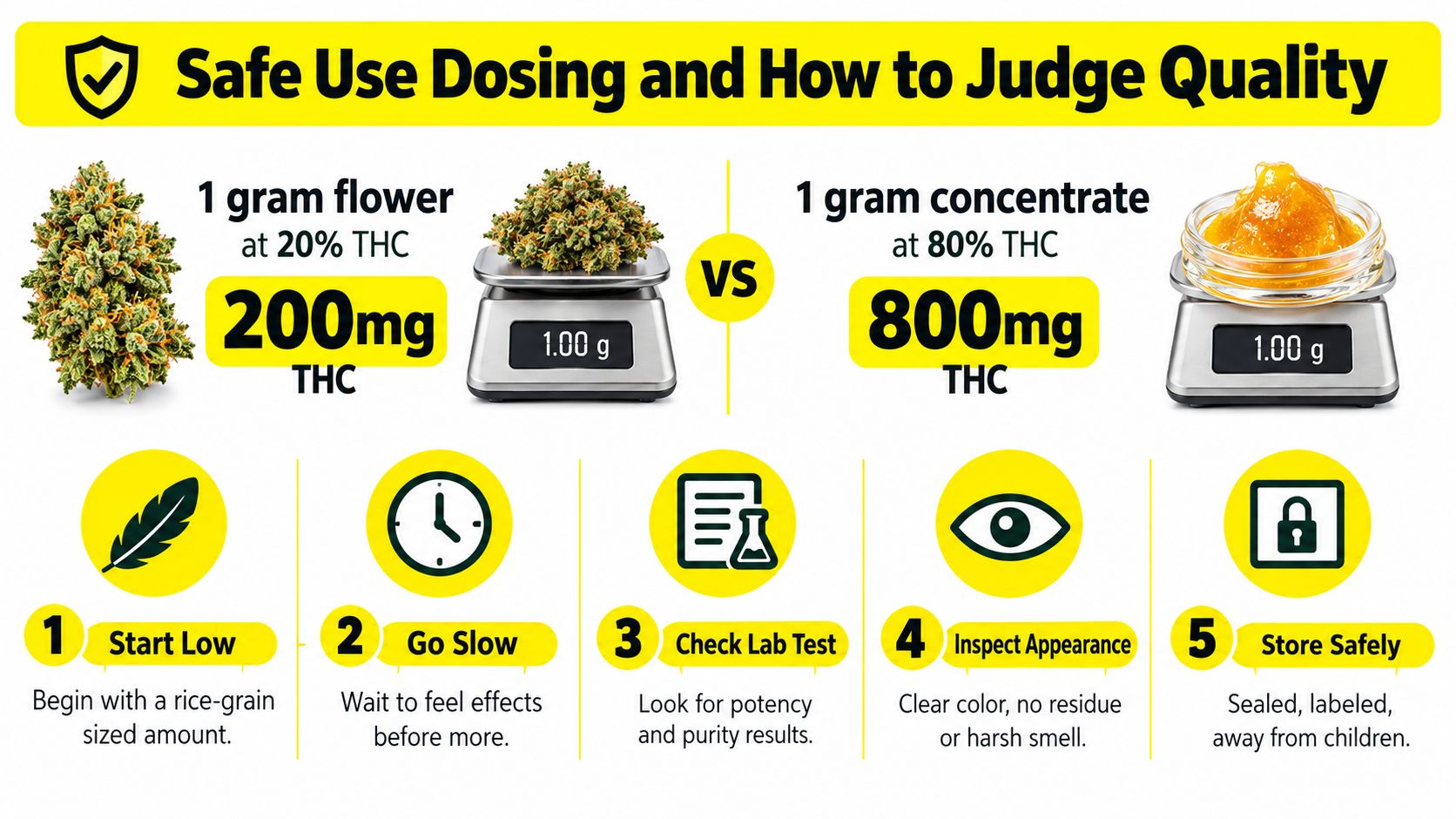
Start with control
For a dab, a rice-grain-sized amount is a cautious starting example for someone new to concentrates. Use an appropriate device and take a small inhalation. A cartridge allows a different kind of control, so begin with one brief puff instead of repeated draws. Check the label for the suggested serving size, and remember that one puff is not automatically equal to one serving across different devices or products.
Inhaled concentrates can feel different depending on the format and your device. A dab or cart may produce noticeable effects quickly, while taking repeated draws before the first effect is clear can make it harder to judge your response.
Give the first serving time to speak for itself. Taking more too quickly is one of the easiest ways to overshoot your comfort level.
Avoid driving, operating equipment, or combining cannabis with alcohol or other intoxicating substances. Store the product sealed, labeled, and away from children and pets. Medical patients should discuss concentrate use with a qualified clinician when cannabis may interact with a condition or medication.
Judge quality beyond THC
A high THC number does not prove that a concentrate was made well. Quality starts with information you can verify. Look for the product type, extraction method, batch or lot details, cannabinoid results, terpene information when available, and a clear expiration or packaging date. A certificate of analysis should identify relevant purity screening.
Extraction method gives you one useful quality clue. Solvent-based products should have testing that addresses residual solvents, while solventless products still need testing for pesticides, microbial concerns, and other contaminants. Inhalable products deserve particular care. A toxicology report found contamination concerns in tested concentrate samples in this toxicology source, which supports choosing regulated products with traceable laboratory information instead of unverified concentrates.
Use this quick label check before buying:
- Method: Does the menu or package identify solvent-based, solventless, distillate, or another method?
- Batch: Can the seller connect the product to a specific batch or lot?
- Potency: Are THC and other cannabinoid results clearly displayed?
- Purity: Does the laboratory report address solvents, pesticides, and other relevant contaminants?
- Condition: Is the container sealed, labeled, and free from unusual residue or harsh chemical odor?
A store's testing explanation can make those details easier to interpret. Read this guide to product testing standards before placing an order, especially if two products show similar THC results but use different extraction methods.
DC Rules for Buying Cannabis Concentrates Legally
Local access starts with age and authorization. In Washington, DC, adult consumers need to meet the applicable 21+ requirement, while medical patients may also need the appropriate registration or certification for medical cannabis access. Visitors should confirm current requirements before ordering because eligibility, identification, and product access can depend on the purchase channel.
A compliant dispensary will verify identification before completing a purchase. Bring a valid government-issued ID and be ready to provide medical documentation or registration details when the selected channel requires them. The staff should also be able to explain what products are available, what the label means, and which purchase limits apply under current DC rules.
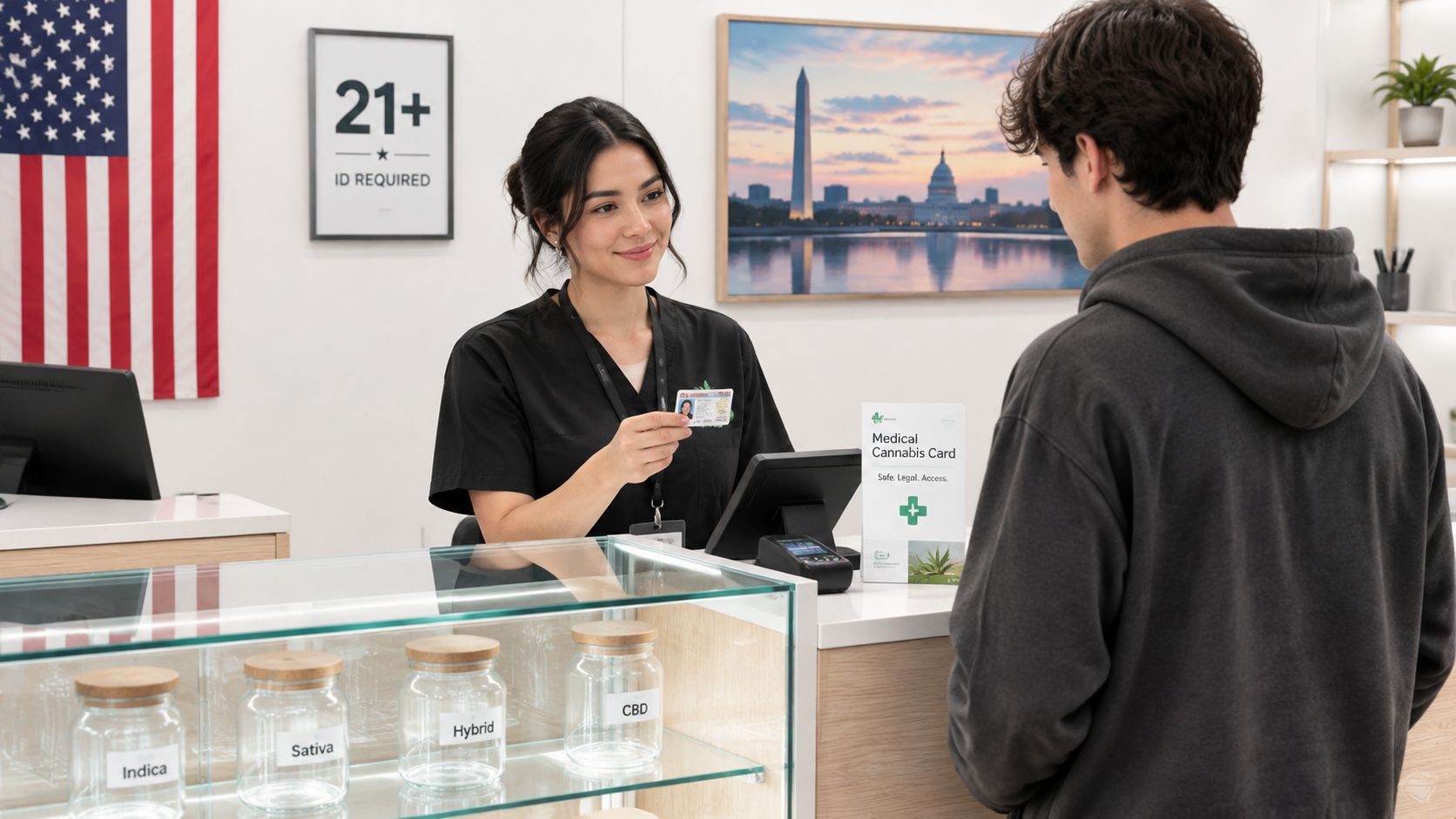
What a prepared buyer should expect
A transparent menu should show more than a strain name. Look for the concentrate type, package size, THC information, brand, and current availability. If the menu doesn't answer a question, contact the dispensary before traveling. That can prevent an unnecessary trip when a product sells out or a delivery area doesn't include your address.
Medical patients may want to ask about registration support, certification pathways, and whether the dispensary can explain compliance requirements without pressuring them toward a specific product. A professional retailer should make the process understandable, particularly for someone buying a concentrate for the first time.
The rules can change, and local details matter. Review this explanation of how DC regulates medical cannabis dispensaries and confirm the current requirements with the dispensary or the relevant DC authority before ordering.
The safest local route is simple: use a compliant seller, verify your eligibility, bring the required identification, review the product label, and ask questions before payment. Avoid unverified products offered through informal channels, especially when no batch record or laboratory report is available.
How to Find and Order Cannabis Concentrates Near You
Searching locally works better when you treat the menu like a filterable catalog rather than a list of colorful names. Start with the product category, then narrow your choice by format, extraction method, strain, and fulfillment option.
A practical DC ordering flow
Open the live menu. Search the concentrate category and check whether the item is currently available. Menus can rotate, so don't assume a product seen in an older post is still in stock.
Choose the format. Filter for shatter, wax, rosin, live resin, distillate, hash, diamonds, or carts. If you're new, ask whether the product requires a dab rig, dab pen, e-rig, or compatible battery.
Compare strains and profiles. You may see familiar names such as Gelato, Blue Dream, Wedding Cake, Runtz, or OG Kush. Treat the strain name as a starting point, then check the listed cannabinoid and terpene information.
Review fulfillment. Depending on the service and availability, choose in-store pickup, curbside service, or delivery powered by Sweede. Confirm the address, ID requirements, and order instructions before checkout.
Plan payment and handoff. Mr. Nice Guys DC accepts debit and cash payments, according to the publisher information provided for this guide. At pickup or delivery, have your identification ready and inspect the sealed package before leaving it unattended.
Delivery coverage can include DC and nearby areas such as Alexandria, Bethesda, Rockville, and Silver Spring. Shoppers in Georgetown, Shaw, Cleveland Park, Friendship Heights, Tenleytown, Spring Valley, Kalorama, Foxhall, Glover Park, and American University Park should still confirm the current service area at checkout.
Make the order match the use case
For discreet portability, a cart may be simpler than a jar of wax and a dab tool. For terpene-driven flavor, live resin or live rosin may deserve closer attention. For a medical patient who wants consistent repeat purchases, batch details and a clear testing record may matter more than a small difference in THC percentage.
If two products seem similar, ask the dispensary one direct question: “What is the extraction method, and can I review the certificate of analysis?” That question quickly separates a transparent menu from one that only promotes potency.
Why Choose Mr Nice Guys DC for Concentrates and Next Steps
A local concentrate purchase should feel more like a guided product decision than a race to the highest THC number. You want a menu that shows what's available, a team that can explain extraction methods, and a compliant process that works for your location and eligibility.
Mr. Nice Guys DC offers concentrates alongside flower, edibles, cartridges and pens, pre-rolls, topicals, and tinctures. Its service model includes in-store pickup, curbside ordering, and delivery powered by Sweede, with coverage extending through DC and nearby communities. The dispensary's published information also describes more than a decade of experience, transparent menus, competitive pricing, and rotating inventory.
The education-first approach matters most when the menu includes products with very different handling requirements. A first-time shopper may need help distinguishing live rosin from live resin. An experienced consumer may want to compare a new batch, terpene profile, or solventless option. In either case, the right conversation starts with intended use, tolerance, method, and testing.
Before ordering, write down three preferences: the format you can use comfortably, the flavor or aroma you want, and the amount of potency you can manage. Then check the live menu, review the product details, and ask for the certificate of analysis when it's available. That process keeps the purchase focused on fit and quality rather than hype.
Mr. Nice Guys DC offers locally available cannabis concentrates, transparent menu browsing, and pickup, curbside, or delivery options for eligible DC-area customers. Visit Mr. Nice Guys DC to compare current concentrate formats, check availability, and place an order with discreet professional support.
Mr Nice Guys DC
At Mr. Nice Guys DC, we’re more than just a cannabis delivery service — we’re passionate advocates for quality, convenience, and community. With years of experience in the cannabis industry, our team is dedicated to educating and empowering customers across Washington, D.C. Whether you're a seasoned user or just starting your cannabis journey, our blog delivers trusted tips, product insights, and the latest updates from the world of weed. Stay informed, stay elevated.
