
Must Be 21 To Enter
By entering this site you are agreeing that you are at least 21 Years of Age or older.
I AM 21 OR OLDERAcapulco Gold Near Me: DC Dispensary Guide
.svg)

.png)
You're probably staring at your phone after a long day, typing Acapulco Gold near me because you want a classic strain without a gamble. That instinct is right, but the name alone won't tell you whether the flower in front of you is fresh, tested, legal, or even close to the old reputation.
Acapulco Gold became a major cannabis name in the United States during the 1960s counterculture era, and historical accounts trace it to the Guerrero region near Acapulco, Mexico, where it was tied to sun-grown, golden-looking cannabis rather than one fixed modern cultivar. It was first recorded in the U.S. in 1964, and the Oxford English Dictionary defined it in 1965 as a special grade of cannabis near Acapulco with a brownish-gold or gold-and-green color. High Times later placed it among its 25 greatest strains, which explains why people still chase the name today. Read the history behind Acapulco Gold

Finding Your Classic Strain in DC
A lot of people make the same mistake. They search for a classic strain, see a menu item with a familiar name, and assume the product will behave like the legend they've heard about for years. That's not how today's market works, especially in a city where one menu title can cover very different products.
If you're searching Acapulco Gold near me in DC, you're really shopping for two things at once, the product and the seller. A dispensary that explains batch details, testing, and format is more useful than one that just says “we've got it.” I'd rather buy from a staff member who can show me the package label than from a place leaning on nostalgia.
Practical rule: treat the strain name as a starting point, not a conclusion.
That matters because the old reputation came from rarity, appearance, flavor, and strength, not from a universally standardized lab profile. The historical label has value, but it doesn't tell you what's in the jar sitting in a DC case right now. If you want a broader local buying strategy, see this guide to searching for a cannabis dispensary near you.
Understanding the Legacy and Reality
A familiar name can hide very different flower. Acapulco Gold earned premium status long before today's lab-tested market, but that reputation does not tell you what is in a current DC package. If you buy on the name alone, you are buying branding first and chemistry second.
Modern descriptions sometimes put Acapulco Gold around 23% THC. Breeder catalogs such as Seedsman list contemporary stabilized versions in a broader range of roughly 19% to 26% THC. Those figures describe the cultivar, not every jar sold under the label. A product in Washington, DC can still vary in THC, CBD, minor cannabinoids, terpene composition, and effects. See the legacy-versus-reality context

Why the same name doesn't mean the same flower
Breeder writeups treat Acapulco Gold as a variable cultivar, not a fixed chemical product. You will see sativa-dominant genetics and terpene claims that do not line up neatly across sources, including caryophyllene, pinene, humulene, myrcene, limonene, and terpinolene. That spread tells you why reputation is a weak buying tool. Use this terpenes guide to see what those compounds contribute.
Clone selection, breeding history, cultivation conditions, harvest timing, and curing all change the result. A “sativa” label does not tell you whether a batch will feel energizing, edgy, or smooth. Compare current batch data, not strain lore.
Bottom line: if the package does not tell you what you are actually buying, the name is decoration.
The shelf label should never outrank the lab paperwork behind it. If a seller cannot show you the relevant batch data, walk away.
How to Verify Product Quality
Start with the certificate of analysis. That's the only place where the product's current chemistry gets pinned down in a way that matters to you. I don't care how romantic the strain name sounds, if the paperwork is weak, the purchase is weak.
The basics are simple. Look for total THC, CBD, minor cannabinoids, total terpene percentage, pesticide testing, microbial testing, and harvest or packaging date. When terpenes are listed, Washington's labeling framework requires a certified third-party analysis to be available for review, so don't accept a verbal explanation when the numbers are supposed to be on the record. If you want a cleaner breakdown of lab terms, use this product testing standards guide.
What to check before you buy
- THC and CBD: Compare the cannabinoid mix, not just the strain name. A high-THC batch can hit very differently from a balanced one.
- Terpenes: Ask which terpenes are listed on the lab report, then compare them with the package.
- Freshness: Use the harvest or packaging date as a freshness check, especially for flower.
- Safety: Look for contaminant testing. If that information is missing, don't assume it passed.
- Packaging: Choose sealed, compliant packaging over loose claims of “authentic” Acapulco Gold.
A dispensary menu can tell you what's on sale. The lab report tells you what you're taking home. That's the difference between shopping and guessing.
Choosing the Right Consumption Format
Once you've verified the product, choose the format that matches how you want to use it. People often fixate on flower, but Acapulco Gold can show up as flower, pre-roll, vape, or concentrate, and those formats do not deliver the same experience. If you're buying for a medical reason, the format matters as much as the strain.
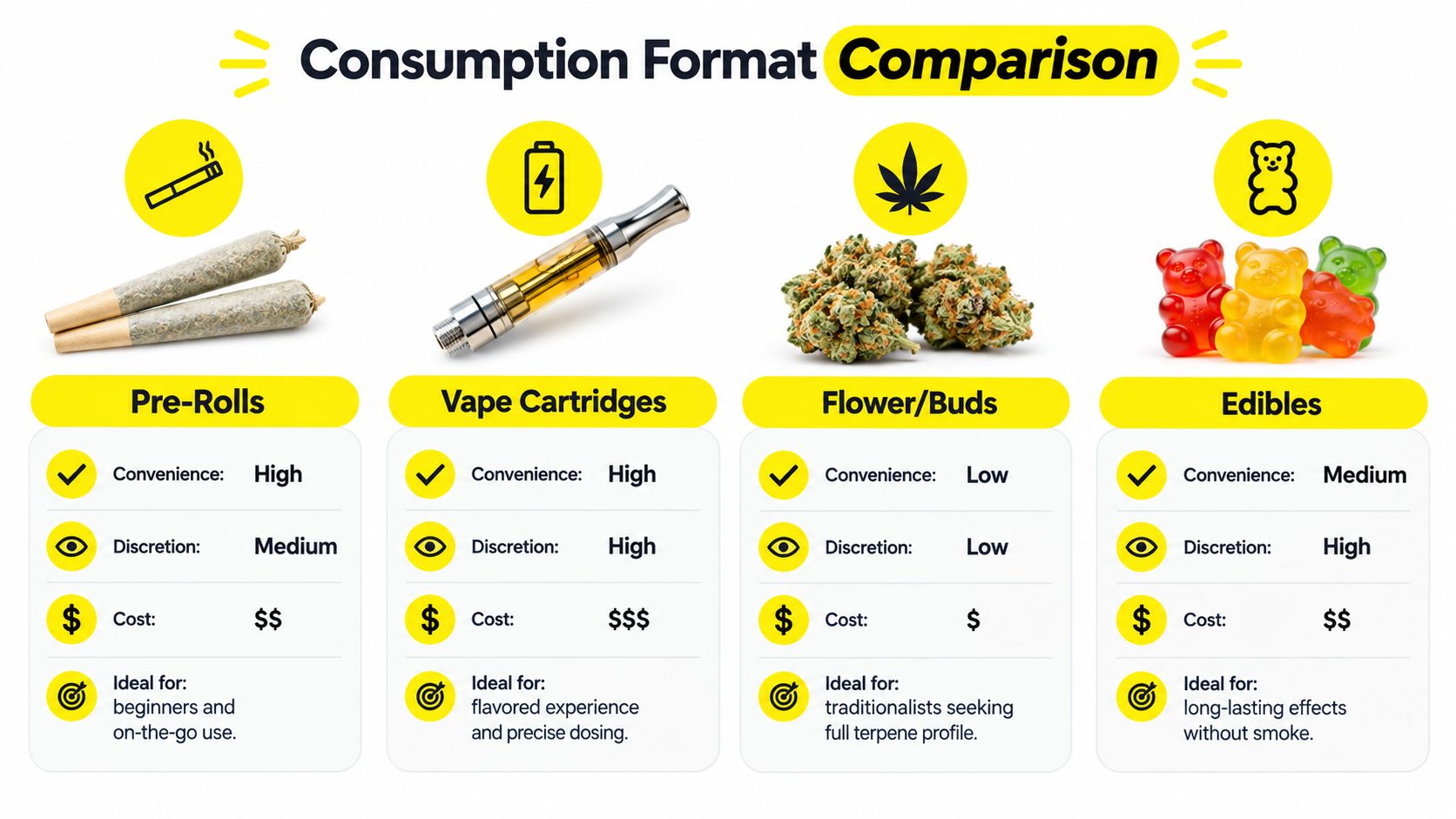
The sharpest trade-off is simple. Flower gives you the most direct read on the cultivar, but it's less discreet. Pre-rolls are easier when you don't want the hassle of grinding and packing. Vapes are more discreet and easier to dose carefully, while edibles are a different category entirely because the experience lasts longer and hits differently.
A realistic example helps. If you're a patient who wants to unwind after work without smoking indoors, a vape may fit better than flower. If you care most about the traditional terpene profile, flower is the more honest choice. If you're sensitive to anxiety or stimulation, don't chase the strongest label on the shelf, choose the format that lets you control the dose.
For a practical side-by-side look at consumption styles, see this guide to edibles, vapes, and flower.
Navigating DC Cannabis Regulations
DC law is where a lot of casual shoppers get tripped up. Searching for a nearby dispensary doesn't automatically mean you're ready to buy, carry, or consume the product legally. The rules depend on whether you're a resident, a visitor, a medical patient, and whether you're buying through a licensed channel.
ABCA says both DC residents and non-residents can obtain medical-cannabis registration, and registered patients may purchase up to 8 ounces within a rolling 30-day period. Eligible domestic and international visitors can also get a temporary DC medical-cannabis patient registration through the District's online ABCA system, and that digital registration may be used immediately after receipt. Visitors 21 or older who participate in a recognized U.S. state or territory medical-cannabis program may present that state registration with an unexpired government-issued photo ID instead of completing a new DC registration. Review DC medical cannabis patient rules and see reciprocity details for visitors
What legality looks like in practice
- Use licensed sellers: DC medical cannabis must come from a retailer or internet retailer licensed by ABCA.
- Watch transport rules: cannabis must be in a labeled container or sealed package.
- Respect the use limit: qualifying-patient use is tied to a qualifying medical or dental condition, or side effects of qualifying treatment.
- Don't assume public use is allowed: DC guidance says medical-marijuana use in public remains a criminal offense.
A practical example makes this clearer. A visitor staying in a hotel can't just buy something nearby and treat the room or street the same way. The buyer still needs the right registration or recognized card, proper ID, and compliance with transport and use rules. If you're crossing between DC and nearby Virginia or Maryland, check your paperwork before you shop, not after.
The Convenience of Local Delivery and Pickup
Convenience matters when you already know what you want and you don't want to spend an hour comparing menus in person. Local ordering can be the smarter move, especially if you're trying to keep your purchase discreet and your day on track. The value isn't speed alone, it's having a compliant path from menu to packaging without extra friction.
Eligible visitors can use DC's temporary medical registration after it's issued, and visiting patients from recognized state programs can present their existing medical card with a current photo ID. That makes pickup and delivery easier to plan around, especially for someone who's in town for a short stay and doesn't want surprises at the counter. If you're comparing service options, this delivery near me guide is a useful starting point.
A concrete example is straightforward. A patient from a recognized state arrives in DC, brings the state card and government ID, places an order through a licensed retailer, and picks up a compliant product without turning the trip into a legal guessing game. A visitor without recognized enrollment can apply for the temporary registration first, then purchase once it's active.
This is also where a good menu helps. If the retailer shows batch details, product form, and current availability clearly, you can make the purchase from home instead of standing at the counter trying to decode labels under pressure.
Final Checklist for a Safe Purchase
Use this checklist before you buy Acapulco Gold in DC.
- Confirm the seller is licensed: If the source isn't licensed by ABCA, don't treat it as equivalent.
- Check the lab data: Review THC, CBD, terpenes, contaminant testing, and the package date.
- Match the format to your goal: Flower, pre-roll, vape, and concentrate all deliver differently.
- Verify your legal status: Residents, visitors, and medical patients do not all shop under the same rules.
- Keep it sealed and labeled: Don't accept loose, unclear, or informal packaging.
- Use it carefully: High-THC products can hit harder than the name suggests.
DC law limits a qualifying patient's possession of dried medical cannabis to 8 ounces at any one time and requires medical cannabis to come from a retailer or internet retailer licensed by ABCA. It also restricts qualifying-patient use to treatment of a qualifying medical or dental condition, or side effects of a qualifying treatment. A patient buying several Acapulco Gold products should keep the combined dried-flower amount at or below that limit and avoid treating an unlicensed seller or informal delivery source as legitimate. Read the DC medical cannabis law
Public consumption is still off-limits. If you want fewer problems and a better product, verify the paperwork first, then buy.
If you want a compliant, straightforward place to compare flower, pre-rolls, vapes, and other formats in Washington, DC, Mr. Nice Guys DC gives you a menu-driven way to check product details before you buy. Visit Mr. Nice Guys DC to review available options, confirm what's in stock, and choose a format that fits your needs without guessing.
Mr Nice Guys DC
At Mr. Nice Guys DC, we’re more than just a cannabis delivery service — we’re passionate advocates for quality, convenience, and community. With years of experience in the cannabis industry, our team is dedicated to educating and empowering customers across Washington, D.C. Whether you're a seasoned user or just starting your cannabis journey, our blog delivers trusted tips, product insights, and the latest updates from the world of weed. Stay informed, stay elevated.
