
Must Be 21 To Enter
By entering this site you are agreeing that you are at least 21 Years of Age or older.
I AM 21 OR OLDERWhere to Buy Pot in DC: Legal Guide for Adults 21+
.svg)

.png)
Licensed medical dispensaries are the only fully legal way to buy cannabis in DC, and adults 21+ can use the District's self-certification path if they don't already have a patient registration. Initiative 71 allows limited possession and transfer, but it does not create a legal recreational retail market, so the answer to where to buy pot in DC starts with licensed medical access.
The first time you try to buy cannabis in Washington, DC, the confusing part isn't the menu, it's figuring out which storefront is operating inside the rules. A polished shop can still be unlicensed, a “gift” can still be the wrong transaction, and delivery can be legal in one scenario and unlawful in another. The useful move is to treat licensing, ID, and product traceability as the deciding factors, not the branding on the window.
Navigating the DC Cannabis Buying Market
A first visit to a DC cannabis shop can look simple, then get confusing fast. The market splits in two, one side tied to Initiative 71, the other to the District's regulated medical system, and the rules are different for each.
Initiative 71 took effect on February 26, 2015, after voters approved it on November 4, 2014. It allows adults 21 or older to possess up to 2 ounces of marijuana, grow up to 6 cannabis plants at a principal residence with no more than 3 mature, and transfer up to 1 ounce to another adult without money, goods, or services. The measure did not legalize recreational sales. The Congressional Research Service explains that local restrictions on limited personal use were repealed, while the prohibition on recreational cannabis sales stayed in place. DC guidance also says public consumption remains illegal and Initiative 71 does not apply on federal property, where possession remains unlawful. The federal legal background explains why DC retail developed around medical access rather than a standard adult-use store model.
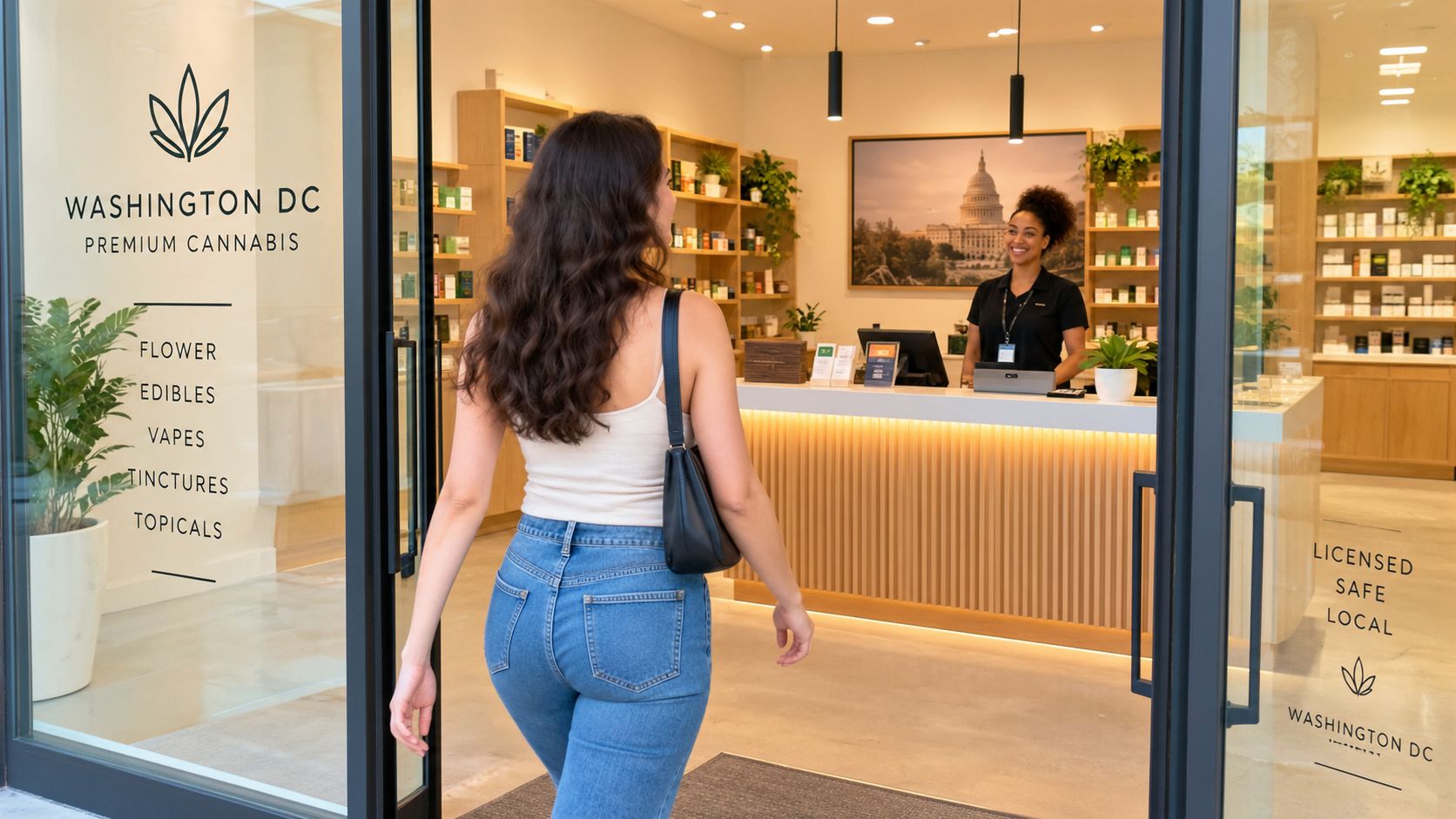
The common mistake is assuming a polished storefront means a legal sale. A menu can look casual, a counter can look legitimate, and the transaction can still fall outside the regulated system. If a retailer is licensed under DC cannabis rules, you are in a regulated channel. If the purchase is framed as a no-cost “gift” exchange, stop and verify what is being offered.
Practical rule: a legal-looking counter does not prove legality, a verified license does.
That wording reflects the actual structure of the market, which is built around medical access. DC buyers keep hearing about medical dispensaries, patient registration, and delivery because those are the channels that fit the rules. For a plain-English history of that split, this local overview is useful background.
Medical Patients versus Adults 21 and Older
Two groups can legally buy cannabis in DC, but they don't use the same path. The difference is important because the documents you bring, the way you register, and the limits you can access all depend on which group you're in.
Medical patients
A registered patient buys through the medical system. DC residents need patient registration to purchase from a licensed retailer, and adults 21 or older can use the District's self-certification option instead of a healthcare-provider recommendation. For visitors, ABCA offers temporary patient registration for eligible domestic and international travelers, and adults 21 or older enrolled in a recognized U.S. state or territory medical-cannabis program can present that registration with an unexpired government photo ID. A registered patient may purchase up to 8 ounces during a rolling 30-day period.
Adults 21 and older
Adults 21+ who don't already have medical status still have a legal route, but it runs through the same regulated retail system. The key difference is documentation. A government-issued photo ID is the starting point, and if residency or registration is needed for the transaction, you'll want that ready before you arrive or place an order. ABCA's retailer framework is built for licensed medical sales, not informal retail.
| Path | What you bring | What it gets you |
|---|---|---|
| Medical patient | Patient registration, ID, and any required proof | Access to licensed medical retail and the patient purchase limit |
| Adult 21+ self-certification | Government photo ID and required self-certification paperwork | Legal access through the same regulated channel |
A first-time buyer from Maryland or Virginia often asks the wrong question. Instead of asking which “gifting shop” will work, ask whether the retailer accepts your registration status and whether the transaction is happening inside the licensed system. That distinction keeps you from guessing your way through the visit.
For a side-by-side breakdown of the routes, this DC shopping guide is a practical companion.
Verifying Licensed Retailers and Making a Purchase
The safest purchase starts before you ever hand over ID. You need to know whether the business appears in ABCA's official retailer directory, because that's the clearest signal that the sale is happening inside the regulated market rather than an improvised storefront.
The current retail framework also has real operating norms. ABCA says licensed retailers may sell and deliver medical cannabis and cannabis products, generally within 7:00 a.m. to 11:00 p.m., though hours can vary by license approval. That range gives you a practical check, if a shop is advertising unusual overnight access, treat that as a reason to verify rather than assume.
What to check before you buy
- License listing. Confirm the business is in ABCA's retailer directory.
- ID and registration requirements. Bring the documents the retailer requests, not just what you think should work.
- Pickup or delivery rules. Make sure the retailer's channel matches your plan.
- Product provenance. Ask whether the items are batch-labeled and legally sourced.
- Receipt and packaging. A compliant sale should be traceable after you leave.
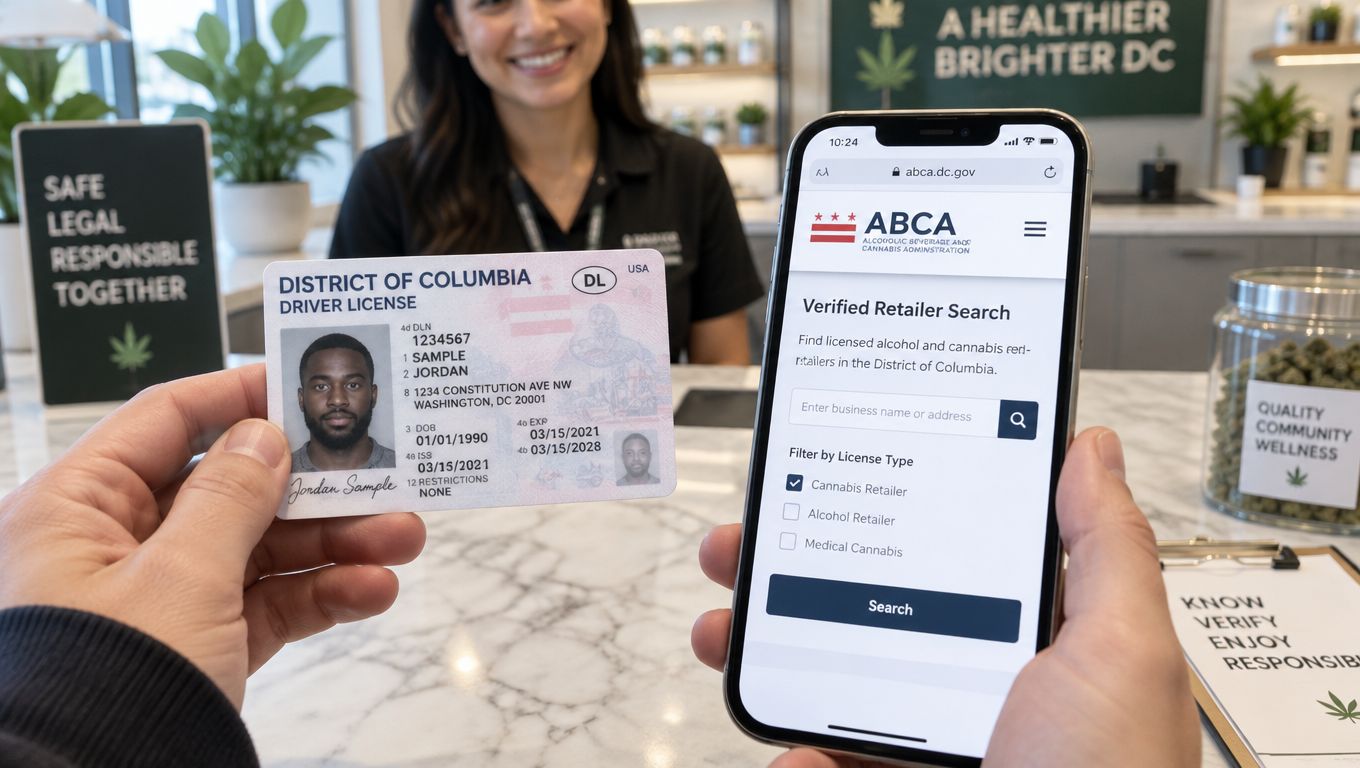
A compliant checkout usually feels ordinary, which is a good sign. The staff verifies your eligibility, the order is tied to a licensed channel, and the transaction doesn't depend on a wink-and-nod explanation of what's being sold. If a seller avoids ID checks or can't clearly explain licensing, that's not convenience, that's risk.
Ask one direct question: “Are you licensed by ABCA for this sale and delivery channel?” If the answer is fuzzy, walk.
For buyers who want a reference point on regulated dispensary operations, this DC compliance guide is a useful follow-up.
Product Selection and Quality Control Standards
Once you've confirmed a retailer, judge the product itself before you compare prices. DC menus usually cover flower, edibles, cartridges, concentrates, topicals, and tinctures, and each one behaves differently once you use it.
The strongest label on the shelf is not the same thing as the safest or most accurately described product. THC percentage alone doesn't tell you whether the product is clean, stable, or accurately described. Traceability matters more. The seller should be able to point to the batch, the testing lab, the test date, and the certificate-of-analysis results.
What good documentation should let you verify
- Cannabinoid concentration. Confirms the labeled potency matches the lab result.
- Water activity. Helps flag moisture conditions that can raise mold risk.
- Foreign matter. Shows whether visible contamination was checked.
- Microbiological contamination and mycotoxins. These tests look for biological hazards potency labels cannot show.
- Pesticides and heavy metals. These matter because chemical contamination cannot be judged by smell or packaging.
- Residual solvents. This matters most for concentrates and vape products.
Flower deserves a close look at freshness and any moisture-related information on the package. Cartridges, concentrates, and edibles need even more batch-level documentation because extraction and formulation add more variables. A product can look polished and still deserve careful review for safety and consistency.
The buyer habit that helps most is simple. Ask for the batch number, compare the label with the lab result if it is available, and listen to how the retailer explains the test results. For a closer look at that standard, this product-testing reference is worth keeping handy.
Mr. Nice Guys DC is one licensed medical-cannabis option in the District, and its menu format reflects the kind of traceable product presentation buyers should expect from a regulated retailer.
Understanding Delivery Options and Service Areas
A delivery order only works in DC if the address and the courier both fit the rules. The binding constraint is geographic, an eligible drop-off has to end inside the District, so convenience never overrides that boundary.
Licensed retailers with a delivery endorsement can serve qualifying patients or caregivers at residential and commercial addresses inside DC. The usual delivery window is 9:00 a.m. to 9:00 p.m., seven days a week. Delivery is also off-limits on District government property, federal property, and school grounds, whether public or private.
A hotel guest in DC may still qualify if the address is eligible and the retailer accepts the order. A shopper in Virginia asking for a cross-border drop-off is outside the system DC delivery rules cover.
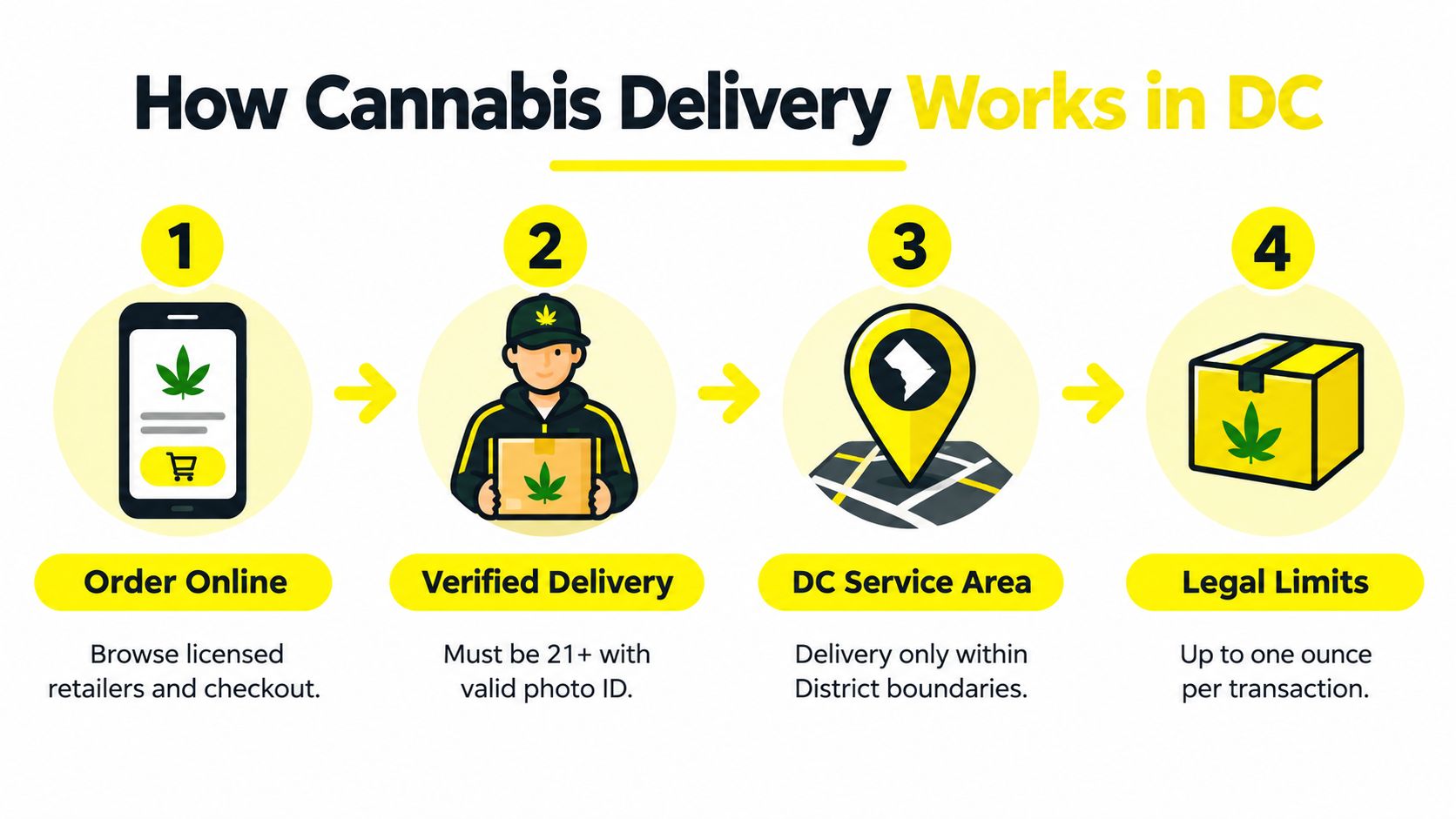
The handoff itself should follow a simple sequence. Order through a licensed retailer or internet retailer, provide the required ID and registration details, confirm the address is inside the District and eligible, then meet the courier and verify identity at delivery.
Third-party delivery adds another layer of control. A courier serving DC medical-cannabis customers must hold a courier license when delivering for a licensed retailer or internet retailer, verify the recipient's identity and age, and stay within the District for the delivery. The ABC Board can also regulate how often deliveries may be made to one patient or caregiver over a day, week, or month.
If the courier does not check ID at the door, the handoff is not following the model.
Practical example: if your building bans cannabis deliveries, the courier cannot fix that by leaving the package in a lobby.
For shoppers comparing pickup versus delivery, this local delivery guide is a useful next read.
Identifying Safe Practices and Avoiding Risks
A storefront can look polished and still sit in the wrong part of DC's cannabis market. The quickest way to protect yourself is to separate a regulated medical dispensary from a gifting-style shop that relies on vague compliance language and hurried transactions.
Pay attention to how the staff handles the sale. Pressure to skip paperwork, vague answers about sourcing, and donation amounts that rise with the quantity selected all point to a sale being dressed up as a gift. If the person behind the counter pushes you to move fast or discourages questions, that is a warning sign.
A few situations deserve immediate caution:
- Donation language tied to product size. If the amount you are asked to “donate” changes with what you take, the transaction may be structured like a sale.
- Gift framing with no clear operating details. Legal language on a sign means little if the process around it is unclear.
- Rushed checkout behavior. Staff who steer you away from receipts, labels, or basic transaction records are creating avoidable risk.
- Pressure to treat the visit as informal. A legitimate business should not need secrecy to explain how the handoff works.
- Suspicious after the fact. If something feels off once you leave, keep the packaging and receipt, and avoid returning until you can verify the business through the proper channel.
The practical question is simple: can you tell where the product came from and how it changed hands? A safe dispensary can answer that clearly. A risky storefront leaves you guessing, and in DC that guesswork is where problems start.
Your Next Steps for Legal Cannabis Purchases
Start with the license, not the menu. Bring the right ID, confirm whether you're buying as a registered patient or through the adult self-certification path, and check that the retailer's pickup or delivery option fits your address and your documents.
If you want the shortest possible checklist, use this: verify the ABCA listing, confirm the transaction channel, ask for batch-level product details, and keep your receipt and packaging. That's the cleanest way to buy cannabis in DC without stepping outside the rules.
If you want a licensed, straightforward buying experience in DC, Mr. Nice Guys DC can help you shop medical cannabis with clear menus, compliant pickup, and delivery options. Visit Mr. Nice Guys DC to check current availability and see how a regulated purchase works in practice.
Mr Nice Guys DC
At Mr. Nice Guys DC, we’re more than just a cannabis delivery service — we’re passionate advocates for quality, convenience, and community. With years of experience in the cannabis industry, our team is dedicated to educating and empowering customers across Washington, D.C. Whether you're a seasoned user or just starting your cannabis journey, our blog delivers trusted tips, product insights, and the latest updates from the world of weed. Stay informed, stay elevated.
