
Must Be 21 To Enter
By entering this site you are agreeing that you are at least 21 Years of Age or older.
I AM 21 OR OLDERThe Force Strain: A Practical Guide for DC Cannabis Patients
.svg)

.png)
You're scrolling a DC dispensary menu after a long day, trying to decide whether Force fits the night you've got planned. Maybe you want something that can help you unwind without turning the whole evening into a fog, or maybe you're just comparing jars, checking formats, and wondering why this one keeps popping up on menus. That's a normal moment for a patient, and it's exactly where this guide starts, with the practical stuff that matters before you buy.
The Force strain gets attention because patients keep coming back to it for a reason, but the name alone doesn't tell you enough. You still need the basics, what the genetics suggest, how the jar should smell, what effects patients commonly describe, how to dose it safely, and which format makes sense for your routine. If you're browsing while deciding between pickup, curbside, or delivery, you'll also want to know how to get it in the DC area, and you can see what's trending on the menu in this DC dispensary buzz update.
Why the Force Strain Keeps Showing Up on DC Menus
A patient usually notices Force in the middle of a very ordinary decision. You've got time after work, maybe a free weekend night, and you're comparing strains that all sound fine on paper. Then Force keeps showing up again and again, which makes it feel less like a random pick and more like a strain worth understanding before you spend money on it.
The reason it stays on menus is simple. Patients tend to look for strains that are easy to place into a real plan, not just a label that sounds strong. Force usually enters that conversation as a strain people think about for winding down, easing into a quieter night, or choosing a format that won't feel complicated to manage.
What this guide helps you decide
If you're new to the strain, the questions usually come in this order. Is it a heavy evening strain or something more balanced? Does it smell the way you expect from the name? Will flower, a cart, or an edible fit your tolerance better?
The guide answers those in the same order a budtender would. It starts with the plant's background, then moves into aroma, effects, dosing, formats, and safety. If you already know what you want, you can skim to the section that matches your immediate question and still make a better choice at the counter.
A useful rule for menu shopping is this. Don't buy off the name alone. Buy off the experience you want tonight, then match the strain's likely profile to that plan.
For readers who like to compare strains before they commit, the same logic applies to every jar. You're not just buying a flower name. You're buying a fit for your schedule, your tolerance, and your comfort level.
The Genetics and Growth Profile Behind the Force
The easiest way to understand Force is to think of genetics like a family recipe. Two parent strains pass along traits the way a familiar dish passes along ingredients, one side might bring structure, the other side might bring aroma, and the final result tells you a lot before you even open the jar. That's why patients who understand lineage often make better choices at the dispensary counter.
Why lineage matters in plain language
A strain's genetics help explain why it feels the way it does. In force metrology, a strain gauge is an indirect force sensor, and the same kind of indirect logic helps people think about cannabis genetics too. You're not looking at the effect itself first, you're looking at the blueprint that tends to produce it, which is why family background matters so much in a strain like Force. The strain gauge principle behind indirect measurement is described in Analog Devices' training material on practical sensor signal design, and the basic idea carries over here, the output tells you something about the underlying structure, not just the surface label.
That matters for Force because the structure of the plant often hints at how it was bred to behave. Patients who prefer calmer evenings usually pay attention to whether a strain leans more heavily toward body comfort and slower pacing. Patients who want a more adaptable experience often look for a profile that doesn't feel too one-note.
What a healthy jar should look like
A well-cured jar usually gives you more than just pretty bud. Look for a structure that feels finished, not rushed, with visible trichome coverage, intact flower, and a trim that doesn't leave the bud looking stripped. Dense or loose structure alone doesn't tell the whole story, but it does tell you whether the flower was handled with care.
If you're shopping in person, ask yourself whether the bud looks balanced and maintained. A healthy batch usually looks like someone respected the plant all the way through harvest, cure, and packaging. If you want a deeper look at how flower sourcing and seed selection shape what ends up on the shelf, this seed buying guide gives useful context.
Practical rule: good genetics can set the direction, but good handling decides whether the strain actually feels consistent in your hands.
For patients, that means the lineage is only part of the decision. The question is whether the jar looks like it was grown and cured for steady use, not just for a pretty menu photo. That's the version you can trust more when you're deciding how to spend your evening.
Aroma, Flavor, and Terpene Profile Explained
The first time you crack open a jar of Force, the smell tells you a lot before the label does. Good cannabis has layers, just like coffee or wine, and the most useful part of learning aroma is training your nose to separate those layers instead of trying to name one perfect scent. That's where terpene language becomes practical instead of technical.
Reading the jar like a tasting note
Some people smell earthy notes first. Others notice a gassy edge, then a sweeter middle, then a peppery finish. That range lines up with the kinds of terpenes patients commonly associate with this style of strain, including myrcene, caryophyllene, and limonene. A clear overview of terpene basics is available in this terpene guide, and it's worth reading if you want the scent terms to mean something useful in the shop.
Think of the smell in three layers. The top note is what hits first when the jar opens. The middle is the scent that stays with you after a few seconds. The base note is what lingers in the jar or on the fingers after you've handled the flower.
How aroma helps you judge freshness
Aroma is one of the fastest freshness checks you've got. A jar that smells flat, dusty, or oddly muted can signal a rushed cure or old storage. A jar with distinct layers usually feels more alive, and that often translates into a more satisfying session because the flower hasn't been stripped of its character.
Two jars of the same strain can smell a little different, and that doesn't automatically mean one is wrong. Grow conditions, cure length, and packaging all shape the final scent. One batch may lean more herbal and earthy, while another leans sweeter or sharper. That's normal, and it's one reason a patient should trust their nose instead of treating strain names like exact formulas.
What flavor usually tells you
Flavor follows aroma pretty closely. A well-cured batch usually tastes cleaner and more defined, while a rushed batch can feel harsh or one-dimensional. If the first puff or sip tastes like the smell promised, that's usually a good sign the jar kept its character through storage and handling.
For patients, the takeaway is practical. Smell before you buy if you can, and if you can't, ask staff how the jar has been describing itself on the floor lately. Aroma won't tell you everything, but it can keep you from making a disappointing choice.
Typical Effects and the Medical Benefits Patients Report
Patients usually ask one question in some form. What's it going to feel like? With Force, the most useful answer is to think in stages, not in promises. The onset tends to arrive first as a change in mood or tempo, then the body effect settles in, and the overall experience usually gets more noticeable as you stop moving around and let it do its work.
The typical experience arc
At lower tolerance, patients often describe the early phase as a shift toward calm. The room feels quieter, your shoulders may drop, and you may notice that the little things stop feeling urgent. At a more moderate level, the body phase tends to become more obvious, which is why some people connect the strain with evening relaxation and a slower pace.
That's also why Force gets mentioned for different wellness goals. Some patients reach for it when they want help separating from a busy day. Others want a strain that feels like it can support sleep preparation, post-workout recovery, or a low-pressure social evening. The point isn't that Force guarantees any one outcome. The point is that its typical profile gives patients a reasonable place to start.
Patients often describe Force as a strain that helps the evening feel less sharp at the edges.
How setting changes the result
The same jar can feel very different depending on the room, the company, and the dose. If you're already relaxed, the strain may feel smoother and more manageable. If you're anxious or trying to multitask, it can feel heavier than expected because your attention keeps checking for changes.
That's why the medical benefit discussion should stay honest. Cannabis can support comfort, rest, and relaxation for many patients, but the experience depends on your own tolerance and the setting you choose. A calm room and a simple plan almost always make the strain easier to read.
For a practical example, a first-time patient might use a small flower dose on a quiet night at home and notice a gentle body shift. An experienced consumer might choose the same strain in a more concentrated format and get a much stronger evening effect. Same strain, different outcome, because the dose changed the whole conversation.
The safest way to think about Force is as a strain that rewards restraint. If you're expecting a measured evening, it can fit that plan well. If you're expecting to push through a packed schedule, it may be the wrong choice for the moment.
Dosing and Consumption Tips for Every Tolerance Level
Dose is where a lot of strain shopping goes sideways. People focus on the name, then they focus on the THC line, then they end up surprised because their body has its own history with cannabis. The smarter move is to match the format and the amount to the kind of session you want.
A simple comparison by experience level
| Experience Level | Flower / Vape | Edibles | Concentrates |
|---|---|---|---|
| First-time patient | Start with a small session and wait before taking more | Use a very modest amount and give it plenty of time | Usually too strong for a first session |
| Occasional consumer | Begin with a light, measured session | Start low and plan the whole evening around the onset | Use only if you already know your response well |
| Experienced user | A planned session can fit a more familiar routine | Choose carefully and don't rush redosing | Suitable only when you already respect its intensity |
A useful edible reference is this edible dosage guide, especially if Force shows up in a gummy, chocolate, or infused snack. Edibles reward patience more than confidence.
How to pace a session
With flower or a vape, take one small step and wait. If the effect feels too light, give it time before you decide to add more. Many people overdo it because the first few minutes feel quiet, then the full effect catches up later and turns the evening heavier than planned.
With edibles, the biggest mistake is redosing too early. People think nothing is happening, take more, and then both doses land together. That's how a manageable plan turns into a difficult one.
The format matters as much as the dose
A quick flower session can work for a patient who wants a short unwind. A vape can suit someone who wants a cleaner, easier-to-control option. Concentrates belong with people who already understand their tolerance. Edibles fit slower, longer evenings and need more planning.
Save this rule: if you're unsure, start smaller than you think you need, then give the product time to show you what it can do.
A simple journal helps too. Write down the format, how much you used, and how the session felt an hour later or the next morning. That small habit does more for better dosing than any strain label ever will.
Product Formats and How the Experience Changes
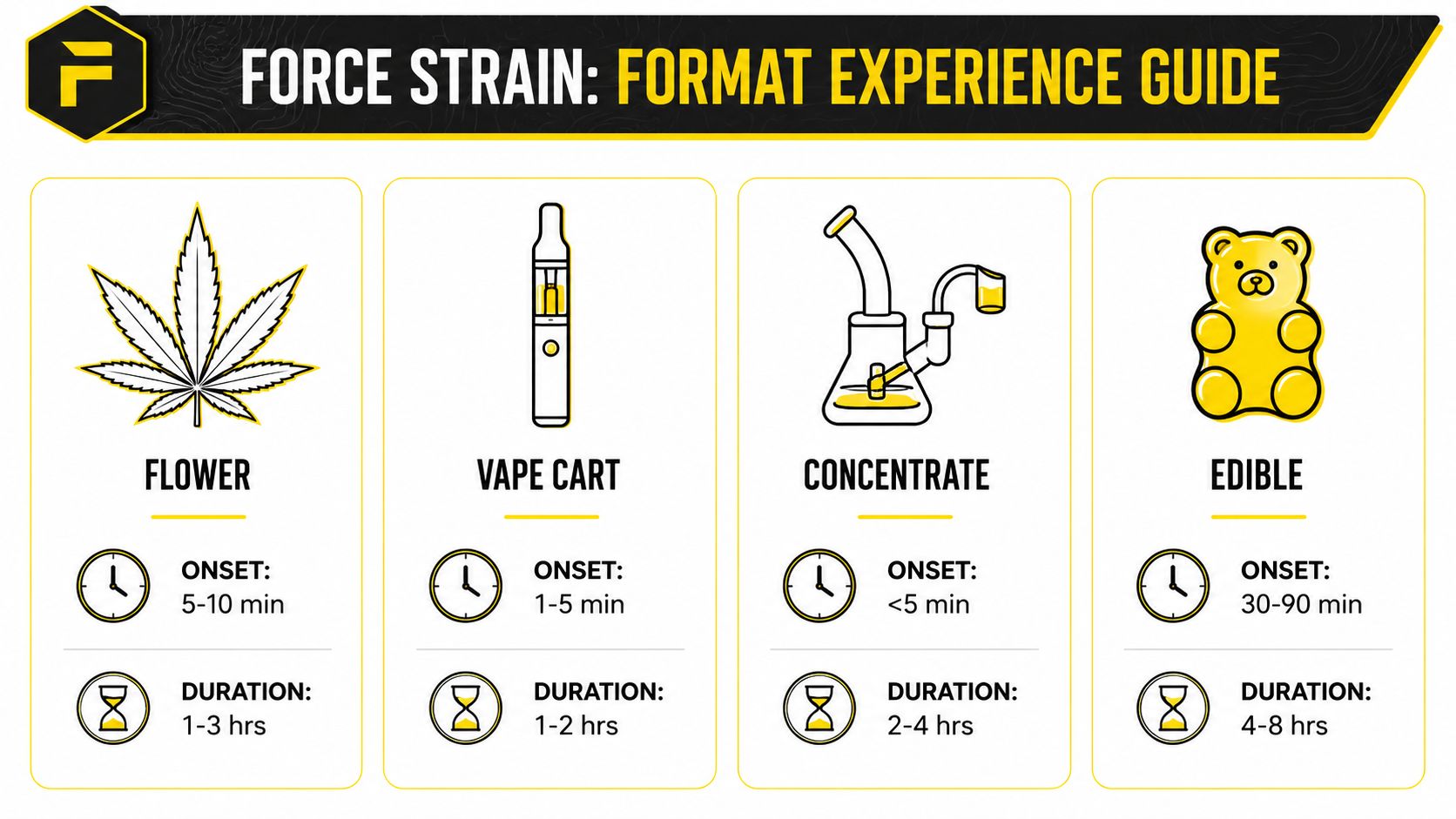
The format changes the whole experience, even when the strain name stays the same. A flower session with Force feels different from a vape cart, and both feel different from an edible because your body processes them in different ways. Patients who understand that usually buy better the first time.
Matching the format to the kind of night you want
Flower works well for people who want a familiar ritual. It's the format most patients think of first when they want a session they can feel building in real time. A vape cart is more discreet and often easier to manage during a quick unwind after work.
Concentrates are for patients who already know they want a stronger, more intense format. They fit best when you don't want to guess at potency. Edibles are the slowest option, but they can suit a movie night, a long stretch of free time, or any evening where you want the effect to last without repeating the session.
The visual guide above helps keep those differences straight, and the timing matters because patients often make the mistake of treating every format like flower. That's not how the body experiences them.
Safety choices that make the format easier to use
The main hesitations people have are overconsumption, anxiety, and dry mouth. The fix starts before the first dose. Pick a format that matches your comfort level, have water nearby, and don't stack more product on top of a session that hasn't fully settled yet.
If you're choosing between formats, ask yourself one question. Do I want control, speed, or duration? Flower and vapes give you more immediate feedback. Edibles give you a longer ride. Concentrates ask for the most experience and the most respect.
For patients deciding how to buy, that choice also shapes convenience. In-store pickup works when you want to talk through the jar and leave with it the same day. Delivery makes more sense when you already know what you want and just need it brought to you.
If you want a side-by-side look at format tradeoffs, this comparison of edibles, vapes, and flower is useful before you place an order.
Safety, Side Effects, and Smart Consumption Habits
The most common side effects patients mention are dry mouth, dry eyes, dizziness, anxiety, and taking more than they meant to. None of that means you made a bad choice. It usually means the dose, the setting, or the format didn't line up with your tolerance.
What to do if the dose feels too strong
Start by lowering stimulation. Sit down, drink some water, and move to a quieter room if you can. Don't add more cannabis in hopes of smoothing it out. That usually makes the problem bigger, not smaller.
If a friend feels uncomfortable, stay calm and keep the space simple. Offer water, reduce noise, and remind them the feeling will pass. If someone seems unwell in a way that feels more serious than ordinary overconsumption, get help right away.
Why set and setting matter
A strain can feel gentle in one room and overwhelming in another. Loud music, a crowded space, and a busy schedule can all make Force feel heavier than expected. A calm home setup usually gives you more control, especially if you're trying a new format.
Legal compliance in DC matters too. Keep products away from children and pets, and don't drive after consuming. If you're using cannabis medically, treat it like any other product that can affect attention and coordination.
How to make checkout easier
Mr. Nice Guys DC offers in-store pickup, curbside pickup, and delivery powered by Sweede, which gives patients a few practical ways to shop depending on the day. Pickup works well if you want to order and collect, curbside suits patients who'd rather stay in the car, and delivery serves DC along with nearby areas like Alexandria, Bethesda, Rockville, and Silver Spring, plus surrounding neighborhoods in the region. Have your ID and payment ready at checkout, and bring the same calm, deliberate approach you'd use when choosing the product itself.
Finding the Force Strain at Mr. Nice Guys DC
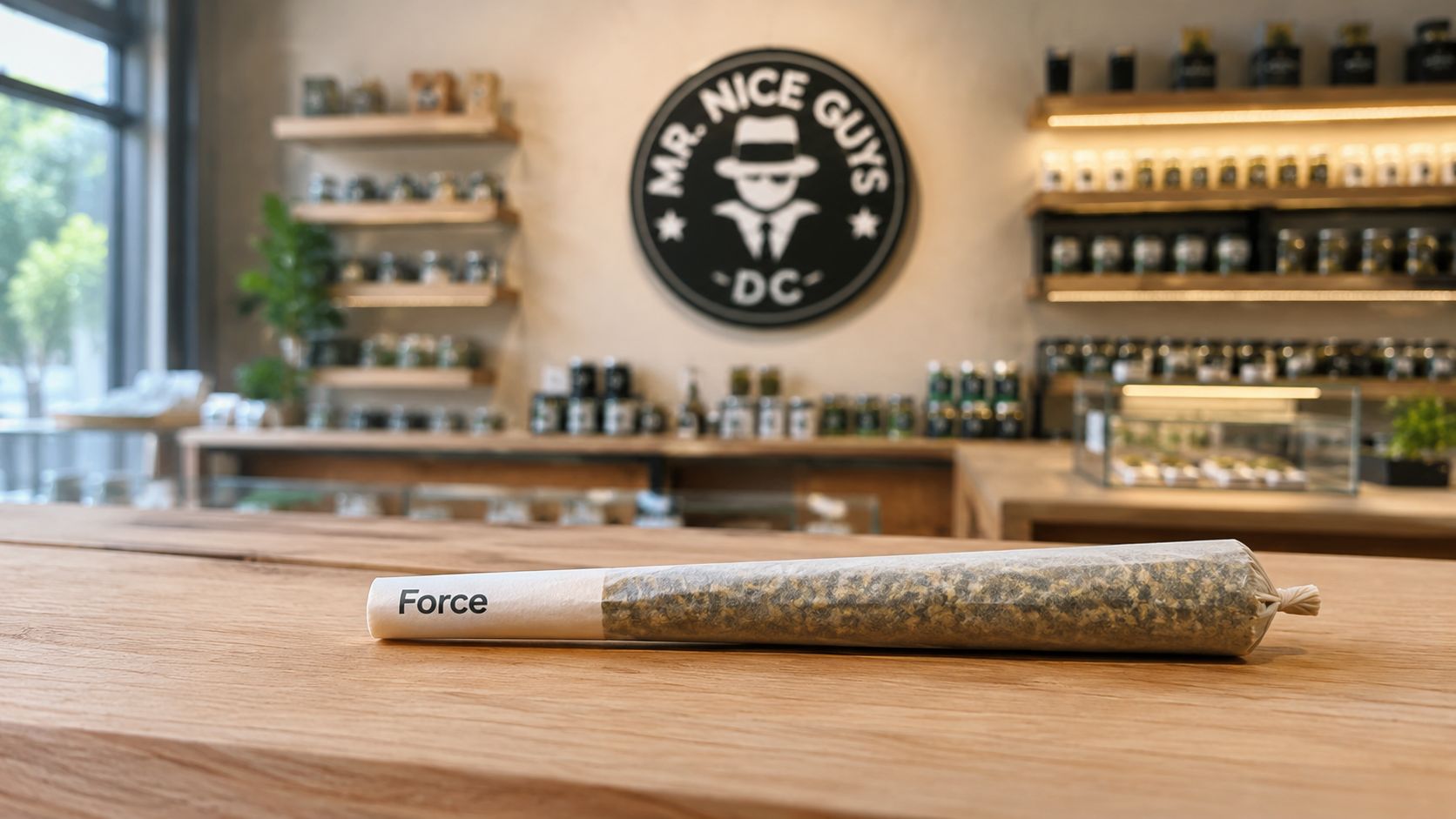
On the menu, Force usually appears the way a dependable strain should, without needing a lot of explanation once you know what you're looking for. If you're visiting in person on U Street, the experience is straightforward, browse the menu, ask questions, and let the team help you compare format, dose, and timing before you commit.
What to expect from each buying option
In-store pickup makes sense if you want to place an order, come in, and leave without a long discussion at the counter. Curbside pickup works for patients who prefer a quick handoff from the car. Delivery through Sweede is the best fit when you already know what you want and need it brought to your address without making a trip across town.
The delivery radius includes DC neighborhoods and nearby areas in Virginia and Maryland, including places like Alexandria, Bethesda, Rockville, and Silver Spring, along with many local neighborhoods across the district. Have your ID ready, bring the right payment method, and keep your order details close so the handoff stays smooth.
One simple way to shop smarter
If you're unsure which Force format to choose, ask for help before you place the order. A good dispensary conversation is usually short and specific. Tell them whether you want something quick, something longer-lasting, or something easy to control, and let that guide the recommendation.
Mr. Nice Guys DC also supports medical certification, which can help patients who need a compliant path into the market. That matters if you're trying to keep the process simple and stay within local rules while still getting guidance on the right product.
You don't need to guess your way through the menu. Start with the experience you want, choose the format that fits your tolerance, and use pickup or delivery in the way that makes the most sense for your day.
A CTA for Mr. Nice Guys DC.
Mr Nice Guys DC
At Mr. Nice Guys DC, we’re more than just a cannabis delivery service — we’re passionate advocates for quality, convenience, and community. With years of experience in the cannabis industry, our team is dedicated to educating and empowering customers across Washington, D.C. Whether you're a seasoned user or just starting your cannabis journey, our blog delivers trusted tips, product insights, and the latest updates from the world of weed. Stay informed, stay elevated.
