
Must Be 21 To Enter
By entering this site you are agreeing that you are at least 21 Years of Age or older.
I AM 21 OR OLDERSmoking vs Vaping Cannabis: A Patient's Guide for 2026
.svg)

.png)
You're probably deciding between two very practical realities, not two abstract ideas. One option is a jar of flower or a pre-roll that feels familiar, fast, and straightforward. The other is a cartridge, disposable, or dry herb vape that promises less smell, more convenience, and potentially a gentler inhale.
For medical cannabis patients in DC, the smoking vs vaping decision usually isn't about finding one universal winner. It's about matching the method to your lungs, your schedule, your housing situation, and the kind of symptom relief you're trying to get. A patient dealing with sharp breakthrough pain may make a different choice than someone managing evening anxiety in an apartment building with strict lease terms.
That's where a lot of online advice falls short. It treats this like a simple safety contest. Real patients need something more useful. They need honest trade-offs, practical examples, and local context that fits how cannabis is typically used in Washington, DC.
The Modern Patient's Dilemma Smoking vs Vaping
A lot of patients walk into a dispensary expecting a clear answer to smoking vs vaping. They want someone to say smoking is old-school and harsher, vaping is modern and better, end of story. That answer is too thin to be helpful.
Public perception has also gotten murkier. A 2026 UT Southwestern summary of survey data covering 20,771 U.S. adults found that the share who believed e-cigarettes are more harmful than cigarettes rose from nearly 3% in 2012 to more than 30% in 2022, while the share saying vaping is less harmful fell from nearly 51% to about 17%. That tells you something important. Many people now make decisions from a place of confusion, not clarity.
For cannabis patients, that confusion gets worse because nicotine data, cannabis products, and social media advice often get mixed together. A patient may hear “vaping is dangerous” and assume every cannabis vape should be avoided. Another may hear “vaping is cleaner” and assume all vape products are automatically low-risk. Neither shortcut is reliable.
If you're still weighing multiple formats, this broader guide on edibles, vapes, and flower at Mr. Nice Guys DC can help put inhaled options in context.
A quick comparison before we go deeper
| Factor | Smoking cannabis | Vaping cannabis |
|---|---|---|
| Onset | Usually feels immediate and obvious | Usually fast, often easier to meter |
| Smell | Strong and lingering | Usually lighter, though not odorless |
| Throat feel | Hotter, harsher for many users | Often smoother, depending on device and oil |
| Device needs | Minimal with joints or simple glass | Requires battery, cartridge, pod, or vaporizer |
| Dose control | Can be rougher to measure | Often easier to take one small pull at a time |
| Apartment friendliness | Lower | Higher, if used discreetly and legally |
| Lung considerations | Involves combustion | Avoids combustion, but still involves inhalation |
Patients usually do best when they stop asking “Which one is better?” and start asking “Which one fits my actual life this week?”
A Head-to-Head Look at Health and Safety
Smoking and vaping are not the same exposure. That's the core issue.
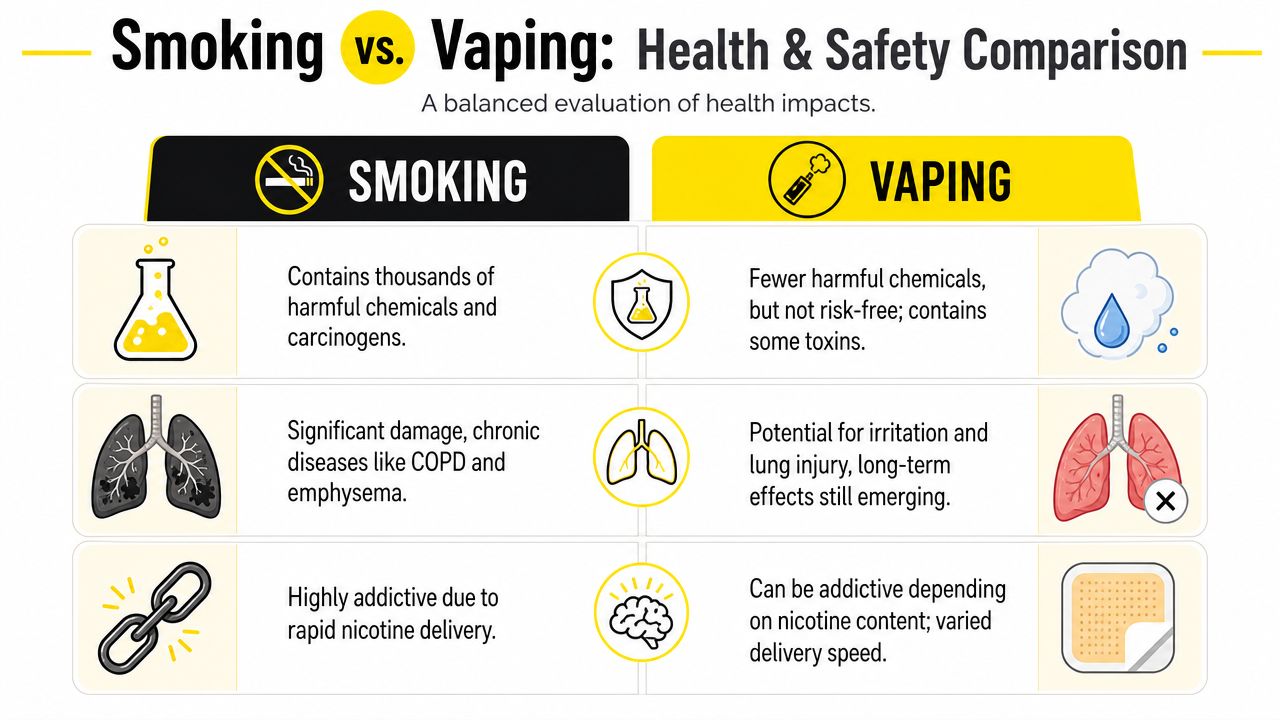
When you smoke cannabis flower, you burn plant material and inhale the products of combustion. That means heat, smoke, and a broader mix of byproducts. When you vape, the device heats material into an aerosol instead of burning it. That difference matters, especially for patients who already deal with cough, airway irritation, or a history of bronchitis.
What combustion changes
The cleanest way to think about this is simple. Smoke comes from burning. Vapor comes from heating. Burning creates more unwanted material.
A CDC data brief that cites an American Chemical Society analysis notes that traditional cigarette smoke contained on average 9 to 450 times more of the toxins studied than vapor from an e-cigarette. That statistic comes from nicotine products, not cannabis flower versus cannabis oil, so it shouldn't be stretched too far. But the principle carries over: combustion generally means heavier chemical exposure than aerosolization.
That's why many clinicians and patient educators describe vaping as a harm-reduction choice rather than a harmless one.
Practical rule: If a patient's main concern is avoiding smoke from combustion, vaping usually makes more sense than lighting flower.
What vaping does not solve
Vaping still puts heated material into your lungs. Patients sometimes switch to carts or dry herb vaporizers expecting zero irritation, then get surprised by throat dryness, coughing, or chest tightness from repeated pulls, high temperatures, or heavy use.
That's especially relevant if you chase intensity. A high-potency device used aggressively can feel rough in a different way than a joint. The irritation isn't identical, but it's still real. If someone tells you vaping is just “water vapor,” that's not a serious explanation.
How I explain it at the counter
For a patient with sensitive lungs, I usually frame the choice like this:
- If smoke itself bothers you, start by reducing combustion.
- If your throat gets irritated by carts, try smaller draws and a lower-intensity device.
- If symptom relief matters but inhalation keeps causing problems, an inhaled method may not be the right first choice at all.
Patients also need product transparency. Potency, extraction quality, and hardware all shape the experience. That's one reason some people pair their inhalation choices with a better understanding of cannabis potency testing, especially when they're comparing flower to concentrates.
Vaping is best understood as lower exposure than smoking, not as a free pass for unlimited use.
The User Experience Onset Duration and Effects
Patients don't choose methods based on chemistry alone. They choose based on how the session feels.
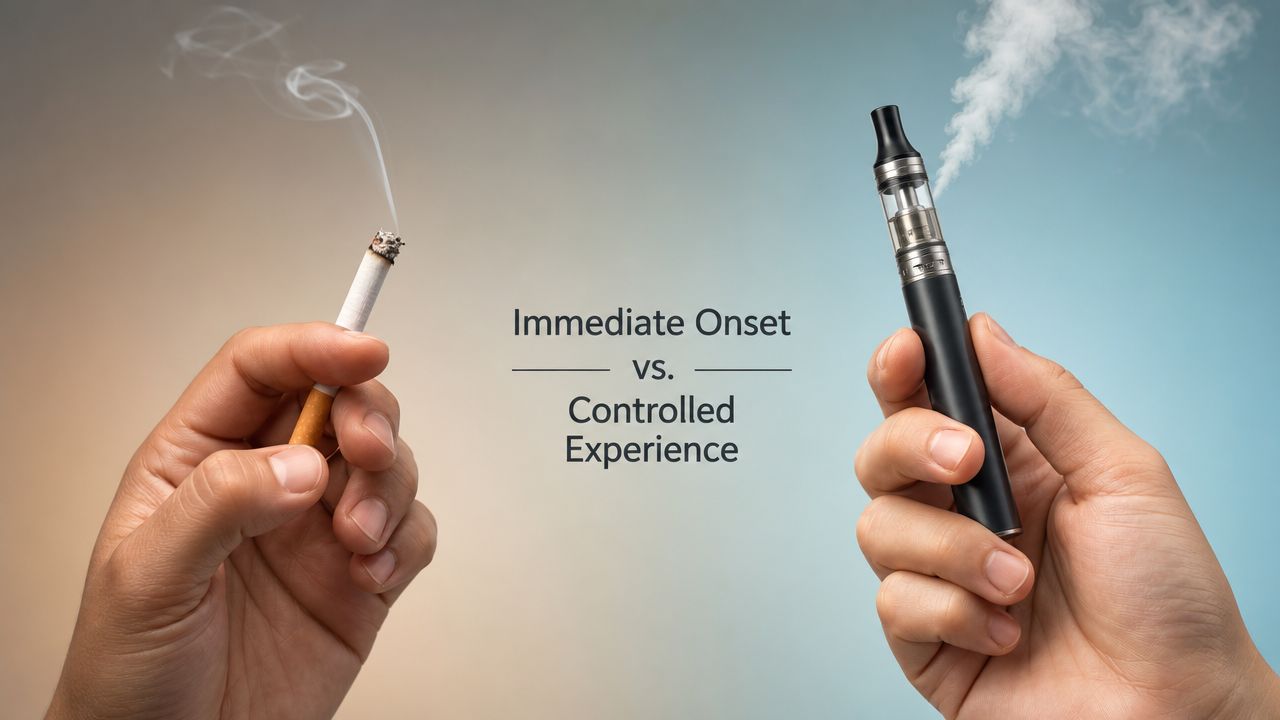
Smoking flower usually gives the most obvious signal that something is happening. You inhale, exhale, and often feel the shift quickly. For patients with sudden nausea, a pain flare, or nighttime restlessness, that directness matters. A small pre-roll or a single bowl can feel easier to read because the effect curve is familiar and immediate.
Vaping can also act quickly, but many patients find it easier to meter. One small pull, then wait. Another if needed. That pacing helps patients who tend to overshoot with flower. It also helps people who want symptom relief without turning a short break into a full session.
Real-world scenarios
A patient with neuropathy who wakes up uncomfortable may prefer a few puffs from flower because the effect feels fast and decisive.
A different patient, maybe someone managing background anxiety while staying functional, might prefer a cartridge because they can take one controlled draw, set it down, and reassess before going further.
That's where smoking vs vaping becomes a lifestyle question as much as a pharmacology one.
- Fast relief after work: Flower often feels fuller and more immediate.
- Low-profile daytime use: A vape pen is usually easier to keep brief and discreet.
- Sensitive to strong peaks: Vaping can be easier to titrate in small steps.
- Likes ritual and full flavor: Many patients still prefer flower.
Duration and the shape of the experience
Smoking often feels like a steeper climb and a more recognizable peak. For some patients, that's exactly what they want. For others, it creates a “too much, too fast” problem.
Vaping often allows for a flatter session if the patient is disciplined with dose. That can be useful for symptom management during a narrow window, like before dinner, before a walk, or before bed.
Here's a quick visual if you want a broad consumer-friendly overview of the differences in format and feel:
What often works better in practice
The mistake I see most often is not the method itself. It's starting too big.
With flower, patients take several hard pulls because they want certainty. With vapes, they keep hitting the pen because it feels smooth, then realize they've gone well past the effect they wanted. The best results usually come from small inhalations, a pause, and a realistic goal for the session.
Understanding Your Device Potency and Maintenance
A patient who says, “I need something easy for evenings,” could be describing three very different setups. A disposable vape, a 510-thread battery with a cartridge, and a dry herb vaporizer all ask different things from the user. They differ in dose control, upkeep, failure points, and how predictable the session feels from one use to the next.
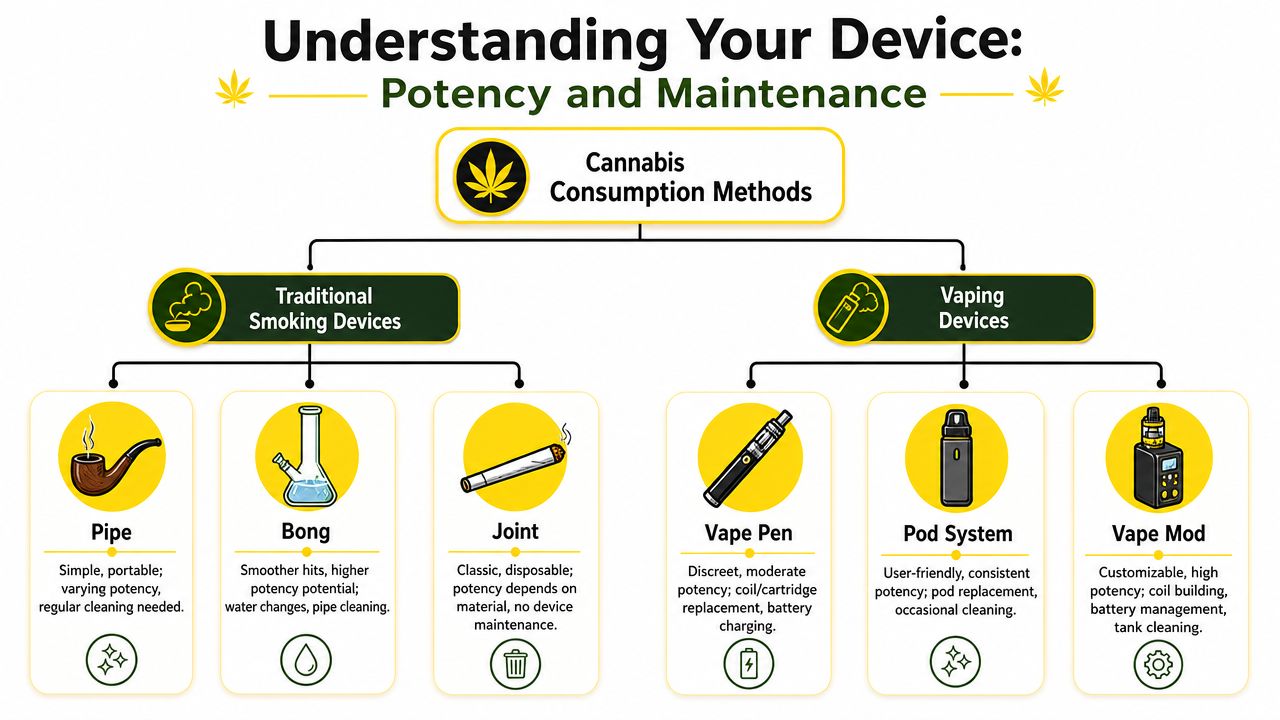
That matters for DC medical patients. The right choice is rarely about trend or convenience alone. It is about whether the device fits your symptoms, your tolerance, your tolerance for maintenance, and the setting where you use it.
Smoking tools versus vaping tools
Smoking hardware is usually more straightforward. A joint needs flower, a lighter, and a little technique. A pipe is quick to pick up and quick to put down. A bong can cool the inhale somewhat, but it still relies on combustion and regular cleaning to stay tolerable.
Vape hardware gives more control, but it also introduces more variables.
- Disposable vape: Simple to start with and easy to carry. Limited control, and once performance drops, there is usually not much to troubleshoot.
- 510-thread battery plus cartridge: Common, flexible, and practical for patients who want to swap batteries or carts based on strain and routine.
- Dry herb vaporizer: Better suited to patients who prefer flower but want to reduce combustion and adjust temperature.
- Pod-style systems: Convenient and easy to use, but often tied to one brand's hardware.
If you are weighing those formats, this guide to cartridges, pens, and disposable vape options gives a clear breakdown of what each setup asks from you.
Why potency control matters
Smooth inhalation can fool patients.
A UCSF article on modern vaping devices explains how efficient some modern nicotine vapes have become at delivering active compounds. That article is about nicotine, not cannabis, but the practical takeaway still applies. Small devices can deliver a strong dose fast, especially when the user keeps taking pulls because the vapor feels light.
I see this mistake often at the counter. Patients assume flower is stronger because it feels harsher, then underestimate a cartridge that tastes clean and goes down easily. For symptom control, that can lead to overshooting the effect they wanted, particularly with high-potency oil and a battery set too high.
The hardware matters here. A low-quality battery can run too hot, burn oil, and make every hit feel rougher than it should. A better battery with adjustable voltage gives patients more room to keep the dose steady and preserve flavor.
Maintenance affects safety, flavor, and consistency
Smoking tools still need care, but the upkeep is usually obvious. Ash builds up. Resin builds up. You clean it, or the experience gets worse.
Vapes fail in quieter ways.
- Charge with intention: Low battery can cause weak or inconsistent pulls, which leads some patients to inhale longer than they planned.
- Store cartridges upright when possible: This helps reduce leaking and clogging in many cart setups.
- Wipe the contacts: Oil residue on the battery or cartridge base can interrupt the connection and mimic a dead cart.
- Use moderate heat settings: Higher voltage often means harsher vapor, faster oil burn, and less terpene flavor.
- Replace worn hardware: Burnt taste, repeated clogs, and poor airflow usually signal a real hardware problem, not user error.
For dry herb vaporizers, maintenance is a bigger part of ownership. Patients need to brush out the chamber, clear screens, and keep residue from baking onto hot surfaces. If they do not, airflow drops and dosing becomes less consistent. For some patients, that trade-off is worth it because they want flower flavor without combustion. For others, it becomes one more device they stop using after a week.
A practical rule works well here. If you want low-odor dosing with fewer moving parts than a dry herb unit, a cartridge setup often makes sense. If you dislike batteries, charging, clogs, and troubleshooting, flower may be the more reliable fit even with the extra smell and cleanup.
Mr. Nice Guys DC can help patients sort through those trade-offs in a factual way, especially when someone is deciding between a simple disposable and a battery-and-cart setup that offers better long-term control.
Secondhand Exposure and Essential Cleaning Tips
Patients who live with family, roommates, kids, or pets usually ask a very practical question first. What lingers?
Smoke tends to hang in a room longer, cling to fabric more aggressively, and announce itself to everyone nearby. Vapor usually dissipates faster and leaves less persistent odor, but it's still not something I'd treat casually indoors around other people. If someone in the home has asthma, is smell-sensitive, or doesn't want passive exposure, the safest move is to step outside or use a non-inhaled format.
What product trends mean for patients
Convenience drives a lot of inhaled use. According to Truth Initiative's youth e-cigarette overview, 55.6% of youth e-cigarette users used disposable devices and 87.6% used flavored products in 2024. That dataset is about youth nicotine use, not adult cannabis patients, but it still points to a broader market reality. Portable, easy, flavored, low-friction devices tend to dominate attention.
For adult cannabis users, that convenience can be helpful or sloppy, depending on habits. A disposable is easy to carry and easy to forget to maintain. A cartridge setup may be cleaner and more consistent, but only if you wipe the mouthpiece and store it properly.
Cleaning tips that actually matter
- For glass pipes and bong pieces: Empty ash promptly. Resin buildup makes the flavor harsher and the device less pleasant to use.
- For vape mouthpieces: Wipe the exterior regularly. It's a small habit, but it matters if the device lives in a pocket or bag.
- For dry herb chambers: Use a cotton swab after sessions while the device is cool enough to handle. Don't let old material bake into the chamber.
- For sticky residue: Use appropriate cleaning materials recommended for the device. Don't improvise with harsh household chemicals.
- For shared households: Keep devices in a case, not loose on a table or nightstand.
Clean hardware isn't just about taste. It helps patients avoid clogged pulls, stale residue, and the temptation to inhale harder than they should.
Navigating Cannabis Use in Washington DC
DC patients need more than generic safety advice. They need advice that respects local rules and everyday realities.
If you can legally possess medical cannabis, that doesn't mean every place is a legal place to use it. The biggest mistake patients make is assuming discretion and legality are the same thing. They're not. A vape pen may attract less attention than smoking flower, but that doesn't automatically make public use acceptable.
Where the choice matters in daily life
Smoking creates visible smoke and a stronger odor trail. That usually makes it harder to use without affecting neighbors, housemates, or building staff. Vaping is often more discreet in private settings, but private still means private. Patients should always follow the rules of the property they're in, especially if they rent.
If you live in an apartment or condo, the practical question isn't only “Can I use cannabis?” It's also “What does my lease say about smoke, odor, and indoor use?” Many landlords and property managers focus heavily on smoking because of smell and residue. That can make vaping easier to manage from a housing standpoint, even when both are still subject to building rules.
For a fuller local primer, this guide to smoking in Washington, DC helps clarify the practical side of staying compliant.
Smart habits for DC patients
- Use cannabis in lawful private settings: Don't assume a quiet corner outdoors is fine.
- Read your lease carefully: Smoking restrictions are often stricter and more explicit.
- Respect shared air: Hallways, balconies, and entryways can create complaints quickly.
- Travel discreetly: Keep products sealed and stored responsibly.
A common example: a patient in a rowhouse with a private outdoor area may find flower manageable without bothering anyone. A patient in a high-rise with neighbors close by may decide that a vape or a non-inhaled product is the cleaner fit for daily life.
Which Method Is Right for You A Patient-Focused Guide
The best answer to smoking vs vaping depends on what problem you're trying to solve.
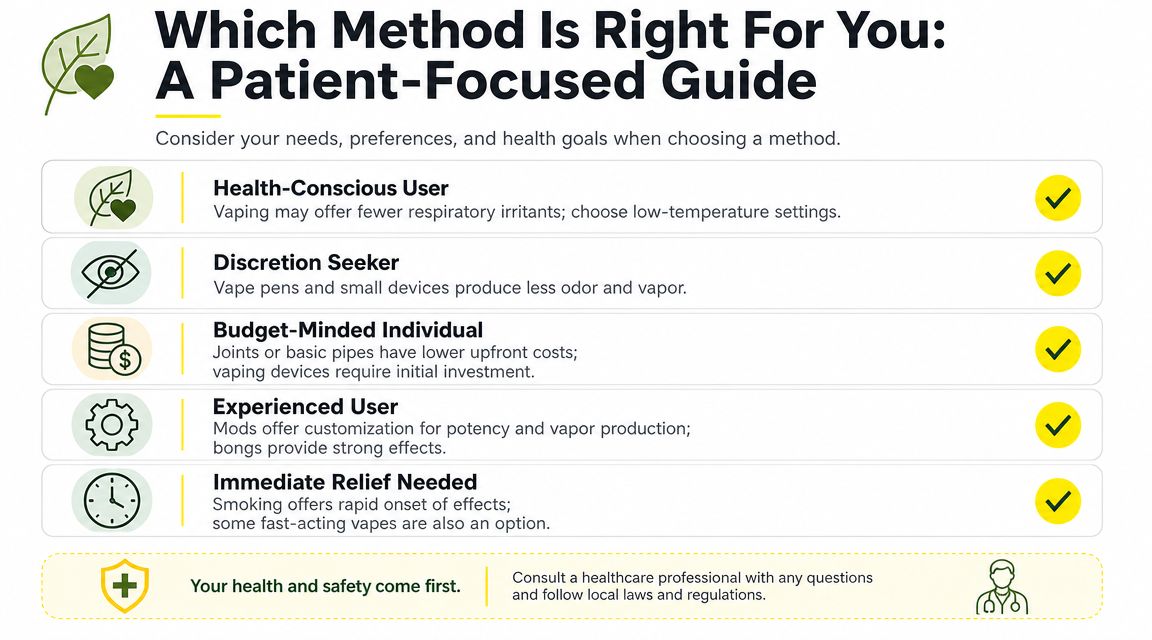
A useful framing comes from Our World in Data's discussion of vaping versus smoking health risks: the question isn't whether vaping is safer. It's “safer for whom, in what form, and compared with what alternative?” That's exactly how patients should think about cannabis too.
Patient profiles and practical fits
The patient who wants immediate relief
If you wake up with pain, nausea, or tension that needs a fast answer, flower may still be the clearest fit. A small pre-roll or one controlled bowl can be straightforward and easy to interpret.
The patient with lung sensitivity
If smoke itself tends to irritate you, vaping is usually the better starting point. Not because it's harmless, but because avoiding combustion is often the more sensible move.
The patient who needs discretion
If odor, apartment living, or short-use windows are major concerns, a cartridge or pen often wins. It's quicker to use, easier to put away, and less likely to leave the whole room smelling like a session.
The patient who tends to overdo it
A vape can help with microdosing if you treat it with discipline. One draw, wait, reassess. The method works best when you use the control it offers.
The patient who values ritual and full-spectrum flower character
Some patients respond better to flower and enjoy the fuller sensory experience. If that's you, the goal may not be quitting smoking altogether. It may be smoking less often, in smaller amounts, and more intentionally.
A simple way to decide
Ask yourself these five questions:
- Do my lungs tolerate smoke well?
- Do I need to be discreet where I live?
- Am I looking for a fast punch or a controlled step-up?
- Do I want simple gear or more dose control?
- Will I realistically clean and maintain the device I buy?
If most of your answers point toward convenience, lower odor, and measured dosing, vaping probably fits better. If they point toward simplicity, immediacy, and comfort with flower, smoking may still be the right tool.
If you're choosing between common portable options, this guide on vape pens vs carts and which fits your lifestyle can help narrow it down further.
Your best method is the one that matches your symptoms, your environment, and your ability to use it consistently without creating new problems.
There's no prize for choosing the trendier option. The smart choice is the one you'll use carefully, legally, and in a way that supports your health instead of complicating it.
If you want help narrowing down flower, cartridges, disposables, or other medical cannabis formats, Mr. Nice Guys DC offers practical guidance for patients who need a method that fits their symptoms, housing situation, and daily routine.
Mr Nice Guys DC
At Mr. Nice Guys DC, we’re more than just a cannabis delivery service — we’re passionate advocates for quality, convenience, and community. With years of experience in the cannabis industry, our team is dedicated to educating and empowering customers across Washington, D.C. Whether you're a seasoned user or just starting your cannabis journey, our blog delivers trusted tips, product insights, and the latest updates from the world of weed. Stay informed, stay elevated.
