
Must Be 21 To Enter
By entering this site you are agreeing that you are at least 21 Years of Age or older.
I AM 21 OR OLDERSativa vs Indica for Sleep: What Actually Works
.svg)

.png)
You're awake again, staring at the ceiling while the city outside settles into its late-night hush. Maybe your mind is replaying a stressful day near Capitol Hill, a missed bus, or tomorrow's early meeting. The vape cartridge and pre-roll on the nightstand look tempting, but grabbing anything labeled “indica” isn't a complete sleep strategy.
The question isn't sativa vs indica for sleep. It's whether you're trying to fall asleep, stay asleep after waking at 3 a.m., reduce nightmares, or quiet racing thoughts. Each problem points toward a different balance of THC, CBD, minor cannabinoids, terpenes, dose, and timing. DC patients can find high-THC flower, cartridges, edibles, tinctures, and high-CBD products through licensed channels, so the choice deserves more care than a quick strain-family decision.
Staring at the Ceiling at 3 a.m. in DC
At 3 a.m. on a work night, Marcus reached for a strong pre-roll after waking and took several pulls because the first one “wasn't working.” He eventually returned to sleep, then woke heavy, foggy, and annoyed. That product may have supported sleep onset, but its dose and duration were a poor fit for middle-of-the-night waking.
Start with the pattern. Sleep-onset insomnia means you cannot drift off at bedtime. Sleep-maintenance insomnia means you wake later and cannot return to sleep. Nightmares, physical tension, and racing thoughts call for different decisions about chemistry, dose, and timing. A product that feels sedating at bedtime can leave you oversedated after a 3 a.m. dose.
Practical rule: Choose cannabis for the sleep problem you're solving. Treat the sativa or indica label as secondary information.
For trouble falling asleep, a fast inhaled product may fit better because its effects arrive quickly. After waking at 3 a.m., a carefully measured sublingual product can provide more control than repeated pulls from a strong pre-roll. Nightmares may change how you judge THC, while racing thoughts may call for a product and dose that quiet the mind without leaving you foggy in the morning.
A label still cannot predict the whole night. Chemistry, dose, timing, tolerance, and your specific symptom pattern matter more than the strain family alone. Patients arranging same-day cannabis delivery in DC may see several formats and strain labels, so read past the marketing shorthand. Match the product to when the problem occurs, then start with the smallest measured amount that fits your plan.
What Sativa and Indica Actually Mean
The original terms described cannabis plants, not guaranteed effects. Cannabis sativa was associated with taller plants, narrower leaves, and growing environments closer to warm, equatorial climates. Cannabis sativa indica was associated with shorter, broader plants linked historically to regions with harsher seasonal conditions. Those botanical distinctions helped describe plant structure and origin, but dispensary menus now use the words mostly as effect shorthand.
In modern retail, hybrid is effectively the default. Decades of breeding have mixed lineages, and a menu label often reflects a cultivator's classification, inherited naming convention, or expected customer experience. “Sativa” usually suggests an uplifting or mentally active profile. “Indica” usually suggests a heavier, more relaxing profile. Neither label guarantees what you'll feel.
Recent genetic work has also complicated the old story. Products marketed as indica aren't necessarily close to traditional landrace indica plants, and some have shown genetic relationships that don't match the folklore customers hear at the counter. That's why I treat the family label as a starting clue, not a chemical diagnosis.
| Trait | Sativa Label, Folklore | Indica Label, Folklore | Lab Reality |
|---|---|---|---|
| Plant shape | Tall with narrow leaves | Short with broad leaves | Retail genetics are often mixed |
| Expected effect | Bright, energetic, cerebral | Relaxing, physical, sleepy | Dose and chemistry can reverse expectations |
| Typical timing | Daytime | Evening or bedtime | The product's onset and duration matter more |
| What predicts sedation | The word “sativa” | The word “indica” | Cannabinoid and terpene profile |
| Consumer shortcut | “Keeps me alert” | “Knocks me out” | Useful shorthand, never a promise |
The most reliable purchasing habit is simple: check the certificate of analysis, cannabinoid ratios, and available terpene data. Two products carrying the same family label can have very different THC, CBD, CBN, and aromatic profiles. If the menu only gives you a strain name, ask the budtender what the test results show rather than assuming the label tells the whole story.
What the Research Says About Sativa vs Indica for Sleep
If you lie awake for an hour, wake at 3 a.m., or cycle through vivid nightmares, the useful question is not “sativa or indica?” Research gives indica-labeled products a modest advantage for general insomnia, while nightmare patterns point in a different direction. Your symptom, dose, and timing still matter more than the family name.
The clearest direct comparison comes from a 2021 naturalistic insomnia study. Participants rated predominant indica products as more effective than predominant sativa products, with indica showing a larger reduction in insomnia symptoms by an estimated mean difference of 0.74 points, with SE 0.11, a 95% confidence interval of 0.36 to 0.81, and adjusted P < .001. Indica also outperformed CBD-only products by 0.59 points, with SE 0.11, a 95% confidence interval of 0.36 to 0.81, and adjusted P < .001, according to the published study.
Use that finding as a buying signal, not a guarantee. The study captured real-world, self-reported insomnia outcomes, while the labels represented complicated chemical profiles. Acute THC exposure has been associated with faster sleep onset, stronger sedation, more slow-wave sleep, and less REM sleep. Broader evidence remains insufficient to support routine clinical use of cannabinoid therapies for insomnia. A review of cannabinoids and sleep describes those effects and reports an average REM latency of 114.5 minutes and REM percentage of 17.7% in one study.
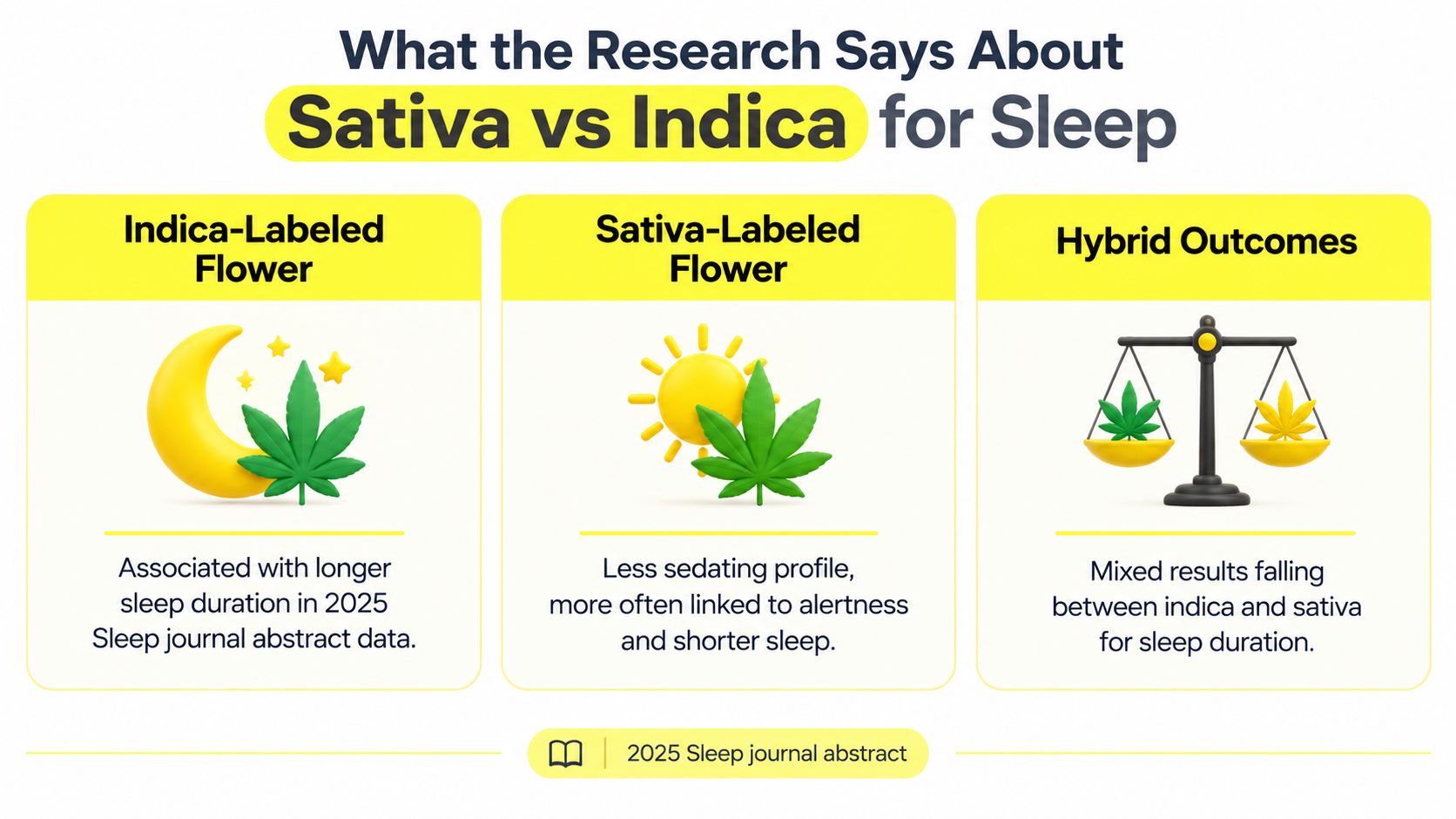
A 2025 Sleep conference abstract complicates the simple bedtime rule. Overall poor sleep was reported by 40.0% of indica users, compared with 28.1% of hybrid users and 27.3% of sativa users. That pattern does not show that indica caused poorer sleep. It shows that product choice, dose, and routine can outweigh the label, as reported in Sleep journal conference data.
Nightmares require a separate approach. In a sleep-disturbed medicinal cannabis sample, people using cannabis for nightmares preferred sativa more often than indica. Sativa-preferring users were also less likely to endorse DSM-5 cannabis dependence, with reported p < 0.05, according to the nightmare-focused research abstract.
My recommendation is straightforward: start with an indica-leaning option for trouble falling asleep, but judge it by the actual chemotype and your response. Indica's sleep advantage appears real but modest, and an indica label cannot fix the wrong THC level, terpene pattern, dose, or timing.
The Cannabinoids and Terpenes Behind Sedation
Start with THC, because it usually drives the strongest bedtime effect. A low-to-moderate THC dose can help some people fall asleep faster, while a larger dose may produce heavier impairment, alter REM sleep, and leave the user groggy. THC also has a biphasic pattern, meaning the same compound can feel calming at one dose and uncomfortable or mentally activating at another.
CBD needs a more careful interpretation. It may help some patients feel calmer without producing strong sedation, but its effects can be mixed, especially at higher amounts. In a clinical study of oral cannabinoids, a THC/CBD preparation reduced total sleep time by 24.5 minutes and REM sleep by 33.9 minutes compared with placebo, while delaying REM onset by 65.6 minutes, according to the clinical cannabinoid sleep study. That's a reminder that “sleepier” and “better rested” aren't identical outcomes.
CBN is commonly marketed for nighttime use because it's associated with sedative effects, but don't treat a CBN-forward label as proof that a product will work for you. Minor cannabinoids such as CBG and THCV can also change the character of a product, although their presence alone doesn't tell you whether it will quiet your mind or keep you alert.
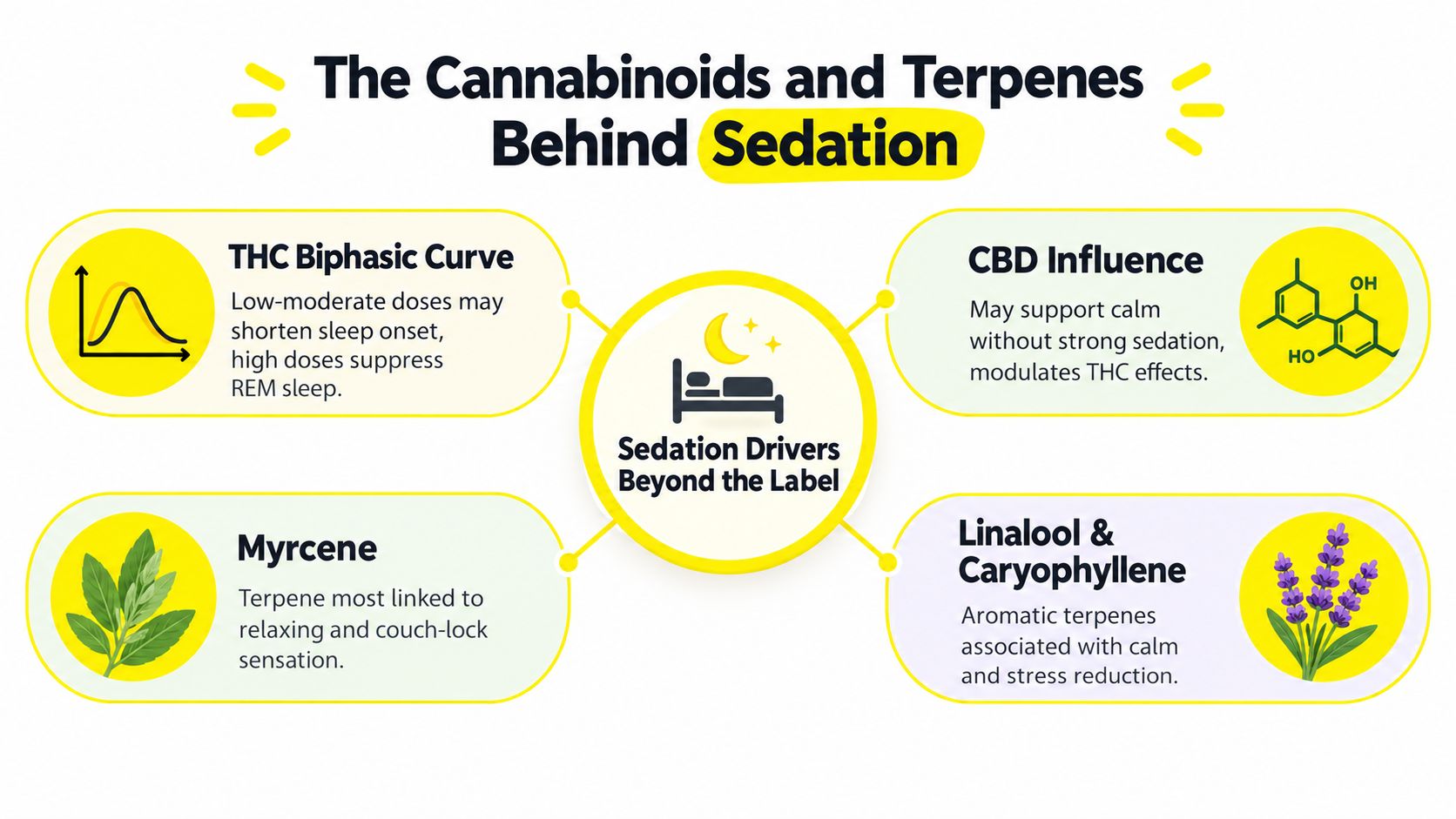
Terpenes give the label more useful context:
- Myrcene: Often associated with a heavier, physically relaxing effect. I look for it when the patient describes muscle tension or a body that won't settle.
- Linalool: Lavender-like and calming, it's a sensible direction for stress-driven bedtime tension.
- Beta-caryophyllene: Peppery and grounding, it interacts with CB2 receptors and may suit patients who feel anxious or scattered.
- Terpinolene: Often leans brighter and more energizing, so I'm cautious with it for a patient whose main complaint is a racing mind.
- THC and CBN together: This combination may appeal to someone seeking a distinctly nighttime profile, but dose still determines whether the result is restful or foggy.
A product labeled indica can be low in myrcene and high in a more stimulating terpene. A sativa can carry linalool and myrcene and feel unexpectedly mellow. Use the guide to the best terpenes for sleep as a shopping lens, not a promise.
Flower, Vapes, Edibles, and Tinctures for Bedtime
The format changes the sleep experience as much as the strain family. Flower and dry-herb vapes act quickly, usually within 1 to 5 minutes, reach their strongest effects around 30 minutes, and taper by about 2 hours. That makes them useful for sleep-onset problems, but their shorter window can disappoint someone who wakes repeatedly through the night.
Distillate and live-resin cartridges behave similarly from a timing perspective, although the dose can feel more concentrated and easy to overshoot. One small inhalation may be enough for a sensitive patient, while a frequent user may need a different approach. The key is to wait long enough to judge the first inhalation before adding more.
Edibles take patience. Gummies, chocolates, and baked products may take 45 to 120 minutes to start, last 6 to 8 hours, and produce a longer, deeper effect than inhalation. Oral THC/CBD products can meaningfully suppress REM sleep, which may reduce dream recall for some people but can also contribute to next-morning fog. Vivid dreams can appear when someone stops after regular use. Never take more because the first portion feels inactive.
Sublingual tinctures and lozenges sit between inhaled products and edibles. They may begin working in 15 to 30 minutes, last 4 to 6 hours, and allow more controlled titration. For many patients, that balance makes them the most practical option when the goal is staying asleep without committing to an all-night edible effect.
| Format | Onset | Duration | REM Impact | Best For |
|---|---|---|---|---|
| Flower or dry-herb vape | 1 to 5 minutes | About 2 hours | Shorter exposure, variable effect | Falling asleep, controlled late-night use |
| Cartridge | Minutes | About 2 hours | Similar short-acting pattern | Convenient sleep onset support |
| Edible | 45 to 120 minutes | 6 to 8 hours | More meaningful REM suppression | Longer nighttime coverage, nightmare-related concerns |
| Tincture or lozenge | 15 to 30 minutes | 4 to 6 hours | Generally easier to control | Middle-of-the-night waking, measured dosing |
For a fuller format comparison, use this guide to edibles, vapes, and flower. Match the product to the clock, not just the package.
Matching Sleep Problems to the Right Strain Type
A patient who can't fall asleep needs a different product from someone who wakes at 3 a.m. Consider four common conversations at the counter.
Trouble falling asleep: Choose a moderate-THC, myrcene-forward flower or vape with an indica-leaning profile. An edible taken about an hour before bed may suit an experienced consumer, but beginners should use a much smaller measured amount and wait for the full onset. A Granddaddy Purple-type profile is a practical example to investigate, provided the current batch shows calming terpenes on its lab report.
Middle-of-the-night waking: Use a short-acting inhaled product or a low-dose sublingual option. The aim is a small, controllable intervention rather than an all-night edible that may still be active after sunrise. For example, a patient who wakes at 3 a.m. might prefer a measured tincture over a strong brownie taken at bedtime.
Nightmares or PTSD-related sleep disruption: An indica-leaning, THC-forward, myrcene-rich chemovar may reduce dream recall because THC can suppress REM sleep. That isn't automatically a reason to use a heavy dose every night. A tolerance break can help prevent escalation when the effect starts fading, and nightmare-focused patients should discuss cannabis use with a qualified clinician.
Racing thoughts and bedtime anxiety: Start with a CBD-forward hybrid, a linalool-rich profile, or a balanced 1:1 THC:CBD tincture. A sativa label can mislead a patient into avoiding a product that might be chemically calming, while a high-THC indica can feel too intense.
| Sleep Problem | Symptom Clue | Recommended Chemovar | Typical Dose | Suggested Format |
|---|---|---|---|---|
| Trouble falling asleep | Awake at bedtime | Moderate THC, myrcene-forward indica-leaning profile | Low and measured | Flower, vape, or carefully timed edible |
| 3 a.m. waking | Falls asleep, then wakes | Short-acting, lower-intensity profile | Small redose only | Sublingual or inhaled product |
| Nightmares | Repeated distressing dreams | THC-forward, myrcene-rich indica-leaning profile | Conservative, monitored | Edible or tincture |
| Racing thoughts | Mental chatter and tension | CBD-forward, linalool-rich, or 1:1 THC:CBD | Low THC with measured CBD | Tincture or balanced hybrid |
Northern Lights-style heavy indicas may fit a patient seeking physical heaviness, while a CBD-forward hybrid is more sensible for someone who needs calm without strong sedation. Check the sleep-focused indica guide, then verify the actual batch report before buying.
Dosing and Timing So You Actually Sleep Through the Night
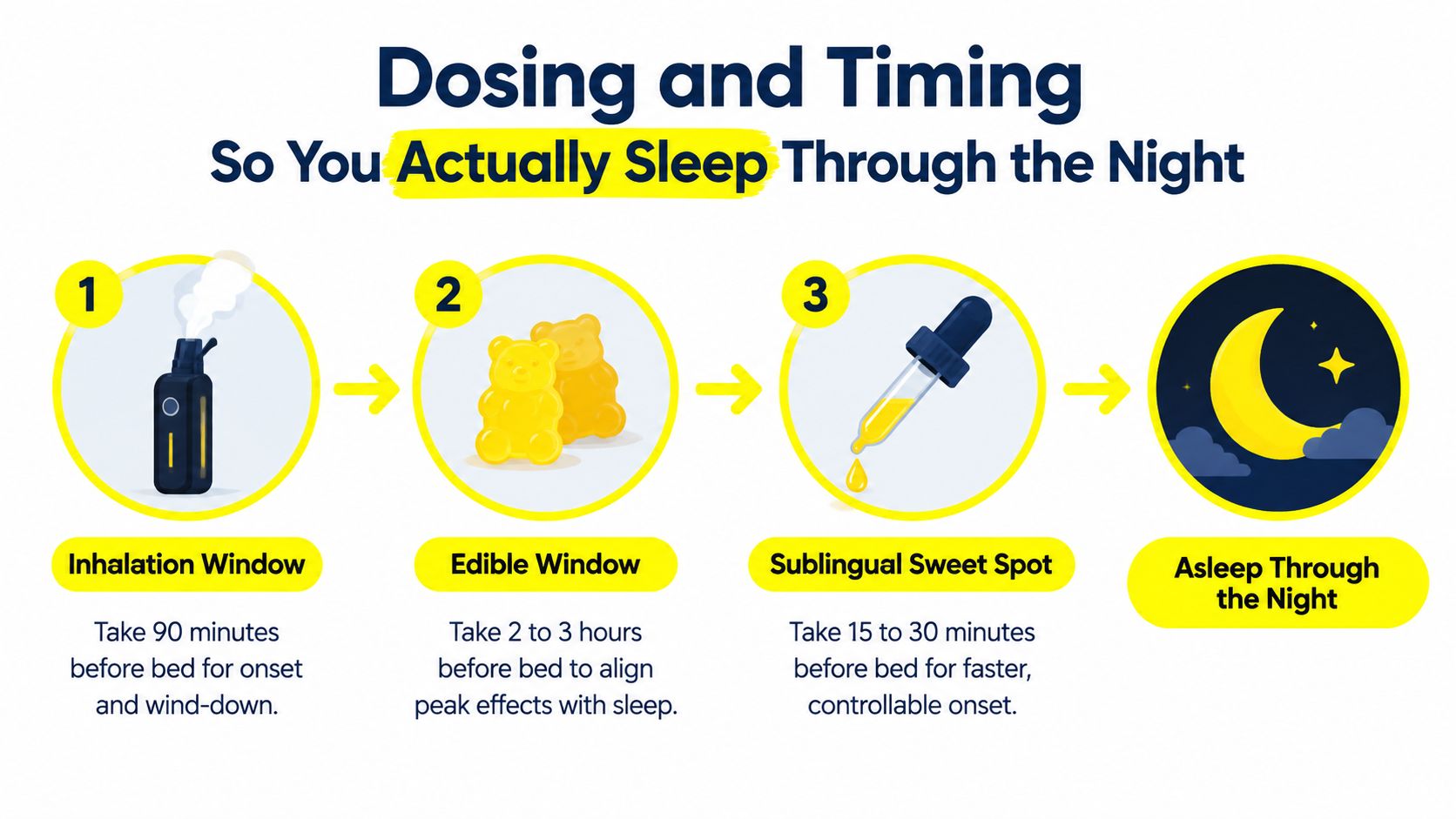
Timing is where many otherwise sensible choices fail. Inhaled products work best when used during the wind-down period, about 90 minutes before bed, giving you time to observe the effect rather than taking a large dose at lights-out. Edibles need a longer runway, usually 2 to 3 hours before bed, because the delayed onset makes premature redosing easy.
Sublingual products have a more controllable window. Take them about 15 to 30 minutes before bed, then give the dose time to settle. If you're new to THC, start with 1 to 2.5 mg. A person with established tolerance may begin around 5 mg, while someone testing CBD may start with 10 to 20 mg. These are practical starting points, not guarantees, and the correct amount depends on the individual product and consumer.
Use a simple protocol:
- Change one variable: Keep the format or chemovar consistent while adjusting dose, so you know what caused the change.
- Avoid alcohol: Don't use alcohol as a chaser. Combining intoxicating substances can make impairment and next-day effects less predictable.
- Redose cautiously: For a 3 a.m. awakening, use only a small short-acting amount if you have enough time before rising. Avoid a large edible when morning alertness matters.
- Take breaks: If sleep improvement fades, a 48- to 72-hour tolerance break can be a practical reset rather than an invitation to keep increasing the dose.
- Track the result: Record product, cannabinoid ratio, terpene profile, dose, time taken, time to fall asleep, awakenings, dreams, and morning alertness.
For a measured approach to oral products, review this cannabis edible dosage chart. The short video below can also help clarify timing and product effects.
A sleep journal will expose patterns that memory hides. If a product helps you fall asleep but leaves you foggy, it isn't a complete success. If it reduces dreams but increases total awakenings, change the strategy instead of automatically choosing a stronger indica.
Choosing Your Bedtime Product at a DC Dispensary
A useful dispensary visit starts with your sleep pattern and schedule, not the word “indica.” Tell the budtender whether the problem is falling asleep, staying asleep, vivid dreams, or a busy mind. Add your preferred onset, how long you need coverage, and whether you must feel clear in the morning. Those answers narrow the format and dose more effectively than a strain nickname.
Use this label checklist:
- THC and CBD: Read the potency and ratio first. They give a better starting point for intensity than sativa or indica.
- Terpenes: Myrcene and linalool can support a calmer profile, while terpinolene may feel brighter. Treat the terpene list as a clue, not a guarantee.
- Minor cannabinoids: CBN may interest nighttime shoppers, but test the product at a measured dose instead of assuming CBN will solve sleep.
- Batch information: Request current laboratory results. Missing terpene data, unclear potency, or a vague strain name should slow the purchase.
- Format: Inhaled products allow tighter control over onset. Edibles provide longer coverage, while tinctures offer a measured middle option.
Ask three practical questions before paying: When was this batch tested? What are the current cannabinoid and terpene results? Can I measure a conservative first dose? If the staff cannot answer, choose a product with clearer labeling.
Granddaddy Purple-type and Northern Lights-style products remain familiar bedtime categories, yet the batch matters more than the name. A sensitive sleeper may prefer a balanced 1:1 THC:CBD option. An experienced consumer may choose a CBN-forward edible. Neither is an automatic prescription.
Use the sleep pattern from section 6 as the decision tree: match the product's onset and duration to the problem, then adjust chemistry and dose only after you know how the first trial affects sleep and morning alertness.
Mr. Nice Guys DC carries flower, vapes, edibles, pre-rolls, concentrates, topicals, and tinctures, with menus for in-store pickup, curbside service, and delivery across DC and nearby areas. Ask for current label information, select a format that fits your schedule, and avoid choosing solely because a package makes the boldest indica claim.
Visit Mr. Nice Guys DC with those questions ready. The right bedtime product is the one you can identify, measure, time, and evaluate clearly.
Mr Nice Guys DC
At Mr. Nice Guys DC, we’re more than just a cannabis delivery service — we’re passionate advocates for quality, convenience, and community. With years of experience in the cannabis industry, our team is dedicated to educating and empowering customers across Washington, D.C. Whether you're a seasoned user or just starting your cannabis journey, our blog delivers trusted tips, product insights, and the latest updates from the world of weed. Stay informed, stay elevated.
