
Must Be 21 To Enter
By entering this site you are agreeing that you are at least 21 Years of Age or older.
I AM 21 OR OLDERDispensary in Washington DC: Your Complete Guide
.svg)

.png)
You're probably trying to figure out one simple thing right now, what's a real dispensary in Washington DC, and how do you avoid wasting time at the wrong door. That's a fair question here, because the District's cannabis market doesn't work like a standard adult-use retail scene. The safest approach is to understand the rules first, then choose the shop, product, and access method that fit your situation.
Finding Your Way in the DC Cannabis Market
A first visit can feel messy if you've only heard people say, “Just go to a dispensary in Washington DC.” In practice, the difference between a licensed medical retailer and an unlicensed “gifting” operation matters from the moment you search online, not just when you reach the counter. Washington, DC's modern cannabis framework was shaped by Initiative 71, approved in November 2014, which allowed adults 21 and older to possess up to 2 ounces of marijuana but did not authorize ordinary recreational sales, creating the gifting environment that came before regulated medical access CRS summary of Initiative 71 and DC cannabis rules.
A simple example helps. A new resident lands in Shaw, searches for “weed near me,” and sees a mix of polished storefronts, delivery pages, and generic listings that don't clearly explain whether cannabis is being sold under DC medical rules. The right move is to check whether the business is operating as a licensed medical dispensary, because that's where compliant purchasing, patient verification, and product traceability begin.
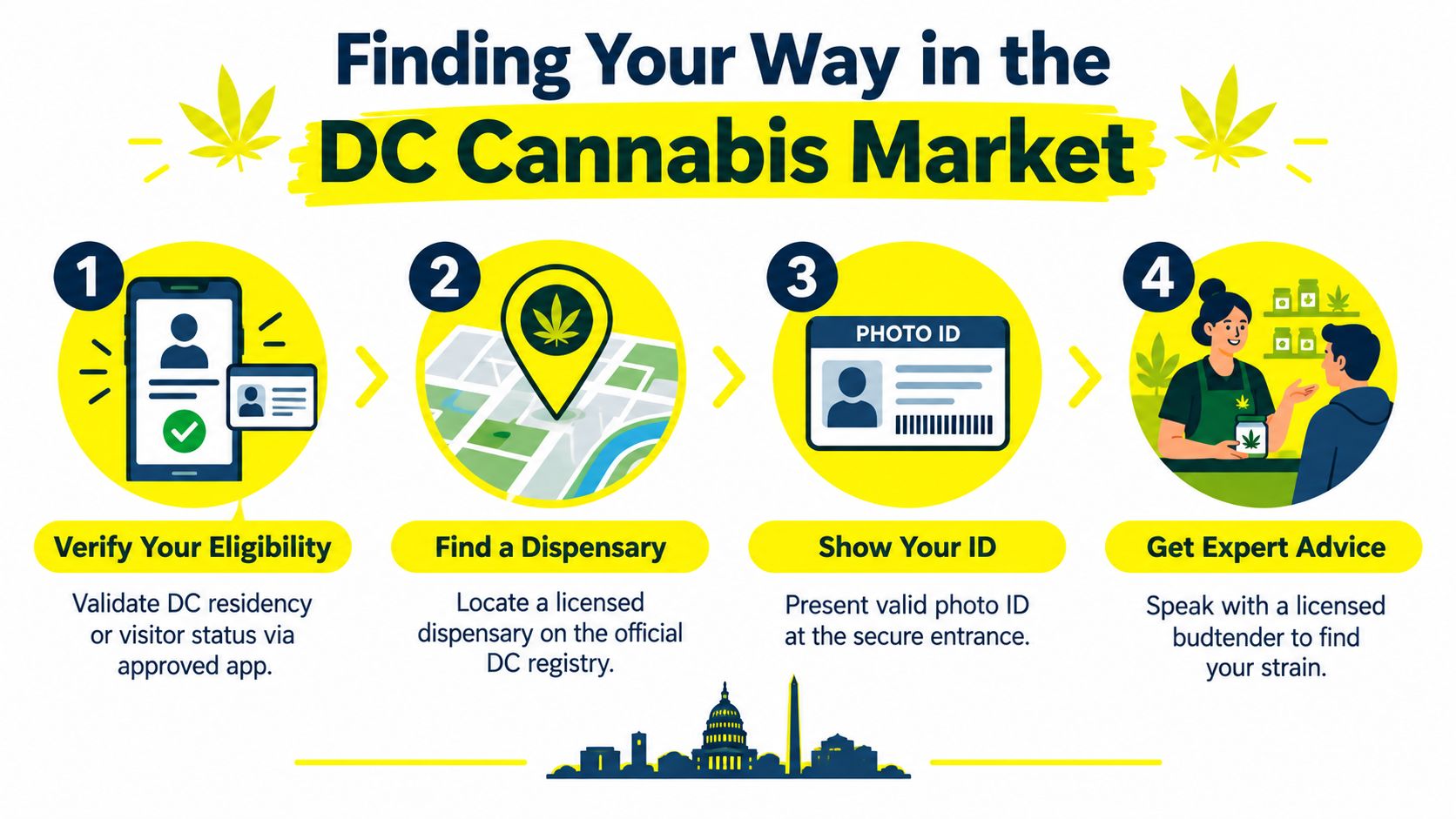
A real DC dispensary should make the rules clearer, not blurrier.
If you want a plain-English overview of the difference between licensed access and the old gifting scene, this guide to where to buy weed in Washington DC is the right starting point. The main thing to remember is that a legal purchase in DC comes through a regulated medical channel, not a casual storefront with vague promises.
Understanding Your Eligibility and Legal Access
The question behind most first-time visits is straightforward, am I allowed to buy here? The answer depends on whether you're a DC resident, a visitor, or someone with a medical card from another place. Washington, DC's medical-cannabis program allows registered qualifying patients to purchase cannabis only after completing the required authorization step, and adults 21 or older may self-certify that they use cannabis for medical purposes during registration, while minors still need a practitioner's recommendation DC medical-cannabis rules.
Residents, visitors, and reciprocity
A DC resident who wants a legal purchase path should complete the local registration process and bring valid identification. A visitor may also have a path in the District, but the correct route depends on whether they already hold a recognized home-state medical registration or need temporary DC registration. That distinction matters because age alone doesn't create a general recreational right to shop.
A helpful rule of thumb is this, if the store can't tell you which credential it needs, you're probably not at a compliant operation. Registered access is about paperwork first, then product selection.
Practical rule: if the counter process feels casual, but nobody checks status, ID, or the retailer's license, that's a warning sign.
What to bring before you go
Bring a valid government photo ID, and if you're a cardholder, bring the credential that matches your current status. For visitors, the smoothest path is to confirm whether you qualify for temporary registration or reciprocity before you order. If you want a step-by-step walkthrough of the local registration process, this page on how to get a DC medical card keeps the process practical instead of legalistic.
If you're helping a parent or another family member, remember that the purchase still has to flow through the correct patient or caregiver authorization. That's not a detail to skip, it's the difference between a valid transaction and a frustrating stop at the door.
Navigating Product Categories and Strain Selection
Once your access is sorted, the menu is the next real decision. DC dispensaries carry the familiar formats, flower, pre-rolls, concentrates, edibles, topicals, cartridges, and tinctures, but the smarter way to shop is to think in terms of how you want the product to fit your day. A bedtime option, a low-key social option, and a product for measured daytime use usually won't look the same on the shelf.
Start with the testing, not the strain name
The District's medical-cannabis framework treats a dispensary as part of a regulated supply chain. Before harvested cannabis can be sold, cultivation centers must segregate material into batches and hold each batch until laboratory testing is completed for THC concentrations, mold, pesticides, and heavy metals DC testing and batch requirements). That means the menu should be read as a safety document, not just a list of strain names.
Strain names can help with familiarity, but they don't replace batch-level information. If you've ever chosen a product because it sounded appealing and later realized it wasn't the effect you wanted, you already know why labels matter more than branding.
Use the product type to match the situation
Flower gives you the most traditional experience and the most flexibility. Pre-rolls are easier when you want convenience and don't want to pack or weigh anything yourself. Edibles fit people who want something discreet, but they require patience and a slower decision process. Concentrates are a different category altogether, so they're usually better for customers who already know what they're looking for and want a more exact format.
Practical rule: choose the format first, then the strain second. That prevents most disappointed purchases.
If you want a menu that's organized around practical strain picks rather than hype, the strain guide at best medical cannabis strains is useful because it keeps the focus on fit, not just names that sound popular. A good dispensary conversation sounds like this, “What time of day are you using it, and how experienced are you?” That's the kind of question that leads to a usable recommendation.
In Store Pickup Versus Professional Delivery Services
Some people want to browse in person. Others want the order to arrive without extra errands. DC's medical market supports both approaches, and the better choice often depends on how much control you want over the purchase experience.
Why pickup works for some patients
In-store pickup gives you the clearest read on the menu, the packaging, and the staff's explanations. If you're new to a dispensary in Washington DC, that face-to-face conversation can be reassuring, especially if you want to compare formats before buying. It's also easier to ask about product labels or confirm that you're staying within your current purchase allowance.
Pickup tends to work best when you already know what you want and don't mind a short stop. It's also the most natural choice if you prefer to see how a dispensary organizes inventory and handles verification before you place bigger orders later.
Why delivery works for many regular customers
DC also tracks delivery as a real part of the regulated medical market, not as a side note. In the DC Alcoholic Beverage and Cannabis Administration's November 2024 program report, total unique sales reached 19,854, and delivery sales contributed over $1 million ABCA November 2024 program report. That's a strong signal that delivery is a meaningful access channel, not a backup plan.
For people who live farther from a storefront, or who don't want to make a trip, delivery is often the practical option. If you're comparing pickup and delivery, this overview of DC delivery service can help you think through convenience without losing sight of compliance.
A good rule is simple. If you value browsing and questions, pick up in store. If you value time, privacy, and consistency, use licensed delivery. Just make sure the order is placed through a licensed retailer or internet retailer, because reachability alone doesn't make a transaction legal.
Managing Your Monthly Purchase Allotment
DC doesn't treat cannabis buying as an unlimited shopping trip. It runs on a rolling 30-day limit, which is the detail many people miss until they're standing at checkout. A registered patient may purchase up to 8 ounces of dried medical cannabis in that period, and ABCA guidance also sets an alternative ceiling of 240 grams of concentrate for patients age 21 or older ABCA patient registration guidance.
Think in rolling windows, not calendar months
The rolling rule means your allowance refreshes based on the date of each purchase, not the first of the month. If you buy a few ounces early, that amount still counts until the window moves forward. That's why a patient who shops in small increments can be as close to the limit as someone who makes one large order.
Here's the practical part. Track every pickup and delivery order, keep an eye on whether you're buying flower or concentrate, and don't assume package count tells the full story. A single purchase can affect the balance differently depending on form and amount.
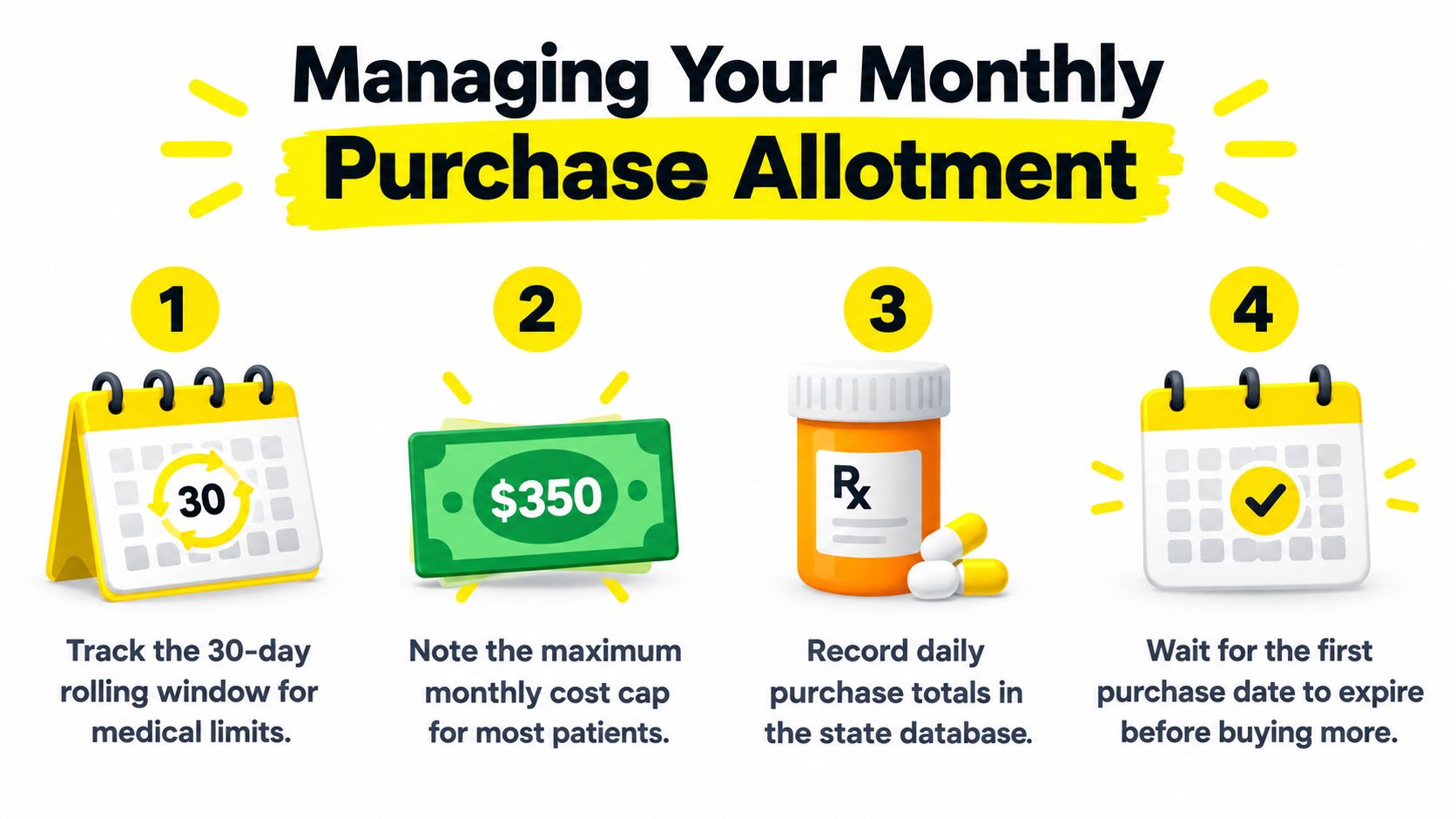
Don't wait until the counter to do the math
If you're close to your limit, check it before you order again. That's especially true if you use both delivery and in-store pickup, because the store still has to count both toward the same rolling cap. For a practical breakdown of order thresholds and how they affect a cart, this page on minimum order requirements is worth reading before you build your next order.
Keep your own running tally. The shop can help, but your records are what prevent a surprise decline.
Your Essential Dispensary Checklist
A smooth visit starts before you leave home. If you're using a dispensary in Washington DC for the first time, the reliable routine is simple, verify your status, bring the right ID, check your current allowance, and choose a licensed retailer that matches the way you want to shop. DC law allows a registered patient or caregiver to possess up to 8 ounces of dried medical cannabis at any one time, and the program also limits retail dispensing to no more than 8 ounces for a qualifying patient during a rolling 30-day period DC possession and purchase limit.
What to confirm before you order
- Identity first: Bring a valid government photo ID, and if you're registered, bring the credential that matches your current patient or caregiver status.
- Retailer status second: Buy only from a licensed retailer or internet retailer. A site that reaches your address isn't enough if the transaction itself isn't licensed.
- Purchase balance third: Check your rolling 30-day total before you add products to the cart, especially if you've already bought flower or concentrate earlier in the month.
- Format matters: Match the product to your purpose, because flower, edibles, concentrates, and topicals don't behave the same way in real life.
- Know your route: If you prefer privacy and convenience, delivery can be a clean option. If you want hands-on help, pickup gives you direct access to staff and labels.
A lot of bad dispensary experiences come from trying to solve every problem at once, legality, product choice, and convenience, all while standing at the counter. Don't do that. Decide your access path first, then shop inside the rules, not around them.
Practical rule: the best first purchase is the one you can repeat legally and confidently.
If you want a local dispensary that focuses on compliant purchasing, clear menus, and practical guidance for patients and visitors, Mr. Nice Guys DC is set up for exactly that kind of experience. Visit Mr. Nice Guys DC to check options for pickup or delivery, review the menu, and shop with the DC rules in mind before you place your next order.
Mr Nice Guys DC
At Mr. Nice Guys DC, we’re more than just a cannabis delivery service — we’re passionate advocates for quality, convenience, and community. With years of experience in the cannabis industry, our team is dedicated to educating and empowering customers across Washington, D.C. Whether you're a seasoned user or just starting your cannabis journey, our blog delivers trusted tips, product insights, and the latest updates from the world of weed. Stay informed, stay elevated.
