
Must Be 21 To Enter
By entering this site you are agreeing that you are at least 21 Years of Age or older.
I AM 21 OR OLDERBest Medical Cannabis Strains Guide for DC Patients
.svg)

.png)
The most popular advice about best medical cannabis strains is often the least useful: pick an Indica for sleep, a Sativa for daytime, or a famous name such as Blue Dream or OG Kush for almost any complaint. Those labels can help you start a conversation, but they don't tell you enough about the product in the jar.
A more reliable approach looks at the THC:CBD ratio, tested potency, terpene profile, dose, and route of administration. A familiar strain name may appear on products with different chemistry from one batch or producer to another. For a first-time patient, the better question isn't “Which strain is best?” It's “Which measurable profile fits my symptoms, tolerance, and daily responsibilities?”
Why There Is No Single Best Medical Cannabis Strain
No single cannabis strain works best for every patient. Pain, nausea, sleep disruption, anxiety, epilepsy, and muscle tension can call for different cannabinoid profiles, and the same THC-heavy flower can feel helpful to one person and overwhelming to another.
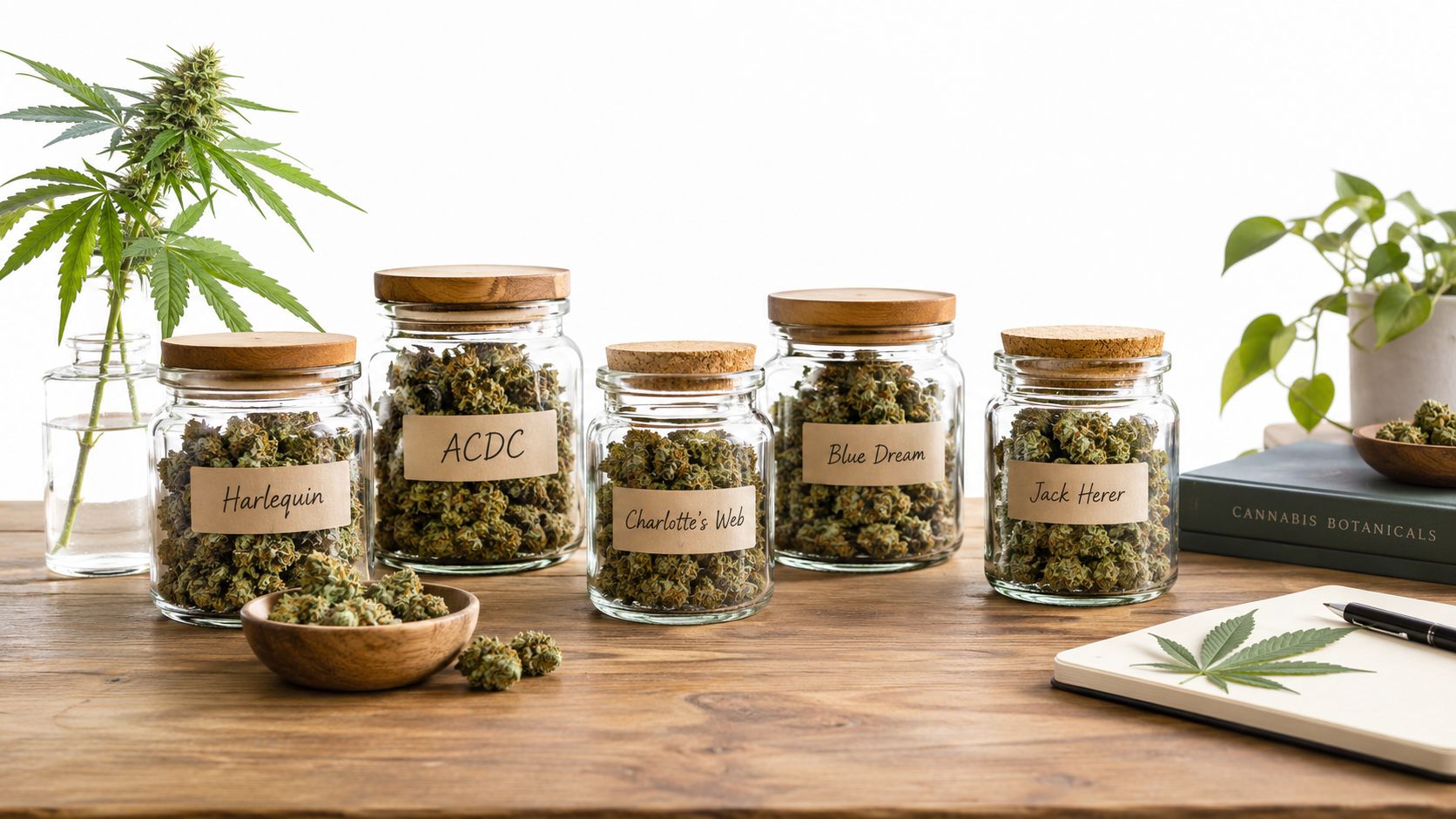
That makes popular strain lists easy to misunderstand. Blue Dream may be familiar and widely reviewed, while OG Kush may have a reputation for physical relaxation, but neither name guarantees a particular medical effect. Lineage and branding are clues, not clinical instructions.
What prescribing patterns reveal
A large German survey provides a useful reality check. Bedrocan was the most frequently prescribed strain, with a THC:CBD ratio of 22:<1, followed by Bakerstreet at 19:<1 and Pedanios 22/1 at 22:1. Across the eight strains selected frequently, seven were THC-dominant, with THC concentrations ranging from 16% to 22%. The German medical cannabis survey shows that medical products are often identified by reproducible cannabinoid ratios rather than by the Indica or Sativa label.
The same survey found that 58% of participants had used medical cannabis for more than one year, and patients had used an average of 5.9 different strains. That doesn't prove that switching automatically produces better results. It does show that medical cannabis selection often involves careful trial, observation, and adjustment instead of finding one permanent “winner.”
A practical example is a patient who starts with a high-THC flower because a product description calls it relaxing. If the patient experiences unwanted mental intensity, the next useful move isn't necessarily to abandon cannabis. It may be to compare a balanced ratio, a lower-potency batch, a different terpene profile, or another format.
The useful product name is the chemistry printed on the label, not just the name on the front of the package.
For a clearer explanation of why multiple cannabinoids can matter, read this guide to full-spectrum cannabis. The main lesson is simple: treat strain names as a starting point, then verify what the product contains.
How to Evaluate Strains Using Cannabinoid Ratios and Terpenes
A product label gives you a more useful starting point when you read it in layers. Begin with THC, then CBD, then the resulting ratio. After that, use terpenes as a secondary filter rather than treating aroma as proof of a medical outcome.
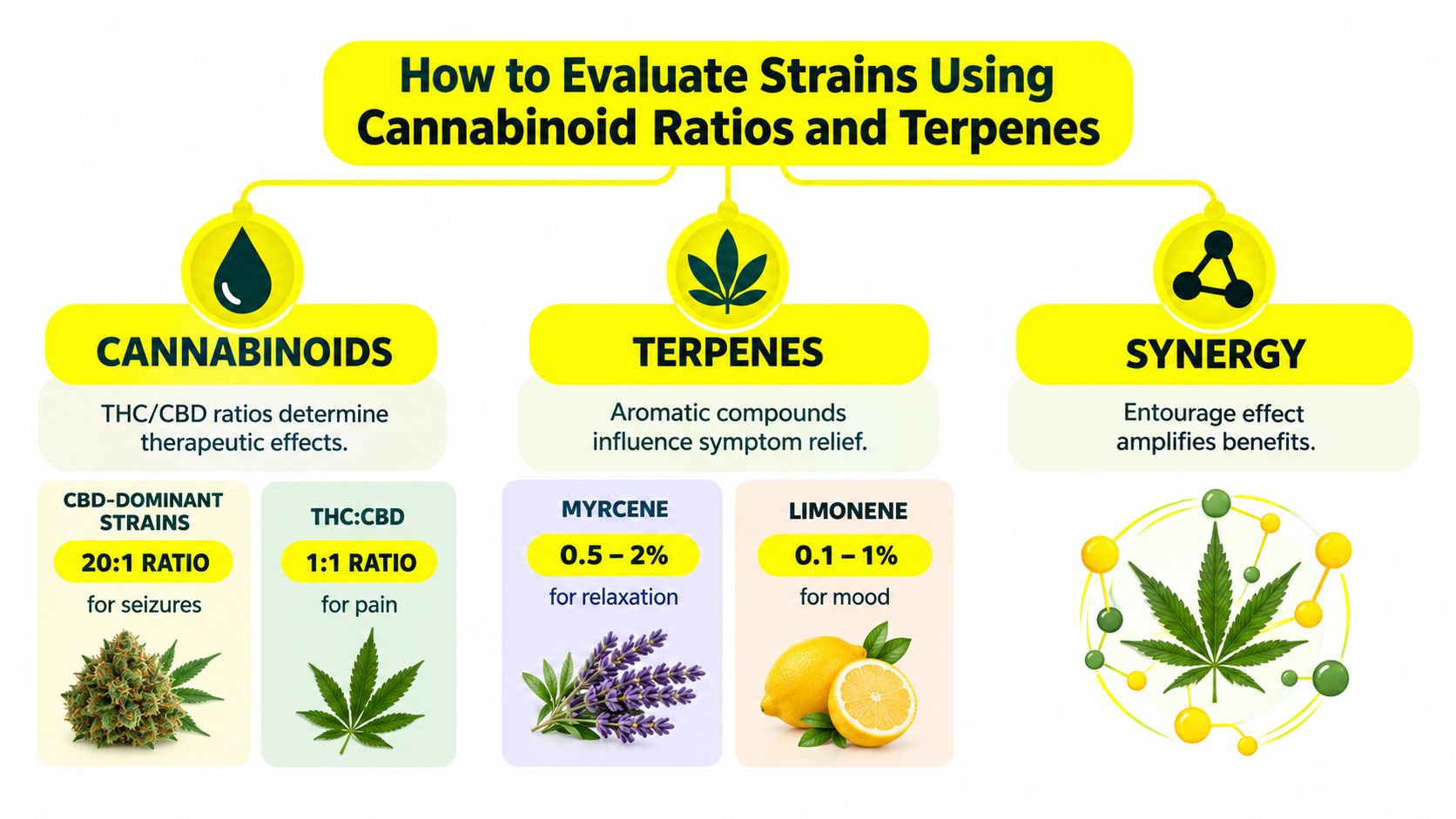
THC is the cannabinoid most associated with intoxication. A high-THC, low-CBD product such as a 22:1 formula signals a very different experience from a balanced 1:1 product. A CBD-forward formula may be more appropriate when a patient wants to explore cannabinoid support with less intoxication, although CBD isn't automatically suitable for every condition or medication profile.
Start with the ratio
Think of the ratio as a decision signal:
- THC-dominant: May provide stronger THC effects, but can also bring more impairment, anxiety, dizziness, or unwanted intensity.
- Balanced THC:CBD: Often makes sense for patients who want to explore a less THC-heavy profile, especially when daytime function matters.
- CBD-forward: Can be relevant for patients prioritizing lower intoxication, but should still be selected with professional guidance and attention to other medicines.
The specific ratio matters more than whether a package says hybrid or Indica. In medical prescribing data, Bedrocan, Bakerstreet, and Pedanios 22/1 were all selected as ratio-defined products, not because their marketing labels promised an identical experience. A useful label-reading habit is to compare the actual THC and CBD values between products before comparing strain names.
For a plain-language overview of THC, CBD, and related compounds, use this cannabinoid breakdown.
Use terpenes as a secondary filter
Terpenes contribute aroma and may help describe the direction of an experience. Myrcene is associated with analgesic and relaxing activity, linalool with sleep and stress relief, limonene with anxiolytic and anti-inflammatory signaling, and β-caryophyllene with analgesic and anti-inflammatory effects. These are plausible mechanism-level roles, not guarantees that a particular flower will treat a symptom.
The evidence doesn't support using Indica, Sativa, hybrid, or terpene profiles alone to predict pharmacology. A large chemovar analysis found no statistical correlation between terpene profiles and genetic profile, and terpene patterns across those familiar categories were highly heterogeneous. The terpene and chemovar review supports a cautious approach: use terpene data as a secondary clue, then rely on lab-tested cannabinoids, dose, and route.
| Terpene | Commonly Found In | Proposed Medical Effect |
|---|---|---|
| Myrcene | Earthy, herbal, musk-forward profiles | Relaxation and analgesic activity |
| Linalool | Floral and lavender-like profiles | Sleep and stress relief |
| Limonene | Citrus-forward profiles | Anxiolytic and anti-inflammatory signaling |
| β-Caryophyllene | Peppery and spicy profiles | Analgesic and anti-inflammatory effects |
For example, two products may both list similar THC potency. If one has a myrcene-forward profile and the other has a bright citrus profile, a patient might discuss the first for evening relaxation and the second for a less heavy direction. The patient should still test cautiously, because the label can't predict the full response.
Best Strain Profiles for Common Medical Conditions
A familiar name such as Blue Dream or OG Kush does not tell you whether a product fits your symptoms. The cannabinoid ratio, measured potency, terpene profile, and route of use give you more useful information than the label alone. Condition-based shopping works better when you compare profiles, not promises. A product that may suit chemotherapy-related nausea could be a poor first choice for someone who needs to stay alert at work, just as a flower that feels manageable for nighttime pain may not suit daytime anxiety.
Match the symptom goal to the product's chemistry, then consider potency and dosing. High-THC products are commonly used for nausea and vomiting. Balanced THC:CBD ratios are more often associated with pain and multiple sclerosis, while CBD-forward products may be more relevant to epilepsy and some mood-related indications. Clinical guidance on medical cannabis selection also emphasizes checking batch-tested potency. Many medical products contain more than 15% THC, which can increase intoxication or adverse effects if the dose is not adjusted carefully.
Compare the profile before the name
| Condition | Recommended Ratio | Product Characteristics |
|---|---|---|
| Chronic pain | Balanced THC:CBD or CBD-forward | Look for measured potency and consider a less intoxicating daytime format |
| Nausea and vomiting | THC-dominant | Stronger THC effects may be relevant, but titration is important |
| Multiple sclerosis-related symptoms | Balanced THC:CBD | A balanced profile may offer a different trade-off from THC-heavy flower |
| Epilepsy-related goals | CBD-forward | Use clinician guidance, especially when other medicines are involved |
| Sleep disruption | A relaxing profile selected individually | Consider THC level, route, and terpene information rather than Indica alone |
| Anxiety with pain | Often less THC-heavy than pain-only use | A CBD-forward or balanced option may be worth discussing |
A patient with chronic pain who needs to drive or work might begin by asking about a balanced product rather than choosing the strongest flower available. Someone dealing with nausea and vomiting might discuss a THC-dominant option, while recognizing that stronger THC effects can also mean more impairment.
Terpenes can help refine the choice after the ratio is clear. A patient seeking physical relaxation might ask about myrcene or β-caryophyllene. Someone focused on a calmer evening might ask whether linalool appears in the lab report. These questions do not replace medical guidance, but they give a budtender or clinician something more specific than “I want an Indica.”
Match the product to the symptom and the time of use. A nighttime product doesn't need to perform like a daytime product.
For help matching a product type to your symptoms and time of day, read this guide to choosing the right product for sleep, pain, and anxiety.
The same strain name can feel different as flower, an edible, a cartridge, or a topical. Route changes the experience, so choosing the right product also means deciding how you plan to use it.
Reading Lab Reports and Testing Data Before You Buy
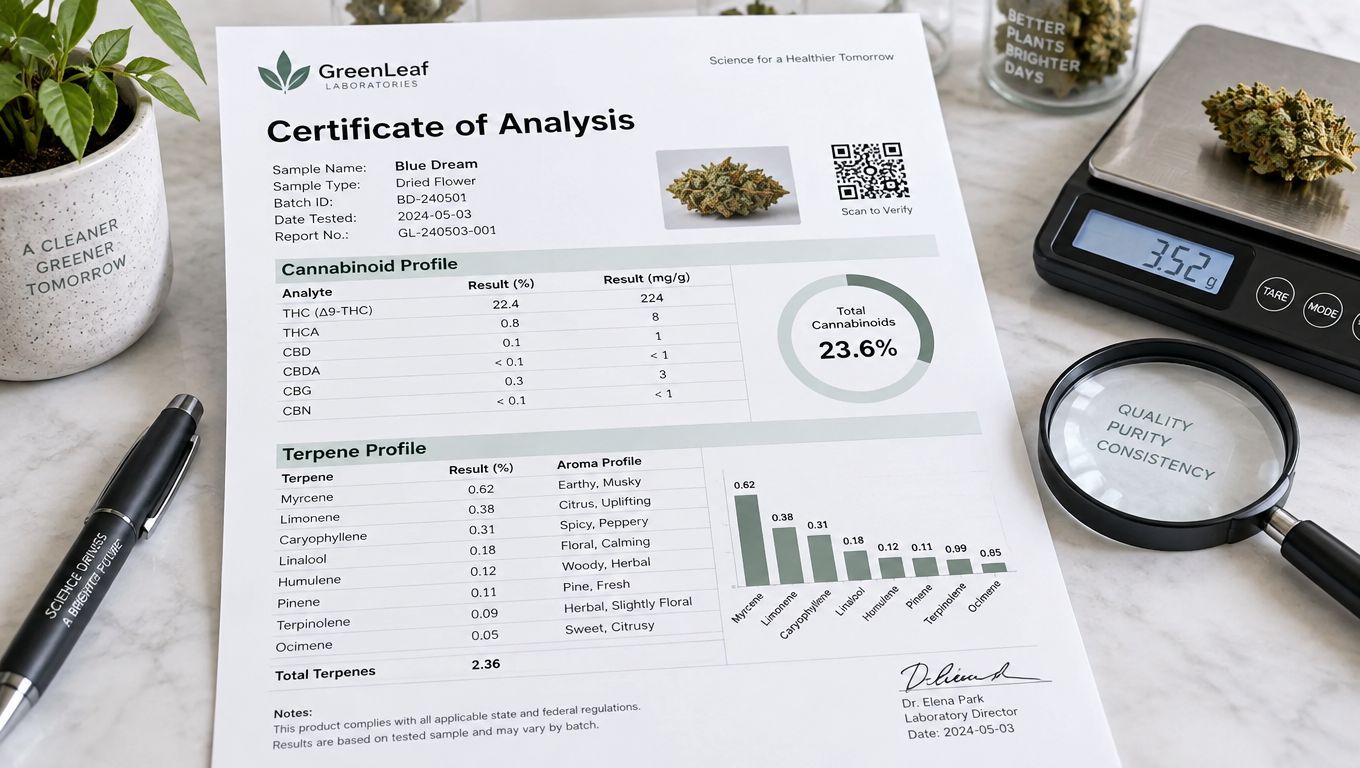
A Certificate of Analysis, or COA, turns a marketing claim into something you can inspect. You don't need laboratory training to begin. Look for the batch identifier, test date, THC result, CBD result, and any available terpene information.
A simple label check
Start at the cannabinoid panel. Compare the actual THC and CBD values, then consider whether the package description matches those results. A product marketed as balanced shouldn't be assumed to be balanced until the laboratory data confirms it.
Next, check whether the COA applies to the batch being sold. Cannabis products can vary between harvests and batches, so an old report or a general product page may not describe the flower in front of you. Ask, “Can I see the latest COA for this batch?” and “What are the actual THC and CBD results?”
The terpene panel comes after cannabinoids. Use it to compare products with similar ratios, not to override the ratio. If two options are both suitable on paper, the terpene profile can help you discuss whether one seems more relaxing, bright, floral, peppery, or earthy.
Don't confuse popularity with suitability
Online attention can distort your expectations. A 2026 surveillance study found that more than 7,000 strains were available for view or purchase by December 2023, and more than 6,000 had user reviews. Reviewable strains grew 13-fold, from 280 in 2010 to 3,905 in 2023, while hybrids containing more than 20% THC had the fastest growth in review volume. The online strain surveillance study illustrates how visibility can follow availability, potency, and familiarity rather than medical evidence.
Blue Dream was listed at 21% THC and 0% CBD and had 9,936 reviews, while Sour Diesel was listed at 19% THC and 0% CBD and had 6,285 reviews. Across all strains, 86.8% received at least one review, 22.4% had more than 30 reviews, and only 0.7% surpassed 1,000 reviews. Those figures describe attention, not effectiveness.
Before buying, ask for the batch report, compare the cannabinoid panel, and note whether the product has been stored appropriately. You can also review product testing standards to understand why testing and traceability matter.
Real Patient Examples of Strain Selection Success
A ratio-first approach becomes easier to understand through realistic scenarios. The examples below are practical illustrations, not claims about named patients or guaranteed outcomes. A clinician should still help patients account for diagnoses, medicines, tolerance, and possible contraindications.
A chronic pain patient chooses balance
A patient begins by choosing the highest-THC flower available because the package promises a powerful effect. The product reduces discomfort but also creates mental fog, making daytime tasks harder. Instead of concluding that cannabis can't help, the patient compares a balanced 1:1 product and records pain, alertness, and unwanted effects after each session.
That choice has a clear trade-off. The balanced product may feel less intense, but it may fit daytime responsibilities better. A systematic review in BMJ Open reported that most chronic-pain patients preferred balanced THC:CBD or high-CBD products while avoiding high-THC preparations, and one cited finding showed 37% favored balanced THC:CBD ratios. The chronic pain preference review supports asking about function, not just intensity.
An anxious patient looks beyond THC
Another patient wants daytime support for anxious feelings but doesn't want a strong high. Rather than selecting a famous “calm” strain by name, the patient asks about CBD-forward or balanced products, verifies the lab report, and begins cautiously. A terpene panel containing linalool or limonene may inform the conversation, but it doesn't guarantee that anxiety will improve.
The practical lesson is to define success before shopping. Is success less tension, clearer thinking, fewer unwanted effects, or better sleep later that night? A product that feels mild but allows the patient to function may be more useful than a potent product that creates a dramatic short-term sensation.
A nausea patient accepts a stronger profile
A patient experiencing chemotherapy-related nausea may have a different priority. A THC-dominant product can be reasonable to discuss because high-THC products are commonly used for nausea and vomiting. That doesn't mean the patient should chase the most powerful flower or assume that a name such as OG Kush will solve the problem.
The patient and clinician might instead choose a tested THC-dominant product, use a conservative dose, and track nausea relief alongside dizziness, impairment, appetite, and sleep. The lesson is that a high-THC product isn't automatically wrong, and a CBD-forward product isn't automatically safer for every goal. The right choice depends on the symptom, the person, and the acceptable trade-off.
Your Next Steps at Mr. Nice Guys DC in Washington
Start your first dispensary conversation with information about yourself, not a strain name. Explain the symptom you're addressing, when it bothers you, whether you need to stay alert, your previous experience with THC, and the formats you're willing to consider.
A useful opening might be: “I'm new to medical cannabis, I need daytime support for pain, and I want to minimize impairment.” That gives the staff a better basis for discussing a balanced or CBD-forward product than asking for the strongest Indica.
Bring a short shopping checklist
- Describe the goal. Say whether you're prioritizing pain relief, sleep, nausea support, relaxation, or daytime function.
- Ask for the ratio. Request the actual THC and CBD results, not only the strain category.
- Request the current COA. Confirm that the report matches the batch being sold.
- Compare formats. Flower, cartridges, edibles, topicals, tinctures, and pre-rolls can suit different routines and dosing preferences.
- Plan your first trial. Start cautiously, avoid driving or machinery, and don't combine products impulsively.
- Track the response. Record the product, route, approximate amount, time, symptom response, and unwanted effects.
A practical journal entry might read: “Balanced flower, evening use, less physical discomfort, mild sleepiness, no need to increase.” That record becomes more useful than a vague memory that a product was “good.”
Consider more than flower
Flower gives patients a recognizable strain name and visible lab information, but it isn't the only option. A topical may be more appropriate for a localized routine, while an edible may suit someone who doesn't want to inhale. Cartridges and pens can be convenient, but their potency and speed of effect make careful dosing important.
A dispensary's menu can change, so focus on the profile you want rather than waiting for one exact name. A product called Blue Dream may be worth considering if its current batch matches your target ratio and terpene preferences. It shouldn't outrank an unfamiliar product with better documentation just because the name is popular.
The most commonly prescribed products in one NIH-reviewed study were ratio-defined options led by Bedrocan at 22:<1 THC:CBD, Bakerstreet at 19:<1, and Pedanios 22/1 at 22:1. The NIH-reviewed prescribing analysis reinforces the practical point: a clinician may choose a high-THC, low-CBD profile such as 22:1 when stronger THC effects are the goal, while avoiding it for someone who needs less intoxication.
For local patients and visitors, the current strain and product selection can help you see what is available before you shop. The dispensary offers flower, edibles, cartridges and pens, pre-rolls, concentrates, topicals, and tinctures, with in-store pickup, curbside service, and delivery powered by Sweede. Debit and cash payments are accepted, and delivery serves Washington, DC and nearby areas including Alexandria, Bethesda, Rockville, and Silver Spring.
Your starting plan should be simple: prioritize the ratio, verify the batch, choose the format that fits your routine, and titrate slowly.
For medical cannabis patients, the strongest product isn't automatically the best product. The more dependable choice is the one whose chemistry you can verify, whose effects you can monitor, and whose trade-offs fit your actual day. Discuss your plan with a qualified clinician, follow local requirements, and give yourself enough information to make the next choice more precise than the last.
Visit Mr. Nice Guys DC to compare tested cannabinoid profiles, terpene information, and formats with guidance from a knowledgeable dispensary team. Ask for help matching a product to your symptoms, tolerance, and daily routine, then use that conversation to build a cautious, personalized starting plan.
Mr Nice Guys DC
At Mr. Nice Guys DC, we’re more than just a cannabis delivery service — we’re passionate advocates for quality, convenience, and community. With years of experience in the cannabis industry, our team is dedicated to educating and empowering customers across Washington, D.C. Whether you're a seasoned user or just starting your cannabis journey, our blog delivers trusted tips, product insights, and the latest updates from the world of weed. Stay informed, stay elevated.
