
Must Be 21 To Enter
By entering this site you are agreeing that you are at least 21 Years of Age or older.
I AM 21 OR OLDERA Practical Guide to CBD Salve in Washington DC
.svg)

.png)
A lot of DC residents first look up CBD salve at the end of a very ordinary day. Your shoulders are tight after carrying a work bag from the Metro. Your hands feel stiff after hours at a keyboard. Your calves are barking after a run on the National Mall or a long walk through Adams Morgan and Capitol Hill. You want something local and practical, not a big wellness project.
That search usually starts with one simple question. Can I put something on this one spot and keep going with my day?
CBD salve sits in that lane. It is a topical cannabis product made to stay on the skin, so you apply it to a specific area instead of taking something that works through your whole system. For many adults, that makes it feel more approachable than smoking, vaping, or swallowing a tincture, especially if the goal is focused relief for a sore neck, dry elbows, overworked hands, or post-workout tension.
The confusion starts because the market often swings between two bad explanations. Some brands talk like a salve can fix everything. Others reduce it to little more than moisturizer with a trendy label. The more useful view is in the middle. A CBD salve is a targeted skin product, usually made with oils, waxes, and other ingredients that help it cling to the area you rub it into. What it can do, and what it cannot, depends on the formula, the amount of CBD, the other ingredients, and your reason for using it.
If you live in Washington, DC, there is another practical layer. You are not only choosing a product. You are also figuring out where it came from, whether the label gives you enough real information, and whether the shop selling it can explain local rules clearly. That matters in DC, where shoppers often sort through a mix of hemp products, cannabis products, and stores that do not do a good job explaining the difference. A trusted local dispensary such as Mr. Nice Guys DC can make that process much easier because clear sourcing, testing, and staff guidance matter just as much as the jar itself.
Your Introduction to Topical CBD Relief
You leave work in DC with one spot bothering you all the way home. Maybe your neck tightened up after carrying a laptop from Metro Center. Maybe your hands are dry and achy after a cold walk through Capitol Hill. Maybe your lower back is reminding you about that long commute and yesterday's workout.
That is usually where interest in CBD salve starts. Not with a broad interest in cannabis, but with a very practical question. What can I put on this one area?
A CBD salve is appealing because the use case is straightforward. You rub it onto a specific part of the body instead of taking something meant to affect your whole system. For many adults, that feels easier to understand than smoking, vaping, or swallowing a tincture. It also helps people who want to keep the experience focused on the area they can point to.
For DC shoppers, there is another reason this category gets attention. Local stores and delivery menus can mix hemp CBD topicals, cannabis-derived topicals, and products with very different ingredient quality. If a label mentions broad-spectrum, isolate, or full-spectrum extract, it helps to know what full-spectrum cannabis means before you buy.
A simple comparison helps here. A salve works more like a spot treatment than a whole-body product. If your shoulders feel overworked after a week of desk time in Dupont or your calves are complaining after a run along the Mall, a topical may fit that moment better than something you ingest and then wait on.
The non-intoxicating appeal matters too. Many people choose CBD salve because they want a cannabis-adjacent option without a high. The U.S. Centers for Disease Control and Prevention explains that CBD is different from THC in its intoxicating effects in its CBD basics overview. That does not mean every topical is identical, and it does not mean every formula will feel the same. It does mean salve often makes sense for someone who wants a targeted product with a more approachable starting point.
The useful middle ground is this. CBD salve is neither a cure-all nor just ordinary moisturizer with trendy branding. It is a topical tool. Its value depends on the formula, the area you use it on, and whether the shop can explain clearly what you are buying under DC's rules.
That is why where you shop matters almost as much as what you buy. In Washington, DC, a well-informed dispensary such as Mr. Nice Guys DC can help you sort through product type, sourcing, and labeling so you can buy with more confidence and fewer guesses.
What Exactly Is a CBD Salve
A CBD salve is a thick, semi-solid topical product made to sit on the skin longer than a lotion. It usually combines a fatty oil with a wax, then adds CBD extract to that base.
A simple way to think about it is this. A lotion is like a lightweight shirt. It spreads fast and feels lighter. A salve is more like a rain jacket. It creates more of a barrier, stays put better, and doesn't disappear as quickly.
Why the texture matters
That dense texture isn't an accident. It's part of how the product works in everyday use. A technically sound CBD salve formulation often uses an oil-to-wax ratio of about 4:1, which helps create the semi-solid structure that sticks to skin and spreads more slowly. In a sample 2 oz batch, that works out to roughly 45 g total oil and 15 g wax, as described in this CBD salve formulation guide.
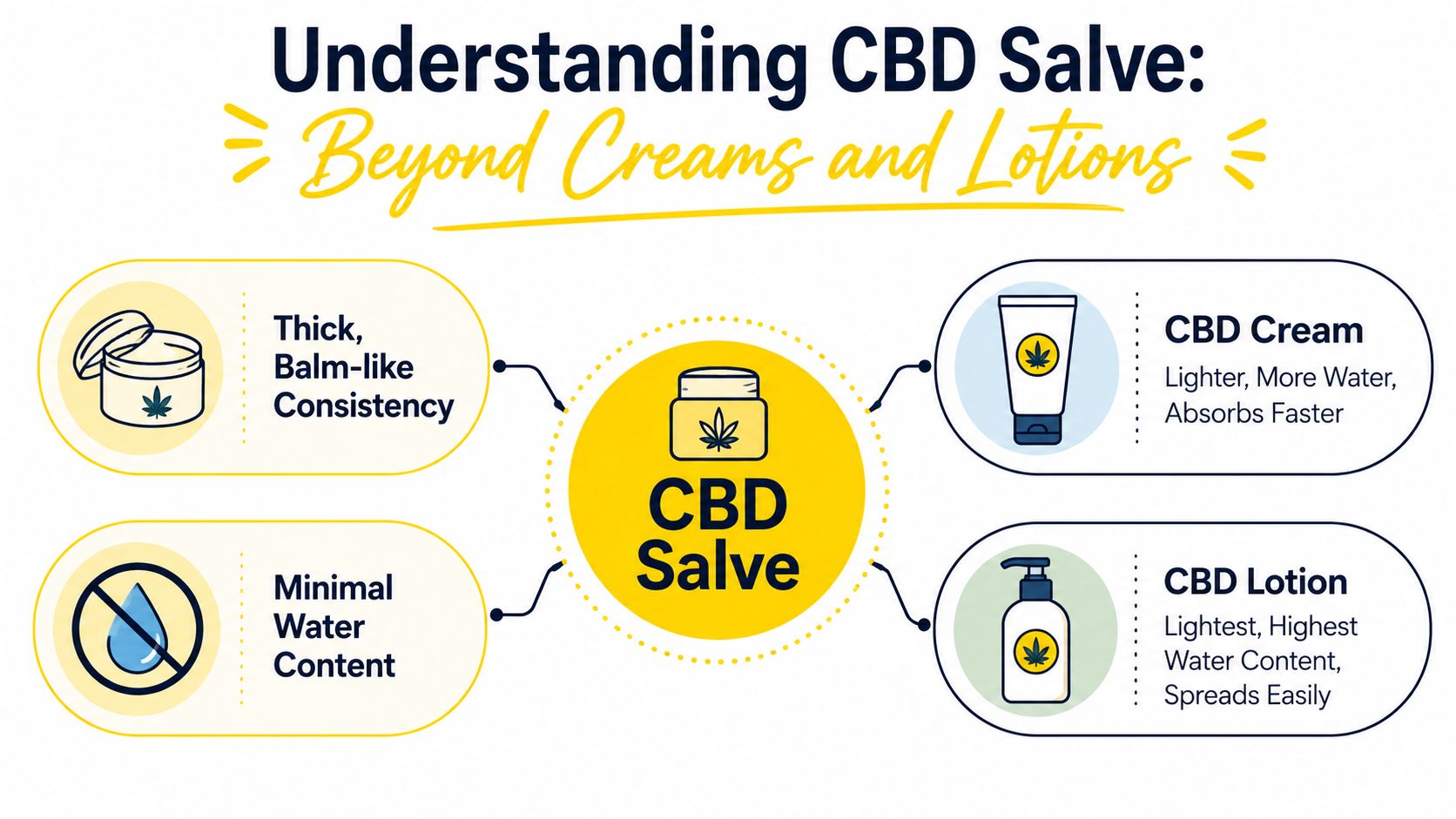
That waxy structure gives salve its signature feel. It can seem heavy if you're expecting a cosmetic cream, but that “heavier” feel is often exactly why someone prefers it for elbows, knees, hands, necks, or other smaller target areas.
Salve versus cream versus lotion
Here's the short version:
| Product | Texture | Typical use feel | Why someone picks it |
|---|---|---|---|
| CBD salve | Thick, balm-like | Stays on the skin longer | Localized application and richer feel |
| CBD cream | Medium weight | Less greasy, more cosmetic | Daily-use comfort with easier rub-in |
| CBD lotion | Lightest | Spreads quickly | Larger areas and lighter hydration |
People also get confused about whether CBD salve can get them high. In standard wellness use, that's not the point of the format. CBD itself is understood as non-intoxicating, and salves are used for external, local application rather than for a psychoactive experience.
What's actually inside the jar
Most salves have a few basic building blocks:
- Wax base: Beeswax is common because it helps the product hold shape.
- Carrier oils or butters: Coconut oil, shea butter, or similar ingredients help soften the wax and carry the extract.
- CBD extract: This may be full-spectrum, broad-spectrum, or isolate.
- Botanicals or scent ingredients: Things like lavender, arnica, eucalyptus, or essential oils may be added.
If label language around extract types feels fuzzy, this quick explainer on full-spectrum cannabis helps clarify the broader category.
A good salve should feel intentional. If it's too runny, too perfumed, or vague about what kind of extract it uses, that's worth a closer look.
How CBD Salve Interacts with Your Skin
You rub CBD salve onto a sore wrist after a long day on the Metro and wonder what happens next. The answer starts with your skin, because skin is selective. It does not readily let everything pass through because you applied a large amount.
That matters for DC shoppers comparing jars by milligrams alone. A higher number on the label can matter, but skin contact time, the salve base, and where you apply it also shape the experience.
What the salve is doing on the surface
A CBD salve usually stays close to the area where you apply it. Its waxes and oils help it sit on the skin longer than a lighter lotion, which gives the cannabinoids and other ingredients more time in contact with the upper layers.
Your outer skin layer works like a careful doorman. It screens what comes in and slows most things down. So a salve is not designed to race through your whole body. It is meant for focused, external use on a specific spot.
People often hear about the endocannabinoid system in the context of edibles or inhaled cannabis, then assume topicals are separate from that conversation. Skin has its own cannabinoid-related activity too. In plain terms, local skin tissues may respond to cannabinoids and other plant compounds placed right on that area, which helps explain why salves are used for targeted comfort rather than broad, full-body effects.
The formula also matters. A salve made with beeswax, plant butters, and carrier oils will feel and behave differently from a water-based cream. If you want a clearer sense of how extract type and processing can shape a product, this guide to CO2 extracted CBD oil gives helpful background.
Why local application feels different from other CBD formats
A standard CBD salve is a topical. You apply it where you want support, such as a knee, shoulder, or the back of the neck. The practical goal is site-specific use.
That is why salves appeal to plenty of adults in DC who have no interest in smoking, vaping, or taking tinctures.
For example, if your hands feel worn out after typing all day, you would massage a small amount into the hands and wrists themselves. If you carry tension in your neck after biking through city traffic, you would apply it to that area of skin. The jar is not meant to change your mental state. It is meant to stay part of an external routine.
A useful expectation is local, skin-level support at the place you apply it.
Where confusion usually starts
Three terms get blended together all the time, especially by first-time buyers trying to sort through wellness products in DC:
- Topical: Applied to the skin for localized use.
- Transdermal: Formulated to move ingredients through the skin for broader absorption.
- Ingestible CBD: Swallowed or taken under the tongue and processed through a different route.
A typical CBD salve belongs in the first group. That distinction helps you shop more confidently, ask better questions at the counter, and avoid buying a product that does not match what you want. In a city like Washington DC, where product categories and regulations can already feel blurry, that clarity goes a long way.
Decoding the Label of Your CBD Salve
CBD salve labels can look more complicated than they really are. Once you know what to scan for, the jar gets easier to judge.
The first thing to check is the type of CBD extract. That tells you a lot about what's inside before you even look at the scent or texture.
The three main extract types
Use this music analogy when labels start to blur together.
- CBD isolate is the solo artist. It's just CBD, with no other cannabinoids.
- Broad-spectrum CBD is the band without the lead singer. You get multiple hemp compounds, but no THC.
- Full-spectrum CBD is the full band. It includes the wider hemp profile, including less than 0.3% THC in federally legal hemp-derived products.
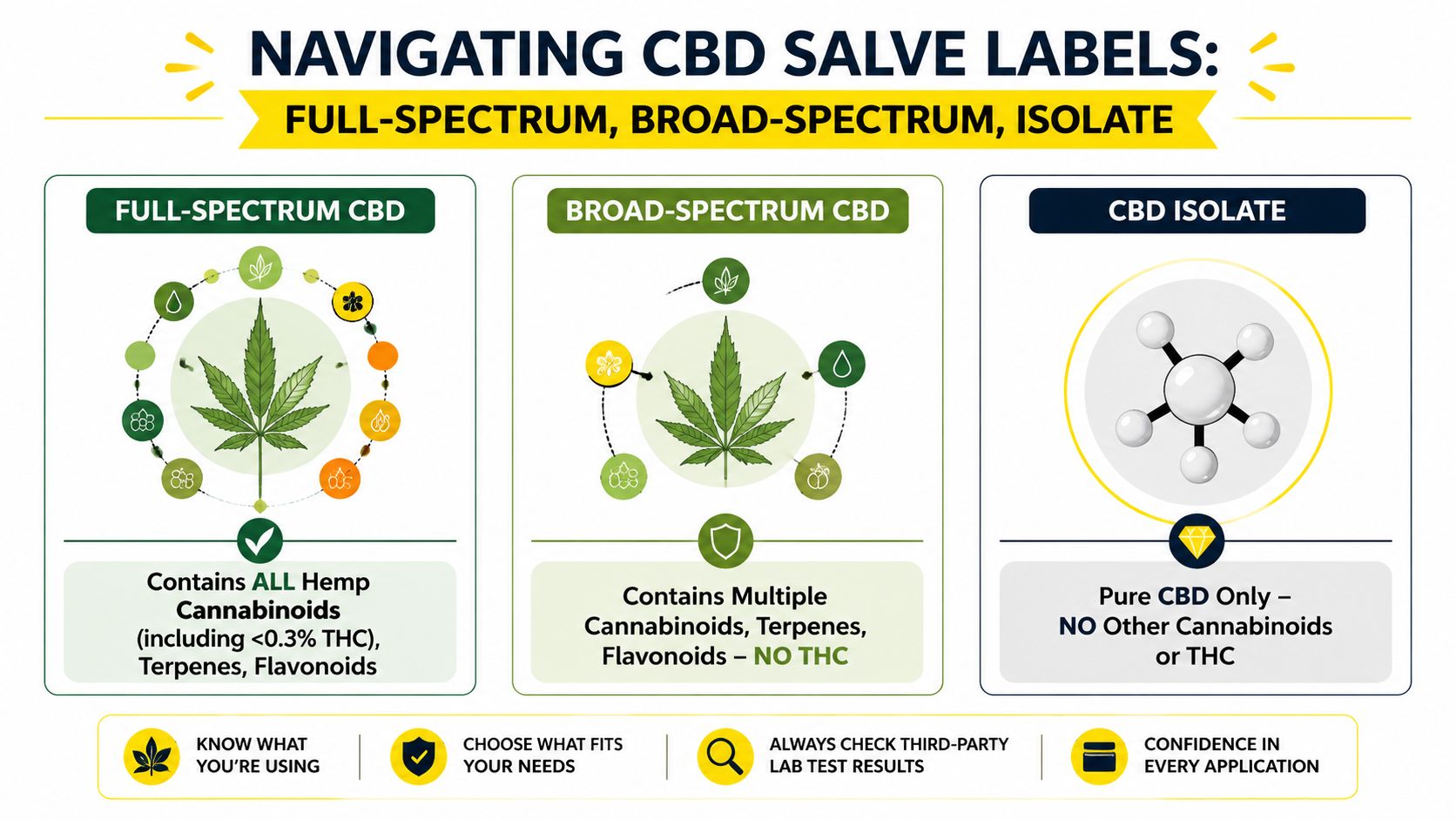
Some shoppers prefer full-spectrum because they want the broader hemp profile often associated with the “entourage effect.” Others want broad-spectrum or isolate because they'd rather avoid THC altogether. If you want a backgrounder on extraction and refinement, this article on CO2 extracted CBD oil is useful context.
Read beyond the front label
The front of the jar usually highlights the feel-good language. The full story is on the side or back.
Look for these categories:
| Label area | What to look for | Why it matters |
|---|---|---|
| Extract type | Full-spectrum, broad-spectrum, or isolate | Tells you the cannabinoid profile |
| Base ingredients | Wax, oils, butters | Shapes texture, glide, and contact time |
| Added botanicals | Lavender, arnica, menthol, eucalyptus | May affect scent and skin feel |
| Use directions | External use only, target area guidance | Helps avoid misuse |
A practical example: if you're shopping for dry knuckles in winter, you might like a richer salve with beeswax and shea butter. If you dislike strong fragrance, a heavily essential-oil-based formula may be a poor match even if the CBD content sounds appealing.
Why the ingredient list matters
Sometimes people credit the CBD for everything they feel, when the base ingredients may be doing some of the work too. A wax-rich salve can feel protective. Massage itself can feel soothing. Cooling or aromatic botanicals can create their own sensory effect.
That doesn't make the product fake. It means you should evaluate the whole formula, not just the CBD headline.
A label that screams one big CBD number but says little about the rest of the formula hasn't told you enough.
Don't skip the COA
A Certificate of Analysis, or COA, is one of the most useful quality checks in cannabis retail. It's a third-party lab report tied to a specific batch.
When you review a COA, focus on plain questions:
- Does the cannabinoid profile match the label?
- Is THC disclosed clearly?
- Does the report include contaminant testing?
- Does the batch number on the product match the document?
In a DC retail setting, this matters because shoppers often encounter products with polished branding but uneven transparency. A product that makes health-forward claims should also make verification easy.
Potential Benefits and Realistic Limits
CBD salve gets talked about most often for discomfort and skin calming. That's understandable. It's easy to apply, easy to carry, and easy to work into a daily routine.
People commonly use it on hands after cold weather, on a stiff neck after work, or on overworked legs after exercise. Others reach for it because the ritual itself helps. Taking a minute to massage one area, slow down, and focus on that spot can be part of the benefit.
Where it may feel useful
A CBD salve often fits best in situations like these:
- Localized muscle tension: A small amount rubbed into the neck, shoulders, or calves after activity.
- Dry or irritated-feeling skin: Especially when the salve base itself is rich and protective.
- Hands and joints: Areas where a thicker product tends to stay in place better than a lotion.
If you're weighing broader cannabis options for discomfort support, this comparison of CBD vs THC for pain can help frame when a non-intoxicating topical makes sense and when another format might be more appropriate.
The limit most labels gloss over
Here's the part many generic articles skip. A scientific review notes that topical CBD has to cross the stratum corneum, the skin's outer barrier, to reach deeper tissues. That makes delivery efficiency a central question, not just a dosage question, as discussed in this analysis of whether CBD salve actually works.
That changes how you should read marketing.
A stronger-looking jar doesn't automatically mean more CBD is reaching the area you care about. Formulation matters. Skin condition matters. Application site matters. Even the act of massaging in a rich balm can shape your experience.
A more grounded expectation
It helps to think of CBD salve as a supportive topical, not a guaranteed answer.
Some salves may feel effective because of the full formula. CBD, waxes, oils, massage, scent, and skin occlusion can all contribute to what the user notices.
That's not a reason to dismiss salves. It's a reason to shop with better questions:
- What's in the base?
- What type of extract is used?
- Does the product feel suited to the area I want to treat?
- Is the brand transparent about testing?
If you approach CBD salve this way, you're much less likely to get distracted by hype and much more likely to find a product that fits your actual needs.
Using CBD Salve Safely and Effectively
The first time you use a CBD salve, keep it simple. You don't need a complicated routine. You need a clean area of skin, a small amount of product, and a little patience.
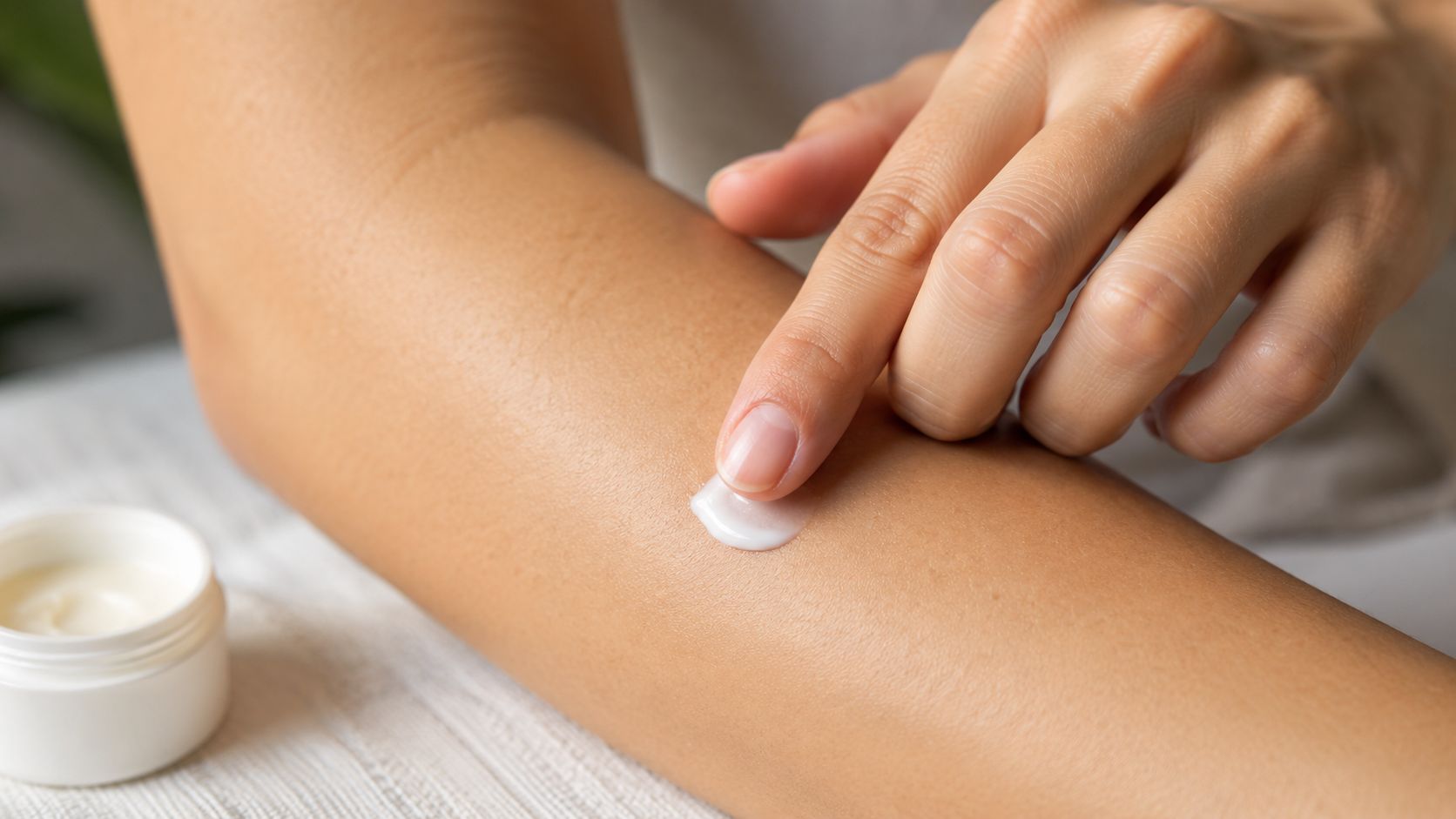
A good first-use routine
Start with this checklist:
- Patch test first. Rub a small amount on a limited area if you have sensitive skin or react easily to botanicals.
- Use a small amount. A dime-sized amount is a practical starting point for a focused area.
- Apply to clean, dry skin. That helps the product make direct contact instead of sitting on sweat or residue.
- Massage it in. Gentle rubbing helps spread the salve evenly across the target area.
- Wait and assess. Give it time before deciding whether you need more.
A lot of people overapply because they expect instant drama. With salves, subtle is normal.
What to expect after application
Users often notice effects within 15 to 20 minutes, and the perceived duration may last up to 6 hours, according to this guide to using CBD salve. That timeframe makes sense for a wax-based product designed to maximize contact time on the skin.
If you want more detail on how topicals differ across product formats, this explainer on cannabis topical cream can help you compare salves with lighter alternatives.
Where to apply and where not to
Good target areas often include:
- Neck and shoulders
- Hands and knuckles
- Knees, elbows, and calves
- Temples, with extra care to avoid the eyes
Avoid applying salve to open wounds, the eyes, or obviously broken skin unless you've spoken with a qualified healthcare professional about the specific product and situation.
Start low, go slow, and pay attention to your skin, not just the label.
If something stings, reddens, or feels off, wash it off and stop using it. Sometimes the issue is CBD. Sometimes it's the peppermint, lavender, eucalyptus, or another ingredient in the formula.
How to Buy Quality CBD Salve in Washington DC
You are standing in a DC shop or scrolling a delivery menu, and two CBD salves look nearly the same. One gives you clear batch testing, ingredient details, and a staff member who can explain what you are buying. The other gives you soft wellness language and a vague hemp claim. That difference matters more than the label design.
CBD rules can feel confusing in Washington, DC, because shoppers often see hemp products, cannabis products, online sellers, and local dispensary menus all mixed together. A simple way to stay grounded is to buy from businesses that explain what is in the jar, how to read the testing, and what kind of topical you are getting.
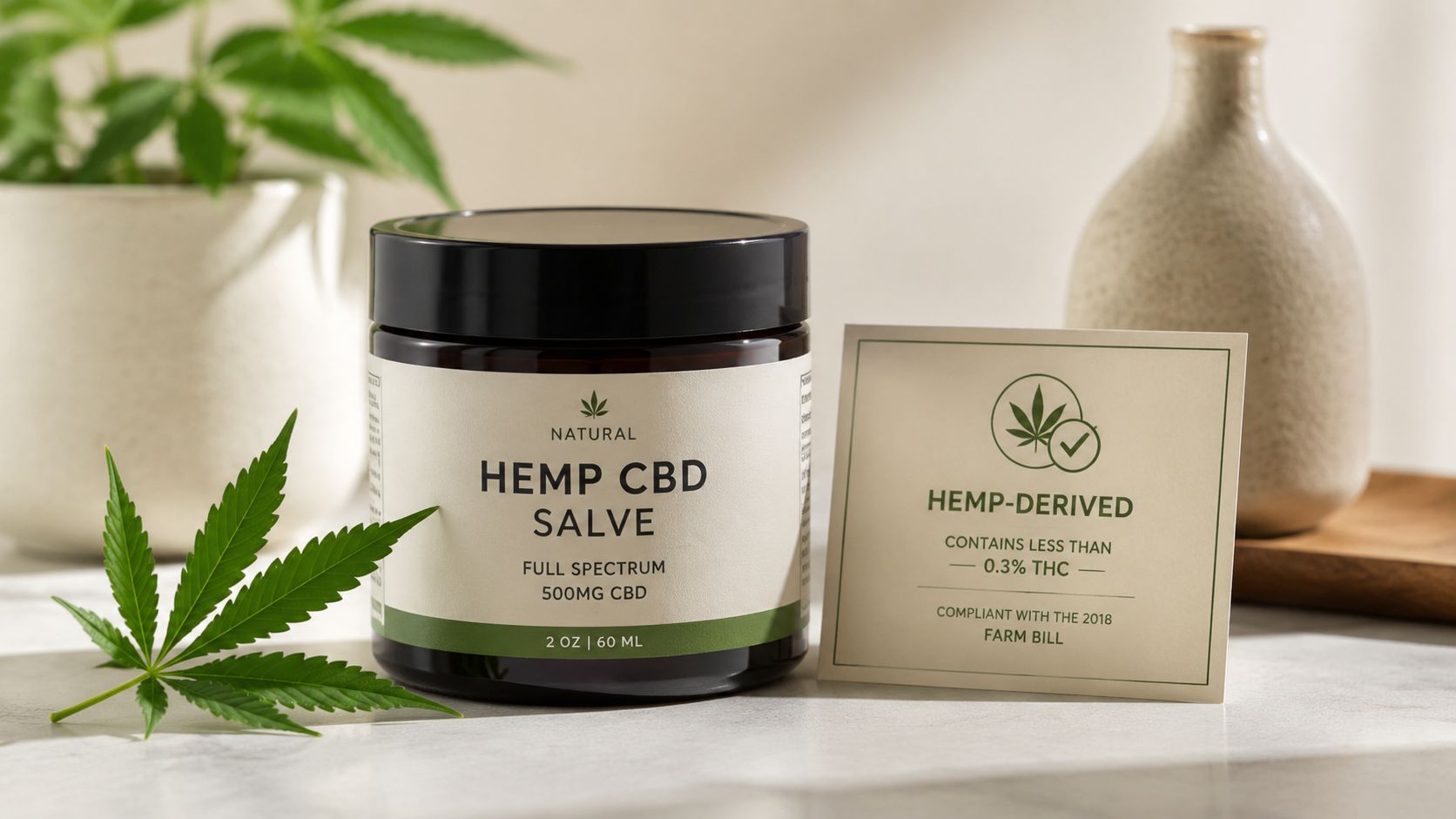
For DC residents, the safest shopping habit is simple. Treat a salve like you would treat skincare for sensitive skin. You want to know the active ingredient, the base oils, the scenting ingredients, and whether the product matches your goal.
Here is a practical checklist for buying locally:
- Confirm the CBD type. Full-spectrum, broad-spectrum, and isolate can feel similar on the shelf, but they are not the same formula.
- Ask for a batch-specific COA. A trustworthy seller should be able to show testing that matches the product in front of you.
- Read the inactive ingredients. Beeswax, shea butter, coconut oil, menthol, and essential oils all change how a salve feels on the skin.
- Check the jar size against the CBD amount. A large jar with a small amount of CBD may sound strong but feel underpowered in daily use.
- Buy for the body area you care about. A salve for hands, post-workout legs, or general dry spots may use very different supporting ingredients.
If you want more context on shopping through legitimate local channels, this guide on where to buy weed in Washington DC helps explain what to look for before you place an order.
Local access also matters. A dispensary like Mr. Nice Guys DC can be useful because you are not guessing from a random marketplace listing. You can compare products in a real retail setting, ask how one topical differs from another, and choose ordering options that fit your routine, including pickup, curbside, or delivery.
A quick video can also help if you're newer to the category.
The goal is not to find the fanciest jar. The goal is to buy a salve you understand and trust. If a seller cannot explain the extract type, the ingredients, or the testing, choose a different product.
If you're looking for a CBD salve or want help comparing topicals, Mr. Nice Guys DC offers a straightforward place to browse products, ask questions, and choose a format that fits your routine.
Mr Nice Guys DC
At Mr. Nice Guys DC, we’re more than just a cannabis delivery service — we’re passionate advocates for quality, convenience, and community. With years of experience in the cannabis industry, our team is dedicated to educating and empowering customers across Washington, D.C. Whether you're a seasoned user or just starting your cannabis journey, our blog delivers trusted tips, product insights, and the latest updates from the world of weed. Stay informed, stay elevated.
