
Must Be 21 To Enter
By entering this site you are agreeing that you are at least 21 Years of Age or older.
I AM 21 OR OLDERBlue Dream Flower: The Complete Patient's Guide
.svg)

.png)
You're standing at a dispensary menu, scanning familiar names, when Blue Dream flower appears again. One batch promises a bright daytime experience, while a friend says the same strain left them calm and heavy. Both descriptions can be honest. The name identifies a genetic tradition, but it doesn't guarantee an identical chemical profile in every jar.
That distinction matters for medical cannabis patients in Washington, DC. Blue Dream remains a recognizable, sativa-leaning classic, yet the most useful buying decision often comes from the batch-specific lab report, not the strain label alone. THC level, CBD content, terpene balance, harvest timing, curing, and storage can all shape what you notice.
Understanding Blue Dream Flower
A first-time patient might choose Blue Dream because the menu describes it as a daytime hybrid. An experienced patient might choose it because they already know the familiar berry and pine aroma. Both shoppers are using the strain's reputation as a shortcut, but that shortcut leaves out the variable that matters most in practice: which Blue Dream batch is in front of you.
Blue Dream is widely described as a sativa-dominant hybrid created by crossing Blueberry with Haze. Commercial strain references commonly place its THC around 17% to 24%, with CBD near 0% to 2% according to Leafly's Blue Dream strain profile. That combination helps explain its reputation for a noticeable psychoactive effect without the CBD-forward character associated with lower-intoxication products.
The usual experience is described as a mental lift paired with physical ease. Some patients use it during the day when they want to remain engaged, while others find the body relaxation more prominent and prefer it later. Those are not contradictory outcomes. A Blue Dream flower sample with a brighter terpene expression and moderate THC can feel different from one with heavier myrcene character, stronger THC, or older storage.
Practical rule: Treat “daytime strain” as a starting description, not a promise.
For a new patient, the sensible approach is to ask three questions before buying:
- What is the THC result? A higher result may feel more intense, especially for someone with limited tolerance.
- Is CBD meaningfully present? Blue Dream is generally THC-dominant, so patients seeking CBD balance may need another product category.
- Does the batch have terpene data? The aroma compounds can help you compare a bright, pine-forward sample with a sweeter, earthier one.
Blue Dream's popularity comes from its recognizable lineage and balanced reputation, but consistency within the name isn't guaranteed. Your own notes, the product's certificate of analysis, and careful dosing will tell you more than the label by itself.
The History and Genetics of Blue Dream
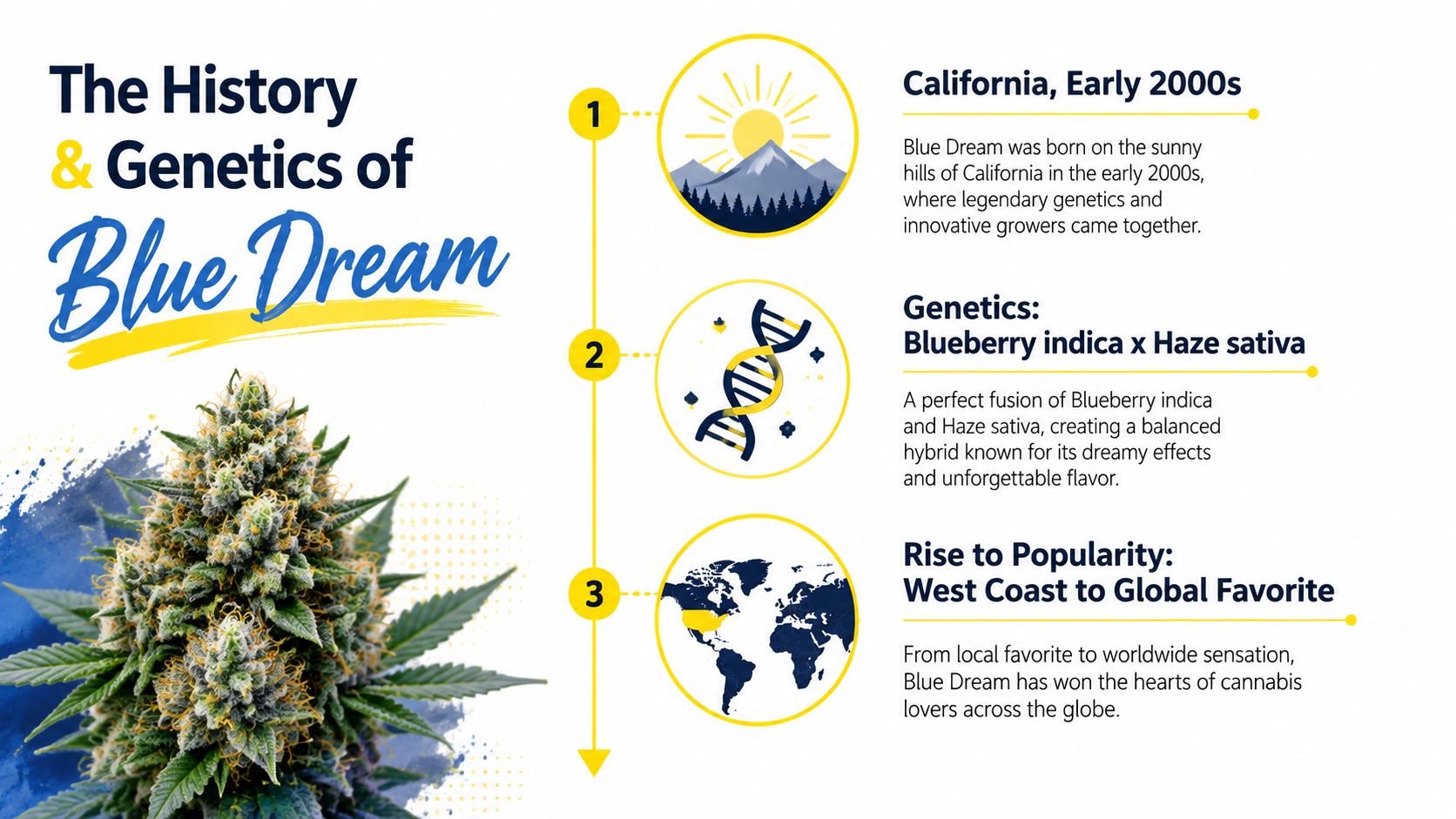
If one dispensary batch smells like berries and another like pine, the name Blue Dream can make the difference confusing. Its history helps explain why. The cultivar emerged from California's medical cannabis community, where clone-based genetics moved through local networks before reaching broader markets. Accounts place its origin in Santa Cruz or the wider California West Coast scene, with a first known appearance commonly dated to around 2003 and wider movement into U.S. seed and clone circulation by about 2008, according to this Blue Dream strain history.
Breeding records generally list Blueberry × Haze as the parentage. Some accounts identify the Haze parent more specifically as Super Silver Haze. Clone-only cannabis lines can carry overlapping breeder claims and naming disputes, so the label describes a family resemblance rather than a guarantee of identical chemistry. Two flowers sold as Blue Dream may differ in aroma, structure, and subjective effects because growers preserve or select different expressions.
Why the parents matter
Blueberry is associated with sweeter, fruitier traits. Haze is associated with sharper pine, herbal notes, and a more active, sativa-leaning character. Blue Dream became recognizable through the combination, with neither side defining every batch on its own.
That lineage gives you a starting expectation, not a shopping decision. One grower may select a phenotype with pronounced berry sweetness. Another may cultivate a cut with stronger pine or herbal notes. Harvest timing, drying, curing, and storage can shift the final aroma and experience further.
A relatively recent classic
Blueberry is commonly linked to DJ Short and earlier cannabis breeding history, while Super Silver Haze is described as a later release. Blue Dream brings those established lines together in a comparatively modern cultivar, moving from California medical circles into broader commercial markets.
For patients, the practical lesson is clear: genetic identity is a range of possible expressions. Compare the batch's certificate of analysis, terpene results, harvest or package information, and sensory details. A verified lab profile is more useful than assuming every product carrying the name will feel the same.
The Cannabinoid and Terpene Profile
A Blue Dream label can look familiar while the flower inside behaves differently from another batch. Start by separating cannabinoids, such as THC and CBD, from terpenes, the aromatic compounds that shape scent, flavor, and part of the experience.
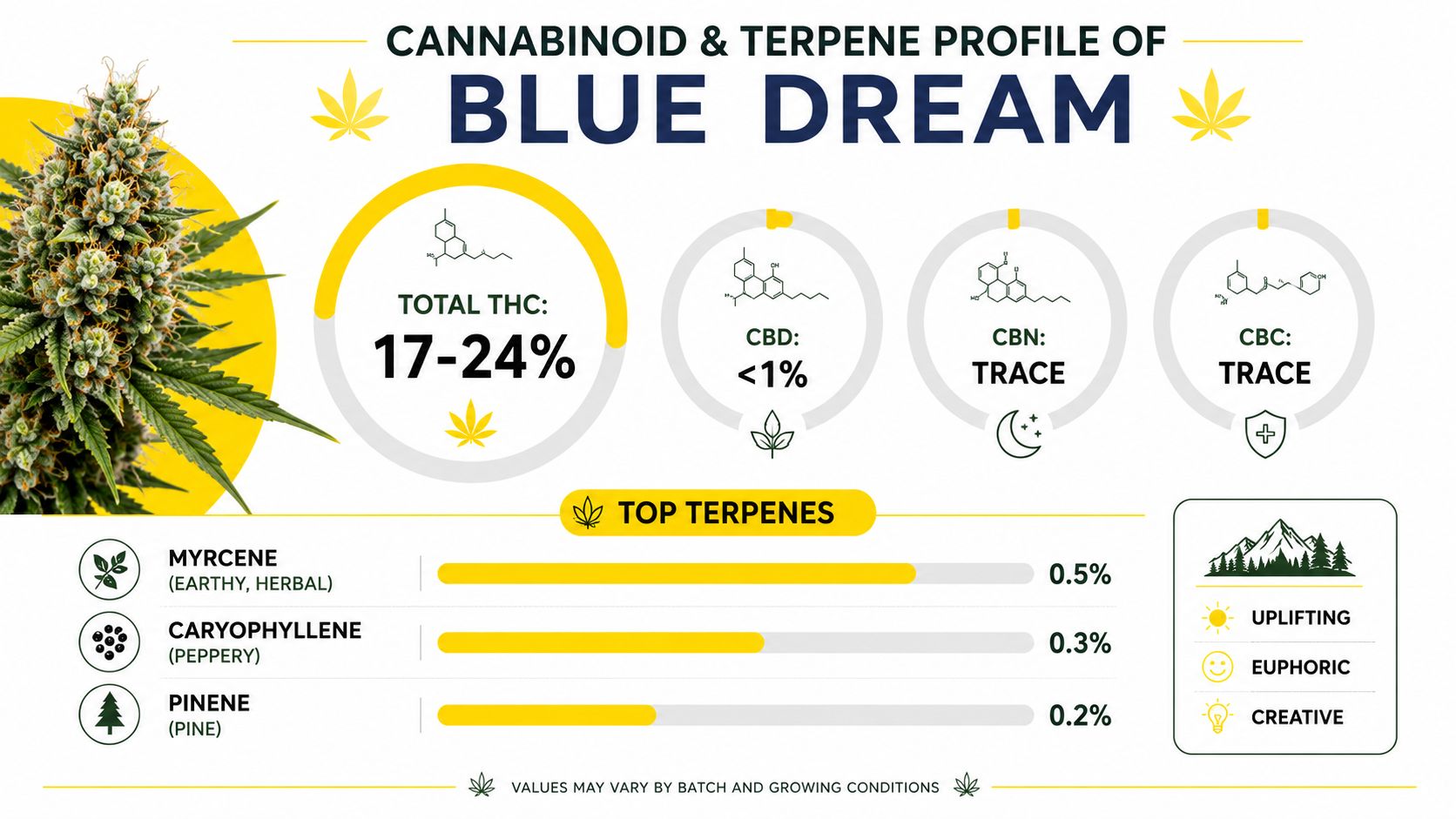
Commercial descriptions often place Blue Dream near 17% to 24% THC, with CBD usually below 1%. Other references describe flower clustering near 18% to 22% THC, while individual samples have reached 26% to 29%, depending on cultivation conditions. Because the Leafly reference was used earlier, these ranges should be treated as general descriptions rather than a guarantee for a particular jar. The certificate of analysis for the batch you are considering carries more practical weight.
A separate review found Blue Dream samples ranging from 9.8% to 24.3% THC, with an average near 19.15%. CBD averaged about 0.09%, according to Cannigma's Blue Dream analysis. The broad spread works like different recipes sharing one name: the label may match, but the proportions can change the result.
The three compounds shoppers see most often
- Myrcene brings earthy, herbal, and fruity notes and is commonly associated with body relaxation. The Cannigma analysis places one reported Blue Dream profile near 0.5% to 0.7% by flower weight.
- Pinene adds a sharper pine aroma and is associated with a clearer, more alert character. The same analysis reports roughly 0.2% to 0.4%.
- Caryophyllene contributes peppery spice and depth, with reported levels around 0.2% to 0.3%, also from that analysis.
These compounds help explain why some Blue Dream batches feel mentally lifted while retaining physical ease. Terpene associations are useful clues, not medical guarantees, and laboratory results cannot predict every patient's response.
For a plain-language explanation of how THC, CBD, and other cannabinoids differ, review this cannabinoid breakdown for cannabis patients. Compare the batch's actual THC and CBD results with its terpene list, harvest or package information, and storage condition. Similar THC levels can still produce different impressions when the aromatic profile has faded or shifted.
Effects and Medical Benefits
Patients commonly describe Blue Dream as combining cerebral lift with moderate physical relaxation. That balance is the reason many people associate it with daytime use, but “daytime” doesn't mean universally energizing. A patient who is sensitive to THC may experience mental intensity, distraction, or unwanted unease instead of productive focus.
The strain's low CBD content matters here. Blue Dream's appeal comes primarily from its THC and terpene profile, not from a substantial CBD buffer. Patients looking for lower-intensity effects or a CBD-balanced option may want to compare other products rather than relying on the Blue Dream name alone. This guide to choosing cannabis for sleep, pain, and anxiety can help frame that decision around the symptom and time of day.
Match the profile to the situation
A patient managing daytime stress might prefer a batch with moderate THC and noticeable pinene alongside myrcene. The goal isn't to chase the highest percentage. It's to find a sample whose reported chemistry seems less likely to overwhelm their tolerance.
Someone dealing with mild discomfort may appreciate the body ease associated with the myrcene and caryophyllene profile. That doesn't make Blue Dream a treatment guarantee, and patients should discuss ongoing symptoms and cannabis use with a qualified healthcare professional.
Appetite is another reason some patients explore THC-dominant flower. However, a patient who needs to remain fully functional for work, driving, caregiving, or other demanding tasks should remember that psychoactive effects can impair judgment and coordination.
Two realistic patient experiences
A first-time patient takes a larger inhalation because the flower smells mild. The THC effect arrives quickly, feels stronger than expected, and turns a supposed daytime session into a period of discomfort. That patient may do better with a much smaller amount and a batch with moderate lab results.
An experienced patient buys a fresh, aromatic sample with a clear terpene report. They use a small amount during the afternoon, notice a gentle mental lift, and reserve the rest for future sessions. Their experience doesn't prove Blue Dream works for everyone. It shows why dose, batch data, tolerance, and context matter together.
Dosing and Consumption for Patients
Blue Dream flower gives you more control than many pre-measured formats because you can adjust the amount inhaled. That control only helps if you use it deliberately. Start with a small amount, wait long enough to judge the effect, and avoid adding more just because the first moment feels subtle.
Choose the format before the dose
With smoked or vaporized flower, effects are usually noticed relatively soon, making it easier to stop after a small trial. Vaporizing may preserve more of the flower's aromatic character, while smoking introduces combustion and can feel harsher for some patients. Neither method removes the need to account for THC potency.
Edibles work differently. They take longer to begin and can last much longer, so a patient who redoses too quickly may consume more than intended. Use the product's labeled serving guidance and keep a written record of the time, amount, and effects. This edible dosage guide provides a separate framework for thinking through edible servings.
Start low and go slow: The right amount is the smallest amount that supports your goal without creating unwanted impairment.
A simple first-session method
- Read the label first. Check the batch THC, CBD, terpene information, harvest or package details, and serving guidance.
- Use a small trial amount. Don't judge the flower by a friend's tolerance or by the strain's reputation.
- Pause and observe. Notice mental clarity, physical relaxation, mood, heart sensations, and any anxiety.
- Record the result. Write down whether the experience felt bright, neutral, calming, or too intense.
- Adjust only at a later session. If the first amount was comfortable but insufficient, make a modest change next time rather than stacking doses immediately.
An experienced patient may already know their preferred inhalation size, but a new Blue Dream batch still deserves caution. A higher-THC flower or a more intense terpene expression can change the experience even when the label looks familiar.
Avoid driving or combining cannabis with alcohol or other intoxicating substances. Keep flower and edibles away from children and pets, and ask a healthcare professional about interactions if you take prescription medications or manage a serious condition.
Spotting Quality Blue Dream and Storing It Right
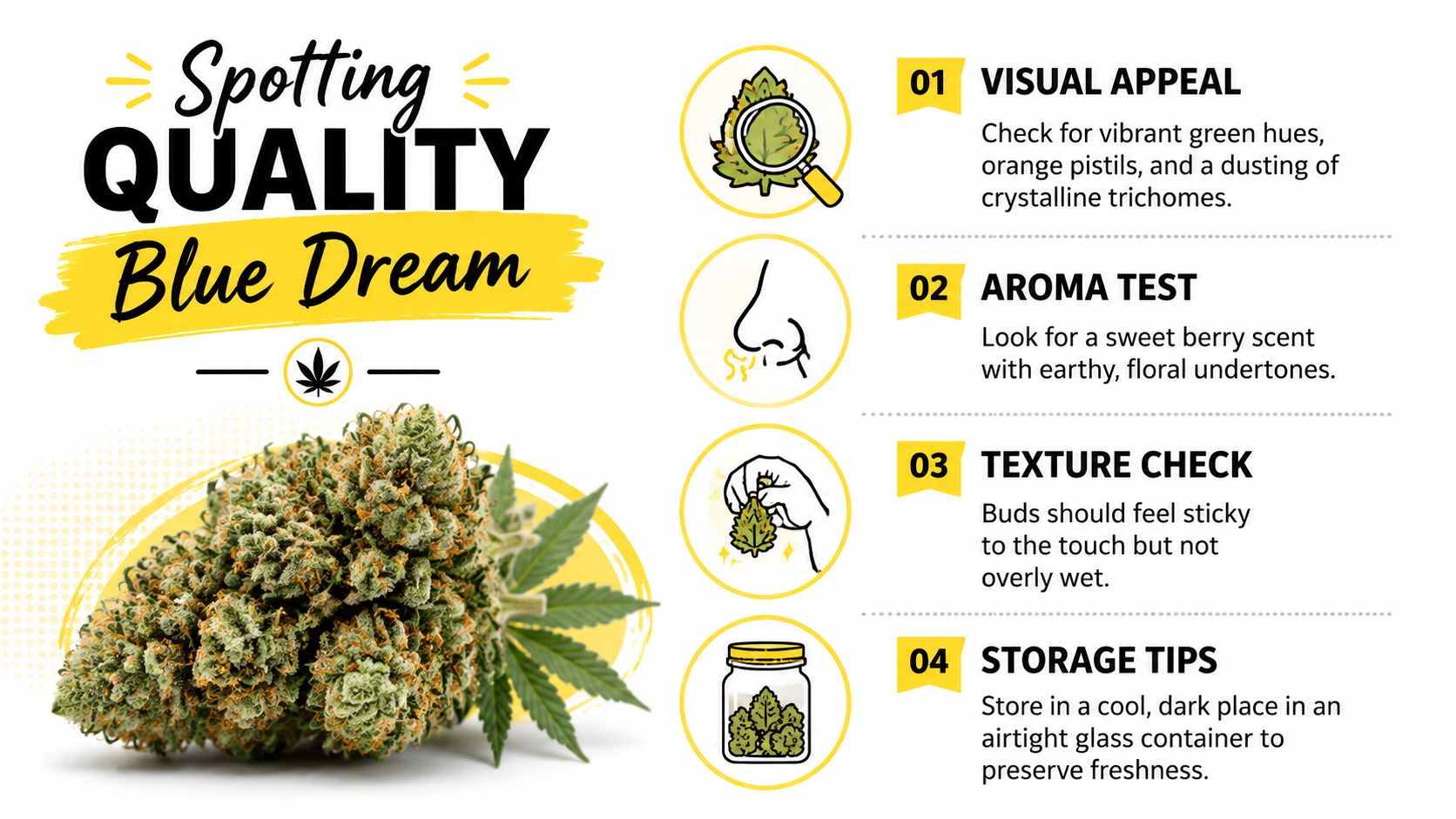
Quality isn't determined by color alone. A well-presented Blue Dream sample should make sense as a complete package, with intact aroma, visible resin, a suitable texture, and a clear product history. No single visual feature can confirm potency or safety, so use appearance as a screening tool and laboratory information as the stronger guide.
Compare the flower in front of you
| Check | A promising sample | A warning sign |
|---|---|---|
| Appearance | Vibrant green hues, orange pistils, and visible crystalline trichomes | Dull color, excessive dryness, or visible contamination |
| Aroma | Sweet berry notes with earthy, floral, or pine undertones | Flat, stale, chemical, or musty odor |
| Texture | Sticky and resinous without feeling wet | Brittle dust or damp material that doesn't separate cleanly |
| Documentation | A batch-specific laboratory report and clear package details | Only a strain name with no useful batch information |
The aroma test is especially useful for Blue Dream because its identity is strongly tied to its berry, herbal, and pine character. A faint smell doesn't automatically mean poor flower, but it may indicate age, storage problems, or terpene loss.
Harvest timing and curing also shape the result. A carefully dried and cured sample may retain a fuller scent and smoother texture, while rushed processing can leave flower harsh or uneven. Ask the budtender when the product was packaged and whether a current lab report is available.
Store your flower in an airtight glass container in a cool, dark place. Keep it away from heat, sunlight, excess air, and unnecessary handling. For more preservation guidance, use this flower freshness guide. Don't leave the container open while you browse, and don't store flower beside strongly scented household products.
Finding Blue Dream at Mr. Nice Guys DC
A patient looking for Blue Dream in Washington, DC can begin with the menu, then ask the same practical questions they'd ask about any batch: What are the current THC and CBD results? Is terpene information available? When was it packaged, and is the flower offered as loose flower, a pre-roll, or another format?
Mr. Nice Guys DC lists Blue Dream among its cannabis offerings and provides options that can include flower, pre-rolls, and vapes, with ordering through pickup, curbside, or delivery channels. Patients can review the current selection rather than assuming every visit will produce the same expression of the strain.
Make the conversation specific
Instead of asking only, “Do you have Blue Dream?”, try:
- “Which batch has the clearest lab results?” This directs the conversation toward the product in stock.
- “Does this batch list terpenes?” You can compare myrcene, pinene, and caryophyllene rather than relying on a generic effect label.
- “Would this be better for a first trial as flower or a pre-roll?” A staff member can explain the format without assuming your tolerance.
- “What else has a similar daytime profile?” A comparison gives you an alternative if the current Blue Dream batch isn't a fit.
You can also browse the dispensary's current strain selection before contacting the team. That helps you compare available products, formats, and batch information from home. For medical patients and adults 21+, a clear conversation about tolerance, intended use, and timing is more useful than choosing by name alone.
Blue Dream Flower Frequently Asked Questions
Why does Blue Dream feel different from one purchase to another?
THC can vary substantially between samples, and CBD is usually minimal. Phenotype, harvest timing, curing, storage, and terpene balance can shift a bright, clear profile toward something sweeter, earthier, or more calming.
Is Blue Dream good for anxiety?
Some patients find its balance comfortable, while others may feel increased unease from THC. Because CBD is generally low, start with a small amount and discuss anxiety, medications, and personal risks with a healthcare professional.
Is it suitable for beginners?
It can be approachable for some beginners, but its THC-dominant profile still calls for caution. Choose a batch with clear lab data, use a small amount, and avoid driving or mixing it with alcohol.
What should I compare before buying?
Compare THC, CBD, terpene results, package date, aroma, and format. A specific batch tells you more than the Blue Dream label alone.
Mr. Nice Guys DC offers Blue Dream flower and related formats, with menu-based ordering and pickup, curbside, and delivery options for patients and adults 21+ in the DC area. Visit Mr. Nice Guys DC to review current availability and ask the team about batch-specific lab data before choosing your next Blue Dream product.
Mr Nice Guys DC
At Mr. Nice Guys DC, we’re more than just a cannabis delivery service — we’re passionate advocates for quality, convenience, and community. With years of experience in the cannabis industry, our team is dedicated to educating and empowering customers across Washington, D.C. Whether you're a seasoned user or just starting your cannabis journey, our blog delivers trusted tips, product insights, and the latest updates from the world of weed. Stay informed, stay elevated.
