
Must Be 21 To Enter
By entering this site you are agreeing that you are at least 21 Years of Age or older.
I AM 21 OR OLDERBest weed for chronic pain: A 2026 guide to relief and strains
.svg)

.png)
When you're dealing with chronic pain, finding something that actually works is everything. So, what’s the best weed for chronic pain? The real answer is, it’s different for everyone. But a good place to start is with the right mix of cannabinoids like THC and CBD, plus the aromatic compounds known as terpenes.
Your Guide to Managing Chronic Pain with Cannabis
Living with chronic pain feels like a constant fight. It gets in the way of work, sleep, and just enjoying your day. For a lot of people tired of traditional pain management, medical cannabis has become a serious option. This guide is here to cut through the noise and give you clear, practical info so you can make choices that feel right.
This isn't about just guessing and hoping for the best. It's about understanding why and how cannabis can provide relief. We'll get into how different kinds of pain—like nerve, inflammatory, or muscle pain—respond to different cannabis profiles. Getting this part down is the first step toward finding your own relief.
Why So Many Patients Are Turning to Cannabis
The move toward cannabis for pain isn't just a trend; there’s a lot of patient experience and growing evidence behind it. People are looking for ways to improve their quality of life without the side effects that can come with some prescription medications.
For example, a patient with fibromyalgia might find that a low-dose edible not only helps with their widespread pain but also reduces the anxiety that often accompanies their condition, allowing them to engage more fully in their daily activities. It also helps with the sleepless nights that often come with chronic conditions. The goal is functional relief—handling the pain while still being able to get on with your life.
This isn't just talk. A study in the journal Pharmacy found that over 80% of chronic pain patients who used medical cannabis for at least a year called it an effective treatment. They also reported needing less healthcare, including fewer trips to urgent care.
A 2023 AMA report pointed out that one in three chronic pain sufferers now uses cannabis, many as a direct substitute for opioids. That’s a huge shift in how both patients and doctors are thinking about its potential.
Building Your Foundation of Knowledge
Before you start looking at specific strains, it's good to get the basics down. Think of your body as having its own built-in regulator—the endocannabinoid system (ECS)—which helps manage things like pain, mood, and inflammation. Cannabis compounds like THC and CBD are like keys that fit into this system, helping to bring things back into balance.
To make this a little clearer, we've put together a quick reference table.
Quick Guide to Cannabis Compounds for Pain
This table breaks down the main players in cannabis and what they do for pain relief, giving you a fast way to see what might work best for your needs.
| Compound | Primary Role in Pain Relief | Best For... | Practical Example |
|---|---|---|---|
| THC | Directly blocks pain signals in the brain, creating powerful analgesic effects. | Neuropathic (nerve) pain, severe pain, and pain-related insomnia. | Using a THC-dominant vape before bed to manage shooting leg pain and get a full night's sleep. |
| CBD | Reduces inflammation throughout the body and calms overactive pain signals without a "high." | Inflammatory pain (like arthritis), muscle soreness, and general wellness. | Taking a daily CBD tincture to reduce morning stiffness and swelling from rheumatoid arthritis. |
| Terpenes | Provide unique aromas and work with THC/CBD to create specific effects (e.g., sedation or focus). | Customizing relief; Myrcene for relaxation, Caryophyllene for anti-inflammatory effects. | Choosing a strain high in Myrcene, like Granddaddy Purple, to help relax tight back muscles after a long day. |
Understanding these compounds and their roles is your starting point. Here's a quick rundown:
- THC (Tetrahydrocannabinol) is the heavy hitter. It directly impacts how your brain perceives pain, offering strong relief.
- CBD (Cannabidiol) is all about calming things down. It works to reduce inflammation and helps manage pain signals without any psychoactive effects.
- Terpenes are the aromatic compounds that give each strain its unique smell and flavor. More importantly, they fine-tune the effects, helping you feel relaxed, focused, or uplifted.
Getting a handle on these components is the first move toward making a smart choice. If you're new to all this, learning the fundamentals can make your first dispensary visit way less overwhelming. You might want to check out our guide on what to know before your first visit to Mr. Nice Guys DC.
How Cannabis Actually Works for Pain Relief
To find the right cannabis for your chronic pain, you first need to know what’s happening under the hood. Your body has its own built-in pain management system called the endocannabinoid system (ECS). Think of it as a massive network of tiny locks that regulate everything from pain and inflammation to your mood and sleep.
When everything is running smoothly, you feel great. But an injury or chronic condition can throw that system out of balance, letting pain signals run wild. That's where cannabis steps in. Its compounds, called cannabinoids, act like keys designed to fit the ECS locks, helping restore that balance and turn the volume down on your pain.
THC and CBD: The Two Main Players
The two most important keys you’ll hear about are THC (tetrahydrocannabinol) and CBD (cannabidiol). They both go after pain, but they take completely different routes to get there. Knowing the difference is a game-changer for finding relief that actually works for you. For a deeper look, check out our guide comparing CBD vs. THC for pain relief.
THC is your direct line to relief. It binds straight to pain receptors in your brain and nervous system, essentially turning the lock to block pain signals before they can register.
- Practical Example: If you’re fighting intense, sharp nerve pain from sciatica, a THC-heavy strain can deliver potent and fast relief by changing how you perceive the pain. It's often the source of the "high," which can also help you mentally disconnect from the discomfort.
CBD is the master regulator. It doesn't create a high and works more behind the scenes. Think of it as helping your own ECS work better, all while calming inflammation throughout the body and soothing overactive nerves.
- Practical Example: For someone with arthritis, where the pain is driven by inflammation, a daily CBD-forward tincture can reduce swelling and stiffness over time. It provides foundational relief without the psychoactive effects, making it ideal for daytime use.
The Entourage Effect: Teamwork Makes the Dream Work
While THC and CBD get all the headlines, they’re not working alone. Cannabis is packed with hundreds of other compounds, including aromatic molecules called terpenes. These are what give a strain like OG Kush its earthy scent or Lemon Haze its citrusy kick. But they do a lot more than just smell good.
The entourage effect is the idea that all these compounds work together, creating a result that’s much greater than any single one could achieve on its own.
Think of a great basketball team. THC is the star shooter scoring all the points, and CBD is the lockdown defender. But the terpenes are the rest of the team—the point guard setting up plays, the center grabbing rebounds. Together, they’re unstoppable. For instance, a strain with THC, CBD, and the terpene Limonene might not just relieve pain but also lift your mood, which is a huge benefit when pain causes depression.
Some of the key terpenes for pain management include:
- Myrcene: Known for its relaxing and muscle-soothing effects. Example: Found in strains like Blue Dream, it can enhance the sedative effects of THC, making it great for pain-related insomnia.
- Caryophyllene: The only terpene that also acts like a cannabinoid, binding directly to pain receptors to fight inflammation. Example: A topical cream with Caryophyllene can be applied directly to a sore joint for localized, non-psychoactive relief.
- Limonene: Often linked to an uplifted mood, which can be a huge help when dealing with the mental drag of chronic pain. Example: Vaping a strain high in Limonene, like Durban Poison, could help you feel more positive and energetic despite your pain.
This is exactly why so many people find that whole flower or full-spectrum products work better than just isolated THC or CBD. When you get the whole team working together, the relief is more complete and nuanced. The science backs this up, too. A review of studies on chronic musculoskeletal pain found that patients using THC or THC/CBD combinations saw their pain drop by over 55.4%—blowing placebos out of the water.
Matching Strains to Your Specific Type of Pain
Saying you have "chronic pain" is a lot like saying you drive a "car." It’s a start, but it doesn’t tell you much. Are we talking about a zippy two-seater for sharp turns, or a heavy-duty truck for a massive haul? The best weed for chronic pain works the same way—it all comes down to whether you're fighting off sharp nerve stabs, dull muscle aches, or constant inflammation.
Choosing the right strain isn't a guessing game. It’s about matching the cannabis profile to what your body is telling you. You wouldn't use a sledgehammer to hang a picture frame, right? So, you shouldn't reach for a super-buzzy sativa when your pain is screaming for you to get some rest. The real key is figuring out what your pain needs and grabbing the right tool for that specific job.
This simple chart can help you make that first call, guiding you toward high-potency relief or a gentler option based on your symptoms.

As you can see, the first step is always to check in with yourself: how bad is the pain, and how much of a "high" are you comfortable with?
For Neuropathic and Nerve Pain
Nerve pain is a beast all its own. That sharp, shooting, or burning feeling from nerve damage is notoriously tough to handle. It's like your body's wiring has gone haywire, sending out painful SOS signals for no good reason. For this kind of tricky pain, a balanced attack often works best.
Strains with a good mix of THC and CBD, like Harlequin or ACDC, are what people often reach for. The THC gets to work interrupting those pain signals firing off in your brain, while the CBD steps in to calm down inflammation and soothe the overactive nerves.
This one-two punch gives you real pain relief without the super-intense high you might get from a THC-only strain. It makes it a fantastic choice if you need to stay functional during the day. It’s about turning down the volume on the pain, not just trying to numb everything out.
Practical Example: Think of someone with sciatica who gets those electric jolts down their leg. A balanced 1:1 THC:CBD vape pen can offer quick relief during a flare-up, letting them stay clear-headed and on their feet for a work meeting.
For Inflammatory Pain
If your pain comes from inflammation—think arthritis or an autoimmune issue—your main goal should be to put out that underlying fire. This pain usually feels like a constant, dull ache paired with swelling and stiffness. For this, high-CBD strains are the real MVPs.
Strains like Charlotte's Web are famous for their powerful anti-inflammatory punch with almost zero psychoactivity. Indica-dominant hybrids that are high in the terpene caryophyllene are also a great bet, since that terpene is known to work directly with your body’s pain receptors to fight inflammation.
Don't think of this as a quick fix. It's more like a daily supplement that helps your body get back in balance over time. For example, using a high-CBD tincture consistently every morning can mean less stiffness in your hands and better mobility throughout the day, allowing you to grip a coffee cup without wincing.
For Musculoskeletal and Aching Pain
When you’re stuck with that deep, heavy ache in your muscles or back, you usually need something with a little more oomph to really get comfortable and relax. This is the kind of nagging pain that demands strong relief.
This is where potent, THC-heavy indicas and indica-dominant hybrids come into play. Strains like OG Kush and Wedding Cake are famous for delivering a deep, body-focused relaxation that feels like it’s melting away muscle knots and tension. You can check out our deep dive on the Ice Cream OG strain to get a feel for how these powerful genetics provide physical relief.
The high THC in these strains delivers serious pain-blocking power, making them perfect for evenings or on days when the pain is just too much. For example, someone with chronic lower back pain might use an OG Kush vape before bed to finally get their back muscles to unclench and lock in a night of solid, restorative sleep.
The crew here at Mr. Nice Guys DC can walk you through all these options and help you dial in your choices based on what works for you.
Choosing the Right Product for Your Lifestyle

Finding the best weed for chronic pain is only half the battle. How you consume it matters just as much, because the product you choose—from flower to topicals—can completely change how fast you feel relief and how long those effects stick around. It’s all about matching the right tool to your specific pain and daily routine.
Think of it like this: you wouldn’t take a slow-acting pain pill for a sudden migraine, right? And you wouldn't rely on a quick fix for an ache that drags on all day. The same logic applies to cannabis.
For Fast-Acting Relief
When a surprise pain flare-up hits—like a sharp nerve twinge or a sudden muscle spasm—you need something that works in minutes, not hours. This is where inhalation methods really shine.
- Flower: Good old-fashioned cannabis flower offers almost instant effects, usually kicking in within 2 to 10 minutes. This gives you immediate relief and makes it easy to manage your dose, one puff at a time. Practical Example: A single puff from a pre-roll can stop a tension headache in its tracks before it ruins your afternoon.
- Vaporizers: Vaping gives you the same speed as smoking but is often a much smoother ride. It heats the cannabis just enough to release the good stuff without actually burning it, offering a cleaner delivery of cannabinoids and terpenes. Practical Example: Keeping a vape pen handy can be a lifesaver for sudden back spasms while you're out running errands.
Inhalation is perfect for that acute, out-of-nowhere pain because you can feel the effects almost in real-time and stop as soon as you hit that sweet spot of comfort.
For Long-Lasting, All-Day Support
For those chronic conditions like arthritis or a nagging back injury that create a constant, grinding ache, you need relief that’s steady and built to last. Products that you digest are your best bet here, offering a slow and sustained release.
Edibles are the heavyweight champion for this kind of all-day support. When you eat an edible, your liver gets involved, converting THC into a more powerful and longer-lasting compound.
An edible in the morning can provide a solid baseline of relief that lasts for 6 to 8 hours, sometimes even longer. Practical Example: Taking a 5mg edible after breakfast can help you power through a workday with Crohn's disease or finally get a full night's sleep without pain waking you up.
Tinctures, which are liquid cannabis extracts in a dropper bottle, give you a bit more flexibility. A few drops under the tongue absorb quickly for faster effects, but swallowing it makes it work more like an edible for extended relief. This dual-action use makes them a super versatile tool in your pain management kit. If you want to dive deeper, check out our guide on choosing between edibles, vapes, and flower.
For Targeted, Localized Pain
What about pain that’s stuck in one spot? Think a sore knee, an aching shoulder, or arthritic hands. For that kind of focused discomfort, cannabis topicals are an incredible option.
These are creams, balms, and lotions infused with cannabinoids that you apply right onto the skin. They get to work on the cannabinoid receptors in that specific area, helping to calm inflammation and dial down pain right at the source.
Best of all, topicals are non-psychoactive, so they won't get you high. This makes them perfect for anyone who needs to manage their symptoms while keeping a perfectly clear head. Practical Example: Rubbing a CBD-infused balm into your knuckles can ease arthritic pain, making it easier to type or knit without discomfort.
And this isn't just anecdotal. The science is catching up. In a 2025 study that followed 440 medical marijuana patients, 38.6% of them saw real, meaningful improvements in their pain and physical abilities after just three months—and those benefits held strong six months later. You can read the full research on sustained cannabis benefits on PubMed. At a shop like Mr. Nice Guys DC, you’ll find all of these options, letting you build a personalized pain-fighting toolkit that actually works for you.
Finding Your Ideal Dose Safely and Effectively
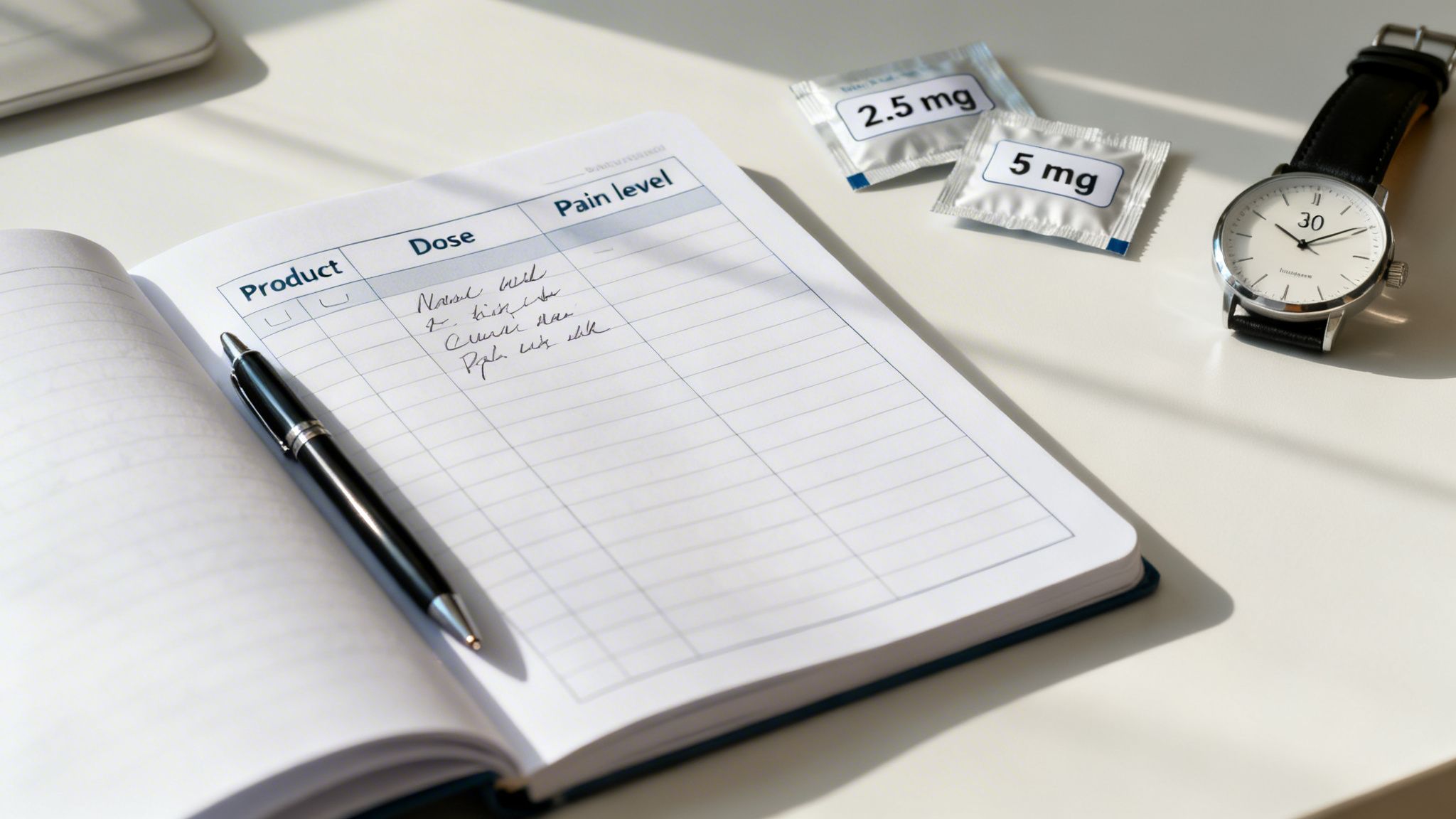
Alright, you've picked out a strain and a format that seems right for you. Now comes the most important part: figuring out the right amount. When it comes to using cannabis for chronic pain, patience is your best friend. The golden rule here is simple but powerful: start low and go slow.
This isn't just some catchy phrase we throw around; it's the single best strategy for finding your personal sweet spot. The goal is to land in your therapeutic window—that perfect dose where you get the most pain relief with the fewest unwanted side effects, like feeling too dizzy or anxious. Rushing this is the number one mistake people make.
Starting Your Dosing Journey
Your first dose should always feel like you’re doing too little. Seriously. You’re just taking a test run to see how your body reacts to a new product, not trying to solve everything at once.
Here’s what that looks like in practice:
- For Inhalation (Flower or Vapes): Take just one small puff. No need to inhale like a champion or hold it in for ages. Then, set it down and just wait. Practical Example: You take a single, 3-second draw from a vape pen containing Harlequin.
- For Edibles: Start with a tiny dose, ideally 2.5mg of THC or less. Most gummies from a good shop are scored for easy dosing. If not, just cut a standard 10mg gummy into four equal pieces. Practical Example: You eat one quarter of a 10mg Wana gummy.
Now for the step that trips everyone up: you have to wait. And how long you wait depends entirely on how you consumed it.
The time it takes to feel the effects of cannabis varies wildly. With smoking or vaping, you'll know what's up in a few minutes. With edibles, it can take up to two full hours to feel the peak effect. Being impatient with edibles is a classic rookie move that almost guarantees an uncomfortable time.
The Waiting Game and Tracking Your Progress
Once you've taken that small starter dose, the clock starts. You absolutely have to give your body enough time to process the cannabinoids before even thinking about taking more. This is how you avoid accidentally overdoing it.
Recommended Waiting Times Before Redosing:
- Inhalation (Smoking/Vaping): Give it at least 30 minutes.
- Edibles or Tinctures (Swallowed): Wait for a full 2 hours. No cheating.
While you're waiting, start paying attention. How are you feeling? Did your pain level shift at all? This is where keeping a journal becomes a game-changer. It doesn’t need to be fancy—a simple notebook or the notes app on your phone is perfect.
For every session, try to jot down these details:
- The strain and product:
Blue Dream Flower - Your starting dose:
"one small puff" - The time:
6:30 PM - Your pain level:
Before: 7/10 (back ache). After 30 mins: 4/10 - Any other effects:
"felt relaxed and a little giggly, was able to cook dinner without pain"
This little bit of data builds your personal roadmap for relief. Over time, you'll start seeing clear patterns that turn guesswork into a reliable plan, helping you find the best weed for your chronic pain consistently. If you want a deeper dive into why edibles take so long, you can learn more about how long edibles last in our detailed guide.
Your Local Partner in Pain Management
Trying to find the best weed for chronic pain can feel like a shot in the dark, but you don’t have to go it alone. The whole journey gets a lot easier when you have a trusted local guide. That’s where we come in. At Mr. Nice Guys DC, we’re more than just a dispensary—we’re your partner in figuring out what actually brings you relief.
Our whole approach is built on being an educational resource for the DC community. We’re here to help you cut through the noise and get clear on your options. Finding safe, effective cannabis shouldn't be a guessing game.
A Curated Menu for Pain Relief
We’ve already done the homework for you. Our menu is carefully curated to prioritize quality, consistency, and effects that are known to help with chronic pain. You won't find just any old strains on our shelves; we specifically stock genetics with real pain-fighting potential.
For instance, you'll often find celebrated strains on our menu like:
- Gelato: A heavy-hitter hybrid famous for its euphoric lift and deep physical relaxation that can melt away stubborn muscle aches.
- Blue Dream: A balanced hybrid that offers gentle pain relief with a calm, focused energy, making it perfect for daytime use.
- Runtz: Known for its long-lasting, soothing effects that are a game-changer for managing persistent pain and the stress that comes with it.
Every single product we carry, from flower to edibles, is lab-tested for purity and potency. This means you get exactly what you see—a clean, safe product with a cannabinoid and terpene profile you can count on.
This commitment to transparency is everything. Knowing the exact THC and CBD percentages lets you follow the "start low and go slow" rule with total accuracy, putting you in complete control of your experience. For example, knowing an edible contains precisely 2.5mg of THC per piece allows you to dose consistently without guesswork.
Service That Puts You First
Navigating the cannabis world can feel complicated, especially when you’re just getting started. That’s why we provide boutique-level service to make you feel comfortable and confident from the get-go. Our team actually takes the time to listen and understand what you’re dealing with.
Are you struggling with nerve pain and need something that won’t put you to sleep? Or is back pain keeping you up at night, and you need just the opposite? We’ll point you toward the right strains and formats based on what you want to achieve. For example, we might recommend a sativa-dominant hybrid like Sour Diesel for daytime nerve pain but a heavy indica like Northern Lights for nighttime back pain.
Making Access Simple and Discreet
Your well-being is our main focus, and that includes making it easy and stress-free to get your medicine. Mr. Nice Guys DC offers a few convenient ways to get the products you need, your way.
Your Options for Easy Access:
- In-Store Pickup: Just order online, and we’ll have everything ready and waiting for you when you arrive.
- Curbside Service: For a quick and discreet pickup, pull up, and we'll bring your order right to your car. No contact needed.
- Convenient Delivery: We offer reliable delivery across Washington, DC, and to nearby spots in Maryland and Virginia, including Arlington, Silver Spring, and Alexandria.
We operate in full compliance with all local rules, so every transaction is secure and professional. With over a decade of experience and thousands of happy customers, we’ve built a reputation for being the real deal. Let us be your trusted partner in managing chronic pain and getting your quality of life back.
Got Questions About Using Cannabis for Pain?
Alright, so you've got the basics down. But what does using cannabis for chronic pain actually look like day-to-day? It's one thing to read about cannabinoids and another to figure out how they fit into your life. Let's tackle some of the biggest questions people have. We want you to feel confident, not confused.
Will I Feel High All Day Long?
This is probably the number one concern we hear, especially from people who need to stay sharp for work, family, or just getting through the day. The short answer? No, you don't have to. You're in the driver's seat.
It all comes down to the products you choose. If you stick with high-CBD strains, you can get a lot of the anti-inflammatory and pain-relieving benefits without the head high. Another solid strategy is microdosing. This just means taking a tiny amount of THC—enough to take the edge off your pain, but not enough to feel "stoned."
Practical Example: You could try a 1:1 THC:CBD tincture and start with just a quarter of a dropper in your morning coffee. That balanced approach often hits the sweet spot, keeping your mind clear while your body feels better. And for pain in one specific spot, like a knee or shoulder? Non-psychoactive topicals are perfect. They give you relief right where you need it with zero intoxication.
Is It Possible to Become Addicted?
It's smart to ask about the risks. When you compare cannabis to something like opioids, which have a huge risk of physical dependency, cannabis is in a completely different league. Its potential for addiction is significantly lower. The conversation around cannabis is less about addiction and more about using it responsibly and mindfully.
It helps to know the difference between a habit and a physical dependency. A habit is just a routine, but a physical dependency is when your body needs a substance to avoid withdrawal. While someone could form a psychological habit with cannabis, the risk of a true physical addiction is low. The key is to keep a healthy relationship with it—using it as a tool for a specific purpose, like pain relief, not just as an all-day escape. For example, if you only use a THC vape when your migraine becomes unbearable, that's tool-based use, not a habit.
How Do I Talk to My Doctor About This?
Bringing up cannabis with your doctor can feel a little awkward, but it's a really important conversation to have. The good news is that more and more healthcare pros are open to discussing it, especially when they see patients using it to get away from other medications.
Here are a few tips to make that chat go a little smoother:
- Explain Your 'Why': Don't just say you have pain. Tell them how it's messing with your life—whether it's wrecking your sleep, stopping you from moving around, or tanking your mood. Example: "My arthritis pain is so bad in the mornings that I can't even make breakfast for my kids. I've read that CBD can help with inflammation."
- Frame It as a Tool: Let them know you see cannabis as just one piece of your wellness plan, right alongside things like physical therapy, diet, or meditation.
- Ask for Their Opinion: Show them you value their expertise. Ask for their medical advice, especially about how it might interact with any other medications you’re taking. Safety first.
It can also help to bring in a little research on how cannabis is used for conditions like yours. That can open the door to a much more productive discussion. Your doctor's input is a vital part of making sure you're doing this safely and effectively.
Ready to explore your options with some expert guidance? The team at Mr. Nice Guys DC is here to help you navigate our curated selection of premium cannabis products. Find the relief you've been looking for by visiting us online today. https://www.mrniceguysdc.com
Mr Nice Guys DC
At Mr. Nice Guys DC, we’re more than just a cannabis delivery service — we’re passionate advocates for quality, convenience, and community. With years of experience in the cannabis industry, our team is dedicated to educating and empowering customers across Washington, D.C. Whether you're a seasoned user or just starting your cannabis journey, our blog delivers trusted tips, product insights, and the latest updates from the world of weed. Stay informed, stay elevated.
