
Must Be 21 To Enter
By entering this site you are agreeing that you are at least 21 Years of Age or older.
I AM 21 OR OLDERBest Strains for Inflammation: A DC Patient's Guide 2026
.svg)

.png)
You wake up stiff. Your hands feel swollen before coffee. Your knee acts fine for three days, then flares when you take the stairs. By late afternoon, your shoulders are tight, your back is barking, and you’re tired of guessing which remedy will help.
That’s where a lot of people start with cannabis. Not because they think it’s magic. Because they want something more targeted, more natural, and more practical than white-knuckling through inflammation every day.
I’ve seen the same pattern over and over at the counter. Someone comes in asking for “the strongest thing,” but what they usually need isn’t the strongest product. They need the right cannabinoid ratio, the right terpene profile, and the right format for how their inflammation shows up in real life.
Living with Inflammation and Seeking Natural Relief
A lot of inflammation patients don’t look “sick.” They’re still working, driving, parenting, training, commuting, and showing up. They’re just doing it with sore joints, tight muscles, irritated nerves, or a body that feels like it’s constantly running hot.
One person needs help getting through the morning because their hands and wrists feel locked up. Another deals with muscle tension that builds all day at a desk. Someone else gets neuropathic pain that turns a normal evening into a restless one. The details change, but the frustration is the same. Relief feels inconsistent.

Cannabis can fit into that routine as a botanical tool, not a cure-all. Used well, it can help take the edge off inflammation, calm pain signaling, and make the day more manageable without automatically knocking you out.
That matters if you’re trying to stay functional. High-CBD options, balanced strains, and targeted topicals can give people room to work, move, or rest more comfortably depending on the product they choose.
If you’re already exploring plant-based wellness, these herbal alternatives in DC are part of the same broader conversation. Cannabis just tends to be more nuanced than typically understood.
What patients usually get wrong
Shopping by strain name alone is a common practice. That’s the mistake.
A name can point you in the right direction, but it doesn’t tell you enough. Two batches of the same strain can feel different if the cannabinoid balance changes or the terpene profile shifts.
Don’t buy for inflammation based on hype, color, or whether your friend said it “hit hard.” Buy for how you need to function.
A better way to choose
Start with three questions:
When do you need relief most
Morning stiffness, midday flare-ups, or nighttime discomfort all call for different product choices.What kind of inflammation are you dealing with
Joint irritation, muscle tightness, and nerve-related discomfort don’t always respond the same way.How clear do you need to stay
Some people want daytime focus. Others want deeper body relaxation after work.
That’s how you find the best strains for inflammation. Not by chasing whatever’s popular, but by matching the plant to the problem.
Understanding Your Body's Response to Cannabinoids and Terpenes
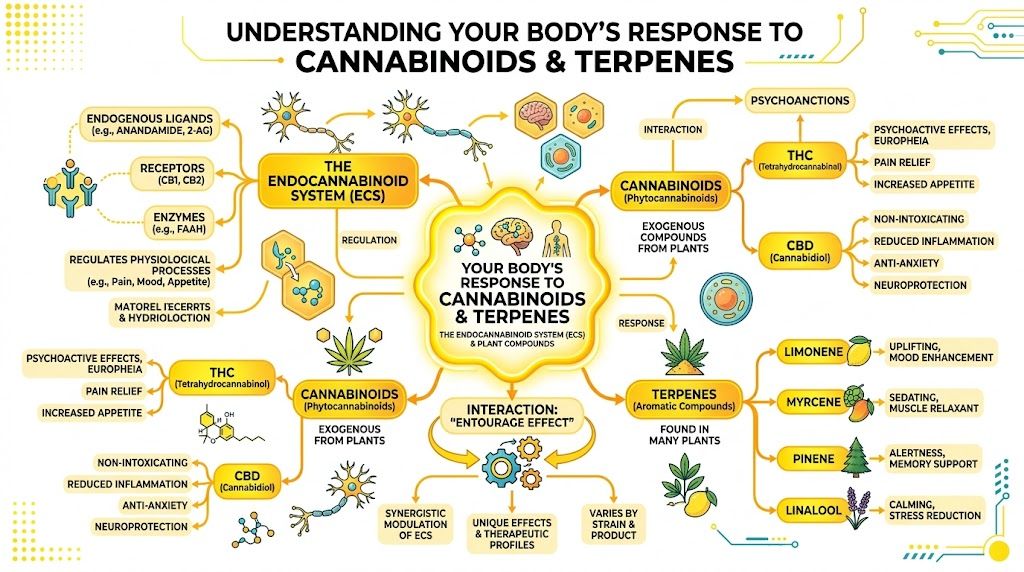
Cannabis makes more sense once you understand one system in your body. The endocannabinoid system, or ECS.
It is a regulation network. Its job is to help your body maintain balance. It interacts with pain signaling, stress response, mood, appetite, and inflammation. An analogy for this is locks and keys. Your body has receptors that act like locks. Cannabinoids and related compounds act like keys that influence how those locks behave.
CBD does the heavy lifting for inflammation
If your goal is inflammation relief without feeling too altered, CBD is usually the first place to look.
High-CBD strains like ACDC and Charlotte’s Web are described as working through a pathway distinct from THC-dominant options. The practical point is simple. CBD appears to affect pain receptors and support anti-inflammatory relief without relying on intoxication. For patients who need to stay functional, profiles with CBD above 12% paired with THC below 5% are presented as a strong benchmark for inflammation management without compromising daily function in this discussion of strains for inflammation and pain.
That’s why many patients prefer CBD-rich flower, tinctures, or capsules during the day. They want less swelling, less irritation, and less body noise without feeling mentally sidelined.
THC still has a job
THC matters too. It just plays a different role.
CBD often gets the spotlight for inflammation itself, but THC can help with how pain is perceived. If inflamed tissue is making your body ache, tighten up, or become more sensitive, some THC can make that discomfort feel more manageable.
The trick is not overdoing it. If you’re new, chasing a heavy THC product for inflammation can backfire. You may get temporary distraction from pain, but too much psychoactivity can make daytime use annoying or impossible.
A balanced profile often works better than a THC bomb.
Terpenes are not decoration
A lot of shoppers ignore terpenes because they focus only on THC and CBD. That’s another mistake.
Terpenes are the aromatic compounds that shape how a strain feels. For inflammation, three names matter most.
Beta-caryophyllene
This is one I tell people to watch closely. It’s associated with inflammation modulation and stands out because it brings something different than CBD alone.Myrcene
Common in several strains chosen for pain and body discomfort. Patients often associate myrcene-heavy profiles with physical ease and muscle comfort.Limonene
More uplifting, often useful when inflammation is dragging your mood down along with your body.
If you want a deeper breakdown of how these compounds shape your experience, this guide on what terpenes in weed actually do is worth reading.
Why synergy matters
The best strains for inflammation usually work because of compound synergy. People call this the entourage effect.
A source focused on terpene profile synergy notes that beta-caryophyllene, myrcene, and limonene can create measurable anti-inflammatory potency through combination, and that strains rich in these compounds may produce stronger therapeutic outcomes than isolated cannabinoid therapy alone in this terpene-focused review.
That matches what experienced patients often report. A flower with decent CBD but weak terpene expression may feel flat. Another with a sharper terpene profile can feel more complete and more useful.
Practical rule: If two strains have similar cannabinoids, choose the one with verified terpene data. That’s often the better inflammation pick.
How to think about this in plain language
Use this shortcut when you’re shopping:
| What you need | What to prioritize |
|---|---|
| Clear-headed daytime relief | Higher CBD, lower THC, caryophyllene and myrcene |
| Body comfort with some mood lift | Balanced cannabinoids, limonene plus caryophyllene |
| Muscle tension and heavier physical discomfort | Myrcene-forward strains with enough CBD or a balanced profile |
| More targeted experimentation | Products with third-party lab testing that show terpene content |
That’s the foundation. Once you know what CBD does, what THC adds, and why terpenes matter, shopping gets a lot easier.
Spotlight on the Best Strains for Inflammation Relief
Here’s my blunt take. If you’re shopping for the best strains for inflammation, start with Harlequin, ACDC, and Cannatonic. Then consider a balanced hybrid if you need a little more pain coverage or a broader body effect.
Not every popular strain belongs on this list. A strain can be famous and still be a poor fit for inflammation if it’s too THC-heavy, too inconsistent, or too mentally loud for routine use.
Top anti-inflammatory strains at a glance
| Strain | Typical CBD:THC Ratio | Key Terpenes | Best For |
|---|---|---|---|
| Harlequin | Often around 2:1 or better | Myrcene, beta-caryophyllene | Daytime joint discomfort, muscle tension, staying clear-headed |
| ACDC | Around 20:1 | Terpene profile varies by batch | Very low-intoxication daytime relief, sensitive users |
| Cannatonic | Balanced to CBD-forward, varies by batch | Often myrcene | Flexible use, body discomfort, easing into cannabis |
| Blue Dream | Not specified here by ratio | Often discussed for balanced effects | Patients who want body ease with mental functionality |
| Jack Frost | Solid CBD and THC amounts | Myrcene, caryophyllene | Hard-to-manage pain with inflammatory overlap |
Harlequin
If I had to recommend one starting strain for most inflammation patients, it would be Harlequin.
Harlequin is widely recognized for high CBD content ranging from 8% to 15% or higher, with THC typically below 5%, often giving it a CBD:THC ratio around 2:1 or better. It’s also associated with myrcene and beta-caryophyllene, which adds to its anti-inflammatory appeal in this strain overview.
That profile makes it a strong fit for people who want relief without feeling mentally scrambled. Think morning stiffness, arthritis-type discomfort, repetitive-use soreness, or body tension that keeps building during the day.
Practical example: If your knees or hands are worst in the morning and you still need to work, Harlequin makes more sense than a heavier high-THC flower. You’re aiming for function, not a fog.
ACDC
ACDC is for people who are THC-sensitive or don’t want much psychoactivity at all.
Its CBD:THC ratio around 20:1 puts it in a very different lane from recreational-leaning strains. It’s the kind of profile I’d point toward for daytime use, long workdays, or anyone who says, “I want relief, but I don’t want to feel high.”
This is also a smart pick for cautious beginners. If cannabis has made you anxious or spacey in the past, ACDC is one of the first profiles I’d revisit.
Cannatonic
Cannatonic sits in the middle nicely. It’s often one of the easiest strains to recommend because it gives patients room to learn what balance feels like.
It’s commonly grouped with anti-inflammatory strains that feature myrcene as a primary terpene, which matters for patients dealing with body discomfort and not just stress. I like Cannatonic for people who want one product that can work after work, on weekends, or on lighter symptom days.
It’s not always the most dramatic option. That’s part of why it works. It tends to feel usable.
Blue Dream
Blue Dream isn’t the first strain I think of for strict CBD-driven inflammation support, but it often earns a place for people who want a balanced hybrid feel.
Some patients don’t just have inflammation. They have inflammation plus fatigue, low mood, mental drag, or stress from being uncomfortable all the time. A balanced hybrid can help those people more than a purely sedating option.
Practical example: If your body feels tight and irritated but you still want to be social, take a walk, or get through chores, Blue Dream may fit better than a heavy evening strain.
For a broader look at cannabis options people use for pain-related issues, this guide to weed strains for pain gives useful context.
Jack Frost
Jack Frost is worth mentioning because terpene synergy matters. It’s described as combining solid CBD and THC amounts with myrcene and caryophyllene, and that combo is noted as particularly effective for harder-to-manage pain in the terpene-focused source referenced earlier.
This is the kind of strain I’d look at for patients whose inflammation comes with stubborn physical discomfort that doesn’t respond well to lighter options.
If your symptoms are inflammatory but the pain is also deep and persistent, a balanced strain with the right terpene support can outperform a CBD-only approach.
How to match the strain to the symptom
Don’t just ask, “What’s best?” Ask, “Best for what?”
For daytime joint irritation
Go with Harlequin or ACDC first.For THC-sensitive users
ACDC is the safer starting lane.For all-purpose body discomfort
Cannatonic is often a smart middle-ground choice.For inflammation plus mental drag
Blue Dream may feel more rounded.For tougher inflammatory pain
Jack Frost is worth a serious look if the lab profile supports it.
Stop treating strain names like guarantees. Use them as starting points. Then confirm the actual cannabinoid and terpene content before you buy.
Choosing the Right Product Format for Your Lifestyle
The strain matters. The format matters just as much.
A great anti-inflammatory flower can still be the wrong choice if you need relief during a work break, before a workout, or only on one sore joint. A lot of frustration comes from using the right cannabis in the wrong way.

Inhalation for flare-ups and fast feedback
Flower and vapes are useful when inflammation spikes and you want to feel the effect quickly.
This is the format I’d suggest for people who need to respond in real time. Maybe your lower back tightens after sitting too long. Maybe your shoulder gets aggravated before the gym. Maybe your hands swell up and you want fast relief without committing to an all-day edible.
Practical example: A patient with exercise-related knee inflammation may use a CBD-forward vape shortly before movement to take the edge off stiffness and help them ease into activity.
The advantage here is speed and control. You can take a small amount, wait, and judge the effect.
Edibles and tinctures for longer coverage
If your inflammation isn’t a short flare-up and instead hangs around all day, edibles and tinctures make more sense.
These formats are useful when you want steadier, more systemic relief. People with recurring arthritis-type discomfort, daily body soreness, or inflammatory symptoms that don’t stick to one body part often prefer this route.
Tinctures are especially practical if you want to stay measured. You can keep the dose low, repeat consistently, and avoid the unpredictability that comes with overdoing an edible.
For a more general breakdown of how these experiences differ, this guide on edibles vs vapes vs flower is a good companion.
Topicals for localized relief
Topicals are the underrated option for inflammation.
If your issue is specific and physical, not whole-body, a cream or balm can be the smartest choice. Think wrists, knees, neck, shoulders, elbows, or one stubborn muscle knot that keeps lighting up.
This is the route for people who want direct application without a psychoactive experience. It’s practical, discreet, and easy to add to an existing routine.
A sore thumb joint doesn’t always need a gummy. Sometimes it needs a topical and a better selection process.
The easiest way to choose
Use the symptom pattern, not your curiosity, to decide.
| Situation | Better format |
|---|---|
| Sudden flare-up before activity | Flower or vape |
| All-day stiffness or recurring discomfort | Tincture or edible |
| One angry joint or muscle area | Topical |
| You’re brand new and cautious | Low-dose tincture or a very controlled inhalation option |
One format doesn’t have to do everything
You don’t need to force one product to handle every moment of your day.
A lot of experienced patients use one format for baseline support and another for flare-ups. For example, someone might rely on a tincture for broad daily management, then keep a vape or topical for specific spikes.
That approach is more realistic than expecting one product to solve morning stiffness, post-work tension, and nighttime discomfort in exactly the same way.
How to Find These Strains and Products in Washington DC
A strain recommendation is only useful if you know how to shop for it correctly, a skill that determines whether people either get dialed in or waste money.
The biggest mistake is asking for a strain by name and stopping there. You need to ask better questions.
What to say to a budtender
Keep it simple and specific. Try language like this:
“I need daytime inflammation relief without much psychoactivity.”
That tells the budtender to steer away from heavy THC picks.“Show me lab-tested flower or tinctures with caryophyllene or myrcene.”
That moves the conversation beyond branding.“I’m dealing with joint inflammation, not just stress.”
This helps narrow the recommendation toward body-focused profiles.“I want something for a flare-up versus something for all-day use.”
That opens the product-format conversation fast.
Ask for the certificate of analysis
This part is essential if you want consistency.
To find the most effective relief, patients should look beyond strain names and ask for lab-tested data on terpene profiles. The same source notes that terpenes like caryophyllene in Kush Mints and pinene may offer specific anti-inflammatory benefits, but their presence and potency can only be confirmed by reviewing the certificate of analysis in this article on cannabis strains for inflammation.
If a product menu doesn’t make that obvious, ask anyway.
What to check on the menu
When you browse a menu, scan in this order:
Cannabinoid profile
Is it CBD-forward, balanced, or THC-dominant?Terpene information
Do you see caryophyllene, myrcene, limonene, or pinene listed?Format
Flower, vape, tincture, edible, or topical?Use case
Daytime, evening, flare-up, or localized support?
A local option patients use for this kind of menu-based shopping is Mr. Nice Guys DC, where flower, edibles, cartridges, topicals, and tinctures are listed for pickup, curbside, or delivery in DC and nearby areas.
A real-world shopping example
Say you have inflammatory knee pain that gets worse by midday but you still need to stay clear. Don’t walk in asking for “the strongest indica.”
Ask for:
- A CBD-forward or balanced daytime product
- Verified terpene info with caryophyllene or myrcene
- A topical if the pain is sharply localized
- A tincture if the discomfort runs through the whole day
That’s a useful conversation. It gives the budtender something concrete to work with, and it gives you a much better chance of leaving with a product that actually fits your life.
Starting Your Journey Toward Inflammation Management
The best strains for inflammation aren’t the loudest names on the menu. They’re the ones that match your body, your schedule, and the way your symptoms show up.
For some people, that means a clear-headed CBD-forward strain like Harlequin or ACDC. For others, it means a balanced hybrid, a topical for one angry joint, or a tincture with more even effects throughout the day. The point is precision.
Keep your approach personal
Inflammation is not one thing. Joint stiffness, muscle irritation, and nerve-heavy discomfort can all feel different, and your cannabis routine should reflect that.
A good starting framework looks like this:
- Match the profile to the symptom
- Match the format to the moment
- Use lab data instead of guessing
- Adjust based on function, not hype
Relief gets more consistent when you stop shopping by strain name alone and start shopping by chemistry.
Start low and pay attention
You don’t need a giant first dose or a dozen products. Start with one thoughtful option, use it consistently, and notice what changes.
Pay attention to:
- When relief shows up
- How long it lasts
- Whether you stay clear-headed enough for your day
- Whether the product helps inflammation, pain perception, or both
That’s how you build a routine that works. Not overnight, but with less trial and error than one might expect once they learn what to look for.
Frequently Asked Questions About Cannabis for Inflammation
Will cannabis for inflammation make me feel high
Not necessarily. If you want to avoid a strong psychoactive effect, start with CBD-rich strains or products with low THC. ACDC is the classic example of this style of profile. Harlequin is also popular because it combines meaningful CBD with relatively low THC.
If staying functional matters, tell the budtender that directly. Don’t be vague. Say you want inflammation support with minimal intoxication.
How quickly will I feel relief
It depends on the format.
Inhaled products like flower or vapes are usually the better fit for faster feedback. Tinctures, edibles, and other ingestible formats are often better when you want longer-lasting coverage instead of a quick response. Topicals are different from both because they’re applied to a specific area.
The right question isn’t just “How fast?” It’s “How fast do I need it, and for how long?”
Should I talk to my doctor before using cannabis for inflammation
Yes, especially if you have a chronic condition, take prescription medications, or are managing something like arthritis or an autoimmune disorder.
Cannabis should be part of a broader care plan, not a secret side experiment. If your symptoms are persistent, get medical guidance. A clinician can help you think through interactions, timing, and whether your inflammation pattern points to something that needs deeper evaluation.
Should I rotate strains
Sometimes, yes.
Rotating can help if one product stops feeling as effective, or if you need different support at different times. A daytime CBD-forward strain and an evening balanced option can make more sense than forcing one strain into every role.
This also helps when your symptoms aren’t consistent. A localized flare-up, a full-body ache day, and a mentally draining pain day may call for different tools.
If you’re ready to sort through strains, terpene profiles, and formats without guessing, talk to the team at Mr. Nice Guys DC. Bring your symptom pattern, ask for lab data, and shop for function. That’s how you build a cannabis routine that supports inflammation management.
Mr Nice Guys DC
At Mr. Nice Guys DC, we’re more than just a cannabis delivery service — we’re passionate advocates for quality, convenience, and community. With years of experience in the cannabis industry, our team is dedicated to educating and empowering customers across Washington, D.C. Whether you're a seasoned user or just starting your cannabis journey, our blog delivers trusted tips, product insights, and the latest updates from the world of weed. Stay informed, stay elevated.
