
Must Be 21 To Enter
By entering this site you are agreeing that you are at least 21 Years of Age or older.
I AM 21 OR OLDERTincture vs Smoking: The Definitive Guide for Cannabis Patients
.svg)

.png)
When you're trying to decide between a tincture vs. smoking, it really comes down to what you're after: speed or control. Smoking hits you fast—often within minutes—but you're also dealing with potential lung irritation and guesswork on the dosage. On the other hand, tinctures give you a smoke-free, discreet, and super precise way to dose, even if you have to wait a little longer for the effects to kick in.
Tincture vs Smoking: A Head-to-Head Comparison
Choosing how you consume cannabis is a personal call. It's a balancing act between your health, your lifestyle, and the kind of experience you want. For a lot of people, the debate between tinctures and smoking is a classic matchup: old-school tradition versus modern, measured precision. Getting a handle on their key differences is the first step to figuring out what’s right for you.
Smoking is the method most people know. You light up the flower, inhale, and the cannabinoids go straight to your lungs for rapid absorption into the bloodstream. It's direct and it's fast. For example, someone feeling the sudden onset of a migraine might choose to smoke because relief can begin in under five minutes.
Tinctures are a whole different ballgame. They're liquid cannabis extracts you typically drop under your tongue. This sublingual approach lets the cannabinoids soak in through the membranes in your mouth, bypassing your digestive system and lungs for a clean, relatively quick onset. As a practical example, a person managing social anxiety might discreetly take a few drops of a tincture 20 minutes before an event, allowing the effects to kick in just as they arrive.
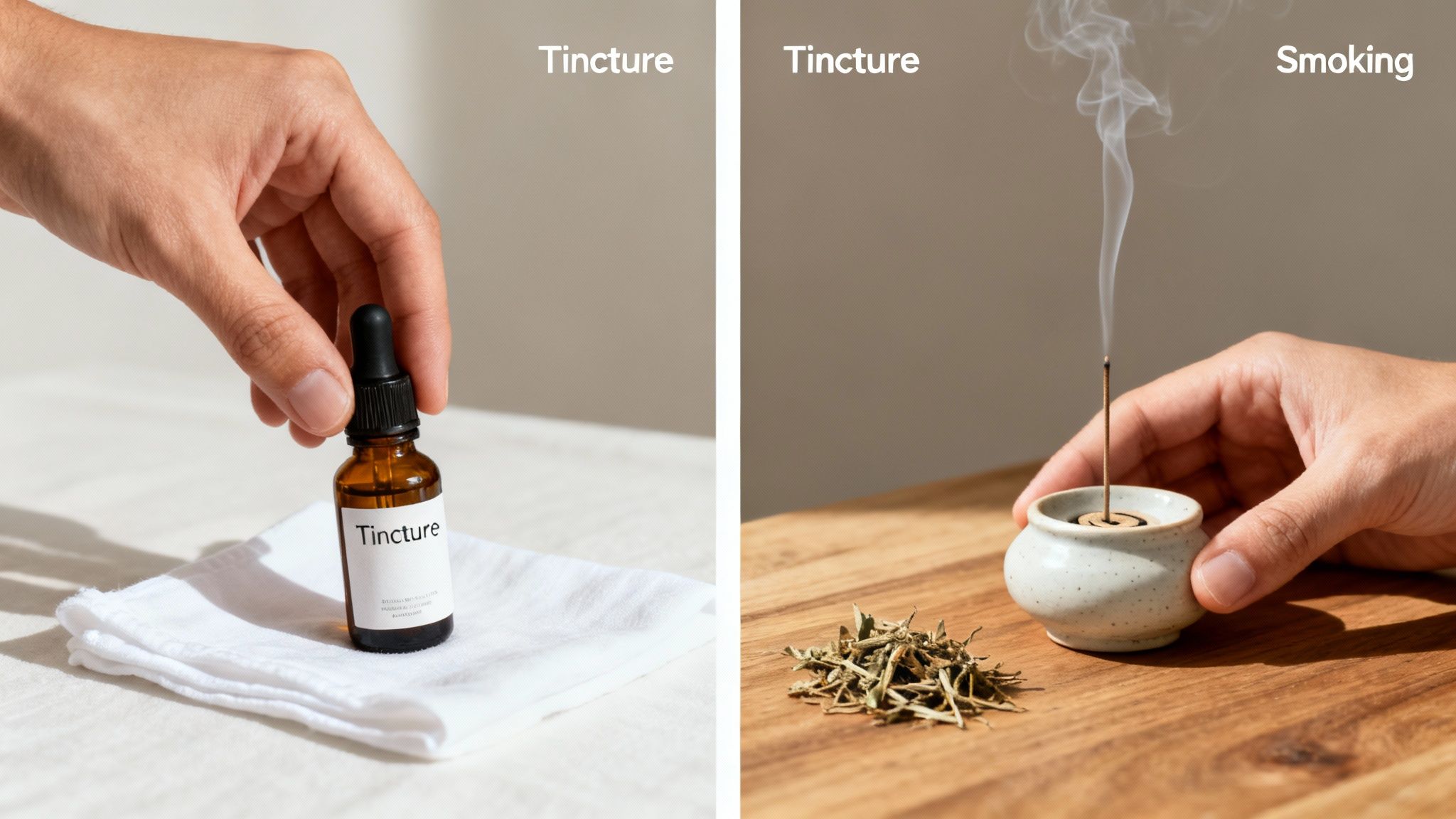
Tincture vs Smoking at a Glance
Sometimes the easiest way to see the trade-offs is to just lay it all out. This quick comparison shows you exactly where each method shines.
Ultimately, the choice between tinctures and smoking is all about your priorities. Are you looking for immediate relief where speed is everything? Or do you need a steady, measurable dose you can count on for long-term management?
Think of it this way: someone who needs a reliable 10mg dose to manage chronic pain during their workday is going to find a tincture far more practical. But if you're dealing with a sudden wave of anxiety, the near-instant calm from smoking might be exactly what you need.
There’s no single "best" method—just the right one for your situation. If you’re curious about other smokeless options, you might want to check out our guide on choosing between edibles, vapes, and flower.
Understanding Onset Time and Bioavailability
When you're comparing tinctures to smoking, two concepts really matter: onset time and bioavailability. Think of onset time as how long it takes to feel the effects, and bioavailability as how much of the good stuff your body actually gets to use. These two factors are the main event, shaping your entire experience.
Smoking is all about speed. You inhale, and the cannabinoids go straight to the millions of tiny air sacs in your lungs, passing almost instantly into your bloodstream. The result? Effects kick in within seconds to a few minutes. For example, a person experiencing a sudden muscle spasm can get relief almost immediately by smoking, which is a game-changer when fast action is needed.
Tinctures play a different game. When you hold a tincture under your tongue (sublingual absorption), the cannabinoids get absorbed through the mucous membranes and into the capillaries right there. This clever route completely sidesteps the digestive system and liver, giving you a much faster onset than an edible—usually around 15 to 30 minutes.
How Bioavailability Impacts Your Experience
This is where the debate gets interesting. It's not just about how fast you feel something; it's about how much of the active ingredient actually makes it into your system. Bioavailability determines the strength and consistency of the effects, and frankly, it's about getting the most value.
While smoking is quick, it’s not exactly efficient. The intense heat of combustion actually destroys a good chunk of cannabinoids before you even inhale them. What's left has to deal with your metabolism and whatever is lost to the smoke in the air.
The result? Smoking offers a surprisingly low bioavailability, estimated to be around 25-30%. For every 10mg of THC you smoke, your body might only use 2.5-3mg.
Tinctures have a clear edge here. That sublingual pathway is a more direct route to the bloodstream, protecting the cannabinoids from being broken down by stomach acid or your liver. This means way more of the product gets put to work.
Here’s a quick breakdown:
- Smoking Bioavailability: Roughly 25-30%, thanks to combustion and metabolic loss.
- Tincture Bioavailability: Can reach up to 35-50%, preserving more cannabinoids for your body.
That difference is huge. While smoking cannabis is still king—74% of US consumers preferred it in one major survey—tinctures are carving out a serious niche with better bioavailability and a cleaner profile. Here at Mr. Nice Guys DC, we see a lot of medical patients leaning this way. More efficiency means more bang for your buck and much tighter control over your dose. You can dive deeper into the specific effects of weed tinctures in our detailed guide.
Duration of Effects: The Other Side of the Coin
The trade-off for smoking’s quick start is a shorter finish. Because the cannabinoids hit your bloodstream and then exit just as fast, the experience typically lasts only 1 to 3 hours. If you need consistent relief, you’ll find yourself reaching for your lighter more often.
Tinctures, on the other hand, provide a more sustained experience. The effects from sublingual use generally last for 2 to 4 hours, giving you a longer window of relief without needing to re-dose constantly.
Think about it this way: someone managing chronic pain through a workday would find a tincture far more practical. A single dose in the morning could easily carry them into the afternoon. But if you’re dealing with a sudden, short-lived flare-up, smoking might be the better tool for its immediate but briefer impact.
Achieving Dosing Precision and Control
When we're talking tinctures vs. smoking, one of the biggest conversations is about control. How do you get a consistent, repeatable dose? While smoking gives you that instant feedback, it’s really more of an estimate every time you light up. Tinctures, on the other hand, bring a level of precision to the table that inhalation just can't match, making them the go-to for anyone needing reliable, predictable results.
This is especially critical for medical patients or even folks just starting their journey. The goal is to find your minimum effective dose—the smallest amount that gives you the relief or effect you're looking for. It’s the key to a positive routine, and tinctures make figuring that out a pretty straightforward process.
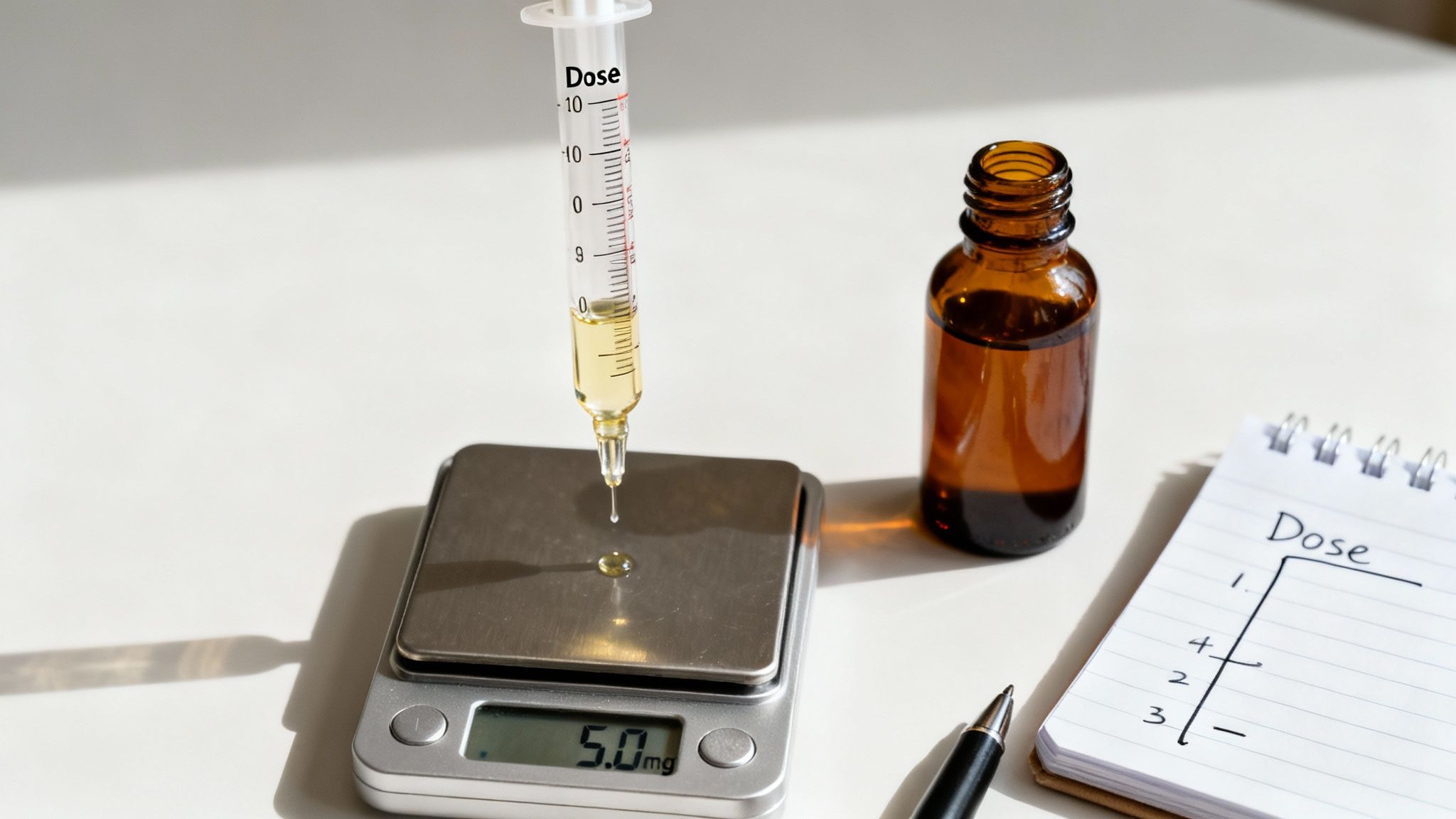
The Art of Tincture Dosing
Think of using a tincture like following a recipe. You have complete control over every single ingredient. The graduated dropper that comes with most tinctures is your best friend here, letting you measure out a dose right down to the milliliter.
Figuring out your dose is simple math. Just check the bottle for the total milligrams (mg) of cannabinoids (like THC or CBD) and the total volume in milliliters (mL). From there, you can nail down the potency of every drop.
Practical Example: Calculating a 5mg Dose
Let's say you've got a 30mL tincture bottle with a total of 300mg of THC inside.
- Find the Potency per Milliliter: Just divide the total THC (300mg) by the total volume (30mL). That gives you 10mg of THC per 1mL.
- Measure Your Target Dose: If you're aiming for a 5mg dose, you’d simply fill the dropper to the 0.5mL line.
- Administer Consistently: By hitting that 0.5mL mark every time, you know you’re getting a consistent 5mg dose. No surprises.
For a medical patient managing something like chronic pain or anxiety, that level of precision is everything. They can confidently take their 5mg dose each morning without worrying about it being too much or not enough. If you're new to this, our guide on what to know before your first medical cannabis visit is a great place to start.
The Guesswork of Smoking
On the flip side, trying to dose with smoked flower is basically a shot in the dark. There’s just no practical way to measure exactly what you're getting with each puff. The whole experience is shaped by a bunch of variables you can't really control.
A few things make precise dosing almost impossible when you smoke:
- Inhalation Depth and Duration: A long, deep draw delivers way more cannabinoids than a quick, shallow one.
- Puff Intensity: How hard you pull also changes how much is vaporized and absorbed.
- Cannabinoid Distribution: The good stuff isn't spread perfectly evenly throughout the flower. One part of a bud can be more potent than another.
- Loss to Combustion: A good chunk of the active compounds gets burned away by the heat before you even have a chance to inhale it.
For someone trying to manage specific symptoms, this variability can be a major drawback. The same number of puffs one day might produce a mild effect, while the next it could be overwhelming, making it difficult to establish a dependable therapeutic routine.
Ultimately, it all comes down to your goals. If your top priority is locking in a specific, repeatable dose for consistent wellness, the clear winner here is the tincture. Its methodical, measurable nature puts you in the driver's seat, cutting out the guesswork and making sure you get exactly what you need, every single time.
Evaluating Health and Safety Impacts
When you start comparing tinctures and smoking, the conversation almost always turns to health and safety—and for good reason. Your choice isn't just about how fast you feel the effects or for how long; it directly impacts your body and your day-to-day life. The biggest difference comes down to one simple thing: combustion.
Smoking, by its very nature, means you’re burning plant material. That process doesn’t just release the cannabinoids you're after; it also creates a whole bunch of unwanted byproducts. When you inhale that smoke, you're pulling tar, carcinogens, and other irritants straight into your respiratory system.
For anyone with respiratory issues like asthma or bronchitis, or even someone just trying to live a healthier lifestyle, this is a massive drawback. For example, an athlete who uses cannabis for recovery would likely avoid smoking to protect their lung capacity, making tinctures a much better fit.
The Smoke-Free Advantage of Tinctures
Tinctures completely sidestep these risks by taking your lungs out of the equation. Since they’re absorbed sublingually (under the tongue), there is zero respiratory involvement. This makes them the clear winner for anyone worried about the long-term consequences of inhaling smoke.
This smoke-free approach isn't just about avoiding future problems; it makes for a much cleaner experience right now. You don't have to deal with a harsh feeling in your throat, coughing fits, or that smoky aftertaste that just won't quit.
The core health distinction is simple: tinctures get rid of the respiratory risks that come with combustion. For health-conscious folks, that fact alone often makes tinctures the better choice for regular use.
Think about a medical user who needs consistent relief throughout the day. Choosing to smoke multiple times daily means repeatedly exposing their lungs to irritants. A tincture delivers the same therapeutic benefits without any of that respiratory baggage, making it a much more sustainable strategy long-term. To get a better handle on the different compounds in these products, you can learn more about CBD vs THC in our comprehensive article.
Practical Safety and Discretion in Daily Life
The safety discussion goes beyond physical health—it bleeds into real-world, everyday situations. The discretion you get with a tincture versus the impossible-to-hide nature of smoking is a huge factor for a lot of people, especially professionals or anyone living in close quarters.
Smoking produces a powerful, unmistakable odor that clings to your clothes, hair, and furniture. It also creates visible smoke, making it nearly impossible to use discreetly. If you live in an apartment with strict rules or just value your privacy, this can become a major source of stress.
Practical Example: The Working Professional
Imagine a professional using cannabis to manage anxiety during a stressful work week.
- Smoking: Trying to smoke on a lunch break is a non-starter. The smell would be a dead giveaway back at the office, creating a seriously awkward or unprofessional situation.
- Tinctures: A tincture is odorless and can be taken in seconds with total privacy. A quick, pre-measured dose in a restroom or at their desk goes completely unnoticed, letting them manage their symptoms without attracting any unwanted attention.
This level of discretion isn't just about convenience—it’s about practical safety and keeping your personal and professional life separate. Tinctures are silent, invisible, and leave no trace, giving them a powerful edge in countless real-world scenarios.
Comparing Key Safety and Lifestyle Factors
To put it plainly, the choice you make affects your daily routine and peace of mind. Here’s a quick breakdown of how they stack up in practical terms.
When you really evaluate the health and safety impacts, the line between tinctures and smoking becomes crystal clear. While smoking offers speed, it comes with undeniable respiratory risks and zero discretion. Tinctures, on the other hand, provide a clean, controlled, and private alternative that aligns much better with a health-conscious lifestyle and the practical demands of modern life.
Practical Use Cases to Guide Your Choice
Knowing the technical differences between tinctures and smoking is a good start, but what really matters is figuring out how that plays out in your own life. The best method is always the one that slots perfectly into your routine and helps you meet your goals. Let's walk through a few real-world scenarios to show you when one clearly has the edge over the other.
This isn't just a simple tinctures vs. smoking debate. It's about matching the tool to the job. By looking at how different people with different needs use cannabis, you can get a much clearer picture of what will work for you.
Choosing for Chronic Symptom Management
Picture someone managing chronic pain from something like arthritis while trying to get through a workday. Their main goals are simple: long-lasting relief and consistent, predictable dosing so they can stay focused and functional.
- Tincture Solution: For this person, a tincture is the obvious choice. They can take a precisely measured 5mg or 10mg dose in the morning and trust it to provide steady, low-key relief for hours. Since tinctures are discreet and odorless, they can easily take another dose if needed without anyone at the office being the wiser.
- Smoking Drawbacks: Smoking just isn't practical here. The effects are strong but fade quickly, usually within an hour or two. That would mean taking frequent smoke breaks, which isn't always possible, professional, or private.
Responding to Acute, Unpredictable Flare-Ups
Now, think about someone who deals with sudden, intense anxiety or panic attacks. Their top priority is immediate relief. They need something that gets to work in minutes to help them regain control.
- Smoking Solution: In this case, the speed of smoking is a lifesaver. When you inhale, cannabinoids hit the bloodstream in seconds, delivering the near-instant calming effects needed to head off an attack.
- Tincture Drawbacks: A tincture, with its 15-30 minute onset time, is just too slow to provide the rapid response required during an acute flare-up.
This visual guide can help you map your own priorities to the right consumption method, especially if health concerns and discretion are at the top of your list.
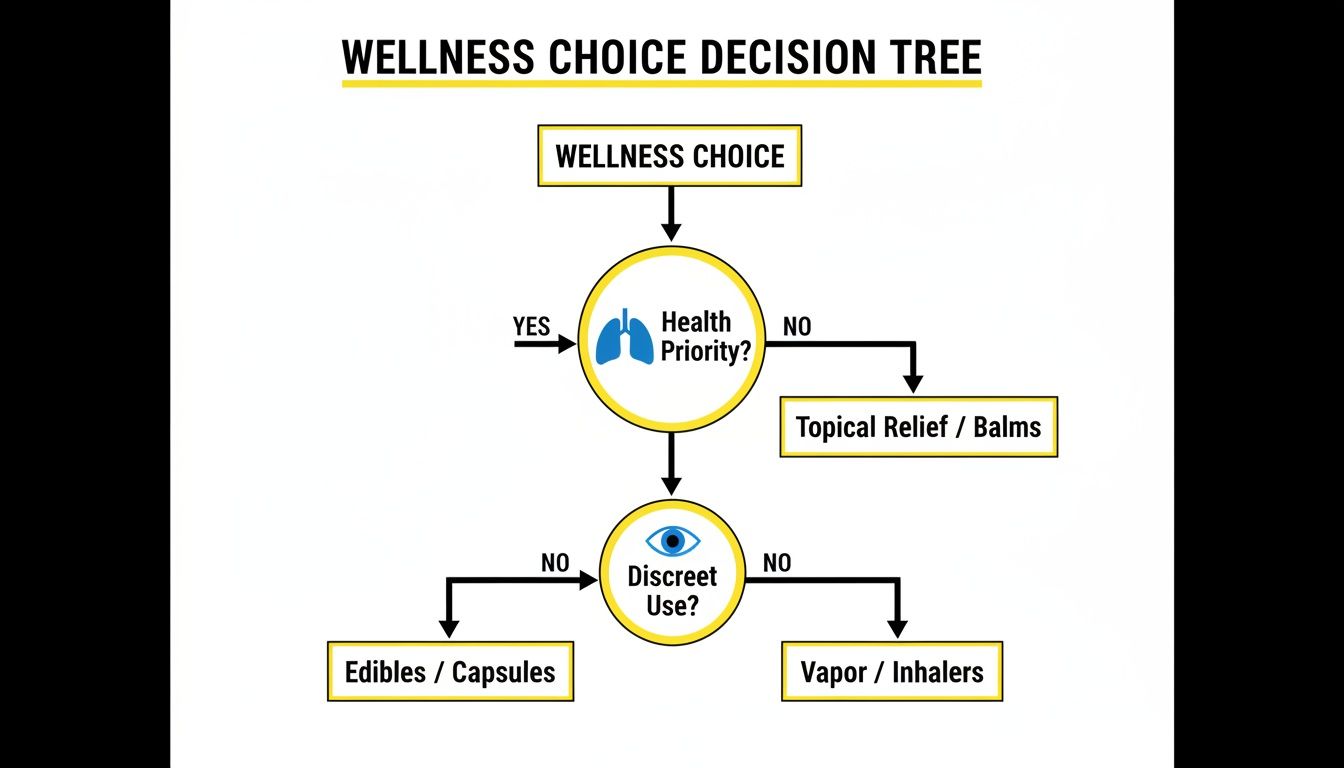
As the decision tree shows, if you’re focused on preserving lung health or need to keep things private, tinctures are the way to go.
Navigating as a New Cannabis User
If you're just starting out, your main concerns are probably safety, control, and not accidentally overdoing it. You need a method that lets you start with a tiny dose and slowly figure out what feels right.
Tinctures are the gold standard for beginners. The ability to measure a dose as small as 1mg or 2mg with a graduated dropper empowers new users to explore effects confidently and safely, minimizing the risk of overconsumption.
Smoking can be intimidating for a novice because the dosage is so unpredictable, making it easier to have an uncomfortably intense experience. This kind of precise control is a big reason why the cannabis extract market is blowing up. Did you know the global market, which includes tinctures like those at Mr. Nice Guys DC, was valued at USD 3.5 billion in 2022 and is expected to hit USD 15.5 billion by 2030? This growth is largely driven by legalization for medical use worldwide to treat conditions like arthritis, anxiety, and even cancer. Unlike smoking, tinctures and oils get a pass under more permissive laws because they don't involve combustion, making them a game-changer for patients who need fast, reliable relief.
To help you connect these ideas to your own situation, here's a quick guide matching common scenarios with the best consumption method.
Which Method Is Right for You: Scenario-Based Guide
This table makes it clear that there's no single "best" method—it all comes down to what you need in the moment.
Matching the Method to Your Lifestyle
Ultimately, your choice in the tincture vs. smoking debate should fit your daily life. A busy parent, a professional who needs to be discreet, or a health-conscious athlete will all have different priorities than someone using cannabis recreationally at home. By thinking about how each method fits into these different scenarios, you can make a choice that’s both informed and practical.
For a deeper dive into picking products for specific issues, check out our guide on using cannabis for sleep, pain, and anxiety.
How to Select Tinctures and Flower in DC
Walking into a dispensary and staring at a huge menu can be a lot to take in. But once you know what to look for, the whole experience shifts from overwhelming to empowering. Whether you're interested in the dialed-in precision of a tincture or the classic, immediate effects of smoking flower, a few key details will help you walk out with something that’s perfect for you. Here’s how we break it down at Mr. Nice Guys DC.
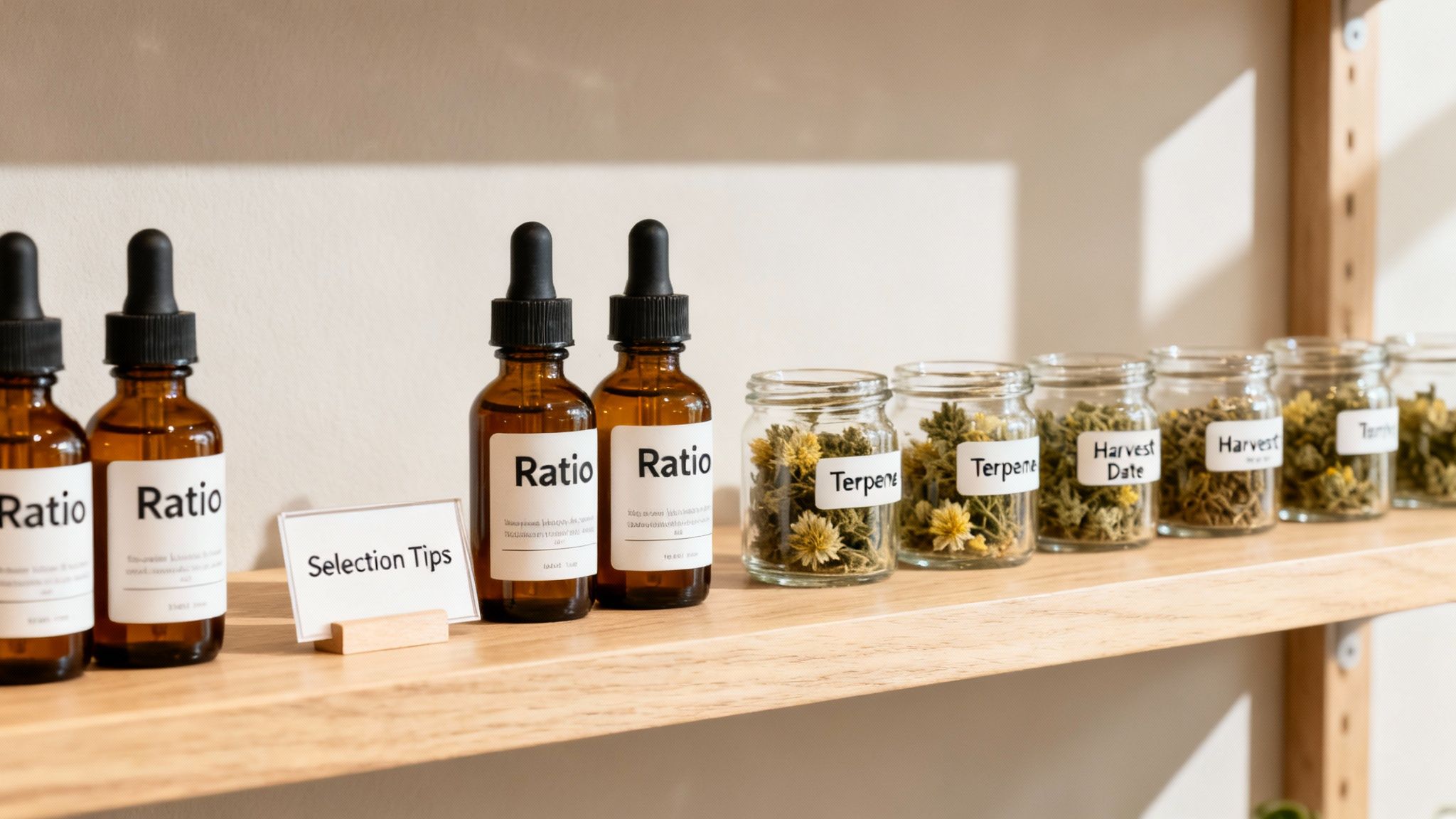
With a little know-how, you can confidently compare tincture vs smoking options and grab the right product for your needs.
What to Look for in a Tincture
Choosing the right tincture is all about reading the label and knowing what the ingredients actually do. Go beyond just the THC number and dig into the details that signal real quality.
- Cannabinoid Ratios: Don't get tunnel vision on THC. Many of the best tinctures offer specific ratios, like a 1:1 THC to CBD blend for balanced effects that are less intense. For example, a student might use a 1:1 tincture to ease study anxiety without feeling too high to focus.
- Carrier Oil: The liquid base really matters. MCT oil (from coconuts) is super popular because your body absorbs it efficiently, but you'll also see hempseed oil. If you have allergies, always double-check the carrier oil.
- Extraction Method: This isn't always listed, but it's a big deal. CO2 and alcohol extraction are common. A full-spectrum extract is usually the gold standard because it keeps more of the plant’s natural compounds, giving you a much richer effect than a simple THC isolate.
How to Identify Premium Flower
When it comes to flower, quality is everything. It dictates the flavor, the aroma, and the entire vibe of your session. Learning how to spot top-tier flower means you’ll get the best experience every single time.
If you remember one thing, make it this: focus on the terpene profile, not just the THC percentage. Terpenes are the aromatic compounds that give flower its scent and flavor, but more importantly, they steer the effects—whether you feel calm, energized, or focused.
Keep these points in mind when you're browsing:
- Terpene Profile: Ask your budtender what the dominant terpenes are. A strain high in myrcene will probably feel more relaxing, while something rich in limonene might be more uplifting. For example, someone looking to unwind after a long day might choose a myrcene-heavy strain, while an artist seeking creative inspiration might opt for a limonene-dominant one.
- Harvest and Cure Dates: Fresher is almost always better. A recent harvest date means you're getting maximum potency and flavor. Just as important is a proper cure—it takes weeks, but it's what makes the smoke smooth.
- Visual and Aromatic Cues: Good flower should hit you with a strong, pleasant smell—never like hay. Look for buds that are dense, have vibrant color, and are covered in a frosty layer of trichomes.
At the end of the day, the best way to make a great choice is to talk to someone who knows their stuff. The crew at Mr. Nice Guys DC can help translate what you're looking for into a specific product on our menu, closing the gap between what you want and how to find it.
Got Questions? We've Got Answers
Stepping into the world of cannabis can bring up a lot of questions, especially when you’re weighing options like tinctures versus smoking. Let’s clear up a few common ones.
Can You Vape a Tincture?
The short answer is no. You should never try to vape a tincture. Tinctures are made with carrier oils like MCT or hempseed oil. These are meant to be absorbed under your tongue or digested, not heated and inhaled. Vaping these oils can cause serious harm to your lungs.
Is One Method Stronger Than the Other?
It's less about the method and more about dosage and how your body uses it. Smoking feels strong and fast because it hits you right away, but a lot of the good stuff gets lost to the flame. Tinctures, on the other hand, have higher bioavailability. This just means your body absorbs more of the cannabinoids, leading to a more efficient, controlled experience with less product.
Which Is More Cost-Effective?
In the long run, tinctures usually come out on top. Because they offer precise dosing and better bioavailability, you end up wasting less product. You can use smaller amounts to get the consistent effects you’re looking for, which saves you money over time.
The Bottom Line: While smoking gives you that immediate hit, tinctures offer a more controlled, efficient, and budget-friendly solution for regular use. That’s why so many medical patients prefer them.
Think about it: if someone needs a consistent 10mg dose every day, a tincture lets them measure it out perfectly, with zero waste. Trying to get that same exact dose by smoking is pretty much impossible, and you’ll likely burn through more flower than you need to.
Ready to see what precise, smoke-free dosing can do for you? Here at Mr. Nice Guys DC, we’ve hand-picked a selection of premium tinctures designed for reliable relief and wellness. Check out our collection online and find a better way to manage your health. Swing by and see us today at https://www.mrniceguysdc.com.
Mr Nice Guys DC
At Mr. Nice Guys DC, we’re more than just a cannabis delivery service — we’re passionate advocates for quality, convenience, and community. With years of experience in the cannabis industry, our team is dedicated to educating and empowering customers across Washington, D.C. Whether you're a seasoned user or just starting your cannabis journey, our blog delivers trusted tips, product insights, and the latest updates from the world of weed. Stay informed, stay elevated.
